Unknown's avatar

About Arcana

My name is Ben Hogwood, editor of the Arcana music site (arcana.fm)

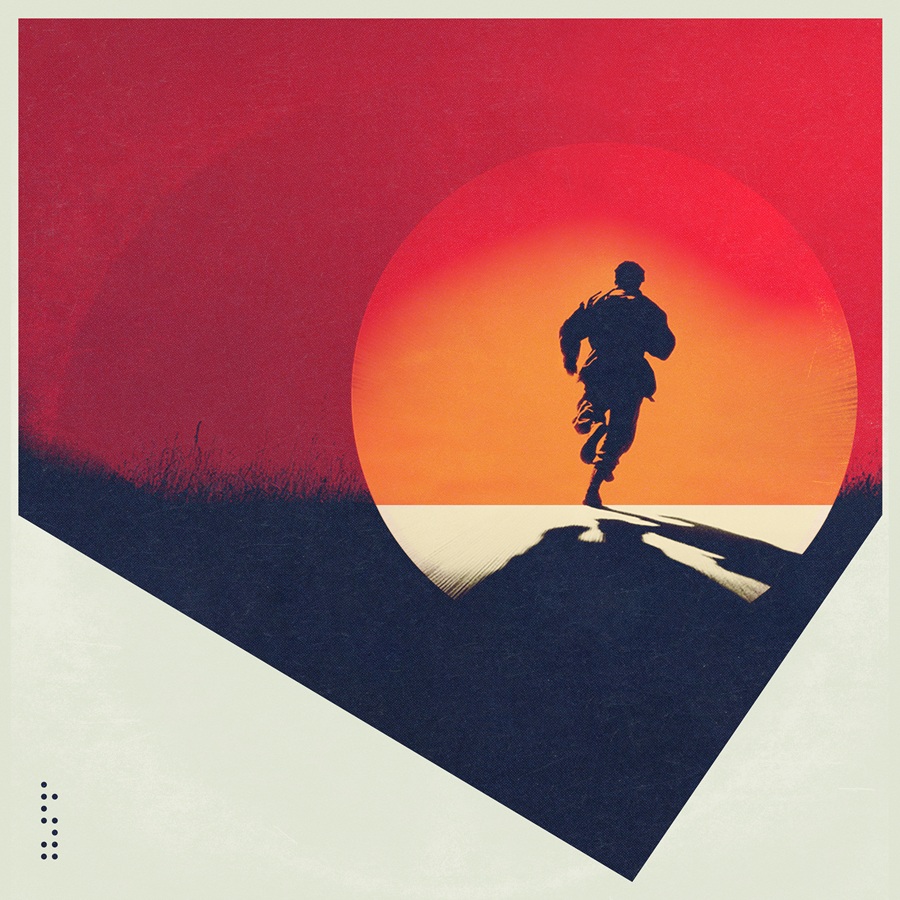
New music – The Orb: Under The Bed

adapted from the press release by Ben Hogwood

In a changing, unpredictable and turbulent world, something we can always rely on is a new Orb album, with the next holiday-for-the-head never far away. On what is quite possibly the millionth longplayer helmed by electronic lifer Alex Paterson; partnered with the now firmly-entrenched boy wonder Michael Rendall; the inspirationally productive outfit yet again deliver the goods, with one of their best yet.

“I was having a dream, and in this dream was an escalator descending out of the clouds, upon which were Buddhists and hipsters travelling downwards, and beckoning me down from the top, was Roger Eno. When I woke up, I had a text from him, asking if we fancied more collabs, so he’s on the record, amongst other friends.

New single Under The Bed, the second track to be taken from forthcoming album Buddhist Hipsters sees long-time Orb cohort Andy Falconer, whom Alex calls “an ambient god”, join forces with Alex, and the pair go so many fathoms deep that they aren’t merely out of their pit, but Under The Bed, and it displays all the awe of the cosmos like a planetarium from heaven. As the press release says – it is nearly ten minutes of pure, easy, hot-weather ambience.

Recording the album and playing recent gigs have been comfortable, happy, and therapeutic experiences, largely due to Michael Rendall, who’s a genius that picks up anything he turns his hand to. We have a wonderful, simpatico relationship on record and on stage. Overall, the length, arc, and energy of Buddhist Hipsters energy mirrors one our fans’ faves, U.F. Orb.” Alex Paterson

Spontaneously Combust kicks off in fine style, with Steve Hillage’s unmistakeable guitar, Miquette Giraudy on vintage EMS synth, plus blue roomy bass, backwards vocals, and gentle dream house grooves. It features a top-secret sample, suggested to Alex by shopkeeper-par-excellence Michael King, taken from his mythical basement vaults at West Norwood’s Book and Record Bar.

A recent live set starter, P~1 slowly builds into firing cosmic D&B cyclones, whilst the bleeped-up late 70s synth of Baraka is an ode to a famous Kenyan blind rhino, who, tellingly is known as a symbol of resilience. Already a firm live favourite, A Sacred Choice is prime leaping reggae skank, with Youth on bass, Paul Ferguson on drums, Andy Falconer on atmospherics, and vocals by Eric Von Skywalker.

The title of the eastern influenced, orchestral drama of hip hop banger Arabebonics is a word invented by rapper Rrome Alone, who lends vocals to the track, with added BVs and strings from Violeta Vicci.

Elsewhere, prog-throbber It’s Coming Soon features Andy Cain’s dulcet tones, that grace this plaintive-arpeggiated-prog-throbber, on which Alex manages to smuggle a nod to his aunties Rose and June into the lyrics, before the dusty nostalgic vibes of Doll’s House glows and pulsates in all the right ways, scattering sound beams like a planet sized disco ball.

With Alex having met lovers rock legend Trevor Waters and discovering his classic Love Me Tonight, Rendall isolated the vocal using Logic, transforming the original into the pinnacle of the LP’s house music passage. Newly titled The Oort Cloud (Too Night) and aided by cult Manchester disc jockey Dr D, they embark on a classic NYC deepside journey, for a moment of dancefloor ecstasy.

Elsewhere, Andy Falconer joins forces with Alex on Under The Bed, while the delightful Khàron, named after the sister planet of Pluto, conjures a universe alive with light and celestial beings, largely aided by Roger Eno’s stunningly sparing piano. Finishing on a high, it bids us a warm goodnight.

Buddhist Hipsters is released on October 10th via Cooking Vinyl and will be available on CD with a 6 panel fold out sleeve, black double LP vinyl with a gatefold sleeve and limited-edition rust red, pink marble and yellow marble vinyl.

Published post no.2,637 – Monday 25 August 2025

New music – Clarice Jensen: Unity

Clarice Jensen unveils new single Unity from her upcoming fourth solo album In holiday clothing, out of the great darkness.

Composer and cellist Clarice Jensen unveiled Unity, the second single taken from her upcoming fourth solo album, In holiday clothing, out of the great darkness, out on October 17, 2025 via FatCat Records’ 130701 imprint.

In ‘Unity’, Jensen builds a symmetrical four-chord pattern that repeats steadily, through looping. Upon this she imposes a scampering arpeggio pattern that is irregular and additive, elongating itself through the repeats. She says,’The concept of unity suggests that many are being joined as a whole. In mathematics it is literally the number one. Unity depicts the multitudes (the evolving arpeggios) contained within a unified whole (the four-chord motif), examining the implications of one, or solo, or solitude and how oneness can imply both solitude and interconnectedness.’

‘Unity’ is the second glimpse of Jensen’s new material, following July’s ‘From a to b’. Jensen has been performing ‘from a to b’ as a solo piece while touring with My Chemical Romance, where it has resonated strongly with audiences. The track explores the idea of how and when a solo line becomes two, and how a singular melodic voice can become its own counterpoint.

In holiday clothing, out of the great darkness showcases Jensen’s distinctive compositional approach, in which she improvises and layers her cello through shifting loops and a chain of electronic effects, exploring a series of rich, drone-based sound fields. Pulsing, visceral and full of color, her work is deeply immersive, marked by a wonderful sense of restraint and an almost hallucinatory clarity. The album was recorded as part of the Visiting Artist Programme at Studio Richter Mahr, the creative space co-founded by Yulia Mahr and Max Richter in Oxfordshire, England.

Having made a solo move to the Berkshire Mountains in upstate New York in September 2020 after many years living in Brooklyn, Jensen found herself confronting and enjoying a newfound solitude as the non-stop movement and collaboration of city life as a musician had come to a standstill. The first LP she made post-move – Esthesis, released on 130701 in 2022 – is largely devoid of cello, synth heavy, and examines emotions in a self-conscious way from an isolated point of view that is nearly one-dimensional.

Jensen sets new parameters for In holiday clothing, placing the acoustic sound of the cello at the fore, and affecting the sound only through a few effects (octave displacement, delay, tremolo and looping). ‘It felt necessary to return to the rich acoustic sound of the cello that I’ve loved and produced for nearly my entire life, and to return to an expression of emotion that’s multi-dimensional and sincere,’ she notes.

As a soloist, Jensen endeavors to establish a new tradition of solo cello performance that integrates electronics with the storied and beloved performance practice intrinsic to the instrument. She places great importance on finding and working with effects pedals that integrate well with the cello, and avoids overt use of plugins or playback. Jensen considers the solo cello works of Johann Sebastian Bach as a central backdrop to this new album. Bach’s Solo Cello Suites display a rich range of voices created by one instrument. Having found ways to expand the sound and voice of the instrument through electronics, Jensen found it fitting to return to Bach’s works – music she has played for many years – as a way to touch back in with the tradition of the instrument.

As a composer, Jensen insists that the programmatic elements of her albums align and ring true. This album’s title is taken from the quote from Rainer Maria Rilke’s Letters to a Young Poet, ‘… what steps forth, in holiday clothing, out of the great darkness’. She writes, “the quote from Rilke had been bouncing around my mind for many years; the visualisation of musical ideas being born and echoing inside a ‘great darkness,’ then emerging ‘in holiday clothing’ felt very beautiful and tangible, and this essay, which to me is a manifesto in celebration of solitude, depicts what so many artists and composers experience when they endeavor solitary work. This album reflects a personal and conceptual exploration of what solo means.”

In holiday clothing, out of the great darkness is due out on 17th October 2025, and is available for pre-order on vinyl and pre-save on supporting digital streaming platforms.

The 20th Malcolm Arnold Festival – ’20 for 20′, 18-19 October 2025

Malcolm Arnold, by permission Fritz Curzon. Text adapted from press release by Ben Hogwood

Demonstrating why Sir Malcolm Arnold is one of the most versatile and resourceful composers; ’20 for 20’ is the theme celebrating the 20th Malcolm Arnold Festival with performances of all 20 of the composer’s Concertos for solo instruments taking place in Northampton, the town of his birth, over the course of the weekend 18-19 October 2025.

Directed by Paul Harris, The Malcolm Arnold Festival is an annual programme of events celebrating one of England’s most prolific, colourful and charismatic composers – Sir Malcolm Arnold (1921-2006), who is probably best known for his internationally famous film scores, symphonic showpieces, and a canon of powerfully emotive semi-autobiographical symphonies.

INVENTIVENESS ON A SMALLER SCALE – MALCOLM ARNOLD’S CONCERTOS

Perhaps less well-known are Malcolm Arnold’s concertos, written throughout his long career and characteristic of the composer’s versatility in writing for a wide range of instruments and in appealing to both performer and listener alike; as such, they demonstrate all the hallmarks of the composer’s inventiveness in smaller scale.

Malcolm Arnold’s scoring for the concerto tends to favour the reduced forces of chamber orchestra or string orchestra and, according to Arnold authority Timothy Bowers; “Within an Arnold Concerto we find a lighter and more intimate world of expression. The influence of Sibelius in particular was embedded in Arnold’s concept of symphony form and scale”, explains Bowers. “He was also attracted to the sound world of Béla Bartók, particularly his ‘night music’.”

As a composition student of Gordon Jacob at the Royal College of Music and honing his craft as Principal Trumpet amongst the brass elite of the London Philharmonic Orchestra, Malcolm Arnold immersed himself in the workings of the orchestra and went on to become one of England’s most skilled and versatile composers, with the ability to write for any instrument that was called for.

“Arnold was far more productive in this field than most of his contemporaries”, says Timothy Bowers, “and this suggests that the concerto was especially important to him as a form. The best of his Concertos are amongst the finest works that Arnold created, and as a body of work they represent a highly personal approach to the genre. The experience of listening and studying the Concerto series as a whole is immensely rewarding.”

Of the twenty ‘Concertos’ with opus numbers, seventeen are for instrumental soloist, of which three are duo-concertos, the majority lasting around fifteen minutes. The earliest were written for friends and colleagues, which lead to commissions from world-renown soloists including Denis Brain (horn), Julian Bream (guitar), Benny Goodman (clarinet), Michala Petri (recorder), and Julian Lloyd Webber (cello), hence those written for more unusual solo instruments, such as harmonica, organ, and piano duo, and in some cases more than one work for the instrument requiring both a different approach in style and orchestral forces.

Some are better known and more regularly performed than others and some are considered masterpieces of the genre, such as the Flute Concerto no.2, and the Concerto for Guitar and Chamber Orchestra.

HEAR ALL 20 CONCERTOS OVER A WEEKEND OF LIVE MUSIC

Festival Director Paul Harris is a composer and clarinettist as well as one of the UK’s leading educationalists and authors. As Malcolm Arnold’s co-biographer, he has worked tirelessly, as Founder-Director of the Malcolm Arnold Festival, to present the composer’s genre in an accessible and exciting format and to provide a platform for both professional and student musicians to perform the composer’s works.

“We’re delighted to be holding the Festival at the very prestigious Cripps Hall which is part of Northampton School for Boys – the very school the young Malcolm Arnold attended!”, says Paul Harris. “For Saturday’s evening concert we transfer to St Matthew’s Church which will provide the opportunity to hear a rare performance of the ‘Grand Concerto Gastronomique’ for Waiter, Eater and Food; a suite of short orchestral pieces, in characteristic Arnold style, and calling for a wordless soprano in tribute to Dame Nellie Melba!

Taking part this year are the LGT Orchestra – an award-winning string ensemble featuring talented young soloists from over 20 nations; Equilibrium Symphony Orchestra – who’s young musicians already have professional solo experience, as well as regional orchestras and youth ensembles that include Bedford Sinfonia, Berkshire Youth Symphony Orchestra, and the London Choral Sinfonia.

GALA CONCERT, GUEST SOLOISTS AND A WORLD PREMIERE

Saturday evening’s Gala Concert provides the opportunity to hear Malcolm Arnold’s Concertos for Trumpet, Harmonica, and Organ, with soloists Nick Budd, Shima Kobayashi and Thomas Moore, while pianist John Lenehan will perform a World Premiere of his own two-hand arrangement of the Concerto for Two Pianos (3 hands) and Orchestra.

The Festival will be welcoming a plethora of guest soloists including: Joshua Milton and Nico Varela, (piano); Poppy Beddoe and Christian Hoddinott, (clarinets); Emmanuel Webb and Elif Ece Cansever, (violins); Hugh Millington and Gonçalo Maia Caetano, (guitars); Michala Petri, (recorder) –who will also be giving a talk; Maria Filippova and Daisy Noton, (flutes); Sarah-Jane Bradley, (viola); Daniel Fergie, (oboe); Junyu Zhou, (saxophone), and Ben Goldsheider and Finnian Smith, (horns).Conductors include Hilary Davan Wetton, Mattea Leow, Ian Smith, Jonathan Burnett and Ben Copeman.

The Festival programme will include complementary works by Malcolm Arnold’s composition teacher, Gordon Jacob; one of his major influences, Jean Sibelius, and fellow composers William Walton, Ruth Gipps, and Malcolm Williamson.

HOW TO BOOK

Day Ticket – allows entry to either Saturday or Sunday’s concerts, priced at £15

Weekend Ticket – allows entry to both days, priced at £25 Under 18s/Students, FREE

Gala Concert – priced separately at £10. Under 18s/Students, FREE

For more information, visit the Malcolm Arnold Festival website

Published post no.2,635 – Saturday 23 August 2025

In concert – Soloists, Danish National Concert Choir & Symphony Orchestra / Fabio Luisi @ BBC Proms: Beethoven 9th Symphony, Bent Sørensen & Anna Clyne

Clara Cecile Thomsen (soprano), Jasmin White (contralto), Issachah Savage (tenor), Adam Palka (bass), Danish National Concert Choir, Danish National Symphony Orchestra / Fabio Luisi

Bent Sørensen Evening Land (2017)
Anna Clyne The Years (2021)
Beethoven Symphony no.9 in D minor Op.125 ‘Choral’ (1811-24)

Royal Albert Hall, London
Thursday 21 August 2025

Reviewed by Ben Hogwood Photos (c) BBC / Chris Christodoulou, Ben Hogwood (soloists)

Celebrating their centenary this year, the Danish National Symphony Orchestra and chief conductor Fabio Luisi led us from the quiet of evening to the blazing light of a sunny morning in the course of this concert.

The challenge facing any concert programmer containing Beethoven’s Choral Symphony is how to lead up to it. This Prom approached from a contemporary angle, beginning in near silence with Bent Sørensen’s contemplative Evening Land. The Danish composer’s imaginative orchestration was key to the success of his picture painting, beautifully rendered by Luisi, as was the threadbare violin solo with which leader Christina Åstrand began. Childhood reminiscences of the Danish island Zealand took place in the half-light, contrasting with visions of nocturnal Manhattan that came through in bursts of technicolour, honouring Leonard Bernstein. Making a lasting impression, however, was the beautiful oboe solo from Kristine Vestergaard that marked the illness and subsequent passing of Sørensen’s father.

Having eavesdropped on this intimate opening piece, the Danish National Concert Choir rose for Anna Clyne’s musical account of the Covid pandemic – already consigned to history, it seems. Few people would like to revisit those days in a concert experience, but Clyne’s message – channelling the text of Stephanie Fleischmann – was one of underlying resilience. The choir began in stasis, occupying an added note chord which somehow drew parallels with the Björk song Possibly Maybe for this correspondent, before the piece flourished. A dreamlike mood was enhanced by a pure, almost complete lack of vibrato from both choir and orchestra, while the harmonic language drew strong parallels with the latter stages of Holst’s suite The PlanetsSaturn and Neptune in particular. An autumnal chill was evident in spite of increasingly frenetic activity in the orchestra, and the piece ended in an uneasy acceptance of events passed, rather like our own emergence from lockdown.

Beethoven’s Ninth Symphony is the ultimate hymn to freedom, though it does of course go through a titanic struggle before that release, in the form of Schiller’s Ode To Joy, can be attained. Luisi led us through the dark, pre-twilight moments in an account notable for its poise and guile. Using relatively fast speeds, the first movement took a little while to light the touch paper, but once ignited the music powered forward with increasing determination. The scherzo was quick, quite matter of fact with its timpani interventions, and balanced by a bucolic trio where the wind kept pace heroically with Luisi’s quick baton. Their attractive textures and warm melodic phrasing were a key feature of both this and the Adagio, again on the quick side, but managing its fanfare interventions impeccably.

Left to right: Clara Cecile Thomsen (soprano), Jasmin White (contralto), Issachah Savage (tenor), Adam Palka (bass), beneath the bust of Sir Henry Wood @ BBC Proms

And so to the finale, with a memorable exposition for the Ode to Joy theme from sotto voce cellos and basses, the Royal Albert Hall hushed in anticipation. The choral passages were suitably exultant, the 75-strong choir drilled to perfection if cooler in temperature than the orchestra. The four soloists (above) were led by impressive bass Adam Palka, whose authoritative recitative “O Freunde, nicht diese Töne!” was a highlight, and while the quartet’s ensemble pieces wavered a little in tuning the sense of release and elation was keenly felt and clearly relished. The smile on the face of the music spread to the audience in the exhilarating closing bars as the orchestra took flight, completing an impeccably controlled interpretation on the part of Luisi that came to the boil at just the right time.

You can listen back to this Prom concert on BBC Sounds until Sunday 12 October.

Click to read more about the BBC Proms

Published post no.2,634 – Friday 22 August 2025

On Record – The Definitive Eric Coates (Lyrita)

Various soloists and orchestras / Eric Coates
Lyrita REAM.2146 [seven discs, 8h 53m 13s]
Compilation, Audio Restoration and Remastering Alan Bunting

You can find the full definitive track listing on the Presto website

Reviewed by Richard Whitehouse

What’s the story?

Lyrita reissues the set collating all those extent recordings by Eric Coates of his own music, ranging over the greater part of a career when he was established among the leading British composers of his generation, heard here in consistently excellent transfers by Alan Bunting.

What are the performances like?

Even at the height of his acclaim, Coates was often dismissed as a purveyor of ‘light music’ at a time when such populism was frowned upon by the classical establishment, though the fact no less an eminence than Elgar had Coates’ recordings of his own music on permanent order confirms the latter’s success was by no means restricted to the record-buying layman. As did Billy Mayerl in the piano domain, it was Coates’ ability to pick up on current trends and render them with an ageless ‘middle of the road’ stylishness that ensured his popularity.

Although his earlier reputation came through his numerous songs (comparatively neglected today), Coates gradually achieved recognition for orchestral music – notably his suites that, grouped according to descriptive title, attracted informed musicians for their compositional finesse as much as more casual listeners for their melodic immediacy. Such success was by no means restricted to the inter-war era – Coates finding a ready outlet for his newer pieces through to the advent of a New Elizabethan Age, just four years prior to his death. Nor was this standing necessarily diminished with the rise of a new popular music during the 1960s as, unlike that of his contemporaries, his music continued to be played such that, at the turn of this century, almost all his major works were available on recordings other than his own.

The present set was manifestly a labour of love on the part of Alan Bunting – who not only supervised its remastering from a disparate range of sources, but has also arranged the order of tracks on each volume. As he himself notes, a strictly chronological ordering would have been more suited to the afficionado, but the present sequencing avoids duplication of works recorded more than once and so enables listeners to enjoy a varied cross-section on each of the initial five volumes. The sixth volume collates all those recordings made in the acoustic process (up until 1926) and inevitably of more specialist appeal, then the seventh features a selection of recordings by other musicians that, in itself, constitutes a true roll-call of artists from the ‘golden age’ of light music and is an essential supplement to Coates’s own legacy.

Does it all work?

Indeed. The remastering has been expertly carried out so the sound across almost all of the electrical recordings exudes clarity and perspective without sacrificing that ambience which came with the actual acoustic. The set comes with two booklets: one that gives an inclusive track-listing for each of the seven volumes while the other, even more substantial, consists of an extensive contextual essay Eric Coates and the Gramophone by Michael Payne; his detailed study about the composer’s life and music (Ashgate: 2012) being required reading.

Is it recommended?

Very much so. The only proviso would be this edition having been issued as two separate sets rather than as a more economical card-box – thereby saving space and plastic! Note also that a two-disc compilation Coates Conducts Coates (REAM.2146) is available from this source.

Listen / Buy

You can explore purchase options at the Wyastone website

Published post no.2,633 – Thursday 21 August 2025