Unknown's avatar

About Arcana

My name is Ben Hogwood, editor of the Arcana music site (arcana.fm)

Switched On – Larry Gus: Subservient (DFA)

reviewed by Ben Hogwood

What’s the story?

Larry Gus is one of DFA’s best-established dance acts, and with Subservient he takes his long player count to four. It is easily his most personal album yet, too, dispensing with the sampler and with Larry – real name Panagiotis Melidis – playing every instrument himself. It is an itemised list, with a drum kit, an SM57 (Shure microphone), a guitar, a bass, a Teenage Enginerring OP-1 (synthesizer and sequencer), and a Roland JV1010 synth module.

Melidis sings both in English and his native Greek, with the overriding message based on empathy. He delves deep into recent experience as a father and a husband, as an artist trying to come to terms with the Greek crisis and similarly catastrophic world events. The musical approach is described rather neatly as a combination of ‘crisis funk pop and trad Mediterranean grooves’.

What’s the music like?

Given the circumstances you could forgive him for delivering some cold and rather harrowing tales, but the response to these challenges is one of outgoing warmth, shot through with a dash of humour and wistfulness.

Subservient does indeed feel a lot more organic with Gus playing the instruments, but more importantly the music itself is once again really well written. You’d struggle to find a more effective bass riff than Taped Hands Here this year, but that track is not alone – Ayler The Pilot is close on its heels with the hook ‘it’s not the family you have it’s just the family you know’.

The vocal tracks are indeed very personal, and A Likely Projection has a thoughtful contribution to go with the breezy riffs. Text of Intent is a remarkable piece of work, its rolling percussion taking the music far afield in response to the meditative vocal.

While some of the music is quite laid back, In This Position goes the other way with some incredibly busy and frenetic music, Classifying A Disease strikes out in the direction of space rock and the bass line on The Sun Sections is far out in an enjoyable way. It’s quite likely that Melidis has a short attention span, which he makes very good use of here.

Does it all work?

Yes. Subservient is a really strong blend of Larry Gus’s personal identity, influences and reactions to present day events. At the same time it brings out an undercover homage to 1970s funk and disco, given a fresh lick of paint and a new viewpoint in the studio.

Is it recommended?

Definitely. Larry Gus continues to make fresh sounds for stale ears, and remains one of DFA’s unsung treasures. Subservient finds him getting ever stronger musically on his most personal album yet, in spite of those day to day vulnerabilities.

Stream

Buy

Wigmore Mondays – Jean Guihen Queyras & Alexandre Tharaud play Debussy, Poulenc, Marais & Bach

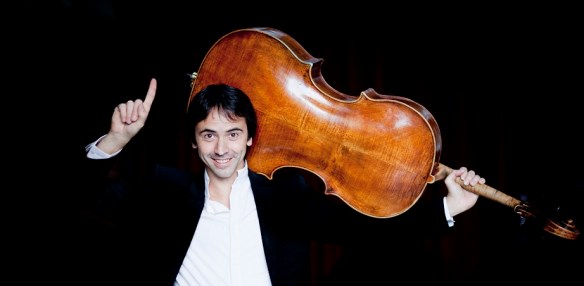
Jean Guihen Queyras (cello, above), Alexandre Tharaud (piano, below)

Wigmore Hall, Monday 28 October 2019 (lunchtime)

You can listen to this concert on the BBC Sounds app here (opens in a new window)

Review and guide by Ben Hogwood
Photo credits Marco Borggreve

Who could possibly be better suited for this concert among today’s musicians than cellist Jean Guihen Queyras and pianist Alexandre Tharaud? The long-established pairing constructed a hugely enjoyable programme of dance-based music for the combination, from two composers who were still writing for the viola da gamba to two writing for the modern cello but harking back to that older era.

The viola da gamba was on its way out when J.S. Bach and Marin Marais wrote their respective pieces for it. They did not know at the time, but it was about to lose its popularity to the cello, which – with one less string and eventually a spike for the player to hold it in – gradually took over.

Bach’s sonata, for viola da gamba and harpsichord, is equally rewarding when played by cello and piano as here, with great sensitivity and a lyrical line to the melodies from Queyras. The first movement Adagio (1:43 on the broadcast link) was beautifully weighted, as was the quicker but equally graceful Allegro (3:18). Both players found the deeper emotion of the Andante (7:06), Bach moving into the key of B minor for some aria-like soul searching. The final movement Allegro (11:03) was a delight, the benefit of an established musical partnership clear to see and with nicely judged ornamentation from Tharaud.

Marais wrote extensively for the lower end of the stringed instrument family, and his Pieces de viole contain music that is as challenging for the players as it is rewarding for the audience. This three-movement suite, arranged for the modern cello by Christian Döbereiner, contained a slower Prélude (16:53) and Sarabande grave (25:33) that Queyras and Tharaud played eloquently, the cellist finding wonderful clarity in his higher range. These shorter movements framed the main act, several variations on the popular tune La Folia titled Couplets sur Les Folies d’Espagne (19:11), which, while apparently played without repeats, is where we had the real fireworks. There was terrific playing from both and a heightened sense of drama ran throughout.
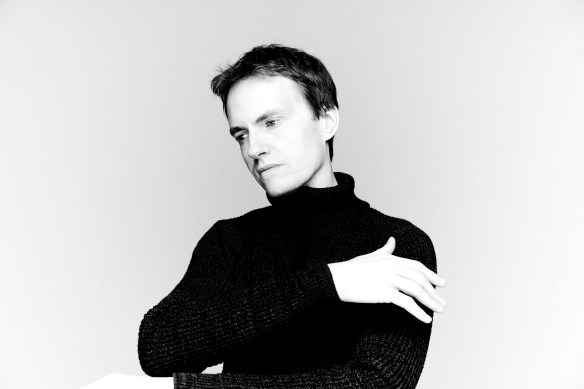
Poulenc originally wrote his Suite Française for orchestra in 1935 as part of a ballet score, but it proved equally effective in a piano arrangement made later that year. This version for cello and piano was made in 1953, for performance by the composer with French cellist Pierre Fournier. Based on the music of 16th century composer Claude Gervaise, it is a charming suite of seven dance movements looking back some four hundred years, merging the musical language of that time with Poulenc’s perky writing and crunchy harmonies. It was brilliantly realised here.

The seven dance pieces are as follows: a lively Bransle de Bourgogne (30:13), a consoling Pavane (31:40), then a cheeky Petite marche militaire (34:00). The suite continues with an eerie Complainte, the cello in its highest register (35:17), then a largely reflective Bransle de Champagne (36:26), graceful Sicilienne (38:10) and ceremonial Carillon (39:29)

Debussy’s Cello Sonata (43:07) is one of the cornerstones of the cello repertoire, a late masterpiece with clear instructions that the pianist should ‘not fight the cello, but accompany it’. At its centre is a remarkable, forward looking second movement with an improvisatory air and extended episodes for pizzicato (plucked) cello.

This was a terrific performance, Tharaud starting off with a forthright opening statement but responding with great care to the nuances of Queyras and his beautifully shaded tone. The pair caught Debussy’s moods – his bold statements but also the furtive corners of the piece, which sometimes feels like it is hiding in the undergrowth on a hot summer evening.

Both elements were clear in the first movement, and also in the second (47:15), a Sérénade where Debussy’s fragments were all joined together. Queyras had the perfect range of pizzicato colours, but also the clarity of tone right at the top of the register. Tharaud complemented him with the ideal lack of sustain on the stumbling piano figurations and the weight of his responses.

All the while this music was headed for the quickfire finale (50:33), which in its short bursts of melody had charm, worry and glorious colour in equal measure, never quite letting go completely until the final bars and Queyras’ authoritative statement.

As a generous encore the pair complemented the Debussy with Rodion Shchedrin’s entertaining In the style of Albéniz (55:28), not dissimilar to the second movement of the Sonata in its evocative tones but more outrageous in its melodies and harmonies. Queyras and Tharaud set it up brilliantly to cap a memorable recital.

Repertoire

This concert contained the following music (with timings on the BBC Sounds broadcast in brackets):

J.S. Bach Viola da gamba Sonata no.2 in D major BWV1028 (before 1741) (1:43)
Marais (1656-1728) Suite in D minor: Prelude (16:53), Couplets sur Les Folies d’Espagne (19:11), Sarabande (25:33)
Poulenc Suite française (1935, arr. 1953) (30:13)
Debussy Cello Sonata in D minor (1915) (43:07)
Encore – Shchedrin In the style of Albéniz (1973)

Further listening

You can listen to the music heard in this concert on Spotify below, including Queyras and Tharaud in the works by Poulenc and Debussy:

Poulenc also wrote a Cello Sonata, which forms part of an album with works for cello and piano with works by Debussy, delivered by the Queyras and Tharaud pairing here:

As this concert illustrated, French composers were particularly skilled at taking inspiration from the Baroque and Classical periods of classical music (from c1650 to 1800). The playlist below enjoys some of the best examples, headed by Ravel’s Le Tombeau de Couperin but also including works by Fauré, Debussy and Poulenc:

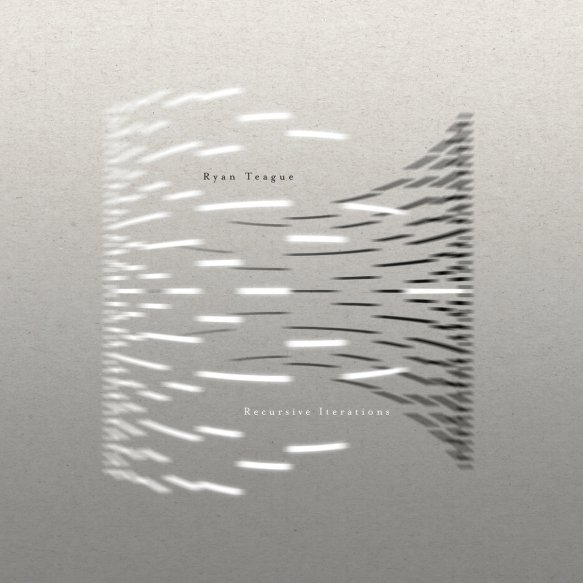
Switched On – Ryan Teague: Recursive Iterations (King Tree)

reviewed by Ben Hogwood

What’s the story?

Ryan Teague’s first album release in three years is an intriguing affair. In keeping with his ability to change tack with each new record, the music sets itself within an algorithmic framework. This has been of great interest to the composer for some time, for his approach to music is as much by way of sound design and architecture as it is melody and harmony. Recursive Iterations, then, takes seven different sets of ‘cells’ and makes a suite from them, bringing together disparate styles and textures.

What’s the music like?

Extremely distinctive, and hard to pin down stylistically. Teague’s different pools of reference – music for TV and film, modern classical, urban, even grime – all come together in fascinating cells that feel like a collision of more than one style at a time.

And yet there is an older style at work, that of the ‘round’ – music like Frère Jacques, where layers would be added to a ‘ground’ bass that stays constant all the way through.

Teague takes those cells, reorders and arranges them, keeps a constant rhythm going, and makes them sound alive and mysterious at the same time. Rich bass sounds can appear – like the start of Recursive Iteration II – in a style that recalls Burial, and yet at the top is a busy, more minimal block that generates energy. Including a Hawaiian guitar adds colour too, and in the middle of the texture there are occasional swoons from a string-like pattern that could be from an old film. A stop-start rhythm holds it all together, while glitches and bugs prevent the music from ever sounding too ordered or inevitable.

At times Teague works with open-ended harmony, so while the melodies are all compact, the music can end up facing outwards. This happens in Recursive Iteration III, which turns out to be semi-orchestral in its concept. While much of the music is instrumental, Recursive Iteration IV uses vocal snippets to good effect, while Recursive Iterations V has a wordless synthesized chorus as its electronics twist and curl at the edges.

In his interview for Arcana, Teague was extremely complimentary of the composer Webern’s ability to work with silence. He uses a similar tactic very well here, effectively placing pauses between musical statements to give the impression that the algorithms in Recursive Iterations were regenerating. Given the concentrated textures it is helpful for the listener to have these slight pauses, like essential punctuation in musical sentences. Recursive Iteration VI – arguably the best iteration – uses silence within a framework of glittering keyboards, rushes of weather-like sounds, a bigger string-based chord and a wavy guitar line. The consonant harmonies give an attractive outlook.

Does it all work?

Yes, in a curious way it does. Teague’s music is definitely worth giving time and attention to, as Recursive Iterations is a lot more dense in content than previous albums. He works the source material really cleverly, despite its pre-programmed elements, and creates some interesting and very curious clashes of sound and style within his carefully aligned structures.

Is it recommended?

Yes. By striking out for something new rather than towing the neo-classical line, Ryan Teague is pushing his music forward in a very interesting way. Recursive Iterations sounds different to anything you will hear this year, part human and part algorithm, yet packing lots of detail and concentrated feeling into its core. A fascinating release which in a few years will almost certainly reveal itself as much more than the sum of its parts we think it is now!

Stream

Buy

Centenary post – Elgar: Cello Concerto

Today is the centenary of one of Sir Edward Elgar‘s best-loved works, first performed on this day in 1919. It was not always that way for the Cello Concerto in E minor, however, as an under-rehearsed premiere may well have contributed to a gap in London performances of more than a year.

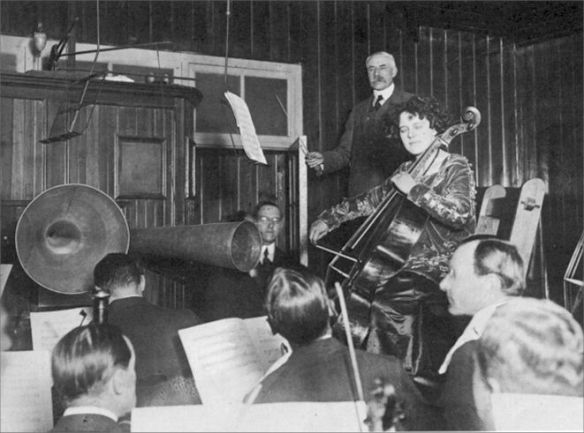
The first performance took place with soloist Felix Salmond, Albert Coates conducting the London Symphony Orchestra. The first cellist to really further the concerto’s cause was Beatrice Harrison, seen above with Elgar in an early recording from 1920. Her official recording with the composer from 1928 can be heard on the playlist below.

Again the work fell into disregard, possibly on account of its darker autumnal hues. The melodies came to Elgar in the aftermath of a painful operation on his tonsils, and while he could hear the sound of fighting in the First World War across the English channel.

It was not really until 1965 that the work reached regular public consumption, thanks to a searing recording by the young Jacqueline du Pre, with the London Symphony Orchestra this time under Sir John Barbirolli’s direction (also on the playlist). This recording preserved du Pré’s reputation as a cellist of great passion and technique, with the considerable help of a seasoned Elgarian in Barbirolli behind the orchestral ‘wheel’. It also apparently convinced a certain Mstislav Rostropovich not to become better acquainted with the piece.

More recently the Cello Concerto has become widespread, most recently with a first night performance at the Proms from Sol Gabetta and an appearance at this year’s season from Sheku Kanneh-Mason.

Gabetta’s recorded version is also on the playlist, with Mario Venzago conducting the Royal Danish National Orchestra. It appears along with two very fine accounts from Julian Lloyd Webber – with the Royal Philharmonic Orchestra and Yehudi Menuhin – and Steven Isserlis, his first recording of the work made with the London Symphony Orchestra and Sir Richard Hickox:

More recently Isserlis has revisited the work with Paavo Jarvi conducting the Philharmonia, a fine account about which he talked to Arcana here.

The Cello Concerto was Elgar’s last major work, completing an intriguing late set of compositions including the Violin Sonata and String Quartet, which share the concerto’s key of E minor, and the wonderful Piano Quintet in A minor. Those four works can be heard on the playlist below:

For a visual treat, though, you can enjoy Jacqueline du Pré’s playing here – not with Sir John Barbirolli but with her husband Daniel Barenboim, conducting the London Philharmonic Orchestra:

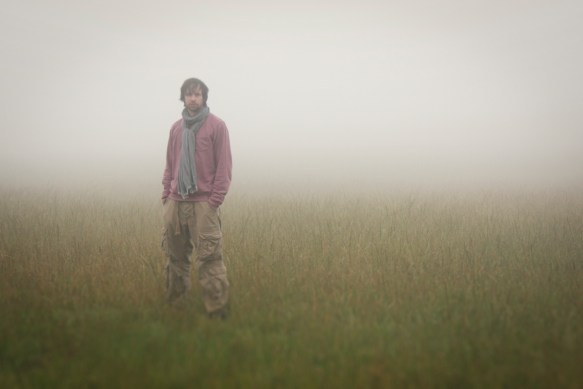
Playlist – Ryan Teague

It gives us great pleasure to welcome Ryan Teague to Arcana’s playlist section.

In an hour’s listening you can enjoy a playlist of Japanese Negative Space. This is a rich variety of largely ambient music that taps into the recent rush of releases from the country over the last few months, in which the Kankyo Ogaku collection of Japanese Ambient, Environmental & New Age Music 1980-1990 has been particularly successful.

Ryan’s selection also includes work by Japanese masters Ryuichi Sakamoto and the much-missed Susumu Yokota. along with an excerpt from Meitei’s recently released Komachi album.

Our thanks to Ryan for a whole host of new names to enjoy! Listen on Spotify below…