Unknown's avatar

About Arcana

My name is Ben Hogwood, editor of the Arcana music site (arcana.fm)

Switched on – M83: DSVII (2019)

reviewed by Ben Hogwood

What’s the story?

Twelve years on from Digital Shades Vol.1, M83 – aka Anthony Gonzalez – revisits his instrumental project. This time, ironically, he chose to use solely analogue equipment in the creation of the sequel, which goes beyond his love of ambient music and shoegaze.

What’s the music like?

While the first Digital Shades volume took its time and created vistas from scratch, DSVII is a much busier affair, reflecting the video games soundtracks of the 1980s that inspired it. Gonzalez freely admits to his wish to recreate the analogue sound of that time, and in doing so emulate or rival the electronic pioneers making music then.

The drone with which Hell Riders begins is a throwback to the first release, but soon enough an attractive set of guitar loops blossoms into what feels like a full-blown set of end credits for a TV series melodic layers piling up on each other.

This is the true sound of DSVII, which leans in towards progressive rock and those synthesizer works from the likes of John Carpenter and Jean Michel Jarre. Gonzalez takes melodic cells and moves them around like the images on the games. It is entertaining and eventful, but sometimes too busy to class as relaxing. It is ultimately background music in this setting, and tracks like Meet The Friends, while attractive, feel like they are playing second fiddle to the images in Gonzalez’s mind. Likewise A Taste Of The Dusk, with more closing credits music, and the sweet flute that fronts Lunar Son. Oh Yes You’re There, Everyday is a good example of the meandering tunes and harmonies we have here, relaxing yet curiously restless

There are some nice diversions though. Goodbye Captain Lee has a sweet air of melancholia, and Colonies is atmospheric, while Mirage effortlessly paints a hazy vista. The piano-led Jeux d’enfants invites comparison with Ravel and Satie, partly because of its name, and is attractive if not as substantial as their writing.

Arguably the best is saved until last, and Temple Of Sorrow, a substantial track that builds through a rush of drums and wordless vocals, cutting out to a soft, bell-like piano. Here you feel is the real heart of how Gonzalez naturally writes music.

Does it all work?

Not all of it. Those who know M83’s music for its power and skyscraper-like builds (Midnight City and We Own The Sky come to mind) might be surprised at the relatively frivolous side shown here – which could of course be seen as an asset too, revealing an artist of several different musical personalities and attributes. Whether you respond to this positively will depend on whether you can take on an hour of instrumental music rooted heavily in the 1980s. If you’re in the wrong mood it might feel like music to eat a meal to rather than immerse yourself in.

Is it recommended?

Yes, ultimately. M83 fans need not hesitate – nor those lovers of 1980s’ instrumental electronica. Those wanting the power of previous albums might want to try before they buy.

Stream

Wigmore Mondays – Marnis Petersen & Camillo Radicke: Anderswelt (The Otherworld)

Marnis Petersen (soprano, above), Camillo Radicke (piano, below)

Wigmore Hall, Monday 23 September 2019 (lunchtime)

You can listen to this concert on the BBC Sounds app here

Review and guide by Ben Hogwood

A song recital that was truly out of this world.

German coloratura soprano Marnis Petersen and pianist Camillo Radicke brought the concept of their most recent recording, Dimensionen: Anderswelt, to the Wigmore Hall for an hour of 20 songs by no fewer than 18 composers.

The description ‘coloratura soprano’ depicts a singer that specialises in an operatic style, often high in the register – and that fits the music in this extraordinary collection. Most of the songs – and a couple of the composers – will surely have been new even to the most devoted Wigmore Hall attendee, and as Petersen and Radicke threaded the links cleverly through sections entitled The Otherworld, Elves, Mermaids and Mermen and Northern Lights, they plotted a course from deepest Germany to northern Iceland.

To begin Petersen read a short passage before the first group of five songs. Hans Pfitzner’s Lockung (Temptation) (2:25), with its twinkling piano and entreating mermaids, beckoned us in to the first of the Elves sections. Here we found Reger depicting a ‘pert and wanton’ elf, to a suitably heady vocal from Petersen, then the first of three settings of Eichendorff’s Elfe poem from Bruno Walter (7:28).

Camillo Radicke was superb here, with the insistent trills high up in the piano’s register, over which Petersen floated beautifully. Julius Weismann’s setting of the same text (9:43) again opted for the high register, this time in an attractive triple time dance. Though written in the same year as the Walter, it felt considerably older – and transitioned nicely to Brahms, setting Heine’s seductive water nymph in Sommerabend (Summer evening) (11:21), which found Petersen’s vocal control in very fine shape.
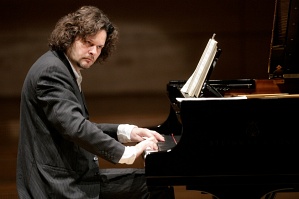
The Mermaids and Mermen section, again five songs in length, had an intriguing juxtaposition of composers. Hans Sommer’s Lore im Nachen (Lore in the skiff) found Radicke catching the ‘shimmer in the evening gold’ on a tranquil lake, as Petersen again soared high in the register. Grieg’s Med en Vandlilje (With a water lily) (18:09) introduced a wary atmosphere with the lurking water sprite (18:09) before Carl Loewe, heard to such great effect in Benjamin Appl and Kristian Bezuidenhout’s recital the previous week, was at it again with the boldly descriptive Der Nöck (The nix) (20:46). The nix (Petersen) and its harp (Radicke) were both strikingly portrayed, and Petersen’s vocal was superb. Sinding’s Ich fürcht’ nit Gespenster (I fear no ghosts) (29:18) was also a striking song, appropriately ghoulish in its coda from Radicke after Petersen had confidently confronted her spectres. Finally we heard a pupil of Hindemith, Harald Genzmer, and the agitated Stimmen im Strom (Voices in the river) (31:32)

To another quintet of songs on Elves, beginning with the cheeky Elfenlied, Wolf’s subject humourously caught by Petersen, who sang into the piano as her subject staggered about having banged his head. Friedrich Gulda’s setting of Elfe – the third of the concert – was a collector’s item (37:34), the 16-year old intriguingly matching the other two in the high treble area for an impish setting. Carl Loewe’s second appearance was with the operatic Die Sylphide (39:20), Petersen’s voice again reaching sparkling heights. Franz Schreker’s Spuk (Spook) (41:42) felt like some of the most modern music here, flitting about with uncertainty and tension, while in a rare outing for the music of conductor-composer Hermann Zumpe, Liederseelen (Song-Souls) (43:58) was affectionately sung.

Petersen and Radicke saved the most adventurous part of their concert until last, with four songs from Scandinavia and Iceland. Ariels Sang (48:06) was a rapturous contribution from Nielsen, boldly delivered, before Sinding reappeared with Majnat (May night) (50:26), a more thoughtful affair. Swedish composer Stenhammar’s Fylgia (53:25) was fulsome and florid in its praise of the spirit, but Sigvaldi KaldalónsHamraborgin (Castle crags) (55:46) painted its subject with uncanny atmosphere, depicting the rarefied atmosphere of the Northern Lights. Petersen capped her vocal performance here with a stunning top ‘B’ at the end.

It was a great way to finish – though after Radio 3 had departed there was another gem in store courtesy of the Finnish composer Yrjö Kilpinen, and an encore of his song Berggeist.

This was a recital of great imagination and technical brilliance. As an introduction to the classical song it would present some challenges to the casual listener, but with the enchantment offered by Petersen and Radicke’s partnership it would prove difficult to resist. Those familiar with the world – or otherworld in this case – should dive right in, as there will definitely be something new!

Repertoire

Marnis Petersen and Camillo Radicke performed the following songs (with timings on the BBC Sounds broadcast in brackets):

The Otherworld

Pfitzner Lockung Op.7/4 (1888-9) (2:25)

Elves I

Reger Maiennacht Op.76/15 (1903-4) (5:23)
Walter Elfe (1910) (7:28)
Weismann Elfe Op.43/4 (1909-10) (9:43)
Brahms Sommerabend Op.85/1 (1878) (11:21)

Mermaids and Mermen

Sommer Lore im Nachen Op.13/1 (publ. 1891) (15:25)
Grieg Med en Vandlilje Op.25/4 (1876) (18:09)
Loewe Der Nöck Op.129/2 (1857) (20:46)
Sinding Ich fürcht’ nit Gespenster (1885) (25:42)
Genzmer Stimmen im Strom (1941) (31:32)

Elves II

Wolf Elfenlied (1888) (35:24)
Gulda Elfe (1946) (37:34)
Loewe Die Sylphide Op.9 (1837) (39:20)
Schreker Spuk Op.7/4 (1898-1900) (41:42)
Zumpe Liederseelen (publ. 1895) (43:58)

Northern Lights

Nielsen Ariels Sang (1916) (48:06)
Sinding Majnat Op.22/3 (1893) (50:26)
Stenhammar Fylgia Op.16/4 (1893-7) (53:25)
Kaldalóns Hamraborgin (c. 1910) (55:46)

Encore – Kilpinen Berggeist Op.99/3

Further listening

All the songs in this concert can be heard from Petersen and Radicke’s recording on the Spotify playlist below:

One of many possible further steps is Wings In The Night, a collection of Swedish songs from mezzo-soprano Anne Sofie von Otter and pianist Bengt Forsberg:

There are so many songs by Carl Loewe that it is difficult to know where you could start. Given his artistry, tenor Christoph Prégardien would seem to be a good bet, this album of songs recorded with pianist Cord Graben:

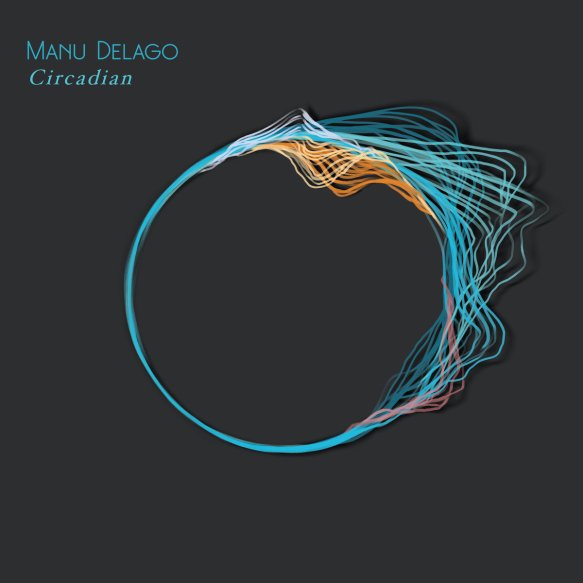
Switched On – Manu Delago: Circadian

reviewed by Ben Hogwood

What’s the story?

While Max Richter made one of the standout contemporary pieces of the last few years in his eight-hour epic Sleep of 2015, encouraging us to fall asleep while it was running, this new album is a response to a lack of quality shuteye. The author, Manu Delago, found he was struggling to get lasting sleep while touring in different climates and time zones, but also looked for inspiration in the brain’s creative thoughts experienced during REM.

Circadian explores this phenomenon, along with light and deep sleep, capped with an abrupt awakening. Delago wrote it while on the road with label-mate Björk, The Cinematic Orchestra, Olafur Arnalds and Anoushka Shankar – and the approach is very different to that of Richter, driven as it is by soft percussion.

What’s the music like?

The list of Delago’s fellow artists is instructive, as his own music draws from his creative experiences with them, but ensures an individual path is also forged.

This is one of the quietest albums I have heard in some time, partly because the principle instrument, the handpan, is so soothing. The title track establishes its bright yet mottled colours, pleasing to the ear as a muffled steelpan might be. Yet as the striking and vividly descriptive track The Silent Flight Of The Owl shows, it combines really well with wind instruments and particularly clarinet, whose soft tones create an eerie impression in the half light, together with what sounds like a didgeridoo in the middle foreground.

The colours of Uranus, again with clarinet, are a sleepy blue, while The Moment I’m Still Awake employs the fuzzy drone of the harmonium, as though there were a fan in the room.

All these recordings are heading for the centrepiece, the 21-minute track Delta Sleep (Live at 4:33am). This depiction of deep sleep was recorded in the middle of the night through to the early hours, the ensemble combining in a hypnotic whole, their sounds fusing into each other with clicks, bright shafts of light and hints of fitful dreaming.

From this emerges Draem and then Zeitgeber, where our subject sits bolt upright, the music building on a syncopated clarinet which has now acquired a rasp to its tone. Adding broken beats, Delago cuts loose for the first time on a track fizzing with the energy of a new day, even though you suspect a slump might be just around the corner!

Does it all work?

From that lengthy description you hopefully get an idea of how effective and descriptive this album is. It does help to know the story behind the music in advance before listening, and to have the right environment for your Circadian experience. Delago’s colours are lovely to the ear and the handpan has a soothing sound, the instrumental craft and blending with ensemble members clear for all to hear.

Is it recommended?

Yes. Circadian could itself work as a sleep aid, providing you bail out before the last track. Delago’s picture painting is exquisite at times, and the relative lack of movement early on is not a problem once the subject has been established. It is a unique approach to an aspect of life that troubles and fascinates us all.

Stream

Buy

On record – Kronos Quartet & Terry Riley: Sun Rings (Nonesuch)

Written by Ben Hogwood

What’s the story?

The Kronos Quartet and Terry Riley have a rewarding history of collaboration covering more than 35 years. Sun Rings is surely one of the most emotive pieces in that history, and is certainly one of the most performed since its premiere in 2002. Here it receives a first full recording.

The work dates back to a commission from NASA, who were looking to mark the 25th anniversary of the launch of the Voyager 1 space probe. They specifically wanted to know if the Kronos could use the ‘space sounds’ collected from the Voyager crafts by physics professor Don Gurnett, who developed plasma wave instruments to receive them. On hearing the results Kronos leader David Harrington immediately contacted Terry Riley to get him on board.

While writing in New York, Riley was interrupted by the World Trade Center attacks of 11 September 2001. They inspired him to turn the focus of his work to peace.
This is the first recording of Sun Rings in its entirety, a chance for those in more than 50 countries who have already experienced it live to hear it in recorded form. Weighing in at nearly 80 minutes, it is a big work, expanding the quartet by adding San Francisco-based vocal ensemble Volti to two of the longest sections, Earth Whistlers and Prayer Central.

What’s the music like?

Fascinating, and timeless in a way that suggests the deep space into which the Voyagers continue to travel. There is a restless edge too, as it seeks the lasting peace Riley had in mind.

After the space sounds set the work in perspective, Hero Danger is a rewarding combination of the otherworldly electronics and the string quartet, with thoughtful lines suggesting a slightly worrisome contemplation. In response Bebopterismo carries urgent anxiety in its angular melody, the music put on edge.

Riley’s musical language is interesting, never purely ‘minimalist’ but repeating his more distinctive melodic ideas. There are rather beautiful dovetails between violin and viola halfway through Planet Elf Sindoori, but just when the ear thinks the sonorities of Sun Rings have been fully established, Earth Whistlers comes as quite a surprise.

It is here the choir are introduced, and this substantial movement makes much of their pure tones. It does perhaps distract from the subject at hand, replicating in a way the interruption of the September 11 attacks on Riley’s thoughts. When we train our gaze fully on Voyager again with The Electron Cyclotron Frequency Parlour there is an intriguing displacement between the close up quartet sound and atmospherics further away, but the focus has shifted.

Prayer Central, the most substantial movement, is soft and contemplative but becomes more animated and off the beat. Venus Upstream is full of anxiety, as though time is limited, its tension spiked by the alarm in the background. The spoken quote from Alice Walker to begin the last section is telling, asking, “Do you really know where you are at this point in time and space and in reality and existence?” It is just the right side of preaching, helped by some lovely cello playing from Sunny Yang.

Does it all work?

Most of the time, though with the caution that for maximum effect the piece is best heard in full and in a quieter place. Then the field recordings really come through to the front. Sun Rings is a substantial piece of work, though there are some natural dips in inspiration once the ideas of each section have been exposed. The use of the choir may split opinion too.

Is it recommended?

Yes. For those following the Kronos Quartet and Terry Riley it is an essential purchase, while providing further evidence of the positive effect astronomy can have as a creative stimulus, not to mention the endless drive for world peace. Between them Riley and the quartet have looked outside of the box to create something unique and, on this evidence, a major work that will last in spite of a few reservations.

Listen

Buy

You can get Sun Rings from the Nonesuch website

In concert – Southbank Sinfonia / Rebecca Miller: Discovering Dorothy Howell

Southbank Sinfonia / Rebecca Miller

St John’s, Waterloo, London
Thursday 19 September 2019

Dorothy Howell
The Rock Overture (1928)
Divertissements (1950)
Humoresque (1919)
Koong Shee Ballet (1921)

reviewed by Ben Hogwood
photo credit (Rebecca Miller) Richard Haughton

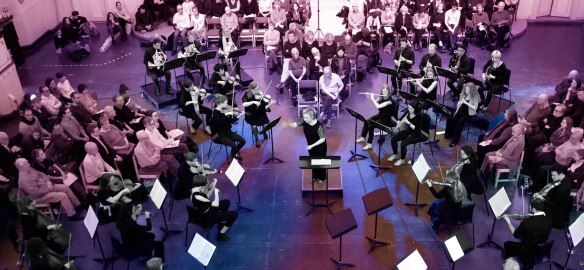
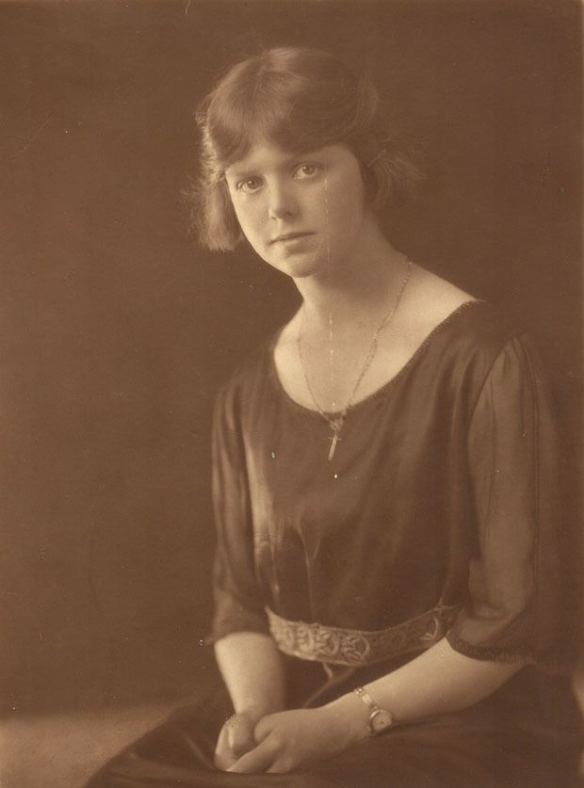
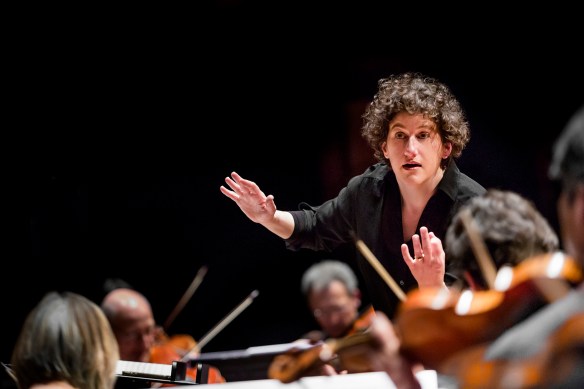
It remains an acute embarrassment to classical music that even today it is still so male-orientated when it comes to composers and conductors in particular. Happily measures are in place to address the imbalance, which means that not before time Dorothy Howell (1898-1982) gets some of the attention her music should have been getting 100 years ago. Great credit for this should go to the Southbank Sinfonia and their associate conductor Rebecca Miller, a devotee of the composer who had led the orchestra in a week-long exploration of her music, working with members of Howell’s family.

The result was an hour of music making that everyone enjoyed. It has been a while since I have watched an orchestra with so many smiles, yet still on their game. There were many smiles as Miller teased the syncopated dance rhythms out of the music, revelling in the composer’s nickname of ‘the English Strauss’.

Such a nickname is a little dangerous, as it immediately brings parallels to the waltz, and a tendency toward lighter entertainment rather than anything substantial. With that in mind it should be pointed out that Howell’s output of 150+ works includes a Piano Concerto (recorded by Miller and her husband, pianist Danny Driver, for Hyperion) and some substantial chamber music.

Dorothy Howell (above)

This ‘rush hour’ concert began with an overture / tone poem. The Rock, contrasting with Rachmaninov’s moody symphonic work of the same name, still felt like a place for nature to let itself go. Bright woodwind and an expansive orchestral picture transported us out onto the windswept coast, where attractive flute melodies and tonal harmonies combined to give a breezy outlook. There were a few pitfalls below the surface, Howell occasionally hinting at something darker in the lower strings, but this was a persuasive and energetic account.

Next we heard the Three Divertissements, a short but appealing work with its roots in the dance. Published as Howell’s last orchestral work, its three movements are each in triple time, furthering the Strauss connections – but in the first one working a nice line in syncopation to make the beat elusive for even the keenest of dancers. Rebecca Miller (below) enjoyed these, dancing on the podium herself, and the players clearly did too, with the heat haze created by the strings in the slow second dance particularly memorable. Clarinet, flute, oboe and cor anglais once again excelled, with a special mention for triangle and tambourine, putting the finishing touches to a performance with a smile on its face and a spring in its step.

The short Humoresque was cut from the same cloth, but the Koong Chee ballet felt much more substantial. Based on a Chinese crockery pattern, the work derived from a plot in a lush garden, with a lake populated by pelicans and flamingos, and with the daughter of the owner promised in marriage falling instead for the gardener. Lovestruck, she was swept away – or not, as the case may be, for Howell left an elusive ending.

The colours of this work would have resonated with those who enjoy the Eastern-leaning orchestral works of Holst or John Foulds, but again Howell’s edge could be felt with the light rhythmic touch she was capable of adding. In Miller she had the most passionate advocate, the conductor admitting in her introduction that it is an ambition to stage the work with dancers one day.

That would be an enjoyable experience, for her introduction was ideal and gave us helpful pointers for the point in the story where the woman is imprisoned (Rebecca Watt’s cor anglais solo was heartfelt here) or when the woman’s father shoots at the gardener, his two arrows hitting their target where the percussion were concerned.

My interpretation of the ending would be that it was bittersweet, the father regretting his decision to shoot the arrows but exonerated as the gardener did not die. At least, that’s what the music told me – for once again it was a colourful and committed account that fired the imagination.

The Southbank Sinfonia should be applauded for their dedication to Howell’s cause, their dedication and enthusiasm creating a wholly enjoyable concert. The welcome to audience members should also be praised, creating an environment where concert-goers new and old are equally welcome. More power to their elbows!

Danny Driver and Rebecca Miller recently released their recording of Dorothy Howell’s Piano Concerto on Hyperion, with more details below: