Unknown's avatar

About Arcana

My name is Ben Hogwood, editor of the Arcana music site (arcana.fm)

Wigmore Mondays – Mariam Batsashvili plays Bach, Haydn & Liszt

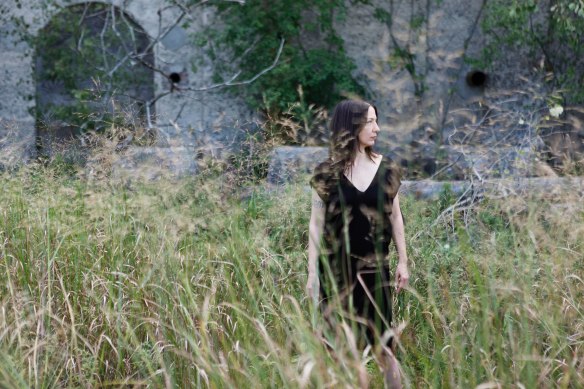
Mariam Batsashvili (piano, above)

J.S. Bach Chromatic Fantasy and Fugue BWV 903 (c1720) (1:45 – 13:19 on the broadcast link below)

Haydn Piano Sonata in D major HXVI:37 (1780) (13:59-24:20)

Liszt Hungarian Rhapsody no.12 in C sharp minor S244/12 (25:39-35:15)

Liszt, edited Busoni & Leslie Howard: Fantasy on themes from Mozart’s Le nozze di Figaro and Don Giovanni S697 (1842) (36:40-55:20)

Wigmore Hall, London
Monday 25 February 2019

To hear the BBC broadcast through BBC Sounds, please follow this link

Commentary and Review by Ben Hogwood

Mariam Batsashvili has made a name for herself as a specialist in the music of one of the most masculine of piano composers. Franz Liszt is regarded very much as a showman, his music often thought to be for virtuosos only who will play it with as much blood and thunder.

However as the Georgian pianist Batsashvili showed here that does not always have to be the case. Her Liszt has its fair share of drama and power, for sure – no let-up there – but hers is a very musical approach, getting beneath the surface to show Liszt’s other compositional talents.

Before Liszt, the Chromatic Fantasy and Fugue from J.S. Bach – one of his pieces that does if anything look forward towards the free form Liszt and his contemporaries would use. Played on a piano it has a strong, instinctive flow – something Batsashvili gets into immediately as the Fantasy plays. With ideal use of the sustain pedal and enough sense of freedom, she delivers an un-showy but very strong musical performance, with a fugue notable for its clarity and expression from 8:14, gathering intensity as it progresses.

Having reached the sunny key of D major by the end of the Bach, Batsashvili stayed out on stage and in the same key while changing composer. Joseph Haydn wrote a large number of piano sonatas, the early examples of which were for friends. This good natured Piano Sonata in D major HXVI:37 (from 13:59) was for the sisters Franziska and Maria Katherina von Auenbrugger, who judging by this were positive souls with a sense of humour and strong technique.

Haydn’s own wit is there in the main theme from the start, and the busy figuration suggests the sisters had pretty nimble fingers too. The slow movement (marked Largo, from 18:22) takes a pensive turn in the minor key, with spicy harmonies suggesting some discomfort. That is removed by the finale (marked Presto ma non troppo, from 21:15), which takes us near to the spirited mood of the first movement if not fully shaking off the doubts recently aired.

Liszt wrote a total of 19 Hungarian Rhapsodies, celebrating his home country in music of great passion and virtuosity, and often incorporating folk tunes into the mix. The Hungarian Rhapsody no.12 in C#minor S244/12 (25:39) starts with suitable drama and contrasts jagged left hand playing with more delicate tunes in the treble, particularly the twinkling, skipping dance at 31:14 when the harmonies turn from minor key to major. Batsashvili finds an exquisite delicacy in this music, sweet but not overly bearing and beautifully played.

Liszt also wrote a number of some incredible fantasies based on existing opera themes. The tour de force heard here, which he premiered in Berlin in 1843, takes themes from Mozart’s Le nozze di Figaro and Don Giovanni as the starting point, working them into a big-boned piece. This was reworked by Busoni, but left incomplete. Leslie Howard, who has recorded the entire piano works of Liszt for Hyperion, added the missing pieces to the jigsaw using the thematic material Liszt was dealing with, and staying true to his spirit and style.

Coincidentally or not, all the themes are from arias dealing with the ‘dangers of philandering’, as Radio 3 announcer Sara Mohr-Pietsch puts it – suggesting there is far more to Liszt’s arrangements than might initially meet the eye.

Batsashvali skips through the opening breezily, but the warning notes in the left hand are there to check progress – before we move into a delightfully played slower selection. Her pacing of the drama feels just right, especially the lead-up to 49:16 and another new theme. The principal material for the piece comes from Cherubino’s aria Voi che sapete and Figaro’s Non più andrai (both from Le nozze di Figaro) and the minuet scene from Don Giovanni. These themes are interwoven and developed to make a substantial whole, with the real big guns coming out for the coda, which Batsashvili plays with considerable panache up to 55:20.

As an encore she gave us two more Liszt arrangements on a much smaller scale. These were two of Chopin’s Polish Songs – The Ring and Bacchanal – and are included below.

Further Listening

Mariam Batsashvili has recorded Liszt’s operatic fantasy, but not the other works in this program – so the playlist below comprises recommended versions of the Bach, Haydn and Liszt Hungarian Rhapsody:

Liszt made a number of transcriptions of the music of Bach – and in particular his Preludes and Fugues. Artur Pizarro collected a good deal of these together for an album for Collins Classics:

Haydn’s piano sonatas do not always get the credit they deserve – so to hear more, listen to this wonderful collection from Alfred Brendel:

https://open.spotify.com/user/zipaboris/playlist/4kRp3JNg1wbvCYnWhbNv6h?si=AWjq35SeTgOBSDinrb7pig
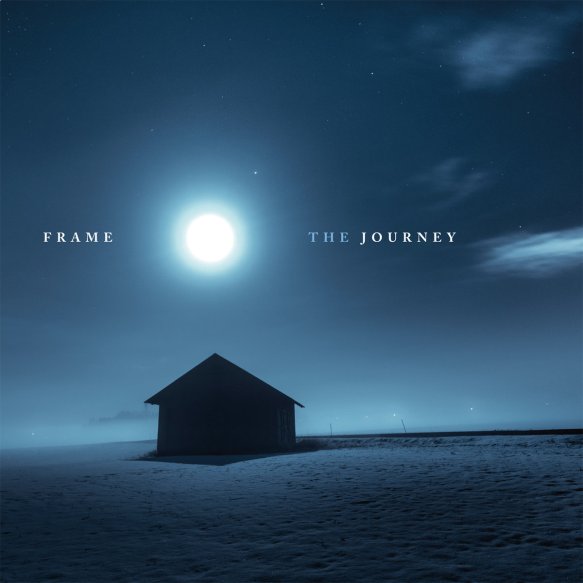
On record: FRAME – The Journey (Glacial Movements)

Reviewed by Ben Hogwood

What’s the story?

The Journey is a set of ten soundscapes focusing on silence. Silence is of course as integral a part of music as the notes themselves, and FRAME – a project started in the 1990s by Eugenio Vatta and Andrea Benedetti – illustrate that beautifully here.

All of the music on this hour-long album is written by Vatta, and is in effect a compilation with Benedetti of FRAME live shows, where their music has followed the evolution of a movie. Their principle is that the album should focus on silence in space, and it does so in ten parts, each named after a planet of the solar system.

What’s the music like?

The idea of music focusing on silence might seem contradictory, but what it does here is focus the mind on the smallest of changes to the overall sound, if you’re listening closely – or, if you’re using the music more in the background, allowing it to evolve without any expectations or pressure. So it is that textures change slowly, like a slow moving body, with long held notes and textures that project an enormous sense of space.

Like Holst, Frame move through the planets in order of distance from the sun – unlike Holst they progress at a sedentary rate, with no surprises but cool, starlit textures to dive into on the way. Also unlike Holst, there is a section for ‘Earth’, so the listener can effectively take the role of a spacecraft flying past. It is mostly calming but there are moments of disquiet near the centre when discords and an insistent lower range tone make the ears retreat on instinct. ‘Mars’ is also a polar opposite, less the god of war than the owner of a very thick sonic blanket. It’s lovely.

‘Jupiter’ has a lot more of the action, as though our craft is passing close enough to get caught up in some of the vast winds that dominate the planet’s weather. ‘Saturn’ is genuinely unsettling, a short piece whose sudden movements of pitch are difficult to comprehend after the serene journey so far. ‘Neptune’ is majestic, a really strong linear wall of harmony. After some more turbulence in Pluto and Charon the arrival is consonant harmony, and represents a natural point of rest.

Does it all work?

Yes, providing ‘The Journey’ is experienced in the right environment. As an aid for busy situations such as commuting it works really well, or as a meditative hour for the brain to zone out. The cool textures are easy on the ear, but while ambience is the key there is a deeply intense heart to this music.

All these components are typical of a Glacial Movements release, with a whole that operates in an ambient space but can be put to meaningful foreground use also.

Is it recommended?

Yes. FRAME’s music takes the listener far from their own shores, immersing them in a wide open world of slow moving beauty.

Further listening

You can listen to The Journey on Spotify below:

Meanwhile the album is available from the Glacial Movements Bandcamp page, where the label’s consistently rewarding catalogue can also be explored.

Wigmore Mondays – Quatuor Arod & Timothy Ridout play Mozart

Quatuor Arod (above) [Jordan Victoria, Alexandre Vu (violins), Tanguy Parisot (viola), Samy Rachid (cello)], Timothy Ridout (viola)

Mozart
Divertimento in D major K136 (1772) (1:46-14:37 on the broadcast link below)
String Quintet in G minor K516 (1787) (17:02-50:49)

Wigmore Hall, London
Monday 25 February 2019

To hear the BBC broadcast through BBC Sounds, please follow this link

Commentary and Review by Ben Hogwood

This BBC Radio 3 Lunchtime Concert showed us Mozart young and ‘old’ – that is, a work each from his teenage years and from his fourth decade. It was given by the Quatuor Arod, a French-based quartet on the BBC New Generation Artists scheme, and their ranks were boosted by viola player Timothy Ridout, himself on the YCAT scheme.

The Arod Quartet’s performance of the Divertimento in D major K136 (from 1:46 on the broadcast) shows what a sunny piece of music this is – although it could be argued they take the first movement a bit too fast, perhaps displaying a bit too much nervous energy. Either way they play it very well and with affection, the simple theme carrying a long way.

The second movement, marked Andante (5:57), feels just right, the four parts integrating in a way that brings home the simple pleasures to be taken from playing this music together. The third movement (12:16) scurries out of the blocks with a hint of mischief, the interplay between the four taking on a more competitive edge but with the first violin of Jordan Victoria ultimately triumphant, and technically excellent.

The String Quintet in G minor K516 operates at the other end of the emotional scale, being the dark to the Divertimento’s light for much of its half hour duration. It is a magnificent piece, profound from the very first theme, where first violinist Victoria mastered the longer phrasing and the increased stretch of the melody when the second main theme of the first movement came around. The sound is very different with two violas, and the greater prominence for Mozart’s own instrument seems to have inspired him to write with especially great feeling. This is the second of four mature string quintets (there are two younger works of smaller form), and these are pieces that are substantial in their dimensions, their feeling and also their melodic invention.

While the piece does start in questioning mood (from 17:02), the five players here portrayed its nervousness while bringing shafts of light into the writing. Vibrato was sparingly used if at all, but was a stronger expressive tool as a result. The first movement’s two main themes are strikingly played, its structure clearly mastered, and the overall sound with Ridout’s viola added is very attractive.

The Minuet is normally a light hearted affair in Mozart chamber music, but here was anything but (from 27:31). Any attempts to come up with a lasting tune are broken by the sliced chords of the quintet playing together, so that what aspires to be a charming dance never has a chance to get fully into its rhythm. Some respite comes from the Trio section, where the composer will usually contrast what has gone in the Minuet. Here, from 29:22, Mozart slips from the minor key to the major for the first time, and the tension eases notably – especially in this performance where sunnier thoughts make themselves known for the first time. This, however, is short lived, for the Minuet returns in even sterner form (31:22)

The slow movement Adagio (32:43) is even more alarming than the Minuet. This is an unexpected move, for the music is in E flat major, which normally finds composers writing stronger music, and it requires the players to use their mutes the whole way through. With no vibrato from the Arod the textures are stark and the sounds lean, especially when the quintet breaks into smaller sections as it frequently does. In the middle the clouds darken further as Mozart moves into the distant keys of B flat minor (34:28) and E flat minor (38:07), where the extra viola (Timothy Ridout) makes a personal outcry of pain. There is hope however, the first violin taking us to sunnier climbs before we return to what feels like a stronger repeat of the music from the start of the movement.

The final movement (41:15) keeps the prevailing mood, slow and solemn from the outset – but then moves towards the major key, and finally shifts up a gear at 44:00 with music of much greater optimism. Let off the leash, Jordan Victoria enjoys the effervescent music he now has, and the tunes flow beautifully, the stern music of the first three movements now receding into the memory.

Further Listening

Mozart’s late chamber works contain some of the most rewarding music in all of his output. The four mature String Quintets stand at the peak of his achievements, with the work performed at this concert complemented by three other masterpieces. In their key make-up they match Mozart’s last four symphonies, and these versions by the Grumiaux Trio and guests (on CDs 2 and 3) make for a wholly satisfying listening experience:

The Quatuor Arod are relative newcomers to the recording scene – but their first disc of string quartets by Mendelssohn is a nice departure point from the Mozart played here:

Finally Mozart’s 3 Divertimenti for strings – best heard in their quartet form – give some of the most carefree classical listening you could wish to enjoy. This collection from the Hagen Quartett brings them together with the perennial favourite, Eine Kleine Nachtmusik:

Playlist – Julia Kent: Cello Mix

It gives us great pleasure to welcome cellist and composer Julia Kent for the provision of a cello-themed playlist for Arcana:

In just over an hour of music she demonstrates a wonderful scope of modern ways of writing for the instrument. These range from the Cello Sonata of David Baker, which appeared on Sony Classical’s Black Composer series in the 1970s (for review on Arcana shortly), to music from Lori Goldston, Peter Gregson, Jo Quail and Resina.

In the course of an hour the cello moves between music of grace (Helen Money, Simon McCorry) and outright menace (Okkyung Lee, Philip Sheppard), not stopping at the same place or mood twice – and on occasion bringing other instruments on board. As a lapsed cellist myself I can declare myself astonished at the breadth of writing there is for the instrument currently.

Sit back and enjoy the cello’s versatility in an hour which I guarantee will take you to several special places!

On record: Julia Kent – Temporal (The Leaf Label)

Reviewed by Ben Hogwood

What’s the story?

Canadian cellist-composer Julia Kent turns to expressive dance for inspiration on her fifth album Temporal. Much of the music here has its origins in the theatre, and looks for a more organic approach than the relatively confrontational Asperities, her previous album for The Leaf Label in 2015.

What’s the music like?

In a word, emotional. The cello has properties unlike any other instrument, an ability to function as bass, harmony or treble – and all combine here to heart-melting effect. Kent uses the distinctive timbres of the instrument’s ‘open’ strings to create a mood in Last Hour Story, the expansive opening piece, but when the bass drops the full range of sound is fully revealed.

The music does indeed dance, often slowly – but the cello takes the lead with probing melodies from its rich tones. The use of subtle vocal effects around the edges only enhances the human connection. While Imbalance uses more electronics, with a fluttering figure from what sounds like a hi-hat, it cuts to the wide open Conditional Futures, a glorious sonic panorama.

When other instruments do appear, such as the soft piano in Crepuscolo, they are at a respectful distance, the cello kept as the foreground ‘lead’.

Does it all work?

Absolutely. Julia Kent knows intimately the potential of a cello not just to sing but also to provide harmonic substance and rhythmic impetus. All elements come together beautifully here.

Is it recommended?

Very much so. Temporal represents a good way in to Julia Kent’s music but is also a natural pinnacle of her work so far. It repays both foreground and background listening, though the former is encouraged so you can get the extent of the intricacies in and around her cello. Once heard a few times, Temporal will become a permanent fixture.

Further listening

You can listen to Temporal below:

Meanwhile Julia has contributed a cello-themed playlist to Arcana which you can listen to here: