Unknown's avatar

About Arcana

My name is Ben Hogwood, editor of the Arcana music site (arcana.fm)

Live review – CBSO Youth Orchestra / Cristian Măcelaru: Copland Symphony 3, Clyne & Szymanowski with Tasmin Little

Tasmin Little (violin) CBSO Youth Orchestra / Cristian Măcelaru (below)

Symphony Hall, Birmingham
Sunday 24 February 2019, 3pm

Clyne This Midnight Hour (2015)
Szymanowski Violin Concerto no.1 Op.35 (1916)
Copland Symphony no.3 (1946)

Written by Richard Whitehouse

Concerts from the CBSO Youth Orchestra have long been a regular and welcome fixture on the Symphony Hall calendar, with this afternoon’s programme offering a judicious selection such as ranged across almost a century of music by British, Polish and American composers.

Many CBSO Youth Orchestra concerts feature a world or local premiere, and today started with a first Birmingham outing for Anna Clyne’s This Midnight Hour. Drawing inspiration (albeit obliquely) from poems by Juan Ramon Jiménez and Charles Baudelaire, this compact piece initially alternates between energy and rumination with steadily accumulating impetus. A pity, then, that the second half rather loses focus through an uneasy amalgam of waltz-like flaccidness and folk-inflected juvenilia; the whole seeming rather less than the sum of its parts.
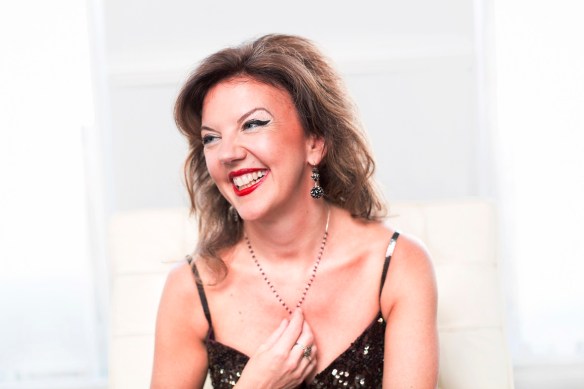
Tasmin Little (above) then joined the orchestra for Szymanowski’s First Violin Concerto, now firmly established as a repertoire item after many years on the periphery. Not the least fascinating aspect is its formal ambiguity – the continuous span interpretable both as a three-movement form as well as an extended sonata design.

It was a measure of Little’s insight that she elided between these possibilities in a performance which stressed the music’s organic inevitability as much as its heady sensuousness, abetted by Cristian Măcelaru’s attentive handling of an orchestration as by no means ‘plays itself’ in terms of overall balance. This was evident not least in the rapturous main climax – after which, Little vividly despatched the brief cadenza prior to the coda’s poignant recollection then the disarming evaporation of those final bars.
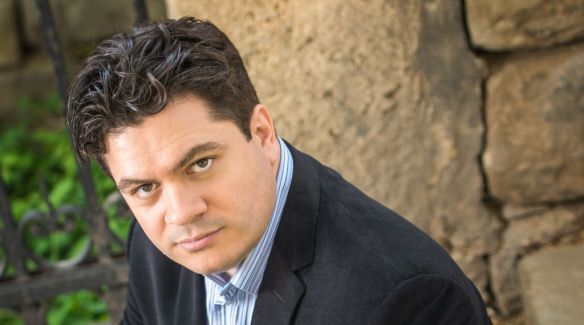
Copland’s Third Symphony is another piece to have garnered regular hearings in recent years – consideration of its being an anomaly in the composer’s output, by dint of its monumental aspirations, having become secondary to the sheer impact invested into its relatively modest (Brahmsian rather than Mahlerian) dimensions. A quality Măcelaru kept in mind throughout what was a cohesive and convincing account – whether in the steadily arching accumulation of tension then release across the first movement, tensile interplay of energy and nonchalance in the scherzo, or the calmly unfolding sequence of variants on a wistful opening theme that is the slow movement. Not the least significant aspect is the degree to which Copland secures thematic consistency across the broader span in the interests of formal and expressive unity.

The CBSO Youth Orchestra responded admirably, not least when being tested to the limit by the music’s polyphonic intricacy and textural density. Gratifying, too, that the best was saved until last – the finale powerfully launched by a paraphrase on Fanfare for the Common Man, before it heads into intensive discussion of the various thematic strands then builds inevitably to a majestic peroration. In Măcelaru’s hands, the latter conveyed affirmation without bathos – as though to confirm that emotional oneness no doubt at the heart of Copland’s conception.

The performance assuredly left its mark on the Symphony Hall audience, which responded with a well-deserved ovation. Next up is a concert by the CBSO Youth Orchestra Academy – for a programme of Weber, Shostakovich and Dvořák – at Town Hall on Sunday 28th July. You can find out more on the orchestra’s website

Further listening

Unfortunately there are no recording of Anna Clyne‘s This Midnight Hour online currently, but you can hear a recording of her orchestral piece Night Ferry on Spotify below:

Meanwhile Tasmin Little‘s recording of both violin concertos by Szymanowski for Chandos Records can be heard here, coupled with a scarcely recorded concerto by Mieczysław Karłowicz:

Finally Copland‘s Symphony no.3 can be heard below in a famous recording where the New York Philharmonic Orchestra is conducted by Leonard Bernstein:

Arcana at the opera: Akhnaten @ ENO

Philip Glass Akhnaten

English National Opera, The Coliseum, London

Thursday 21 February 2019

Review by Ben Hogwood

Photo credits Jane Hobson

On its second run at the Coliseum, Phelim McDermott’s production of Philip Glass’s third opera Akhnaten looks set to be a sell-out hit this time around too.

That much is clear from the first declamation of Zachary James, the Scribe who provides commentary throughout the opera, describing the rise of the first ‘monotheist’ Pharoah of Egypt – that is, one who looks to believe in just one god.

Immediately the dust and shimmering heat of the Egyptian desert are rendered to the audience, not just through the stunning, scorched-earth stage design but through Glass’s orchestration, dispensing with violins in the orchestra for a leaner, drier sound.

The music is deceptive, and though it may on occasion lack development of its principle ideas it is emotionally substantial and deftly scored. Typically for Glass, the majority of the three acts are rooted in consonant harmonies, and are packed with arpeggiated figures that serve as their melodies. However that is not the full story, for over this base the composer manipulates urgent and sometimes troubling cross rhythms. These are often energetic figures set for the woodwind, and are musical statements that repeatedly ask questions of the plot that by and large are answered.

The ENO orchestra play superbly for Karen Kamensek, operating like the workings of a swan beneath the water line. Meanwhile up above on stage, the singers show superb control and poise, tackling the lengthy phrases with deceptive ease. They are compelling throughout, unwavering in pitch, and are married to arresting images and breathtaking colours. Skills ensemble Gandini Juggling provide mesmeric support, their notable feats of poise and balance given an expressive edge in line with the plot.

The king Akhnaten himself is sung by countertenor Anthony Roth Costanzo, who is a pure presence, his voice ringing out strongly to all corners of the Coliseum. It dovetails beautifully with the mezzo-soprano of his queen Nefertiti, sung by Katie Stevenson (below). Their slow moving duet in Act 2, where both singers sport vivid red trains, is a treat for the eyes and ears.

Indeed once the audience adjust to the pacing and development of an initially obscure plot, the opera becomes a study in thought. Rebecca Bottone, James Cleverton, Keel Watson and Colin Judson head a very strong supporting cast and sing superbly throughout, while the spoken declarations of Zachary James are especially good, adding real gravitas to the plot. The scenery frequently dazzles while the sun, lauded above all by the Egyptians, dominates proceedings from the back of the stage with reassuring stillness.

After 35 years, Akhnaten continues to provide a standout operatic experience, and dazzled newcomers and returning patrons alike on this occasion, a multi-dimensional treat for those lucky enough to attend. Phelim McDermott and above all Philip Glass have created an experience notable for its achievement in presenting an ancient civilization to the modern world, showing how the human spirit and instinct is essentially unchanged in all its time on earth, both for good and bad.
Go and see it while you have the chance.

There are three more opportunities to see Akhnaten at the Coliseum in London, on Thursday 28 February, Saturday 2 March and Thursday 7 March. For more information head to the ENO website

The only available recording of Akhnaten, made by the original cast and conducted by regular Glass collaborator Dennis Russell Davies, can be heard on Spotify below:

Wigmore Mondays – Kitty Whately & Simon Lepper: From the Pens of Women

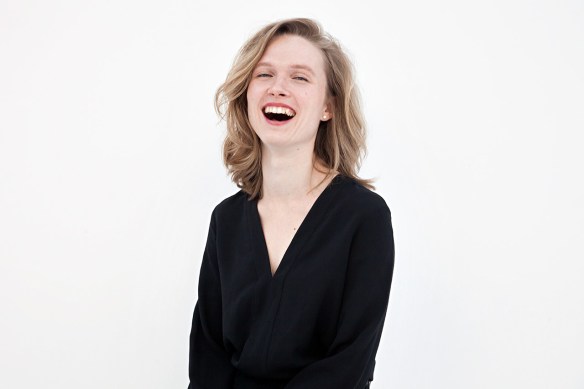
Kitty Whately (mezzo-soprano, above), Simon Lepper (piano, below)

Jonathan Dove All the Future Days (Autobiography; Penelope; The Siren) (2004) (2:11-13:27 on the broadcast link below)
Vaughan Williams 4 Last Songs (1954-8) (13:58-23:27)
Judith Cloud Night Dreams (Variations on the Word Sleep) (2006) (24:58-28:12)
Lori Laitman Orange Afternoon Lover (I Was Reading a Scientific Article) (2006) (28:15-32:24)
Argento From the Diary of Virginia Woolf (Anxiety) (1974) (32:27-34:25)
Rebecca Clarke Lethe (1941) (35:58-39:00)
Juliana Hall Letters from Edna (To Harriet Monroe; To Mother) (1993) (39:05-43:15)
Jonathan Dove Nights Not Spent Alone (2015) (43:34-52:42)

Wigmore Hall, London
Monday 18 February 2019

To hear the BBC broadcast through BBC Sounds, please follow this link

Commentary and Review by Ben Hogwood

What a refreshing hour of music.

With no criticism intended, Mondays at the Wigmore Hall, where BBC Radio 3 hold a lunchtime concert every week, are a reliable way in which to start the week with quality music. They show off some of the very best in chamber, piano and vocal music, often in imaginative programs, but understandably catering for the audience with relatively well-thumbed pieces of music often included.

Not so on this occasion. Mezzo-soprano Kitty Whately always ensures she has an equal balance of male and female composers in her programs, and likes to sing about the stories of both sexes. From the Pens of Women, then, presented an opportunity to sing songs written by women – which in classical music is still not much as a proportion of the whole. She was joined by her regular recital partner Simon Lepper.

Autobiography (2:11 on the broadcast link) was a brave start, Whately straight into the high notes as she flew like the eagle in the text above the rapidly circling figurations of Lepper’s piano. Jonathan Dove’s sound world is fascinating here, clearly on the wing – and then coming down to earth a little for Penelope (4:46), which has a right hand piano figure not dissimilar to Britten, calling out in the right hand before the vocalist brings softer thoughts, then rising to soar with great feeling.

Then, from 8:04, another striking setting – this time The Siren, where Lepper worked overtime to bring a distinctive, treble-rich piano part that dives from the heights as though into a pool of water before cutting off quite suddenly at 13:27 on the broadcast.

Ursula Vaughan Williams‘ text, as set by her husband Ralph, is a very different story. One of her husband’s last works, the Four Last Songs would inevitably invite comparisons with the more famous works of the same name by Richard Strauss, but they are totally different. Vaughan Williams was less obviously heart-on-sleeve with his feelings, but look deeper and they are still there.

The first, Procris (13:58) is a little restless and decides against following the black humour of the story, while Tired (16:32) is a wonderful song, softly rocking its listener as a lullaby. Whately gave an appropriately understated reading here. Hands, Eyes and Heart (18:32) is a short song but then Menelaus (19:42), the most substantial of the four, finishes the brief cycle in a poignant mood.

Three settings of Margaret Attwood follow, with Judith Cloud’s Night Dreams (24:58) a beautifully observed setting of how the author ‘would like to watch you sleeping’. The song is dappled in half light and is shot through with the intimacy of the sleeping hours, while Lori Laitman’s Orange Afternoon Lover (I Was Reading A Scientific Article) (28:15) is similarly personal, set to a flowing accompaniment. Dominick Argento’s setting of Anxiety from From the Diary of Virginia Woolf (32:27) is propelled by the urgent piano part and keeps a high level of agitation throughout.

The text of Edna St Vincent Millay (above) provided the inspiration for the last third of the concert, a remarkable group of song settings. Rebecca Clarke’s Lethe is the very definition of bleakness, the underworld river supplying no comfort but only sorrow and menace (35:58), particularly in its ominous piano part at the end.
Juliana Hall’s settings of Letters from Edna provide some much-needed light relief, Millay asking humorously for payment from her publisher (39:05-40:22), declaring herself ‘awfully broke’, before passionately declaring her love and admiration To Mother (40:25).

Three settings make up Jonathan Dove’s mini-cycle Nights Not Spent Alone – the down to earth text of Recuerdo (43:34), with a quasi-orchestral piano part brilliantly managed by Lepper, the heady What lips my lips have kissed (47:41) and the passionate I too beneath your moon (50:18).

As an encore Whately and Lepper gave another Dove song, All These Dismal Looks (54:13-56:00), the fourth of five songs making up his Five Am’rous Sighs. The humourous song put the seal on an outstanding hour of music making, full of new discoveries and surprises and passionately delivered. The music and verse will I’m sure provide a springboard for listeners to the broadcast to look further afield. Talking of which…

Further listening

Kitty Whately has recorded the Jonathan Dove songs as part of a disc devoted to the composer’s music, including All The Future Days in its entirety, as well as Nights Not Spent Alone:

The below playlist contains all the music heard in this concert in available versions:

https://open.spotify.com/user/arcana.fm/playlist/6ctQO8z0d77IAARv24UoCR?si=JMBLzE4GQ9S7_Ay03k3iTg

Meanwhile you can hear all the songs of Rebecca Clarke on this disc from Patricia Wright, Jonathan Rees and Kathron Sturrock:

On record: Orchestre National de Lille / Jean-Claude Casadesus – Dutilleux: Symphony no.1, Métaboles & Les Citations (Naxos)

Cyril Ciabaud (oboe), Kasia Tomczak-Feltrin (harpsichord), Mathieu Petit (double-bass), Romain Robine (percussion) (all Les Citations), Orchestre National de Lille / Jean-Claude Casadesus

Dutilleux
Symphony No. 1 (1951)
Métaboles (1964)
Les Citations (1985/90)

Naxos 8.573746 [61’27”]

Recorded 18-21 July 2016 at Auditorium de Nouveau Siecle, Lille
Producer/Engineer Phil Rowlands

Reviewed by Richard Whitehouse

What’s the story?

Jean-Claude Casadesus marks his four-decade tenure at the helm of the Orchestre National de Lille with this disc of Henri Dutilleux (1916-2013), with whose music he has been associated across his conducting career and whose current status he has played no small part in securing.

What’s the music like?

Numerous listeners will have come to know Dutilleux’s First Symphony through a recording Casadesus made with his Lille forces in 1977 (released on LP by Forlane in 1984 then on CD by Erato as part of its five-disc compendium in 2014).

The present account offers no radical reassessment; rather an intensifying of what was already a taut and involving take on a work which channels elements drawn from Roussel and Honegger into a distinctive if not yet fully characteristic statement. Thus, the stealthy Passacaille and incisive Scherzo now comprise an unbroken and cumulative continuity; the ensuing Intermezzo exuding calm though little repose prior to a Finale whose variations on its bracing initial chorale unfold eventfully yet purposefully to a hushed close. Rarely has this piece evinced greater cohesion or conviction.

One of George Szell‘s selective though influential commissions for the Cleveland Orchestra, Métaboles is a linked sequence of five pieces which combine the formal logic of a symphony with the expressive immediacy of a concerto for orchestra. Casadesus places emphasis firmly on the former quality, there is assuredly no lack of impetus as he steers these musicians from the striking Incantoire, through the rapturous Lineaire then impetuous Obsessionnel and alluring Torpide, to the energetic Flamboyant which makes for a scintillating apotheosis.

Les Citations is a diptych that alludes to Britten, Mannequin and Jehan Alain over its succinct yet highly unpredictable course; in scoring which evokes the French baroque and Debussy’s revitalising of it in terms at once authentic and capricious – as this fine reading makes plain.

Does it all work?

Absolutely. Dutilleux may have come to international prominence well before his death, but there remains something innately French about both his music’s content and its sound-world, as these readings confirm. A conductor who has never sought worldwide acclaim, Casadesus has choosing to hone his repertoire and musicianship from a long-term location, so explaining the tangible chemistry and unanimity of purpose that exists between him and the Lille players.

Is it recommended?

Indeed, especially as the recording offers a near-ideal combination of detail and perspective, and the booklet notes a sure knowledge of this composer’s idiom. Anyone new to Dutilleux now has a range of options, with this new release as good a starting-point as any available.

Further listening

You can listen to this new release on Spotify:

Further reading

You can read more about the release on the Naxos website, while the video below gives a generous glimpse of the equally desirable recording these forces have made of the Second Symphony:

Live review – City of Birmingham Symphony Orchestra / Mirga Gražinytė-Tyla: Grieg Peer Gynt; Sibelius, Rautavaara & Salonen

Klara Ek (soprano), CBSO Youth Chorus, CBSO Chorus, City of Birmingham Symphony Orchestra / Mirga Gražinytė-Tyla

Symphony Hall, Birmingham
Thursday 14 February 2019

Salonen Dona nobis pacem (2010)
Rautavaara Cantus Arcticus (1972)
Sibelius Rakastava Op.14 (1893/8)
Sibelius En Saga Op.9 (1892/1902)
Grieg Peer Gynt – incidental music (selection), Op.23 (1875)

Written by Richard Whitehouse

You can listen to the concert as broadcast on BBC Radio 3 by clicking on this link

It may not have been a typical Valentine’s Day concert, but this evening’s programme from the City of Birmingham Symphony Orchestra certainly had an abundance of rapture and wonder.

Not least in its welcome revival of Cantus Arcticus, the ‘Concerto for Birds and Orchestra’ with which Einojuhani Rautavaara had confirmed a decisive turning away from the twelve-note procedures of the previous decade. Its utilizing his recordings of birdsong from the Finnish marshland may be nearer conceptually to Respighi’s Pini di Roma than Messiaen’s Oiseaux éxotiques, but the interplay with orchestra is deftly and poetically carried through – from the stark backdrop of The Bog, through the searching poise of Melancholy then to the gradual build-up of Swans Migrating, its hymnic apotheosis duly becoming a Rautavaara hallmark.

Mirga Gražinytė-Tyla secured a warm and euphonious response from the CBSO, which was no less attuned to the emergent drama of Sibelius’s En Saga. After an atmospheric opening, the ensuing episodes unfolded a little sectionally for momentum to be gauged consistently, though the magical passage with solo strings before the climactic section was spellbindingly delivered – then, after a suitably fraught culmination, the closing pages affectingly mingled poignancy and resignation; qualities evident not least in the clarinet playing of Oliver Janes.

Prefacing each of these works were short but pertinent a-cappella choral pieces. The upward striving of Esa-Pekka Salonen’s Dona nobis pacem gave the CBSO Youth Chorus its chance to shine, while a rare hearing for Sibelius’s The Lover brought the CBSO Chorus to the fore for a melting account of three settings from the Kanteletar – their tales of yearning, encounter then farewell between lover and beloved eloquently rendered with no trace of false sentiment. Maybe Gražinytė-Tyla will tackle the almost as seldom heard version for strings before long?

After the interval, Grieg’s incidental music for Ibsen’s Peer Gynt. What to include became far less straightforward after publication of the complete score, but tonight’s selection centred on the familiar two suites and three additional items. Gražinytė-Tyla secured a lively response in the Overture, then brought out the pathos of ‘Ingrid’s Lament’ and encroaching menace of In the Hall of the Mountain King. The influence upon Sibelius of The Death of Åse was no less evident than that of Morning on Debussy, while the Arabian Dance had nonchalance to spare and Anitra’s Dance an alluring poise. Peer Gynt’s Homecoming sounded suitably windswept, and inclusion of the soulful Whitsun Hymn gave the CBSO Chorus its moment in the spotlight. Klara Ek was soloist in Solveig’s Song and Solveig’s Cradle Song, both of which she sang simply and affectingly, avoiding the operatic overkill often encountered. A pity the grotesquely comical Dance of the Mountain King’s Daughter was not included, but what remained was a more than plausible overview – skilfully and evocatively rendered.

It more than set the seal on this well planned and rewarding concert, some of whose relative unfamiliarity was outweighed by its undoubted appeal. The Peer Gynt selection can be heard again on Saturday on BBC Radio 3, alongside the UK premiere of tone poem The Sea by Mikalojus Čiurlionis.

Further listening

Here is a Spotify playlist of music from the concert, including the whole incidental music to Peer Gynt (with the exception of the Salonen, which has not yet been recorded):

Further information on this concert can be found here