Unknown's avatar

About Arcana

My name is Ben Hogwood, editor of the Arcana music site (arcana.fm)

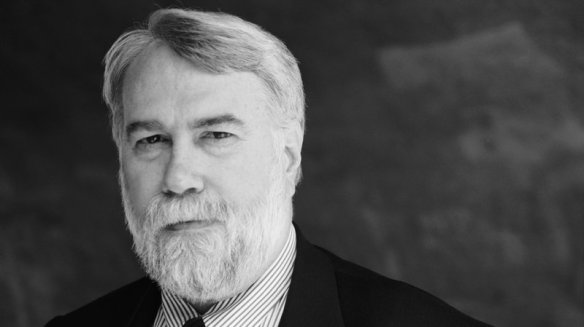
Happy 70th birthday to Christopher Rouse

Christopher Rouse is 70 today!

The American composer, although enthusiastically championed by Marion Alsop, has not yet enjoyed the exposure his music deserves.

His studies with George Crumb and Karel Husa, not to mention a thorough grounding in rock music history, have led rise to a fiercely individual voice in American music, one that is notable for its bold writing for orchestra.

Rouse has surely written some of the loudest modern music there is, and yet he does so with a sensitivity and intensity few of his piers can match. Listen to the playlist below and see if you agree:

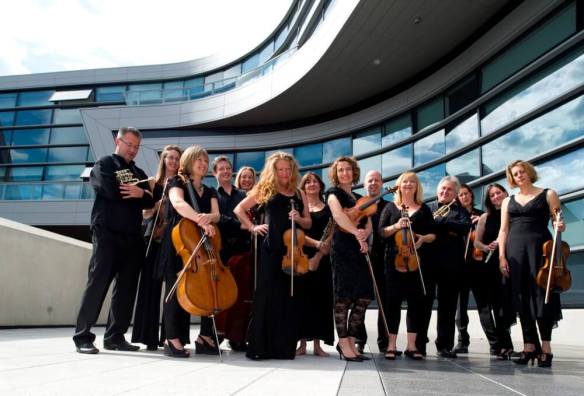
Britten Sinfonia at Lunch – Bach, Janáček, Messiaen, Martinů & Edmund Finnis @ Wigmore Hall

Britten Sinfonia soloists [Thomas Gould (violin), Caroline Dearnley (cello), Emer McDonough (flute), Huw Watkins (piano)]

J.S. Bach Violin Sonata no.1 in B minor BWV1014 (1720)
Janáček Pohádka (1910)
Messiaen Le merle noir (1952)
Finnis Five Trios (world premiere tour) (2019)
Martinů Trio for flute, violin and piano (1936)

Wigmore Hall, London
Wednesday 13 February 2019

Photo credit Harry Rankin (Britten Sinfonia)

Review by Ben Hogwood

For years now Britten Sinfonia’s At Lunch series has been a steady delight, a way to discover the new and rediscover the old in chamber music. Using interesting combinations of instruments and building consistently innovative programs around them, the group offer a very accessible way in to discovering classical music’s treasures of the small scale.

This latest series, given in Norwich, Cambridge and London, is no exception, exploring 300 years of chamber music for flute, violin, cello and piano. Pianist Huw Watkins was the one constant for the whole concert, which at London’s Wigmore Hall gave off the unmistakeable aroma of spring.

Watkins and Thomas Gould began proceedings with a very tasteful account of Bach’s Violin Sonata. It is always good to hear Bach with piano accompaniment, for the music is so versatile that it suits the colours available. In a work like this particular sonata, where the piano plays much more than the role of a traditional accompanist, the textures were ideal. The violin, too, had more notes than normal thanks to Bach’s ‘double stopping’ writing, and Gould played these passages beautifully.

Janáček’s Pohádka represented quite a step forward stylistically but the transition was natural, and the fierce lyricism so often associated with the Czech composer was brought to the fore. Caroline Dearnley enjoyed the song-like passages and Watkins gave great clarity to the busy accompaniments, neither musician stinting on the intensity of Janacek’s writing as the plot of the fairy tale took hold.

The same could be said of Le merle noir, Messiaen’s only published work for flute and piano. An important work that signals his intent to accurately reproduce birdsong on traditional instruments, it is a remarkable piece – and Emer McDonough brought to it a wide range of colour. Most importantly she made it sound natural, for while the notes are all written out the intention of the piece is to sound as instinctive as possible. Again Watkins was the catalyst with some carefully voiced and wholly complementary thoughts.

Each ‘At Lunch’ concert features a new work on its world premiere tour, and the springlike atmosphere was ideal for Edmund Finnis and his Five Trios, for the conventional piano trio grouping of violin, cello and piano. Finnis finds an unusual amount of space in his music, and here his blend of quick movement over slow, drone-like figures opened out the textures very attractively.

There was very little bass in the five trios, notable for their translucence and bright textures. The first introduced softly oscillating figures, while the second spread shafts of light from spread piano chords and string harmonics. The dappled sunlight streaming through the Wigmore Hall roof was the ideal companion for the rippling textures of the third piece, but then in the fourth we enjoyed a bolder statement from the cello, its fuller sound ringing through a haze of sustained piano and glassy violin. To finish, the prayerful fifth piece completed a meditative ten minutes from a composer whose rarefied textures are well worth further investigation.

The Britten Sinfonia members closed their generous concert with Martinů’s Trio for flute, violin and piano. So prolific was the Czech composer that it is easy to overlook his achievements, particularly in the chamber music field. While it can on occasion be tricky to recall some of his melodies after the first hearing of a piece, the overall feel of his writing is uniformly positive and, in this case, capable of making the audience smile and clap spontaneously.

The third of four movements was responsible for the clapping outburst, a wonderful piece of effervescent writing betraying his Parisian location when writing it. The outer movements were a little grittier but still charmed with their syncopation, colour combinations and piquant melodies. The tender second movement was heartfelt too.

The standard of musicianship in this concert was extremely high. Particularly memorable moments include Emer McDonough’s final movement cadenza in the Martinů, where Watkins held the performance together admirably despite the tricky rhythms, the graceful playing of Thomas Gould in the Bach and Caroline Dearnley’s rich cello tone in the fourth of Edmund Dinnis’s trios, not to mention the expressive Janáček.

Once more from this source, an enlightening hour of music in an imaginative context. If you live in London or the East of England you really should catch them live soon!

Further listening

You can listen below to an interview with Edmund Finnis, talking with Dr Kate Kennedy about Five Trios ahead of the Wigmore Hall concert://embeds.audioboom.com/posts/7174837-edmund-finnis-talks-about-his-new-work-five-trios/embed/v4?eid=AQAAACp5ZVy1em0A

You can also hear a new release of Finnis’s music for orchestra here:

Meanwhile the remainder of the program is grouped together on this Spotify playlist:

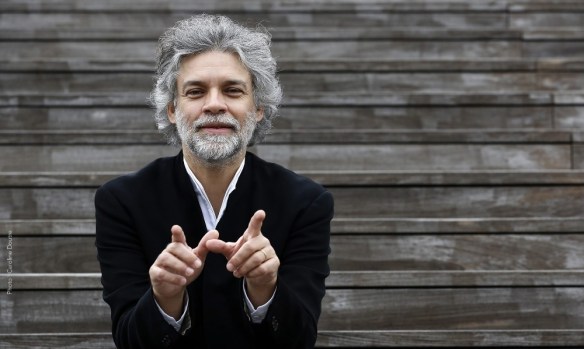
Wigmore Mondays – François-Frédéric Guy plays Debussy, Tristan Murail & Brahms

François-Frédéric Guy (piano)

Debussy Préludes, Book 2 (1912-13): Brouillards (1:27-4:25 on the broadcast link below); La puerta del vino (4:31-7:41); Les fées sont d’exquises danseuses (7:46-10:37); La terrasse des audiences du clair de lune (10:42-15:00; Feux d’artifice (15:03-19:07)
Debussy Images, Set 1 (1901-05): Reflets dans l’eau (20:47-25:37)
Tristan Murail Cailloux dans l’eau (2018, UK premiere) (25:40-32:30)
Brahms 4 Piano Pieces, Op.119 (1893) (34:35-48:23)

Wigmore Hall, London
Monday 11 February 2019

To hear the BBC broadcast through BBC Sounds, please follow this link

Commentary and Review by Ben Hogwood

If last year saw a surfeit of Debussy’s music in the composer’s centenary year, it was for a good reason. The composer is rightly revered as one of the leading lights of early 20th century music, and brought with him new approaches to melody and harmony, not to mention sound worlds and textures unlike anything that had been heard before.

His writing for the piano is indispensable and of a consistently high and original quality, whether taking inspiration from older forms or creating new ones. In his Préludes for the piano he builds on an approach perfected by Chopin, who used each key to create 24 such works. Debussy, however, made 24 character pieces, painting portraits either of specific or deliberately vague imagery.

In this lunchtime recital François-Frédéric Guy fully immersed himself in this revolutionary writing, showing a clear affinity with five of the Préludes from the later Book 2. The swirling mists of Brouillards (Mists) (from 1:27 on the broadcast link) are vividly portrayed, with a notable attention to detail on the weighting of the notes. The swagger of the Habanera inhabits La puerta del vino (The wine door) (4:31), with its exotic harmonies matched to a free rhythmic approach.

The parallel chords of Les fées sont d’exquises danseuses (Fairies are exquisite dancers) (7:46) are also beautifully weighted, while La terrasse des audiences du clair de lune (The terrace of moonlit audiences) (10:42) grows from its introduction with a masterful crescendo. Finally Feux d’artifice (Fireworks), 15:03) is captivating, and during it you can practically see sparklers being waved around, thanks to the twinkling figurations in Guy’s right hand.

Reflets dans l’eau, taken from Debussy’s Images Set 1, is another watery wonder (from 20:47), played here with exquisite control from both fingers and feet – the use of the sustain pedal being of great importance in Debussy’s music. The rippling sounds act as the inspiration for Tristan Murail’s tribute to the composer, Cailloux dans l’eau (25:40)

His response begins at a more measured tempo than Debussy’s, savouring the colours for longer and effectively making his water slower moving. Soon, however, the ripplies become much more pronounced and twist upwards to the higher pitches on the piano (c30:00), with frothy trills that gradually subside towards silence. Guy played this with absolute control, fully immersed in Murail’s writing.

To finish, the final works for piano by Brahms. These four pieces were written as the composer reached his 60s, and mark the end of a late creative flowering including a number of chamber works for clarinet and intimate pieces for the piano. Three of Op.119 are classed as Intermezzos, a title essentially giving the composer free rein.

No.1 feels the most free of all, with a soaring right hand line beautifully floated by Guy in this performance. A real song without words, it carries deep emotional impact here. Guy moves straight on to the second piece (38:20), a flowing piece with greater urgency and a sunnier theme in the centre.

Then at 42:27, the short third piece, with repeated notes using the ‘classic’ Brahms triplet rhythms. Guy missed a couple of notes here but gauged the piece just right leading to the heroic Rhapsody (43:51) This piece is a triumphant way to end any concert, but does finish on a darker note. Until then, Brahms develops the theme, moving by 46:30 to a mood that recalls the previous Intermezzo. Then the main tune returns with great force (47:37), and just as it looks like a sunny ending Brahms plunges us into the minor key, signing off with great fire and brimstone.

To calm the waters after this, Guy returned to Debussy, and the first book of Préludes – with the most famous excerpt of all, Clair de lune (49:52-53:55).

Further listening

François-Frédéric Guy has not yet recorded any of the music heard in this concert – however the below Spotify playlist includes some leading versions of the repertoire heard:

Unfortunately the Tristan Murail is not available anywhere yet; however his complete piano music up until 2013 can be heard here in recordings made by Marilyn Nonken:

For more Debussy, Mitsuko Uchida’s album of the Études, another extension of a form pioneered by Chopin, can be heard here in an award-laden disc:

Late Brahms is one of the pinnacles of the Romantic piano repertoire, and few recorded it with the authority of Steven Kovacevich, heard here in a wonderful album for Philips:

On record: Emilie Mayer: Symphony no.4, Piano Concerto, String Quartet etc

**Ewa Kupiec, ****Yang Tai (pianos) ***Klenke Quartett; */**Neubrandenburger Philharmonie / *Stefan Malzew, **Sebastian Tewinkel

Mayer
Symphony no.4 in B minor (1851)*
Piano Concerto in B flat major (1850) **
String Quartet no.9 in G minor***
Piano Sonata in D minor (c1860-70)****
Tonwellen-Valse in C****
Marcia in A****

Capriccio C5339 [129’39”]

Recorded December 2017

Reviewed by Richard Whitehouse

What’s the story?

Capriccio reissues its two discs devoted to the music of Emilie Mayer (1812-1883), a notable figure in German mid-romanticism who came through early upheavals to establish herself as a composer whose considerable output was heard throughout Western and Central Europe.

What’s the music like?

Very much of its time, which is not to suggest intrinsic lack of quality or stylistic anonymity. This is immediately evident from Symphony no.4, fourth of her eight symphonies, premiered in Berlin on 16th March 1851, whose tempestuous opening Allegro is the more impressive for its subtlety of sonata design, then an Adagio which likewise brings to mind Berwald (could Mayer have been at the disastrous Stockholm premiere of his Symphonie serieuse in 1843?); followed by an alternately incisive and lilting scherzo, then a finale whose brevity round off the work in unequivocal fashion.

The Piano Concerto feels relatively uneventful in its expressive range, though the deft interplay of soloist and orchestra is never less than pleasurable – Ewa Kupiec rendering it with a dexterity and poise that bring to mind the concertos of Hummel or Field.

The ninth and last of Mayer’s string quartets is unquestionably the highlight on the other disc. Its seriousness of intent is confirmed by the dedication to her father, who took his own life in 1840, and made tangible with the sombre opening Allegro (anticipatory of Brahms‘s Op. 51 quartets) then a speculative and agitated scherzo. The Adagio brings a degree of consolation, before the finale delivers an unforgiving resolution akin to Mendelssohn’s F minor quartet.

Less well integrated formally, the Piano Sonata is most successful in the vaunting energy of its outer movements, whose considerable virtuosity points to Mayer’s own pianistic abilities – equally in the gracefully alluring Tonwellen Waltz and the engaging March that round off this programme. The Klenke Quartet and Yang Tai prove sympathetic advocates throughout.

Does it all work?

Very much so. Mayer is hardly the only female composer to have been wholly forgotten after her death, but she is assuredly among the finest – not least in her ability to fashion large-scale designs of a formal focus and a cumulative emotional impact in advance of most among her contemporaries. In the two orchestral pieces, the Neubrandenburg Philharmonic – under the respective direction of Stefan Malzew and Sebastian Tewinkel – leaves little to be desired, nor do warmly spacious sound and succinct if (for the most part) informative booklet notes.

Is it recommended?

Indeed. Last year saw the spotlight falling on many female composers (and artistic figures in general) whose significance is essentially historical. Mayer is an undoubted exception, however, and it is to be hoped more of her music will soon be recorded and performed.

Further listening

You can listen to this new release on Spotify:

Further reading

You can read more about the Mayer release on the Capriccio website

Timothy Ridout & Frank Dupree – Bridge, Britten & Bowen @ Wigmore Hall

Timothy Ridout (viola, above), Jack Dupree (piano, below)

Bridge Pensiero; Allegro appassionato (1908)
Britten Lachrymae: Reflections on a Song of John Dowland Op. 48a (1950)
Bowen Viola Sonata No. 1 in C minor Op. 18 (1907)

Wigmore Hall, London
Tuesday 5 February 2019

Photo credit Kaupo Kikkas (Timothy Ridout)

Review by Ben Hogwood

The first Tuesday in the month usually brings with it a lunchtime recital at the Wigmore Hall from an artist on the YCAT roster. YCAT (Young Classical Artists Trust) is a charitable organisation looking after the development of emerging classical artists. A snapshot of its alumni (Alison Balsom, Simon Haram, the Belcea Quartet and Sean Shibe) bears testament to the success of their program and the longevity of the careers they boost.

On this evidence, viola player Timothy Ridout is another who looks set for great things – as does German pianist Frank Dupree, with whom he gave this recital. Dupree was demonstrating his versatility with a second appearance at the hall in nine days (previously appearing with BBC New Generation artist, trumpeter Simon Höfele)

The pair began with two compositions by Frank Bridge, himself a viola player – but one who seemed reluctant to write anything substantial for his own instrument. The Pensiero and Allegro appassionato are the only works that survive. Written in 1908, they fall into Bridge’s late Romantic period and make a very satisfying double. Ridout played the Pensiero affectionately and with a beautiful tone, which opened out for the surge of the Allegro appassionato that followed.

Bridge and Benjamin Britten enjoyed an inspirational creative partnership, the elder man a lasting influence on his pupil. Britten’s Lachrymae is his major work for viola and piano, though is more commonly heard in its orchestral arrangement. It is a masterful set of variations on a song by John Dowland, If my complaints could passions move, and reverses the variation format so that we hear all the variations first and the tune right at the end. He also refers to a second Dowland song, Flow my tears, in the course of the piece.

Ridout and Dupree gave a superb performance, atmospheric right from the start with a commendable attention to detail and a brooding passion which was unleashed in the fifth and sixth variations. The dynamic shadings were exquisitely realised, Ridout’s tone was beautifully judged, and Dupree’s punctuation marks were ideally clipped in the seventh variation.

Finally a very different form of Englishness was heard in the form of York Bowen’s Viola Sonata no.1. Bowen wrote this at the age of 20, and it shows an early command of the required form, as well as melodic invention, which both players clearly enjoyed. There was humour, too, in the coda parts of the first movement, and in the closing pages, which felt like a race to the finish between the two.

The sonata’s dimensions are considerable – 29 minutes in this performance – but the work did not outstay its welcome, thanks to the energy of the outer movements. These drove forward with great enthusiasm and lyrical input. Ridout’s tone was consistently strong and rich in the low register, his phrasing ideal – while Dupree matched him note for note in the tricky accompaniment. The slow movement found the emotional heart of the piece, but the sweeping optimism of the last movement stayed with the audience the longest.

As a nicely chosen encore Ridout introduced Bowen’s Melody for the G string (1917), its title a lightly humourous take on Bach’s Air but also rooting the viola player to the same string for the whole five minutes. With a charming tune, it provided a winsome finish to a very fine concert.

More music

You can watch Timothy and Jack in York Bowen’s Romance below, also at the Wigmore Hall:

Meanwhile to hear the music in this concert, the Spotify playlist below includes all the works performed, in versions currently available:

Timothy has not yet recorded any of the works featured, but his debut disc for Champs Hill is well worth hearing – the complete works for viola and piano by Belgian composer Henri Vieuxtemps:

Links

You can find out more about the work of YCAT and their artists on their website