Chopin Fantaisie-Impromptu in C sharp minor Op.66 (c1834) (1:27-6:18 on the broadcast link below) Wagner, transcribed Liszt Overture to Tännhauser S442 (arr.1848) (7:25-22:33) Schumann Carnaval Op.9 (1834-5) 24:25-47:13
Wigmore Hall, London
Monday 4 February 2019
To hear the BBC broadcast through BBC Sounds, please follow this link
Commentary and Review by Ben Hogwood
Sophie Pacini’s Wigmore Hall recital began with a fast, flowing performance of Chopin’s Fantaisie-Impromptu. As the name implies this is an extremely free piece but there is structure too, with two distinct themes. From 1:27 on the broadcast link above you can hear the main material, then at 2:31 a contrasting and relatively settled theme in the major key. A short development section brings us back to the main material at 4:33, and then Chopin spins a beautiful coda from the second theme at 5:35.
Liszt’s transcription of Wagner’s overture to the opera Tannhäuser (from 7:25) is something of an Everest for pianists; one that Sophie Pacini appeared to have scaled with commendable ease. This was a towering performance but also one that allowed the detail of the parts to come through – only rarely did the tunes threaten to become subsumed by the massive textures, and that certainly wasn’t the fault of Pacini – just a case of Liszt trying to accommodate so much of the orchestra!
In the broadcast the overture builds steadily from soft but noble beginnings, reaching what sounds like a mighty peal of bells at 9:27. This majestic theme dominates the music, coming back at 18:42 with an extraordinary accompaniment of what sounds like circling birds in the right hand part, leading up to a massive statement towards the end.
Carnaval is a favourite among the Schumann piano output, a series of character pieces that present a masked ball. Schumann himself is there, together with wife Clara – and not only that, Schumann invents several characters to depict the very different strains of his personality. There is a grand total of 20 different sections making up this attractive and colourful suite of pieces, and they run as follows (with approximate descriptions):
The very lively Préambule (24:25) begins the piece, cutting to Pierrot (26:36), whose repeated three-note figure reminded me of Musorgsky’s Pictures at an Exhibition. Arlequin (27:47) is a short, playful number, leading to a charming Valse noble (28:32), then Eusebius (29:39), one of the ‘selfies’ in Carnaval that depicts composer’s ‘calm, deliberate’ side. By contrast Florestan (31:26) depicts the composer’s fiery, impetuous nature, and Schumann quotes the main waltz theme from his earlier work Papillons, Op. 2.
The Coquette (32:15) follows, depicting a flirtatious girl, before Réplique (33:18) acts as a reply. There would then be a freely-written section called Sphinxes, which Sophie Pacini chooses not to perform here. Instead we move on to the quick fire Papillons (33:48, no connection to Op.2), then A.S.C.H. – S.C.H.A (34:31), another form of self portrait. Chiarina (35:09) is a depiction of the composer’s wife Clara, while the spacious arpeggios of Chopin (36:03) depict the composer.
Estrella (36:46) depicts Ernestine von Fricken, before Reconnaissance (37:23), a brilliant musical portrayal that is thought to depict Schumann and Ernestine recognizing each other at the ball. Pantalon et Colombine (38:54) are from the commedia dell’arte, then we hear the charming Valse allemande (39:38)
An extremely active Intermezzo: Paganini (40:14) leads into a reprise of the Valse allemande. Then Aveu (41:30) initally feels a bit bashful in its depiction of a confession of love. A Promenade (42:20) moves directly to a Pause (43:58), written out in musical form. After an almost identical reprise of a passage from the opening Préambule, we lead without a break into the final section, the Marche des “Davidsbündler” contre les Philistins (The March of David Against the Philistines) (44:16) It is a rousing finish to a cycle full of character.
Sophie Pacini’s performance is a fast one – most versions clock in just under half an hour, whereas hers is under 23 minutes. This shows the quick tempo choices she makes, and the short pauses between musical numbers. On occasion the music feels a bit too hasty and some of the softer moments and dance scenes could do with a bit more space and charm, some time to breathe between the sections perhaps. That said, a very enjoyable performance of characterful music that ends triumphantly.
As a suitable footnote to the concert, Pacini returned to the key of C sharp minor for Saint-Saëns (48:26-53:33) and his Allegro appassionato.
Further listening
Sophie Pacini has recorded all of the repertoire given in her recital. Her encore piece, the Saint-Saëns Allegro Appassionato, is added in a new recording from Bertrand Chamayou:
Quite where Liszt found the time to transcribe loads of orchestral pieces for piano is a mystery, but he did – including all nine Beethoven symphonies! This collection from Glenn Gould includes the Fifth, as well as more Wagner:
Schumann’s character pieces for piano are greatly loved. Carnaval is one of the most popular, but there are plenty of others – and on this album from Wilhelm Kempff you can enjoy three collections – Kinderszenen (for children), the wonderful Kreisleriana and the Waldszenen(Forest Scenes):
Cosmo Rodewald Concert Hall @ Martin Harris Centre for Music and Drama
University of Manchester
Thursday 24th – Sunday 27th January 2019
Reviewed by Richard Whitehouse
The 17 string quartets of Mieczysław Weinberg (1919-1996) barely featured in more general discussion until recently, when the extent of their achievement has gradually become evident. Central to this has been the advocacy of the Quatuor Danel, whose integral recording (for the CPO label) during 2006-09 was followed by several live renditions before this one – given as part of the Weinberg: East and West conference co-convened by Prof David Fanning and Dr Michelle Assay and supported by the British Academy and the Adam Mickiewicz Institute.
Although a science-based institution, Manchester University has an active music department and, in the Cosmo Rodewald Concert Hall, a venue second to none for chamber performance – its spacious yet immediate acoustic ideally suited for the resourceful ensemble textures in which these string quartets abound. Weinberg is still often (and erroneously) referred to as a protégé of Shostakovich, but this cycle stands as the continuation of the lineage that takes in Beethoven and Bartók, and which itself represents a highpoint of European musical culture.
The cycle was launched on Thursday lunchtime. From a time when his career path was of a pianist, the ambition of the First Quartet (1937) is the more remarkable – doubtless a reason Weinberg subjected it to radical revision in 1985; refining its youthful awkwardness without diluting that heady aura indebted to Bartók and Szymanowski. The Danel assuredly captured its three movements’ emotional turmoil, wistful introspection then driving energy; the mature composer emerging in the finale, with its folk-inflections and teasing fragmentation towards the close.
The Second Quartet (1940) evinces greater formal and expressive poise; Weinberg revised it in 1986 as well as recasting it as his First Chamber Symphony. It remains one of his most appealing works, though the Danel’s impulsiveness prevented the first movement from seeming too ingratiating; an approach continued in an alternately contemplative and eruptive Adagio, then a quizzical intermezzo and tautly robust finale. Greater expressive freedom and rhythmic impetus, as compared to the recordings, was evident in most of these performances.
Thursday evening commenced with the Third Quartet (1944). Its uncompromising language is pursued across three movements (played without pause) that make inventive play with formal archetypes – whether the intensive sonata process in the initial Allegro, restive transformation of ideas over the slow movement’s ternary format or fugitive understatement of a final rondo which even the Danel could not prevent from feeling overly provisional. The Fourth Quartet (1945) is a more rounded achievement – its expansive trajectory leavening the tonal asperities of its predecessor with a long term tonal evolution that takes in the broadly paced momentum of the opening Allegro, through a motoric scherzo of irresistible rhythmic drive then a Largo whose funereal gait could hardly be taken out of context, to a finale whose blithe optimism is tempered by the pain of experience well before its stark closing gesture. Even more than on its recording, the Danel convincingly brought off this minor-key elision and did ample justice to a piece which ought to have communicated Weinberg’s name outside of the Soviet Union.
After the interval came the Fifth Quartet (1945). Appreciably different in its scale and scope, while continuing Weinberg’s intently evolving mastery of the medium, this proceeds from a wistfully ambivalent ‘Melodia’, via a drily amusing ‘Humoreska’ then a propulsive ‘Scherzo’ whose unbridled élan was unerringly conveyed here. The musing ‘Improvisation’ finds this work’s textural sparseness at its most tangible, before a ‘Serenata’ rounds off the whole with an equivocation which Shostakovich subsequently put to productive use in his own quartets.
Friday lunchtime began understatedly with the limpid Aria (1942) and laconically humorous Capriccio (1943), written in Tashkent on either side of the First Symphony, and which offer ready-made encores. Whether they were heard at this time is uncertain, but the Sixth Quartet (1946) went unheard for six decades until the present ensemble brought it to light and ranks among Weinberg’s salient masterpieces – one whose content is as distinctive as it is personal. Not the least its distinguishing factor is the way its six movements are dovetailed towards a satisfying yet by no means integrated whole – initiated by the quixotic opening Allegro, then intensified by a coursing Presto and explosive Allegro – these latter two ‘bleeding’ into each other – before a gaunt Adagio which seems in search of its underlying theme; then a troubled intermezzo then provides breathing space for the increasingly fractious course determined by the finale. A work that makes a virtue of its equivocation to an unnerving degree, the Danel responding with technical finesse and emotional insight that reinforced its intrinsic greatness.
Friday evening opened with the Seventh Quartet (1957). Coming after more than a decade, it might appear a pragmatic response to the post-Stalin era, yet there is nothing of compromise in this work (first of at least five Weinberg quartets to be premiered by the Borodin Quartet). Hardly its least achievement is the follow-through of its movements from a preludial Adagio of subdued eloquence, via an intermezzo with its structural (as opposed to anecdotal) use of klezmer inflections and which became an unexpected encore, to a finale whose implacable opening and close frame a theme and 23 variations of prodigious inventiveness and resource: qualities abundantly in evidence as the Danel rendered its quasi-palindromic design with a conviction and expressive breadth that ideally needed the interval to be placed afterwards.
Instead the ensemble continued directly with the Eighth Quartet (1959), first of Weinberg’s single-movement designs that artfully conceals a two-part format. Its initial unfolding from ruminative Adagio to wistful Andante and back is intensified through the intervention of a limpid Allegretto and a brusque Allegro, before the initial stasis is tentatively regained. The Danel conveyed this with an inevitability which could hardly be gainsaid. After the interval, the Ninth Quartet (1963) opens with an Allegro of a tensile velocity unequalled in his output – its energy spilling over into a sardonic intermezzo, while the ensuing Andante undercuts the poise of its would-be passacaglia with episodes of rhapsodic inertness, before a finale whose motivation seems destined to end in uncertainty. Again, an account of real insight, the Danel returning to give the first performance of Two Pieces from 1950 and only recently relocated – their respective charm and nonchalance indicative of Weinberg’s desire to write accessible music of integrity at a time when his concert output could hardly have gained much exposure.
Saturday lunchtime began with the Tenth Quartet (1964), its four movements complementing rather than conflicting with each other. Thus, the solemn opening movement finds its natural progression in a speculative scherzo; one to which a tersely declamatory Adagio itself makes possible the faux-repetition and ultimate equivocation of the finale. Mindful of the semantic connection with those comparable works in Shostakovich’s own cycle, the Danel duly opted for a flexible, nuanced approach both here and in the Eleventh Quartet (1966). In the latter, continuity is taken further across four movements which abound in motivic pre-echoes and allusions – the furtive scampering of the first movement followed by a teasingly refractory intermezzo, then a soloistic Adagio makes way for a finale whose waltz inflected progress cannot prevent the return of the opening from seeming fateful rather than inevitable. Never superficial, the Danel maintained coherence throughout while not overlooking the degree to which this piece holds the key to the elliptical inscrutability of those quartets that followed.
Any such ‘late’ style is amply confirmed by the Twelfth Quartet (1970), standing in solitary splendour within the context of Weinberg’s cycle. It effectively rewrites the rulebook as to how four movements are brought together in a diverse yet integrated whole. Serial elements extend the instrumental discourse, as does the incorporation of timbres and textures recalling those Weinberg surely encountered at the Warsaw Autumn Festival in 1966. Such are evident in the initial Largo, its impassive unfolding disrupted by flurries of activity towards its centre, while the Allegretto abounds in acerbic gestures that hasten a disconsolate end; from where the Presto surges to a climax of unremitting savagery. The final Moderato is left to negotiate motivic fragmentation and disjunctive exchanges prior to the most disconcerting conclusion in the quartet literature. The Danel conveyed the fullest extent of this wresting of continuity from change, then returned for another first – a combative scherzo intended for the Seventh Quartet that Weinberg (rightly) discarded as likely to detract from the majesty of its finale.
On to Saturday evening and the Thirteenth Quartet (1977) once again takes up the concept of a single movement. Here, though, the constituents of its sonata design are interspersed with episodes akin to scherzo and slow movement, the overall structure infused with a cumulative intensity that, allied to the increased usage of extended playing techniques, gives this music a rebarbative quality which is hardly sublimated by the anguished close. The Danel duly made the most of this discomforting piece, nor was there any lack of commitment in the Fourteenth Quartet (1978). Its five continuous movements do not so much progress as lurch forwards from the edgily austere first movement, by way of its sombrely impassive successor, then a scherzo and intermezzo which are not so much elusive as disembodied, to a finale in which any attempt at an overall synthesis gradually falls away to reveal a wanly resigned ending; one whose inherent fatalism is arguably more dismaying as it withdraws into virtual silence, as if to suggest that Weinberg’s self-communing is essentially a defence – even an escape.
The Fifteenth Quartet (1979) may be less stark in outcome but is the most radical of all these works in formal design. Its nine relatively brief movements are interpretable in various ways – but a highly oblique sonata design is implied by the aggressive ‘development’ of the central three movements, framed by respectively angular and thrusting ‘transitions’, then surrounded in turn by a two-part ‘exposition’ of almost secretive inwardness; itself balanced by a ‘reprise’ whose incrementally wider expression facilitates an eventual, albeit tenuous, sense of closure.
Sunday afternoon brought the cycle to its close. The Sixteenth Quartet (1981) is inscribed to the memory of Weinberg’s sister in what would have been her sixtieth year; this, along with the outwardly conventional four movements, affords a sense of rapprochement – though the initial Allegro feels anything but predictable in its discursive sonata design, while the gritty scherzo enfolds a trio of ethereal remoteness. A highly austere slow movement (a passacaglia in intention if not in execution) hints at more lyrical expression given fuller rein as the finale builds on its waltz-inflected main theme to a short-lived climax which, in turn, makes way for a becalmed postlude. This recalls earlier ideas before reaching a close whose gentle radiance transcends the age-old distinction between depth and profundity with the deftest of touches.
The Danel realized this to perfection, as it did the very different Seventeenth Quartet (1986) with its affirmation rare in Weinberg’s later music. This also marks a final engagement with one-movement form; its energetic Allegros serving as exposition and development, then as development and reprise, between which are a recitative-like Andantino and aria-like Lento. Transitions are provided by vibrant solos and the whole capped by a coda of real optimism – tangibly conveyed in this effervescent account which also made a fitting close to the cycle.
Following the interval, David Fanning (above) joined the Danel for a ‘40-minute encore’ in the Piano Quintet (1944) that is Weinberg’s earliest masterpiece and was to remain one of his defining works. Securing momentum over the whole is never easy, but Fanning’s deft understatement ensured a steady build-up from the speculative opening Moderato, via an agitated Allegretto, to the sardonic Presto; after which, the expansive Largo exuded real eloquence without undue rhetoric before the combative final Allegro that culminated in a coda of furtive anticipation.
Interspersed within this cycle were two other recitals. Friday afternoon saw Rosalind Dobson (above) and Michelle Assay (above with David Fanning) repeat their account (after its world premiere in November) of Old Letters (1962), eight romances after Julian Tuwim. The length and only incremental expressive range meant this sequence felt too long for a collection while too unvaried for a cycle; its highlight being a setting of ‘Lorelei’ the more affecting for its brevity. Not that this performance lacked anything in characterization, Dobson and Assay returning for two settings of an untitled poem by Alexander Blok: as ‘Dedication’ this forms the wistful opening of Weinberg’s Beyond the Threshold of Past Days (1951), and, as ‘Music’ the eloquent finale of Shostakovich’s Seven Romances (1967) – for which latter they were joined by Marc Danel and Yovan Markovitch.
Saturday afternoon brought two of the solo sonatas from Weinberg’s later years. Whether or not publicly performed in the composer’s lifetime, the Double Bass Sonata (1971) has since established itself in an admittedly select repertoire for the instrument. Certainly, it could have no more committed an advocate than Roberto Carrillo-Garcia (above), who rendered the six-movement amalgam of elements derived from suite and sonata with consummate insight and panache – repeating its propulsive finale to considerable acclaim. The Sixth Piano Sonata (1960) avoids overt display, but this equivocal take on the ‘prelude and fugue’ archetype makes absorbing listening, not least when Michelle Assay brought out the sombre poise of its Adagio then the contrapuntal intricacy and cumulative energy of its final Allegro to such an engaging degree.
Thursday afternoon also brought a fascinating presentation by Dr Daniel Elphick, who has reconstructed the original versions of the First and Second Quartets – the former being the subject of his lecture-recital which revealed the teenage Weinberg as fully aware of current developments; not least the climax of its slow movement, when that of the ‘Largo desolato’ from Berg’s Lyric Suite loomed startlingly into focus. Hopefully it will be possible to hear these original versions before too long – maybe as a recorded appendix to the Danel’s cycle.
The conference itself featured a dozen papers by scholars drawn from across Europe, as well as Australia, Russia, the UK and the US. Most of these should become available online in due course, and it is to be hoped publication will ensue. Mention should also be made of a Skype interview with Weinberg’s elder daughter Victoria Bishops that shed light on the composer’s middle decades, and a flying visit from Gidon Kremer (whose Kremerata Baltica focusses on Weinberg in his centenary year) for a brief recital and speech on the importance of this music.
Overall, this conference offered valuable context for appreciating the quartet cycle. Assessing Weinberg’s quartets surely centres on the underlying premise of a composer concerned with building on the achievements of the past rather than with breaking new ground – from which perspective, his finest quartets are defining examples of what the genre is capable of yielding, and in an age that most often seems unfavourable to abstract musical thought. Clearly this is a cycle which is relevant to present-day composers and listeners alike: as and when it makes its way into wider public consciousness, this will have been made possible by the Quatuor Danel.
Further information about Quatuor Danel can be found at their website. Meanwhile Daniel Elphick’s Weinberg blog can be found here
You can listen to the Quatuor Danel’s Weinberg cycle below:
Simon Höfele (trumpet, above) & Frank Dupree (piano, below)
Enescu Légende (1906) (2:07-8:20) Takemitsu Paths (In Memoriam Witold Lutoslawski) (1994) (8:39-14:48 Hindemith Trumpet Sonata (1939) (16:56-33:30) Savard Morceau de Concours (1903) (35:20-41:05) Gaubert Cantabile et scherzetto (1909) (41:33-46:20) Charlier Solo de Concours (1900) 47:39-54:26)
Wigmore Hall, London
Monday 28 January 2019
To hear the BBC broadcast through BBC Sounds, please follow this link
Photo credits Sebastian Heck (Simon Höfele)
Commentary and Review by Ben Hogwood
There is more music for the combination of solo trumpet and piano than you might think – and how gratifying for the BBC New Generation Artist Simon Höfele to remind us of that on his debut at the Wigmore Hall. Forming a most impressive partnership with pianist Frank Dupree, he gave us four works from the first decade of the 20th century, three by composers new to Arcana pages – and a masterpiece of the century’s repertoire.
Initially playing a trumpet ‘in C’ (that is, calibrated to sit naturally in the key of C major), Höfele listened to Dupree solemnly intoning the opening chords of the EnescuLégende (from 2:07 on the enclosed BBC Sounds link). A competition piece written by the Romanian composer for the 1906 trumpet competition (concours) at the Paris Conservatoire, it begins in a deceptively languid mood, the trumpet low in its register, but soon begins to stir, Höfele hitting a faultless top ‘C’ around 5:50. Then the thoughtful mood returns, the trumpet using the mute at the very end.
From this soft dynamic comes the beginning of the next piece, Takemitsu’s Paths (8:39). The paths in question are very separate – soft, ruminative phrases using the mute, answered by much bolder and generally higher writing. The piece ascends to the relative heights, the piercing rasp of the mute-inflected phrase brings it towards earth, but it ultimately ends in mid-air contemplation.
Hindemith was an incredibly versatile composer, in his career writing sonatas for no fewer than 16 of the instruments of the orchestra. His Trumpet Sonata is one of the finest examples of this canon, and betrays its 1939 origins with frequent references to the actions of his ‘home’ country Germany. At this point the composer was an exile in Switzerland, and this work effectively shows both his horror and sorrow at the annex of Austria, the occupation of Czechoslovakia and ultimately the invasion of Poland.
Turning to a trumpet ‘in B flat’, Höfele leads a brisk and busy start (from 16:56), though signs of the composer’s tongue-in-cheek writing are never far from the surface, peeking through at 17:50. Once reasserted, however, the main thematic material is impossible to shift.
The second movement (22:26) has a spirit of soft-hearted lazy play about it initially, with light hearted piano comments (ideally voiced by Dupree here) that are punctuated by the trumpet. From 29:19, the last movement, the piano distractedly accompanies the long trumpet phrases in lamentation, using as their source a chorale. Then the music builds to a resentful peak before fading away.
Very little is known of the French composer Augustin Savard – though he did win the coveted Prix de Rome with his oratorio La Vision de Saül in 1886. This Morceau de Concours is a competition piece for the trumpet that shows an impressive grasp of the instrument, not to mention drama in the slow introduction (35:20). By 39:06 the music has worked its way round to a genial theme for the faster section, after which trumpet and piano enjoy some light hearted exchanges.
Philippe Gaubert’s Cantabile et scherzetto, published six years later, enjoys a similar profile. Gaubert’s output is mostly directed towards the flute, but he too wrote a competition piece with a serious introduction (41:33) and a playful counterpart (44:20), packed with repeated triplets.
For the Solo de Concours by Belgian composer Théo Charlier (47:39) a slow introduction is not necessary, the piano firmly setting the scene before the trumpet’s arrival. An attractive slower theme (50:15) gives the other side of the story. A poignant aside from the muted trumpet follows before all the shackles are cast off in the final section (52:44) Just occasionally here Höfele felt as though he was overreaching with some of the more complicated phrases, but this – as with all the other pieces – was brilliantly handled.
The encore was a great choice, a Song Without Words by Russian composer Sofia Gubaidulina (56:03-58:30), a solemn tune spiced with the odd ‘wrong’ note in the piano accompaniment, almost in the manner of Charles Ives.
Further listening
Simon Höfele and Frank Dupree have not yet recorded any of the repertoire performed in this concert. However the playlist below assembles the music in a number of different recordings, headed by Alison Balsom and Tom Poster in the HindemithTrumpet Sonata:
Höfele does however have an extremely impressive disc of modern works in the bag, including music by HK Gruber, Takemitsu, Jolivet and Iain Hamilton:
Hindemith’s sonatas are intriguing pieces that combine flair and depth with concise writing structures. This disc, commonly linked by pianist Alexander Melnikov, is a winner:
François Le Roux (baritone, above), Olivier Godin (piano, below)
Henri Dutilleux (1916-2013)
4 mélodies (Féerie au clair de lune, Pour une amie perdue, Chanson au bord de la mer, Fantasio)
Au gré des ondes: Prélude en berceuse
3 mélodies inédites (L’Ange pleurer, Vers de Ronsard, La Faute en est à toi)
Improvisation
Regards sur l’infini
Hommage à Bach
Chanson de la déportée
3 sonnets de Jean Cassou (Éloignez-vous (XVII) (Leave us), La geôle, Il n’y avait que des troncs déchirés
J’ai rêvé
Petit air à dormir debout
San Francisco Night
Wigmore Hall, London
Tuesday 22 January 2019
Review by Ben Hogwood
This was a remarkable hour of music; the only regret being that not more people were present at the Wigmore Hall to see it. In a relatively rare Tuesday lunchtime concert at the venue, François Le Roux and Olivier Godin treated us to an hour-long celebration of the birthday of Henri Dutilleux, one of France’s finest 20th century composers – which is certainly saying something!
Dutilleux (below), who died as recently as 2013, left a small but perfectly formed musical canon, consisting mostly of works for the orchestra or the piano. His songs are little known and for good reason, as the composer himself did not think greatly of them, preferring to suppress their performance and recording. There are however enough to form more than an hour of music.
Only the baritone François Le Roux performs them regularly, and with pianist Olivier Godin he has recorded them all on a single disc. From that disc came much of the music performed here; songs written in the 1940s when the composer was establishing his mature voice.
Dutilleux was very hard on himself, it has to be said – and to explain why we had the peerless programme notes of Roger Nichols to guide us. They told us of Charles Panzera, a distinguished baritone who became the muse of the first eight songs in the recital, all written for performance on French radio.
The first of the 4 mélodies was Féerie au clair de lune (Moonlight of Fairies), which had bluesy undertones to its sparkling piano part, brilliantly played – and a vividly pictorial response to the words which Le Roux had no trouble in communicating. This was a feature of the recital, the baritone’s open performance style, extending through a simple but moving Pour une amie perdue (For a Lost Lady-Love), with its straightforward stepwise progressions, and then a slow, meandering Chanson au bord de la mer (Song by the Sea). The direct responses contained flashes of humour in the entertaining Fantasio, a setting of André Bellessort with the opening line (translated), ‘Death caught you costumed for the fancy ball’.
The concert was helpfully bookmarked with some of Dutilleux’s solo piano output, about which he was once again dismissive – but which once again far exceeded his evaluations in my opinion! The Prélude en berceuse was an attractive pairing with an easy charm and hints of Ravel. A later Improvisation enjoyed its freedom, while Hommage à Bach was clarity personified, an ideal bit of pastiche writing.
By then Le Roux had given us the Borsent setting L’Ange pleurer (The Weeping Angel), then a very cheeky Vers de Ronsard to make even the most liberally minded audience members blush a little! The same poet’s Le Faute en est à toi (Love, blame yourself) was perfectly clear but also given an extra sense of yearning by a slight husk to the singer’s voice.
1941 was a good year of songwriting for Dutilleux – we heard Chanson de le deportee (Song of the departed woman), a downhearted and rather powerful lament. Then we moved to four settings of Jean Cassou, the startling violence within Éloignez-vous (XVII) (Leave us) making a strong impact, together with a cold coda. After that, the descriptive powers at work in La geôle were equally startling, notably for the full range of the piano expertly used by Godin. Il n’y avait que des troncs déchirés (Only torn tree-trunks) was also remarkable, a wild-eyed and rather stark setting, before J’ai rêvé (I dreamed), which inevitably inhabited a much more languid world.
Dutilleux was never a composer for unnecessary or lengthy discourse – as the short piano piece Petit air à dormer debout proved. The final song, too, San Francisco Night – with words by Paul Gilson – took much longer for Le Roux to explain than it did to sing. His storytelling was rather wonderful though, as was the song – a beautifully judged and very poignant tribute to Francis Poulenc, and part of a collection commissioned by the American soprano Alice Esty. Dutilleux’s final song, it effectively marked the end of the French mélodie begun by Berlioz – but what a lovely, bittersweet way to finish.
Further listening
Unfortunately François Le Roux and Olivier Godin’s disc of Dutilleux’s songs is not available on any streaming services currently. However you can listen to a wonderful disc of Anne Queffélec playing the composer’s piano works on Spotify here:
Arcana has an audience with Ian Page, conductor and artistic director of Classical Opera and The Mozartists. We are talking about Mozart’s stay in London, which the group have put under the microscope with a handsome release on Signum Classics last year. It is all part of Page’s ambitious Mozart 250 enterprise, an imaginative project bringing Mozart’s career to life not just through his own music but through that of his contemporaries.
Page recalls how the latest CD project began. “We had some of the programs from the actual concerts to work with, which was four and half concerts’ worth. There is so much stuff that he did when he was here that was very surprising, that we won’t have heard, but there were things that they did that ended up in the music library in Salzburg. It was such a wide range of music.”
Mozart lived in London for just over a year, from 23 April 1764 until 24 July 1765 – and was only eight when moving to the capital. Despite that, there is a surprising amount of music from his pen – and from his contemporaries. “I didn’t realise there was so much in London!” admits Page. “Loads of those were composers I had never heard of, and I’m supposed to be a specialist! There was one composer we didn’t feature, who was in the programmes but didn’t end up on the CD – an Italian guy called Mateo Ventor, who wrote an opera called La della fonte which Mozart would definitely have heard. We decided in the end that two CDs’ worth was right, and because they were all live concerts there was one CDs’ worth that you couldn’t discern if it was studio or not. For the second CD there were some minor blemishes. I thought it best to get over myself and get the repertoire out there, because there is so much worth hearing! It’s funny coming to it after doing the operas in studio recordings, where you have a choice of versions.”
Even now it is difficult to reconcile how Mozart was so young when he wrote what he did. Page has a theory. “I think it’s a testament also to the quality of stuff that was going on. He was such a magpie. You know the AbelSymphony that people thought was by Mozart? It’s an understandable mistake to make, because it’s genuinely a really top quality piece.”
It seems London will be the start of a Europe-wide venture. “I’m hoping to do a similar one for Mozart in Italy,” he explains, “because a lot of stuff survived that we know he heard when he was in Italy, and some degree of a score survived – complete operas this time. I haven’t had a chance yet to work out if they are any good or not, because it does rather rely on that, and not releasing things for the sake of it.”
I try to cast Ian’s mind back to the research he did before deciding to embark on Mozart 250, assuming it must have been an astonishing amount. “I genuinely can’t remember when I first had the idea”, he recalls, “but it was the sort of stuff we were doing with Classical Opera, so it made sense to package it. Part of it was a reaction against lazy programming, and having an anniversary for the sake of it. I remember when the 2006 anniversary happened, and I felt that nobody would want to hear Mozart in 2007 because of the exhaustive nature of the programming. It is a similar story with the Beethoven one coming up in 2020. It seems to me that the whole reason to celebrate something is to make it more part of our lives in the long term. The Mozart 250 came well after that, but I suddenly thought it would be a great way to mark it, and the temerity of it made me giggle because I’m not generally someone who plans things out. To be able to say we’re doing Idomeneo in 2031 is just something that makes me laugh!”
It has distinct advantages too. “It means every season you don’t start off with a blank canvas. Recently we did Haydn’s Applausus, and if we didn’t do it this year we would have missed the boat! I do find I have this growing sort of paranoia that I’m going to come across this neglected masterpiece that was written 251 years ago! It’s been a lot more research since having the idea. Even something like Applausus, where I knew about it and was interested in doing it, as soon as there was a rationale for doing it, it makes those choices. Similarly in 2016 we did the opera Apollo et Hyacinthus, it was because Mozart didn’t write much in that year. It worried me that it wasn’t going to be a great year, but all it means is that you dig a little bit deeper. I think 1769 is the other ‘weak’ year where there is very little Mozart and Haydn, one Gluck – and again it just means you look sideways a bit more.”
The reputations of Mozart’s fellow composers have been boosted. “I’ve been surprised by how much that contemporary stuff has taken off more at the moment than Mozart’s writing in a way. In January we did a retrospective at the Wigmore Hall of 1768 in general, and I’m still toying at late notice with a potential window in November where we might put in the whole of the Hasse opera we did an aria from, because it was done so well. It is a balancing act between long term planning and when you do find something that really merits unearthing.”
Our discussion shifts to the dangers of lazy programming – specifically how poor Haydn is often shunted to the start of a concert, rather than being made the main feature a lot of his work deserves. Page agrees. “Yes, and it’s always one of the symphonies with a nickname. There is so much else. For Applausus he wrote a wonderful letter with instructions on what he wanted them to do. He said if you tell me the date of the performance, I’ll try and dash off an overture for you, but if not all you need is an Allegro and Andante from a Symphony in C major, because the first movement grows out of it. So we did the first movement of the Symphony no.38, and the players and the audience just loved it! He just didn’t write bad music, it’s extraordinary. Most composers did, but what struck me with Applausus was the consistency of the writing.”
Is Mozart a little more variable? “Slightly,” he agrees. “We’ll definitely do all the operas, and all the concert arias, and I think the symphonies we will do most of. They were so much more flexible in those days, you could easily turn an opera overture into a symphony. There is a danger of getting a bit completist and worthy with the project, but there is also a lot of interesting stuff. What really plays into our hands I think is that because we have chosen to specialise so closely on a particular era, you feel how the players would have felt at the time. Of course our players branch out into all sorts of other repertoire, like Handel and Schubert, but for Mozart In London, we had a week of rehearsals and half way through we suddenly found that we were in the idiom. The stuff we did in days four and five we picked up immediately, because we were so immersed. That was really interesting to get a feel for what the players felt, because they had not had to jump from France or Italy, they were doing music from their own city where composers came, where there was no outside influence.”
What was the reason the Mozart family came over? “I think the Mozart family does get a bit of bad press here, but it is also swings and roundabouts, and I think Leopold (Mozart’s father) did cash in on it a bit. I do think when they left Salzburg it was not necessarily part of the plan. He knew they were going to go to Paris, but what they found was that everybody on the road said to them that they must go to London. They tagged it on, and then stayed for 15 months. The argument is that it wasn’t so much a musical education as a general one, a fermenting pot. Mozart’s dad brought a hi-tech microscope when he was in London, and brought it back to Salzburg. There was lots going on – the letters Leopold wrote talk about a Westminster pavement, and streetlights that stayed on all night, so he says this is the city that never sleeps – because they were not used to not having blackouts at night! Things like that are so interesting, and I love those sideways bits. Blackfriars Bridge was under construction, for instance. The letters are so colourful. His dad drank English beer, and complained about it, and then had to pay more money to buy Italian wine instead!”
“The other thing that is a ridiculously tiny detail was reading about the people that were around. Two things happened, one was that all the choral works tended to have all the same singers in them, so after work no.10 the same 20 singers would know all the stuff. Thomas Arne and John Beard, who were running the scene at the time, were known as Tommy and Johnny, which transforms them – Tommy Arne sounds like a wide boy! It gives the period so much more colour. Mozart’s dad wrote all these letters and kept a travel diary, so they went to the Tower of London, and visited the menagerie and the zoo, where Mozart was terrified of the lions. He couldn’t stand the noise! His sister writes of seeing these striped donkeys she’d never seen before! It was a really lovely time reading those. I started this word document with all the pieces we know were performed, at Covent Garden, Drury Lane and Haymarket, were listed. There were notes on the orchestration but for the English repertoire we had to orchestrate some from short score, pocket size. I probably rejected around 80% of the options!”
As you will have gathered, Page is a great storyteller, and agrees that the double album they have completed is as much a portrait of London as it is Mozart. “Yes, and it’s funny how these things dawn on you later. The Applausus that we did, about two months ago I thought I hadn’t come across a single piece of reference to its performance in the UK. I got in touch with the Handel and Haydn Society and they didn’t think it had been done either! There are often reasons but even then the contemplation of why some pieces survive – Bolero and Karelia Suite, where the composers wonder why are they listening to that, it’s not what I wanted to be remembered for! When we were doing the Mozart in London a couple of months after we did a concert of the full J.C.Bach opera Adriano in Siria, and that was fantastic music, really strong and beautifully crafted, like beautiful furniture, the work of a craftsman.”
Was it easy to get interest from record companies around the Mozart 250 project? “With Signum the initial agreement was to do a complete Mozart cycle which we had started two years previously with Linn. Signum were one of not many labels who would let us bring in our own team. If I said I wanted to work with Andrew Mellor they were fine, whereas most would have their own team. There is a freedom about it, and they loved the idea of Mozart 250, and loved the idea of planning to record one opera per year for the next 20 years, of which we are now seven in. That’s a strong background, and then the idea and hope is we will be able to do one other disc per year, so we’ve done discs with Sophie Bevan and Allan Clayton, which is a disc slightly linked to this with some John Beard stuff.”
Page remembers the audience reaction to the first Mozart 250 concerts. “It was very niche, our first time at Milton Court. The audiences were very small, and I know of only a few dozen who treated it as a whole weekend, where most chose the concerts they wanted to come to. There was an amazing sense among the people who were there, a wonderful feeling that they were grateful we were doing this repertoire. A couple of players have said to me in the last six months that the Mozart In London series was their favourite project, because of the immersion. I think it’s growing.”
“The ability to listen to everything in context is what it’s all about. I’ve just been conducting Beethoven’s Choral Symphony for our twentieth anniversary, and it has really whetted my appetite. I feel that with the Beethoven anniversary brewing, it doesn’t need wall to wall Beethoven, it needs something else and more context.”
Thinking ahead, he says, “It will be interesting to see if we’re having a similar conversation in five years’ time, because for Beethoven my brain is probably where it was for Mozart 250 two years before that. In my head my challenge is to come up with an acceptable program for each symphony, and sometimes it might be as simple as devising the program that was done when it was premiered. I would shy away from doing the famous example with the Fifth and Sixth Symphonies, and the Fourth Piano Concerto, but maybe do the one with the Fourth Symphony and the Violin Concerto which is interesting. As you say looking sideways is interesting. Another thing I am interested in is Beethoven playing the viola in Bonn for a number of years, and I think there is research going on to see what the repertoire was. They did operas there as well, and that would make a fascinating weekend of concerts I think, to explore what he was playing.”
“In the first half of the Beethoven 9 concert we did an aria with chorus from the Cantata for Leopold II, which is an amazing piece. There is a very good recording by the Corydon Singers and Orchestra with Matthew Best on Hyperion, and tracks four and five – a soprano aria leading to a chorus – just make sure you’re listening in a darkened room and turn those two tracks up. They will blow you away!”
Creative juices flowing, he thinks further ahead. “For the Pastoral Symphony, I’m thinking it would be great to explore the possibility of doing a first half of nature arias for the creation and seasons, or some of the other program symphonies that were being written at the time. It needs something else to package them together – rather than doing something like the last three Mozart symphonies together in a single concert. You know that it’s not what the composer had in mind.”
There are further clues from Beethoven on how the order of performance has changed over the centuries. “There is a Beethoven letter about which way round to do the Fifth and Sixth Symphonies, and he says that when you’ve got the real meat of the program you should do it in the first half when the audience is fresh, rather than in the second. That’s so interesting I think. The other thing they did a lot of I think is mixing genres, to have a solo piece and a symphonic piece together is quite refreshing.”
There is a hint of frustration in his voice, despite the accompanying smile. “Everything else we know about the composers shows them to be extraordinarily inventive minds, so why would we not be led by their best views to present a concert? It’s funny, the sliding scales we have – nobody would dream of playing the wrong note on purpose, but we’re quite cavalier about dynamics or scoring or seating.”
Back to the Mozart 250 project – and an important element of it being the commitment to young artists, keeping them part of the framework in which Page presents the music. “It is important, yes,” he agrees, “and imperceptibly, in recent years, we have started to say that we’re now quite often working with designated young artist’s projects. The Haydn that we performed, we had worked with some of the artists for three years, and some were making their first appearance with the company. Jacques Imbrailo is a singer we have worked with a lot over the years, and in fact he is on the most recent recording that we released in the Autumn, with a really intriguing Mozart piece called Grabmusik:
He wrote it just when he came back to Salzburg after his grand tour. The story behind it is that the Archbishop of Salzburg locked him in solitary confinement, because he thought this portfolio of compositions could not have been written without help from his dad, so he said, “You’re not to see anyone, and here’s a text – you set it – as a text!” We think this was the result, a cantata for bass and soprano. Jacques recorded that with us, and in my mind that, along with the first symphony, is what you want to wow someone with when you think of what Mozart did as a kid.”
Page is rightly proud of the young artists initiative, heartily endorsed as it is. “Jacques wrote a lovely testimonial for us recently, and he said about the first time he appeared with us, which was a Wigmore Hall concert, where he was sharing the stage with Philip Langridge, a hero of his. He said that nobody else was doing that where you can appear on level pegging with someone like that. And of course the Mozart is young music, it’s healthy in the same way that Handel is – the singers the composers were writing for had a life expectancy that was so much shorter. There are some staggering things, like the original Barbarina who as 12. Hamina was 17. What I find now we’ve been going long enough to reap the benefits of it. When we do have people like Allan Clayton or Jacques, it’s like an old friendship, and it might have been a couple of years but within five minutes there’s a shared language. It’s that much quicker to get to the nub of what we’re doing. If anything now we’re becoming more international and working with up and coming European talent.”
How does he discover the up and coming artists? “Sometimes I do hit a brick wall, especially if an opera is almost all cast, so it can be that the last role takes ages to fill up. When we did Figaro years ago we hadn’t cast the Figaro 6 months before, and I’d heard up to 20 people – and it was not until I flew to Sweden that we were able to fill it. To be fair now that we have a reputation a lot of the agents will come to us and suggest things. When we started out I went to every college opera but now I don’t have so much time. It’s quite lucky in a way not being Arts Council-funded, as we don’t have as much of an obligation. I’ll be quite selective about who I audition but when they do I will give them a good 45 minutes, and it’s not just about how they sing it’s about how intelligent they are, how they respond to direction. Ideally by the time we start rehearsals they are already those characters and that is usually a barometer.”
Their experiences are intriguing. “Sometimes it is a case of people having a sequence of bad experiences, not being treated very well! A good example is a tour we had to Italy around ten, twenty years back, where the bus didn’t turn up to take us to the venue. Instead of arriving there at 1 o’clock for lunch and a 2:30 rehearsal we arrived at 2:20. The orchestra went into this dark cloud, and nobody said anything! They had assumed they were not going to have any lunch that day because of the delay. It was such an eye opener that their assumption was that. Sometimes it is a bit of a battle to begin with because people are used to fighting their corner rather than collaborating. I do think the world is changing now though, with all the stuff coming out about bullying – it’s well overdue I think.”
Mozart is often highlighted as the most difficult composer to perform. Is that a statement to which Page would hold true? “Well Glyndebourne are doing this ‘Glyndebourne Cup’, every other year, and this time around they focussed on Mozart. They made a film called something like ‘Why Mozart is so difficult’ and I think that is immediately a disastrous starting point, you have to make it something positive to get away from the fear. I do love that Schnabel quote about Mozart about how it’s too easy for children and too difficult for adults. There is something not elusive but it’s a lifetime’s work. Every time I come back to the du Ponte operas there is always the feeling of how I did that last time, and was I really that stupid?!”
Is that the sign of a great work? “Yes, I think so”, he nods. “I remember when I first started out and for 18 months by chance I alternated for six months between Mozart and Britten operas. It was the most perfect complement, and with Verdi – it’s obviously great – but it’s so melody-led. With Mozart and Britten it is the synergy between text and emotion in the music which I love. There is something endlessly challenging about the Mozart operas but you need to think beyond them as difficult. The challenge is to be so immersed that you don’t realise how things are going. Bernstein talked about the act of performing as being the same as composing, and I think that is always the goal. We recorded Bastienne and I had already dismissed it, but when we recorded the dialogues we did something that made us laugh, and we thought we have to capture that on CD, or we lose the spirit of it! I haven’t had the first edit back yet but I’m hoping that comes across, the genuine feeling of people being happy and having fun. We’ve steered clear of the Mozart piano concertos so far, although we did well with Kristian Bezuidenhout last summer. I’ve got such a Perahia-like vision in my head so it is difficult to shift from that, but when you listen to Denis Mathews and Solomon it’s magical. It is not always a case of the more we evolve the closer we get to perfection!”



 Following the interval, David Fanning (above) joined the Danel for a ‘40-minute encore’ in the Piano Quintet (1944) that is Weinberg’s earliest masterpiece and was to remain one of his defining works. Securing momentum over the whole is never easy, but Fanning’s deft understatement ensured a steady build-up from the speculative opening Moderato, via an agitated Allegretto, to the sardonic Presto; after which, the expansive Largo exuded real eloquence without undue rhetoric before the combative final Allegro that culminated in a coda of furtive anticipation.
 Interspersed within this cycle were two other recitals. Friday afternoon saw Rosalind Dobson (above) and Michelle Assay (above with David Fanning) repeat their account (after its world premiere in November) of Old Letters (1962), eight romances after Julian Tuwim. The length and only incremental expressive range meant this sequence felt too long for a collection while too unvaried for a cycle; its highlight being a setting of ‘Lorelei’ the more affecting for its brevity. Not that this performance lacked anything in characterization, Dobson and Assay returning for two settings of an untitled poem by Alexander Blok: as ‘Dedication’ this forms the wistful opening of Weinberg’s Beyond the Threshold of Past Days (1951), and, as ‘Music’ the eloquent finale of Shostakovich’s Seven Romances (1967) – for which latter they were joined by Marc Danel and Yovan Markovitch.
 Saturday afternoon brought two of the solo sonatas from Weinberg’s later years. Whether or not publicly performed in the composer’s lifetime, the Double Bass Sonata (1971) has since established itself in an admittedly select repertoire for the instrument. Certainly, it could have no more committed an advocate than Roberto Carrillo-Garcia (above), who rendered the six-movement amalgam of elements derived from suite and sonata with consummate insight and panache – repeating its propulsive finale to considerable acclaim. The Sixth Piano Sonata (1960) avoids overt display, but this equivocal take on the ‘prelude and fugue’ archetype makes absorbing listening, not least when Michelle Assay brought out the sombre poise of its Adagio then the contrapuntal intricacy and cumulative energy of its final Allegro to such an engaging degree.

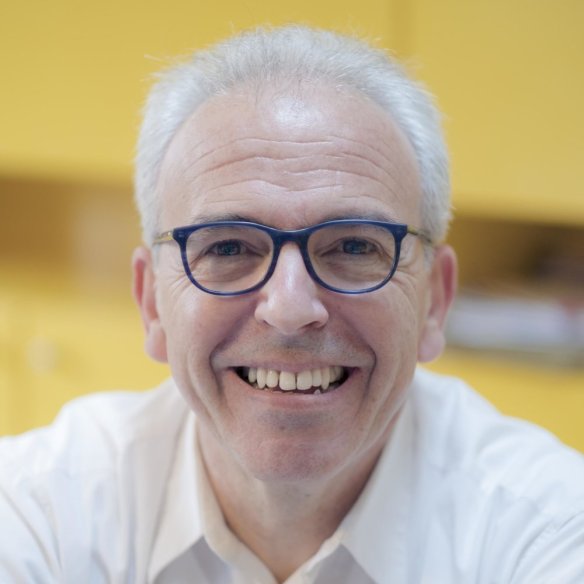
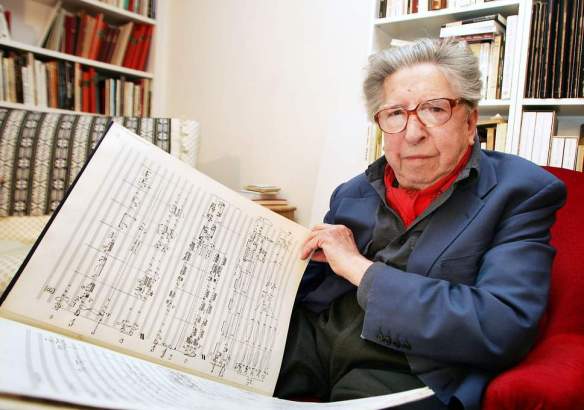 Only the baritone François Le Roux performs them regularly, and with pianist Olivier Godin he has recorded them all on a single disc. From that disc came much of the music performed here; songs written in the 1940s when the composer was establishing his mature voice.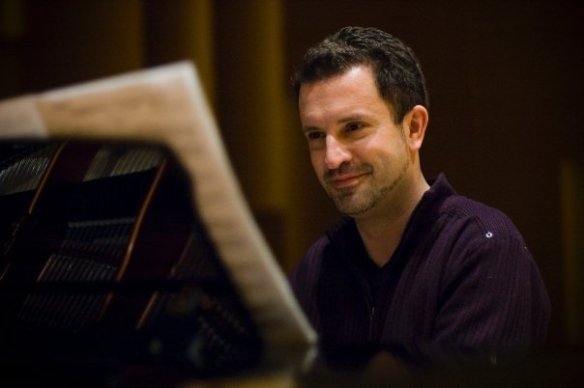

 What was the reason the Mozart family came over? “I think the Mozart family does get a bit of bad press here, but it is also swings and roundabouts, and I think Leopold (Mozart’s father) did cash in on it a bit. I do think when they left Salzburg it was not necessarily part of the plan. He knew they were going to go to Paris, but what they found was that everybody on the road said to them that they must go to London. They tagged it on, and then stayed for 15 months. The argument is that it wasn’t so much a musical education as a general one, a fermenting pot. Mozart’s dad brought a hi-tech microscope when he was in London, and brought it back to Salzburg. There was lots going on – the letters Leopold wrote talk about a Westminster pavement, and streetlights that stayed on all night, so he says this is the city that never sleeps – because they were not used to not having blackouts at night! Things like that are so interesting, and I love those sideways bits. Blackfriars Bridge was under construction, for instance. The letters are so colourful. His dad drank English beer, and complained about it, and then had to pay more money to buy Italian wine instead!”
