Unknown's avatar

About Arcana

My name is Ben Hogwood, editor of the Arcana music site (arcana.fm)

Arcana at the Proms – Prom 35: Martyn Brabbins – Enigma Variations

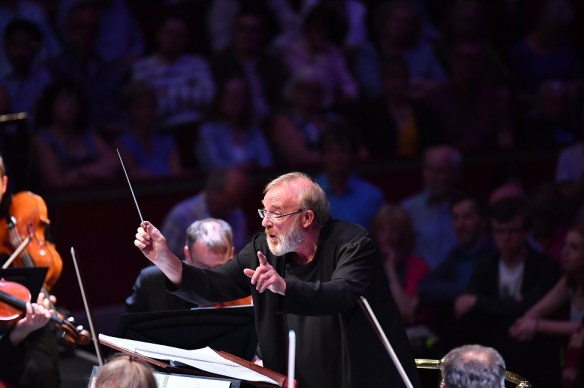
Idunnu Münch (mezzo-soprano), William Morgan (tenor), Nadine Benjamin (soprano), David Ireland (bass-baritone), English National Opera Chorus, BBC Singers, BBC Scottish Symphony Orchestra / Martyn Brabbins (above)

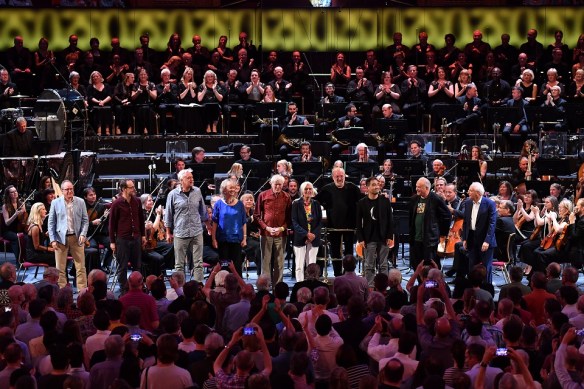
Various composers Pictured Within: Birthday Variations for M. C. B. (2019, BBC commission: world premiere)
Vaughan Williams Serenade to Music (1938)
Brahms Schicksalslied (Song of Destiny) Op.54 (1871)
Elgar Enigma Variations Op.36 (1899)

Royal Albert Hall, Tuesday 13 August 2019

Reviewed by Richard Whitehouse
Photo credits Chris Christodoulou

You can listen to this Prom on BBC Sounds here

It was clearly a great idea that the BBC commission a piece to mark Martyn Brabbins’s 60th birthday, this concert also being his 36th appearance at these concerts, as well as featuring 14 composers with whom this most stylistically wide-ranging of conductors has been associated.

The result was Pictured Within: Birthday Variations for M.C.B, each composer contributing a variation on an anonymous theme in what is an inverse take on Elgar’s procedure in his own Variations on an Original Theme – whose ground-plan also furnished the formal framework. Space precludes more detailed discussion, though it is worth noting the degree to which these composers (the full list is here) were inhibited or liberated by their placing in the overall scheme. And as this theme yielded its potential more from a harmonic then melodic or rhythmic angle, the most successful made a virtue of such constraints – not least Judith Weir in her engaging 10th variation and John Pickard in a finale, The Art of Beginning, whose deft mingling of portentousness with humour might yet become the springboard for an entirely new venture.
Vaughan Williams’s Serenade to Music (premiered in this venue – but not at these concerts – 81 years ago) was conceived for 16 solo singers and the choral alternative inevitably loses some of the original’s intimacy, though not the distinctiveness in its setting of lines drawn from Shakespeare’s The Merchant of Venice. Joining the BBC Singers and members of the ENO Chorus were participants on the Harwood Young Artists programme, of whom Nadine Benjamin brought a wide-eyed wonder to the soprano solos which motivate the latter stages.

Less often heard in the UK, Brahms’s Song of Destiny is among his most ruminative choral works. Its setting of the eponymous poem by Friedrich Hölderlin might be seen as continuing from A German Requiem in its subdued fatalism, albeit with a more animated central section as hints at that starker resignation which overcame the composer in his later years. Brabbins presided over an unforced yet insightful account of a piece that, for its relative unfamiliarity, has garnered numerous distinguished admirers – among them the composer William Walton.

Closing this concert with Elgar’s Enigma Variations made for an effective symmetry as well as bringing the programme full circle. Brabbins is no stranger to the work and duly galvanized the BBC Scottish Symphony Orchestra in a performance which gave full rein to these widely contrasted portraits (never caricatures!) of the composer’s friends while also ensuring an overall unity to the greater design – with the only lengthy pause coming after a luminous account of the ninth Nimrod variation – that carried through to a finale whose elation was shorn of any bombast. There were various delights on the way, not least a winsome take on the fifth variation, with the numerous instrumental solos eloquently taken. Hard to believe Elgar extended that final variation only at the urging of others, so inevitably does this build to its resplendent ending.

Some might have wondered whether building a full Prom around the birthday of its conductor was excessive but, given the regard in which Brabbins is held and the conviction he invested into each of these pieces, that decision was manifestly justified. Many Happy Returns M.C.B!

Martyn Brabbins has recorded Elgar’s Enigma Variations with the BBC Scottish Symphony Orchestra for Hyperion. More details can be found on their website, or on the YouTube clip below:

Switched On – Emme: Into The Darkness (Modularfield)

What’s the story?

Berlin-based Argentinian Emme releases Into The Darkness, an album looking at the connection between intimate thought and the vastness of outer space. In the space of seven tracks and 36 minutes her music looks to reflect these contrasts through close-up observations and big sonic spaces.

What’s the music like?

Not as dark as the title implies, with a satisfying blend of movement and stillness. Insert The Chip and Earth Calling might be remote soundscapes suspended in air, but second track Discovery is the clincher. As it starts you might relax into thinking this will be a very slow moving, star-gazing album, but then the beat drops and the perception changes immediately. With this kinetic energy at her disposal Emme develops Into the Darkness as a dub-infused journey, while Blank Point goes further still, underpinned by a broken beat with distortion overlapping its broad riff.

As the album develops several ‘80s influences are revealed – Blancmange and OMD among them – but Emme forges an individual path while including these. The expansive XH-28:A is a case in point, as it breaks down to a solo from a plucked string instrument – mandolin or violin, I suspect – and is soon joined by an analogue set of drum fills.

The biggest track, When the Wind Whispers, feels like a collection of different viewpoints, with no drums but a restless movement between different ideas and timbres.

Does it all work?

Most of the time. There is a lot of variety here, almost with the danger of the musical styles becoming disjointed – and at 36 minutes it does feel like an extended EP rather than a fully blown album. That said, Into The Darkness has impressive ambition and despite the moments of thick ambience, Emme conjures up impressive tension and restlessness.

Is it recommended?

Yes, for the consistently interesting corners to its slightly ragged construction. Emme’s spirit of discovery should be applauded and noted for future releases.

Stream

Buy

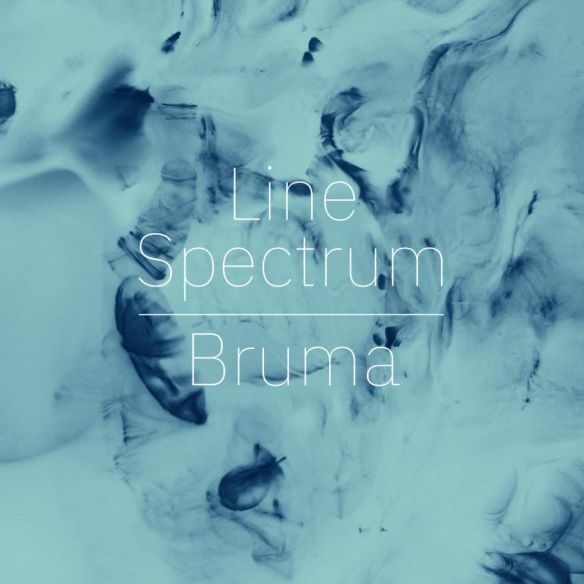
Switched On – Line Spectrum: Bruma (Glacial Movements)

What’s the story?

On their website Glacial Movements describe Bruma as ‘an album of exploration. Somewhere cold and safe’. It is the work of Ukrainian artist Oleg Puzan, whose approach is less obviously musical, building sound pictures through a massive array of small figures and bigger, weather-like effects.

What’s the music like?

Atmospheric. You will not find much in the way of obvious melody or harmony, but that is not a criticism, more an observation of the way Puzan works. The development of each of the five tracks on the album is strangely compelling, though each are closely linked together, the change between tracks coming at very definite time divisions. Although Bruma – which appears to mean a kind of sleep or hibernation – seems set to function as background music its very different textures and panoramas mean it has to be listened to in the foreground, dominating the headphones as it moves from comforting sounds to more ominous drones that approach from the distance.

A Set Of Events At The Shore, evocatively titled, is the first track, and as outlined above it is all about atmosphere and noise, creating a space with running water and natural noises – but compromising it with a not altogether pleasant drone that makes itself known quite high up the spectrum.

An intense experience on headphones, with some thick ambience but also what feels like white noise and interference as Fabric Merge progresses. No melodies as such but concentrated atmospheres. Ways gets thicker still, but the ambience and cold acoustic is more reassuring, and one that as a listener you want to dive into, with a rich chord growing to encompass the whole audible picture. The fourth track, Fluidity, has the flow of cold water in a regular pattern to sooth the mind, leading to the 15-minute final track Quietness. This is comforting but only to a point,with a disquieting sense of danger around the edge, as though you’re in a place you don’t want to get marooned in.

Does it all work?

Yes, providing you’re in the right mood. Some of the more high pitched sounds do actually become challenging after a while, but are essential to the whole experience.

Is it recommended?

Yes, because of the intensity of its ambience, though the manipulation of the many sounds on Bruma will not be to every listener’s taste.

Stream

Buy

Switched On – Albrecht La’Brooy: Healesville (Apollo)

What’s the story?

Albrecht La’Brooy – the Melbourne duo of Sean La’Brooy and Alex Albrecht – bring this 40-minute album of improvised ambience to calm our nerves. Their Spotify biography tells the real story, describing an approach looking to ‘modernise the classic jazz format while walking ambient music through the rainforest and down to the shore. Absorbing Australia’s landscape to craft enlightened, on the fly performances that are never to be missed and never to be repeated’.

What’s the music like?

‘Natural ambience’ is the most appropriate description, for the music is rooted in field recordings made by the pair. On Healesville these include noises associated with tending the land – a tractor is especially prominent – but also a wider sound scape which includes bird noises, indistinct voices and other sounds caught on the breeze. Above this are long, held notes, a slightly shrill bird-like sound and softly intoned piano unisons or chords with plenty of sustain, which unfold like an improvised chorale. The held notes behind can range from one single pitch to thicker clumps but always feel consonant in their make-up.

The fact that two of the five tracks on this album bear the word ‘lullaby’ tells a lot of the mood and tempo at which Albrecht La’Brooy operate, but as well as relaxation there is positive energy to be found in abundance, especially in the piano playing. Sean’s Lullaby may have a good deal of reverb, but its stream of consciousness respectfully echoes Satie and Debussy.

Does it all work?

Healesville is a supremely calming listen, experienced at its best on the morning commute but equally effective in a quiet room. It sets an incredibly restful outdoor scene, making the listener feel as though they are lying on their back in a field with no reason to get up any time soon.

Is it recommended?

Yes, and especially to every commuter whose fevered brow needs soothing!

Stream

Buy

Proms at … Cadogan Hall 4: Aris Quartet play Schubert, Sirmen & Haydn

Aris Quartet [Anna Katharina Wildermuth, Noémi Zipperling (violins), Caspar Vinzens (viola), Lukas Sieber (cello)]

Schubert String Quartet no.1 in G minor / B flat major D18 (1810/11) (2:03 – 18:14 on the broadcast link below)
Maddalena Laura Sirmen String Quartet No. 5 in F minor (publ. 1769) (20:20 – 31:43)
Haydn String Quartet in B flat major Op.76/4 ‘Sunrise’ (1796-7) (33:04 – 54:33)

Cadogan Hall, Monday 12 August 2019

Reviewed by Ben Hogwood

You can listen to this Prom on BBC Sounds here

The BBC Proms are charting 800 years of history in their Proms At…Cadogan Hall concerts this season, and the fourth instalment brought an examination of the string quartet towards the start of its existence. It was great to see Haydn – the acknowledged father of the form – given top billing for once, with one of the six masterpieces published as his Op.76, the mature peak of his chamber music output.

Before that, the youthful Aris Quartet brought us music by an even younger composer. Schubert was only just into his teens when he delivered the first of fifteen published string quartets, and even at this point – with a work given its first performance by the family quartet in their home – he was finding a distinctive and adventurous voice. Schubert played viola in his own piece – and it was published when he turned 15.

The String Quartet no.1 inhabits two keys, G minor and its major key ‘relative’, B flat. The first movement (from 2:03 on the broadcast link above) has a tender slow introduction but becomes surprisingly stern as its main theme kicks in (3:47), with brisk tremolo figurations. This is complemented by a less stern, major key theme later on (5:24). The Aris Quartet gave it the appropriate depth, before moving on to the silvery elegance of the Menuetto (7:56), where the quartet are instructed to use mutes. This had a nice rise and fall to its dance steps in the Aris performance. A warm Andante followed (11:30), now in the sunnier climbs of B flat major, before a bright and breezy finale (14:31) in the same key confirmed the young composer’s progress not just with writing for strings, but in his already enviable grasp of form.

Very little has been heard to date of Maddalena Laura Sirmen, but thanks to the BBC Proms we had confirmation that women composers were indeed alive and well in the 18th century. Thankfully performances of their work are starting to break through, and to hear Sirmen’s String Quartet no.5, published alongside Mozart’s early works, was to hear a voice rooted in Venetian Baroque traditions but very much looking forward.
Sirmen’s work opens with a short but quite austere Largo (20:20), which the quartet played with a bit less vibrato, gradually using more as the music became warmer. Then at 21:30 they gave a nice, full sound to the first Allegro, an attractive movement and a busy affair where the parts are closely intertwined. Sirmen’s style is free of padding and the players enjoyed its conversational style. The Largo returned at 26:26, casting a shadow before the Minuetto (27:40) drew us back to music of optimism and charm.

Haydn wrote a great many string quartets – thought to be 68 in all – but the six published as Op.76 are among his finest achievements in the field. He somehow manages to find a fresh approach with each of his works, and in the case of the ‘Sunrise’ it is through a musical portrayal of the very beginning of the day (from 33:04). He had already successfully tried this approach in a symphony (the introduction of Symphony no.6 (Le Matin) the best example) but this is a more intimate affair.
The performance here was beautifully shaded to catch the first light, with a sensitive and beautiful solo from Anna Katharina Wildermuth, but the ensuing busy passages – the players following the composer’s directions – were much more forceful, as though the sun had woken a gale force wind too.

This was a very fine performance, enjoying Haydn’s invention and wit, but giving each return to the ‘Sunrise’ material the magic of the first hearing. The second movement, marked Adagio, was expansive but also softly voiced (41:18), an example of one of the composer’s later, radiant slow movements. There was still plenty of room given to the first violin part, and Wildermuth took full advantage with excellent intonation.

A typically lively Minuet followed, with a smile and the odd knowing glance through its chromatic melodies (45:59). With it came a contrasting Trio section which had something of the march about it (57:35), over a steady drone from cellist Lukas Sieber, with the Minuet repeated at 49:01. The fourth movement (50:02) was elegant, light on its feet and with fine ensemble playing, the quartet enjoying Haydn’s presentation of the theme and its variations right up to the brisk finish.

Once off air the quartet gave an encore of the last movement of Dvořák’s American string quartet, disrupting the progression through 800 years for the live audience rather, but again playing with plenty of energy and virtuosity.

Listen

The music in this concert can be heard on Spotify below:

The six Surmen quartets can be heard on Spotify in this collection from the Allegri Quartet:

Meanwhile Haydn’s collection of Op.76 quartets can be heard here in a fine set of recordings from the Takacs Quartet: