
Unknown's avatar

About Arcana

My name is Ben Hogwood, editor of the Arcana music site (arcana.fm)

On record: Deutsche Staatsphilharmonie Rheinland-Pfalz / Mark Fitz-Gerald – Shostakovich: The Gadfly, The Counterplan (Naxos Film Music Classics)

Shostakovich The Gadfly, The Counterplan Bachchor Mainz, Deutsche Staatsphilharmonie Rheinland-Pfalz / Mark Fitz-Gerald

Shostakovich
The Gadfly, Op.97 (1955) – complete original score (ed. Fitz-Gerald)
The Counterplan, Op. 33 (1932) – excerpts

Bachchor Mainz, Deutsche Staatsphilharmonie Rheinland-Pfalz / Mark Fitz-Gerald

Naxos Film Music Classics 8.573747 [61’46”]
Producer Roland Kistner Engineers Bernd Nothnagel, Karl Haffner
Dates March 21st-24th, 2017 in Philharmonie, Ludwigshafen

Reviewed by Richard Whitehouse

What’s the story?

Mark Fitz-Gerald continues his pioneering series of Shostakovich film scores in their original orchestration with this disc of the composer’s music for The Gadfly, coupled with pieces that never made it to the final cut and excerpts from the most successful of his earlier film-scores.

What’s the music like?

Unlike that on the previous discs in this Naxos series (scores to New Babylon on 8.572824/5, Alone on 8.573747 and Girlfriends on 8.572138), the music for The Gadfly was very much a mainstream project for a composer struggling to find focus in the post-Stalin era. Alexander Faintzimmer’s adaptation of Ethel Voynich’s novel, essentially a romantic politicization of the Risorgimento among the mid-19th century Italian states, was a success with both Soviet officialdom and the public; while the 12-movemnet suite, as adapted by Lev Atovmian, has long been the most widely heard of Shostakovich’s film-derived scores. The present ‘urtext’ version was prepared and edited by Fitz-Gerald in conjunction with DSCH publishing house in Moscow and Paris (and has been published as Volume 138 of the New Complete Edition).

Despite its 29 individual cues averaging under two minutes, this sequence is (surprisingly?) cohesive in formal and expressive follow-through. Framed by the surging ‘Overture’ (track 1) and rhetorical ‘Finale (29), it follows the scenario closely. The famous ‘Romance’ is divided between the tracks ‘Youth’ and its reprise (4/25), with eloquent violin playing from Nikolaus Boewer, and its middle section is located elsewhere. Further highlights include the evocative ‘Dona nobis pacem’ (15) derived from Bach’s Mass in B minor, the infectious ‘Contredanse’ and ‘Galop’ for strings (19/20), and effervescent ‘Bazar’ (22) which became the well-known ‘Public Holiday’. Many of the other tracks are predominantly sombre or introspective, though the understated effectiveness of Shostakovich’s instrumentation offsets any risk of uniformity.

Also included are two organ cues excluded from the final score – including ‘Ave Maria’ (31), an ingenious reworking of a parody mass by Renaissance composer Antoine de Févin as was replaced by the Bach. The disc is completed by three excerpts from The Counterplan – made to commemorate the 15th anniversary of the Bolshevik Revolution, whose intermingling of personal relationships with construction in Leningrad is best remembered for its ‘Song of the Counterplan’. This emerges towards the close (34) to round-off these excerpts in fine style.

Does it all work?

Indeed. Fitz-Gerald secures a lively response from his Deutsche Staatsphilharmonie forces, with the various guitar and mandolin solos idiomatically taken, while Elke Voelker’s organ contributions are recorded with necessary ambient space. Those who know The Gadfly from the suite will find these frequently stripped-down orchestrations of the original film-score an unexpected pleasure. The sound is unexceptionally fine (volume levels in louder items can sound a touch manipulated), while John Riley’s booklet notes are detailed and informative.

Is it recommended?

Yes. This is a welcome act of restoration for film-music almost entirely known in a version approved though not undertaken by the composer. Hopefully this series will be continued – a recording of the complete score for The Counterplan would be a worthwhile next instalment.

You can read more about this release on the Naxos website, while for more on Mark Fitz-Gerald, visit his

On record: Eve Daniell, Roderick Williams & Simon Lepper – John Pickard: Songs (Toccata)

John Pickard Songs Eve Daniell (soprano), Roderick Williams (baritone), Simon Lepper (piano)

Pickard
The Borders of Sleep
Binyon Songs
The Phoenix

Toccata Classics TOCC0413 [61’01’’] English texts included
Producer/Engineer Michael Ponder
Recorded January 7th and 8th 2017 at St George’s, Bristol

Reviewed by Richard Whitehouse

What’s the story?

A further disc of music by John Pickard (b1963) from Toccata Classics, this time focussing on his output for voice and piano which to date comprises just three works, though these are no less personal than his more extensive contributions to the orchestral and chamber genres.

What’s the music like?

In his booklet notes, Pickard speaks of the difficulty in finding the right words for music thus intended. His works featuring baritone evince due discernment in those poets he has set. Not least the Binyon Songs – five settings of Laurence Binyon (1869-1943), the ubiquity of whose For the Fallen has detracted from a large and varied corpus. The present sequence is nothing if not representative – conveying abused benevolence in Nature, re-emergence in Sowing Seed and hectic transition in Autumn Song. The warm confessional of When all the world is hidden (a likely counterpart to Mahler’s Liebst du um Schönheit?) makes for a telling foil to the relatively expansive The Burning of the Leaves, affording closure through its insight into the immutable process of decay and renewal – an apotheosis as probing as it is profound.

Whereas the Binyon songs are a loosely related sequence, The Borders of Sleep is a song-cycle in formal intent and expressive scope. Here the texts are by Edward Thomas (1878-1917), considered a ‘wat poet’ (he died at Arras) though one whose poetry tends toward the speculative and even oblique. These concerns are pursued across the course of nine songs – taking in such as the sombre monotony of The Mill-Water, black irony of The Gallows and impermanence of Rain. The final settings comprise a fitting culmination: the mood of Last Poem, made concrete by its alternate title The sorrow of true love, transmuted into the fatalistic calm of Lights Out whose initial line also provides the title of this work and whose intimation of transcendence through the release of sleep affords its own benediction.

In contrast, the earliest piece here sets the earliest text, The Phoenix freely adapted from R. K. Gordon’s translation of a 10th-century Anglo-Saxon poem found in the Exeter Book. In fining down the expansive original (677 lines), Pickard has created a scena for soprano and piano where the evocation of this mythical bird’s demise and rebirth becomes metaphor for change and renewal; hence aligning it with the more recent poets featured here then, by extension, the underlying concerns to be found in even the most abstract among Pickard’s compositions.

Does it all work?

Very much so – not least when the performances are so attuned to the spirit and sensibility of Pickard’s music. A stalwart of English-song repertoire, Roderick Williams invests the Binyon and Thomas settings with unsparing emotional acuity, and if Eve Daniell experiences passing difficulty with pitching and intonation, her command of high-flown rhetoric in The Phoenix leaves no doubt as to her identity with this piece. Simon Lepper’s accompaniment is of the highest order, while recorded sound judges balance between voice and piano to perfection.

Is it recommended?

Indeed, and Pickard will hopefully add to his output for voice and piano in due course. In the meantime, acquire this disc and check out the composer’s orchestrations of his Binyon songs (also performed by Williams) on the English Music Records’ anthology Now Comes Beauty.

You can read more about this release on the Toccata Classics website, while for more on John Pickard, you can visit his website here

YCAT at the Wigmore Hall: Savitri Grier & Richard Uttley play Poulenc, Messiaen & Beethoven

Savitri Grier (violin, above), Richard Uttley (piano, below – photo credit Cathy Pyle)
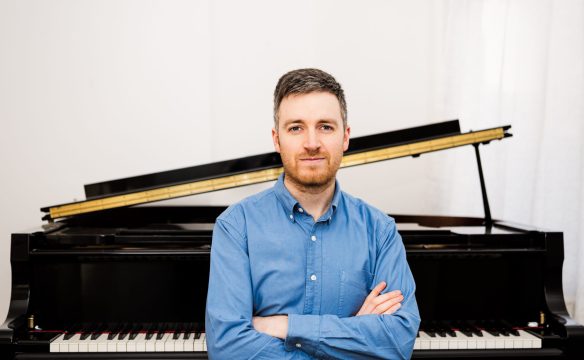
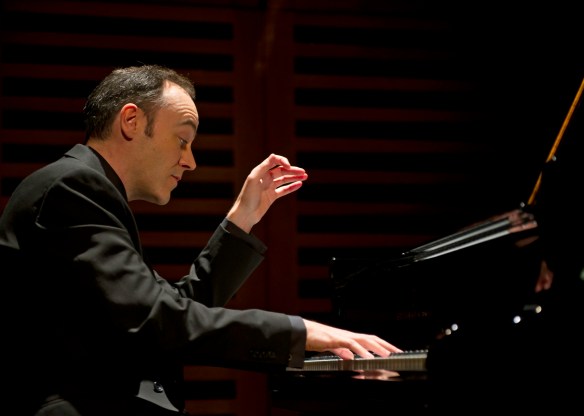
Poulenc Violin Sonata (1942-3)

Messiaen Theme and Variations (1932)

Beethoven Sonata for Violin and Piano in C minor Op.30/2 (1803)

Wigmore Hall, London; Tuesday 6 March 2018

Written by Ben Hogwood

I cannot recommend the YCAT Lunchtime Concert series at the Wigmore Hall highly enough. It gives us a chance to see the professional classical performers of tomorrow, and allows appreciation of just how much young talent there still is, waiting to be discovered. The YCAT (Young Classical Artists Trust) scheme gives an incredibly valuable service to classical music, giving young artists selected through a rigorous audition process the security of career guidance, a dedicated artist manager and a concert platform including appearances such as this at the Wigmore Hall.

This particular recital brought a current member of the scheme, violinist Savitri Grier, and an ‘alumni’, pianist Richard Uttley, who is building an impressive portfolio headed by contemporary music. This well chosen program showed the two have an extremely sound musical chemistry, and also showed Grier to be a formidable violinist of full tone and strong personality.

She immediately took command of the Poulenc Violin Sonata, so much so that even at the back of the hall it was easy to appreciate the depth and breadth of her phrasing. On occasion the artists were even a touch too loud, but that could hardly be considered a massive problem, especially with the virtuosity and crisp ensemble on display in the outer movements. The slightly resentful Adagio slow movement, written in the midst of the Second World War, showed the pair at their most sensitive, reigning in the volume to give some softly voiced thoughts that were truly touching.

Messiaen’s Theme and Variations occupy a rather singular place in the composer’s output, but show what he was to become – and convinced a young Pierre Boulez when he heard them that he had to study with the composer. The theme itself is mysterious, and both performers enjoyed this and the already expansive harmonic language adopted by the composer. Gradually the variations grew in intensity, reaching an impressive apex.

Mozart and Beethoven were the two composers to advance the Violin Sonata into the 19th century, writing as they were for the violin and piano as equal instruments. If anything Beethoven’s C minor example, the second of his game changing Op.30 trio of works, makes greater demands on the piano – but it is arguably the most ambitious work of its time for the combination.

The second Beethoven ‘C minor’ work in consecutive days at the Wigmore Hall (see Monday’s Leon McCawley recital for more), it exploded into life through an incredibly energetic and virtuosic performance. Both Grier and Uttley took a punchy approach to the first movement’s trade-offs, their ensemble particularly secure, but as the work progressed there was also room for humour (in the third movement Scherzo) and a greater elegance (the second movement Adagio cantabile, sensitively played).

Beethoven’s gruff exterior won out though, and in the finale, where Uttley rose to the demands of some fiendish scales demanded by the composer, there was a great tête-à-tête between the two players, an engaging game of cat and mouse where both were ultimately crowned the winners.

Further listening

You can listen to the music played in this concert on the Spotify playlist below:

Wigmore Mondays: Leon McCawley plays Haydn, Chopin, Beethoven & Hans Gál

Leon McCawley (piano, above – photo credit Clive Barta)

Haydn Piano Sonata in C minor, HXVI:20 (1771) (1:41 on the broadcast link – 18:08)

Hans Gál Three Preludes, Op 65 (1944) (19:34 – 28:12)

Chopin 2 Nocturnes, Op 37 (1838-9) (29:32-42:07)

Beethoven 32 Variations on an Original Theme in C minor, WoO 80 (1806) (44:07 – 53:49)

Wigmore Hall, London; Monday 5 March 2018

You can listen to the BBC Radio 3 broadcast by clicking here

Written by Ben Hogwood

Leon McCawley is an enterprising pianist who looks to play both the familiar and the unfamiliar, as his intriguing discography for the Somm and Avie labels shows. This concert, carefully planned, distilled this approach into an engrossing hour’s music of darkness and light.

The darkness was present in the works of the program inhabiting minor keys, especially those by Haydn, the first by Chopin, and the towering Variations of Beethoven.

Haydn first (from 1:41 on the broadcast) – one of his many Sonatas for piano that helped revolutionise the instrument’s reach and capacity. This particular example had a first movement (from 1:41, marked Moderato) that was surprisingly reserved and doleful for its composer, as though he had something on his mind.

McCawley moved into an equally serious Andante con moto (from 8:53), but as this settled a more lyrical approach took hold, rather like an aria. Brightening as the movement progressed, its elegance was countered by the finale (marked Allegro, from 13:46), which was detached in its delivery from McCawley, becoming more worked up as the themes were developed before a darker end at 18:08.

The Hans Gál pieces were undoubtedly the curiosity of the program. Gál’s renaissance of recent years has unearthed some very interesting music. A Jewish composer, he had to flee the Nazi regiment in the 1930s for the UK. Tragedy took hold there also, in the form of his elder sister and one of his sons taking their own lives, before the family were able to settle more in Edinburgh, where he worked for Donald Tovey at the university.

Due to the prominence of tonal writing in his music, and the unfashionable stance of this approach at the time, his music was more or less forgotten – until recently, where the conductor Kenneth Woods has revived the four symphonies, Matthew Sharp the music for cello and McCawley the piano music.

This was essentially a taster of freeform pieces, the Three Preludes beginning with something of a whirlwind at 19:34. They descended into a mid-range cluster of notes before the busy-ness returned. The second prelude (22:13) had more private thoughts, and was more romantic, while the third (26:10) was playful and elusive.

McCawley then moved on to thoughtful Chopin, the first of the 2 Nocturnes Op.37 (29:32) darkly shaded and very sombre. It was a nice touch moving from G minor to G major (36:30) for a more carefree, triple time piece, subtly charming.

These served as the ideal lead-up to some tempestuous Beethoven. When the composer is operating in the key of C minor you can usually expect fireworks – the Symphony no.5, the Pathétique piano sonata and the Piano Concerto no.3 are just three examples of the brimstone we hear in this key. The 32 Variations (from 44:07) are close in date to the Fifth, and have similar qualities – though here Beethoven takes a small chord progression cell and works his magic with it.

From the start McCawley powered through some impressive pianistic feats, using a really strong sense of phrasing to give the music space when needed. From 47:01 the music effectively moved into a slow ‘movement’ in C major, but it soon returned with extra vigour to the home key.

This was a brilliant performance, capped by an inspired encore of the same composer’s Bagatelle in C major Op.33/2 (54:47) – McCawley careful to choose an appropriate key. This was enjoyably mischievous, Beethoven playing around with both pianist and listener.

Further listening

You can listen to the music played in this concert on the Spotify playlist below – which includes McCawley’s own recordings of the Haydn and Gál:

McCawley is the only pianist to date who has recorded the complete piano works of Hans Gál, and the album is also on Spotify:

Wigmore Mondays: Aleksandar Madžar plays Beethoven’s ‘Hammerklavier’ Sonata

Aleksander Madžar (piano, above)

Beethoven Piano Sonata no.29 in B flat major Op.106 Hammerklavier (1817-18) (2:35-48:14 on the broadcast link)

Wigmore Hall, London; Monday 26 February 2018

You can listen to the BBC Radio 3 broadcast by clicking here

Written by Ben Hogwood

Is there a more complete work for piano than Beethoven’s Hammerklavier sonata? Few pieces are bigger in scope, and yet at the same time few speak as intimately as this piece does, especially in the slow movement.

It therefore takes a special performance to communicate the strengths of the piece in full to an audience, but Aleksander Madžar went some way to doing that at the Wigmore Hall.

The name Hammerklavier comes from the German word, specifying the piece should be played on the more modern fortepiano and not the harpsichord. It also phonetically describes the opening phrase in the first movement (from 2:35-14:14 on the broadcast, marked Allegro) where it really feels like the piano is being used as a forceful rhythm instrument rather than for its melodic beauty. Madžar took a much more relaxed view of the opening statement, communicating the onset of the drama but bringing it in much more gradually. He did at times have a shrill ring to the top of his range, especially when the right hands were playing in octaves.

That said, it was clear how he wanted this performance to go, and the structure of the movement made sense under his hands, with the repeat of the first part of the first movement (the exposition) included.

The second movement Scherzo (14:15) had a considerable breadth of colour, and subtly pointed out Beethoven’s harmonic deviations, not least in the ‘trio’ passage where Beethoven briefly visits the minor key (15:18). Here the sound was uncommonly hollow, and try as I might I could not dismiss the notion of empty bottles or bones rattling in a cage. Very macabre!

The slow movement (from 18:05, marked Adagio sostenuto) surely holds the key to a successful performance of the Hammerklavier. It is one of those moments in late Beethoven where time seems immaterial, where each phrase has a great meaning and where the right hand, although slow, is purely melodic. It anticipates music that has been written more than a century since – Mahler and Schoenberg, to name just two – but is still recognisably of Beethoven’s time. We were hanging on each of Madžar’s notes here, as he slowly traversed each section to set himself up for the mighty fugue. The unhurried phrases unfurled with natural ease, and the thoughtfulness and deep seated feeling could be sensed just from watching his movements.

The last movement Introduzione (35:32) began with a strong sense of anticipation, leading up to the big fugue (38:14). This took a little while to straighten itself out – to be fair it must be an incredibly difficult switch in the mind to go from a period of such stillness to rapid movement – but once Madžar had settled on a tempo it gathered considerable momentum. The end, when it came, was fulsome and thrilling.

An encore in this context was risky but the choice was ideal – the Allemande from Bach’s Partita no.1 in B flat major (from 49:30-53:02). Carefully chosen in the same key, it shows to some extent the Hammerklavier’s past.

Further listening

You can listen to the music in this concert in a powerhouse of a recording from Emil Gilels, paired below with what is commonly regarded as the first of Beethoven’s ‘late’ sonatas, the A major work published as Op.101.