

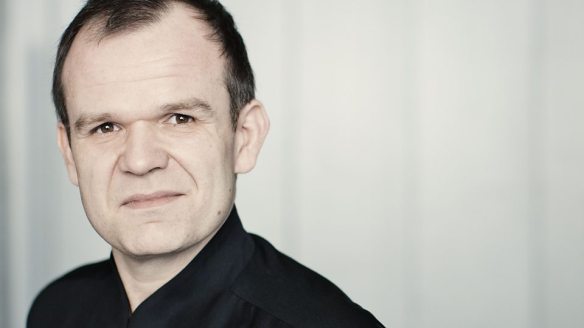
London Symphony Orchestra / François-Xavier Roth (above)
Half-Six Fix
Stravinsky Le chant du rossignol (1917)
Debussy La Mer (1903-1905)
Barbican Hall, London; Wednesday 28 March 2018
Written by Ben Hogwood
The London Symphony Orchestra’s new Half-Six Fix initiative went ‘live’ with this Stravinsky / Debussy double header; a concert full of colour and mutual appreciation for two of the 20th century giants.
A more relaxed approach was immediately evident on arrival at the Barbican for the early evening hour of music. Downloading the EnCue app gave audience members a stream of content at their disposal, with comprehensive notes on the two pieces as well as artwork and cues for the performances themselves.
Interestingly during the concert I did not witness anybody using their phone in this way – which in a sense was encouraging, for everyone was in thrall to the performers themselves. The other major disadvantage with reading concert notes on a mobile phone is the distraction of notifications from elsewhere. Surely one of the great advantages of live music is that it takes you to a special place away from everyday life! That said, the resources available do also give the option for reading between pieces, and were of a high quality to make them fully worthwhile.
Our compere for the evening was François-Xavier Roth and he was the ideal host, introducing the pieces with a nice line in respect and humour. The use of musical examples with the orchestra was helpful – flautist Gareth Davies showed off Stravinsky’s Le chant du Rossignol, while it was nice to see glockenspiel and cymbals promoted to the front line so that we could appreciate Debussy’s masterly use of the orchestra in La mer.
The performances were superb. Le chant du Rossignol had rhythmic precision and musical finesse, telling the story of the nightingale and the efforts of its Japanese imitators to emulate its song in vivid, widescreen technicolour. Stravinsky’s inspiration in this piece was revealed to be very close to Petrushka, and Roth conducted a performance that brought the melodies to the front but emphasised some wonderful textures conjured up in the middle foreground. There were visuals, and fleeting glimpses of solos, but it seemed the LSO had not fully decided whether to show the orchestra in full or images derived from the piece, settling for a halfway approach which was fleetingly helpful.
Watching the orchestra was definitely enough – their standard these days is as high as ever, and if anything was even better for La mer. Clearly this is one of Roth’s first loves, and from a seat near to the orchestra you could practically feel the spray as the orchestra dived in.
Tempo choices were on the whole assertive but never at the expense of detail and expression, and when the final swell came in the third movement, Dialogue du vent et de la mer (Dialogue of the wind and the waves).
Roth is an ideal host for this sort of evening, which can be wholeheartedly recommended, a case of quality winning over quantity – and it is pitched at a level where everyone present, from the first time attendee to the hundredth, will learn something new and get a fresh perspective. A great initiative for opening the mind to classical music in a more relaxed setting.



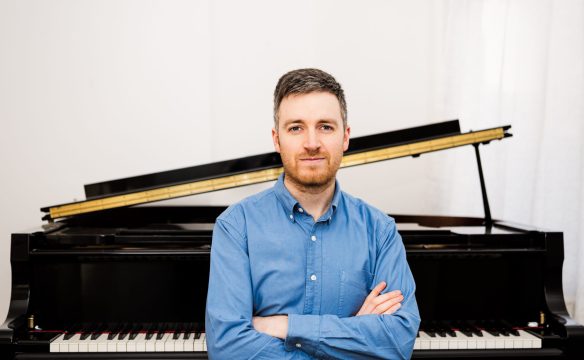 The mid-afternoon ‘Tombeau de Debussy’ juxtaposed pieces from the supplement published by La Revue musicale in 1920 with commissions under BCMG’s Sound Investment Scheme. Jungeun Park’s Tombeau de Claude Debussy found violinist Alexandra Wood, cellist Ulrich Heinen and pianist Richard Uttley (above) evoking the composer’s death in darkly ironic terms, then the oblique tonality of Dukas’s La plainte, au loin, du faune … seemed as much a memorial to the creative impasse as to its passing. Highly sensitive here, Uttley was no less probing in the moody ‘Sostenuto rubato’ that Bartók incorporated into his Eight Improvisations; soprano Ruby Hughes joining him for the whimsical profundity of Satie’s setting of Lamartine in En souvenir. Sinta Wallur’s Tagore Fireflies sets three brief verses by the Indian poet in music whose ornamented vocal was complemented by the piano’s gamelan-like patterning. Wood and Heinen found requisite plangency in the first movement of Ravel’s Duo; then cellist and soprano took on engaging theatricality for Frédéric Pattar’s setting of Maeterlinck in (… de qui parlez-vous?). Uttley captured the bluesy elegance of Goossens’s Pièce, before Julian Anderson’s Tombeau united the musicians in a setting of Mallarmé’s tribute to Edgar Allen Poe whose chiselled vocal writing and guitar-like sonorities made for a provocative ending.
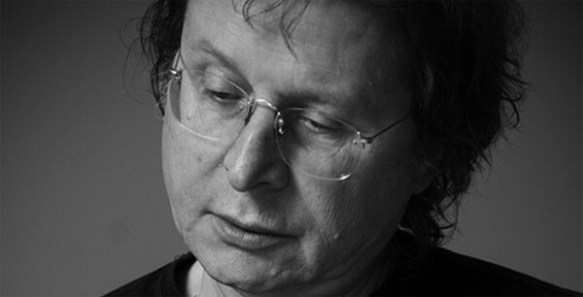 Sunday afternoon brought Birmingham Contemporary Music Group in a programme devoted to Debussy’s Legacy. Boulez’s Dérive 1 (1984) set the scene with its wave-like eddying of pithy motifs, then the music of Tristan Murail (above) took centre-stage with pieces from across three decades of his career. Treize Couleurs du soleil couchant (1978) is a reminder of how radical yet understated (à la Debussy) his music must have sounded in a French scene dominated by Boulezian serialism, harmonic overtones a constant around which the ensemble inhales then exhales its glistening timbres. How Murail got there was duly underlined by Couleur de mer (1969): almost his first acknowledged work, its five sections pit serial constructions against a more intuitive take on harmony and texture in music whose eruptive central span is almost as startling as its cadential sense of closure. Between these, Feuilles à travers les cloches (1998) is an evocative and eventful miniature anticipating the stark post-impressionism of Murail’s more recent music. Fastidious playing from BCMG, and perceptive direction by Julien Leroy.
