Unknown's avatar

About Arcana

My name is Ben Hogwood, editor of the Arcana music site (arcana.fm)

Ask the Audience at the BBC Proms – Stuart Fitzsimon on Rachmaninov, Shostakovich and Emily Howard

Ask The Audience Arcana at the Proms
fitzThis is the latest in the series where Arcana invites a friend to a Prom who does not normally listen to classical music. In an interview after the concert each will share their musical upbringing and their thoughts on the concert – whether good or bad! Here, Stuart Fitzsimon (above) gives his thoughts on Prom 53.

Alexey Stadler (cello), Royal Liverpool Philharmonic Orchestra / Vasily Petrenko

Emily Howard Torus (2016, world premiere); Shostakovich Cello Concerto no.1 (1959); Rachmaninov Symphony no.3 (1935-38)

You can listen on the BBC iPlayer here

Arcana: Fitz, what was your musical upbringing?

It wasn’t particularly musical – music was never forced upon me – but I played the guitar as a school kid, and I did Grades 1 and 2 with classical guitar. I was in numerous choirs – the school choir, a chamber choir, the Queen’s Chapel of the Savoy Choir. I performed on Radio 4, and on tours in Switzerland and Italy. From a classical perspective I never played on a classical instrument. My brother played saxophone and keyboard, but I wouldn’t consider any of these to be orchestral instruments.

There were records in the house – more tapes than records – and I remember on holiday taking my mum and dad’s Beach Boys 20 Golden Greats tape to France on holiday and playing it on loop. I remember their Beatles records, but I was never encouraged musically really – it just all happened!

I went to University. I originally wanted to be a policeman, but they wouldn’t offer me criminology as I didn’t have a law degree – they offered me part criminology, part sociology. I enjoyed the sociology far more, decided I didn’t want to be a policeman any more. So I did a degree, which didn’t have anything to do with what I wanted to do in my career or life!

So I started going to gigs, and meeting people who were into similar music as me – dirty London Indie of the time! I started managing bands, putting on bands, and realised then that I wanted to work in the music industry. I knew lots of people in bands and ended up going to a lot of those gigs for free, and thought why don’t I start putting on some bands? So that’s how my Flook night started that I did in London.

Could you name three musical acts you love, and why you love them?

Three acts I love are The Libertines, The Cribs and the Super Furry Animals.

The Super Furries are a band I fell in love with, having missed their first two albums. I got bored of the guitar because I couldn’t be bothered to practice around 14 or 15, and I stopped listening to pop music…but then I got into it again and went through the mandatory Oasis and Blur thing at the time in the mid-1990s. Then I started looking at the lesser bands I didn’t pick up at the time and Super Furries were one of them.

I remember listening to the Guerrilla album in the garden of my mate’s house, and it was the weirdest album I’d been introduced to by friends. Up until then it was dad rock, man rock, and then suddenly you’ve got this band writing stuff like intros before track 1 on the CD player! Playing a CD and immediately rewinding it to minus two minutes or whatever, like a secret hidden track, is pretty bizarre!

The rest of the album contains songs about chewing gum and mocking the concept of having a mobile phone. This was before they became ubiquitous! Super Furries saw all that kind of stuff coming, and knew how it was going to change people’s lives. It was a bizarre album for the instruments they used, the sound they made – the first weird band I got into!

I went to university and discovered a whole load of music I didn’t know about, the widest range of music from meeting different people. After that you settle into what you know and love and social groups that come off the back of that. After university I started gigging more and going on internet forums – before Facebook, MySpace – Face Party and Friendster were the networks of the time!

When I wasn’t doing data entry I was wasting time on internet forums, and the one I was on most was The Libertines.org. I met a hell of a lot of people through that – some of my very best friends today! It was a new thing in 2003-4, knowing people from log-in names and stuff. I remember when I first went to meet them in Camden and I told my mum, I think she was concerned I was going to get stabbed that night – what if they’re murderers?!

They didn’t kill me though, and the people I met from that social circle are very dear to me these days too. It all stems from the fact it was the Libertines board. My job is probably a result of people I met on that board, and knowing I wanted to get a job in music. I didn’t talk about the music to be fair! They were the band for a year-18 months who had their moment where they burned very brightly, and they pissed it all up the wall. They’re not the same band they were then, but I still love them for what they were.

The Cribs were one of the bands who got tagged on to what was known as the ‘Nigel’ scene, bands like Selfish C**t, The Unstrung, Special Needs. Some of the bands made the best out of being in that category, and The Cribs somehow got associated with it despite having nothing to do with London! They played a lot in Lodnon, stayed and crashed down here a lot, and I ended up going to a lot of their gigs.

They’re definitely my favourite live band, probably recorded band too, and I was fortunate to go in the studio when they recorded their second album, hearing Hey Scenesters! for the first time and recording with Edwyn Collins, an absolute legend. I was fortunate to record with them (on the song Martell) – they’re lovely blokes and a brilliant band. They’ve done very well to hold on to what they had in their early 20s.

What has been your experience of classical music so far?

I don’t really have any, although I was in choirs – I sang famous pieces like Verdi’s Requiem, Handel’s Messiah and Zadok the Priest. On the basis they are classical pieces it’s probably through those, singing them in concerts. In terms of going to watch music I can’t think of many situations other than the 6Music Prom with Laura Marling in 2013. I saw Carmen at the Royal Albert Hall but would say that was an opera rather than classical.

How would you rate your first Proms experience?

It was very interesting. I’d never considered going to a classical concert and standing up, like you do in the arena, ‘in the pit’. That was quite surreal, with people standing, sitting, lying down – all in their own world. It was a different type of person at the sides, a bit older, wiser, maybe richer. I really enjoyed it, I wasn’t expecting to stand but it was unexpected and enjoyable!

I’ve always thought of the Proms as a classical music event but as I was listening to the first piece I didn’t think it sounded classical! I would say it was more orchestral than anything else. The orchestra pinned it all together. The first piece she was talking about science and mathematics had influenced her, and it didn’t sound classical in the same way that the Shostakovich did, the more sorrowful, mournful Russian piece. The symphony screamed ‘classical’ at me though!

What might you improve about the experience?

It had the formula you spoke about before the concert, where you might get a piece you didn’t know to start with, and then the cellist – who was exceptional! – and then the symphony, the larger piece with all the instruments. I think that approach works well. If you started with the symphony people would probably leave when they’ve heard the bit they know, so I understand why it works that way.

I don’t know if I would necessarily change anything but I might do something more aligned to my personal tastes – musicians I love, a piece I have an affinity with – thinking about films I love with classical or orchestral music in. There are definitely things I would want to do but I don’t think I would change the theme of tonight’s event, I enjoyed it. The symphony was what I would expect from a night out at the Proms – quiet and then loud – but I loved it.

Would you go again?

Yeah, definitely. It’s not something I’ve ever gone and bought tickets for but I didn’t know you could do the standing option, and I’d do that again. You didn’t tell me what this night was about and I didn’t research it, but I was pleasantly surprised. If I was looking through a Proms calendar there is no reason why I would have chosen tonight, but it was probably a perfect example about what they are about. I would definitely go again, and probably go to a random Proms event – it would be as rewarding as someone you know. So after that I would wholeheartedly recommend going to watch the Proms!

Verdict: SUCCESS
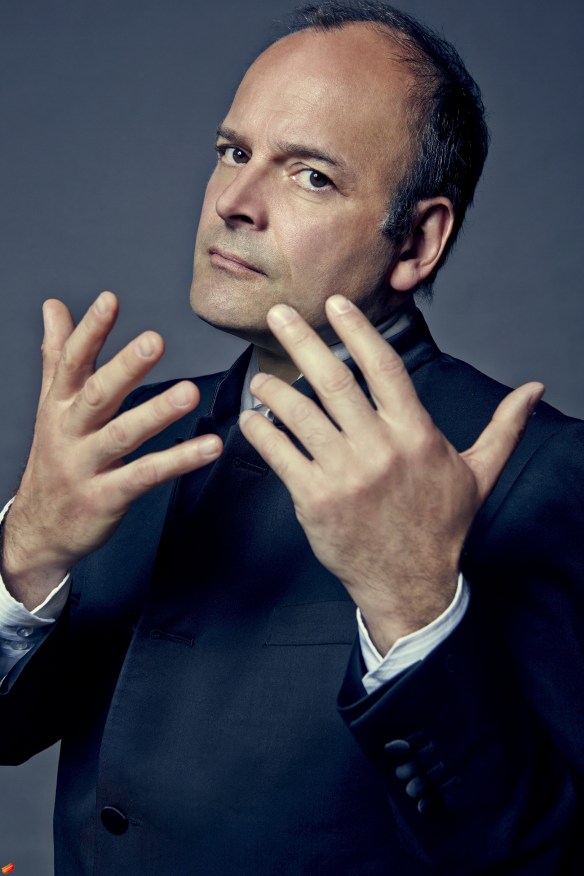
 

BBC Proms 2016 – Louis Lortie: Venezia e Napoli

louis-lortie

Louis Lortie (piano) © Elias

Rossini, transcribed Liszt La regata veneziana; La danza (1830-35, transcr. 1837)

Poulenc Napoli (1925)

Fauré Barcarolle no.5 in F sharp minor Op.66 (1894); Barcarolle no.7 in D minor Op.90 (1905)

Liszt Venezia e Napoli (1859)

Cadogan Hall, Monday 22 August 2016

Listen to this concert on the BBC iPlayer

For an hour Louis Lortie managed to transport the Cadogan Hall audience to even sunnier climes – to Venice and Napoli, to be exact. He did this through a well constructed program painting pictures of the Italian cities and regions from afar, for none of the chosen composers were Italian.

All except Rossini, that is – though the two Soirées Musicales chosen for this concert were given in arrangements made by Liszt. Typically these were hyped up for concert audiences, but as in most of Liszt’s transcriptions there is a sensitive side staying true to the original, and Lortie found that unerringly in the humour of La danza.

We transferred from Venice to Naples for Francis Poulenc’s brief but vivid three-movement portrait. The central Nocturne was the great find here, a really lovely bit of descriptive music bookended by two fast movements typical of Poulenc in their wit and, in the Caprice italien, a deceptively soft heart that Lortie delighted in showing us.

It was especially good to hear two of Fauré’s Barcarolles included, especially as Louis Lortie has realised his love of the composer’s music in a new disc from Chandos. The Barcarolles are real diamonds, perfect for listening at either end of the day, and are highly original in their elevation of an older art form all but ignored by other composers. Lortie showed concert audiences need not be dissuaded by them either, with a darkly shaded Barcarolle no.7, which found some of the Fauré’s shadowy writing encroaching from the edges like the approach of night. Meanwhile the distinctive motif of the Barcarolle no.5 was ever-present, though towards the end of this the pianist was too full with his volume at the bell-like top end of the register.

That said, his playing throughout was remarkably accurate and expressive, and both qualities were evident in a superb performance of Venezia e Napoli, the epilogue to part two of Liszt’s piano travelogue Années de Pèlerinage. The virtuosity on show was breathtaking in the final Tarantella, but it was the poetic depiction of the gondola and the slower Canzone, with its majestic interpretation of Rossini’s Otello, that really hit home.

Ben Hogwood

Ask the Audience at the BBC Proms – Tim Squier on Beethoven, Dutilleux and HK Gruber

Ask The Audience Arcana at the Proms
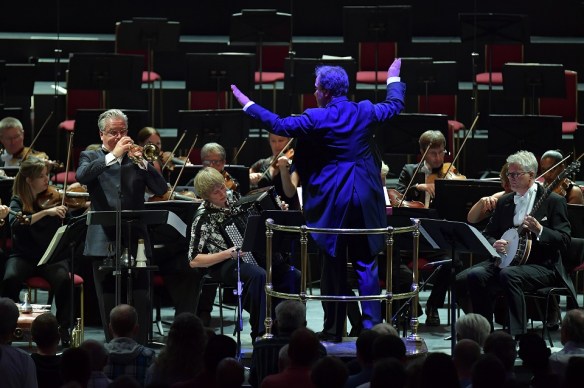
gruber-buskingThis is the continuation of a series where Arcana invites a friend to a Prom who does not normally listen to classical music. In an interview after the concert each will share their musical upbringing and their thoughts on the concert – whether good or bad! Here, Tim Squier gives his thoughts on Prom 34.
Håkan Hardenberger (trumpet), Claudia Buder (accordion), Mats Bergström, BBC Symphony Orchestra / Sakari Oramo

Dutilleux Timbres, espaces, movement (1990)
Gruber Busking (2007)
Beethoven Symphony no.5 in C minor (1804-1808)

You can listen on the BBC iPlayer here

Arcana: Tim, what was your musical upbringing?

It was my mum that brought me up, and in terms of music it’s not worth going there really! It was very middle of the road – Cliff Richard, some of The Beatles. I discovered most things myself pretty much, she would have the radio on sometimes – but when I first discovered my own music it was via an alarm clock, an FM radio that she gave me. It was all the pop of the time in 1984-1986 – Madonna, Prince, A-ha, your Now 1984. Certainly in my early years there was Band Aid – and I wasn’t particularly cool. There wasn’t anything of a classical background in there!

Could you name three musical acts you love, and why you love them?

Harold Budd is a big one for me. I do love my ambient and he doesn’t seem to put a foot wrong really. He just seems to have a certain emotion and style where you can just get lost in it. It can be background but it can be foreground as well. I can work to it, and not be fully tuned in, or I can be sitting down and listening to it and it works just as well.

I’m going for artists who have been with me for a long time, and Fleetwood Mac are an act that I could never really get enough of. They’ve gone through different phases like the 1980s pop side but I can also do the Peter Green stuff, and the Stevie Nicks especially. I just keep discovering new things off the albums too, like Oh Daddy from Rumours recently. Stevie Nicks solo – just brilliant, too. Not every single track but she’s the sort of person you can see her rehearsal footage on YouTube and it’s amazing. I’m watching it thinking it’s better than the album version!

For the third one I’ll go for someone electronic – Carl Craig. Certainly between 1990 and 1996 where he couldn’t put a foot wrong. He could do an ambient track, a banging techno track, stuff that doesn’t all into a genre – something for the dancefloor, something for the home. Carl recorded a lot of that on cassette tape, it didn’t sound very good but still did the business!

What has been your experience of classical music so far?

I think almost unintentionally my first experience of anything like classical music would have been through film scores. One of my best friends in London has been responsible for playing me some classical music but not so much for a long time now. I have been to one Prom before but it was a long time ago and I can’t remember the actual pieces – but I know I enjoyed it. I quite enjoy listening to it but I don’t know much about it. I’ve heard some Ravel before, and quite enjoyed that.

How did you rate your first Proms experience?

The Royal Albert Hall is always a joy, it’s a great venue – and the acoustics are really good for classical rather than pop I think. I really rated the first piece (the Dutilleux) and enjoyed that the most I think.

What did you think of the Dutilleux?

It was thoroughly enjoyable, I’m a real sucker for that deep sound from the lower strings – there is a certain orchestral sound I really love, the lower frequency, and you get a lot of that in film scores. There was a lot of that coming through and it flowed really well. I wasn’t bored at all, I really loved it.

What did you think of the HK Gruber?

It started out interesting, and the introduction was good, but the trumpet was too much of a focal point and I found myself drifting out. I was trying to listen to the background more but because of the positioning I was trying to hear what was going on my right hand side, but every time I tried I could hear the trumpet. There was a variety of devices going on (the mutes and three different trumpets – Ed) I’ll always give things a chance, and I tried but it didn’t work out!

And the Beethoven?

That was really enjoyable, a nice take on it – it’s been a while since I heard the entire piece and I think it really worked. There were some quirky moments, it was great watching the whole orchestra. There was one really young player who really stood out (oboist Henry Clay), he was really good. Another thing going back to the first piece, the Dutilleux – the percussion was great. With the Beethoven I loved the whole thing and there was a really nice stereo effect coming through, the clarity was there more and I could pick up on certain things, especially being a bit of an audiophile.

There are bits you forget as well – you don’t get them played on Capital Radio four times a day after all! It was good to hear those. So I think the Dutilleux first, then the Beethoven, then the Gruber.

Would you go again?

Absolutely, for sure. I’m quite open to new musical experiences and will try most things but would do this again!

Verdict: SUCCESS

You can read Arcana’s review of the whole Prom here – and you can listen to it on the BBC iPlayer

BBC Proms 2016 – BBC Symphony Orchestra / Sakari Oramo: Beethoven’s Fifth, Dutilleux & HK Gruber

gruber-busking

Soloists Håkan Hardenberger (trumpet), Claudia Buder (accordion) and Mats Bergström (banjo) pictured during the performance of HK Gruber‘s Busking, with the BBC Symphony Orchestra conducted by Sakari Oramo (c) Chris Christodoulou

Prom 34; Royal Albert Hall, 10 August 2016

You can listen to the Prom on the BBC iPlayer

Sakari Oramo continues to inspire. His tenure with the BBC Symphony Orchestra to date has been characterised by imaginative programming and excellent performances, and putting an obvious spring in the orchestra’s musical steps.

Last year they delivered a Prom capped by Beethoven’s Seventh Symphony, an account that fizzed with enthusiasm and vigour, and these same qualities were on show for the Fifth Symphony here. Oramo’s speeds were on the aggressive side, the slow movement arguably losing a bit of expressive heart because of it, but the faster movements unquestionably thrilling in their verve and forward drive.

Because of this approach, music that could have been over familiar received a new, sparkling coat of paint, and excellent woodwind contributions, particularly from new oboist Henry Clay, elevated the standard of playing. Guest leader Malin Broman set the tone with great vigour.

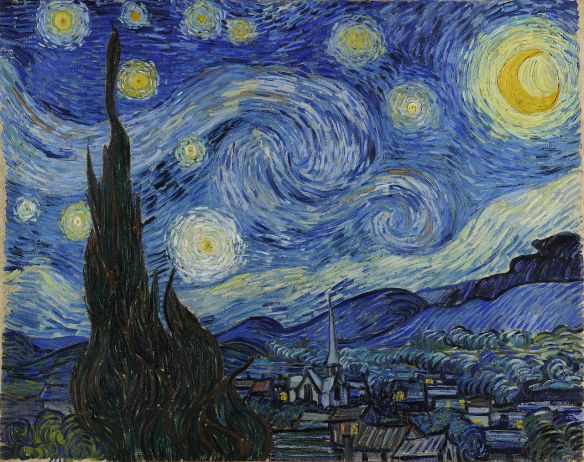
The first half gave us two contemporary pieces of very different impact. Timbres, espaces, movement became a three-movement orchestral piece when Henri Dutilleux revised it in 1990, and in this performance we could revel in its beautifully shaded colours, its sudden, strident unisons, and its captivating rhythms – all reflecting the painting on which it is based, Van Gogh’s Starry Night.

1280px-Van_Gogh_-_Starry_Night_-_Google_Art_Project

These were expertly delivered by the BBC Symphony percussion, while in the second movement the glorious spectacle of twelve cellos highlighted the genius in the composer’s part writing as well as the deep lyricism of his melodies. This was the third Dutilleux performance of the week, capping a very strong trio begun with The Shadows of Time and the Cello Concerto Tout un monde lointain…

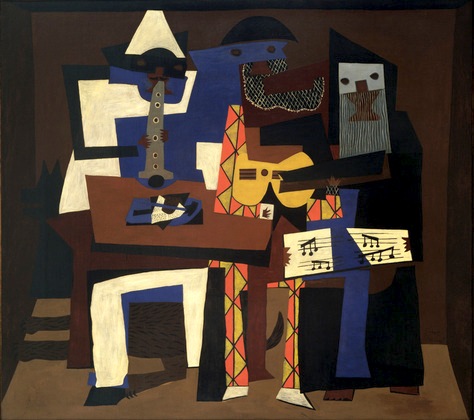
Less obviously successful was the substantial piece by HK Gruber, Busking – a work from 2007 receiving its UK premiere. Again the composer’s inspiration was a painting, in this case Picasso’s Three Musicians:

Picasso_three_musicians_moma_2006

Despite an excellent performance, in which trumpeter Håkan Hardenberger turned various shades of red and purple, all the while staying fully in command of his instruments, this was a piece that unfortunately ran out of steam quite early on.

A very promising beginning, with swaying syncopation brought on by the trumpeter with just his mouthpiece, ultimately lost its rhythmic impetus. Unfortunately the balance between the three soloists also became skewed heavily in favour of the trumpet, at the expense of brilliantly played detail from accordion (Claudia Buder) and banjo (Mats Bergström).

A doleful slow movement briefly evoked a melancholy cabaret, and did so very effectively, but here again the tones of the trumpet dominated, despite Hardenberger’s use of the mellow flugelhorn. This was not the fault of the players – and could also reflect Arcana’s position in the arena – but it was a shame to miss out on the touches of humour elsewhere. By the third movement, where some energy returned, the piece had by that time run out of substance.

That should not count against the overall success of this Prom, however, as the excellent performances of the BBC Symphony Orchestra reaped their just rewards.

Ben Hogwood

You can hear other Dutilleux performances at the BBC Proms by following the links below:

The Shadows of Time with the Philharmonia Orchestra conducted by Esa-Pekka Salonen

Tout un monde lointain… with Johannes Moser (cello) and the BBC Philharmonic Orchestra conducted by Juanjo Mena

BBC Proms 2016 – Håkan Hardenberger and HK Gruber perform Kurt Weill & Kurt Schwertsik at Cadogan Hall

Håkan Hardenberger (trumpet), HK Gruber (chansonnier, above), Helen Crayford (piano), Mats Bergström (banjo & guitar), Claudia Buder (accordion), Academy of St Martin in the Fields

Broström Sputnik (2015)

Lundgren arr. Pöntinen The Seagull (2007)

Weill Speak Low (arr. Pöntinen) (1943); Songs from The Threepenny Opera (1928); Der Song von Mandelay (1929); Song of the Rhineland (1944)

Schwertsik Adieu Satie – Gymopédie; Clownerie acrobatique (2002, arr. 2010)

HK Gruber 3 MOB Pieces (1968, rev.1977)

Brahms arr. Broström Hungarian Dance no.6 (1869 / 2016)

Cadogan Hall, Monday 8 August 2016

Listen to this concert on the BBC iPlayer

After A Satie Cabaret the BBC Proms chamber music series at Cadogan Hall continued in mischievous mood, this time bringing Kurt Weill and his associates centre stage. In doing so they managed to include another tribute to Satie, courtesy of Kurt Schwertsik, a member of the unofficial Third Viennese School with composers Friedrich Cerha and HK Gruber.

The three were responsible for the creation of MOB-art, in Gruber’s words ‘a celebration of enjoyment and invention’. The approach, enjoying tonal music but pushing boundaries and frequently encroaching on jazz and musical genres, was explored here by Gruber with good friends and long-time musical collaborators, trumpeter Håkan Hardenberger and Swedish composer Tobias Bröstrom.

As well as being a composer of some repute Gruber is an excellent conductor and vocalist into the bargain, and with Hardenberger he brought Weill’s music fair off the page, not to mention the words of his collaborators, Brecht and Ira Gershwin.

The concert began with Broström and a celebration of space travel, Sputnik. This completed one bumpy orbit of the Cadogan Hall, a lively and enjoyably syncopated curtain raiser. After this Jan Lundgren’s The Seagull was a mournful companion, beautifully observed by the muted trumpet.

hardenberger

Håkan Hardenberger (trumpet)

Neither principal performer could stay quiet for long however, and we swiftly moved to the music of Weill. This was in the form of an attractive selection that showed not just the importance of the trumpet in the composer’s work, but also his chemistry with the acerbic wit and poignant observations in the text of Bertolt Brecht. These were given out by Hardenberger himself, revealing unexpected gifts for vocalising in Song of the Insufficiency of Human Behaviour, but also HK Gruber, surely without parallel in this music. There was a glint in his eye as he characterised the selections from The Threepenny Opera, One Touch of Venus, Happy End and Where Do We Go From Here?

They were superbly accompanied by accordionist Claudia Buder and Mats Bergström on guitar and banjo, both stylish players, while pianist Helen Crayford enjoyed the colourful harmonies and spiky rhythms. The string players of the Academy of St Martin in the Fields supplied extra body and impetus, clearly enjoying themselves.

After the Weill came two movements from Schwertsik’s suite Adieu Satie. The first of these was a lovely piece of expanded pastiche in the form of a Gymnopédie, led by Buder and supplemented by the strings, before the irreverent Clownerie acrobatique took enjoyable liberties with syncopations and melodic figures.

This led us to Gruber’s flagship work, the 3 MOB Pieces, where chamber ensemble and drum kit team up neatly with humour and touching asides. Composer Broström was now required to play drums, and did so with aplomb.

Finally all the performers were united for Broström’s mischievous but rather brilliant arrangement of Brahms’s Hungarian Dance no.6, which called on Hardenberger to play at dizzying speed – and found him unexpectedly overshooting his final note. If anything this added to the enjoyment, for it was an occasion where spirit and humour were to the fore, with the distinctive colours of accordion, banjo and piano adding to the already ebullient strings.

The BBC Proms have delivered several imaginative chamber concerts this year, and this one was an excellent introduction to the music and world of HK Gruber ahead of a performance of Busking in Prom 34, where Buder, Bergström, Hardenberger and Gruber will once again join forces.

Ben Hogwood