Unknown's avatar

About Arcana

My name is Ben Hogwood, editor of the Arcana music site (arcana.fm)

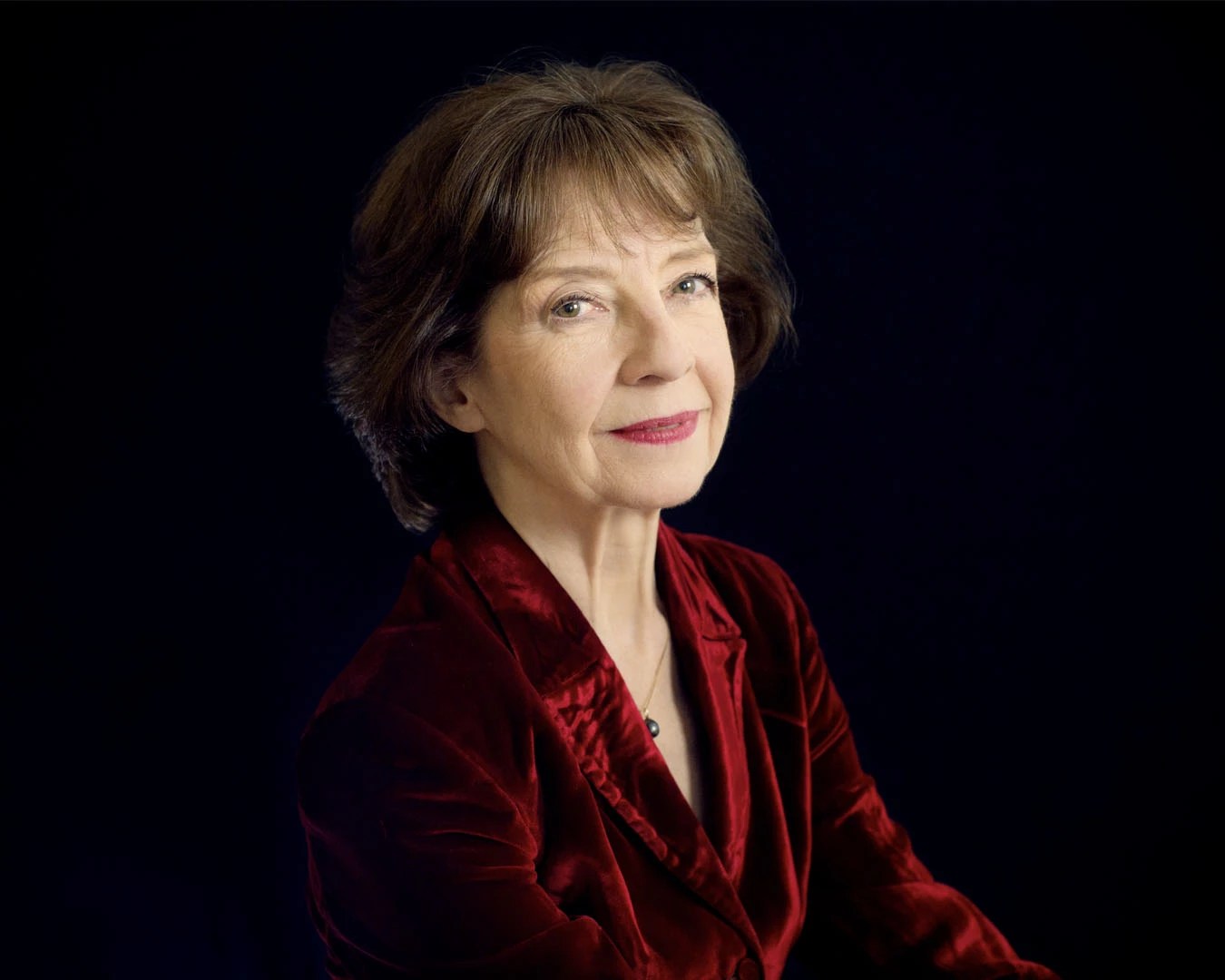
In concert – Anne Queffélec @ Wigmore Hall: Mozart and a French ‘musical garden’

Anne Queffélec (piano)

Mozart Piano Sonata no.13 in B flat major K333 (1783-4)
Debussy Images Set 1: Reflets dans l’eau (1901-5); Suite Bergamasque: Clair de lune (c1890, rev. 1905)
Dupont Les heures dolentes: Après-midi de Dimanche (1905)
Hahn Le Rossignol éperdu: Hivernale; Le banc songeur (1902-10)
Koechlin Paysages et marines Op.63: Chant de pêcheurs (1915-6)
Schmitt Musiques intimes Book 2 Op.29: Glas (1889-1904)

Wigmore Hall, London
Monday 28 April 2025 (1pm)

by Ben Hogwood picture of Anne Queffélec (c) Jean-Baptiste Millot

The celebrated French pianist Anne Queffélec is elegantly moving through her eighth decade, and her musical inspiration is as fresh as ever. The temptation for this recital may have been to play anniversary composer Ravel, but instead she chose to look beneath the surface, emerging with a captivating sequence of lesser-known French piano gems from the Belle Époque, successfully debuted on CD in 2013 and described by the pianist herself as “a walk in the musical garden à la Française.”

Before the guided tour, we had Mozart at this most inquisitive and chromatic. The Piano Sonata no.13 in B flat major, K.333, was written in transit between Salzburg and Vienna, and the restlessness of travel runs through its syncopation and wandering melodic lines. Queffélec phrased these stylishly, giving a little more emphasis to the left hand in order to bring out Mozart’s imaginative counterpoint. She enjoyed the ornamental flourishes of the first movement, the singing right hand following Mozart’s Andante cantabile marking for the second movement, and the attractive earworm theme of the finale, developed in virtuosic keystrokes while making perfect sense formally.

The sequence of French piano music began with two of Debussy’s best known evocations. An expansive take on the first of Debussy’s Images Book 1, Reflets dans l’eau led directly into an enchanting account Clair de Lune, magically held in suspense and not played too loud at its climactic point, heightening the emotional impact.

The move to the music of the seldom heard and short lived Gabriel Dupont was surprisingly smooth, his evocative Après-midi de Dimanche given as a reverie punctuated by more urgent bells. Hahn’s Hivernale was a mysterious counterpart, its modal tune evoking memories long past that looked far beyond the hall. Le banc songeur floated softly, its watery profile evident in the outwardly rippling piano lines. The music of Charles Koechlin is all too rarely heard these days, yet the brief Le Chant des Pêcheur left a mark, its folksy melody remarkably similar to that heard in the second (Fêtes) of Debussy’s orchestral Nocturnes.

Yet the most striking of these piano pieces was left until last, Florent Schmitt’s Glas including unusual and rather haunting overtones to the ringing of the bells in the right hand. Queffélec’s playing was descriptive and exquisitely balanced in the quieter passages, so much so that the largely restless Wigmore Hall audience was rapt, fully in the moment. Even the persistent hammering of the neighbouring builders, a threat to concert halls London-wide, at last fell silent.

Queffélec had an encore to add to her expertly curated playlist, a French dance by way of Germany and England. Handel’s Minuet in G minor, arranged by Wilhelm Kempff, was appropriately bittersweet and played with rare beauty, completing a memorable hour of music from one of the finest pianists alive today.

Listen

You can listen to this concert as the first hour of BBC Radio 3’s Classical Live, which can be found on BBC Sounds. The Spotify playlist below has collected Anne Queffélec’s available recordings of the repertoire played:

Published post no.2,517 – Tuesday 29 April 2025
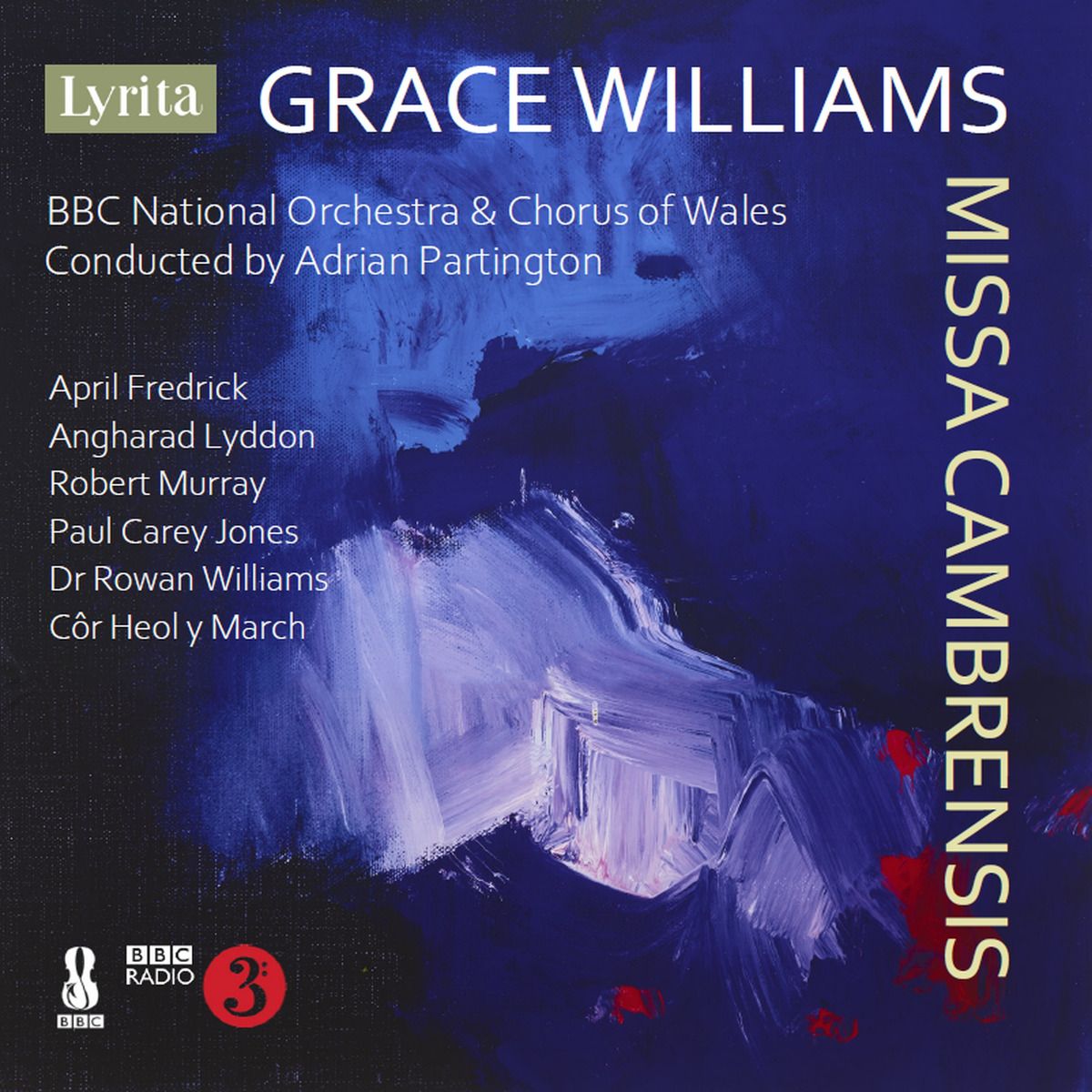
On Record – Soloists, BBC National Chorus and Orchestra of Wales / Adrian Partington – Grace Williams: Missa Cambrensis (Lyrita)

Grace Williams Missa Cambrensis (1968-71)

April Fredrick (soprano), Angharad Lyddon (mezzo-soprano), Robert Murray (tenor)
Paul Carey Jones (bass), Dr Rowan Williams (narrator); Côr Heol y March, BBC National Chorus and Orchestra of Wales / Adrian Partington

Lyrita SRCD442 [66’41’’] Latin / Welsh text and English translation included
Producer / Engineer Adrian Farmer, Engineer Simon Smith

Recorded 20-21 January 2024 at BBC Hoddinott Hall, Cardiff

Reviewed by Richard Whitehouse

What’s the story?

Lyrita continues its coverage of Grace Williams (1906-1977) with her largest concert work, Missa Cambrensis, in a recent studio recording which confirms it as the defining statement from a composer who, almost half a century since her death, is only now receiving her due.

What’s the music like?

As Paul Conway observes in his typically thorough booklet notes, Missa Cambrensis is one among a number of works by Williams that is Welsh only in a titular sense. Premiered at the Llandaff Festival in 1971, it was well received by fellow composers, critics and public alike but not heard again until 2016 in a performance one recalls as originally intended for release on Lyrita and which can be heard via the composer’s dedicated website. Not that the present account is other than successful in conveying the essence of this powerful yet elusive piece.

Many settings of the Mass since Haydn have unfolded a symphonic trajectory, but Williams goes further with the division into five clearly defined movements. The initial Kyrie Eleison not only introduces most of those salient motifs but also establishes that tone, mystical in its undulating equivocation, such as characterizes this work’s long-term expression: the contrast here between choral and soloistic textures duly accentuated by their hieratic and supplicatory quality. This duly sets up an emotional contrast intensified in the Gloria, outwardly the most straightforward part of the work but with a calmly ecstatic response at Laudamus te then an eloquent Dominus Deus that are nothing if not personal, together with an intensely wrought Cum Sancto Spiritu whose culminating Amen’s convey a distinctly ambivalent affirmation.

As most often, the Credo is the most substantial portion but Williams rings the changes by dividing this into halves, a pertinent division coming at Et homo factus est and Crucifíxus étiam pro nobis. In between are interpolated a setting of Saunders Lewis’s Carol Nadolig (A Christmas Carol) for children’s voices with viola, cello and harp of melting pathos, offset by a starkly narrative treatment of the ‘Beatitudes’ prior to a mostly ruminative resumption of the Credo. Pivoting between contemplation and elation, the Sanctus is rounded off by a joyful Hosánna in excélsis which is not to be heard again after the subdued eloquence of the Benedictus. An anguished response to the Agnus Dei feels the more acute, as also a searching Dona Nobis Pacem which brings the work full circle to its contemplative close.

Does it all work?

Yes, and with an understated while readily identifiable personality that surely makes this the most potent setting of the Mass from a Welsh composer. Subliminal influences might not be hard to discern, among them Britten’s War Requiem, but they never detract from Williams’s own idiom. The soloists cannot be faulted in terms of commitment, with Rowan Williams a notably incisive reciter, while Adrian Partington secures a lustrous response from his choral and orchestral forces. Overall, it is hard to imagine the work given with greater conviction.

Is it recommended?

It is indeed, not least in the hope that further live hearings of Missa Cambrensis may prove forthcoming. Good news, moreover, that Lyrita has now acquired the premiere performance of Williams’s only completed opera, The Parlour, which is scheduled for imminent release.

Listen & Buy

You can read more about this release at the Wyastone website

Published post no.2,516 – Monday 28 April 2025

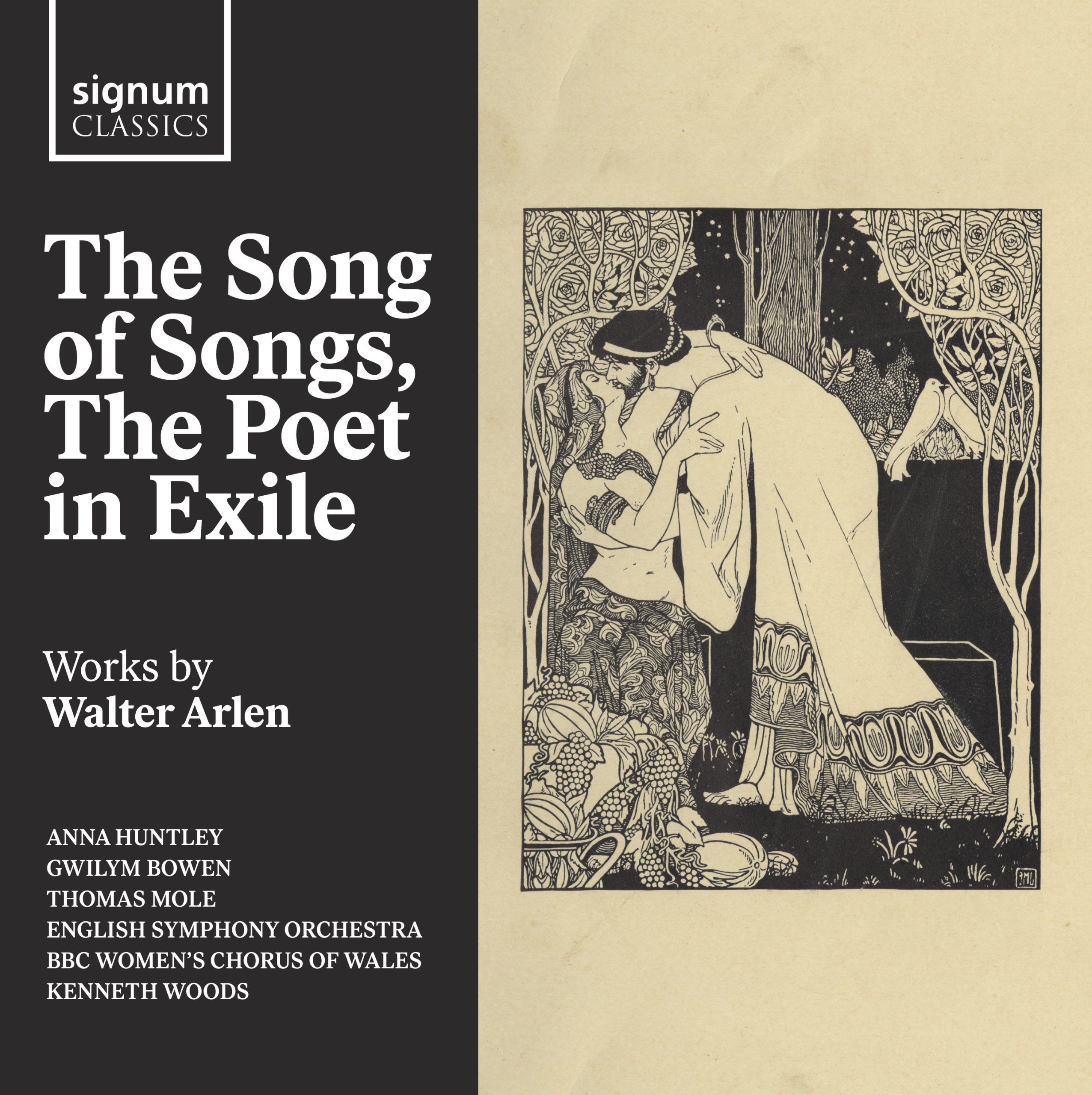
On Record – Anna Huntley, Gwilym Bowen, Thomas Mole, BBC Women’s Chorus of Wales, ESO / Kenneth Woods – Walter Arlen: The Song of Songs, The Poet In Exile (Signum Classics)

Arlen arr. Bekmambetov / ed. Woods The Song of Songs (1953)
Arlen ed. Woods The Poet in Exile (1988, rev. 1994)

Anna Huntley (mezzo-soprano), Gwilym Bowen (tenor), Thomas Mole (baritone), BBC Women’s Chorus of Wales, English Symphony Orchestra / Kenneth Woods

Signum Classics SIGCD879 [52’21’’]
Producer / Engineer Phil Rowlands, Engineer Andrew Smilie

Recorded 17-20 February 2022 at BBC Hoddinott Hall, Cardiff

Reviewed by Richard Whitehouse

What’s the story?

Kenneth Woods and the English Symphony Orchestra continue their exploration of music by composers murdered or forced into exile during the Third Reich with this release of Walter Arlen, whose recent death at 103 enabled him to experience a renewed interest in his music.

What’s the music like?

Although he remains best known through his trenchant music criticism for the Los Angeles Times, the Vienna-born Walter Arlen (Aptowitzer) also made a distinguished contribution to music administration and left a not inconsiderable output. Several albums featuring his songs and piano music can be heard on the Gramola label, while this latest ESO release provides a welcome introduction to two of his works that involve larger forces – the one drawing on an ancient Jewish source and the other upon poems by a seminal author from the post-war era.

Whether or not The Song of Songs is the harbinger of monogamy in the Judeo-Christian moral code, it contains some of the eloquent expression found in either Biblical testament. In just 30 minutes, Arlen’s ‘dramatic poem’ takes in the main narrative, its lively initial chorus featuring intricate polyphony for female voices and incisive orchestral textures. As the piece unfolds, its emotional emphasis is placed on the solo contributions – whether those of Solomon sung with burnished warmth by Thomas Mole, those of the Shepherdess with poise and insouciance by Anna Huntley, or those of the Shepherd given with virility and tenderness by Gwilym Bowen. Nor is the BBC Women’s Chorus of Wales wanting in intonational accuracy. If the resolution does not bring expected closure, this direct and unaffected setting certainly warrants revival.

The real discovery is The Poet in Exile, a song-cycle to texts by Polish-born American author Czesław Miłosz. These profound poems are not easily rendered in musical terms, and it is to Arlen’s credit that he goes a considerable way to achieving this. As the composer states, they ‘‘dealt with situations echoing my own remembrance of things past’’ – as holds good from the trenchant rhetoric of ‘Incantation’, via the sombre rumination of ‘Island’ then wistful elegance of ‘In Music’ or controlled fervour of ‘For J.L.’ (with its striking harpsichord obligato), to the confiding intimacy of ‘Recovery’. Some may have heard these songs with Christian Immler and Danny Driver (GRAM98946) but this orchestration by Woods, after the arrangement by Eskender Bekmambatov, offers a wider-ranging context for assured singing by Thomas Mole.

Does it all work?

Pretty much, and not least because the ESO is heard to advantage in the spacious acoustic of Hoddinott Hall while directed by Woods with unerring sense of where to place the emotional emphasis – especially important in conveying the meaning of the songs. A pity, however, that neither texts nor translations could be included here – not least as that by Leroy Waterman of The Song of Songs is appreciably different from those which have been previously set, while the Miłoz poems are worth savouring on their own terms and need to be approached as such.

Is it recommended?

It is. If not a major voice, Arlen’s music is always approachable and often thought-provoking. Initiates and newcomers alike will enjoy getting to know these works and hearing them given so persuasively – a worthy present, indeed, for this composer as he neared his 102nd birthday.

Listen & Buy

Click on the names to read more about performers Anna Huntley, Gwilym Bowen, Thomas Mole, the English Symphony Orchestra and conductor Kenneth Woods. Click on the name for more on Walter Arlen

Published post no.2,515 – Saturday 26 April 2025

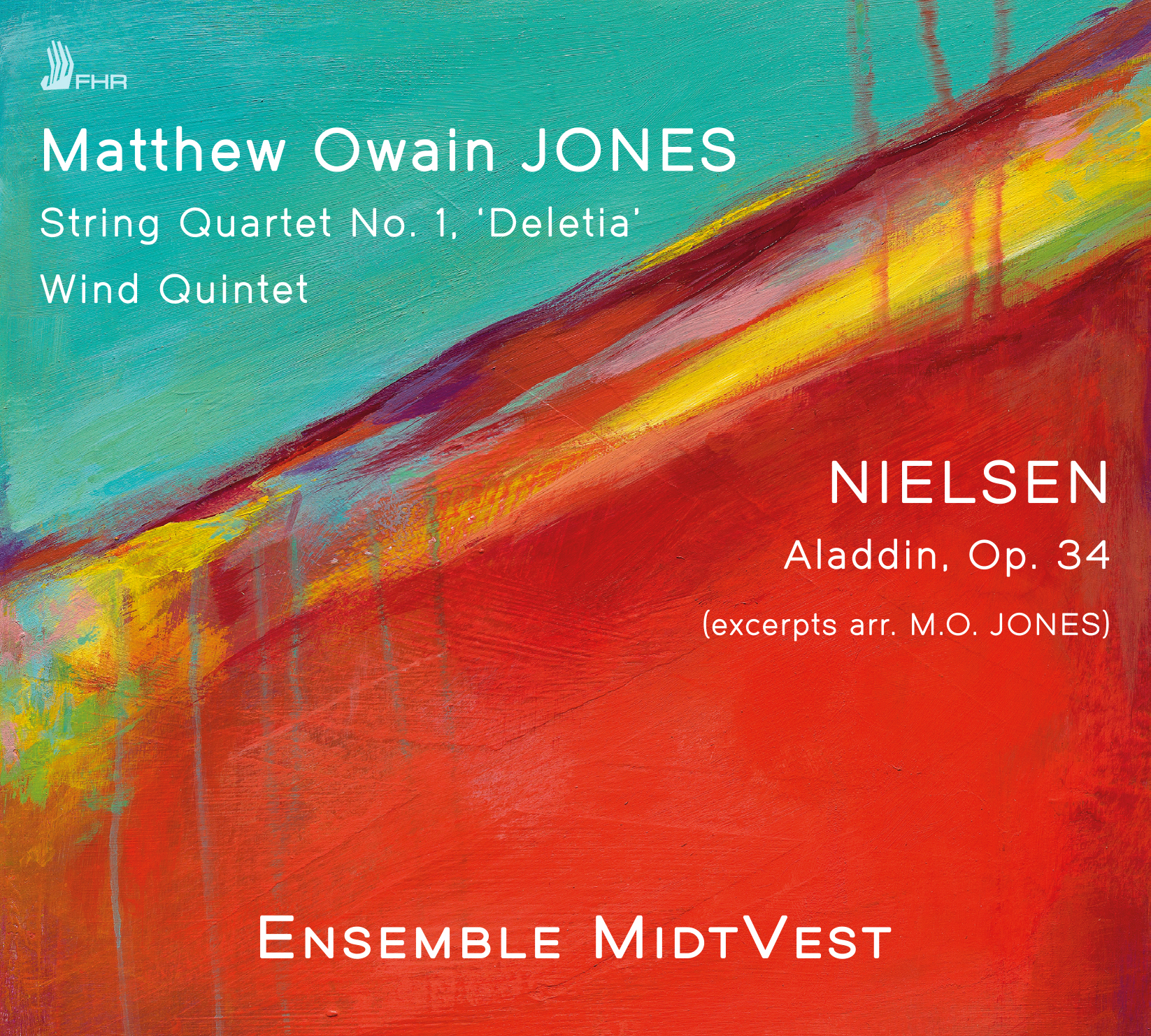
On Record – Ensemble MidtVest – Matthew Owain Jones: String Quartet no.1, Wind Quintet; Nielsen arr. Jones: Aladdin (First Hand Records)

Matthew Owain Jones
String Quartet no.1 ‘Deletia’ (1993, rev. 2012)
Wind Quintet (2016)
Nielsen arr. Jones
Aladdin, FS89: Nine Pieces for wind quintet, string quartet and piano (1917-19, arr. 2018)

Ensemble MidtVest [Charlotte Norholt (flute), Peter Kirstein (oboe), Tommaso Lonquich (clarinet), Yavor Petkov (bassoon), Neil Page (horn); Matthew Owain Jones, Karolina Weltrowska, Ana Feitosa (violins), Sanna Ripatti (viola), Jonathan Slaatto (cello), Martin Qvist Hansen (piano)]

First Hand Records FHR163 [63’53’’] All world premiere recordings
Producers / Engineers Michael Ponder (String Quartet, Wind Quintet), Morten Mogenson (Aladdin)

Recorded 6 December 2017 (String Quartet), 11 January 2018 (Wind Quintet), 29-31 August 2018 (Aladdin) at Den Jyske Sangskole, Herning, Denmark

Reviewed by Richard Whitehouse

What’s the story?

First Hand Records makes a welcome addition to its contemporary catalogue with this release of music or arrangements by Matthew Owain Jones, all performed by the extended outfit that is Ensemble MidtVest and among whose varied personal the composer himself can be found.

What’s the music like?

Fifty last year, Jones has had a diverse career as a musician as is recounted in his personable booklet notes. Composing has often taken a back seat in his activities, the works here written almost a quarter-century apart, yet there can be no doubting the idiomatic nature of his music.

Composed when barely out of his teens, the First String Quartet is evidently the product of a gifted if unfocussed musical talent. Jones admits as much by appending the subtitle ‘Deletia’ to its revision almost two decades on – the original four movements having been reduced to just two, albeit substantial entities. These duly complement each other in almost all respects – the initial Andante exuding a warmth and fervency that is questioned, without being denied outright, by the ensuing Allegro whose ‘minaccioso’ marking underlines its capricious while sometimes ominous nature. The result is uneven yet engaging – making it a pity that, after a musical co-written with his sister, Jones should have left composing somewhat in abeyance.

It was the positive reception accorded that revision of his quartet which encouraged Jones to return to composition in earnest, and among the first fruits of this resumption was his Wind Quintet. Its substantial single movement falls into four continuous sections such as outline a relatively Classical design (albeit with an intermezzo-like section placed second), and Jones cannily exploits those incremental changes in timbre or texture without recourse to extremes of tempo and mood. The outcome is music demonstrably within the lineage of a genre more extensive than often supposed and, though its content breaks little new ground, this is never less than expertly conceived for the medium and affords a pleasurable listen in its own right.

The locus classicus of wind quintets has to be that written just over a century ago by Nielsen, music by which composer ends this collection. Although its suite is periodically revived, the lavish incidental music (not a ballet, as is referenced several times in the notes, though there is a notable element of dance) for Adam Oehlenschlager’s play Aladdin proved too ambitious even at its Copenhagen premiere. Surprising, perhaps, that the nine numbers included here translate so well into the medium of a mixed decet – preserving the distinctive nature of music from Nielsen’s maturity (it comes mid-way between his Fourth and Fifth Symphonies) and thus making it freely available to practitioners for the very different context of the recital room.

Does it all work?

Pretty much. Much of the attraction of this collection lies in the respect which the members of Ensemble MidtVest have for Jones and his music, thereby making for performances that could scarcely be improved upon in terms of technical refinement or interpretative insight.

Is it recommended?

It is, not least as the sound conveys the immediacy but also delicacy of this music with ideal clarity and perspective. Jones must feel vindicated by the enterprise, as indeed he should, and one looks forward to more releases of both his compositions and arrangements in due course.

Listen & Buy

Click on the names to read more about composers Matthew Owain Jones and Carl Nielsen, and the performers Ensemble MidtVest

Published post no.2,515 – Saturday 26 April 2025

Switched On – Andrea Cichecki: Drawn Into The Edge Effect (Castles In Space)

by Ben Hogwood

What’s the story?

The music of Andrea Cichecki speaks of the great outdoors, the environment she now calls home having moved after years of city life.

Each of the nine tracks tells a personal story, the music complemented by field recordings made in the Ore Mountains and Saxon Switzerland, designed to further the immersive listening experience.

What’s the music like?

The season of spring courses through Cichecki’s music, which teems with life and hope. The lush textures of A Lost Memory are a case in point, where the warm keyboard sounds build up in layers, melodies swirling towards a greater whole. The lush textures are beautifully managed.

Cichecki uses no drums but generates plenty of momentum on tracks like Choosing Paths and Diffused Reflection Of Yourself, both a hive of activity with melodic loops bubbling up in lively counterpoint. The Edge Effect is the musical equivalent of looking at the bright light of a new morning, with dappled, treble-rich textures.

A Tale Not Everyone Knows is poised and rather beautiful, while the expanse of tracks like Naked Animal and Different Step is enhanced by the field recordings.

Does it all work?

It does. Cichecki’s music has an inner serenity and brightness that give it an immediate appeal.

Is it recommended?

Very much so. This is music to soothe the fevered brow, but through its ambience there is also an inner energy that provides a great deal of positivity. Andrea Cichecki makes music to enhance and energise!

For fans of… Matthewdavid, M83, Julianna Barwick, Ulrich Schnauss, Jon Hopkins

Listen / Buy

Published post no.2,514 – Friday 25 April 2025