Unknown's avatar

About Arcana

My name is Ben Hogwood, editor of the Arcana music site (arcana.fm)

In concert – CBSO / Kazuki Yamada: Mahler Symphony no.9 & Takemitsu

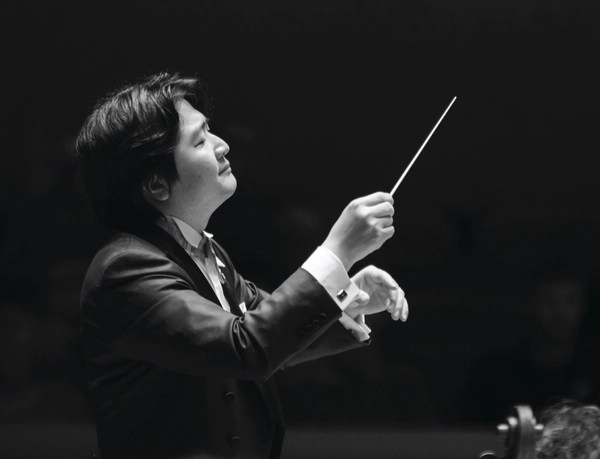
City of Birmingham Symphony Orchestra / Kazuki Yamada (above)

Takemitsu Requiem (1957)
Mahler Symphony no.9 in D major (1908-09)

Symphony Hall, Birmingham
Thursday 10 April 2025

Reviewed by Richard Whitehouse Picture of Kazuki Yamada (c) Hannah Fathers

Ninth Symphonies have been a recurrent feature of this season from the City of Birmingham Symphony Orchestra and Kazuki Yamada. Tonight’s concert brought this to a culmination of sorts with that by Mahler and which naturally occupied almost the whole of the programme.

Whatever else, it was a performance whose scope matched the music’s ambition and not least in an opening Andante as lays claim to being its composer’s greatest achievement. Admittedly this took a few minutes to find focus, those initial bars not so much speculative as halting, but an overall sense of the movement unfolding seamlessly across its strategic peaks and troughs was undeniable, and Yamada was mindful to underline Mahler’s holding back of its expected culmination so the closing minutes mused eloquently if uncertainly on what might have been.

The middle movements can often emerge as incidental to the formal scheme, and Yamada’s take on the Ländler gave some pause for thought. Each of its constituents was vividly shaped and articulated, but a stop-start discontinuity arguably denied it that innocence to experience trajectory which, in turn, makes tangible the fatalistic humour at its end. The Rondo-Burleske was the undoubted highlight – its abrasiveness spilling over into violence towards the close, but not before Yamada had summoned the requisite anguish from its yearning trio section.

It might have been better to continue directly into the Adagio. As it was, a relatively lengthy pause left this finale sounding less a direct reaction to what had gone before than a delayed avoidance of the issues raised. Yamada’s overall handling of this movement was fine if not exceptionally so. Such as the twilit episode prior to the main climax was lucidity itself, but the conductor having already slowed to near-stasis then made it difficult to reduce the tempo further, so that the closing bars risked feeling emotionally gratuitous rather than inevitable.

What could hardly be gainsaid was the commitment of the CBSO’s response over what, for all its latter-day familiarity, remains a testing challenge whether individually or collectively. Wisely, Yamada has resisted any temptation to fashion a self-consciously virtuoso orchestra; emphasis seems to be instead on encouraging flexibility and sensitivity of response in terms of the music at hand – a more circumspect though productive approach which suggests he is happy to stay the course in terms of a partnership which is still in its relatively early stages.

Not a few performances of Mahler Nine opt for a scene-setting piece rather than first half as such. Yamada did so with Takemitsu’s Requiem – if not this composer’s first or even earliest acknowledged work, then certainly the one that established his wider reputation. The CBSO strings did justice to its subtle interplay of expressive threnody and more angular elements in a reading that fulfilled its purpose ideally. Hopefully the coming seasons will revive some of the more innovative pieces to have languished in the three decades since Takemitsu’s death.

This was the latest in what is becoming a tradition and rightly so – a page in the programme listing those ‘‘friends, members and colleagues’’ whom the CBSO Remembers with no little gratitude. From this perspective, tonight’s programme could hardly have been more fitting.

For details on the 2024-25 season A Season of Joy, head to the City of Birmingham Symphony Orchestra website. Click on the name to read more about conductor Kazuki Yamada

Published post no.2,502 – Monday 14 April 2025

On Record – Splonge! An Introduction To Tubby Hayes (Decca / Fontana Jazz)

Reviewed by John Earls

A vinyl-only release, with the following tracklisting:

Side A
Tubbsville
You For Me
Lady ‘E’ – Tubby Hayes & The All Stars
Angel Eyes – Tubby Hayes Quintet
Johnny One Note – Tubby Hayes Quintet

Side B
Pedro’s Walk – Tubby Hayes Orchestra
Bluesology – The Tubby Hayes Quartet
Blues In Orbit – The Tubby Hayes Quartet
For Members Only (Take 1) – The Tubby Hayes Quartet
Hey Jude – Tubby Hayes Orchestra

What’s the story?

Tubby Hayes, born in London in 1935, was “one of the most influential and dominating personalities on the British Jazz scene” according to his one-time band mate and fellow British jazz legend Ronnie Scott. He died in 1973 at the age of 38 following a turbulent personal life that included alcohol and drug issues.

In an attempt to answer the question “Where do I start?” this album (a vinyl only release) brings together ten tracks originally recorded for the Fontana label between 1961 and 1969 and compiled by filmmaker, author and avid Tubby Hayes fan Mark Baxter, who has also written some excellent sleeve notes: “I once heard someone say that if John Coltrane had been born in Raynes Park he would have sounded like Tubby Hayes”. Interest in Tubby Hayes and his music was in no small part renewed by musician, writer and Tubby Hayes expert Simon Spillett’s magnificent 2015 biography The Long Shadow of The Little Giant: The Life, Work and Legacy of Tubby Hayes, and the 2016 documentary film Tubby Hayes: A Man In A Hurry, written and produced by Baxter.

What’s the music like?

This is a broad and thoroughly enjoyable selection of tunes capturing the virtuosity and range of a fine jazz musician in an eight year spell of his all too short career. It encompasses glorious big band music as well as some notable smaller jazz ensemble performances.

Hayes’s own composition Tubbsville (from the 1961 album Tubbs) is a great big band opener with a compelling groove and Hayes’s astounding tenor saxophone style to the fore.

The big band format is also represented on the album by three Tubby Hayes Orchestra performances including Pedro’s Walk (from 1964’s Tubb’s Tours) with its bossa nova inflections and a take on Hey Jude (recorded in 1969 but released on 1970’s The Orchestra) of which Baxter states that whilst its commercial sound may not be to some jazz lovers taste “it still has moments when you are reminded of what a jazz great Hayes was”. He’s right. It also features a terrific Spike Wells drum intro to boot.

The other Orchestra selection is Milt Jackson’s Bluesology from the album 100% Proof (1967) which sees multi-instrumentalist Hayes getting straight into vibraphone mode (he is also credited with tenor saxophone and flute) in a mellow bluesy number that features some other greats of British jazz, not least the aforementioned former Jazz Courier Ronnie Scott (also on tenor saxophone) and Kenny Wheeler on trumpet.  

The first we hear of Hayes’s vibraphone playing on the album is on Lady ‘E’ (from 1963’s ‘Return Visit!’), a Roland Kirk composition whose playing of the nose flute (amongst other things) is also a stand out feature. It’s a smooth swing produced by Quincy Jones. Hayes’s finesse on the vibraphone is again on display on the slow and more subdued ballad Angel Eyes which also features Jimmy Deuchar on muted trumpet.

Things are a bit more edgy with the Tubby Hayes Quintet’s interpretation of the Rodgers and Hart show tune Johnny One Note (from 1962’s Down In The Village), with Jimmy Deuchar’s “opening tear-arsed arrangement”, to quote Simon Spillett’s apt and graphic description, going into a fast and furious ride with Hayes concentrating on tenor saxophone duties but ably complemented by the rest of the quintet including Deuchar himself on trumpet. Hayes’s saxophone virtuosity is again on display on You For Me (from 1962’s Tubbs in New York), not least in the remarkable unaccompanied introduction.

The remaining tracks are For Members Only (Take 1) taken from Grits, Beans & Greens: The Lost Fontana Studio Sessions 1969 (released in 2019) with Hayes on tenor saxophone and flute, and Blues In Orbit from Mexican Green (1968) featuring some more flying Hayes sax solos and some ripping drums from Tony Levin who, Spillett reports in his book, says that Hayes apparently never played the tune again.

Does it all work?

Absolutely. If you are new to Tubby Hayes this does indeed answer the question “Where do I start?”. If you are more familiar with his music it is a superb reminder of the talent and virtuosity of this major figure in British jazz that will send you back to the original albums.

Is it recommended?

For sure. It’s a super compilation and with the sleeve notes and artwork (the cover image is Ed Gray’s wonderful ‘Soho Soul Tubby Hayes ‘A Man In A Hurry’’) it amounts to a great package put together with love and care and released just after what would have been Hayes’s 90th birthday. We owe Mark Baxter and Decca a debt of gratitude.

Oh, and if you’re wondering where the title Splonge! comes from, Baxter’s sleeve notes point you to the count-in on the recording of Hayes’s track Voodoo (not on the album).

Listen & Buy

To purchase Splonge! An Introduction To Tubby Hayes (available on vinyl only), visit the Decca website.

Published post no.2,501 – Sunday 13 April 2025

On Record – Naresh Sohal: Complete Piano Music (Konstantinos Destounis) (Toccata Classics)

Naresh Sohal
A Mirage (1974)
Chakra (1979)
Prayer (2006)
Tsunami (2007)
Piano Trio (1988)

Konstantinos Destounis (piano); Cristina Anghelescu (violin), Adrian Mantu (cello), Mark Troop (piano) (Piano Trio)

Toccata Classics TOCC0689 [56’30”]
Producers and Engineers Konstantinos Destounis and Bobby Blazoudakis, Peter Waygood (Piano Trio)

Recorded 18 January 2022 at Dmitris Mitropoulos Hall, Athens; 1-3 June 2001 at Gateway Studio, Kingston-upon-Thames

Reviewed by Richard Whitehouse

What’s the story?

Toccata Classics issues the first of a likely series devoted to chamber and instrumental music by Naresh Sohal, featuring all those acknowledged pieces for solo piano along with his Piano Trio, on a release that also continues the posthumous rehabilitation of this significant figure.

What’s the music like?

Although he composed sparingly for the medium, the piano pieces Sohal did write afford an overview of how his music evolved across three decades. Primarily this involved an active as well as frequently confrontational exploration of more radical tendencies in post-war music, resulting in a distinctive while personal synthesis which the composer duly refined and made more pliable with what came after. Those later pieces are not necessarily simpler technically or expressively, yet they convey their essential concerns with greater clarity and immediacy.

At the time of A Mirage, Sohal was still preoccupied with aspects of a European avant-garde he encountered on arrival in the UK some 12 years earlier. Hence the influence of Xenakis in its tendency toward registral extremes and stratified figuration which coalesce more through gestural force than motivic logic. This is already changing in Chakra, which likewise unfolds as an arch but now with a tangible sense of resolution at its apex – though little prepares one for the sudden upsurge at its close after a definite subsiding of tension across the latter stages.

Moving on almost 30 years and Prayer demonstrates a more methodical amalgam of formal means towards expressive ends, though there is nothing at all reactionary about the outcome – whether in the unforced eloquence of its initial Adagio or the fluid interplay of its ensuing Allegretto as it pursues an increasingly intricate and eventful course. A piece titled Tsunami might lead one to expect a headlong discourse, but Sohal’s study is far more controlled and understated by evoking this natural phenomenon in all its awesome and destructive majesty.

Although it comes nearer chronologically to the former group of pieces, the Piano Trio might well be the latest work here as regards overall elaboration. Thus, its three continuous if well-defined sections outline an active process of thesis, antithesis then synthesis which is audible at every stage, though here the evolution is one of a constantly increasing velocity towards a violent or even tragic denouement. Immersed in Indian philosophy as he was, Sohal was only too aware of those darker and negatory forces which are to be found at all levels of existence.

Does it all work?

Yes, in that Sohal’s is a powerful and flexible musical idiom that predicates communication of emotion over theoretical consistency. A quality always to the fore in these accounts of the piano pieces – Konstantinos Destounis searching out their imaginative reserves without ever falling short of their frequently considerable technical demands. Neither is there any lack of insight or commitment in that of the Piano Trio which, in terms of compactness and overall immediacy, is an ideal way into this composer’s language at its most characteristic or potent.

Is it recommended?

Indeed. The sound accorded Destounis is almost ideal in its clarity and definition, though the Piano Trio is rendered at a slightly oblique perspective. Informative notes on life and music, and good news that a follow-up release of Sohal’s string quartets should soon be available..

Listen & Buy

For purchase options, you can visit the Toccata Classics website. Click on the names to read more about pianist Konstantinos Destounis and composer Naresh Sohal.

Published post no.2,500 – Thursday 10 April 2025

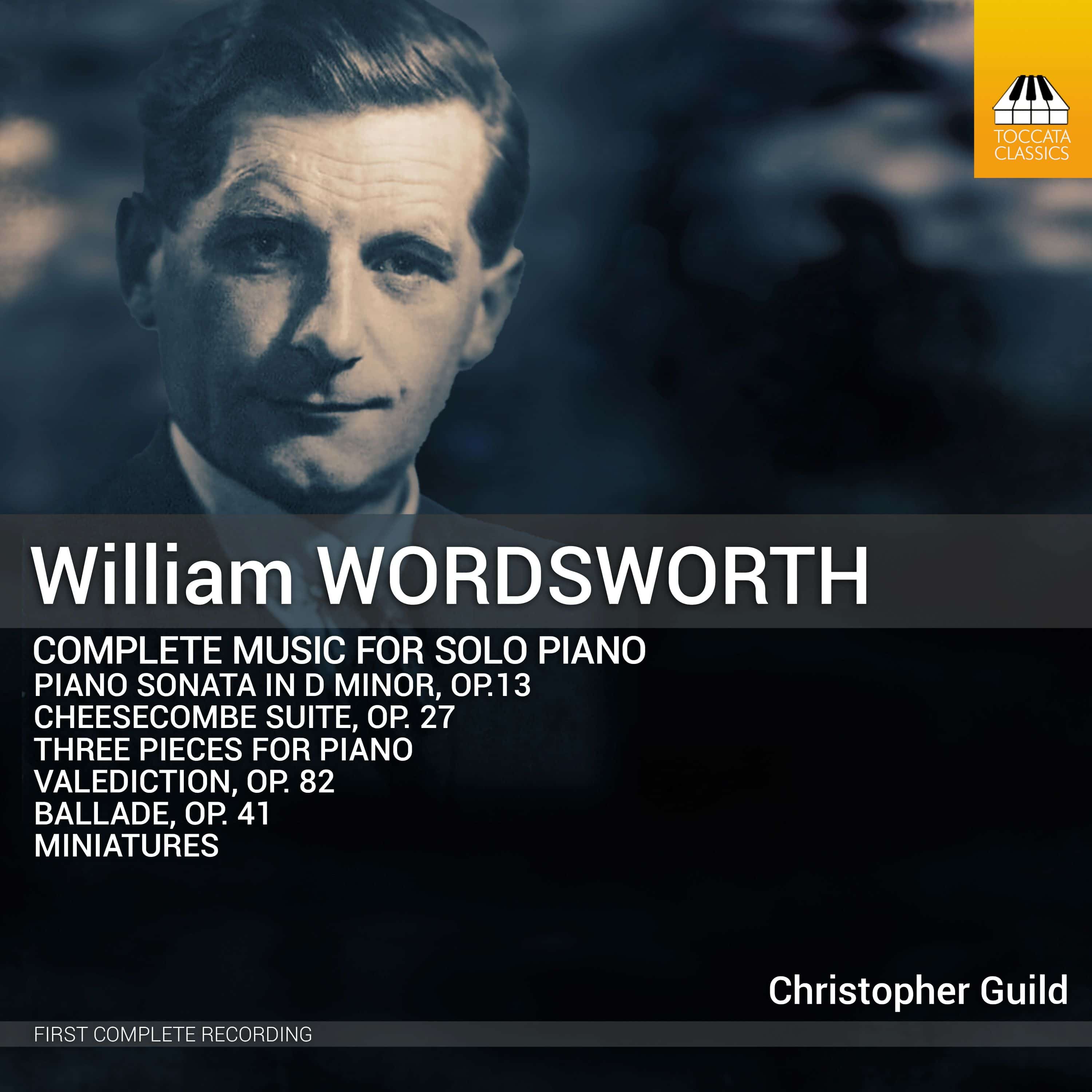
On Record – William Wordsworth: Complete Piano Music (Christopher Guild) (Toccata Classics)

William Wordsworth
Piano Sonata in D minor Op.13 (1938-9)
Three Pieces (1932-4)
Cheesecombe Suite Op.27 (1945)
Ballade Op.41 (1949)
Eight Pieces (all publ. 1952)
Valediction Op.82 (1967)

Christopher Guild (piano)

Toccata Classics TOCC0697 [81’08”]
Producer and Engineer Adaq Khan

Recorded 13 April, 29 May 2022 at Old Granary Studios, Beccles, 2 April 2023, Wyastone Hall, Monmouthshire (Three Pieces)

Reviewed by Richard Whitehouse

What’s the story?

Toccata Classics intersperses its continuing survey of William Wordsworth’s orchestral music with a release devoted to that for solo piano, including several works not otherwise recorded and all ably performed by Christopher Guild, who already features prominently on this label.

What’s the music like?

Although not a large part of his catalogue, piano music features prominently in Wordsworth’s earlier output – notably a Piano Sonata that ranks among the finest of the inter-war period. Its first movement is introduced by a Maestoso whose baleful tone informs the impetuous while expressively volatile Allegro. The central Largamente probes more equivocal and ambivalent emotion before leading into the final Allegro, its declamatory and martial character offset by the plangent recall of earlier material prior to a denouement of surging and inexorable power.

His status as conscientious objector found Wordsworth engaged in farm-work in wartime, the experience duly being commemorated in his Cheesecombe Suite whose pensive Prelude and dextrous Fughetta frame a quizzical Scherzo then a Nocturne of affecting pathos. Written for Clifford Curzon, Ballade is a methodical study in contrasts which makes an ideal encore; as, too, might Valediction – though here the emotions run deeper and more obliquely, as befits this inward memorial to a lifelong friend from comparatively late in its composer’s creativity.

This release rounds out our knowledge of Wordsworth’s piano music with two collections not previously recorded. Among his earliest surviving works, the Three Pieces comprise a taciturn Prelude, fleeting Scherzo then soulful Rhapsody which between them find the composer trying out whole-tone figuration with resourcefulness but also a self-consciousness that might have decided him against publishing. Published by Alfred Lengnick as part of its five-volume educational series Five by Ten, the eight miniatures wear their didactic intention lightly; only one of these exceeding two minutes, yet all evince a technical skill that is never facile along with a pertinent sense of evocation that should commend them to amateurs and professionals alike. Here, as often elsewhere, Wordsworth proves a ‘less is more’ composer of distinction.

Does it all work?

Very much so and Christopher Guild, with admirable surveys of Ronald Stevenson (Toccata) and Bernard Van Dieren (Piano Classics) to his credit, is a natural interpreter of often elusive yet always rewarding music. His charged and often impetuous take on the Sonata has more in common with the pioneering account by Margaret Kitchin (Lyrita) than the overtly rhetorical one by Richard Deering (Heritage). Similarly, his approach to the Cheesecombe Suite and the Ballade draws out their depths if occasionally at the expense of their expressive immediacy. Interestingly, Valediction is played from a copy by Stevenson that alters aspects of keyboard layout or pedalling if not the notes themselves; resulting in a greater emotional ambivalence and textural intricacy which Wordsworth, had he heard it, would most likely have endorsed.

Is it recommended?

Indeed, not least when the sound of both Steinway D’s are so faithfully conveyed and Guild’s annotations are so perceptive. Those who have the Deering release should consider acquiring this one also, while those new to this music need not hesitate in making this their first choice.

Listen & Buy

For purchase options, you can visit the Toccata Classics website. Click on the names to read more about pianist Christopher Guild and composer William Wordsworth.

Published post no.2,500 – Thursday 10 April 2025

In concert – Viktoria Mullova & Alasdair Beatson @ Wigmore Hall: Beethoven & Schubert

Viktoria Mullova (violin), Alasdair Beatson (fortepiano)

Beethoven Sonata for piano and violin no.6 in A major Op.30/1 (1802)
Beethoven Sonata for piano and violin no.8 in G major Op.30/3 (1802)
Schubert Rondo brillant in B minor D895 (1826)

Wigmore Hall, London
Monday 7 April 2025 (1pm)

by Ben Hogwood

Violinist Viktoria Mullova and pianist Alasdair Beatson have been exploring Beethoven’s works for piano and violin for a while now, and this concert demonstrated the rapport they have built with the music – and the Wigmore Hall audience.

On a bright March day in London the Spring Sonata might have been the most appropriate choice – more of which later – but instead we enjoyed an unsung gem among Beethoven’s works for this combination. This was the Sonata for piano and violin no.6 in A major Op.30/1, the least heard of the trio published as Op.30 and a work brimming with good spirits in this performance.

As our BBC Radio 3 host Andrew McGregor informed us, Alasdair Beatson was playing a fortepiano copy of a Conrad Graf instrument, and it brought a wide range of tonal colour to the hall, with mottled treble and a wonderfully grainy lower register. Beatson and Mullova played as one, finishing each other’s sentences, or joining in unisons which could not be split. Op.30/1 warmed to this treatment, its bursts of energy complemented by tender, charming asides. Mullova’s intonation took a little while to settle, but once secured her phrasing was a delight. The soft centred, sweetly toned second movement was followed by an Allegretto con variazioni finale with terrific energy, driving up to and through a sparkling finish.

The Sonata for piano and violin no.8 in G major Op.30/3 followed – a charming work, especially in a performance such as this. Mullova and Beatson were on the edge, justifying a daringly fast tempo choice for the first movement with tight ensemble and drive, Mullova exaggerating the louder notes to put the listener in mind of the sort of sound Beethoven himself would surely have loved. The bubbly first movement was charming, its confidential asides well worth savouring, the togetherness between the two musicians truly admirable. The Tempo di minuetto explored darker moods, notably its brief passage in the minor key which cast a shadow over the return of the previously sunny first theme. The irrepressible finale enjoyed its humourous ‘wrong’ notes, recalling Haydn’s ‘Bird’ string quartet in their impudence.

It is hard to imagine a better performance of Schubert’s Rondo brillant, with which the concert ended. Here the two performers were like dancers in hold as they explored the composer’s unusual rhythmic terrain, bringing a sense of occasion to the introduction and an attractive sway to the dance rhythms as Schubert’s abundant melodies unfolded. A strong central section set up a series of virtuoso heroics towards the end, falling comfortably under Mullova’s fingers, while Beatson prompted with equal dexterity. The performance was a thrill from start to finish. As an ideal encore we did finally hear from Beethoven’s Spring Sonata – the beautiful second movement Adagio, given a charming lilt from Mullova’s phrasing and Beatson’s flowing accompaniment.

Listen

You can listen to this concert as the first hour of BBC Radio 3’s Classical Live, which can be found on BBC Sounds

Published post no.2,499 – Wednesday 9 April 2025