Unknown's avatar

About Arcana

My name is Ben Hogwood, editor of the Arcana music site (arcana.fm)

In concert – Quatuor Danel: Shostakovich & Weinberg #8 @ Wigmore Hall

Quatuor Danel [Marc Danel & Gilles Millet (violins), Vlad Bogdanas (viola), Yovan Markovitch (cello)]

Shostakovich String Quartet no.11 in F minor Op.122 (1966)
Shostakovich String Quartet no.12 in D flat major Op.133 (1968)
Weinberg String Quartet No. 12 Op.103 (1969-70)

Wigmore Hall, London
Wednesday 15 January 2025

by Richard Whitehouse Photo (c) Marco Borggreve

This latest instalment in Quatuor Danel’s traversal of the string quartets by Shostakovich and Weinberg comprised the Twelfth Quartets from both composers – masterpieces both, and was prefaced by the teasing brevity and obliqueness of the former’s preceding such composition.

His 60th year marked the onset of Shostakovich’s ‘late period’ – its overt introspection being appropriate for a piece dedicated to the memory of Vasily Shirinsky, former second violinist of the Beethoven Quartet who premiered all but the first and last of the composer’s cycle. In fact, the Eleventh Quartet is appreciably more varied than this memorial aspect may suggest – the Introduction initiating a subdued discourse given an ironic twist in the Scherzo then erupting combatively in the Recitative, prior to the anxiety of the Etude and ruthlessness of the Humoresque. This performance came into its own with the Elegy, a remembrance of enfolding pathos – after which, the Finale assumed that retrospective function found in many of Shostakovich’s later works with due emphasis on its stealthy and quixotic humour.

Just two years on brought Shostakovich’s Twelfth Quartet – if not his greatest then surely in the top two, while arguably uncharacteristic in its self-conscious yet masterly formal design. Although not introductory as such, the Danel was mindful to keep its opening movement on a tight rein such that its interplay of mood and tempo inferred without defining those seismic confrontations to come. This longest and most diverse of its composer’s quartet movements did not disappoint – the Danel having fullest measure of an 18-minute span whose eventual subsiding presages a pizzicato-driven assault the more visceral for being so methodical in its unfolding. Nor was the allusion to initial material at all misconstrued as this work enters its climactic phase, a transformation whose unbridled affirmation was powerfully in evidence.

It might have emerged barely 18 months on, but Weinberg’s Twelfth Quartet feels comparable only in its scope and ambition. A likely response to the creative radicalism this composer had encountered on returning to his native Poland after over a quarter-century, its four movements essentially reinvent the Classical archetype so that the opening Largo outlines a succession of amorphous or disruptive elements with little audible regard for just how they might interact – something that will only come into focus as the work unfolds while opening-out expressively.

This evolution takes in a stealthy if always speculative Allegretto, and a Presto whose violence has become assaultive by its close. It remains for the final Moderato to effect closure through a synthesis almost improvisatory for all its formal rigour. Allied to this comes a dominance of playing techniques that does not intensify the music as drain it of all emotion and so reduce it to merest gestures by the end. A remarkable piece, even so, and a testament to its composer’s tenacity in the face of an unsympathetic, often antagonistic cultural climate at home or abroad.

Tonight’s impressive reading almost had to be abandoned as Gilles Millet’s bridge collapsed just before the end of the third movement, but his last-minute location of a replacement saw it resume to the close – an unexpected hiatus seemingly in accord with this extraordinary work.

You can hear the music from the concert below, in recordings made by Quatuor Danel -including their most recent cycle of the Shostakovich quartets on Accentus:

For more information on the next concert in the series, visit the Wigmore Hall website. You can click on the names for more on composer Mieczysław Weinberg and Quatuor Danel themselves.

Published post no.2,414 – Friday 17 January 2025
Switched On – Lightwave: Cités Analogues (Bureau B)

by Ben Hogwood

What’s the story?

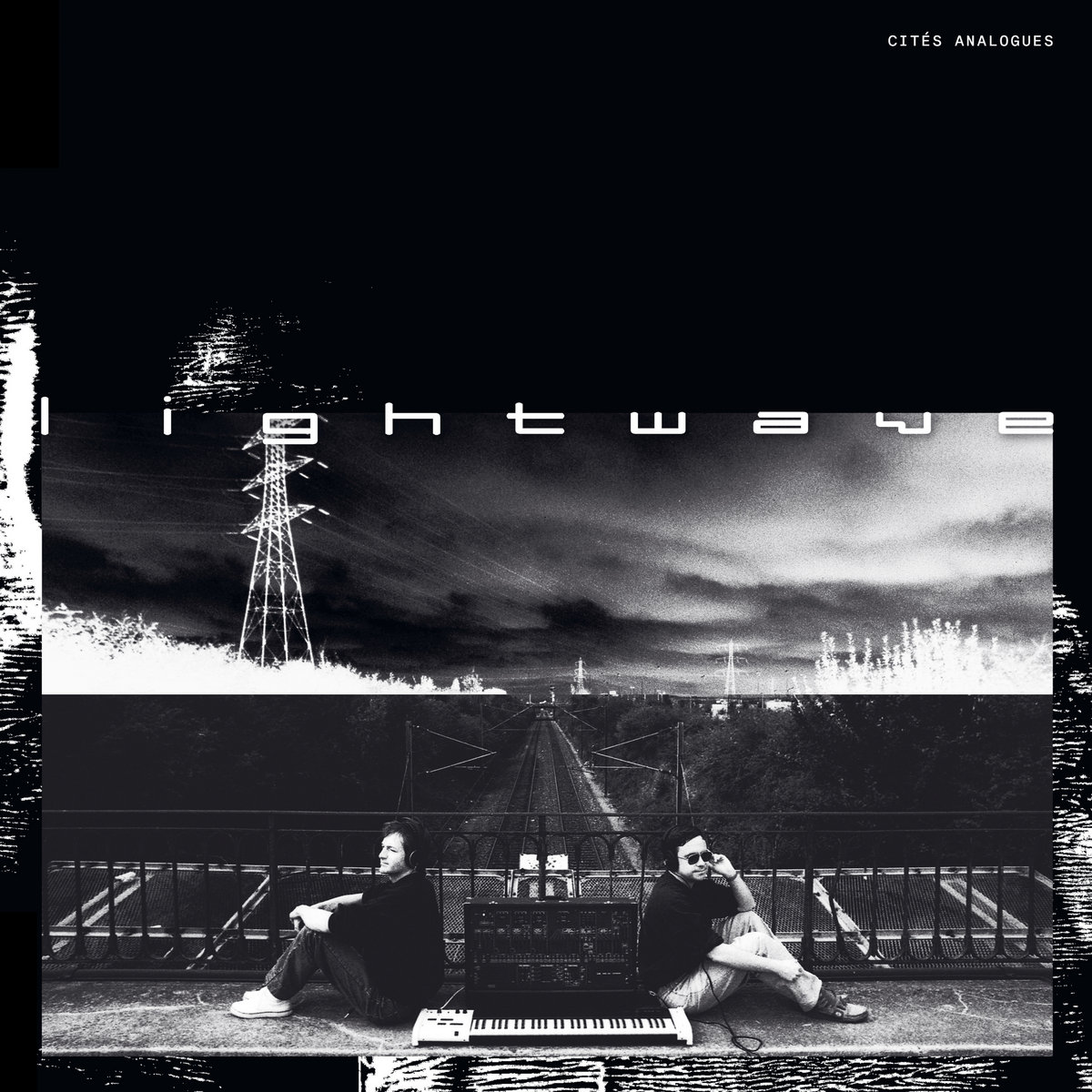
In the story of electronic music – and especially that with a more experimental, ambient viewpoint – the name of Lightwave will not be known to many. Christoph Harbonnier and Christian Wittman released their first album, Modular Experiments, in 1987, after which they recorded Cités Analogues in April and May 1988. It was released as a casette.

Their relative neglect is a mystery, but the restoration of this album should ensure their profile is raised. Bureau B have done the duo proud with a reissue on LP, CD and download. Their press release lists an inventory of RSF, ARP, Roland and Oberheim modular systems, mixed on A&H 12/2 and recorded to tape on a Revox B77 tape machine – a complex set-up but one aimed at what they describe as ‘a concept album, comprising of a series of discrete compositions and atmospheres assembled into two continuous tracks. The tracks are split out a little by dividers, with field recordings and tape processing softening the join between sections.

What’s the music like?

This is a fascinating listen, and if you didn’t already know you might suspect that Cités Analogues had been recorded in the last year, such is its reach and originality. Whether they work in long or short form the duo make subtly shifting soundscapes that are unexpectedly intense in their realisation.

On occasion they hit some winsome grooves, as in the slow but elastic Le Purvis. Agora is lost in thought, musing over a slowly shifting bass, while the eerie Polycentre and activity of News are at once complementary. Cités Analogues itself is an effective long form piece, its quarter-hour duration packed full of ideas and fragments that are given an assured and compelling development. As the album evolves Lightwave create soundscapes with industrial roots but with added splashes of instrumental colour. These are especially evident on Ophelia, a dream sequence with feather-light textures, suspended in mid-air.

Does it all work?

It does. Any regular listeners to the output of the Bureau B label will find much in the way of musical nourishment here. The only regret is that it’s taken so long for Lightwave to get the kind of exposure they deserve!

Is it recommended?

Yes – Lightwave are essential listening for any lovers of Brian Eno, Tangerine Dream and the like. Their music is descriptive, engaging and frequently fascinating, their sonic outlines branching out far ahead of their time.

For fans of… Brian Eno, Tangerine Dream, Klaus Schulze, Jean-Michel Jarre

Listen and Buy

In appreciation – Elgar Howarth

by Ben Hogwood

This week we have learned the sad news of the death of Elgar Howarth at the age of 89.

Howarth was a master of many disciplines, as this detailed obituary on the brass website 4barsrest outlines. Not only was he an inspired trumpet player, especially with the Philip Jones Brass Ensemble, but he was a fine composer and arranger for brass band and an outstanding conductor of music old and new. As a regular conductor of the London Sinfonietta he forged close musical relationships begun in Manchester with the likes of Sir Harrison Birtwistle, Sir Peter Maxwell Davies and Alexander Goehr.

The playlist below attempts to recognise Howarth’s achievements as a player, arranger and conductor, with a wide range of music from Gibbons and Handel to Maxwell Davies and Birtwistle, via Sousa and Copland. Do give it a listen!

Published post no.2,413 – Wednesday 15 January 2025

Switched On – Fennesz: Mosaic (Touch)

by Ben Hogwood

What’s the story?

The composition process for Christian Fennesz’s eighth album was relatively swift. Mosaic was written and recorded at the end of 2023 and completed in the summer of 2024, using a new studio space in the composer’s home city of Vienna.

Experimentation is at its heart, from the collection of ideas through a process of improvisation and development. In the making of Mosaic Fennesz was able to use unusual time signatures (Love and the Framed Insects being in 7/4 rather than the most-used 4/4) while influences come from far and wide, such as West African pop (Personare) and a collage of hard rock riffs (Gonionrizon)

What’s the music like?

Spacious. This is a beautiful audio experience, especially on headphones, where Fennesz places the listener in a position to end the listening experience in a place of extreme calm.

Not all the music is calm however, for the compelling Love and the Framed Insects has an engrossing dialogue, becoming more jagged in its appearance, as though portraying the side of a mountain or the slow movement of a glacier. Personare has tracer lines that cut through the texture.

Contrasting with the sharper sounds are the incredibly restful scenes of Heliconia and A Man Outside. The former takes shape gradually, finding solid ground as its chords grow in stature but then moving to slow, processed guitar loops that add charm to the experience. A Man Outside is taken by the sonic breeze, its lines drifting this way in that as though in the late afternoon sun.

Patterning Heart is a thing of beauty, a slowly oscillating drone whose shape is dictated by an ebb and flow of the sonic tide, the sound occasionally swelling as Fennesz applies distortion to the guitar. The collage of riffs, Gonionrizon, is fascinating, a kaleidoscope of colour that continually changes as though a spectral organ is being played.

Does it all work?

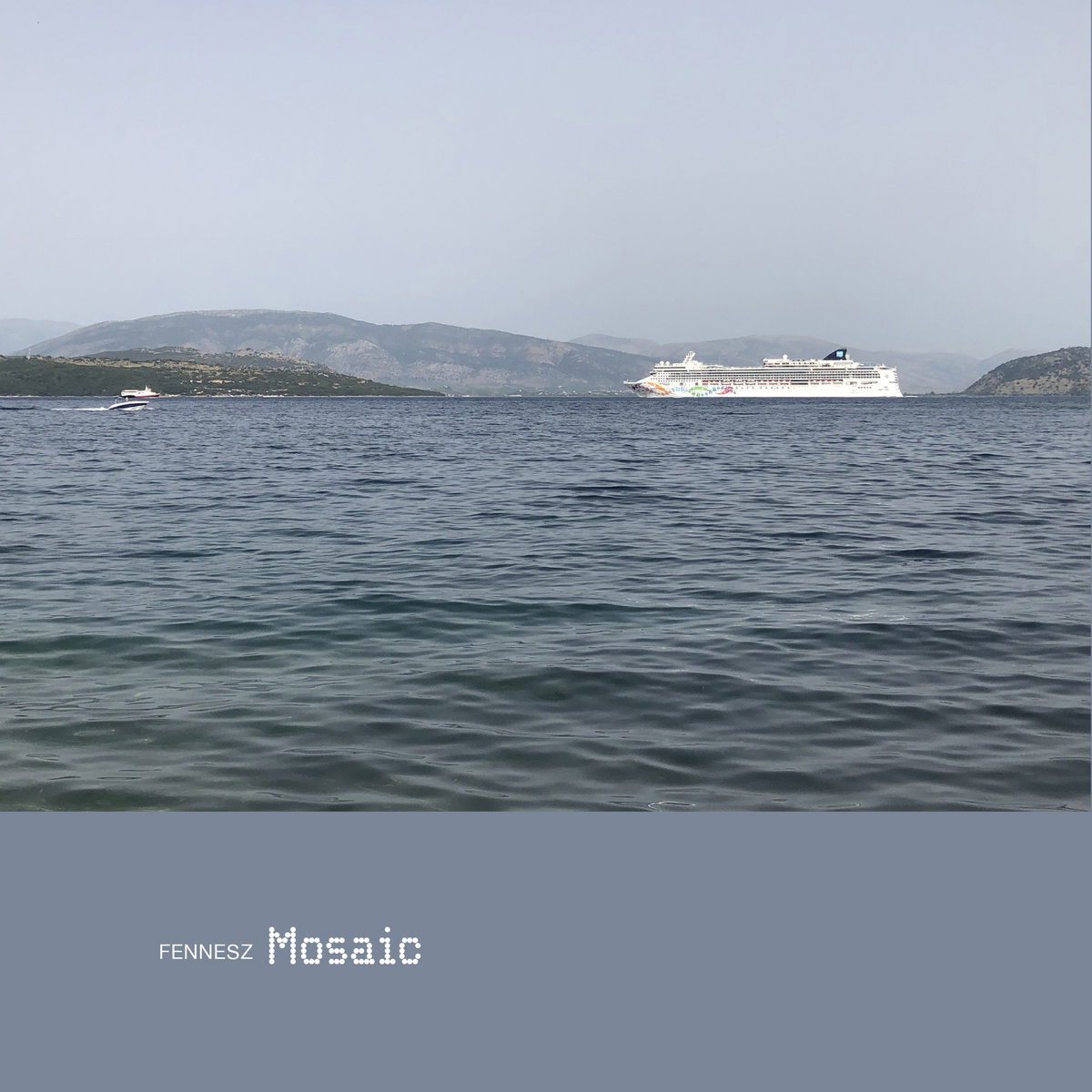
It does – and as the press release mentions, Mosaic is a natural follow-on from Venice, though the boat in the cover art is much bigger and the water less calm. A reflection of the world, it would seem.

Is it recommended?

Yes, enthusiastically. There is a beguiling warmth and space to Fennesz’s work here, an album that links together in a wide spectrum of sound. From whispered ambience to dazzling beauty, it’s all here.

For fans of… Tim Hecker, Loscil, Stars Of The Lid, A Winged Victory for the Sullen

Listen & Buy

Published post no.2,412 – Tuesday 14 January 2025

On this day in 1945 – the world premiere of Prokofiev’s Fifth Symphony

The 13th January 1945 saw the world premiere of one of the 20th century’s best-loved symphonies, conducted by its composer at the Great Hall of Moscow Conservatory. Sergei Prokofiev was the composer, with the USSR State Symphony Orchestra, giving the first performance of his Symphony no.5 in B flat major Op.100, intended to be “a hymn to free and happy Man, to his mighty powers, his pure and noble spirit”.

On the surface, the Fifth appears to be just that…with a healthy influence from the composer’s ballet scores, notably Romeo & Juliet. Yet scratch a little beneath the surface and there are compelling elements of darkness and acerbic wit, felt in the quickfire second movement Scherzo, with its macabre trio section, the deeply felt slow movement and – even more – the supposedly carefree finale.

The symphony is packed full of melody, delivered in Prokofiev’s typically chromatic but memorable style.

Published post no.2,410 – Monday 13 January 2025