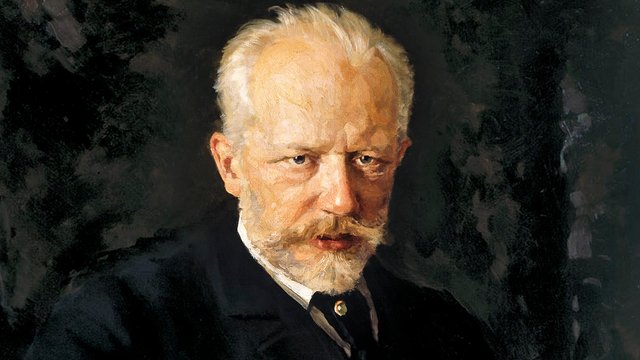
This day marks the anniversary of the premiere of Tchaikovsky‘s Romeo and Juliet, an ‘Overture-Fantasy’ marking the pinnacle of his inspiration from the plays of William Shakespeare.
Although one of his most successful works nowadays, the work had a tricky genesis – the reaction to its premiere in Moscow in 1870 was lukewarm to say the least. Two more revisions followed, the last of which we can hear in this white hot live version from the New York Philharmonic Orchestra under Leonard Bernstein:
This day marks the anniversary of the premieres of two Haydn symphonies, from the group of 14 known as the ‘London’ symphonies.
While many Haydn symphonies are labelled with nicknames, their unnamed counterparts are far from inferior! That is certainly the case for Symphony no.98 in B flat major, premiered at the Hanover Square Rooms in London on this day in 1792 with Haydn directing from the keyboard and the violinist Johann Peter Salomon, who commissioned the symphonies, leading the orchestra:
Haydn’s penultimate published symphony is no.103, the Drumroll – which was also given its first performance in London, on this day in 1795. It was given in the King’s Theatre, again with Haydn at the fortepiano and the famed violinist, Giovanni Battista Viotti, leading the orchestra.
The symphony is scored for a larger orchestra, with a fulsome wind and brass section – plus the timpani, responsible for the drum roll that opens the work:
by Ben Hogwood Picture of György Kurtág (c) Filarmonia Hungaria
This is a post in honour of the remarkable composer György Kurtág, celebrating his 99th birthday today.
You can read about his work with baritone Benjamin Appl in an interview published on Arcana last week, but to get some appreciation of Kurtág’s remarkable music, here are a few pointers:
It is perhaps a bit restrictive trying to listen to Kurtág’s music via a YouTube link, so if you can find a widescreen system to play Grabstein für Stephan on then I fully recommend it. Following the score will show just how imaginative his orchestration is, and how compressed and concentrated the music becomes.
Meanwhile the Microludes, for string quartet, encapsulate Kurtág’s economical and pinpoint style, pieces whose every move and aside is critical to the whole.
One of my favourite live experiences was watching Kurtág and his now late wife Márta play exquisite duets at the Wigmore Hall for the composer’s 80th birthday. It was like eavesdropping on a private conversation between two intimately connected souls, no more so than when they were playing Kurtág’s own arrangements of J.S. Bach:
Published post no.2,450 – Wednesday 19 February 2025
As part of Arcana’s 10th birthday celebrations, we invited our readers to contribute with some of their ‘watershed’ musical moments from the last 10 years.
Editor Ben Hogwood, after much consideration, has chosen a piece of immersive ambience from the Pacific coast.
“Getting to know new music is one of life’s joys – but it does bring with it a danger that the listener does not return to their successes as often as they might or should do. When I was thinking through my musical highlights from the last 10 years it was difficult to bring one specific artist or event to mind. There have been several from my work elsewhere, writing for musicOMH – discovering Bruce Hornsby’s new direction, or following the music of Erland Cooper and its Orcadian connections. Western classical music has provided some memorable moments too, few more so than Sir Simon Rattle conducting Mahler at the BBC Proms.
Yet the one I settled on for Arcana’s 10th anniversary is a thread running through the site’s whole decade, my love of the extraordinary music of Loscil. This is the alias used by Scott Morgan, a Canadian who lives in Vancouver, British Columbia – and whose music is like none other.
Perhaps it’s the fact I have been to Vancouver on several occasions, visiting relatives, that I feel such a strong connection to Loscil’s music. But there is something primal about it that really tugs not just at the heart but at the very fibre of our being, a connection formed between music and the earth. It is the deepest ambience you can imagine in music, an extraordinary achievement when you examine the relatively simple tools used in its construction.
The best example for this is the third section of the Equivalents album from 2019 – a timeless wonder that is deep as the ocean, as wide as the sky. There are clouds on the horizon, and the music paints all these and more in its extraordinary span.
In a memorable interview for Arcana, Scott summed it up. “There is a way of using the creative process and the creation of music to express that which you can’t express in other ways, and that’s what ends up coming out a lot of the time.” Later he noted, “a lot of my work accidentally plays with the spectrum between the natural world and the industrial world…ultimately I think I’m after some sort of balance of what it is to be human, and what it is to be human inside of this natural world we live in.”
I saw Scott perform this music live, at Rich Mix in the heart of Shoreditch – and it was only seconds before we were transported away. In my head I was stood on a beach at the far west of Vancouver Island, experiencing the weather with all its primal force.
You can listen to the album on Tidal below:
Published post no.2,439 – Saturday 8 February 2025
As part of Arcana’s 10th birthday celebrations, we invited our readers to contribute with some of their ‘watershed’ musical moments from the last 10 years.
Clive Murrell writes:
I saw your e-mail and had to message you back with an album that I listen to regularly which was actually released ten years ago this May!
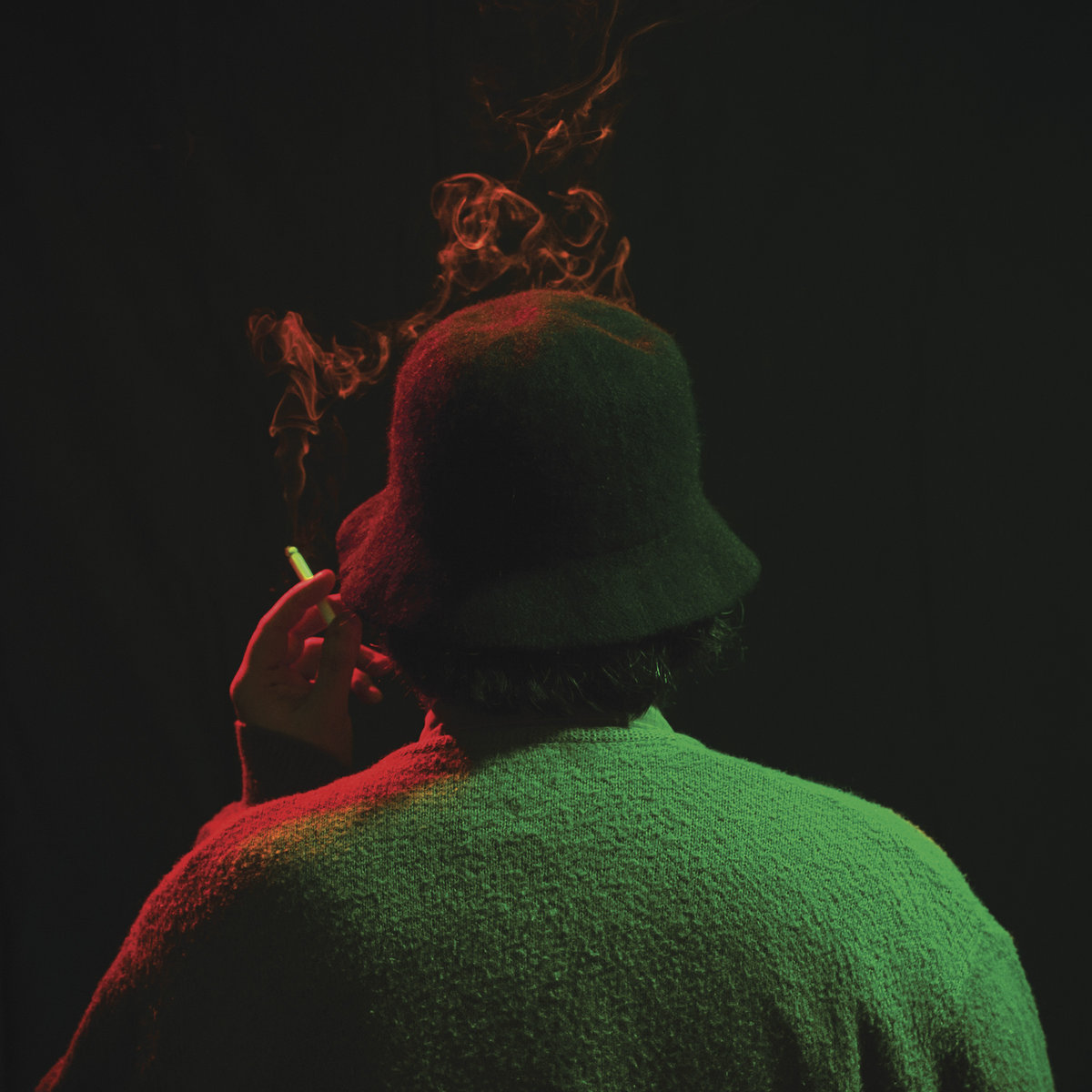
It’s the sublime Simple Songs by Jim O’Rourke.
I know that he’s pretty much turned his back on the more mainstream music he was making, but I think it’s a fantastical piece of work just like the rest of his back catalogue.
Not only did he frequent the ranks of Sonic Youth, but he also lived in Croydon for a while!
You can listen to Simple Songs on Tidal below:
Published post no.2,435 – Thursday 6 February 2025



 Arcana.fm