In concert – Katie Trethewey, University of Birmingham Voices, CBSO Chorus & Orchestra / Ludovic Morlot: John Luther Adams – Vespers of the Blessed Earth; Sibelius

Katie Tretheway (soprano), CBSO Chorus, University of Birmingham Voices, City of Birmingham Symphony Orchestra / Ludovic Morlot

John Luther Adams Vespers of the Blessed Earth (2021) [CBSO co-commission: UK premiere]
Sibelius Symphony no.2 in D major Op.43 (1901-02)

Symphony Hall, Birmingham
Thursday 9 May 2024

Reviewed by Richard Whitehouse

Almost eight years ago, the City of Birmingham Symphony Orchestra and Ludovic Morlot gave the UK premiere of John Luther AdamsBecome Ocean. Tonight they, with the CBSO Chorus and University of Birmingham Voices, gave that of his most recent large-scale work.

It may have been obliquely inspired by Monteverdi, but Vespers of the Blessed Earth is very much a humanist response to those ecological challenges of the present and, to this end, its texts have a concreteness and functionality which is wholly at the service of the music. Thus A Brief Descent into Deep Time sets words as depict the (reverse) geological evolution of the Grand Canyon, its emotional matter-of-factness in contrast to A Weeping of Doves with its unaccompanied setting of the call of the Papuan fruit dove in what is one of Adams’ most ravishing inspirations. Hardly less affecting is Night-Shining Clouds – an interlude, in the form of a chaconne, for strings that follows what the composer calls a ‘sub-harmonic’ series with its slowly spiralling descent to the depths for a graphic evocation of cloudly pollutants.

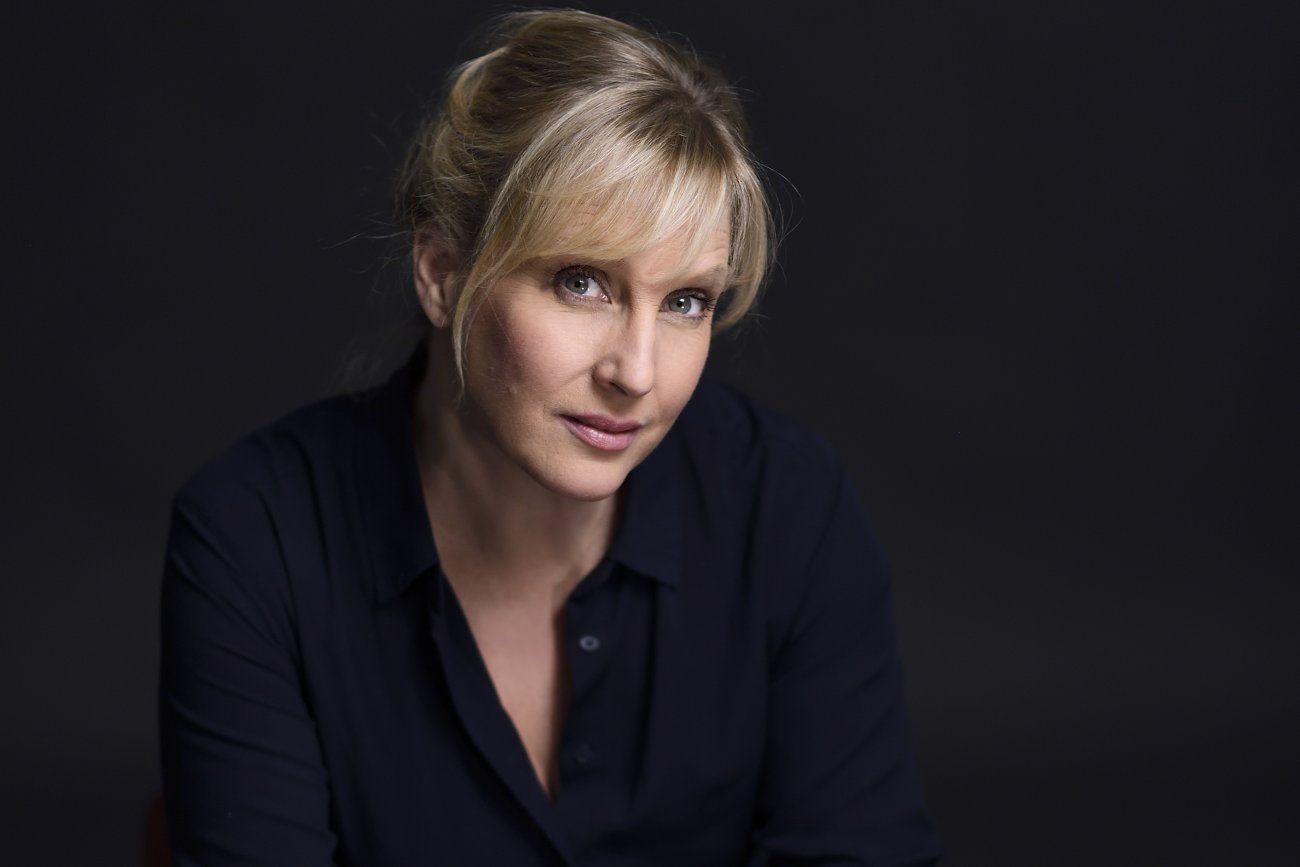
The fourth and climactic section, Litanies of the Sixth Extinction divides the choruses into four parts which between them chant the names of species in the process of or likely to face extinction – closing ominously with Homo Sapiens. It was here that an antiphonal placing of strings and percussion, along with choirs of woodwind and brass placed along either side of the upper circle, came into its own but, typically for Adams, the effect was one of cumulative if not intensifying emotion. Aria of the Ghost Bird followed with its transcribed rendering of the call from the now-extinct Kaua’i O’ō, tonight taken by Katie Tretheway (above) in what was a finale of the gentlest eloquence. It duly remained for offstage flute and chimes, here placed up in the grand tier, to see this inconsistent while always absorbing work to its wistful close.

In his thoughtful introductory remarks, Morlot spoke of the appositeness when juxtaposing Adams with Sibelius and the latter’s Second Symphony, which followed the interval, made his point admirably. Once the most popular such piece by Sibelius (and, indeed, of the last century), latter-day performances too often fight shy of its innate rhetoric or overt emotion. Without being disengaged, this account succeeded because of its methodical trajectory, not least a first movement whose restraint was never at the expense of its overall incisiveness.

With its stark contrast between conflict and consolation, the slow movement can easily fall into overkill but not here – Morlot evincing a keen sense of cohesion through to its baleful ending. The scherzo likewise secured keen cohesion from its alternate energy and raptness, then its surging transition into the finale brought an emotional frisson maintained through to an apotheosis whose grandeur never felt self-conscious or overbearing. Whether the triumph expressed is cultural or personal, the underlying essence of its affirmation was not in doubt.

It certainly set the seal on a memorable evening – one that confirmed the undoubted rapport between orchestra and conductor, while bridging the conceptual divide and almost 120 years between these pieces. Hopefully the CBSO and Morlot will be working together again soon.

Click on the link to read more on the current CBSO concert season, and on the names for more on soprano Katie Trethewey, conductor Ludovic Morlot, the University of Birmingham Voices and the CBSO Chorus. Meanwhile you can click on the name for more on composer John Luther Adams

Published post no.2,203 – Saturday 8 June 2024

In concert – CBSO Chorus & Orchestra / Joshua Weilerstein: Haas, Bernstein, Shaw & Dvořak

Michael Mulroy (treble), CBSO Chorus, City of Birmingham Symphony Orchestra / Joshua Weilerstein

Haas Study for Strings (1943)
Bernstein Chichester Psalms (1965)
Shaw Music in Common Time (2014)
Dvořak Symphony no.9 in E minor Op.95 ‘From the New World’ (1893)

Symphony Hall, Birmingham
Wednesday 15 May 2024

Reviewed by Richard Whitehouse Picture (c) Yuri Pires Tavares

In recent seasons, Joshua Weilerstein has presided over several of the City of Birmingham Symphony Orchestra’s most thought-provoking concerts and tonight’s programme was no exception in its potent mix of the recent and unfamiliar, alongside a symphonic evergreen.

It was thanks to the conductor and Auschwitz survivor Karel Ančerl that Study for Strings by Pavel Haas survived its immediate context, as propaganda for a Nazi documentary on cultural activity at the Theresienstadt transit-camp, to become one of this composer’s defining works. Felicitously combining Czech folk music with traditional Jewish inflections and (in its central section) more expressionist undertones, alongside a compact and quasi-symphonic design, it is a potent indication as to where post-war Czech music might conceivably have been headed.

It duly brought a vivid and energetic response from the CBSO strings, who were then joined by brass and percussion in Bernstein’s Chichester Psalms. Commissioned by the Dean of the city’s cathedral, it enabled the composer to pull together a number of earlier or aborted ideas in three Psalm-settings given focus by being heard in Hebrew translation with an authentic (if impractical as regards the percussion) scoring. Weilerstein drew the requisite verve from its initial setting, and if Michael Mulroy seemed tentative in its successor (discreet amplification might have helped), the contrast between his plaintiveness and edginess of the male-chorus interludes was pertinently drawn. Its anguished prelude for strings powerfully rendered, the final setting had an affecting eloquence through to the serene unaccompanied closing chorus.

After the interval, the CBSO Chorus was heard in rather more restrained guise with Music in Common Time by Caroline Shaw. Its brief and oblique text might have come from a late song by Talk Talk, but it yet provides the framework for a cannily unfolding fantasia in which the eddying textures of John Adams frame a speculative section with its string writing more than a little redolent of early Penderecki. Throughout, voices and instruments were finely melded in a composition that certainly suggests a plausible way out of any post-minimalist impasse.

What to say about the New World Symphony? Firstly, that it fitted judiciously into the overall programme as to conception; secondly, that it brought out the best in this partnership. Right from its evocative introduction, Weilerstein was alive to those many expressive ambiguities in the initial Allegro (a pity, though, that he omitted the exposition repeat as this undermines the formal balance overall), then drew a rapt and often searching response from the CBSO in the Largo – Rachel Pankhurst making the most of its indelible cor anglais melody. Nor was there any lack of bite or (in its trio section) gracefulness in the scherzo; such incisiveness of ensemble consistent throughout the finale, whose rhythmic impetus ensured the coda was not merely decisive but crowned the whole work in an apotheosis as conclusive as it was joyous. In his thoughtful initial remarks, Weilerstein spoke of this programme as being defined by its complexity, nuance and confrontation: qualities not always evident in present-day music, or in present-day discourse, but whose absence is our loss – as this concert eloquently confirmed.

Click on the link to read more on the current CBSO concert season, and on this link to read about the CBSO’s 2024/25 season. Click on the names for more on conductor Joshua Weilerstein, the CBSO Chorus and composer Caroline Shaw

Published post no.2,181 – Friday 17 May 2024

In concert – Sheku Kanneh-Mason, Soloists, Philharmonia Chorus, Royal Philharmonic Orchestra / Vasily Petrenko: Elgar, Weinberg & Rachmaninoff

Sheku Kanneh-Mason (cello), Mirjam Mesak (soprano), Pavel Petrov (tenor), Andrii Kymach (baritone), Philharmonia Chorus, Royal Philharmonic Orchestra / Vasily Petrenko

Elgar In The South (Alassio) Op.50 (1904)
Weinberg Cello Concerto Op.43 (1948/1956)
Rachmaninoff The Bells Op.35 (1913)

Royal Festival Hall, London
Thursday 11 April 2024

Reviewed by Ben Hogwood Pictures (c) Chris Christodoulou

The Royal Philharmonic Orchestra and Vasily Petrenko continued their dual focus on Rachmaninoff and Elgar this season with a deeply satisfying programme. They began with Elgar on holiday, music to match the Mediterranean climate of a rather humid Royal Festival Hall. This was In The South, Elgar’s extended postcard from Alassio, Italy, a sudden burst of inspiration that the composer finished in double quick time. Petrenko and his charges caught the instinctive writing, launching the overture in high spirits that brought the spring sunshine in from outside. Their interpretation grew in stature as it progressed, the central statements from brass given impressive heft. Yet it was the quieter asides that proved most telling, notably a fine viola solo from Abigail Fenna, whose depiction of the ‘canto popolare’ was appropriately reserved and beautifully phrased.

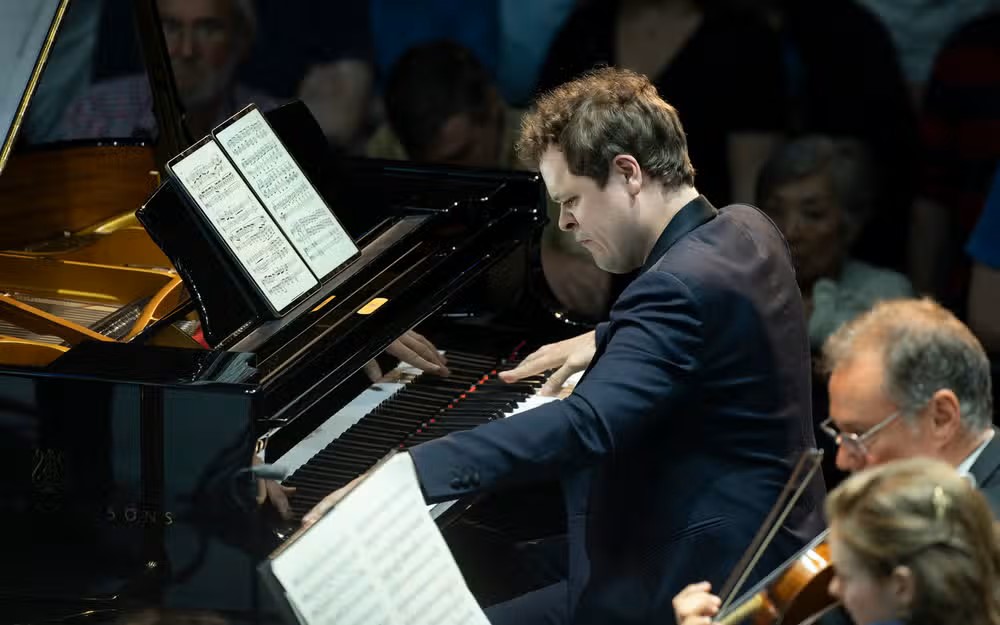
Sheku Kanneh-Mason joined for Weinberg’s Cello Concerto, a fine work sharing the same key (C minor) and elegiac mood of its now neglected equivalent by Nikolai Myaskovsky, completed three years earlier. Sheku’s credentials in Shostakovich (he won the BBC Young Musician prize with a standout account of the Cello Concerto no.1) served him well here, and he was an eloquent guide in the thoughtful first movement. Again this was an interpretation growing in stature, from a silvery first movement to the persuasive habanera of a Moderato that grew increasingly sour in tone, aided by standout solos from trumpeter Matthew Williams. By the third movement Allegro the gloves were well and truly off, incisive solo playing carrying through to an assertive and deeply felt cadenza, before the finale responded with doleful phrases turning us back to the material of the first movement, emotions not fully resolved. The main theme carried more weight second time around, while Kanneh-Mason’s choice of the same composer’s Prelude no.18 for solo cello was ideal as an encore, setting the seal on a fine interpretation. Hopefully his thoughts on the concerto will be set down in the studio by Decca before long.

Rachmaninoff’s four-part choral symphony The Bells formed a dramatic second half, led by an extremely well-drilled Philharmonia Chorus (prepared by Gavin Carr), whose diction and ensemble were most impressive. On first glance the men appeared outnumbered, but when the telling moments came in the third and fourth movements they rose to the occasion with great conviction.

In tenor Pavel Petrov, soprano Mirjam Mesak and baritone Andrii Kymach, Petrenko could call on three excellent soloists, Mesak in particular impressing with her sensitive phrasing and vibrato, passionately singing The Mellow Wedding Bells. Her glittering dress was an ideal match for Poe’s verse, too. Petrov’s ringing delivery set the ideal tone in The Silver Sleigh Bells, while Kymach’s declamation was pitched just right for The Mournful Iron Bells, right after the frenzied scherzo, The Loud Alarm Bells.

The Royal Philharmonic Orchestra gave memorable contributions, with incisive woodwind, plangent brass, strings united as one, and percussion that added punctuation to the choral thunderclaps of The Loud Alarm Bells, Rachmaninoff effectively slamming the door shut on his deepest fears. Following this dramatic high point, the cor anglais solo of Patrick Flanaghan was all the more poignant – and Petrenko made sense of the major key ending, a chink of light in the darkness.

You can find more information on further concerts at the Royal Philharmonic Orchestra website

Published post no.2,146 – Friday 12 April 2024

BBC Proms 2023 – Soloists, London Philharmonic Choir and Orchestra / Gardner – Ligeti & Richard Strauss

Prom 36 – Jennifer France (soprano), Clare Presland (mezzo-soprano), Edvard Grieg Kor, London Philharmonic Choir, Royal Northern College of Music Chamber Choir, London Philharmonic Orchestra / Edward Gardner

Ligeti Requiem (1963-5); Lux aeterna (1966)
Richard Strauss Also sprach Zarathustra Op.30 (1896)

Royal Albert Hall, London
Friday 11 August 2023

by Richard Whitehouse photos by Mark Allan / BBC

There did not seem any more concrete reason to build a Prom around the music from Stanley Kubrick’s film 2001: A Space Odyssey other than this being the 55th anniversary of its release, but it at least offered an opportunity to revive one of the last century’s defining choral works.

Much has been made of a then avant-garde composer writing a piece based on a seminal text from the Christian liturgy, but centenary composer György Ligeti’s Requiem is anything but beholden to tradition. Focussing on what would normally constitute the first half of the Requiem Mass itself skews the textual imagery away from any hope of attaining ‘eternal rest’ – the four movements duly proceeding from a sombre Introitus in which the music’s conceptual vastness along with its expressive extremes are laid bare. The Kyrie is the most (in)famous part – emerging in two successive and cumulative waves of micropolyphony both overwhelming and disorientating, not least when rendered with the poise and precision that the combined choirs summoned in the Albert Hall’s expanse. Inevitably, the terror of the infinite gives way to that of the absurd.

Hence the Dies irae sequence, designated On the Day of Judgement and a veritable tour de force of choral outbursts with vocal interjections; Clare Presland’s ominous intoning tellingly offset by Jennifer France’s stentorian pronouncements, with the wind and brass of the London Philharmonic Orchestra visceral in their contribution under the attentive guidance of Edward Gardner. Neither did the Lacrimosa lack gravitas, the soloists musing eloquently if wearily against a stark instrumental backdrop whose essential emptiness carries through to the close.

While not intended as a continuation of the larger work, Lux aeterna still makes for a viable resolution in its undulating yet never static textures such as conjure the presence of ‘eternal light’ without any concomitant spiritual aspect. Set high-up in the gallery, to the right of the platform, the Edvard Grieg Kor evinced a faultless intonation along with a tangible sense of the music’s timelessness – though this piece would maybe have been better placed after the Ligeti instead of before the Strauss, not least as there was no segue between the latter works.

Also sprach Zarathustra was, of course, elevated to a new level of public recognition after its Introduction had been utilized as fanfare in Kubrick’s film, and a less than thrilling rendition here at least ensured this Sunrise could not pre-empt the remainder in Strauss’s free-ranging overview of Friedrich Nietzsche’s influential tract. On fine form overall, the various sections of the LPO relished their passages in the spotlight, reminding one that this piece is as much a ‘concerto for orchestra’ before its own time as the musical embodiment of human aspiration. Pieter Schoemann audibly enjoyed setting The Dance Song in motion and while others have made its climax more intoxicating, Gardner brought a rapt serenity to the Night Wanderer’s Song such as made the tonal equivocation of those final bars the more acute and intriguing.

Numerous recent Proms have followed the second-half work with an ‘official’ encore and, while this practice is not always justified, the inclusion tonight of a certain waltz by another Strauss would have extended the 2001 concept still further and effected a more definite close.

For more on the 2023 BBC Proms, visit the festival’s website at the BBC. Meanwhile click on the names for more information on artists Jennifer France, Clare Presland, the London Philharmonic Orchestra and conductor Ed Gardner. For more on Ligeti, head to this dedicated website

Online Concerts – The Cardinall’s Musick / Andrew Carwood: Byrd 400th anniversary

William Byrd
Masses for 4, 3 and 5 voices

The Cardinall’s Musick / Andrew Carwood

Wigmore Hall, London
Tuesday 4 July 2023

Reviewed by Ben Hogwood Photos (c) Benjamin Ealovega

This week we have been marking the 400th anniversary of the death of William Byrd, one of the founding fathers of English classical music as we know it today.

One of the key events on Tuesday, the day itself, was a trio of concerts at the Wigmore Hall from the Cardinall’s Musick choir and their conductor Andrew Carwood. Together they have recorded all of Byrd’s choral music for the Gaudeamus and Hyperion labels, but on this occasion the focus was the composer’s three Mass settings.

Context for these unique works is vital, and it was given by an extremely helpful and thorough note from Katherine Butler, bolstered by musical insight, and also from Carwood himself in well-chosen asides to the audience. Both illustrated vividly how perilous Byrd’s own position as a composer was, for as a Catholic he was compelled to write settings of the mass, despite knowing public airings of the music would be against the demands of his monarch, Elizabeth I, for whom he was royal composer. If discovered, these performances could bring about imprisonment and even death. Because of this, the works lay undiscovered in their largely anonymous packaging, used for very private occasions presided over by a priest who would even have his own bolthole, should the ceremony be discovered.

Byrd
Mass for 4 voices (c1592-3), with the Propers for the Feast of Easter Day

The Cardinall’s Musick [Patrick Craig, Matthew Venner (altos), William Balkwill, Mark Dobell (tenors), Richard Bannan, Robert Rice (baritones), Edward Grint, Nathan Harrison (basses)] / Andrew Carwood

The three Cardinall’s Musick concerts began with a lunchtime account of the Mass for Four Voices, dating from around 1592-3, and given context by in performance by Byrd’s settings of the Propers for Easter, completed in 1607. These began with a celebratory Introit, with its busy acclamation of the resurrection, with the mood changing for a solemn, weighty Kyrie from the Mass. This was given plenty of room by Carwood, with superb control from the singers in their sustaining of the notes. A fulsome Gloria followed, notable for its clarity of line and rhythm. Carwood was judicious in harnessing the ten voices available to him, reducing the forces to five for the Gradual & Alleluia. Here, the portrayal of ‘Mors et vita duello conflixere mirando’ (death and life have fought a huge battle)’ was vividly conveyed, before ‘et gloriam vidi resurgentis’ (‘and I saw the glory of the rising’) reached impressive heights.

The substantial Credo was paced just right, with a holding back from the ‘descendit’, with controlled lower notes to complement. A busy Offertory and graceful Sanctus were beautifully sung, the music gradually unfolding. The Communion (Pascha nostrum) was slow, appropriately reverent and pure, before the moving Agnus Dei had as its end a final chant and response telling us the Mass had finished.

Byrd
Mass for 3 voices (c1593-4), with the Propers for the Feast of Corpus Christi

The Cardinall’s Musick [Julie Cooper, Laura Oldfield (sopranos), Patrick Craig, Matthew Venner (altos), William Balkwill, Mark Dobell (tenors), Nathan Harrison (bass)] / Andrew Carwood

As Andrew Carwood explained, we heard some of the richest music in the first concert, then some of the most intimate in the second. This was music of the recusant house rather than the big church or cathedral, and Carwood invited us to imagine we were in a building no bigger than a sitting room. With Catholics shrouded in secrecy, he gave an idea of just how risky this music making was.

We heard the Mass For Three Voices, with a noticeable reduction in texture from the lunchtime concert, as well as less movement within the parts. That said, there was an air of restrained celebration all the same. A quick Kyrie & more florid Gloria was sung with two to a part, and while the single parts could be left exposed they were very secure in these hands, notably the tricky entries from on high. The Propers on this occasion were for the feast of Corpus Christi and were published in 1605. They featured a ‘risky’ Gradual, before a six-piece Credo found a lovely peak on the words ‘Et ascendit in caelum (and ascended into heaven)’ and a beautiful confluence at the end. There was a suitably thoughtful start to the Sanctus, which became more florid in its ‘Hosanna’ exultations. The Communion was outwardly expressive, retreating to a sombre Agnus Dei and a solemn final chant.

Byrd
Mass for 5 voices (c1594-5), with the Propers for the Feast of All Saints

The Cardinall’s Musick [Julie Cooper, Laura Oldfield (sopranos), Patrick Craig, Matthew Venner (altos), Ben Alden, William Balkwill, Mark Dobell (tenors), Edward Grint, Robert Rice (bass)] / Andrew Carwood

Finally the evening concert gave the Mass for Five voices with the Propers for the Feast of All Saints of 1605 – an effervescent celebration but becoming more meditative as the music proceeded. Carwood, revelling in the occasion, conducted with great sensitivity once again, presiding over a busy Introit with the rejoicing angels. The layered Kyrie of the Mass itself was ideally weighted, making the most of the chromatic possibilities, before a relatively restrained Gloria. The five voices, with increasingly complex writing, were nonetheless easy to follow, their rhythmic lightness suggesting a dance at the end of the Gradual – Carwood referring to the repartee between the voices.

He then referenced the intensity of Byrd’s writing, the declamation in the Credo and its extraordinary harmony, fusing of madrigal techniques into the mass. It was helpful to have these insights on top of the booklet notes, for Carwood setting Byrd apart as a composer even from the likes of Palestrina. The full ten-voice Credo explored deeply felt power and resonance, an incredibly expressive movement, while the purity of the sopranos shone through in the Offertory. A slow Sanctus gradually gathered pace with more complex writing, before the Communion – making explicit reference to the persecution Byrd felt, gave an appropriate stress to the words ‘propter iustitiam (for righteousness’ sake)’ and showed some well-handled dissonances. Finally an Agnus Dei of solemn, minor key angst found peace at last, capped by the closing sentence.

The choir and their conductor received a deservedly rapturous reception, for their beautiful and controlled singing had given Byrd the best possible remembrance, marking the death of this musical martyr in appropriate style. The Cardinall’s Musick and the Wigmore Hall should be applauded for such a well-conceived and executed trio of concerts, which are highly recommended for online viewing!

You can listen to the Cardinall’s Musick recordings of the Byrd Masses, dating from 2000, on the Spotify link below: