In concert – Jenebah Kanneh-Mason, CBSO / Andrew Gourlay: Coleridge-Taylor, Rachmaninoff & Wagner

Jenebah Kanneh-Mason (piano), City of Birmingham Symphony Orchestra / Andrew Gourlay

Coleridge-Taylor Ballade in A minor Op.33 (1898)
Rachmaninoff Piano Concerto No. 2 in C minor, Op. 18 (1900-01)
Wagner arr. Gourlay Parsifal Suite (1877-82, arr. 2017-18)

Symphony Hall, Birmingham
Thursday 12 October 2023 (2.15pm)

Reviewed by Richard Whitehouse

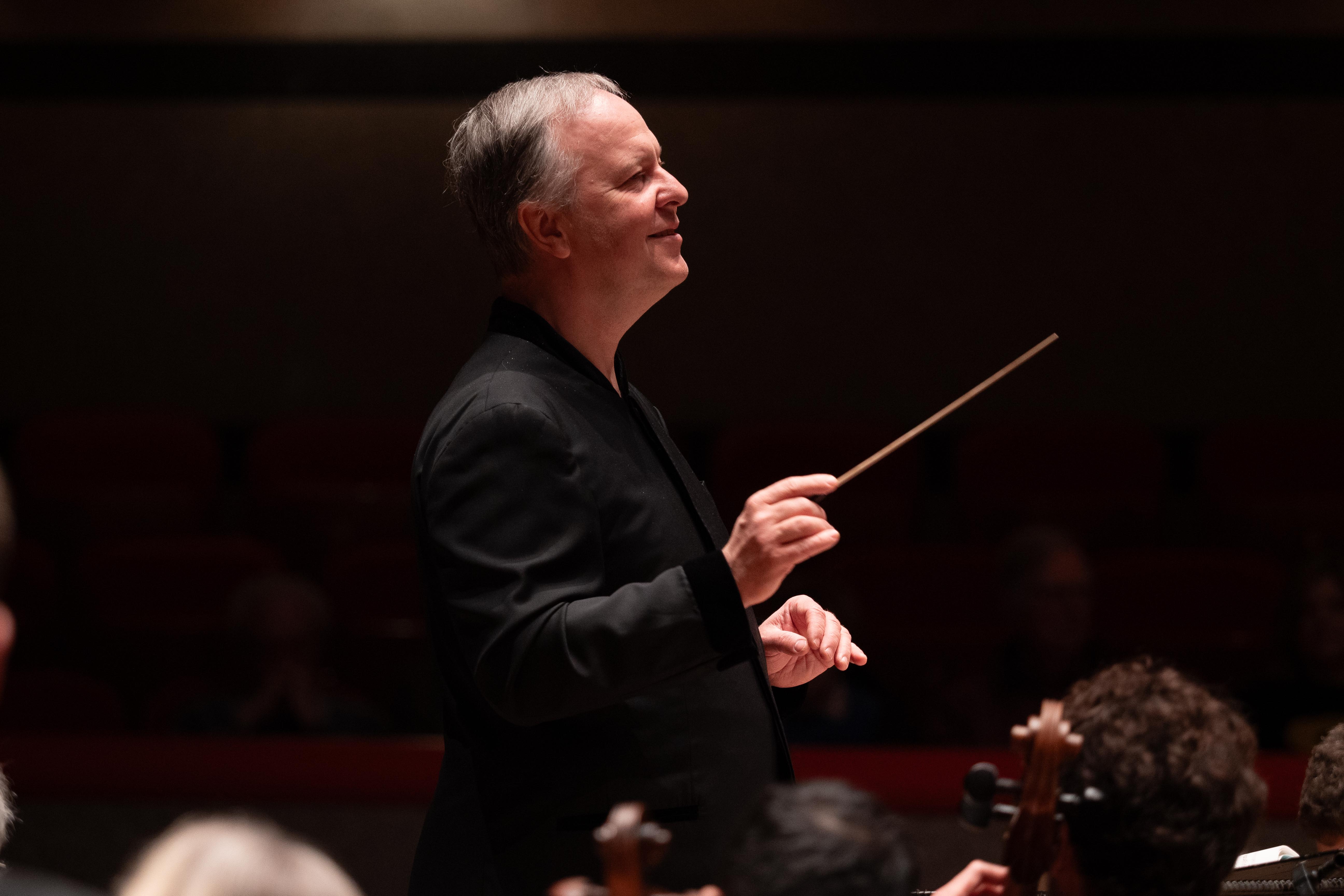
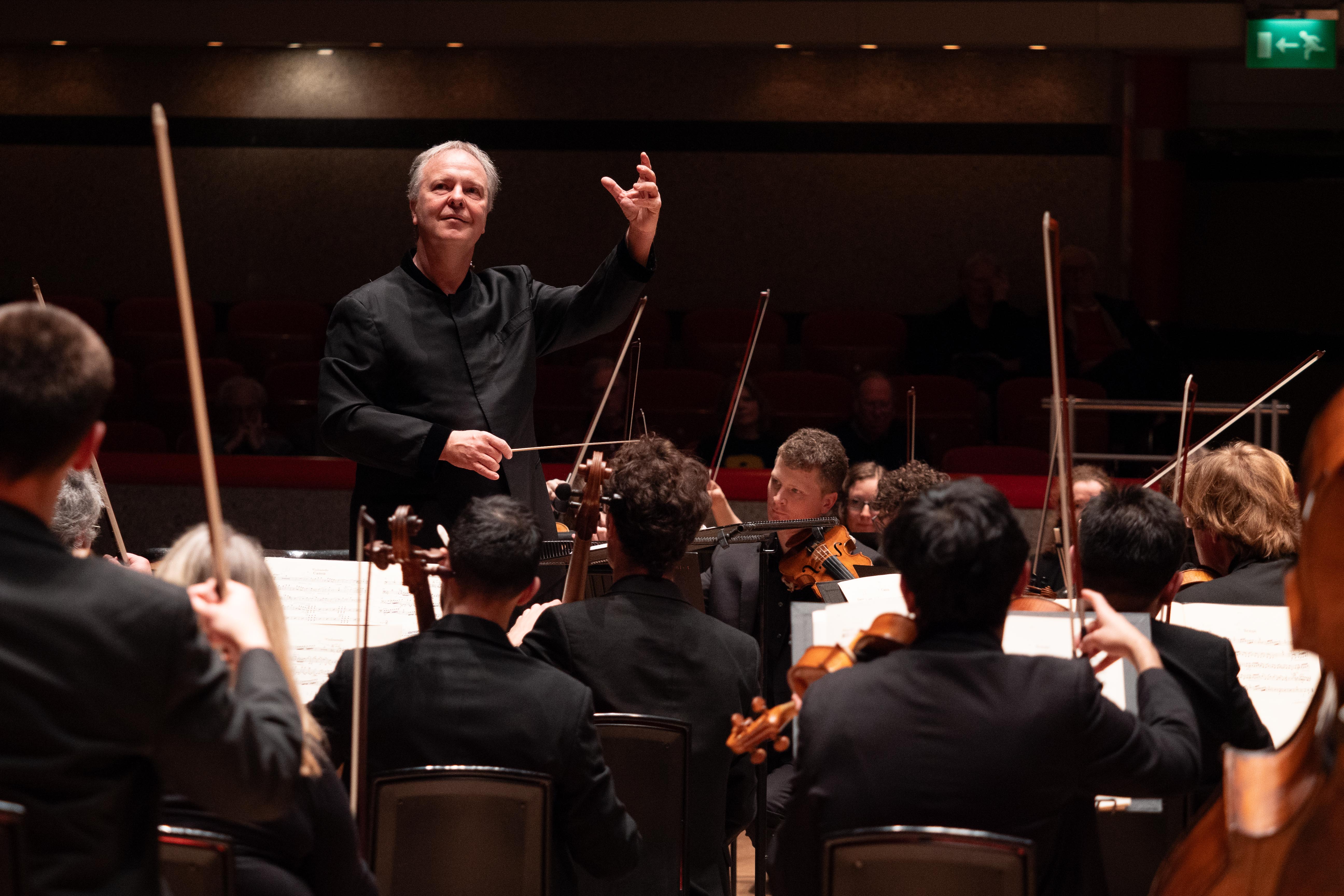
A regular collaborator with the City of Birmingham Symphony Orchestra over recent seasons, Andrew Gourlay returned to Symphony Hall this afternoon for a varied programme of music from the late nineteenth-century and one where his input extended to more than conducting.

The resurgence of interest in Samuel Coleridge-Taylor’s music continues apace, his Ballade a success at the Three Choirs Festival and no less an effective concert-opener today. Gourlay drew a keen rhythmic impetus from its outer sections, while making the most of the surging melody that comes between before it returns to dominate the closing pages. What (if anything more specific) this piece might be about remains uncertain, but its undeniable impulsiveness of expression carries all before it, not least in so vibrant and committed a performance as this.

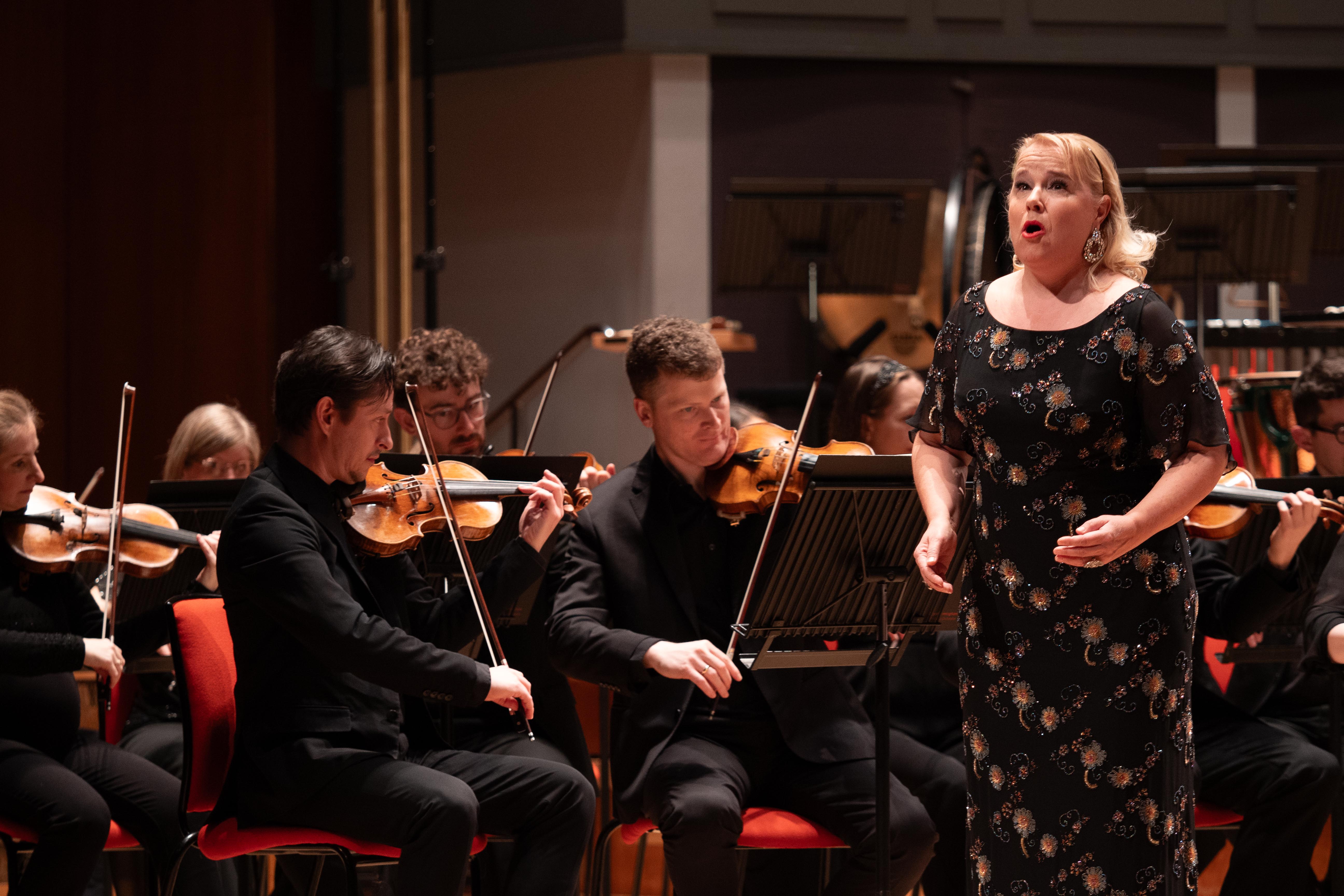
Rachmaninoff’s Second Piano Concerto has never been more ubiquitous than it is today, and it takes a performance of some distinction to experience it afresh. That was not the case here, even though Jeneba Kanneh-Mason certainly contributed pianism of a high order – elegance of touch combined with crystal-clear articulation as made those more understated passages a pleasure to behold. What it lacked was greater projection elsewhere – piano all but inaudible at the climax of the first movement, despite Gourlay reining in orchestral dynamics – or that sense of the work as a long-term, cumulative entity. Intimate and confiding, the Adagio was the undoubted highlight and though the scherzando sections of the finale lacked a degree of incisiveness, the ‘big tune’ was eloquently rendered when it returned as a fervent peroration.

Overall, if this was a performance not quite the sum of its best parts, it confirmed this latest addition to the Kanneh-Mason dynasty is shaping up as a pianist with whom to reckon – as was demonstrated by her capricious take on Rachmaninoff’s Prelude in A flat major Op.23/8.

Symphonic syntheses from Wagner’s music-dramas (latter-day equivalent of those ‘bleeding chunks’ beloved of an earlier generation) have enjoyed something of a vogue in recent years, though Gourlay’s Parsifal Suite feels both more modest and more successful in its ambitions.

Writing in the programme, the conductor explained his concern had been to draw this opera’s numerous orchestral passages into a continuous as well as a cohesive sequence, with no need for ‘outside’ linking material. This he achieved by reordering those seven sections in question such that one segued naturally into the next. Thus the Prelude to Act One – opulent but never portentous – was followed by the Good Friday Music from Act Three, its beguiling pathos a perfect foil for the anguished Transformation Music from Act Three then the desolate Prelude to Act Three; now finding its continuation in the volatile Prelude to Act Two, before dramatic and musical equilibrium is restored with the Transformation Music from Act One – its stately progress here making possible the Finale to Act Three with its serenely enveloping catharsis.

Certainly, anyone deterred by the formidable length and gravitas of the complete opera will find Gourlay’s suite conveys its essence – not least as rendered with such poise and insight by the CBSO, in excellent shape prior to touring Germany and Switzerland later this month.

You can read all about the 2023/24 season and book tickets at the CBSO website. Click on the artist names for more information on pianist Jeneba Kanneh-Mason and conductor Andrew Gourlay, and for more on composer Samuel Coleridge-Taylor. Andrew Gourlay’s recording of the Parsifal Suite is available through Orchid Classics, and can be listened to below:

Published post no.1,979 – Sunday 17 October 2023

In concert – Fazil Say, CBSO / Kazuki Yamada: Prokofiev, Saint-Saëns & Rachmaninoff

Fazil Say (piano), City of Birmingham Symphony Orchestra / Kazuki Yamada

Prokofiev Symphony no.1 in D major Op.25 ‘Classical’ (1916-17)
Saint-Saëns Piano Concerto no.2 in G minor Op.22 (1868)
Rachmaninoff Symphonic Dances Op.45 (1940)

Symphony Hall, Birmingham
Wednesday 4 October 2023

Reviewed by Richard Whitehouse. Picture (c) Fethi Karaduman

French and Russian music has dominated the start of this season by the City of Birmingham Symphony Orchestra, this afternoon’s programme continuing the trend with early pieces by Prokofiev and Saint-Saëns heard alongside Rachmaninoff’s last and arguably greatest orchestral work.

Prokofiev consigned two earlier such pieces as juvenilia prior to his Classical Symphony, an infectious refit of Haydn in the early 20th century and calling-card for a career that beckoned in the West. If Kazuki Yamada slightly over-egged the humour in the opening Allegro, as too a rather self-conscious take on the Gavotte, the limpid phrasing of the intervening Larghetto was as disarming as was the interplay of wind and strings in the Finale – a reminder, here as throughout, that such musical directness should not be mistaken for mere technical facility.

This could be said of the Second Piano Concerto that Saint-Saëns unleashed on an evidently nonplussed Parisian audience half-a-century earlier. True, the conflation of Bach – given a makeover worthy of Alexander Siloti – with Liszt affords the opening movement an almost makeshift design, but Fazil Say took it firmly in hand from a surging ‘chorale-prelude’ to a tersely decisive coda. A pity his pianism was not applied a little more deftly in the ensuing intermezzo, its ingratiating poise smothered by an almost hectoring insistence, but the final Presto suited this most demonstrative of present-day virtuosi to a tee – its perpetuum mobile undertow maintained with unflagging resolve through to those almost brutal closing chords. Credit to Yamada for enhancing the total effect with his astute and precise accompaniment.

Say, as much composer as pianist, responded to the applause with his Black Earth – a study in sonority alluding to the golden-age of Turkish balladry as well as the Saz (a Turkish lute) in a mood of sombre fatalism which, unlike his orchestral epics, did not outstay its welcome.

The CBSO has given frequent performances over the decades of Rachmaninoff’s Symphonic Dances, but none so incendiary. Not that there was anything overly powerhouse in Yamada’s conception of an initial piece whose outer sections felt trenchant in their energy, with the alto saxophone melody at its centre eloquently given by Kyle Horch and the coda rendered with melting grace. Nor was any lack of suavity in the central piece, its underlying waltz motion poised on a knife-edge of sardonic humour rightly given its head in the hectic closing pages.

Yamada had the measure, too, of the last piece with its dramatic introduction and impulsive continuation, but it was in the lengthy central episode this reading really came into its own – the composer creating music of an intoxicating expression via subtleties of harmonic nuance or textural shading rather than any defining melodic line. From here, impetus was seamlessly restored to a climactic emergence of the Dies irae plainchant then surged on to the explosive closing gesture that might have resounded longer had the audience not unreasonably erupted.

Yamada responded with Lezginka from Khachaturian’s ballet Gayane. An exhilarating close to an afternoon as began for early arrivals with what sounded like a medley from a mid-1970s children’s TV show on the first-floor performance space: it could only be here in Birmingham.

You can read all about the 2023/24 season and book tickets at the CBSO website. Click on the artist names for more information on pianist Fazil Say and conductor Kazuki Yamada

In concert – Boris Giltburg, CBSO / Michael Seal: Rachmaninoff Paganini Rhapsody & Shostakovich 8th Symphony

Boris Giltburg (piano, above), City of Birmingham Symphony Orchestra / Michael Seal (below)

Rachmaninoff Rhapsody on a Theme of Paganini Op.43 (1934)
Shostakovich Symphony no.8 in C minor Op.65 (1943)

Symphony Hall, Birmingham
Thursday 28 September 2023

Reviewed by Richard Whitehouse. Pictures (c) Sasha-Gusov (Boris Giltburg), Eric Richmond (Michael Seal)

Now into his 12th season as its associate conductor, Michael Seal appeared this evening with the City of Birmingham Symphony Orchestra in works written before the Second World War and during the middle of a conflict whose consequences seem very far from being played out.

Although present-day ubiquity had rather dulled its more innovative aspects, Rachmaninoff’s Rhapsody on a Theme of Paganini remains a game-changer through the integration of piano with orchestra and conception of just what a piano concerto might be. Taking Paganini’s 24th Caprice for violin as the basis for a continuous sequence of 24 variations barely disguises the three-movement format of an archetypal concerto. Boris Giltburg responded with no lack of flair or panache, while recognizing the formal divisions of 15, three and six variations across which the theme is reconstituted in ever more ingenious and unexpected ways. The evergreen 18th variation saw a heartfelt response from CBSO strings, with the closing sequence finding this theme in pointed conflict with the ‘Dies irae’ chant right up to a perfectly judged pay-off.

An impressive performance and Giltburg (who in appearance and approach bears more than passing resemblance to a young Vladimir Ashkenazy) gave the second from Rachmaninoff’s second set of Études-Tableaux (aka The Sea and the Seagulls) as a limpidly affecting encore.

It may have had several fine performances from the CBSO over the decades (Rudolf Barshai, Maxim Shostakovich and Cristian Măcelaru immediately come to mind), but Shostakovich’s Eighth Symphony remains a testing assignment both for players and listeners – not least in an opening movement whose underlying Adagio tempo and almost unrelieved sombreness seem to override its constant evolving toward a violent then wrathful culmination. Seal (above) paced it all superbly and the CBSO responded with like dedication, but it was Rachel Pankhurst’s take on the plangent cor anglais soliloquy during the reprise that set the seal on a memorable account. Nor did Seal skimp on the satire of the Allegretto, a response to the inanity and idiocy of war where those climactic overlapping woodwind and brass entries emerged with fearsome acuity.

The inevitability with which the final three movements segued one into the other did not belie their disjunctive contrasts. With its overtones of mechanized warfare and martial rallying, the second scherzo powered to a climax as fairly exploded into the ensuing Largo – a passacaglia whose numbed unfolding on strings is offset by solos from horn and clarinet, deftly rendered by Elspeth Dutch and Oliver Janes. Out of such desolation the finale’s seeming promise of a return to innocence cannot be sustained beyond a return of the first movement’s culmination, and if the present account faltered momentarily on its way there, the closing pages – as earlier themes gradually subside into the most resigned of resolutions – were ideally judged. That one could have heard a pin drop in the final minutes says much for their effect on those listening.

An enthusiastic reception could not disguise the less than full house for a piece that is never easy or enjoyable listening, and it would be a tragedy were encroachment of ‘lifestyle’ issues to offset future hearings. This eloquent and insightful reading provided its own justification.

You can read all about the 2023/24 season and book tickets at the CBSO website. Click on the artist names for more information on pianist Boris Giltburg and conductor Michael Seal

In concert – Thomas Trotter, CBSO / Pierre Bleuse: Saint-Saëns ‘Organ’ Symphony; Ravel, Poulenc & Holmès

Thomas Trotter (organ, above), City of Birmingham Symphony Orchestra / Pierre Bleuse

Ravel Le Tombeau de Couperin (1914-17, orch. 1919)
Poulenc Organ Concerto in G minor FP93 (1934-8)
Holmès La Nuit et l’Amour (1888)
Saint-Saëns Symphony no.3 in C minor Op.78 ‘Organ’ (1885-6)

Symphony Hall, Birmingham
Wednesday 20 September 2023 (2.15pm)

Reviewed by Richard Whitehouse

It hardly seems 40 years since Thomas Trotter took on the post of Birmingham City Organist in succession to the venerable George Thalben-Ball, and it was good to see his local orchestra marking the occasion with a programme which featured two staples from the organ repertoire.

Some 85 years on and it might be hard to imagine just how radical (or, better still, subversive) Poulenc’s Organ Concerto was through its juxtaposing elements both serious and populist in a continuous sequence that comes together precisely because of this stylistic incongruity. Not that Trotter betrayed any such doubts in what proved a tautly cumulative reading; aspects of the Baroque and Classical colliding with a sombre if never wantonly earnest Romanticism in which strings melded seamlessly with the soloist while timpani underpinned climactic points. Pierre Bleuse ensured a steady gathering of tension over the lengthy central span of slow(ish) music, with the final stages making the most of that music-hall element as makes the fateful ensuing recessional then baleful closing cadence more decisive in its stark emotional impact.

Organ transcription of Ravel’s Le Tombeau de Couperin is not unknown, but this afternoon’s performance was of the composer’s familiar orchestral version. Bleuse (below) conveyed the reticent elation of the Prélude, and while his expressive emphases made the Forlane overly studied in its knowingness, the wistful elegance of the Minuet sounded as disarming as was Yurie Aramaki’s oboe playing. Nor was any lack of poise in the central sections of the Rigaudon, even if Bleuse’s slightly stolid tempo in those either side sacrificed some of the music’s elan.

Composer, artist and feminist Augusta Holmès left a substantial output whose ambition may outstrip its attainment but includes such gems as La Nuit et l’Amour. Originally an interlude in her symphonic ode Ludus pro patria, it had established itself as an autonomous item well before becoming a staple of late-night music programmes – its canny amalgam of sensuous harmonies and heady lyricism recalling such contemporaries as Massenet and Godard, albeit with her engagingly personal twist which communicated itself readily in this performance.

Saint-Saëns was guarded with his assessment of Holmès, but his remark on her ‘flamboyant orchestration’ feels no less applicable to the Organ Symphony such as constitutes his greatest orchestral achievement and of which the City of Birmingham Symphony has given numerous memorable outings. While not among these, this account still left little to be desired – Bleuse launching the first part with keen expectancy before steering a purposeful if slightly dogged course through the ensuing Allegro. Seated up high at the organ console (rather than adjacent to the orchestra as with the Poulenc), Trotter made the most of the Adagio’s luminous timbral registrations which complemented the similarly burnished orchestration, while there was no lack of vigour or vivacity in the ‘scherzo’ section that bursts in at the start of the second part.

It is easy to make the ‘finale’ overbearing in its grandiloquence, but Trotter resisted any such temptation – he and Bleuse conveying the impetus and excitement of this music as it headed through passages of chorale and fugue toward a peroration as satisfying as it was irresistible.

You can read all about the 2023/24 season and book tickets at the CBSO website. Click on the artist names for more information on organist Thomas Trotter and conductor Pierre Bleuse

In concert – Sheku Kanneh-Mason, CBSO / Kazuki Yamada: Beethoven, Shostakovich, Walton

Sheku Kanneh-Mason (cello), City of Birmingham Symphony Orchestra / Kazuki Yamada

Beethoven Leonore Overture no.1 Op. 138 (1807)
Shostakovich Cello Concerto no.1 in E flat major Op.107 (1959)
Walton Symphony no.1 in B flat minor (1932-5)

Symphony Hall, Birmingham
Saturday 16 September 2023

Reviewed by Richard Whitehouse

Having opened the City of Birmingham Symphony Orchestra’s season two days earlier with Verdi’s Requiem, Kazuki Yamada returned for a judicious programme comprising three ‘No. 1’s’ – two mid-20th century masterpieces and an overlooked gem from the previous century.

Beethoven’s First Leonore Overture is in fact the third such piece written in conjunction with his eponymous opera, being intended for a Prague production that never materialized. Shorter in duration and simpler in design than its two ‘successors’, it sets the scene without attempting an overview of Leonore’s dramatic essence. Yamada duly made the most of an introduction as speculative as it was searching, then steered a lively course over the main Allegro – not least a surging crescendo into the coda such as Rossini had taken to heart before the decade was out.

It was with Shostakovich’s First Cello Concerto that Sheku Kanneh-Mason won BBC Young Musician of the Year in 2016 and thus launched a career that shows no signs of stalling. In the meantime, his take on this piece has deepened and at times darkened – the opening Allegretto exuding keen irony abetted by the incisive response from an orchestra whose single horn and double woodwind are thrown into sharp relief against modest strings. If the ensuing Moderato seemed a little measured, its stark intimacy was eloquently sustained to a yearning climax then mesmeric interplay of cello harmonics with celesta in the coda. The third-movement Cadenza emerged with real cumulative impetus, and not even the hiatus while Kanneh-Mason replaced a broken string could stem the final Allegro’s sardonic course to its decisive closing flourish.

A work that has latterly regained (at least in the UK) the reputation it enjoyed decades earlier, Walton’s First Symphony has had regular performances from the CBSO (and a recording with Simon Rattle), and this reading did not lack for commitment. Not least an opening movement such as built methodically and remorsefully from initial expectancy, through a central span of brooding stasis, to a pulverizing culmination; the only proviso being the frequent inaudibility of its underlying pulse in lower strings during the climactic stages. The scherzo seemed even finer in its tense amalgam of spite and barbed humour, its treacherous syncopation dextrously handled, while the slow movement unfolded from a wistful flute melody (affectingly rendered by Marie-Christine Zupancic) to its climax of baleful intensity subsiding into numbed regret.

The finale still tends to be seen as surrender to well-tried symphonic precedent yet, as Yamada presented it, did not eschew formal or emotional obligations. The resolute introduction, agile fugal writing and irresistible build-up to the timely appearance of extra percussion all became part of a conception vindicated by the elegiac trumpet theme (ably conveyed by Jason Lewis); leading to a peroration in which Yamada’s urging his players onward briefly risked unanimity of response while still resulting in the sheer affirmation of those thunderous closing chords.

Overall, an engrossing performance which augurs well for the CBSO’s first full season with Yamada. Next week places the spotlight on Thomas Trotter who, having done forty years as City Organist in Birmingham, takes the loft for repertoire staples by Poulenc and Saint-Saëns.

You can read all about the 2023/24 season and book tickets at the CBSO website. Click on the artist names for more information on cellist Sheku Kanneh-Mason and conductor Kazuki Yamada