In concert – Alice Coote, Philharmonia Orchestra / John Eliot Gardiner: The Sea and the Land: Mendelssohn, Elgar & Dvořák

Mendelssohn Hebrides Overture Op.26 ‘Fingal’s Cave’ (1830, rev. 1832)
Elgar Sea Pictures Op.37 (1899)
Dvořák Symphony no.5 in F major Op.75 (1875, rev. 1887)

Alice Coote (mezzo-soprano), Philharmonia Orchestra / John Eliot Gardiner

Royal Festival Hall, London
Thursday 16 February 2023

Reviewed by Ben Hogwood Picture credits – John Eliot Gardiner (c) Sim Canetty-Clarke; Alice Coote (c) Jiyang Chen

This was an ultimately invigorating concert, using a cleverly constructed programme to look at how composers respond to the earth itself.

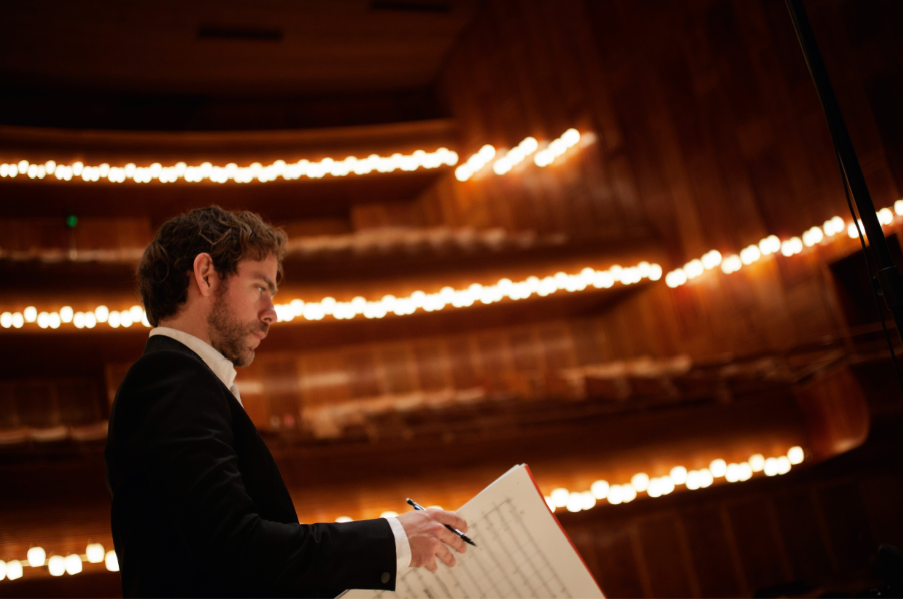
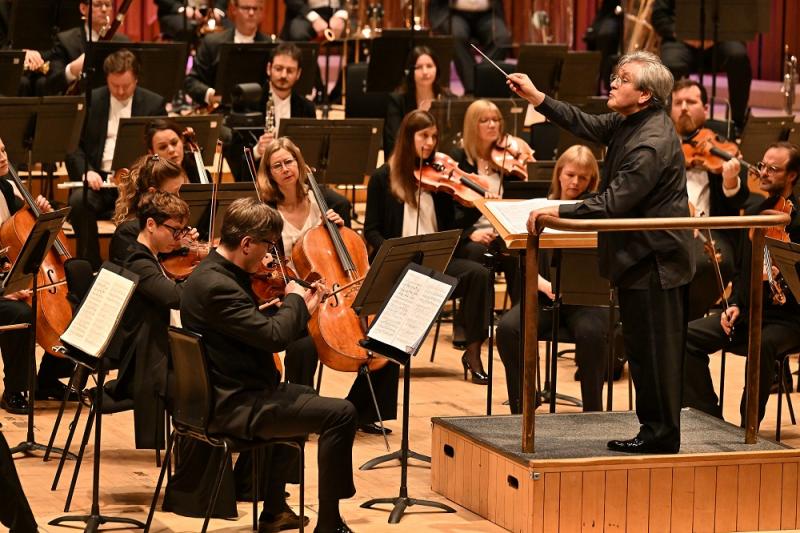
We began off the west coast of Scotland, the Inner Hebrides to be exact – and the uninhabited island of Staffa. Here it was that Mendelssohn saw Fingal’s Cave (above) in the summer of 1829. His musical response has become one of the composer’s best-loved pieces, an early and remarkably vivid example of the symphonic poem. Under John Eliot Gardiner, the Philharmonia Orchestra recounted the scene with remarkable accuracy, capturing the unusual, organ-like appearance of the landmark as well as the sea spray crashing around it. Gardiner steered a sure-footed and clear course through the water, aided by a wonderful clarinet duet from Mark van de Wiel and Laurent Ben Slimane in the second theme.

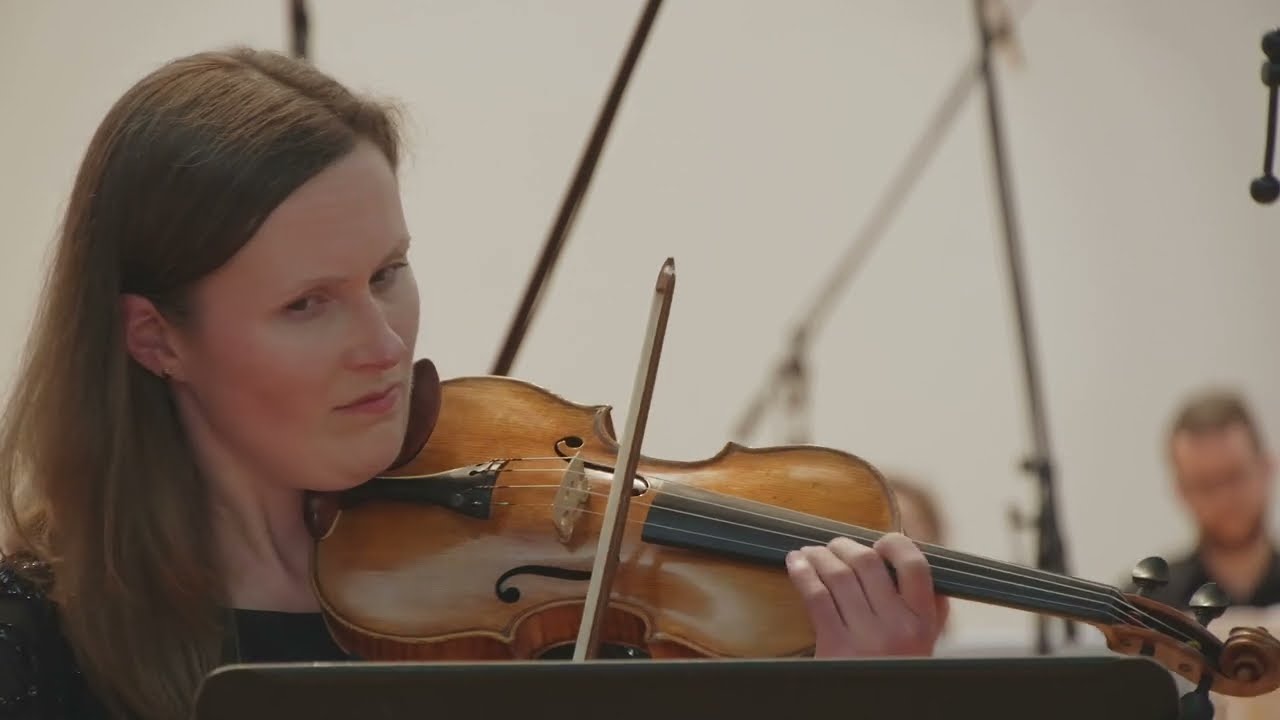
Alice Coote (above) then joined the orchestra, transporting us to the rarefied waters of Elgar’s Sea Pictures, the mezzo-soprano bringing to life five carefully chosen gems that took the composer far from his desk in Malvern in 1899. It took a while for singer and orchestra to achieve the optimum balance, so the words on the screen above were helpful as Coote found her feet. She did so quickly, and the somnambulant atmosphere of Sea Slumber-Song was cast, the strings lapping at the edges of Coote’s beautifully placed words. As she grew into the role so the gently rocking In Capri was attractively weighted and subtly intense.

Sabbath Morning At Sea was solemn yet soon reached for the heights, Coote’s innate grasp of the text matched by Gardiner’s control and shaping of the melodic line from the orchestra. The celebrated Where Corals Lie was perhaps inevitably the highlight, but The Swimmer ran it close, running all the way to a richly coloured high register from the singer at the end. Support came from the depths, too, with Alistair Young’s sensitive contribution on the Royal Festival Hall organ one to savour.

We returned to land for Dvořák’s Symphony no.5, the work with which he ‘rebooted’ his career as an orchestral composer in 1887, his publisher having spotted an opportunity to re-promote a piece finished in 1875. In this concert the parallel with the seasons was irresistible, the symphony’s first movement in particular resembling the flourishing of flowers in spring. Fleet footed strings were complemented by fresh faced woodwind, headed by the burbling clarinets who shone once again in the opening theme.

The Fifth is a sunny work, sitting in the shadow of the last three symphonies (nos.7-9) where live performances are concerned. As this concert revealed, however, it is a descendant of Beethoven’s Pastoral symphony, a work with considerable depth of its own and many different orchestral colours in which to revel. After a vivacious first movement, where Dvořák’s themes were given the best possible chance to shine, the cellos took the lead in their burnished opening to the romantic slow movement. This serious, minor key theme – surprisingly similar to the main tune of the Mendelssohn – was supplemented by an attractive, triple-time dance in the major key.

The slow movement segued effortlessly into the Scherzo, where the flurry of violins conjured up a vision of dancers trying to find their feet on the floor. The give and take between orchestral sections was a delight both to hear and to watch, as it was in the finale. The material here turns a little sour initially, Dvořák struggling manfully to regain the positive demeanour of the first movement. In Gardiner’s hands this was a compelling argument, ultimately won with the help of the superb Philharmonia brass, trombones punching out their melodies to thrilling effect. Once the ‘home’ key was reached the winter storms retreated and we basked in glorious musical sunshine, capping a fine evening where spring really did seem within touching distance.

You can read all about the 2022/23 season and book tickets at the Philharmonia Orchestra website.
In concert – London Symphony Orchestra / Sir Antonio Pappano: Richard Strauss, Coleridge-Taylor & Liszt

Roman Simovic (violin), London Symphony Orchestra / Sir Antonio Pappano

Coleridge-Taylor Ballade in A minor Op.33 (1898)
Liszt Die Ideale S106 (1856-7)
Richard Strauss Ein Heldenleben Op. 40 (1898)

Barbican Hall, London
Sunday 12 February 2023

Reviewed by Richard Whitehouse

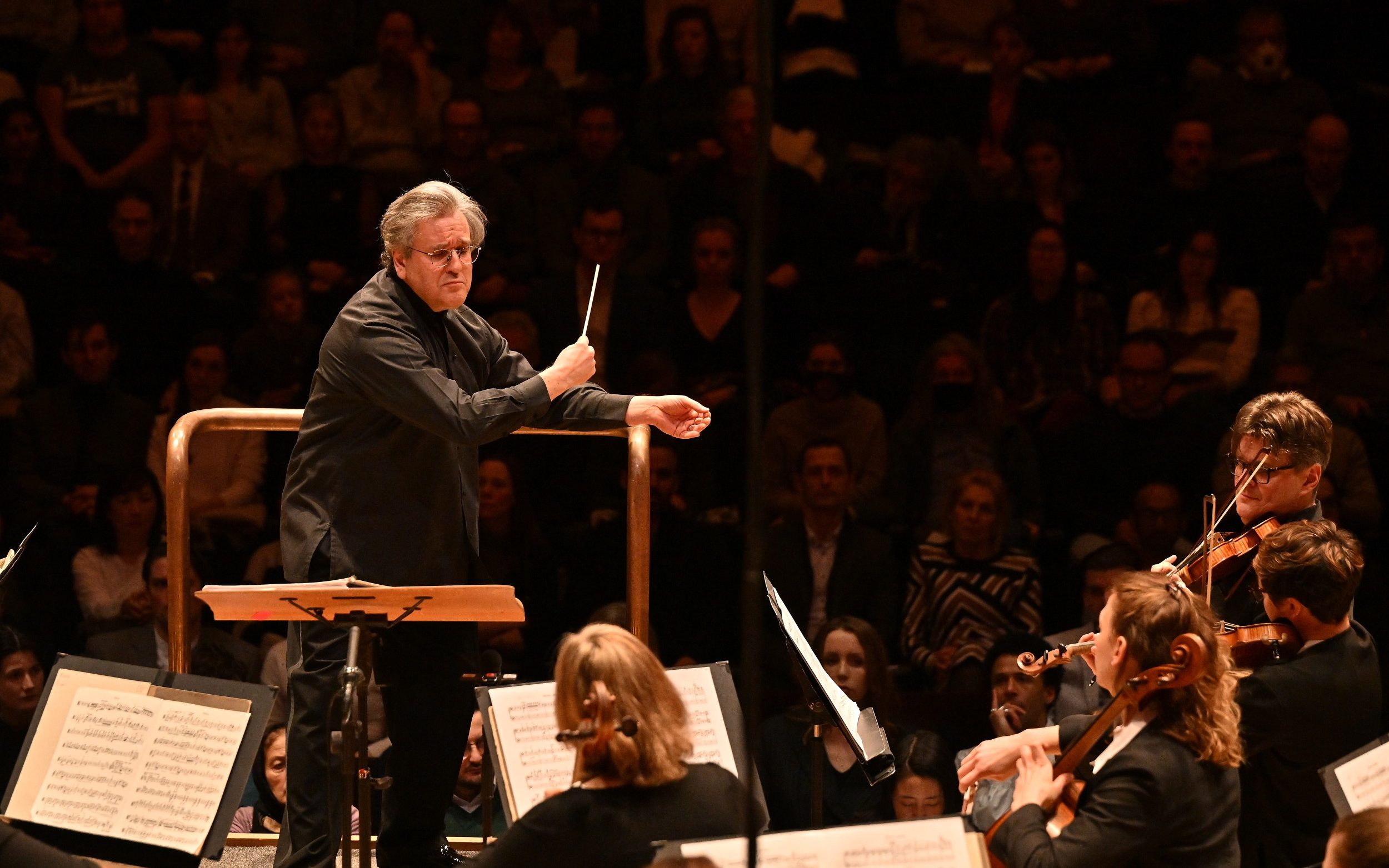
It may have been his only concert this season with the orchestra of which he becomes Chief Conductor next year, but the rapport between Sir Antonio Pappano and the London Symphony Orchestra was audibly sustained through the whole of what proved a judiciously programmed concert.

Whether or not his Ballade (as commissioned for and premiered at a Three Choirs Festival in Gloucester) was inspired by music from a nearby street organist, Samuel Coleridge-Taylor’s work confirms the melodic fecundity and orchestral panache of his maturity. Its languorous slower episodes, framed by swifter sections of mounting energy, might not generate a more cumulative momentum, but the emotional immediacy of this piece overall is never less than appealing – certainly in a performance as vividly and precisely executed as that given tonight.

Pappano gave a memorable account of Liszt’s Eine Faust Symphonie four seasons ago, and it is good to see him exploring the mostly neglected orchestral output of this still misunderstood figure. The 12th of his symphonic poems, Die Ideale was written for the unveiling of a statue of Goethe and Schiller – a poem by the latter furnishing the conceptual basis of a piece which avoids programmatic or psychological excess for mostly lyrical and understated material; one whose deftly modified sonata design may well have been in Wagner’s mind when envisaging the symphony of the future. Pappano steered a cohesive course, building assuredly towards a triumphal if never bombastic apotheosis whose chordal writing for timpani (picked up on by Bruckner in his First Symphony nine years later) is merely its most striking musical attribute.

This conductor has made a fine recording of Richard Strauss’s Ein Heldenleben with Orchestra dell’ Accademia Nazionale di Santa Cecilia, and a similar combination of formal clarity alongside expressive intensity was evident here. Surging forward without indulgence, The Hero found due contrast in the sniping pettiness of The Hero’s Adversaries – consummately rendered by the LSO woodwind – then leader Roman Simovic took centre-stage for an unusually focussed take on The Hero’s Companion as culminated in rapturous euphony. Pappano’s underlying tempo for The Hero at Battle was a little too headlong, though never to the detriment of its textural density in what emerged as a purposeful development of the work’s myriad motifs; heading into a powerfully wrought climax at the beginning of The Hero’s Works of Peace.

It is in this penultimate section that the work’s pivoting between tone poem and symphony is most finely drawn, and Pappano duly underlined the numerous allusions to Strauss’s earlier pieces with due awareness of their place within the intricately conceived whole. Nor was the fateful transition into The Hero’s Resignation and Fulfilment uncharacterized, making this finale a culmination of the overall design and consummation of its intrinsic content. Whether or not the evocation of domestic bliss, there could be little doubt as to the music’s sincerity.

Contrary to latter-day presumptions, moreover, there was no evidence of the work’s revised ending as somehow tacked-on to what went before – Pappano drawing a Nietzschean ‘oneness’ from those closing bars which set the seal on a persuasive reading, and a memorable concert.

You can find out more about the 2022/23 season and book tickets at the London Symphony Orchestra website. Click on the artist names for more on Sir Antonio Pappano and Roman Simovic, while you can also read more about the Samuel Coleridge-Taylor Foundation

Online concert – Zoë Beyers, English Symphony Orchestra / Kenneth Woods: Elcock: Violin Concerto

Elcock Violin Concerto Op.13 (1996-2006)

Zoë Beyers (violin), English Symphony Orchestra / Kenneth Woods

Filmed at the Wyastone Concert Hall, Monmouth, Thursday 26 May 2022. Producer Phil Rowlands / Videographer Tim Burton

by Richard Whitehouse

The English Symphony Orchestra’s online schedule got off to a fine start for this year with a studio account of the Violin Concerto by composer-in-association Steve Elcock. It may have taken shape across nearly a decade, but the work is no less impressive for that. It also marks something of a transition from less ambitious pieces, often conceived with local musicians in mind, to the symphonic works as have recently been performed and recorded to great acclaim – whose formal as well as expressive concerns it anticipates and shares in various instances.

The concerto opens with an Allegro vivo whose rhythmic energy is maintained throughout, yet with sufficient contrast for its second theme to assume greater emotional emphasis in the reprise, prior to a forceful conclusion. The undoubted highlight is a Molto tranquillo whose haunting main theme, first unfolded by the soloist over undulating upper strings in a texture evidently inspired by change-ringing techniques, is a memorable inspiration. A pavane-like idea latterly comes into focus and the closing stage, which opens onto an eloquent plateau before evanescing almost regretfully into silence, lingers long in the memory. The finale is a relatively taut passacaglia whose theme accelerates through five variations from Andante to Presto, culminating in a combative ‘cadenza’ for violin and timpani then a decisive pay-off.

A tough challenge, indeed, for any soloist and one such as Zoë Beyers and the ESO, under Kenneth Woods, met with assurance over its 33 minutes. Aside from its sheer velocity, the first movement is notable for a close-knit interplay between soloist and orchestra here brought off with admirable precision, while the modal subtleties of the slow movement were deftly rendered as enhancements to its overall tonal trajectory. If its sequence of accelerating variations seemed to be over rather too soon, the finale was nevertheless a cohesive entity that saw this piece to a defiant conclusion.

Good to hear that this performance will be released commercially in due course, as a coupling for the Eighth Symphony which the ESO premiered in 2021 and the tone poem Wreck it gave last year – hence making for a persuasive overview of this increasingly significant composer.

This concert can be accessed free until 7 February 2023 at the English Symphony Orchestra website, but remains available through ESO Digital by way of a subscription. Meanwhile click on the names for more on the English Symphony Orchestra and Kenneth Woods, or on composer Steve Elcock

In concert – Members of the Philharmonia Orchestra / Olivia Clarke: Music of Today: Bryce Dessner

Bryce Dessner
The Forest, Sederunt Principes (2019) (UK premiere)
Lachrimae (2012) (UK premiere)

Members of the Philharmonia Orchestra / Olivia Clarke

Purcell Room, Southbank Centre, London
Thursday 2 February 2023

Reviewed by Ben Hogwood Olivia Clarke picture (c) Rebecca Nead Menear

Bryce Dessner is surely the only composer able to list Taylor Swift, Paul Simon and the Philharmonia Orchestra among their musical accomplices. It is this multi-disciplined CV that makes him an excellent choice as Artist-in-Residence at the Southbank Centre – and this instalment of the Philharmonia Orchestra’s early evening Music of Today series allowed a look at his writing for string ensemble.

As well as namechecking the above artists, rock guitarist Dessner has a number of musical projects currently coming to the boil. His band The National (where his twin brother Aaron also plays) stand on the verge of their 9th album, prefaced by elegant single Tropic Morning News just over two weeks prior.

Meanwhile his string arrangements for the Malmö Symphony Orchestra help encapsulate the musical wonder of Complete Mountain Almanac, a project fronted by his sister Jessica and singer Rebekka Karijord. Their self-titled album, released in late January, has a folk-inflected beauty.

Dessner’s composition work also continues apace, and as this concert illustrated he is amassing an impressive and durable body of work. The Forest, for seven cellos, is not a nature poem as its title might suggest. Rather, it refers to the forest-like interiors of Notre Dame cathedral, all but destroyed in the dreadful fire of 2019. Dessner was in Paris at the time, and was moved to write a musical response. He considered the wood lost in the flames, pondering the sounds it would have absorbed through the ages, going back as far as Perotin’s 12th century motet Sederunt principes.

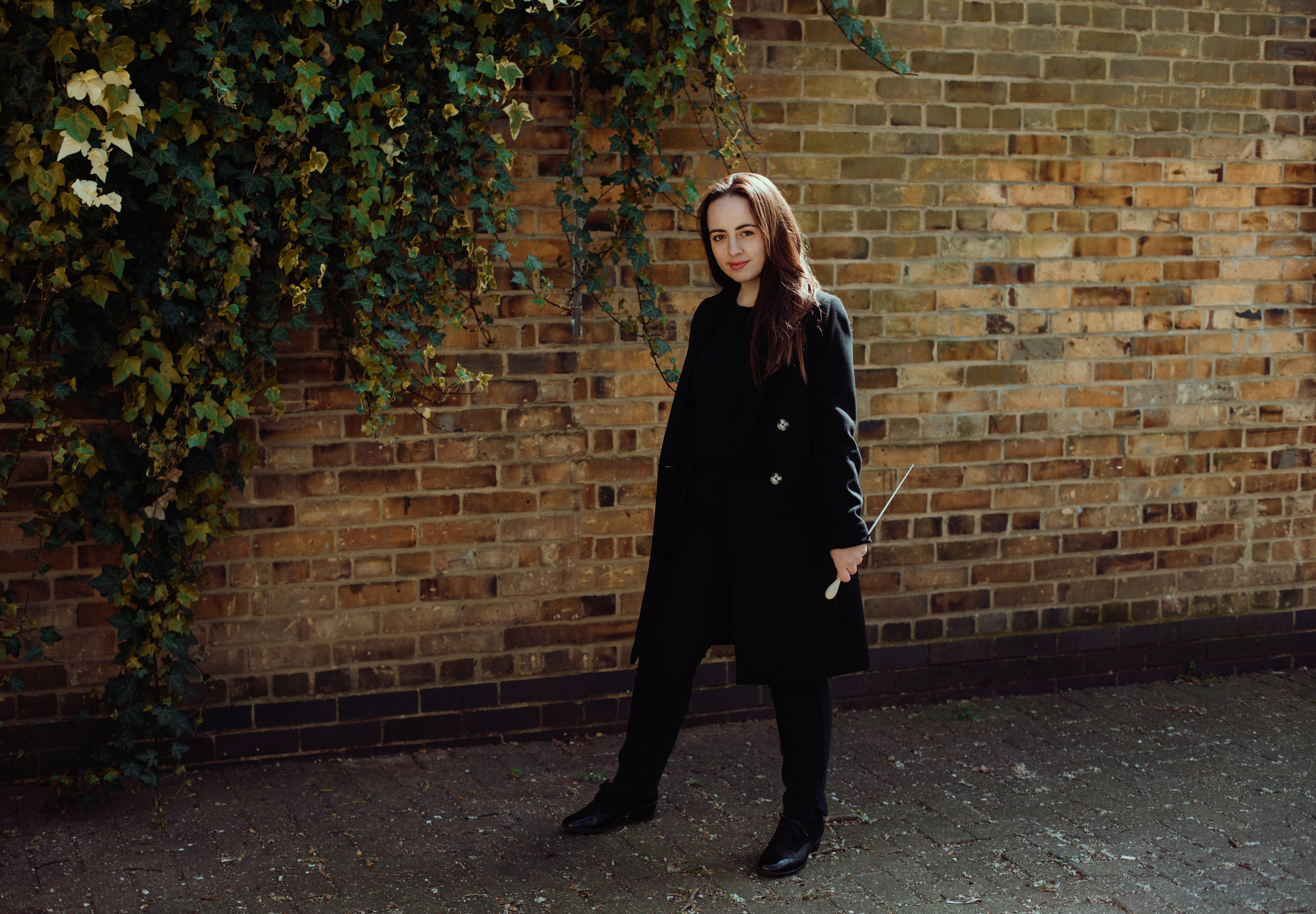
Taking this as his stimulus, Dessner weaves old and new together with a seamless join, the deeply historical source material given fresh if solemn context. The composer chooses not to use the swell of the cello sound too often, steering clear of cliches often found in writing for this instrumental combination. Instead the sounds are more subtle, the cellos often applying the wood of the bow to the string, decorating the sound and giving it acoustic context. In this way they present an absorbing collage of sounds, meditating on the lost material while projecting well beyond the size of the Purcell Room to evoke the vastness of the cathedral. Olivia Clarke (above) kept a firm hand on proceedings in what was a fine performance.

Lachrimae, as its title suggests, also looks to the distant past for inspiration. The source material here is John Dowland’s song of the same name, expanded by Dessner into a piece for a 12-piece string ensemble that also draws on Bartók’s Divertimento for strings. The piece starts by quoting its source material, but quickly projects it on to a wider musical canvas. In this performance there were pre-echoes of Dessner’s soundtrack for The Revenant three years later, these being colder textures with an equally compelling group of musical ideas.

Michael Fuller’s double bass was a central component of the more expansive writing, and the lower notes were played as though freshly dug from the ground itself. Meanwhile the upper strings traded motifs of power and poise, building energy and momentum impressively and inexorably – until suddenly all was still. The cold haze of a winter morning could be glimpsed in the mind’s eye, and the piece ended in the contemplative mood with which it began.

Olivia Clarke conducted another excellent, concentrated performance, aided by the forthright leadership of cellist Karen Stephenson. It may have been a short encounter, but this was a concert affirming Dessner as a composer whose progress should be closely monitored, fully justifying Steve Reich’s billing as ‘a major voice of his generation’.

You can watch a previous performance of The Forest on Facebook here:

For more information, visit the Bryce Dessner website – and for more on the Philharmonia’s free concert series Music of Today, visit their dedicated page

In concert – Alexandre Kantorow, CBSO / Kazuki Yamada: Tchaikovsky Piano Concerto no.2 & Holst The Planets

Alexandre Kantorow (piano), CBSO Youth Chorus, City of Birmingham Symphony Orchestra / Kazuki Yamada

Tchaikovsky Piano Concerto no.2 in G major Op. 44 (1879-80)
Holst The Planets Op. 32 (1914-17)

Symphony Hall, Birmingham
Thursday 2 February 2023

Reviewed by Richard Whitehouse

He may not take up his role as Chief Conductor for a couple of months, but Kazuki Yamada already has acute rapport with the City of Birmingham Symphony Orchestra, as was evident tonight in this unlikely though effective coupling of major works by Tchaikovsky and Holst.

While it has never aspired to the popularity of its predecessor, Tchaikovsky’s Second Piano Concerto lacks none of the melodic appeal or emotional heft synonymous with this composer. Growing conviction that piano and orchestra were best heard separately rather than together can give the first movement a rather stop-start trajectory, but with Alexandre Kantorow (below) alive to its bravura and poetic facets there was never a sense of disjointedness in a first movement – emphasis on whose ‘brillante’ and ‘vivace’ markings avoided any risk of portentousness.

Although those aspects of the edition by Alexander Ziloti that simplify the solo writing have now been consigned to history, truncation of the Andante into an intermezzo akin to that of the First Concerto remains common. To do so, however, misses out on the expansiveness of this movement – notably its eventful trialogue between piano, violin and cello as dominates the latter stages, and which here saw a sustained interaction between Kantorow and the CBSO section leaders (Eugene Tzikindelean and an as yet unidentified cellist. Yamada directed with an unobtrusive rightness, then gave the soloist his head in a finale that makes up for its relative brevity with scintillating wit and agility – not least in the coda when, having resisted any temptation for a grand apotheosis, Tchaikovsky allows soloist and orchestra an effervescent race to the close.

Tchaikovsky was never an influence on Holst, and the conventional scoring of the former’s piece is worlds away from that of The Planets with its extended range of ingenious timbres and textures. Finding the right martial pulse at the outset of Mars, Yamada built this first piece to a pulverizing climax – after which, the enfolding raptness of Venus was the more tangible in its serenity and poise. The deftness and insouciance of Mercury was no less to the fore, and the only reservations came in a Jupiter whose bracing outer sections verged  on the dogged; with a central section whose indelible melody took on a ceremonial turgidity which has nothing to do with this music as Holst conceived it. Happily, the remaining three pieces, which all too often seem anticlimactic, emerged as highlights of this performance.

Undeniably the emotional focal-point, Saturn unfolded from initial remoteness to a climax whose sense of crisis was palpably evident, before withdrawing into a radiant evanescence. Contrast with the sardonic humour of Uranus was pronounced – Yamada making the most of its flights of fancy, then lurchingly triumphant parade, before the heart-stopping dissolve near its close. Neptune capped proceedings superbly – its strangeness and insubstantiality allied to searching introspection which afforded cohesion to this venture into the unknown.

Placed high to the left of the auditorium, the CBSO Youth Chorus added its ethereal tones. The final fadeout began almost too remotely to be sustained yet, as this repeating vocalise moved beyond earshot, there was no doubt as to the totality of what had been experienced.

You can read all about the 2022/23 season and book tickets at the CBSO website. Click on the artist names for more on Kazuki Yamada and Alexandre Kantorow – and for more on Gustav Holst, head to The Holst Society