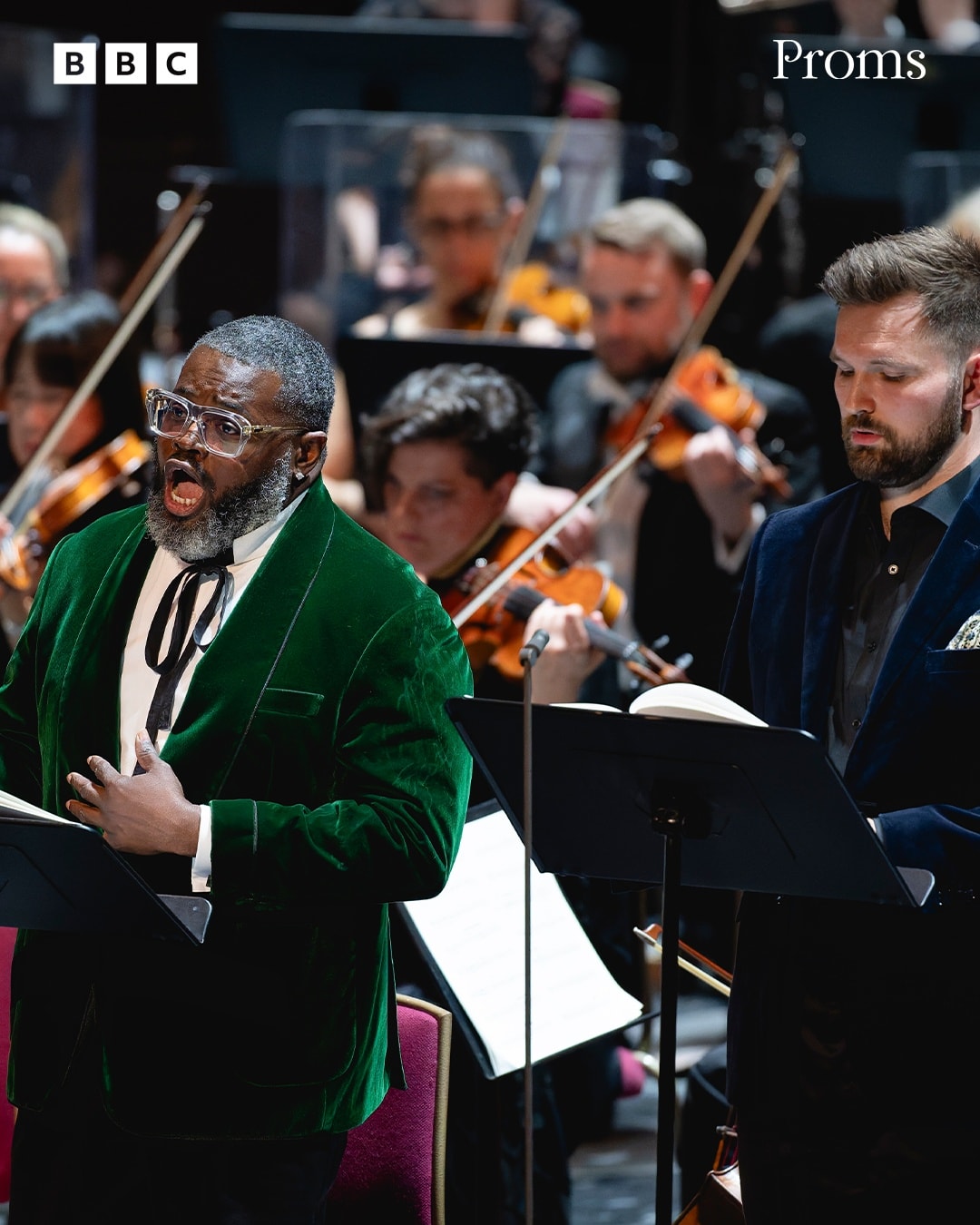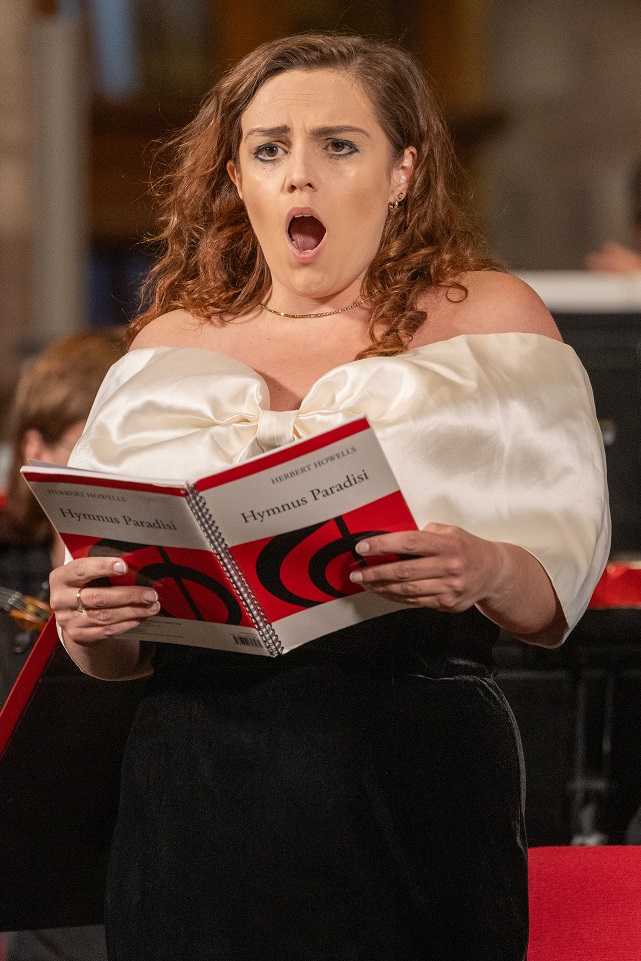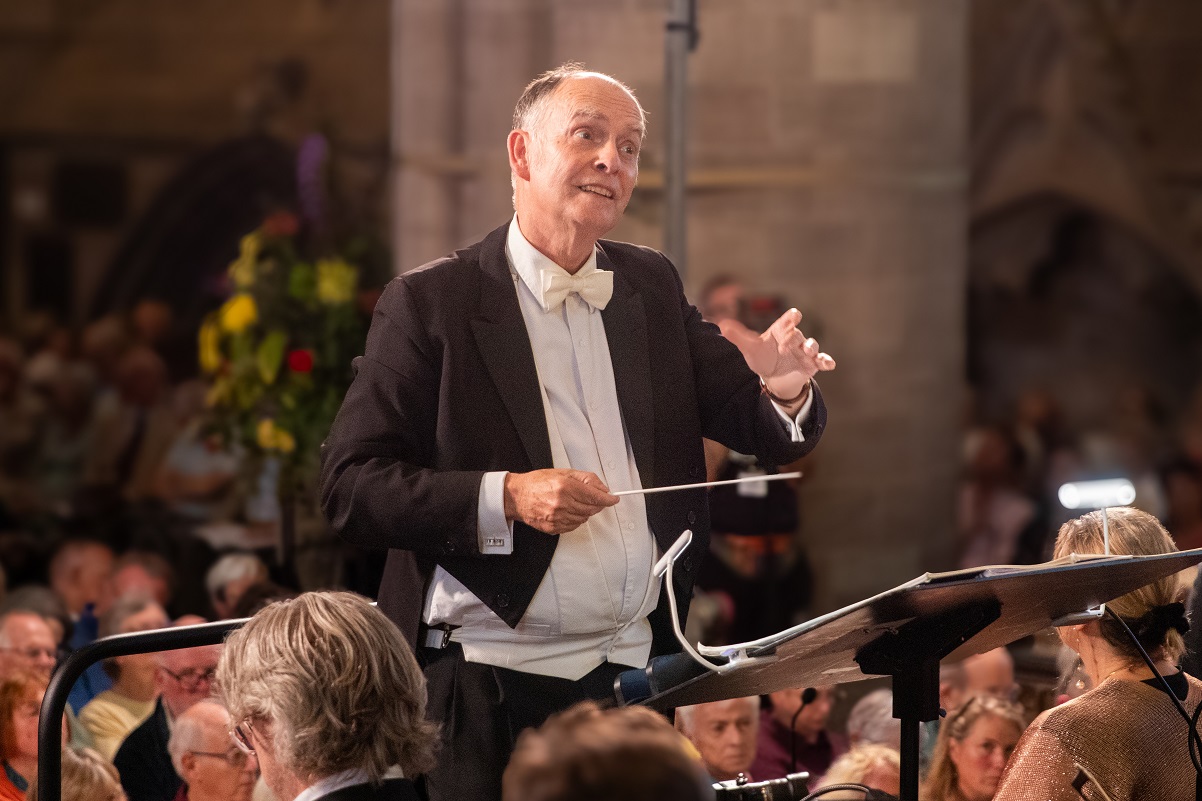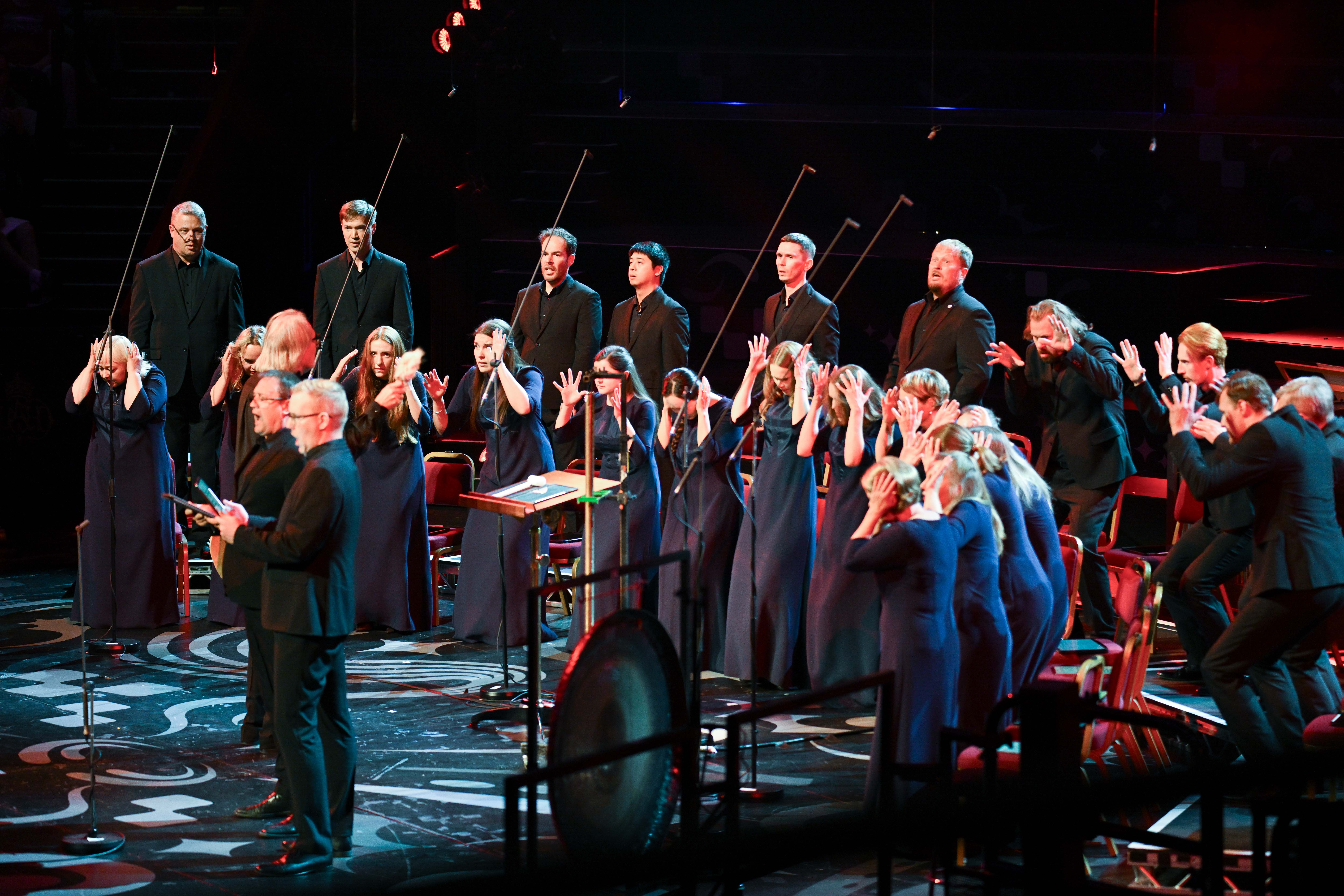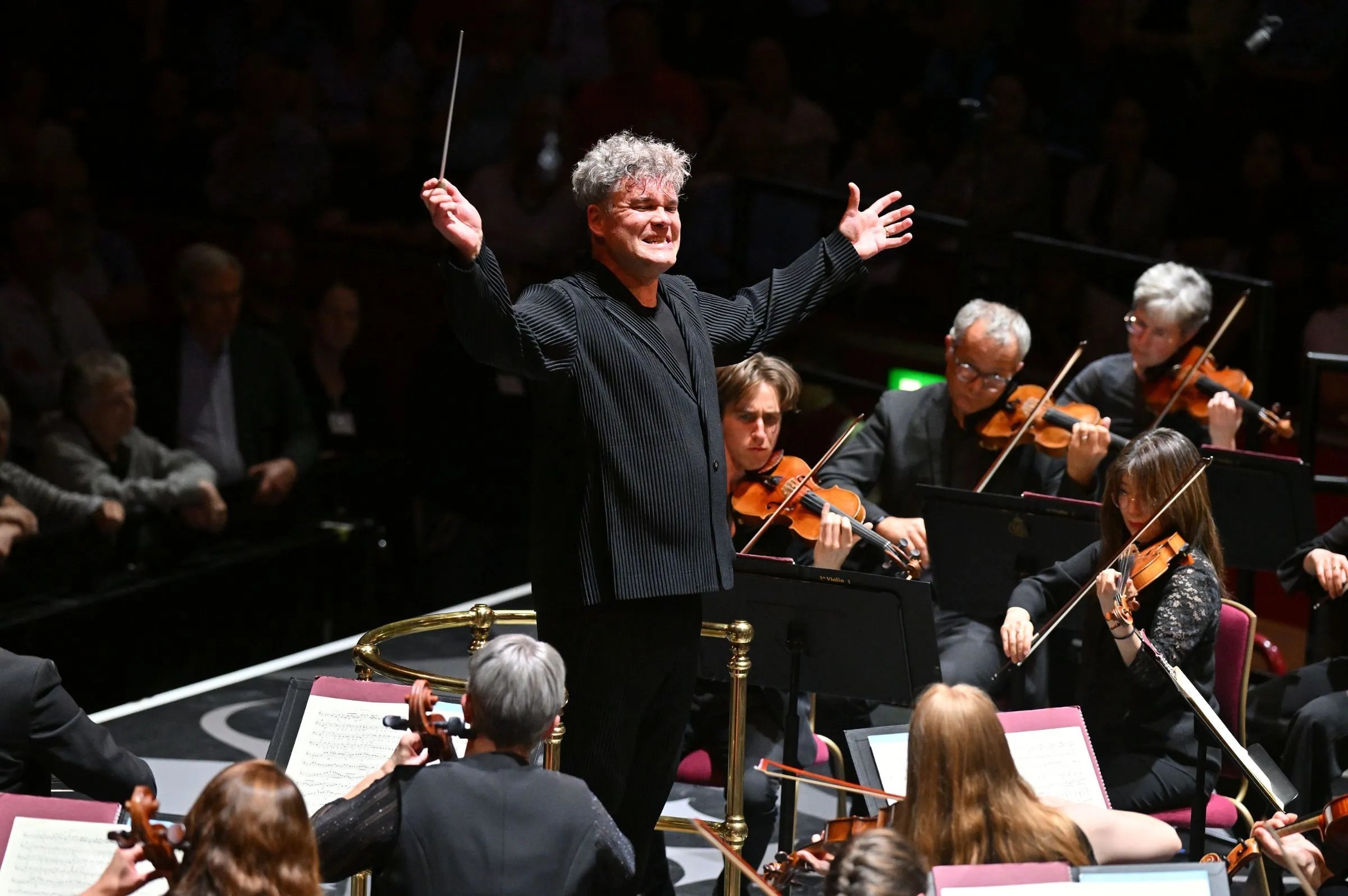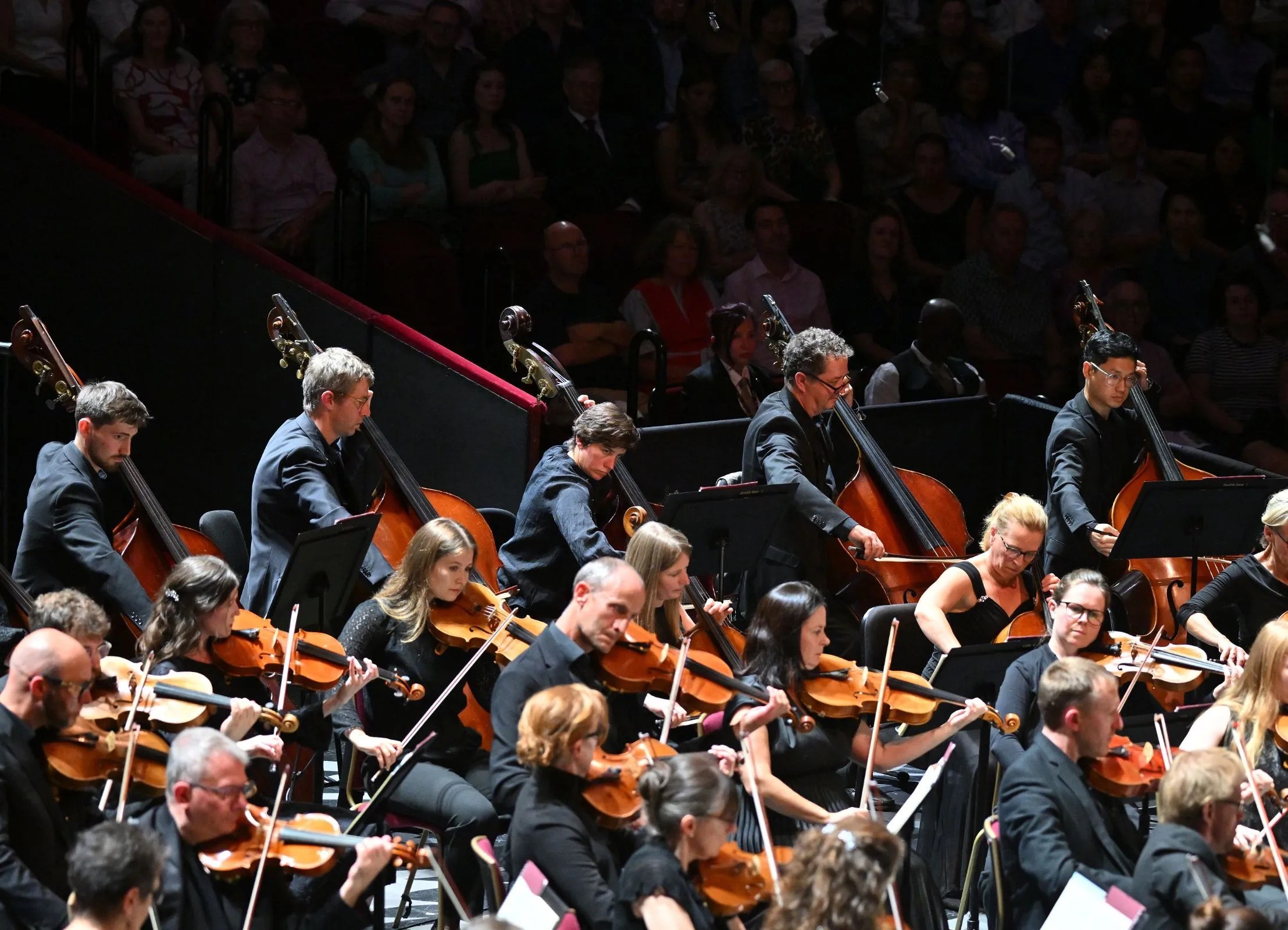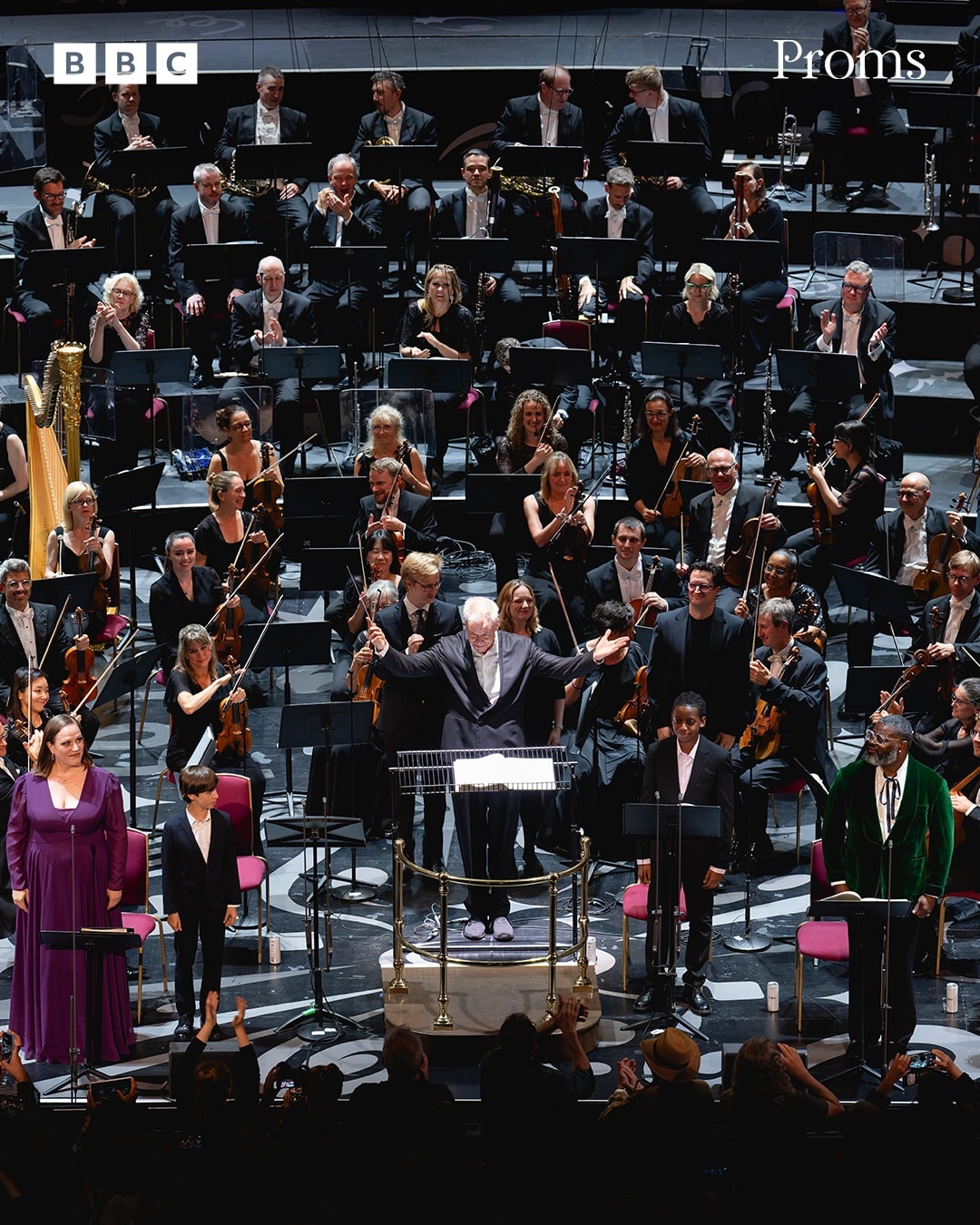
In concert – Sean Shibe, BBC Philharmonic Orchestra / Anja Bihlmaier @ BBC Proms: Richard Strauss, Mark Simpson ‘ZEBRA’ & Berlioz

Sean Shibe (guitar), BBC Philharmonic Orchestra / Anja Bihlmaier

Richard Strauss Tod und Verklärung Op.24 (1888-89)
Simpson ZEBRA (or, 2-3-74: The Divine Invasion of Philip K. Dick) (2025) [BBC commission: World premiere]
Berlioz Symphonie fantastique Op.14 (1829-30)

Royal Albert Hall, London
Tuesday 22nd July 2025

Reviewed by Richard Whitehouse Photos (c) BBC / Mark Allan

The current BBC Proms season features several high-profile premieres, not the least of them being tonight’s from Liverpool-born clarinettist and composer Mark Simpson, remembered at these concerts for his orchestral fanfare sparks launching 2012’s Last Night in no uncertain terms.

On one level, ZEBRA (or, 2-3-74: The Divine Invasion of Philip K. Dick) is a straightforward three-movement concerto following the customary formal trajectory. No work that draws its inspiration from one of Sci-Fi’s most distinctive authors could be deemed predictable and so it proved with this musical representation of an epiphany which, experienced in his mid-40s, pervaded his thinking until his untimely death. Whether or not possessing divine overtones, it duly provided an imaginative context for the present work as it unfolds from a combative and even assaultive opening movement, through a mostly ruminative yet sometimes restive elegy, into a finale whose rapidly accruing energy surges towards an apotheosis of theatrical overkill – the ‘Zebra’ of the title as demonstrative as it remained elusive a presence during Dick’s life.

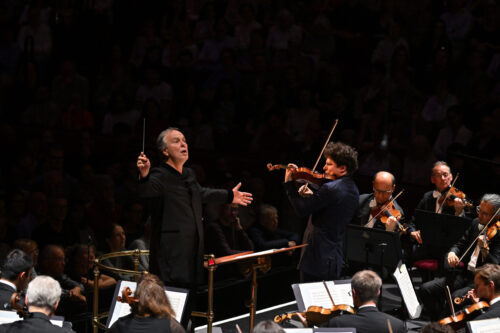
Music whose virtuosity summoned an orchestral response to match – the BBC Philharmonic Orchestra responding with alacrity to Simpson’s often febrile textures and translucent sonorities under the assured guidance of Anja Bihlmaier. Ultimately, of course, this was Sean Shibe’s show – his magnetic presence and mastery of electric guitar making it a notable addition to a genre still lacking in worthwhile contributions. His encore of a dreamily disembodied soundscape might even have been paying oblique homage to the great, happily not so late Robert Fripp.

On another level, Simpson’s concerto chimed ideally with the likely concept of this concert. One that commenced with an unexceptionally fine account of Richard Strauss’s Tod und Verklärung, Bihlmaier characterizing its more inward episodes with affecting poignancy as compensated for a lack of implacability in its early stages or a slightly underwhelming affirmation toward its close. Rarely in doubt was the direction in which this composer’s metaphysical musings were headed, even if the outcome was a performance no more than the sum of its best parts.

Berlioz pursued a rather less elevated ‘death and transfiguration’ in his Symphonie fantastique, but an approach with which Bihlmaier seemed more fully in accord. The lengthy introduction of Rêveries – Passions was eloquently delineated, and if the main portion of this movement (without exposition repeat) was overly self-contained, it elided naturally into Un bal with its ingratiating waltz offset by passages of despondency and elation. The highlight was a Scène aux champs which unfolded seamlessly from its plangent cor anglais solo, through mounting agitation, near catastrophe then uneasy resignation, to its mesmeric ending made more so by undulating timpani chords. After this, Marche au supplice (with first-half repeat) built with ominous tread to a climax almost graphic in its depiction of the ‘hero’ condemned to death.

An outburst of applause suggested many had not anticipated the orgy to come, but Bihlmaier responded with a Songe d’une nuit du Sabbat that, if lacking the ultimate drama, set the seal on an engaging performance with the BBC Philharmonic at something like its collective best.

You can listen back to this Prom concert on BBC Sounds until Sunday 12 October.

Click on the artist names to read more about Sean Shibe, Anja Bihlmaier, the BBC Philharmonic Orchestra and composer Mark Simpson – and for more on the BBC Proms

Published post no.2,605 – Thursday 24 July 2025

In concert – Ryedale Festival: Timothy Ridout, Orchestra of Opera North / Tom Fetherstonhaugh – Bliss: Viola Concerto first performance; Vaughan Williams, Coleridge-Taylor & Elgar

Timothy Ridout (viola), Orchestra of Opera North / Tom Fetherstonhaugh

Vaughan Williams The Wasps – Overture (1909)
Bliss (orch. Wilby) Viola Concerto, B68a (1933, orch. 2023)
Coleridge-Taylor Solemn Prelude in B minor, Op. 40 (1899)
Elgar Variations on an Original Theme, Op. 36 ‘Enigma’ (1898-99)

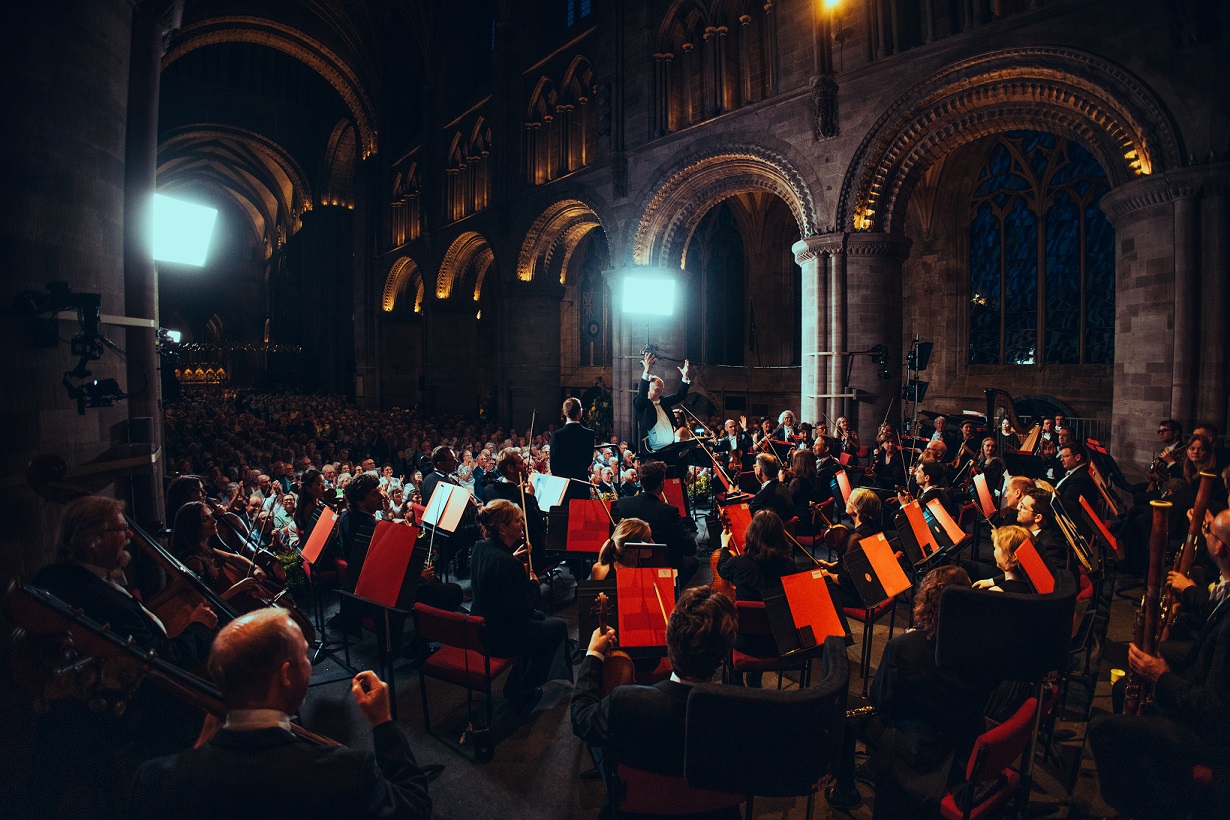
Ripon Cathedral
Saturday 19 July 2025

Reviewed by Richard Whitehouse Photos (c) Jonas Cradock

With a variety of activities throughout its region, the Ryedale Festival is now well established among the most wide-ranging of such events 45 years since its inauguration and this evening’s concert showcased the Orchestra of Opera North in the impressive setting of Ripon Cathedral.

The all-British programme centred on the first hearing for a Viola Concerto that Arthur Bliss had always intended to create out of his sonata for that instrument, but has only recently been carried out by Philip Wilby. A former professor of composition at Leeds University, Wilby is best known for his choral and organ music but as was duly confirmed, is an able orchestrator with a keen appreciation of Bliss’ idiom. Hence the successful launch of a piece that deserves to assume its place within the still-limited repertoire of concertante works for this instrument.

That it exists at all was no doubt through the prompting of Lionel Tertis, for whom Bliss wrote his Viola Sonata some 20 years after a single-movement Violin Sonata (never played publicly during his lifetime) as was his only other such duo. Formally it is among his most innovative pieces, the skewed sonata design of its initial Moderato exuding a restive and even impulsive eloquence as responded well to an orchestration which resembles more the intimacy of Bliss’ late Cello Concerto than the full-blooded fervour of his earlier such works for piano or violin.

The ensuing Andante is Bliss at his most personal – its darkly ruminative progress building to an anguished culmination made the more so in this context, before subsiding into the fugitive unease from which it had emerged. There follows a propulsive Molto allegro modelled on the rhythmic syncopation of the Furiant, a scherzo-cum-finale climaxing with a powerful cadenza here forcefully partnered by timpani. After which, the Coda poignantly surveys all that went before in a sustained Andante maestoso as brings about an apotheosis of plangent resignation.

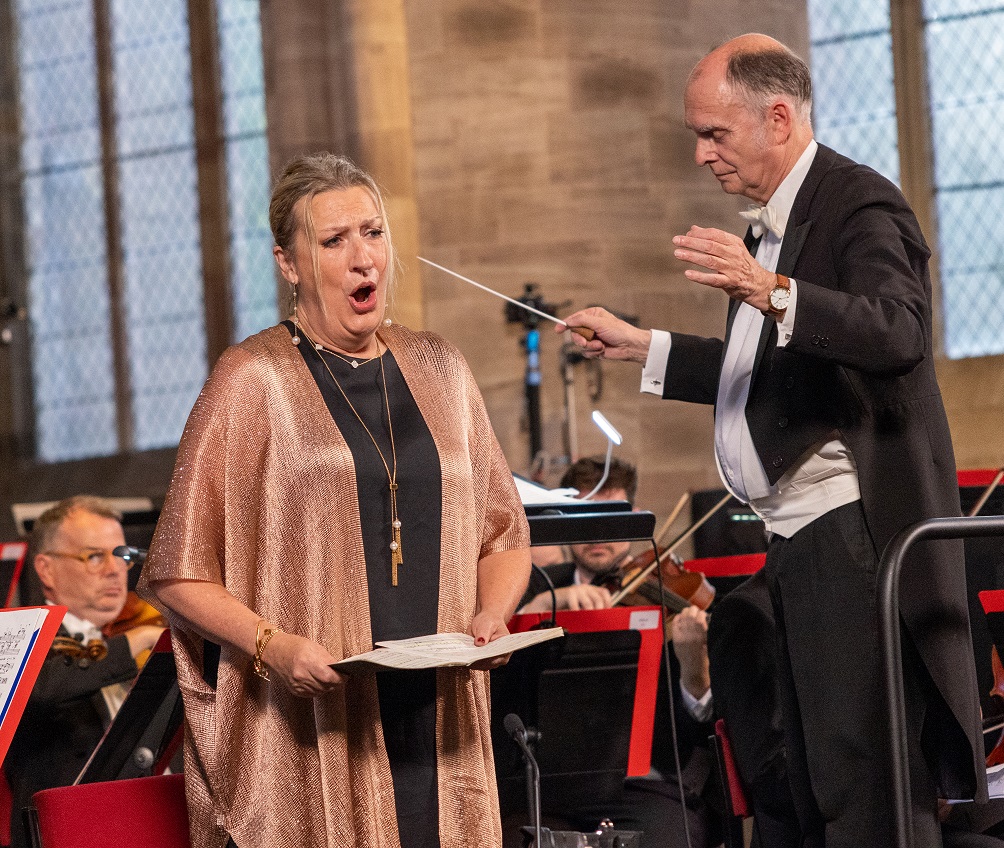
At around 27 minutes, Bliss’s Viola Concerto is equal in its scale as in its expressive reach to comparable works by Hindemith and Walton, so credit to Timothy Ridout (above, among the leading younger violists) that its essence was so tangibly conveyed. Nor was the OON found wanting under the assured direction of Tom Fetherstonhaugh, heard here in an ambience where detail lacked only the final degree of definition. Hopefully a recording will follow of what is likely to be the most important performance scheduled in this 50th anniversary-year of Bliss’ death.

The first half had begun in sparking fashion with the overture Vaughan Williams wrote as part of incidental music for a Cambridge University production of Aristophanes’ satire The Wasps, its incisiveness not precluding an open-hearted response to the ineffable melody at its centre.

A very different proposition duly launched the second half. Solemn Prelude is a characteristic statement by Samuel Coleridge-Taylor that did not merit the total neglect after its premiere at Worcester Cathedral; further hearings only made possible with the score’s belated relocation at the British Library so new parts could be made. Fusing Elgarian nobility with Brucknerian grandeur, any risk of portentousness was countered with an expressive immediacy abetted by Fetherstonhaugh’s flexible control over pace so that a welcome spontaneity came to the fore.

It certainly made an ideal entrée into the ‘Enigma’ Variations. Performances of Elgar’s earliest masterpiece now seem more frequent than ever, and tonight’s had much to commend it. Never fazed by the expansiveness of this acoustic, Fetherstonhaugh opted for mainly swift tempi as might easily have caused blurring in those faster variations had it not been for his scrupulous balance of detail. Elsewhere there was no lack of emotional input, not least during variations VIII-X with the wistfulness of ‘W.N.’ then deftness of ‘Dorabella’ framing a ‘Nimrod’ whose fervour was the greater for its relative urgency. Nor was the ‘E.D.U.’ finale lacking in panache as it brought the whole sequence to a conclusion of ringing affirmation, though it was maybe a pity that this building’s impressive organ could not have been utilized for the closing bars.

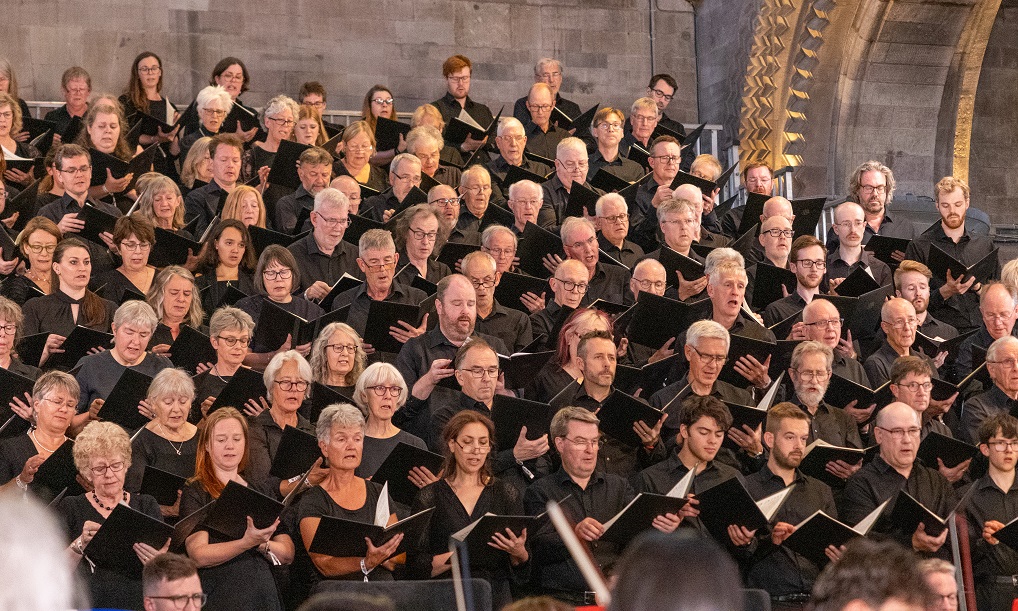
What was hardly in doubt was the response that this account received from the near-capacity audience, making one anticipate more such events at Ripon Cathedral in future editions of the Ryedale Festival, as it continues assiduously to promote the cultural life of North Yorkshire.

For more on the festival, visit the Ryedale Festival website, and click on the artist names to read more about violist Timothy Ridout, the Orchestra of Opera North and their conductor Tom Fetherstonhaugh. Meanwhile click to read more on the Arthur Bliss Society and the Samuel Coleridge-Taylor Foundation

Published post no.2,602 – Monday 21 July 2025

In concert – Gina Birch @ Rough Trade East

L-R Jenny Green, Gina Birch, Helen McCookerybook, Marie Merlet

Rough Trade East, London, 16 July 2025

by John Earls. Photo credits (c) John Earls

Gina Birch was a founding member of legendary post-punk band The Raincoats, but it took her until 2023 to release her first solo album. This concert at London’s Rough Trade East was to promote her just released and excellent second solo album Trouble.

“Many of these songs have never been played live before. So it’s an exciting moment for you and a very exciting and scary moment for us” says Birch as she takes the stage with her live band The Unreasonables (Jenny Green and Marie Merlet).

The opening Don’t Fight Your Friends provides a tentative start but pretty soon it’s clear this is going to be something special.

Happiness is a warm and welcoming second number before Birch tells us “now you’re going to wake up again” and launches into Causing Trouble Again, a stirring celebration and shout out (literally) to iconic feminists “and all the other trouble makers I’ve forgotten” that sees Birch playing a high neck bass line melody and some deft solo work from Green on electric guitar.

Doom Monger follows with some funky reggae riffs before the band are joined on stage by “very special guest” Helen McCookerybook who adds vocals to an affecting Hey Hey with its sparse drums and a powerful I Thought I’d Live Forever.

The set finishes with two songs from Birch’s first solo album. I Play My Bass Loud, with its Raincoats’ No One’s Little Girl undertones, sees all of the band playing basses in wonderful solidarity. Feminist Song is a terrific and potent closer to the show with Birch exclaiming:

“I’m a fighter, I’m a believer
I’m a mother, I’m a cleaner
I’m an artist and I’m yours”.

A wonderful evening and a demonstration of Gina Birch’s enduring power to inspire and bring joy.

John Earls is Director of Research at Unite the Union and posts at @johnearls.bsky.social on Bluesky and @john_earls on X. You can subscribe (free) to his Hanging Out a Window Substack column here: https://johnearls.substack.com/

Published post no.2,601 – Sunday 20 July 2025

In concert – Johan Dalene, Andreas Brantelid & Christian Ihle Hadland @ Wigmore Hall: Korngold & Ravel

Johan Dalene (violin, above), Andreas Brantelid (cello, bottom), Christian Ihle Hadland (piano, middle)

Korngold Piano Trio in D major Op.1 (1909-10)
Ravel Piano Trio in A minor (1914)

Wigmore Hall, London
Monday 7 July 2025 (1pm)

by Ben Hogwood

With the BBC New Generation Artists scheme reaching its quarter century earlier this year, we had a timely reminder of its legacy in the shape of this high-powered BBC Radio 3 Lunchtime Concert at the Wigmore Hall. All three artists record for the BIS label, and on this evidence it is to be hoped the three will form a lasting trio, for they have an obvious and enduring musical chemistry.

The concert began with the first published work of Erich Wolfgang Korngold, a child prodigy in the same line as Mozart and Mendelssohn before him. While his Piano Trio in D major Op.1 is dedicated to his father Julius, who was a forceful influence on his son’s writing at this point, to have written such an accomplished work is simply remarkable. The work’s rich harmonies and searching melodies explore new possibilities while revering past traditions, a Viennese work written through the eyes of a young composer showing off his agility and expressive potential.

The trio can be elusive on occasion, with a lot packed into its four movements. On occasion the young composer appears to be trying out variants of a modern Viennese style, which comes to him naturally along with an awareness of developments in France. Fauré is a notable influence; so too Brahms and Richard Strauss; and these, mixed with youthful passion, make a heady concoction.

That this performance succeeded owed much to the dexterity and balance of pianist Christian Ihle Hadland, bringing clarity to the second movement Scherzo where Korngold’s thoughts are not always finished before moving onto the next melody. Johan Dalene gave room to the fervent Larghetto, bringing out its thoughtful side with a pure tone in the higher violin register. Meanwhile the strength of the finale was bolstered by its longer sentences, adhering clearly to the energico of its marking but with Dalene and cellist Andreas Brantelid finding perfect melodic unison. All three players enjoyed Korngold’s oblique approach to the final cadence, signing off with some panache.

Ravel’s Piano Trio in A minor was in his mind for some time before writing, though once composition began it did so with great urgency, the composer aware that the First World War was imminent. Hadland was superb throughout this interpretation, the crystalline quality given to the piano’s chords setting the tone for the whole work. Dalene responded with a sweet melancholy to the second theme, while the trio’s white-hot energy and virtuosity in the fast ensemble passages was something to behold.

They also relished the cross rhythms of the Pantoum, given with some exotic colours as Ravel’s mind became distracted by thoughts and the musical language of the Far East. Those were even more apparent in the language of the Passacaille, the threat of war now prescient in the hollow left-hand line of the piano, picked up by Brantelid as though intoning a Gregorian chant. This thoughtfulness and relative darkness gave way to a brilliant burst of light in the harmonics opening the finale, where again the trio reached energetic highs amid bold and clear ensemble statements. Hadland’s mixture of precision and power proved ideal for Ravel, helped by a similar approach from both string players, all three sweeping all before them in the convincing closing bars.

These were performances to cherish, while thought provoking in their proximity to the War where Korngold raised money as a regimental band leader and composer while Ravel approached the front line as a munitions lorry driver.

Listen

You can listen to this concert as the first hour of BBC Radio 3’s Classical Live, which can be found on BBC Sounds until Wednesday 6 August.

Published post no.2,589 – Tuesday 8 July 2025

In concert – Quatuor Danel: Shostakovich & Weinberg #11 @ Wigmore Hall

Quatuor Danel [Marc Danel & Gilles Millet (violins), Vlad Bogdanas (viola), Yovan Markovitch (cello)]

Weinberg String Quartet no.16 in A flat minor Op.130 (1981)
Weinberg String Quartet no.17 Op.146 (1986(
Shostakovich String Quartet no.15 in E flat minor Op.144

Wigmore Hall, London
Friday 27 June 2025

by Ben Hogwood Photo (c) Marco Borggreve

After giving fresh insight and context to the 32 string quartets and two piano quintets of Shostakovich and Weinberg, Quatuor Danel finally brought their Wigmore Hall cycle of both composers to a close. The journey began just before the COVID pandemic but was necessarily aborted. However on the series resumption in 2023 Wigmore Hall artistic and executive director John Gilhooly generously suggested the quartet begin the concerts afresh, a gesture acknowledged by Quatuor Danel first violinist Marc Danel before the group’s encore.

Danel admitted it had been difficult deciding which work should close the combined cycle, yet this concert proved the group had made the right decision, closing with some of Shostakovich’s final musical thoughts. Before that we heard the two very contrasting last quartets by Weinberg. His String Quartet no.16 was completed in 1981, the year in which his sister would have reached her sixtieth birthday had she not been murdered, along with the composer’s parents, in the Holocaust. Bearing her dedication, the quartet is a work of conflicting emotions, with an underlying tension trumped by a strong and lasting resolve.

Stylistically, Weinberg’s writing reflects his reacquaintance with the music of Bartók. This was evident from the heavy-set bow strokes of the first movement, where Danel led with power and precision. Weinberg allows time for calmer thoughts, but there was a guarded watchfulness that the Quatuor Danel conveyed most vividly here. The contrast between Scherzo and Trio in the second movement was striking, the emphatic gestures of the former upturned by the ghostly outlines of the otherworldly trio, which hinted at an alarm going off in the distance. The climax of the Lento felt like the culmination of a unified protest from all four instruments, its dissonant cries living long in the memory, before the waltz of the finale. Cold to the touch, the four instruments were muted but not silenced, and a period of moving stillness in the music held the attention before the waltz returned for the thoughtful closing bars.

With the String Quartet no.17, completed five years later, the mood changed completely. With a more explicit tonal language, this piece started in high spirits, Weinberg relishing the opportunity to revisit and quote from his earlier works, doing so in the spirit of pure musical enjoyment. A rustic first theme was brilliantly played here, as was the richly voiced chorale proving such an effective counterpart. This single movement work falls into four distinct sections, and eloquent solos from Danel and cellist Yovan Markovitch were memorable, before the feathery textures that began the finale, after which the chorale theme returning in an even brighter light. The positive disposition of the quartet gave it a youthful appearance beyond the references to early works, the composer enjoying childhood recollections through the viewpoint of relative seniority. The Danel ensured we were aligned in that viewpoint, too.

Shostakovich’s String Quartet no.15, however, is indisputably the work of a man in the twilight of his life. Written in six slow movements, it is one of the most distinctive utterances in the repertoire both of Shostakovich and the string quartet, and no performance should leave its audience unmoved. In the course of 40 minutes, Shostakovich leaves us with music that in terms of speed never really gets out of first gear, but whose intensity is unrelenting from its very first bars.

The Danel found that intensity with unerring accuracy, right from the first drawn-out melodies. Musically we seemed to have travelled back several centuries, the work unfolding with almost painful slowness, Shostakovich’s frailty made clear through music. And yet there is a spiritual quality looking ahead to the music of Arvo Pärt and Silvestrov, a kind of minimalism conveyed in searching, long-phrased melodies.

The Quatuor Danel were sparing in their use of vibrato, which made for an even more effective expressive tool when used, while their intonation was commendably flawless in such a difficult key for strings. In the second movement, ironically titled Serenade, the music felt inverted, its distinctive outcries made through crescendos reaching for the very soul. Marc Danel gave a searing solo at the beginning of the central Intermezzo, after which he sat, head bowed, listening to his three colleagues, while the viola solo from Vlad Bogdanas for the Funeral March was similarly charged. The Epilogue returned to the remarkable stillness present for much of this work, after which there was an equally moving silence.

It would be difficult to suggest an encore for music with such finality, but the quartet found an answer – in the shape of the first movement of Shostakovich’s String Quartet no.1. This might be thought an odd choice, but, as Danel explained, its music was a timely reminder for the world in which we live that the sun would come back. Hearing Shostakovich’s first and last statements for quartet in such proximity, it was hard not to agree with him – and so – with huge credit to the players for some memorable performances – this wonderful cycle concluded in the best possible way.

You can hear the music from the concert below, in recordings made by Quatuor Danel -including their most recent cycle of the Shostakovich quartets on Accentus:

For more information, click on the names for more on composer Mieczysław Weinberg and Quatuor Danel themselves.

Published post no.2,580 – Sunday 29 June 2025