On record – Sir John Tomlinson, Rozanna Madylus & Counterpoise: Kokoschka’s Doll (Champs Hill Records))

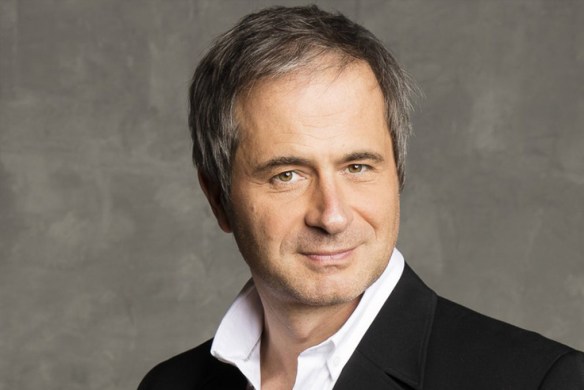
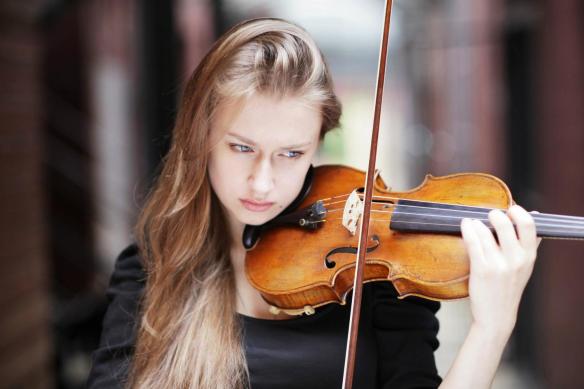
Rozanna Madylus (mezzo-soprano), Sir John Tomlinson (bass), Counterpoise [Kyle Horch (saxophone/clarinet), Deborah Calland (trumpet), Fenella Humphreys (violin), Iain Farrington (piano)]

Music by John Casken, Alma Mahler, Gustav Mahler, David Matthews, Richard Wagner, Anton Webern and Alexander Zemlinsky

Champs Hill Records CHRCD150 [81’54”]

Producer Matthew Bennett
Engineer Dave Rowell

Recorded 21-22 May 2018 & 17 January 2019, Music Room, Champs Hill, Sussex

Written by Richard Whitehouse

What’s the story?

The enterprising ensemble Counterpoise returns with its second release – an ambitious and wide-ranging selection centred upon that redoubtable femme fatale who was Alma Mahler and with a major new piece of music-theatre featuring Sir John Tomlinson from John Casken.

What’s the music like?

The generous programme effectively divides into two parts. The Art of Love opens with four songs by Alma – her setting of Julius Bierbaum’s Mild Summer Night and A Nocturnal Light followed by that of Gustav Falke’s Harvest Song, all of them accorded a fresh perspective in resourceful arrangements by David Matthews. Much the finest is the recently located setting of Leo Greiner’s Lonely Walk, but even this must yield to the radiance of Paul Wertheimer’s Blissful Hour by Zemlinsky, Alma’s lover before Mahler and an underrated Lieder composer.

Matthews’s subtle arrangement of Mahler’s rapturous Rückert setting If You Love for Beauty, followed by his ominous Wunderhorn setting Where the Splendid Trumpet Sounds, proceed Iain Farrington’s violin-and-piano transcription of the start of the Adagietto from Mahler’s Fifth Symphony (it would be worth hearing the rest). Webern’s glinting Trio Movement for clarinet, trumpet and piano is intriguingly countered by Matthews’s hardly longer yet more equable Transformation (with addition of piano); after which, his arrangement of Wagner’s Dreams (last of five settings after Mathilde Wesendonck) underlines its rapt introspection. Rounding off this first part with Liszt’s take on Isolde’s Liebestod might almost be thought rather predictable, but Farrington’s pointedly unshowy rendering is an undoubted pleasure.

The second half of this programme is devoted to Kokoschka’s Doll – a melodrama for bass-baritone and ensemble by John Casken, who has also devised the text in collaboration with Barry Millington. Drawing on the artist’s letters and autobiography, this almost 40-minute piece focusses on Kokoschka’s fractious liaison with a recently widowed Alma Mahler, his near-death experience as a soldier on the Eastern front, then his ill-fated attempt to recreate Alma as a doll to his idealized specifications. Unfolding between past and present, the text provides plenty of leeway for Sir John Tomlinson to convey the tortured while not a little self-seeking protagonist through an adept interplay of speech and parlando – dispatched with his inimitable blend of fiery rhetoric and soulful rumination. Instrumentally the music is rich in timbral and textural nuance, following the emotional ebb and flow of Kokoschka’s musings as they spill over into the irrational. An engrossing concept, skilfully realized, which would certainly be worth presenting in a scenic version at some of the UK’s many studio-theatres.

Does it all work?

As an overall sequence, certainly. Counterpoise is an object-lesson of unity within diversity, whether in the range of music this ensemble brings together or in the arresting nature of the arrangements it favours. Added to which, the singing of Rozanna Madylus is a treat in store.

Is it recommended?

Indeed. Performances and recording leave nothing to be desired, while the booklet features a succinct introduction by Millington along with reproductions from Kokoschka’s drawings of his ‘Alma Doll’ – more appealing visually than it becomes at the denouement of the scenario!

Listen and Buy

You can read more about this release, listen to clips and purchase from the Champs Hill website

Wigmore Mondays – Alessandro Fisher & Roger Vignoles: Nordic Tales

Alessandro Fischer (tenor, above), Roger Vignoles (piano, below)

Wigmore Hall, Monday 16 March 2020 (lunchtime)

You can listen to this concert on the BBC Sounds app here (opens in a new window)

Review and guide by Ben Hogwood

With the Coronavirus pandemic now sadly in full swing, this was the last concert at the Wigmore Hall for some time, the venue now on an enforced break until mid-April at the earliest. It served as a reminder of just how lucky we are to be able to experience live music, and how good it is to have concerts such as this preserved on the radio.

This particular concert was a fascinating program of Nordic tales through the eyes of four composers of different nationality. BBC New Generation Artist Alessandro Fisher and the superb, ever-attentive Roger Vignoles cleverly constructed a program focusing on Scandinavia. Yet we saw it not just through the eyes of one of its favourite musical sons (Grieg) but through three others with strong connections – Robert Schumann (Germany), Frederick Delius (England) and Gunnar de Frumerie (Sweden).

Schumann’s 5 Lieder date from 1840, his famed year of song, and came about from his admiration of Hans Christian Andersen’s ability to blend the childlike and the grotesque in his stories. Each of the five songs behaves in a similar way musically. Märzveilchen (The March Violets) (2:32), are aptly timed here, with an appropriately breezy and outdoor air, Fisher’s clear voice adding to the sunny countenance. In Muttertraum (A mother’s dream) (4:10) a shadow falls over the music, drawing longer as the tenor describes the ominous appearance of a raven, all to the accompaniment of a beautifully shaped single line from Vignoles (below).

For Der Soldat (The soldier) (6:56) the muffled drum is vividly described by Schumann – and Vignoles – and Fisher’s voice takes on a declamatory form but reaches stunned silence at the end, when he realises he has killed his man. In Der Spielmann (The fiddler) (9:55), Fisher’s ringing voice tells of celebration but also an untimely death, before the final Verratene Liebe (Betrayed Love) (13:14) This brief song stays in genial mood despite its subject matter.

You can learn a lot about a composer’s output from their songs, and in the case of Grieg his songs reveal the work of a skilled tunesmith and an effortless ability to set a scene in next to no time. The songs here tell of those skills, and Fisher clearly loved performing them. He begins with two early works, the affectionate To brune Øjne (Two brown eyes) (15:50) and yearning Jeg elsker dig (I love you) (16:55).

Grieg’s depiction of En svane (The swan) is held in magical suspension by both Fisher and Vignoles (19:51), its serene progress leading to the flowing song Med en vandlilje (With a waterlily) (22:26). Prinsessen (24:55) has particularly special pleading from Fisher here, the prince’s entreaties to his beloved falling on deaf ears, while Fra Monte Pincio (28:02) has an urgent delivery, thinking of good times ahead.

To Delius, who visited Norway for a number of epic walks across the country, and whose relationship with the country remained close. He was good friends with Grieg, too, so it is perhaps inevitable they should both share common ground as excellent songwriters. The selection here begins with Twilight Fancies (34:40), Roger Vignoles shading the picture with distant horn fanfares and Fisher judging his vibrato ideally. The song sets a translation of the text used by Grieg in Prinsessen, and the different responses of the composers are fascinating in comparison.

Young Venevil (38:32) strains at the leash, impetuous but ultimately unlucky in love. The Nightingale (40:35) is airy and atmospheric, its chromatic movement nicely managed, while Longing (43:24) brings with it a surge of feeling through the flowing piano and Fisher’s ringing tone.

The music of Gunnar de Frumerie is seldom heard, but he is highly regarded among 20th century Swedish composers. The Songs of the Heart cycle features deeply intimate music, its subject matter woven into natural allegory. The six songs begin with the contemplative, almost rapturous When You Close My Eyes (47:58), then the pure You Make Everything Beautiful (50:10), which feels whiter than white. Blessed It Is To Wait (52:36) carries a feeling of impatience despite its title, before the profound From The Depths Of My Soul (54:16). You Are My Aphrodite (57:05) surges forward with great passion and intensity, Fisher’s effectively surfing the turbulent waves of the accompaniment. Finally Like A Wave (58:24) carries a Debussy-like humidity, sultry and ardent.

Repertoire

This concert contained the following music (with timings on the BBC Sounds broadcast in brackets):

Schumann 5 Lieder Op.40 (1840)
Grieg To brune Øjne Op.5/1, Jeg elsker dig Op.5/3 (1864), En svane Op.25/2, Med en vandlilje Op.25/4 (1876), Prinsessen (1871), Fra Monte Pincio Op.39/1 (1869-84)
Delius From Seven Songs from the Norwegian (1889-90): Twilight Fancies (34:40); Young Venevil (38:32); From Five Songs from the Norwegian (1888): The Nightingale (40:35); Longing (43:24)
de Frumerie Hjärtats sånger (Songs of the Heart) Op.27 (1942, rev. 1976) (47:58)

As an encore, once the Radio 3 microphones had departed, Fisher and Vignoles gave a brilliantly rendered account of Ian VenablesFlying Crooked, a comical but rather accurate portrayal of the flight of a butterfly, in this case a Cabbage White.

Further listening & viewing

Alessandro Fisher has not yet recorded the music given in this concert, but each song is included on the playlist below, in leading versions that include Anne Sofie von Otter’s account of Songs of the Heart:

Grieg’s songs are particularly worthy of further exploration, and these recordings from soprano Claire Booth and pianist Christopher Glynn are a great introduction to his craft:

von Otter meanwhile has recorded a disc of Swedish songs which include the works by Gunnar de Frumerie:

Finally Delius and his Norwegian connection, brilliantly explored in this vocal and orchestral collection from Danacord:

In concert – Piotr Anderszewski, CBSO / Omer Meir Wellber: Bartók & Bruckner

Piotr Anderszewski (piano), City of Birmingham Symphony Orchestra / Omer Meir Wellber (above)

Symphony Hall, Birmingham
Tuesday 10 March 2020

Bartók Piano Concerto no.3 (1945)
Bruckner Symphony no.6 in A major (1879-81)

Written by Richard Whitehouse

It is a measure of how far Bruckner’s Sixth Symphony has come from being one that even dedicated exponents avoided to one relative newcomers tackle as a way into this composer. The indisposition of Mirga Gražinytė-Tyla could have seen its removal from this evening’s programme, though Omer Meir Wellber (who for the past season has been chief conductor of the BBC Philharmonic, among his portfolio of notable positions) was clearly unfazed by this most technically exacting and emotionally unpredictable among Bruckner symphonies.

As was evident from the start of the Majestoso, the City of Birmingham Symphony’s violins rendering its indelible rhythm with real incisiveness and Wellber duly steering a purposeful course through this most animated of Bruckner’s symphonic movements, while never at the expense of those more lyrical and monumental themes to come. The climactic transition into the reprise was thrillingly done, and how persuasively Wellber pointed up the coda’s breath-taking modulations then its surging peroration whose sudden slowing-up was ideally judged. The Adagio was hardly less fine, with the CBSO strings securing burnished eloquence in its alternation between lament and rapture – underpinned by a majesty no less tangible than that in the following symphonies for all its restraint and, in the closing pages, gentle evanescence.

Other conductors might have found greater wit and insouciance in the Scherzo, but Wellber yielded to few in his delineating of its quizzical and propulsive gestures; nor did the trio want for elegance, for all its final phrase was ‘leant on’ a little too insistently. Notoriously difficult to make cohere, the Finale felt all of a piece with what went before – Wellber mindful that its ultimate affirmation is not without its quixotic or even ironic asides; moreover, that its formal divisions are secondary to its being in constant transition, on the way to an apotheosis where this movement audibly chases its tail as an unlikely and even uproarious means of bringing the work full circle. Quite a piece and quite a reading as set the seal on a performance that, if not the last word as interpretation, was never less than confident and assured in its traversal.

Coupling Bruckner with Bartók might seem a risky strategy but, in the event, the Austrian’s ‘cheekiest’ symphony followed-on ideally from the Hungarian’s deftest piano concerto. Piotr Anderszewski’s (above) take on the Third was one of judicious touches, not least an initial Allegretto tougher and more demonstrative than usual, without sacrificing this music’s innate sense of ingratiation. What followed was arguably too slow for an Andante, though how acutely the pianist brought out its ‘religioso’ marking in those poised exchanges of soloist and strings then woodwind – the brief central scherzo a ‘night music’ as delectable as it was evocative. Nor did Anderszewski under-characterize the final Allegro, its underlying vivacity accorded heft and not a little ambiguity on route to the most agile and uninhibited of Bartók’s codas.

A successful concert, then, which should certainly find favour on the (regrettably truncated) European tour the CBSO now undertakes. It is back in Symphony Hall for Verdi’s Requiem, then a varied programme that features the UK premiere of Julian Anderson’s Cello Concerto.

Further listening

Here is a Spotify playlist of music from the concert. The CBSO have not recorded the Bruckner before there is a recent version available from their former chief conductor, Sir Simon Rattle, and the London Symphony Orchestra. The playlist also includes the CBSO, Rattle and pianist Peter Donohoe in a 1992 recording of the Bartók:

For further information on the current season of CBSO concerts, visit the orchestra’s website

Wigmore Mondays – Ruby Hughes, Natalie Clein & Julius Drake: Works for soprano, cello & piano

Ruby Hughes (soprano, above), Natalie Clein (cello), Julius Drake (piano, both below)

Wigmore Hall, Monday 9 March 2020 (lunchtime)

You can listen to this concert on the BBC Sounds app here (opens in a new window)

Review and guide by Ben Hogwood

A fascinating hour of music for three instruments not often linked – soprano, cello and piano. Its imaginative programme comprised music by six composers from three different centuries using four languages! It made for a very satisfying whole.

Kodály’s single-movement Sonatina for cello and piano (1:41 on the radio broadcast) began the program. This is a work with which Natalie Clein and Julius Drake are very familiar, having recorded it for Hyperion in 2009, and they immediately found its expressive core. The Sonatina was initially intended for a Sonata the composer finished in 1909, but it happened to work particularly well on its own, and was completed later. Its colourful music – which has parallels to Debussy’s own Cello Sonata – is rich in melodic and harmonic content. Free in form, it speaks directly of the composer’s Hungarian heartlands. Clein’s tone was sumptuous in this performance and Drake’s piano exemplary, the two plotting a convincing course for the work.

This was followed without a break by three of John Tavener’s 6 Akhmatova Songs, written for soprano Patricia Rozario and cellist Steven Isserlis in 1993. In effect the cello is singing here too, its wordless line providing an otherworldly introduction for the third song of the six, Boris Pasternak (10:45). Clein’s rich sound was the ideal foil for the clarity of Ruby Hughes’ soprano. Couplet (12:48) was immediately more agitated, the gruff cello adopting a more questioning slant as it helped describe the poet’s suspicion about praise of her own work. Hughes, too, was more penetrating in her delivery. Finally Dante (14:23) grew outwards from the start, its expressive line shared between singer and instrumentalist.

Deborah Pritchard’s short but powerful Storm Song (16:46), a setting of text by Jeanette Winterson, was the last part of this unbroken first sequence. Premiered almost exactly three years ago, it was led by Hughes’ wide ranging but beautifully shaped melodic lines, soaring above the sinuous cello and piano as they descended into a powerful maelstrom at the song’s heart.

Debussy’s Chansons de Bilitis were next, three heady settings of words by Pierre Louÿs, initially claimed to be erotic works from Ancient Greece. They were in fact the poet’s own construction, a fact Debussy presumably knew. La flûte de Pan (23:02) immediately transported the listener to a sultry outdoor setting and a lovers’ tryst, given appropriately chromatic settings by the composer. Julius Drake provided a rich tapestry in Debussy’s piano writing, and the humid setting was enhanced by the slow, tolling bells of the introduction to La chevelure (25:50) Hughes, now lower in her range, cast the spell. Le tombeau des naïades (29:16) closed this deliberately elusive trio, and we were left feeling as though we were all in on a rendezvous that was not supposed to be happening!

On the palmy beach is a commission from Kings Place for Judith Weir, completed in 2019 for these three performers and watched here by the composer herself. A cycle of four themed songs, it takes encounters with the sea and its inhabitants as inspiration, setting four very different poems by Wallace Stevens, Kathleen Jamie, Norman McCaig and Emily Dickinson. Weir has blogged on how she initially intended to keep the two instruments in step with each other, but how it became ‘much more alluring to liberate the cello’. Presumably for copyright reasons, the text for only one of the four poems (the Dickinson) could be printed, which made the text more difficult to follow in spite of Hughes’ wonderful singing. Yet there was a great deal of communication through the music, for which Clein and Drake were equally responsible.

Clein soared towards the heights in the prologue to the setting of Stevens’ Fabliau of Florida (34:30), where foam and cloud are one, and gave a full-throated epilogue too. Weir’s use of the cello to depict a jellyfish in Jamie’s The Glass-hulled boat (38:23) was uncanny, humorous and strangely touching, the agile lines dovetailing with Hughes’ own words. Norman McCaig’s Basking Shark (42:08) was next, the broad cello line a counterpoint to Hughes’s vivid storytelling and only latterly joined by the piano. Finally the setting of Dickinson’s I started Early – Took my Dog – (656) (46:13) was compelling, the sea toying with the author before ultimately opting not to catch her up.

To conclude a unique concert we heard Schubert’s Auf dem Strom (50:57), written for Beethoven’s memorial a year after his death in 1828 and containing a quotation from the Eroica Symphony. Setting the poetry of Ludwig Rellstab, it was written for soprano with horn and piano accompaniment, the composer later adding an obbligato cello was just as valid instead of the horn. This was to our advantage, for it enabled Natalie Clein to project the phrases beautifully, setting the scene for Hughes’ subtly wrought grief. With eloquent playing from Drake, this felt rather like the slow movement of a Schubert piano trio, but with words – expressive and touching.

Repertoire

This concert contained the following music (with timings on the BBC Sounds broadcast in brackets):

Kodály Sonatina for cello and piano (1922, published 1969)
Tavener Akhmatova Songs (1993) (excerpts) (10:45)
Pritchard Storm Song (2017) (16:46)
Debussy Chansons de Bilitis (1897-8) (23:02)
Weir On The Palmy Beach (2019) (34:30)
Schubert Auf dem Strom D943 (1828) (50:57)

Further listening & viewing

The works by Deborah Pritchard and Judith Weir have not been recorded yet, but you can hear available recordings of the works by Kodály, Tavener, Debussy and Schubert on the following Spotify playlist:

References to Natalie Clein and Julius Drake’s Kodály recordings of 2009 were unfortunately missed from the Wigmore Hall program. You can hear preview clips of their collection, including the Sonatina on the Hyperion website

The most recent collection of music by Judith Weir comes highly recommended. Airs from Another Planet is a collection of songs and chamber music, released on the enterprising Delphian label:

Meanwhile the music of John Tavener continues to enchant in a lasting way. While awareness of the composer centres all too often around his piece for cello and orchestra, The Protecting Veil, this collection of works for cello from RCA – nominated for the Mercury Music Prize in 1997 – has aged very well. It includes all six of the Akhmatova Songs, performed by dedicatees Patricia Rozario and Steven Isserlis:

In concert – Kristine Balanas, Royal Philharmonic Orchestra / Andris Poga: Sibelius, Bruch & Rachmaninov

Kristine Balanas (violin), Royal Philharmonic Orchestra / Andris Poga

Cadogan Hall, London
Thursday 5 March 2020

Sibelius Karelia Suite Op.11 (1893)
Bruch Violin Concerto no.1 in G minor Op.26 (1866)
Rachmaninov Symphony no.3 in A minor Op.44 (1936)

Reviewed by Ben Hogwood
Photo credit (Andris Poga) Jean-Philippe Raibaud

This was a nicely balanced and uplifting concert that balanced the relative misery of the early March weather in London. With the rain hammering down outside the Cadogan Hall, the Royal Philharmonic Orchestra and Latvian conductor Andris Poga got on with ensuring there was plenty of warmth inside.

They began with Sibelius’s charming Karelia Suite, a work full of good tunes and typically attractive and imaginative scoring. It is an ideal ‘curtain up’ piece in the right performance, although this one took a little while to move up through the gears. The first movement Intermezzo felt a little stentorian, and could have had a lighter spring in its step, but the succeeding Ballade was nicely measured, the emotional heart of the performance and given affectionately by Poga. By the time the Alla Marcia third movement had arrived, so too had the bounce in the rhythms, and the deceptively simple string theme was given with a smile.

For Bruch’s Violin Concerto no.1 the orchestra were joined by Kristine Balanas (above), who led from the front in an account with passion and flair in strong supply. Yet there was an emotional distance between soloist and orchestra, who rarely interacted, and the opportunity for links through the sharing of Bruch’s wonderful melodies largely overlooked. Balanas played with a strong technical command of her Antonio Gragnani instrument, which made a wonderful sound, and the double stopping with which the finale begins was brilliantly done, the response from the orchestra appropriately breezy. Andris Poga clearly enjoyed the piece, but the distance remained throughout and hampered the work’s emotional impact.

There followed a hugely enjoyable account of Rachmaninov’s Symphony no.3, the first appearance of this work in a Royal Philharmonic Orchestra concert for a good while. Written in Lucerne but premiered by the Philadelphia Orchestra and Leopold Stokowski in 1936, the piece is unique for its successful blend of homesick melancholy and the suggestion of bright lights in America, written at a distance from both. Rachmaninov was effectively taking in the surroundings of both countries, but was ultimately thinking of home.

From the start it was clear the affection Andris Poga holds for the Third, with the carefully shaped and graceful chant theme contrasting with the upward sweep from the orchestra that followed. He was particularly impressive in managing the bracing syncopations in the finale, often tricky for orchestras to nail, and so too for the fugue that Rachmaninov tosses around the different sections towards the end. The slow movement was especially beautiful, with a solo from leader Sulki Yu that melted even the hardest heart. The same could be said for the warmly played slower theme in the first movement, beautifully floated by cellos with subtle prompting from woodwind.

What really impressed in this symphony was the orchestra’s overall sound, richly colourful and depicting vivid pictures of Rachmaninov’s surroundings. Visions of Hollywood could occasionally be discerned, the suitability of the composer’s music for the big screen uncannily made clear, but in the intimate slow movement a softer and more fragile heart was in evidence.

Unfortunately the players of the Royal Philharmonic Orchestra were not named in the programme, a shame as there were several new faces added to the fold this time around. They impressed greatly in a memorable account of a symphony finally getting its due rewards in the concert hall.

Further listening

You can listen to a playlist of the concert programme below – which includes the RPO in previous recordings of the Sibelius and Bruch, plus their conductor-elect Vasily Petrenko leading the Royal Liverpool Philharmonic Orchestra in a fine account of Rachmaninov’s Third Symphony.