Live review – CBSO Chorus and Orchestra / Mirga Gražinytė-Tyla: Brahms’ German Requiem & Mozart Serenade for wind

Camilla Tilling (soprano), Florian Boesch (baritone), CBSO Chorus, City of Birmingham Symphony Orchestra / Mirga Gražinytė-Tyla

Symphony Hall, Birmingham
Wednesday 4 March 2020

Mozart Serenade for wind in C minor K388 (1782-3)
Brahms Ein Deutsches Requiem Op.45 (1865-9)

Written by Richard Whitehouse

The City of Birmingham Symphony Orchestra’s current season features several major choral works that have long been central to this orchestra’s repertoire. While it has received numerous readings (most recently with Andrew Manze), Brahms‘s A German Requiem is not among these – so it was fascinating to hear what Mirga Gražinytė-Tyla might make of a piece that, though it has never fallen from favour since its premiere 152 years ago, remains a stern interpretive test in terms of projecting formal integration and an expressive essence more elusive for its restraint.

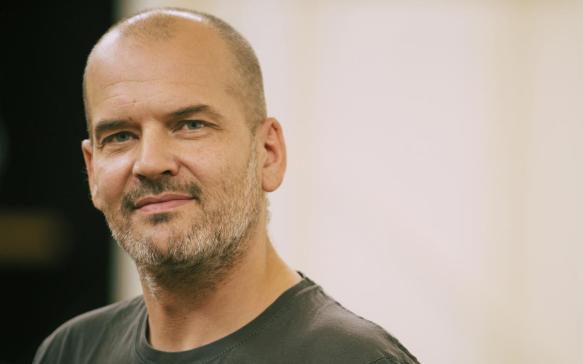
In the event the performance was a fine one – not least because this conductor found the right balance between flexibility of motion, without which the textures all too easily risk stolidity, and that seriousness of manner without which the music soon loses any sense of purpose. A balance as evident in the lengthy second movement, the inexorable tread of its outer sections framing an interlude of wistful grace then with the ensuing fugue building animatedly to its serene close, as in the brief fourth movement whose blithe exterior conceals music of artful dexterity. Camilla Tilling (above) summoned a winsome response in the fifth movement, a late but necessary addition in its opening-out the work’s emotional range, while Florian Boesch (below) was suitably if not unduly vehement in his initial contributions to the third and sixth; the former crowned by a fugue of visceral and unflagging energy, though that in the latter movement marginally lost focus as its grandly rhetorical gestures ran their (too?) predictable course.
It is in the first and seventh movements that Brahms’s highly personal concept of redemption through love is at its most explicit, MG-T duly having the measure of their calmly insistent searching towards eventual catharsis – even if the finale’s gradual winding-down resulted in less than the ideal repose. The CBSO Chorus was on fine form throughout – a tribute to the expertise of associate chorus director Julian Wilkins, who also made a pertinent contribution in an organ part no less crucial for its understatement; underpinning and often motivating an orchestration which adds in no small measure to the work’s humane and compassionate spirit.

A relatively short first half gave welcome opportunity for the CBSO’s woodwind to take the stage for an un-conducted reading of Mozart’s Serenade in C minor, last in his trilogy of such pieces which transcended an ostensibly lightweight genre and, in doing so, made possible the emotional substance of the symphonies that followed. Ensemble seemed a shade insecure in the opening Allegro, but its underlying intensity carried over to an Andante whose ineffable rapture was itself contrasted with the textural severity of the Menuetto. Best, though, was the final Allegro – a set of variation on an unassuming theme with the formal outline of a sonata-rondo made explicit with its major-key ending. Overall, a winning account of a piece whose scoring for wind octet has gained it less exposure than Mozart’s comparable orchestral works.

It also made for an unlikely while successful coupling and a similarly thought-provoking one is scheduled for next Tuesday, MG-T making her first foray into Bruckner with the erstwhile elusive Sixth Symphony alongside the deceptive simplicity of Bartók‘s Third Piano Concerto.

Further listening

Here is a Spotify playlist of music from the concert. The CBSO have not recorded either of these works before but these are fine alternatives:

For further information on the current season of CBSO concerts, visit the orchestra’s website
Wigmore Mondays – Lise Berthaud & David Saudubray: Schubert & Brahms sonatas

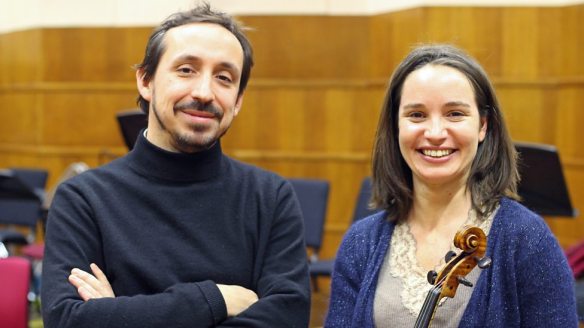
Lise Berthaud (viola), David Saudubray (piano)

Wigmore Hall, Monday 2 March 2020 (lunchtime)

You can listen to this concert on the BBC Sounds app here (opens in a new window)

Review and guide by Ben Hogwood

Neither of the two principal works in this BBC Radio 3 Lunchtime concert originated as viola pieces, but both have become repertoire staples for the instrument, the warmth of the Schubert Arpeggione Sonata and the sage experience of Brahms’s First Clarinet Sonata being ideal vehicles for its silvery tone.

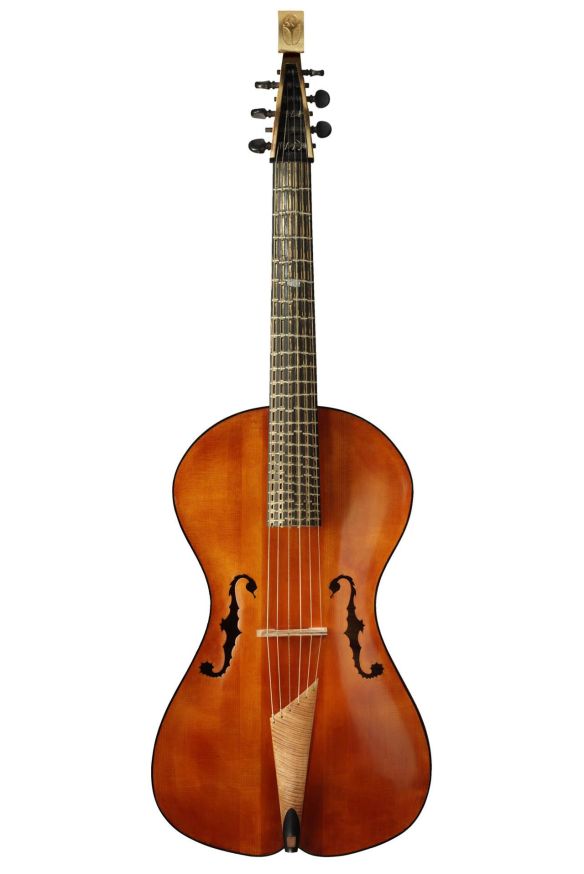
The Schubert is an especially unusual case, being the only prominent piece written for the arpeggione. This was an instrument with six strings and frets like a guitar, which was bowed and held between the knees.

Though it did not catch on as an alternative to the cello or the viola, Schubert wrote a substantial piece for a friend of his who played it. Because of the practicality of performing the work it was not until 1867 that it was finally published, with the realisation that it transcribes ideally for either cello or viola with piano accompaniment, the melodies lying under the fingers with deceptive ease.

The Arpeggione Sonata is a largely happy work, though it begins lost in thought (from 2:42 on the broadcast link). This was a measured intro from David Saudubray but as the first movement progressed the songful tone of Lise Berthaud’s viola took over, the pair enjoying the spring in the step of the faster music as though they were venturing out to dance. There was a really nice passage around the 8:38 mark, the viola using pizzicato to accompany the piano.

The second movement Adagio (14:28) explored more tender thoughts, the piano’s rocking motion suggesting the profile of a lullaby, especially with Berthaud’s soft musings above. However it was not long before we were straight into the Allegretto finale (18:13), the players investing more urgency until we arrived back at the dance (19:31), Schubert unable to resist setting the players on the floor once again. This good humour continued until the bright ending.

Brahms’s first contribution to the viola and piano repertoire is a very different animal, being from late in his career. Having decided to finish as a composer in 1890 it was something of a surprise when Brahms, having rid himself of the pressure of a Fifth Symphony, found inspiration in the clarinet. He wrote a Trio, Quintet and two Sonatas for the clarinettist Richard Mühlfeld, but it was soon brought to his attention that the Trio and both Sonatas transcribed very easily for viola – and those arrangements were made with his blessing.

As Lise Berthaud showed, the profile of Brahms’ melodies in the Sonata in F minor Op.120/1 are ideal for the instrument, the wide range of the first movement (29:07) easily under her fingers. The sweep of this melody and its subsequent development was impressive, as was the graceful second theme, with just the occasional slip from Saudubray in Brahms’s more congested piano writing. The controlled but expressive Andante was delightfully played (37:14), its roots clearly in song. A lilting Intermezzo was third (42:10), both players finishing each other’s musical sentences as equals, the music itself like a breeze in the branches of an old tree. The fourth movement (46:07), marked Vivace, threw caution away, with a peal of bells from the piano leading to a flowing and good spirited exchange, prone to the odd outspoken burst from the piano. Here was proof that the older Brahms still had the enthusiasm and musical vitality of his youth.

Repertoire

This concert contained the following music (with timings on the BBC Sounds broadcast in brackets):

Schubert Arpeggione Sonata in A minor D821 (1824) (2:42)

Brahms Viola Sonata in F minor Op.120/1 (1894) (29:07)

As an encore we had a lovely piece from Frank Bridge, the Berceuse (52:40), whose rocking motion was evident in Saudubray’s sensitive piano playing, the ideal foil to Berthaud’s velvety tone.

Further listening & viewing

The music from this concert can be heard in the playlist below, with versions of the Schubert and Brahms recorded by Berthaud herself:

As alluded to in the review, late Brahms works particularly well for the viola, as this collection shows – with both sonatas and the trio for viola, cello and piano coupled together:

Frank Bridge wrote some winsome music for his first instrument, collected here by the viola player Louise Williams and pianist David Owen Norris, joined for three songs by mezzo-soprano Jean Rigby:

In concert – Leonidas Kavakos, Philharmonia Orchestra / John Wilson: Elgar Symphony no.3; Barber & Korngold

Leonidas Kavakos (cello), Philharmonia Orchestra / John Wilson (above)

Royal Festival Hall, Southbank Centre, London
Thursday 27 February 2020

Barber First Essay Op.12 (1937)
Korngold Violin Concerto in D major Op.35 (1945)
Elgar, realized Anthony Payne Symphony no.3 in C minor Op.88 (1933; 1993-4)

Reviewed by Richard Whitehouse
Photo credit (John Wilson) Sim Canetty-Clarke

It is good to see John Wilson taking up more concert engagements, so putting his talent at the service of symphonic repertoire. Tonight, he directed the Philharmonia in a programme that culminated with quite possibly the finest reading Elgar’s Third Symphony has yet received.

The relatively brief first half commenced with Barber’s First Essay, written in the wake of his soon-to-be ubiquitous Adagio and given a high-profile launch by Arturo Toscanini with the New York Philharmonic. Succinct to a fault, the sombre rumination of its initial section soon makes way for music of brittle aggression (such as Britten surely had in mind writing the Dies irae section of his Sinfonia da Requiem two years later), and reaches a short-lived climax with the return of the piece’s opening which itself subsides into musing expectation.

A timely revival, whereas Korngold’s Violin Concerto now seems almost too familiar since coming in from the cold some quarter-century ago. Leonidas Kavakos has become one of his staunchest advocates, but while his recent Proms account often verged towards the soporific, this evening saw much greater focus; not least an initial Moderato whose yearning melodies were rendered with real incisiveness, then a Romanze whose lush textures and diaphanous harmonies never risked becoming cloying. If the final Allegro was even more impressive, this was because what is ostensibly the weakest movement emerged on a par with those before – Kavakos pointing up its effervescence while keeping any indulgence in check on route to the heady return of its opening theme, in what is a coup de théâtre even by Korngold’s standards.

Wilson has already demonstrated his Vaughan Williams credentials, and is evidently no less at home in Elgar. Some 22 years on from its premiere and the Third Symphony, as realized by Anthony Payne, continues to fascinate and exasperate in equal measure – yet, while there can be no denying its conjectural status, what came over here was Wilson’s conviction as he steered a purposeful course through the opening movement – pulling together what can feel a prolix development then evincing similar grip and determination in the coda. What follows was ideally poised between scherzo and intermezzo, its balletic and song-like strains eliding seamlessly, while the Adagio has seldom sounded more potent in its wrenching dissonances and wan consolation as lead to a coda whose fragmented texture only emphasized its pathos.

On to the finale (Wilson rightly ensured minimal pause between movements) and while there was no lack of finesse in the shaping of its themes, Wilson made relative light of there being no concrete development section by bringing its nominally tentative variants into tensile and, above all, cumulative accord. This carried through into the coda – undoubtedly the best Payne which Elgar never wrote and whose spirit of reaching out towards whatever might lie beyond was palpably conveyed as the music receded, slowly but never disconsolately, toward silence.

At some 50 minutes this was as taut and incisive a reading as the piece can yet have received, but the essential rightness of Wilson’s approach could not be doubted. Payne himself looked mightily impressed, and one can only hope a recording with the Philharmonia is in the offing.

In concert – Sol Gabetta, NHK Symphony Orchestra Tokyo / Paavo Järvi: Takemitsu, Schumann & Rachmaninov

Sol Gabetta (cello), NHK Symphony Orchestra Tokyo / Paavo Järvi (above)

Royal Festival Hall, Southbank Centre, London
Monday 24 February 2020

Takemitsu How slow the wind (1991)
Schumann Cello Concerto in A minor Op.129 (1850)
Rachmaninov Symphony no.2 in E minor Op.27 (1906-07)

Reviewed by Ben Hogwood

This Royal Festival Hall concert offered the relatively rare chance to catch the NHK Symphony Orchestra, on a mini-tour from Tokyo in the company of their chief conductor, Paavo Järvi.

As he told Arcana in an interview the previous week, Järvi has been acquainting himself with the music of Toru Takemitsu in recent years, culminating in a recording of his orchestral works with the NHK. One of them, How slow the wind, was a descriptive and colourful way in which to open the concert, presenting a picture of relative calm.

One of Takemitsu’s best qualities is the descriptive power of his music, which is able to capture the elements in a subtle but meaningful way. Rain, earth and air are three you can expect to encounter with particularly vivid results, and the latter was to the fore in this intriguing symphonic poem. As the title suggests, it really was the slowed down movement of air, and was played with attention to detail and affection, painting a picture far away from the Southbank. The influence of Debussy, as outlined by Järvi, was clear, but so too were elements of Ravel and Messiaen, though the percussive colours in which Takemitsu dressed the piece were wholly his own.

Sol Gabetta then took charge of the Schumann Cello Concerto. Clearly this is a piece she loves, and it is gratifying in recent years to see the concerto come into the centre of the instrument’s repertoire. The first movement, dominated by a nagging theme that stays in your head for long after, was a dramatic affair, the cellist seizing the initiative but ensuring Järvi and the relatively small orchestral forces were with her every step of the way. Gabetta’s high register tone was probing, with unerring accuracy in her tuning.

When Schumann moves seamlessly into the slow movement it is like walking into a different, calmer room of the same house, but Gabetta ensured the links throughout were clearly signposted, and her duet with leader of the NHK cellos Ryoichi Fujimori was both sensitive and ideally balanced.

The finale found a bold approach from Gabetta capitalizing on Schumann’s innovative writing, with the written-out cadenza particularly strongly executed before a thoroughly affirmative end. Gabetta capped this with the inclusion of the first movement of VasksGramata cellam as an encore. Gabetta gave this at the first night of the BBC Proms in 2016 and it is no less startling heard once again with its vocalisation.

For the second half it was slow burning Rachmaninov, the NHK smoothly into their stride for the first movement of the Symphony no.2 in E minor. If the moody bass strings at the opening were slightly withdrawn, that gave Järvi plenty to work with as the music unfolded. With the faster tempo came an airy texture as though the sun was shining through outdoors. Once we had glimpsed the brightness it was hard not to let go of it, and the Scherzo, taken at a fastish tempo, glinted at the edges.

Järvi judged the famous Andante just right, indulging in the gorgeous textures but never overdoing it, so that Kei Ito’s clarinet was given the best possible platform to deliver a heartstopping solo. Yet it was in the excited whoops of the finale where this interpretation really delivered, the orchestra stepping up another gear as the music excitedly passed between the instrument groups, percussion adding a sheen to the wonderful wall of sound.

It being Estonian Independence Day, Järvi – while noting the amusement of celebrating the day in London with a Japanese orchestra – gave us a glimpse of summer through Heino Eller’s sunkissed Homeland Tune, from the 5 Pieces for Strings. It was a fitting end to a concert that helpfully reminded us of the approach of spring – and in the process told of classical music’s potential reach. A Japanese orchestra conducted by an Estonian with an Argentinian cellist. What’s not to like about that?!

Further listening

You can listen to a playlist of the programme performed by the NHK Symphony Orchestra and Paavo Järvi. It includes Gabetta’s recording of the Schumann, and leading recordings of the other repertoire (including encores):

For a very fine disc of Heino Eller’s music for string orchestra, this collection from the Tallinn Chamber Orchestra and Tonu Kaljuste on ECM is just the ticket:

Wigmore Mondays – Meta4: String Quartets by Fanny Mendelssohn & Bartók

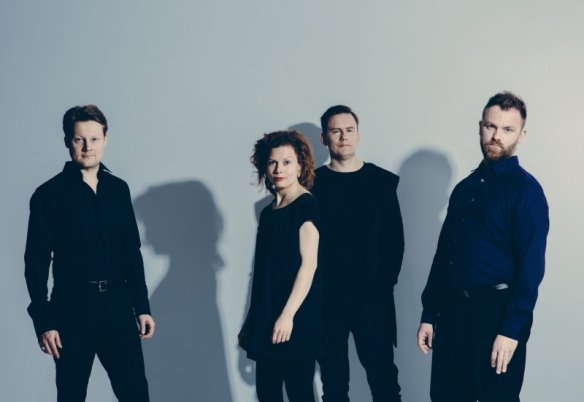
Meta4 [Antti Tikkanen, Minna Pensola (violins), Atte Kilpeläinen (viola), Tomas Djupsjöbacka (cello)]

Wigmore Hall, Monday 17 February 2020 (lunchtime)

You can listen to this concert on the BBC Sounds app here (opens in a new window)

Review and guide by Ben Hogwood

A pleasingly varied program from the Finnish string quartet Meta4, not least because it gave the Wigmore Hall and BBC Radio 3 audience a chance to hear Fanny Mendelssohn’s String Quartet, many undoubtedly experiencing the piece for the first time.

Often overshadowed by her brother Felix Mendelssohn’s musical output, Fanny was clearly a highly accomplished composer in a time when women were not encouraged to follow such musical disciplines. Only now is the quality of her music fully revealed, and this String Quartet stands side by side with the seven completed works of her brother. This one, as its composer freely admits, stands in the shadow of the late quartets of Beethoven.

The work’s dimensions are relatively unusual, pointed towards the third movement by two relatively short movements, slow and fast respectively, and it spends a lot of time in C minor as well as the ‘home key’ of E flat major, creating a tension between darker thoughts and sunnier climes. There is an enjoyable disregard for convention in the slow first movement (from 2:41 on the broadcast), with a broad and quite free approach that Meta4 have fully under their wing, the three standing players swaying and moving around the stage in response to the music.

While this could have been off putting there was no doubting their commitment and involvement, ensuring the first movement Adagio was thoughtful and profound. The following Allegretto (6:55) was quite wary initially, its C minor fluttering speaking of unease, but its central section scurried forward with an energetic fugue started by Atte Kilpeläinen’s busy viola (from 8:01).

The Romanze (10:57), beautifully played, was back in C minor but grew to be the centre of the performance, the soft heart of the movement becoming something really substantial and emotive in this performance. Meanwhile the spirited and full bodied finale (18:18) signed off in a lively fashion, powering forward through unison from viola and cello to a headlong sprint for the finish. Occasionally the intonation was a little off in the upper reaches of the violin line, but this was otherwise a very fine performance.

Bartók’s cycle of six string quartets rank among the very finest achievements in the form, and are rightly a cornerstone of any aspiring group’s repertoire. The First is the longest, in keeping with his earlier works as displaying deep Romantic-inspired passion but changing the musical language, finding a more individual voice as it strays further from tonality. The work came after several discarded attempts in the string quartet form, suggesting Bartók knew already that this would be one of his primary means of expression – and is regarded by many commentators on the composer as the work where his mature style arrives.

Much of the passion in this case was invested by the composer in a relationship with the young violinist Stefi Geyer, dedicatee of the Violin Concerto no.1, and the quartet is effectively a detailed account of their relationship and its ultimately tragic ending. That said, it is effectively a transition from the darkness of the breakup to the light and positivity of what might lie ahead.

Set in three substantial movements, this work often sounds as though there are more than four instruments playing, thanks to the use of multiple stopping (playing more than one note at a time on an instrument).

The first movement, described by Bartók as a ‘funeral dirge’, begins in shadow (26:39) but grows gradually in expressive intent. The quartet stay largely together in their outpouring, though a striking change of emphasis occurs at 31:04 when the cello takes on a drone-like figure. The music is briefly more assured, before dropping back to more threadbare, muted sounds.

The sorrowful first movement is effectively an introduction to the second (35:43) which pulls away from the slow tempo and starts noticeably to look up and outward. The textures become fuller, the dialogue between instruments is much more pronounced and the rhythmic definition starts to make itself known, as though Bartók wants to incorporate more of the traditional music around him. There are still pauses for reflection, but essentially the mood is one of grit and determination.

The third movement (46:06) is marked Allegro vivace – a real sign that the composer wants to get on with things. The cello takes up the mantle, its weighty dialogue with the viola inspiring full-bodied ensemble passages and more obviously folky asides.

The musical language flits between tonal statements, with bold tunes, and sections of music with a much less obvious centre. At 50:42 the music retreats, the quartet together but murmuring confidential asides to each other. The music builds and the statements become wilder and more sweeping. There are big chords from 55:49 where the sound could perhaps be bigger…but then Meta4 are saving themselves for a final push, finishing with a wonderfully robust and rustic chord.

As a side note, it was refreshing to see Meta4’s colourful attire for this concert, brightening up a dull February lunchtime! There need be no rules for dress in classical music like this, and it was good to see the quartet wearing what they felt comfortable with.

Repertoire

This concert contained the following music (with timings on the BBC Sounds broadcast in brackets):

Fanny Mendelssohn String Quartet in E flat major (1834) (2:41)

Bartók String Quartet no.1 (1908-9) (26:39)

Further listening & viewing

The music from this concert can be heard in the playlist below, which includes Meta4’s own recording of the Bartók from 2014:

It has taken an awful long time for the music of Fanny Mendelssohn to break through to anywhere near the centre of classical repertoire – which is unforgivable really, given how good it is. The playlist below collects her Piano Trio and Piano Quartet, bisected by a Piano Sonata in C minor:

Bartók, meanwhile, is an ever-present as one of the 20th century’s musical innovators. The string quartets form the backbone of his career, and the cycle by the Takács Quartet is certainly one of the finest:

You can see details of Meta4’s Bartók release here: