Live review – Christopher Maltman & CBSO / Michael Seal perform Mahler, Sibelius & Nielsen

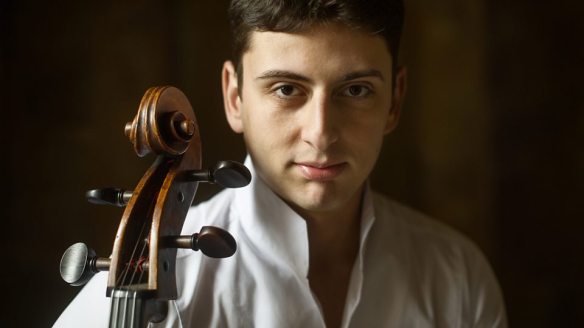
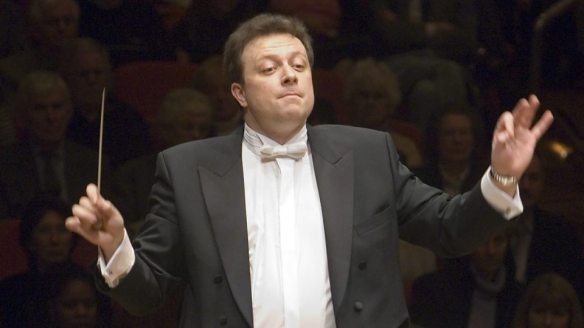
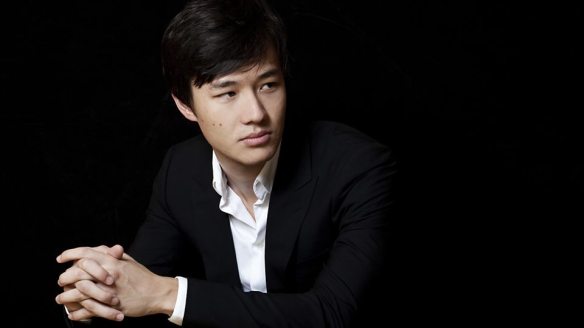
Christopher Maltman (baritone), City of Birmingham Symphony Orchestra / Michael Seal (above)

Symphony Hall, Birmingham
Wednesday 10 April 2019

Sibelius Symphony no.3 in C major Op.52 (1907)
Mahler Songs from Des Knaben Wunderhorn
Nielsen Symphony no.5 FS97 (1922)

Written by Richard Whitehouse

Photo of Christopher Maltman (c) Pia Clodi

Michael Seal’s concerts as Associate Conductor of the City of Birmingham Symphony are seldom without interest and tonight’s programme featured a typically bold juxtaposition of Nordic symphonies from the early twentieth century, alongside orchestral songs by Mahler.

Time was when Sibelius’s Symphony no.3 was overlooked even by his keenest advocates, but it has long since become a regular fixture and this account doubtless benefited from the CBSO’s lengthy association with the piece under Sir Simon Rattle and Sakari Oramo. That said, Seal had ideas of his own to impart – most evident with the gradually intensifying curve of momentum over the first movement’s development into the reprise, then close alignment of tempo between its successor’s diverse episodes and the lilting main theme so it elided deftly between slow movement and intermezzo. The finale was a slight disappointment – lacking that ominous mystery in its initial ‘scherzo’ phase, with the closing pages a little provisional in their affirmation – though there was no mistaking the unanimity of response on the way.

After the interval, Seal set a notably swift tempo for the first phase in the opening movement of Nielsen’s Fifth Symphony, though this was never at the expense of ongoing incident or the music’s questing ambivalence. The ensuing Adagio was eloquently projected, building to an apotheosis more powerful for Adrian Spillett’s bravura rendering of its side-drum cadenza – subsiding into a rapt though never somnolent coda where the receding presence of offstage side-drum was ideally offset by Oliver Janes’s limpid clarinet solo at the rear of the platform.

There was nothing anticlimactic about the second movement, its four-sections-in-one design itself amounting to a cohesive entity such as Seal recognized in his taut yet flexible handling of the initial Allegro – tapering away seamlessly into a Presto whose surging energy poses a challenge to ensemble that was confidently met here. The yearning polyphony of the Adagio was finely sustained by strings and woodwind, and if the notoriously tricky final pages felt a shade reined-in, their clinching of the tonal and emotional argument could hardly be gainsaid.

Between these imposing symphonies, a selection from Mahler’s song-sequence Des Knaben Wunderhorn. Christopher Maltman was the persuasive guide through their evocations of life in all its manifestations – beginning with the guileless exchanges of soldier and lover in Der Schwildwache Nachtlied (1892), before bringing a suave nonchalance to the ruminations of Rheinlegendchen (1893) then an ominous sense of dread from amid the sombre fanfares of Wo die schönen Trompeten bläsen (1898). A brief though pertinent interlude was provided by the droll moralizing of Lob des hohen Verstandes (1896), then the selection was rounded off by the stark processional of Der Tamboursg’sell (1901) with its anticipations of the Fifth Symphony then in progress. Maltman once again proved a sensitive and insightful exponent.

Throughout the selection, Seal drew playing of refinement and finesse from the CBSO which seems never to have given this sequence as an integral whole. The orchestra will, however, be returning to Mahler with Ilan Volkov when they perform the Ninth Symphony on April 23rd.

For further information on the City of Birmingham Symphony Orchestra’s 2018-19 season click here You can read about the forthcoming Mahler Ninth Symphony concert here

Further listening

Unfortunately the concert was not recorded for broadcast, but you can hear a playlist of the pieces heard on Spotify below on leading versions:
Wigmore Mondays – Louis Schwizgebel, Benjamin Beilman & Narek Hakhnazaryan: Shostakovich & Mendelssohn

Louis Schwizgebel (piano, above), Benjamin Beilman (violin), Narek Hakhnazaryan (cello, both below)

Shostakovich Piano Trio no.1 Op.8 (1923) (from 2:14 on the broadcast link below)
Rachmaninov arr. Gayane Hakhnazaryan Vocalise Op.34/14 (1915)
Mendelssohn Piano Trio no.1 in D minor Op.49 (1839)

Wigmore Hall, London
Monday 1 April 2019

To hear the BBC broadcast through BBC Sounds, please follow this link

Commentary and Review by Ben Hogwood

A piano trio of exciting soloists gave this memorable concert at the Wigmore Hall as part of BBC Radio 3’s Lunchtime Concert series.

Pianist Louis Schwizgebel, violinist Benjamin Beilman and cellist Narek Hakhnazaryan are all making a name for themselves on their own terms, but by uniting for chamber music performances illustrate the very first principles of why this music was written.

Before their stylish performance of Mendelssohn’s Piano Trio no.1, we heard them in early Shostakovich – his first of two works in the popular form. The Piano Trio no.1 is not a typical work in the context of the composer’s full output, however – but it does show a prodigiously talented 17-year old student making formal innovations and writing heartfelt music, in this case pointing towards the work’s dedicatee, Tatyana Glivenko.

Shostakovich’s teacher Maximilian Steinberg perceived his increased ‘enthusiasm for the grotesque’, documented in Anthony Burton’s excellent notes for this concert, but looking back in the context of the composer’s full output this fascinating work revealed more of a debt to Russian romanticism than could initially be expected.

Beilman and Hakhnazaryan picked up this connection in their ardent melodies, while the steely piano of Schwizgebel gave some clues as to the source of Steinberg’s displeasure. Here though they put the seal on an outstanding account of music full of energy but with its excesses curbed through Shostakovich’s compact design. A captivating performance which is well worth experiencing from 2:14 on the broadcast link.

The inclusion of Rachmaninov’s Vocalise (from 17:50) made good sense in the context of the Shostatkovich. Made by Gayane Hakhnazaryan, mother of Narek, this arrangement illustrated the versatility of Rachmaninov’s original, more familiar to us in orchestral guise or for solo instrument with piano. Violin and cello dovetailed beautifully here, the trio managing the balance with an appropriate blend of nostalgia and poise.

Mendelssohn’s Piano Trio no.1 is perfectly suited to a recital such as this, a piece with virtuoso demands that would appeal to the soloists but also a work whose close integration brings a special intimacy to its more reflective moments. This was a terrific performance, the darker colours of the first movement established immediately in Hakhnazaryan’s heartfelt cello subject (27:02). A doleful second movement Song without words was lighter but also touching (37:04), before the twinkling right hand figures of Louis Schwizgebel led a sparkling account of the Scherzo (44:20).

The finale fused all these qualities, starting in relative seriousness and darkness (48:04) but finding bright light as the music transferred subtly but gloriously to the major key (55:16).

As an encore the Scherzo twinkled again, completing a concert notable for its fresh, enthusiastic and virtuosic qualities. Catch it if you can!

Further reading and listening

The music in this concert can be heard in the best available recordings on Spotify here:

Wigmore Mondays – Novus String Quartet play Respighi & Berg

Novus String Quartet [Jaeyoung Kim, Young-Uk Kim (violins), Kyuhyun Kim (viola), Woongwhee Moon (Violoncello)]

Respighi Quartetto dorico (1924) (2:00 – 23:53 on the broadcast link below)

Berg Lyric Suite (1926) (27:15 – 59:23)

Wigmore Hall, London
Monday 25 March 2019

To hear the BBC broadcast through BBC Sounds, please follow this link

Commentary and Review by Ben Hogwood

Listening to the Quartetto dorico is like taking a big step back in time. The opening salvo of Ottorino Respighi’s quartet from the mid-1920s is certainly arresting for its volume and scoring – only four instruments but a massive sound! – and its musical language feels imported from another age.

The young Korean ensemble capture these qualities, establishing a dream state that is maintained throughout the performance. Respighi’s quartets are rarely performed, so the BBC and Wigmore Hall should be commended for bringing this one in from the cold, adding another dimension to the 20th century string quartet.

There is an otherworldly quality to the high violin writing later on in this single-movement span, lasting over 20 minutes – and the concentration of feeling provides an intense listening experience. From 4:30 on the broadcast link the music retreats to a quieter passage led by the viola, who essentially intones another chart to the soft, restful comments of the other three. A distinctive section starts at 9:27, with an irregular pulse but a strong rhythmic profile established by the plucked cello string, which gives a dance-like feel to the melody.

At 14:15 an important section starts, the Passacaglia – which has six beats in the bar. The music here is slow moving and deeply contemplative, the first violin taking the lead with a lot of the thoughts as the harmonies stay relatively still. Gradually the higher reaches of the instruments come into play, before a dramatic series of unison sweeps bring down the curtain.

If you’re able to read music I would highly recommend following the score with the performance, as it helps you appreciate Respighi’s unique approach to writing for string quartet. The link is here

From the sacred to the profane – and affter heady music to lift us away from earth, Alban Berg’s six-movement Lyric Suite brings us right back to earthly experiences. Though publically dedicated to the composer Alexander von Zemlinsky, as it quotes from his Lyric Symphony, it is in fact a not-so-private account of his doomed affair with Hanna Fuchs-Robettin, who he met on a visit to Prague in the 1920s.

The tempo markings of the six movements are descriptive and tell the story. The first provides a good introduction to Berg’s unique way of using serial (or ‘non tonal’) music in a way that is still highly melodic and richly layered with harmonies. Marked Allegretto gioviale (from 27:15 on the broadcast), it uses all four instruments for thick textures and intense dialogue, telling the story of the start of the couple’s affair.

The second movement, marked Andante amoroso (30:43), is lighter, with more of a spring in its step as Berg profiles Hanna and her two children, with distinct musical motifs for each. The third (Allegro misterioso – Trio estatico (37:24)) gives a musically vivid account of the affair’s consummation, with feather light textures, the instruments’ bows used near the bridge to create a feverish atmosphere.

Then, as the doomed nature of the relationship makes itself evident, the music turns sourer. The fourth movement is a slow one, Adagio appassionato (40:36) – and is passionate and pretty heavy, turning to depths of desolation at the end. The second violin (44:20) quotes from the Zemlinsky Lyric Symphony, but this is eerie and displaced, with the ending at 46:38 still more remote.

The last pair of movements is devastating for Berg. It starts with a febrile affair marked Presto delirando – Tenebroso (47:13) and has crisp, jagged phrases until, as the music slows, the thoughts become more remote and despair-laden, leading to the relatively sudden end at 51:45.

Finally the Largo desolato, which really is the end of everything () These are melodies that speak of despair and desolation, the end of the tether. A brief show of spirit and resolve is made at 56:56 but this is soon overcome by the viola and second violin, before some sweeping, downwards facing melodies on the cello. The music, fully spent, peters out at 59:23, as though Berg can no longer say any more.

Like the Respighi above, there is so much going on in Berg’s Lyric Suite that it may be an advantage to follow the music itself while listening. It can be found here

The Novus String Quartet gave incredibly impressive accounts of both works, taking the physical and mental demands in their stride and keeping a consistently high standard of ensemble. They have a refreshing approach to programming, and these elements should ensure they are a top level string quartet to keep an eye on.

Further reading and listening

The music in this concert can be heard here, with the Novus Quartet’s recently released recording of the Berg Lyric Suite an added draw:

The Quartetto dorico is one of two string quartets completed by Respighi, but he also wrote the celebrated Il tramonto (Sunset) for soprano and string quartet. All three works fit very nicely onto one album, recorded by the Brodsky Quartet and the mezzo-soprano Anne Sofie von Otter:

Meanwhile Berg’s music for string quartet works extremely well in company with his colleague and fellow ‘serial’ composer Anton Webern. Berg’s rich romanticism and Webern’s incredibly concentrated approach complement each other on this Juilliard Quartet album:

One more playlist to end with – a selection of string quartets from the mid-1920s, illustrating the range of styles applied to the idiom at that time. There are some very different responses here from Janáček, Bartók, Martinů and Frank Bridge – very interesting to compare and contrast!

Wigmore Mondays – Jeremy Denk plays Bach & Schubert

Jeremy Denk (piano)

J.S. Bach Partita no.5 in G major BWV829 (1726-1730) (1:35 – 16:37)
Schubert 4 Impromptus D935 (1827) (19:16 – 54:07)

Wigmore Hall, London
Monday 18 March 2019

To hear the BBC broadcast through BBC Sounds, please follow this link

Commentary and Review by Ben Hogwood

If you know anybody who is sceptical of the music of J.S. Bach, point them in the direction of the link above, and Jeremy Denk’s account of his Partita no.5. This sparkling display of virtuosity showed beyond doubt the composer’s ability to write instinctively with humour, a playful Partita where the only regret was the pianist’s decision not to use all the written repeats applied to the dance-based movements.

The reason for this would almost certainly have been time constraints, with Denk’s wish to combine the Bach with the Four Impromptus Schubert completed in 1827, his last full year. The two made a very satisfying coupling, giving listeners in the Wigmore Hall and to BBC Radio 3’s Lunchtime Concert an hour of fluidly written and brilliantly played pieces.

The Bach first, beginning at 1:35 on the broadcast link with a lively Praeambulum, then moving almost without a break into the traditional sequence of dance movements the composer reserved for pieces such as this. With the mood defined Bach presents an elegant Allemande (3:54), a light footed Corrente (7:35) and then a slower Sarabande (8:52), which features attractive doubling of the melody.

These slower dances always present a pause for thought within Bach, an intake of breath before more dancing – which here includes a Minuetta (11:34) where Bach puts a delightful ‘two against three’ set of rhythms together, the dance stumbling attractively. It’s over all too soon unfortunately, but the straight faced Passepied (12:38) has a stately feel, before the triple-time Gigue (13:48), with its centrepiece, a fugue that Denk masters most impressively, building the momentum to a thrilling conclusion.

Angela Hewitt has spoken of how the key of G major ‘always seems to inspire Bach to write music of great radiance, joy, gentleness and technical display’ – and that is on view throughout Denk’s spring-like account. He delighted in asides to the audience throughout, letting them in on his enjoyment of the music.

The Schubert presented a very different range of emotions. Published as a set of four pieces in 1839, twelve years after composition, the Impromptus work in isolation and also as a quartet, their themes crossing over but not as rigidly as a sonata might demand. This spirit of relative freedom runs through the four pieces.

The first Impromptu, in F minor (19:16 on the link) is a substantial piece that immediately brings Beethoven to mind with its call to arms – Schubert’s contemporary having not long died. The second theme of this impromptu (20:51) is soft and hymn-like, reflective yet with strength in depth when repeated and magnified, in development. This intense passage is cleverly worked, coming back around to the relatively stern main theme at 24:25, though Denk enjoys the more optimistic strains of the major key as it soon takes over. The ‘hymn’ recurs in this key at 26:08 – but as befits the uncertainty of this music, Schubert can’t resist more harmonic movement right through to the turbulent end.

The second Impromptu (29:43) is in F minor’s ‘relative’ key, A flat major, and starts in wonderful stillness. This main theme is restated on a number of occasions, resisting any of the louder interventions trying to derail it. A central section (from 33:05) is faster and flowing, but once again takes a turn for darker waters as Schubert alternates between major and minor key. This only heightens the soft contentment of the main music when it returns at 35:17, wonderfully handled by Denk.

The third Impromptu is similarly light and shade, but this time much more in favour of brighter thoughts. From its opening (37:27) it sets out a theme very similar to a famous melody from Schubert’s Rosamunde stage music, which the composer proceeds to take as a base for several variations – just as he did in an earlier String Quartet in A minor. This unfolds beautifully – with impeccable technique from Denk, and impressive depth in the minor key fourth variation (41:44). The twinkling figure of the final variation (45:30) looks to finish the piece in high spirits, but a final statement returns us to quiet thought.

Finally the fourth Impromptu (47:49) returns us to the F minor world of the first, though here Schubert is in the mood for a dance, evoking the Hungarian cimbalom with spicy harmonies and some daring passagework for the right hand. This finishes the piece acrobatically in the run up to 54:07, a feat superbly realised by Denk here.

As a completely irreverent encore, breaking Schubert’s spell but proving a superbly entertaining sign-off, we had the Pilgrims’ Chorus from Wagner’s Tannhäuser well and truly sent through the boogie-woogie and blues wringer by Donald Lambert (from 55:55 – 58:21)

Further reading and listening

If you enjoyed Jeremy Denk’s Bach playing, there is a disc of Partitas he released back in 2011 for Azica Records. You can hear it on Spotify here:

Denk’s latest release is an intriguing exploration of music from 1300 to the present day. You can hear it here:

Meanwhile to explore more Schubert Impromptus and pieces, the peerless Alfred Brendel is strongly recommended. This album includes all the Impromptus for solo piano as well as some attractive German Dances, the elusive but compelling 6 Moments Musicaux and the darkly tinged 3 Klavierstücke:

Live review – Anna Vinnitskaya & CBSO / Mirga Gražinytė-Tyla perform Shostakovich

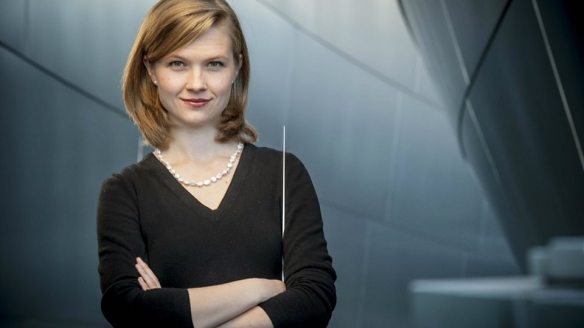
Anna Vinnitskaya (piano, above), Jonathan Holland (trumpet), City of Birmingham Symphony Orchestra / Mirga Gražinytė-Tyla (below)

Symphony Hall, Birmingham
Saturday 16 March 2019

Shostakovich
The Limpid Stream: Suite Op.39a (1935)
Piano Concerto no.1 in C minor Op.35 (1933)
Symphony no.5 in D minor Op.47 (1937)

Written by Richard Whitehouse

Photo of Anna Vinnitskaya (c) Gela Megrelidze

With Birmingham Opera Company’s staging of Lady Macbeth of Mtsensk having finished its run, an all-Shostakovich concert by the City of Birmingham Symphony was not just apposite but underlined the rapport between the orchestra and its music director Mirga Gražinytė-Tyla.

The programme centred on Shostakovich’s music before and after an infamous Pravda article irrevocably altered the composer’s evolution. Attacks on The Limpid Stream were admittedly gratuitous; this last of his ballets finds Shostakovich at his most accessible – as witnessed by the suite devised several years later. Starting with a suave Waltz (which found fame as title-music for Stanley Kubrick’s Eyes Wide Shut), this continues with a vigorous Russian Dance then breezy Galop. The highlight is an Adagio whose soulful cello melody was eloquently rendered by Eduardo Vassallo. A deft pizzicato Polka was a rather inconclusive ending: the uproarious final dance (which follows-on almost continuously) would have made for a more decisive conclusion. No matter, this was still an engaging sequence and captivatingly played.

Shostakovich conceived his First Piano Concerto for his own pianism. Influences derive more from stage and screen than any earlier concertos, but its formal ingenuity is undeniable. Anna Vinnitskaya gauged ideally the first movement’s volatile tempo changes, while the Lento had poignancy and no mean vehemence at its climax; the ensuing intermezzo an upbeat to a finale whose high-jinx were teasingly held in check. Jonathan Holland was engaging in the obligato trumpet part, and the CBSO strings retained their articulation even in the hectic closing pages.

Whether or not an explicit response to that condemnatory Pravda article of January 1936, the Fifth Symphony is crucially important for moving the emphasis within Shostakovich’s output away from the theatrical. Nothing reinforces this more than the opening Moderato, with its individual take on sonata design that Gražinytė-Tyla handled with real assurance – keeping the exposition in motion with a fleeter than usual second subject, before eliding seamlessly into a purposeful development then an anguished reprise and desolate coda. The Scherzo had ironic wit without heaviness, whereas the slow movement impressed through its inevitability of progress towards a central episode of rapt inwardness; after which, the searing climax did not pre-empt the coda with its musing interplay of harp and celesta against suspended strings.

The finale offers the greatest challenges but Gražinytė-Tyla had its measure too, her fast yet never inflexible tempo for the surging initial stages segueing into the central episode with its heartfelt recall of earlier ideas then ethereal searching towards a crowning peroration. Neither wantonly triumphal nor turgidly defeatist, this was a thoughtful yet decisive conclusion to the overall emotional trajectory; maybe those searching trumpet dissonances could have sounded even more baleful, though a sense of coming through against the odds was never in doubt.

This was an impressive account of a symphony which has been much harder to interpret once its ultimate ‘message’ became a matter for debate. Gražinytė-Tyla provided no easy answers; instead, her presenting the work as a cohesive and integral whole was its own justification.

For further information on the City of Birmingham Symphony Orchestra’s 2018-19 season click here

Further listening

Unfortunately the concert was not recorded for broadcast, but you can hear a playlist of the pieces heard on Spotify below, including Anna Vinnitskaya‘s recording of the Shostakovich with Kremerata Baltica: