In concert – Quatuor Danel: Shostakovich & Weinberg #10 @ Wigmore Hall

Quatuor Danel [Marc Danel & Gilles Millet (violins), Vlad Bogdanas (viola), Yovan Markovitch (cello)]

Weinberg String Quartet no.14 in B flat minor Op.122 (1978)
Weinberg String Quartet no.15 in G flat major Op.124 (1979-80)
Shostakovich String Quartet no.14 in F sharp major Op.142 (1972-3)

Wigmore Hall, London
Tuesday 6 May 2025

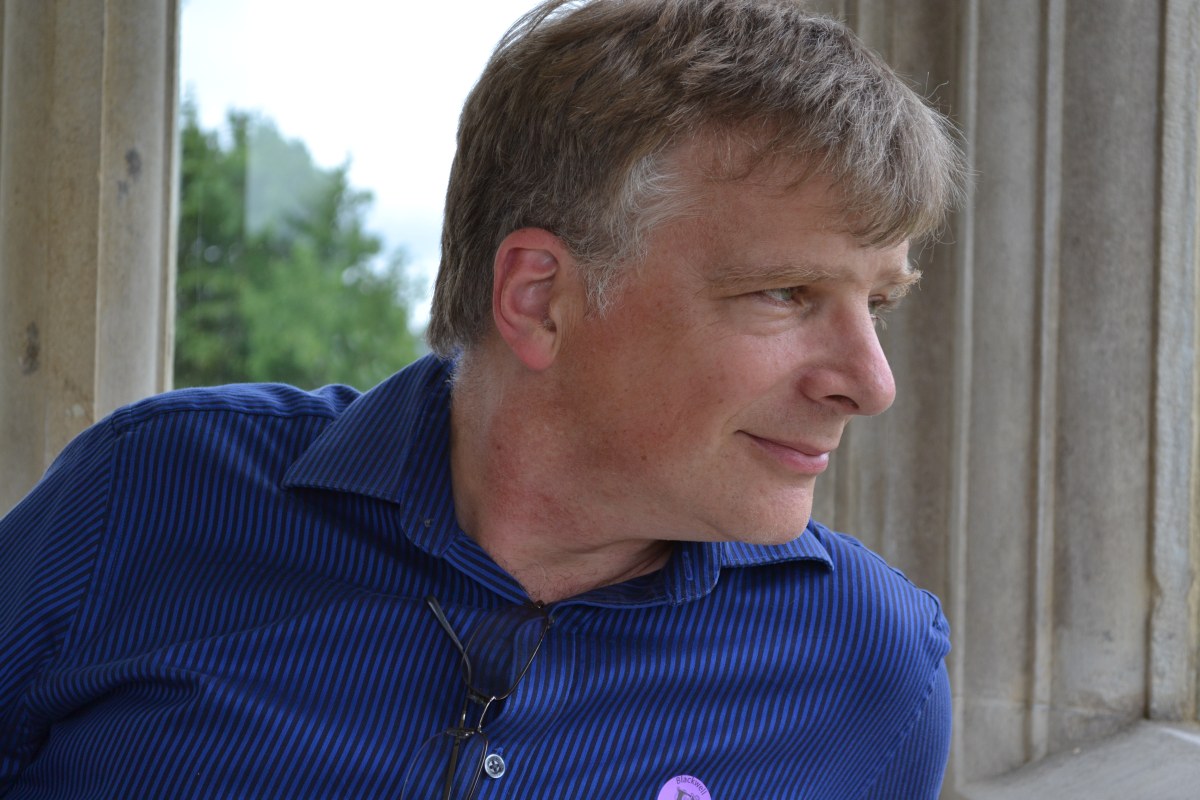
by Richard Whitehouse Photo (c) Marco Borggreve

Quatuor Danel’s interrelated cycle of string quartets by Shostakovich and Weinberg reached its penultimate stage this evening, and a programme with two of the latter composer’s most oblique such pieces heard alongside what is the most accessible of the former’s late quartets.

Second in a quartet of quartets written in the years after Shostakovich’s death, Weinberg’s Fourteenth Quartet continues straight from the sombre equivocation of its predecessor. Its five continuous movements never progress systematically as lurch forwards from an edgily austere first movement, by way of a moodily impassive successor, then on to a scherzo and intermezzo that are not so much elusive as gnomic in character; prior to a finale where any attempt at overall synthesis gradually subsides to leave only the wanly resigned conclusion. An ending, moreover, whose fatalism feels the more dismaying as it withdraws into virtual silence, as if Weinberg’s self-communing may well be a defence or even escape. As with its successor, his replacing tempo headings with metronome markings only abets obfuscation.

The Fifteenth Quartet might appear relatively less stark in outcome yet is certainly the most radical of all these works in formal design. Its nine mainly brief movements are interpretable in various ways – but a speculative sonata design is implied by the aggressive ‘development’ of the central three movements as framed by respectively angular and thrusting ‘transitions’; surrounded in turn by a two-stage ‘exposition’ of almost secretive inwardness which is itself balanced by a ‘reprise’ whose incrementally more direct expression facilitates that eventual, albeit tenuous sense of closure. Other approaches are entirely plausible, though there was an undeniable culmination imparted to those middle movements as the Danel steered its secure course through this fascinating if always disconcerting instance of Weinberg’s later maturity.

After such obliquities, the seeming directness of Shostakovich’s Fourteenth Quartet was the more affecting, though nothing should be taken at face value at this stage of its composer’s creativity. Allusions to earlier works (his own and others) abound and while the presence of serial elements is reduced next to its predecessors, sparsity of texture ensures a distanced or remote feeling even when this music is at its most active. As is true for most of the opening Allegretto, its lilting poise increasingly fitful as it nears a regretful if still inquisitive close.

By contrast, the central Adagio finds this composer at his most inward and confessional; its content allotted for much of its course to first violin and cello, so affording an austerity into which the eloquence of the ‘Angel Serenade’ by Gaetano Braga is a reminder Shostakovich was at time considering an operatic treatment of Chekhov’s story The Black Monk. The final Allegretto initially brings a more impetuous discourse, but this elides seamlessly into a coda whose pale radiance essentializes the work’s home key in a leave-taking of acute poignancy.

As always, the Danel gave its collective both here and in those miniatures which served as a welcome encore: two pieces from Prokofiev’s Visions fugitives, arranged for string quartet by Sergey Samsonov with a sensitivity for those piano originals as was nothing if not idiomatic.

You can hear the music from the concert below, in recordings made by Quatuor Danel -including their most recent cycle of the Shostakovich quartets on Accentus:

For more information on the final concert in the series, visit the Wigmore Hall website. You can click on the names for more on composer Mieczysław Weinberg and Quatuor Danel themselves.

Published post no.2,528 – Friday 9 May 2025

In concert – Anne Queffélec @ Wigmore Hall: Mozart and a French ‘musical garden’

Anne Queffélec (piano)

Mozart Piano Sonata no.13 in B flat major K333 (1783-4)
Debussy Images Set 1: Reflets dans l’eau (1901-5); Suite Bergamasque: Clair de lune (c1890, rev. 1905)
Dupont Les heures dolentes: Après-midi de Dimanche (1905)
Hahn Le Rossignol éperdu: Hivernale; Le banc songeur (1902-10)
Koechlin Paysages et marines Op.63: Chant de pêcheurs (1915-6)
Schmitt Musiques intimes Book 2 Op.29: Glas (1889-1904)

Wigmore Hall, London
Monday 28 April 2025 (1pm)

by Ben Hogwood picture of Anne Queffélec (c) Jean-Baptiste Millot

The celebrated French pianist Anne Queffélec is elegantly moving through her eighth decade, and her musical inspiration is as fresh as ever. The temptation for this recital may have been to play anniversary composer Ravel, but instead she chose to look beneath the surface, emerging with a captivating sequence of lesser-known French piano gems from the Belle Époque, successfully debuted on CD in 2013 and described by the pianist herself as “a walk in the musical garden à la Française.”

Before the guided tour, we had Mozart at this most inquisitive and chromatic. The Piano Sonata no.13 in B flat major, K.333, was written in transit between Salzburg and Vienna, and the restlessness of travel runs through its syncopation and wandering melodic lines. Queffélec phrased these stylishly, giving a little more emphasis to the left hand in order to bring out Mozart’s imaginative counterpoint. She enjoyed the ornamental flourishes of the first movement, the singing right hand following Mozart’s Andante cantabile marking for the second movement, and the attractive earworm theme of the finale, developed in virtuosic keystrokes while making perfect sense formally.

The sequence of French piano music began with two of Debussy’s best known evocations. An expansive take on the first of Debussy’s Images Book 1, Reflets dans l’eau led directly into an enchanting account Clair de Lune, magically held in suspense and not played too loud at its climactic point, heightening the emotional impact.

The move to the music of the seldom heard and short lived Gabriel Dupont was surprisingly smooth, his evocative Après-midi de Dimanche given as a reverie punctuated by more urgent bells. Hahn’s Hivernale was a mysterious counterpart, its modal tune evoking memories long past that looked far beyond the hall. Le banc songeur floated softly, its watery profile evident in the outwardly rippling piano lines. The music of Charles Koechlin is all too rarely heard these days, yet the brief Le Chant des Pêcheur left a mark, its folksy melody remarkably similar to that heard in the second (Fêtes) of Debussy’s orchestral Nocturnes.

Yet the most striking of these piano pieces was left until last, Florent Schmitt’s Glas including unusual and rather haunting overtones to the ringing of the bells in the right hand. Queffélec’s playing was descriptive and exquisitely balanced in the quieter passages, so much so that the largely restless Wigmore Hall audience was rapt, fully in the moment. Even the persistent hammering of the neighbouring builders, a threat to concert halls London-wide, at last fell silent.

Queffélec had an encore to add to her expertly curated playlist, a French dance by way of Germany and England. Handel’s Minuet in G minor, arranged by Wilhelm Kempff, was appropriately bittersweet and played with rare beauty, completing a memorable hour of music from one of the finest pianists alive today.

Listen

You can listen to this concert as the first hour of BBC Radio 3’s Classical Live, which can be found on BBC Sounds. The Spotify playlist below has collected Anne Queffélec’s available recordings of the repertoire played:

Published post no.2,517 – Tuesday 29 April 2025

In concert – Peter Donohoe, RPO / Brabbins: Elgar ‘Enigma’ Variations; Bliss Piano Concerto; Vaughan Williams @ Cadogan Hall

Peter Donohoe (piano, above), Royal Philharmonic Orchestra / Martyn Brabbins (below)

Vaughan Williams Five Variants of Dives and Lazarus (1939)
Bliss Piano Concerto in B flat major Op.58 (1938-9)
Elgar Variations on an Original Theme Op.36 ‘Enigma’ (1898-9)

Cadogan Hall, London
Wednesday 16 April 2025

Reviewed by Richard Whitehouse Pictures (c) Andy Paradise

June 1939 saw one of the more memorable occasions for British music with several premieres at the World’s Fair of New York, this multi-day festival with its theme of ‘Building the World of Tomorrow’ thrown into ironic relief given the outbreak of war in Europe three months later.

The first half of tonight’s concert by the Royal Philharmonic Orchestra duly replicated that on June 10th, beginning with Five Variants of Dives and Lazarus which Vaughan Williams wrote for the event. One of the few non-symphonic orchestral works from his later years, its scoring for divided strings and harp gives a warmly evocative context to this succession of paraphrases whose steadily unforced evolution is rounded off by one of its composer’s most radiant codas. Various solo passages provided the RPO’s section-leaders with their moment in the spotlight.

That concert 85 years ago continued with the Piano Concerto that Arthur Bliss had written for Solomon which enjoyed frequent revival over the next quarter-century. This 50th anniversary of its composer’s death provided an ideal opportunity to reassess a work conceived within the late-Romantic lineage, notably an opening movement whose thunderous initial gestures set in motion this large-scale sonata design whose overt rhetoric is tempered by an expressive poise and more ambivalent asides which make it anything but the epigone of an already bygone era.

Among a few present-day pianists to have this piece in his repertoire, Peter Donohoe tackled its many technical challenges head-on; the RPO and Martyn Brabbins (who had never before conducted it) overcoming some occasional moments of mis-coordination so as to present it to best advantage. He brought a lighter touch and no little emotional poise to bear on the central Adagietto, its inwardness carried over into a finale whose probing introduction was a perfect foil to the bravura that followed. Whatever qualms Bliss may have had regarding the ‘world situation’, there was little sense of doubt as the music surged to its emphatic and affirmative close – thereby setting the seal on this memorable performance and a work which, whatever it lacks in distinctive invention, vindicates Bliss’s overall ambition to an impressive degree.

A pity that logistics (and economics!) made revival of Bax’s Seventh Symphony, which had originally featured in those New York concerts, impracticable but hearing Brabbins direct so perceptive an account of Elgar’s Enigma Variations was no hardship. Perhaps because of the immediacy of the Cadogan Hall acoustic, it was also one in which the relatively brief livelier variations came into their own – hence the unbridled impetus of the fourth (W.M.B), seventh (Troyte) or 11th (G.R.S) variations, though there was no lack of eloquence in the first (C.A.E) and fifth (R.P.A) variations, or suffused fervour in the ninth (Nimrod). The 10th (Dorabella) variation was made into an intermezzo halting if whimsical, and the 13th became a romanza such as opened out this work’s expressive remit onto an altogether more metaphysical plane.

Those having heard Brabbins conduct this work in the Royal Albert Hall quite likely missed that organ-reinforced opulence afforded the 14th (E.D.U) variation yet, as this finale built to its triumphal conclusion, the unfailing conviction of this performance could hardly be denied.

For details on their 2024-25 season, head to the Royal Philharmonic Orchestra website. Click on the artist names to read more about pianist Peter Donohoe and conductor Martyn Brabbins, and also to discover more on The Arthur Bliss Society

Published post no.2,509 – Monday 21 April 2025

In concert – CBSO / Kazuki Yamada: Mahler Symphony no.9 & Takemitsu

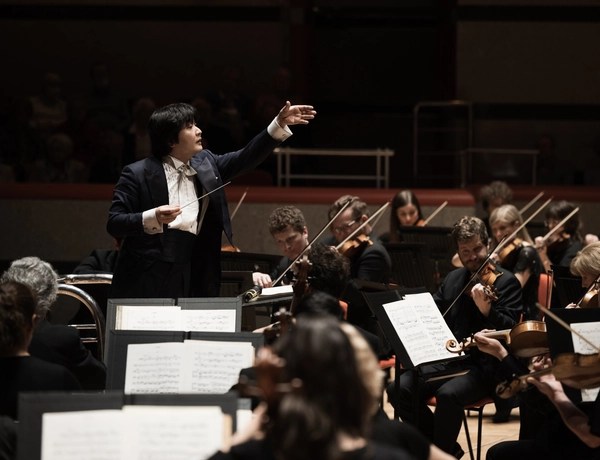
City of Birmingham Symphony Orchestra / Kazuki Yamada (above)

Takemitsu Requiem (1957)
Mahler Symphony no.9 in D major (1908-09)

Symphony Hall, Birmingham
Thursday 10 April 2025

Reviewed by Richard Whitehouse Picture of Kazuki Yamada (c) Hannah Fathers

Ninth Symphonies have been a recurrent feature of this season from the City of Birmingham Symphony Orchestra and Kazuki Yamada. Tonight’s concert brought this to a culmination of sorts with that by Mahler and which naturally occupied almost the whole of the programme.

Whatever else, it was a performance whose scope matched the music’s ambition and not least in an opening Andante as lays claim to being its composer’s greatest achievement. Admittedly this took a few minutes to find focus, those initial bars not so much speculative as halting, but an overall sense of the movement unfolding seamlessly across its strategic peaks and troughs was undeniable, and Yamada was mindful to underline Mahler’s holding back of its expected culmination so the closing minutes mused eloquently if uncertainly on what might have been.

The middle movements can often emerge as incidental to the formal scheme, and Yamada’s take on the Ländler gave some pause for thought. Each of its constituents was vividly shaped and articulated, but a stop-start discontinuity arguably denied it that innocence to experience trajectory which, in turn, makes tangible the fatalistic humour at its end. The Rondo-Burleske was the undoubted highlight – its abrasiveness spilling over into violence towards the close, but not before Yamada had summoned the requisite anguish from its yearning trio section.

It might have been better to continue directly into the Adagio. As it was, a relatively lengthy pause left this finale sounding less a direct reaction to what had gone before than a delayed avoidance of the issues raised. Yamada’s overall handling of this movement was fine if not exceptionally so. Such as the twilit episode prior to the main climax was lucidity itself, but the conductor having already slowed to near-stasis then made it difficult to reduce the tempo further, so that the closing bars risked feeling emotionally gratuitous rather than inevitable.

What could hardly be gainsaid was the commitment of the CBSO’s response over what, for all its latter-day familiarity, remains a testing challenge whether individually or collectively. Wisely, Yamada has resisted any temptation to fashion a self-consciously virtuoso orchestra; emphasis seems to be instead on encouraging flexibility and sensitivity of response in terms of the music at hand – a more circumspect though productive approach which suggests he is happy to stay the course in terms of a partnership which is still in its relatively early stages.

Not a few performances of Mahler Nine opt for a scene-setting piece rather than first half as such. Yamada did so with Takemitsu’s Requiem – if not this composer’s first or even earliest acknowledged work, then certainly the one that established his wider reputation. The CBSO strings did justice to its subtle interplay of expressive threnody and more angular elements in a reading that fulfilled its purpose ideally. Hopefully the coming seasons will revive some of the more innovative pieces to have languished in the three decades since Takemitsu’s death.

This was the latest in what is becoming a tradition and rightly so – a page in the programme listing those ‘‘friends, members and colleagues’’ whom the CBSO Remembers with no little gratitude. From this perspective, tonight’s programme could hardly have been more fitting.

For details on the 2024-25 season A Season of Joy, head to the City of Birmingham Symphony Orchestra website. Click on the name to read more about conductor Kazuki Yamada

Published post no.2,502 – Monday 14 April 2025

In concert – Viktoria Mullova & Alasdair Beatson @ Wigmore Hall: Beethoven & Schubert

Viktoria Mullova (violin), Alasdair Beatson (fortepiano)

Beethoven Sonata for piano and violin no.6 in A major Op.30/1 (1802)
Beethoven Sonata for piano and violin no.8 in G major Op.30/3 (1802)
Schubert Rondo brillant in B minor D895 (1826)

Wigmore Hall, London
Monday 7 April 2025 (1pm)

by Ben Hogwood

Violinist Viktoria Mullova and pianist Alasdair Beatson have been exploring Beethoven’s works for piano and violin for a while now, and this concert demonstrated the rapport they have built with the music – and the Wigmore Hall audience.

On a bright March day in London the Spring Sonata might have been the most appropriate choice – more of which later – but instead we enjoyed an unsung gem among Beethoven’s works for this combination. This was the Sonata for piano and violin no.6 in A major Op.30/1, the least heard of the trio published as Op.30 and a work brimming with good spirits in this performance.

As our BBC Radio 3 host Andrew McGregor informed us, Alasdair Beatson was playing a fortepiano copy of a Conrad Graf instrument, and it brought a wide range of tonal colour to the hall, with mottled treble and a wonderfully grainy lower register. Beatson and Mullova played as one, finishing each other’s sentences, or joining in unisons which could not be split. Op.30/1 warmed to this treatment, its bursts of energy complemented by tender, charming asides. Mullova’s intonation took a little while to settle, but once secured her phrasing was a delight. The soft centred, sweetly toned second movement was followed by an Allegretto con variazioni finale with terrific energy, driving up to and through a sparkling finish.

The Sonata for piano and violin no.8 in G major Op.30/3 followed – a charming work, especially in a performance such as this. Mullova and Beatson were on the edge, justifying a daringly fast tempo choice for the first movement with tight ensemble and drive, Mullova exaggerating the louder notes to put the listener in mind of the sort of sound Beethoven himself would surely have loved. The bubbly first movement was charming, its confidential asides well worth savouring, the togetherness between the two musicians truly admirable. The Tempo di minuetto explored darker moods, notably its brief passage in the minor key which cast a shadow over the return of the previously sunny first theme. The irrepressible finale enjoyed its humourous ‘wrong’ notes, recalling Haydn’s ‘Bird’ string quartet in their impudence.

It is hard to imagine a better performance of Schubert’s Rondo brillant, with which the concert ended. Here the two performers were like dancers in hold as they explored the composer’s unusual rhythmic terrain, bringing a sense of occasion to the introduction and an attractive sway to the dance rhythms as Schubert’s abundant melodies unfolded. A strong central section set up a series of virtuoso heroics towards the end, falling comfortably under Mullova’s fingers, while Beatson prompted with equal dexterity. The performance was a thrill from start to finish. As an ideal encore we did finally hear from Beethoven’s Spring Sonata – the beautiful second movement Adagio, given a charming lilt from Mullova’s phrasing and Beatson’s flowing accompaniment.

Listen

You can listen to this concert as the first hour of BBC Radio 3’s Classical Live, which can be found on BBC Sounds

Published post no.2,499 – Wednesday 9 April 2025