Wigmore Mondays: Fatma Said sings Schumann, Mendelssohn, Poulenc & Sherif Mohie El Din with James Vaughan

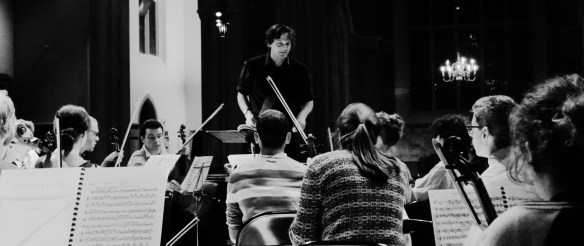
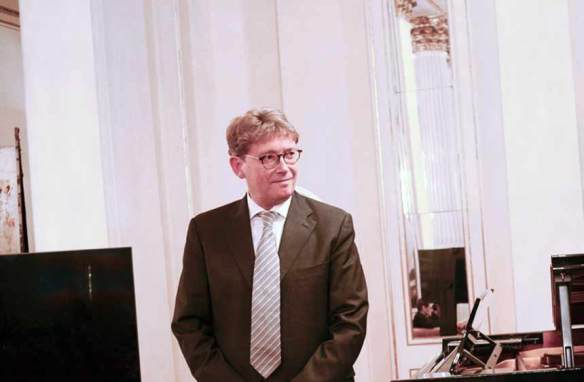
Fatma Said (soprano, above), James Vaughan (piano, below)

Schumann 6 Gesänge Op. 89 (1850); Singet nicht in Trauertönen Op.98a/7, Liebeslied Op.51/5 (both 1849), Requiem Op.90/7 (1850)
Mendelssohn Die Liebende schreibt Op.86/3 (1831), Ach, um deine feuchten Schwinge (Suleika) Op.34/4 (1837), Hexenlied Op.8/8 (1827)
Poulenc Les chemins de l’amour, from Léocadia (1940), 2 poèmes de Louis Aragon (1943)
Sherif Mohie El Din Three Poems by Amal Donqul (1989)

Wigmore Hall, London; Monday 15 January 2018

Written by Ben Hogwood

The broadcast can be heard on the BBC iPlayer by clicking here

As a demonstration of artistry, this was quite some Wigmore Hall debut for soprano Fatma Said, a BBC Radio 3 New Generation Artist. The Egyptian singer used four languages in the course of an hour, and showed an aptitude for contrasting musical styles in a cleverly constructed programme.

It was good to hear less familiar Schumann songs as a starting group (from 1:32 on the broadcast) The set of six, published as Op.89, were written in the composer’s second ‘year of song’, the productive 1850. They set words by Wilfriend von der Nenn (a pseudonym for Wilhelm Schöpf), and show off an economy and intensity of word setting, with none lasting more than two minutes.

Said caught the agitation running through Es stürmet am Abendhimmel (There are storms in the evening sky) (1:32), set up by a wonderfully turbulent introduction from the excellent James Vaughan. A flowing Heimliches Verschwinden (Stealthy departure) (3:07) led to the yearning harmonies of Herbstlied (Autumn song) (5:12), then the softer hearted Abschied vom Walde (Farewell to the forest) (7:38). Both performers threw wide the curtains for a bracing Ins Freie (Out in the open) (9:45), before Röselein, Röselein! (Rose, little rose) (11:54) began with a striking solo, setting its dreamy mood.

A group of three more Schumann songs followed, the bright and carefree Singet nicht in Trauertönen (Do not sing in mournful tones) (15:20) leading to Liebeslied (Love Song), where there was a nice rapport from both performers in the song’s ebb and flow (17:38). Requiem (19:46) had a restrained and respectful air.
Mendelssohn’s songs are less-often heard, but carry melodic invention along with often incredibly challenging piano parts! A thoughtful Die Liebende schreibt (The beloved writes) (24:55) and the more urgent Ach, um deine feuchten Schwingen (Ah, West Wind, how I envy you) (27:51) were nicely done, but the Hexenlied (Witches’ song) (30:34) was something else, the high notes nailed impressively by Said while Vaughan handled the flurry of notes with apparent ease.

The pair then turned to Poulenc, whose songs are the jewel in the crown of his musical output. We heard three brief but meaningful numbers, Les chemins de l’amour (The paths of love) (34:44) caught the efforts to stay cheerful despite the approach of World War II in 1940, while C (38:51) dealt with the immediate and horrific aftermath. Fêtes galantes (41:40) was a bit too breathless, but maybe that was the point as it raised a laugh!

Said then turned to ‘home away from home’, introducing three songs by Egyptian composer Sherif Mohie El Din, a welcome move that introduced a new sound world to the Wigmore Hall as well as showing the soprano’s clear passion for music and words of her first language.

The musical depiction of The Rain (from 44:22) was vivid and featured well-placed silences, the piano part enhancing the effect of raindrops. Could the river flow forever (46:50) had darker shading, while the final Against whom?  (49:57) was a tortuous and anguished study of feelings felt during surgery.

The performers generously gave us two encores – a further Egyptian song, Daughter of the Sultan by Gamal Abdel-Rahim (54:41) and then, after the radio went off air, Old Sir Faulk by Sir William Walton, with accompanying gestures from the soprano.

This emphasised how at home she is on the stage, and capped an extremely impressive and enjoyable recital, where a blend of musicianship and communication of the messages behind the text was always the primary goal. Both performers succeeded comfortably.

Further listening

You can listen to recorded versions of the repertoire in this concert on this Spotify playlist, apart from the Sherif Mohie Eldin songs which are not on the streaming service:

Meanwhile here is a link to the Sherif Mohie Eldin official YouTube page, including the three poems performed in the concert:

London Symphony Orchestra / Sir Simon Rattle – Genesis Suite & Bartók Concerto for Orchestra

Simon Callow, Rodney Earl Clarke, Sara Kestelman, Helen McCrory (narrators), Gerard McBurney (creative director), Mike Tutaj (projection design), London Symphony Chorus and Orchestra / Sir Simon Rattle

Various composers The Genesis Suite (1945)
Bartók Concerto for Orchestra (1943)

Barbican Hall, London; Saturday 13 January 2018

Written by Ben Hogwood

Collaboration in classical music is rare. Pop music is full of it – many of the best songs and albums are co-written – but for composers to work together on a single work is nigh on unthinkable. Full marks, then, to Sir Simon Rattle and the London Symphony Chorus and Orchestra for reminding us of an instance when that did in fact happen – no fewer than SEVEN classical composers coming together in 1945, at the end of World War II, to write the Genesis Suite. The project was held together by Nathanial Shilkret, masterminding the project from Hollywood.

The Suite, of course, has nothing to do with the rock band. Yet it is fully progressive, telling the story of the first book of the Bible from creation through to the construction of the Tower of Babylon in the space of an hour, working its way from Schoenberg to Stravinsky via Shilkret himself, Alexandre Tansman, Darius Milhaud, Mario Castelnuovo-Tedesco and Ernst Toch.

Rattle and creative director Gerard McBurney collaborated on a series of moving images and audio clips to put the Genesis Suite in modern perspective. These were thought provoking and occasionally daring. The story of Cain and Abel (with surprisingly upbeat music from Milhaud) was played out to a Middle Eastern backdrop, Ronald Reagan and Margaret Thatcher were prominent during the story of The Flood (Noah and the Ark), while the construction of the Shard against Stravinsky’s music for Babel was a powerful allegory.

Unfortunately the music was overshadowed somewhat by the wordy text, taken directly from the King James Bible, and read as written. Nor was it helped by a lack of ensemble between the starry quartet of narrators. Simon Callow and Helen McCrory stood far left, Sara Kestelman and Rodney Earl Clarke far right – which meant for the audience it was a strain to hear two of the four speakers unless sat directly in the middle, despite the amplification. Some speakers were better versed than others in their delivery, too – and maybe because of my own seated position Kestelman and Clarke appeared to have greater emotional involvement.

The London Symphony Chorus, however, were as one in their powerful contributions, dressed in white to maximise their dramatic delivery. When the men came out into the stalls for the Stravinsky finale the Suite’s tension between creation and what man has done with it reached its ultimate, tense conclusion.

Musically the Suite was inconsistent. Schoenberg’s Prelude stood out for inventive orchestration and far reaching harmonic language, while in a dramatic sense Toch’s dramatic setting of The Rainbow (The Covenant) was a notable high. Creation itself, Shilkret’s contribution, felt hurried, the seven days of creation crammed into ten minutes.

Despite these reservations Genesis Suite made a lasting impression, especially following Rattle’s assertion that all composers except one wrote in exile. After the interval another such composer, the Hungarian Béla Bartók writing in America in 1943, was to light up the concert.

It is very easy to take the LSO’s virtuosity for granted, but in a performance like this they shone from every corner. Rattle challenged them to dig deep technically and emotionally and they delivered on every level, particularly in the work’s deeply felt heart, the Elegia. Rattle and McBurney opted to continue with images, which were slow moving or static this time, depicting the forests Bartók looked on during composition. However the gauze on which the images were shown did on occasion muffle the projection of the brass musicians sat under or behind the screen.

Ultimately this did not spoil a terrific performance, where sinewy strings and percussive outbursts were complemented by outstanding, colourful woodwind playing. The first of the two scherzos brought this out, with pairs of bassoons, flutes, clarinets and oboes outstanding in their delivery, balanced by the trumpets. The finale danced energetically, bathed in a luminous glow which proceeded to leave its spell on the audience.

Further listening

You can see Sir Simon Rattle talking about the Genesis Suite below:

The music from this concert, including Rattle’s own recording of the Concerto for Orchestra, can be heard on this Spotify playlist:

Wigmore Mondays: Isabelle van Keulen & Ronald Brautigam play Beethoven, Fauré & Szymanowski

Isabelle van Keulen (violin), Ronald Brautigam (piano)

Beethoven Sonata for piano and violin in G major Op.30/3 (1801-2) (from 1:37 on the broadcast)
Szymanowski The Fountain of Arethusa from Myths Op.30 (1915) (from 19:51)
Fauré Violin Sonata no.1 in A major Op.13 (1875-6) (from 26:34)

Wigmore Hall, London; Monday 8 January 2018

Written by Ben Hogwood

The broadcast can be heard on the BBC iPlayer by clicking here

Full marks to the Wigmore Hall for their choice of established recital partners and an invigorating program to start the 2018 BBC Radio 3 Lunchtime Concert series. Isabelle van Keulen and Ronald Brautigam were clearly brought in to blow away the January blues and dispel any ‘back to school’ feelings among the audience, and they did so with freshly minted interpretations of Beethoven, Szymanowski and Fauré.

Beethoven’s eighth published Sonata for piano and violin, the third of his Op.30 set, began the concert (from 1:37 on the broadcast link). This spring-like work flew off its perch with a flourish, and once a few minor tuning issues at the outset were settled van Keulen and Brautigam enjoyed the close-knit ensemble playing in the first movement.

The second movement, a slow Minuet (from 8:00), was delivered as a passionate song and dance, a little quicker than expected, while the third movement (from 15:00) threw open the doors once again, van Keulen enjoying its folk dance associations.

The first of Polish composer Karel Szymanowski’s 3 Myths, also Op.30, had added electricity. Heralding a new sound world for the composer, The Fountain of Arethusa began with a watery cascade of notes from Brautigam (from 19:51), matched by tensile high register playing from van Keulen, both vividly portraying the fountain but also exploiting the sensual harmonies and rich textures. Hopefully van Keulen will go on to record the composer’s works for violin and piano.

The concert finished with one of the sunniest of works for the combination. Fauré’s Violin Sonata no.1, his first work in the form, surged forwards from the outset (from 26:34), the longer melodic phrases beautifully measured on the violin, while Brautigam’s sensitivity in balancing a busy piano part was a notable achievement.

The second movement (from 35:35) introduced darker, shaded thoughts and grew to a passionate climax of real stature. The third movement Scherzo (from 41:55) was a delight, showing off the qualities that secured an encore at the work’s first performance in Paris in 1877. The finale (45:45), initially elusive, brought all these elements and more together, and finished with an impressive sweep.

There was room at the end for an appropriate encore, giving homage to centenary composer Lili Boulanger. She died in 1918, aged just 24, and her Nocturne (from 52:13 on the broadcast), beautifully shaded here, was an atmospheric example of her unfulfilled potential.

Further listening

You can listen to recorded versions of the repertoire in this concert on this Spotify playlist. Meanwhile if you enjoyed the Fauré and Szymanowski in particular, this lovely disc from Augustin Dumay and Maria João Pires shows the depth of European repertoire from the 20th century for violin and piano.

Jerusalem Chamber Music Festival Ensemble – Stravinsky, Ustvolskaya & Shostakovich

Jerusalem Chamber Music Festival Ensemble: Elena Bashkirova (piano, above), Marina Prudenskaya (soprano), Pascal Moragués (clarinet), Sergej Krylov (violin), Alexander Knyazev (cello)

Stravinsky Suite from The Soldier’s Tale (for violin, clarinet and piano) (1918-19)
Ustvolskaya Piano Sonata no.5
Shostakovich Seven Poems of Alexander Blok, Op.127 (1967)
Ustvolskaya Trio for clarinet, violin and piano (1849)
Shostakovich Piano Trio no.2 in E minor Op.67 (1944)

Wigmore Hall, London; Thursday 14 December 2017

Written by Ben Hogwood

Pianist Elena Bashkirova founded the Jerusalem Chamber Music Festival in 1998, and this celebration at the Wigmore Hall was part of a desire to continually expand the festival beyond Israel’s borders. Here we had a well-conceived program of Russian music, if a little unremitting in its darkly coloured focus.

It was especially gratifying to see the prominence given to Galina Ustvolskaya’s music. A pupil of Shostakovich, she has a small but potent legacy of works, which show a style already thinking well ahead of its time. In the first half of the concert we heard the Piano Sonata no.5, a remarkably concentrated piece of music lasting only half the 20 minutes it does on record. The suspicion was that Bashkirova did not follow some of the instructed repeats, or that her performance was simply much faster than those before it. Either way it left a powerful imprint, its refusal to budge from a central Db anchoring the music becoming a really strong musical device in spite of all the activity around it.

Arguably even more accomplished was the Trio for clarinet, violin and piano with which the concert’s second half began. This too left a lasting impression, thanks largely to the sensitivity with which Pascal Moragués and Sergej Krylov played the quiet music, and to the probing and penetrating tone of Bashkirova’s right hand. As Paul Griffiths’ booklet note pointed out, this music sounds more like late Shostakovich – but its composition date of 1949 shows just how originally Ustvolskaya was thinking.

From Shostakovich we heard two works, the late Seven Poems of Alexander Blok, Op.127, and the Piano Trio no.2 in E minor, Op.67. Both are hugely effective concert pieces, but it was the Blok poems that cut to the core at the end of the first half. Soprano Marina Prudenskaya, a late stand-in for Anna Samuil, got right to the heart of Blok’s verse, nowhere more so than in the savage destruction of Burya (The Storm). From this a wispy cello line emerged, Alexander Knyazev responding with a moving plaintive tone, after which the trio joined for the first time in accompanying Prudenskaya for the final song. It capped a tightly structured performance, the string players finding just the right tone if not always the exact intonation, while Bashkirova’s piano probed the lower reaches of the bass sound.

This was also the case in the Second Trio, which was occasionally a bit unkempt technically but which unerringly found the heart and focus of Shostakovich’s music. From the ghostly harmonics at the start, Krylov and Knyazev were clearly on the same emotional page, and with Bashkirova the three players achieved an impressive variety of volume and colour. Shostakovich’s powerplay scherzo and middle of the last movement were incredibly strong and lasting statements, but as ever with his music the greater meaning could be found in the moments of intimacy where the listener can hear a pin drop. The last movement thus became the focus of attention, music of sorrow, paranoia and anger – with just a little respite at the end.

The evening began with Stravinsky’s suite from A Soldier’s Tale, distilled into short movements for clarinet, violin and piano. Melodic and spiky, this performance was enjoyable and included just the right amount of humour, before taking a darker turn for the final Triumphal March of the Devil, where Krylov took over.

An excellent and thought provoking concert, particularly in the light of the various programmes marking the centenary of the Russian Revolution this year.

You can listen to the music from this concert on the Spotify playlist below:

Ralph Lane, Oberon Symphony Orchestra & Samuel Draper – Weber, Finzi & Vaughan Williams

Ralph Lane (clarinet), Oberon Symphony Orchestra / Samuel Draper

St James’s, Sussex Gardens, London; Saturday 2 December 2017

Weber Oberon, J306 – Overture (1826)
Finzi Clarinet Concerto, Op.31 (1949)
Vaughan Williams Symphony no.4 in F minor (1934)

Reviewed by Richard Whitehouse

British music has not figured prominently on the schedule of the Oberon Symphony Orchestra thus far, so it was interesting to have two notable works from the concertante and symphonic genres juxtaposed in tonight’s concert; their contrasts in aesthetic brought unequivocally into relief.

Long the most often performed of its composer’s larger works, Finzi’s Clarinet Concerto is now firmly established in what is still a limited repertoire. Avowedly English despite (even because of?) his mixed European ancestry, Finzi cuts a somewhat ambivalent figure such as this piece pointedly confirms and which Ralph Lane duly underlined.

Whether in the starkly alternated recitative and arioso writing in the initial Allegro, the ruminative and frequently ominous poignancy of the central Adagio (its expressive eddying deftly unfolded), then the amiable but never merely blithe melodiousness of the final Rondo, this was an assured and perceptive account – enhanced by Samuel Draper’s handling of the restrained orchestration. Maybe Finzi’s shorter orchestral works will find their way onto future Oberon programmes?

As, hopefully, will other Vaughan Williams symphonies, given the success of this reading of the Fourth. Over eight decades on from its premiere, the work still divides opinion as to what its composer intended. The deteriorating political situation in Europe is often quoted as evidence, though this is not a symphony about or even anticipating war; rather the composer posits the notion whether the Beethovenian concept of adversity to triumph was sustainable in an era of cultural, specifically tonal dislocation.

The sound-world exudes an austerity and angularity not unknown in Vaughan Williams’s earlier music, though never so overt as here: worth considering in the context of Shostakovich’s (then unwritten) Fifth and Enescu’s (then unfinished) Fourth, both symphonies which have been highlights of recent Oberon concerts.

As also was this performance. Draper set a fast though never unduly headlong tempo for the opening Allegro, bringing out those contrasts between violence and eloquence on the way to a coda of rapt introspection. The ensuing Andante was similarly kept moving, its dissonant harmonies and tensile polyphony yielding an unexpected pathos confirmed in the flute-lead threnody at its close.

Rhythmically exacting, the Scherzo evinced a measure of uncertainty in ensemble, though Draper had the measure of its acerbic humour – as also the trio’s pomposity – through to an impulsive transition into the Finale. Its martial strains never descending into parody, this brought the overall conception into powerful focus; the ‘fugal epilogue’ driving onward to a fateful return of the work’s opening and an unequivocal (four-letter?) last chord.

So, an impressive take on a symphony which has lost none of its capacity to provoke, or even shock, and an admirable statement of intent from this orchestra on its fifth anniversary.

Given the occasion it was understandable when, instead of beginning with a British overture, Draper chose that which Weber wrote for his final opera Oberon. If the magical opening was a touch earthbound, the performance then hit its stride prior to an effervescent close.

On this evidence, the Oberon Symphony is set fair on the home strait towards its first decade of music-making.

Further information at on the Oberon Symphony Orchestra can be found at their website – while Samuel Draper’s website is here