In concert – BCMG NEXT @ Coventry Cathedral

bcmg-next

Kerkour Procession in Remembrance (2010)
Salonen Pentatonic Étude (2010, rev. 2014)
Roxburgh Wordsworth Miniatures (1998)
Birtwistle Duets for Storab (1984)
Lachenmann Pression (1969)
Saunders Bite (2016)

NEXT [Leila Hooton, Rebecca Speller, Gavin Stuart (flutes), Emily Wilson (clarinets), Cameron Howe (viola), Carwyn Jones (cello)]

Coventry Cathedral
Wednesday 3 November 2021

Written by Richard Whitehouse

This evening’s concert by NEXT (musicians training as performers of contemporary music in a partnership between Birmingham Contemporary Music Group and Royal Birmingham Conservatoire) was to have featured Gérard Grisey’s penultimate work Vortex Temporum, but a player’s withdrawal after testing positive for Covid led to this alternative programme of solos and duos from the past half-century; one that, coming together as an effective and appealing recital in its own right, showed no sign of having been assembled at short notice.

The Anglo-Moroccan composer Brahim Kerkour is little heard in the UK, though Procession in Remembrance (the central piece in Three Modules for Sketches of Miniatures) suggests a continuation of spectral thinking (Kerkour studied with Tristan Murail) for the way alto flute and bass clarinet intertwined to create raptly translucent textures at once abstract yet tangible. Music to which Esa-Pekka Salonen’s Pentatonic Étude offered a notable foil – this paraphrase on a passage from Bartók’s unfinished Viola Concerto putting the solo instrument through its paces, before reclaiming the original in an understated apotheosis realized by Cameron Howe with due sensitivity. Hopefully a full-scale viola concerto by Salonen will yet be forthcoming.

Two sets of interdependent pieces came next. Edwin Roxburgh remains best known for larger-scale compositions, but Wordsworth Miniatures finds him no less adept when working on a more limited canvas – poems by the English author serving as the titles for these four deftly contrasted clarinet miniatures which Emily Wilson rendered with appropriately lyrical poise. Written while resident on the Inner Hebridean isle of Raasay, Harrison Birtwistle’s Duets for Storab draws its inspiration from three locations featuring the name of a Viking prince whose shipwreck, pursual and death are not so much portrayed as evoked by the six atmospheric and plaintive pieces with flautists Rebecca Speller and Leila Hooton in (mainly) whimsical accord.

Finally, to two more substantial and combative solo pieces which both conveyed the essence of their respective composers. Helmut Lachenmann’s Pression expounded a radical notion of ‘instrumental musique-concrète’ explored in later orchestral and chamber works – its utilizing cello as a means of sonic inclusiveness summoning a trenchant response from Carwyn Jones. Even more visceral in content, Bite finds Rebecca Saunders draws on the thirteenth and final prose from Beckett’s Texts for Nothing in this monologue for bass flute whose phonetic and syntactical elements are subsumed into a tensile continuum where anticipations and echoes merge freely or often forcefully – Gavin Stewart entering into its spirit with evident resolve.

Such a programme might not have seemed suited to the expanse of Coventry Cathedral, but the situating of musicians and listeners in a semi-circle adjacent to the entrance and at right-angles to the nave kept proceedings well within focus and allowed for the acoustic’s natural ambience to come through. Hopefully the Grisey can be rescheduled in due course, but the qualities of these pieces and their performances could not be gainsaid. Meanwhile, BCMG returns next Friday with a late-evening recital BCMG Nights in the foyer of Symphony Hall.

Further information on future BCMG and NEXT events can be found at the BCMG website

In concert – Benjamin Grosvenor, CBSO / Marta Gardolińska: Mozart, Beethoven, Fanny Mendelssohn & Felix Mendelssohn

marta-gardolinska

Mozart Die Zauberflöte K620: Overture (1791)
Beethoven
Piano Concerto no.1 in C major Op.15 (1795, rev. 1800)
Fanny Mendelssohn
Overture in C major (1832)
Mendelssohn
Symphony no.4 in A major Op.90 ‘Italian’ (1833)

Benjamin Grosvenor (piano), City of Birmingham Symphony Orchestra / Marta Gardolińska

Symphony Hall, Birmingham
Wednesday 3 November 2021 (2.15pm)

Written by Richard Whitehouse. Picture of Benjamin Grosvenor (c) Andrej Grilc

Those having heard Gustavo Dudamel’s recent Ives cycle will know of Marta Gardolińska’s role in the success of the Fourth Symphony, with her similarly methodical attention to detail being evident in this afternoon’s concert with the City of Birmingham Symphony Orchestra.

An avowedly Classical concert it may have been, but an artfully programmed one. Certainly, it was refreshing these days to hear the introduction of Mozart’s Overture to The Magic Flute given with this degree of gravitas, followed by a purposeful take on the main allegro such as brought out the music’s verve along with an onward striving apposite given its indebtedness to the ideals of the Enlightenment. The CBSO itself sounded wholly enthused in what was as purposeful and as immediate an account of this piece as it can have given in recent seasons.

It also prepared admirably for Beethoven’s First Piano Concerto with Benjamin Grosvenor (above). The latter has often sounded unduly self-effacing in the concerto repertoire, but this work fits his temperament to a tee – not least its initial Allegro, whose alternating of bravura with more equivocal expression included an electrifying transition to the reprise then nonchalant take on what is the second (c1805), shortest and contextually most satisfying of the composer’s three cadenzas. Neither was there any lack of eloquence in a Largo such as ranks among the most affecting of Beethoven’s earlier slow movements, while a headlong if never hectic tempo for the final Rondo enabled Grosvenor to instil his last entry with a poise as made the orchestral payoff the more conclusive. A fine performance which inevitably brought the house down.

Grosvenor returned for an affecting encore of Danza de la Moza Donosa – second of three Danzas Argentinas by Alberto Ginastera (maybe Grosvenor will investigate one or other of his piano concertos one day?). There was further unfamiliar fare after the interval, with an Overture by Fanny Mendelssohn. Her only completed orchestral work, its formal cohesion and technical finesse indicate what might have been possible under different circumstances, not least when Gardolińska drew such committed and characterful playing from the CBSO.

There cannot have been a time when Felix Mendelssohn’s Italian Symphony was unpopular in Birmingham and so it proved here. As has become customary, Gardolińska (rightly) observed the first movement’s exposition repeat, with its substantial lead-in, in what was otherwise an unexceptionally fine account of this opening Allegro. More individuality came through in the Andante, not least with its quirkily understated interplay between pedantry and pathos, while the intermezzo was more than usually arresting for the distinction made between its elegant outer sections and a trenchant, often combative trio. The ensuing Saltarello rounded off this performance in bracing fashion – those rhythmic contrasts between its main and second ‘tarantella’ themes vividly brought out on the way to a conclusion of no-nonsense finality.

This appealing programme was enthusiastically received by the fullest house the CBSO had enjoyed since live music-making resumed. Symphony Hall will hopefully be as well attended this Saturday, when Mirga Gražinytė-Tyla returns for the commemorative A Covid Requiem.

Further information on the CBSO’s current season can be found at the orchestra’s website. For more on Marta Gardolińska, click here – and for more on Benjamin Grosvenor, head to the pianist’s website

CBSO players perform the Allegretto from Fanny Mendelssohn’s String Quartet in E flat here:

In concert – Mischa & Lily Maisky play Beethoven, Britten & Piazzolla @ Wigmore Hall

mischa-maisky-lily-maisky

Beethoven 7 Variations on ‘Bei Männern, welche Liebe fühlen’ from Mozart’s Die Zauberflöte WoO 46 (1796)
Britten Cello Sonata in C major Op.65 (1961)
Piazzolla Le grand tango (1982)

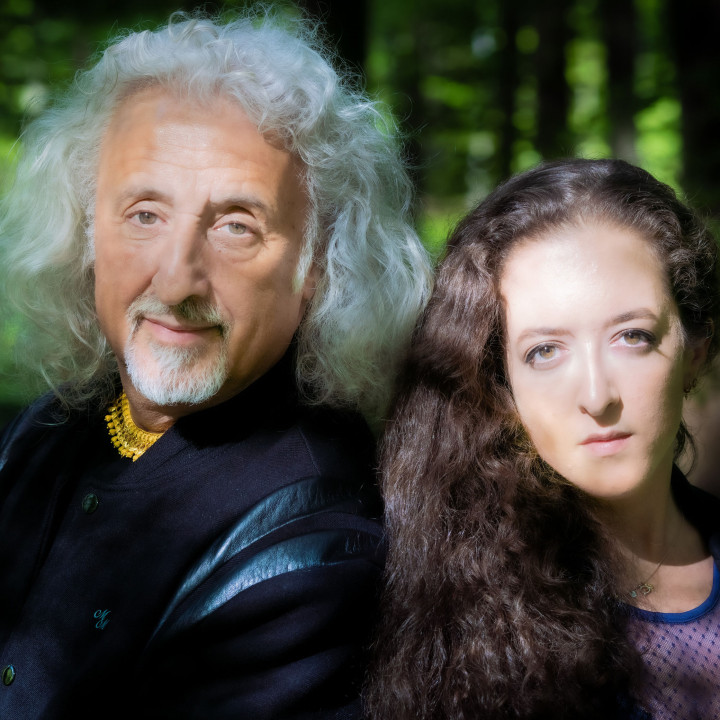
Mischa Maisky (cello), Lily Maisky (piano)

Wigmore Hall, London
Monday 1 November 2021

Written by Ben Hogwood

Father and daughter duo Mischa and Lily Maisky presented an imaginative program of works for cello and piano in this BBC Radio 3 Lunchtime Concert, where it was gratifying to note a full attendance at the Wigmore Hall.

They immediately found the light-hearted spirit of Beethoven’s 7 Variations on Bei Männern, welche Liebe fühlen, an aria from Mozart’s Die Zauberflöte. The piano takes the lead for much of this work, and Lily’s phrasing was subtle yet nicely shaped. The burnished tone of Mischa’s cello was a feature in the minor-key fourth variation, while Lily’s sensitive ornamentation at the start of the sixth was especially attractive.

A compelling performance of Britten’s Cello Sonata followed. As a former pupil of Mstislav Rostropovich, Mischa Maisky effectively has a direct line to a work that started the beginning of an extremely fruitful musical friendship between Britten and Rostropovich that lasted up to the composer’s death 15 years later. This performance inhabited the spirit of the work from first note to last, with the feeling in the first movement Dialogo that we were eavesdropping on a private conversation. Britten’s frequent but subtle references to Shostakovich were nicely highlighted here, with a few witty asides.

In the second movement Scherzo the Maiskys were dancing a balletic routine, Mischa’s pizzicato questions finished off by Lily’s featherweight answers. The tempo was slightly slower than is often used here, but in this way the pair effectively pointed out the work’s proximity in Britten’s output to the opera A Midsummer Night’s Dream. The sombre third movement Elegie had a silvery tone from the cello, while the following Marcia dealt in sardonic humour. The finale was a tour de force, featuring low notes from Mischa’s cello capable of rattling the windows, before powering through to an emphatic finish.

Piazzolla’s Le Grand Tango celebrates the dance form with which the Argentinian composer became obsessed, though as he stated the preoccupation was in his mind rather than the dancing feet. This was a passionate performance, the Maiskys in hold throughout as they maintained their close musical chemistry, right from the full bodied notes with which the cello began to a red-blooded dance for the closing pages. In between we had music of great tenderness and affection, not to mention rhythmic persuasion.

The duo gave us two encores, the first of which was a heartfelt tribute to the recent passing of Nelson Freire, clearly a dear friend. Bloch’s Prayer, from the short suite From Jewish Life, was an ideal choice, reverently played and with a searing tone quality to the highest register. It was a moving tribute that could hardly be bettered. There was also an ideal response in the form of Mischa’s own transcription of Brahms’s Lerchengesang Op.70/2, where Lily’s piano took the expressive lead.

You can hear the music played by Mischa and Lily on the Spotify playlist below, compiling Mischa’s recordings for Deutsche Grammophon of all the repertoire:

For more information on Mischa Maisky you can visit his artist page

In concert – CBSO Youth Orchestra plays Shostakovich with Michael Seal

michael-seal-bcsoyo

Howard Argentum (2017)
Britten
Diversions Op.21 (1940, rev. 1954)
Shostakovich
Symphony no.10 in E minor Op.93 (1953)

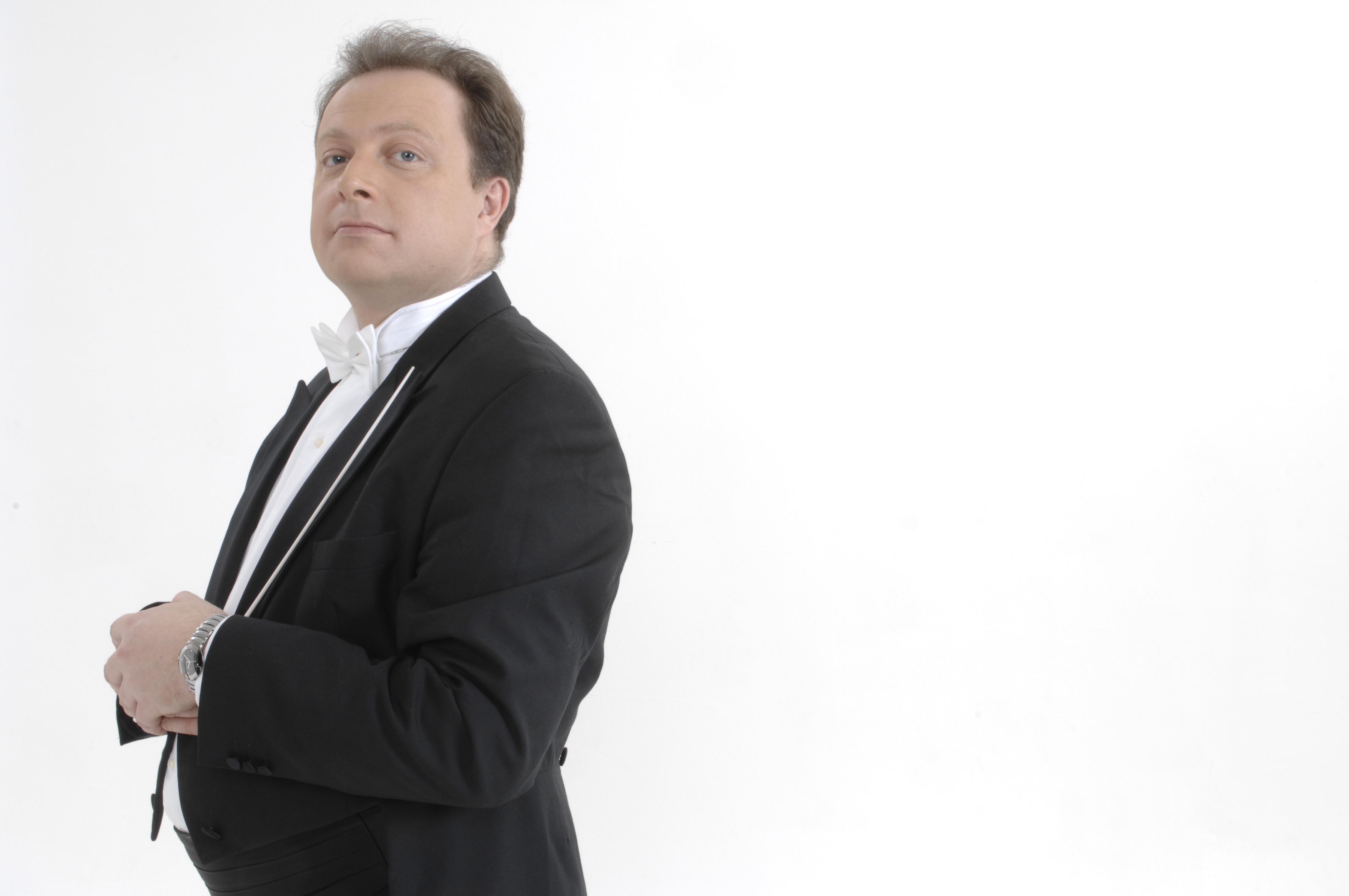
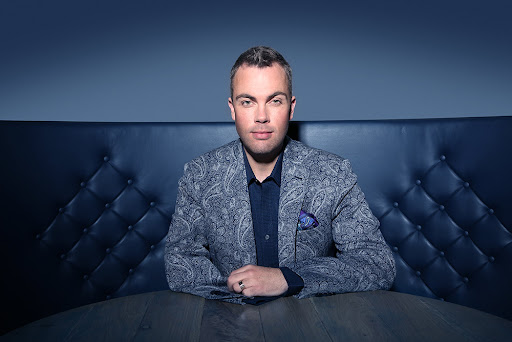
Nicholas McCarthy (piano, below), CBSO Youth Orchestra / Michael Seal (above)

Symphony Hall, Birmingham
Sunday 31 October 2021 (3pm)

Written by Richard Whitehouse

It seems quite a while since the CBSO Youth Orchestra was last in action – this afternoon’s concert playing to its strengths with a programme as featured respectively early and mature works from Britten and Shostakovich, while beginning with a recent piece by Dani Howard.

Now in her late twenties, Howard is one among several British composers who have come to prominence in the past five years. Written to commemorate the silver-wedding anniversary of two close friends, the appropriately named Argentum is in a lineage of curtain-raisers by such as John Adams or Michael Torke – drawing audibly yet productively on such post-minimalist traits in music whose unbridled animation subsides towards a mid-point stasis, before rapidly regaining its previous energy over the course of a build-up to the pointedly affirmative close.

The CBSOYO evidently enjoyed making its acquaintance, then seemed no less attuned to the eclecticism pursued by Britten in his Diversions. Written for Paul Wittgenstein, who had lost his right-arm in the First World War, it takes the form of 12 variations on a theme announced by the orchestra whose faux-portentousness determines what follows. Prokofiev is the main influence (Britten could not have known his left-hand Fourth Concerto, written for but never played by Wittgenstein and unheard until the 1950s) on music of an inventiveness and verve admirably conveyed here by Nicholas McCarthy; his characterizing of each variation astutely gauged through to a scintillating ‘Toccata’ cadenza, with Michael Seal similarly judicious in the mock-solemnity of the ‘Adagio’ then a final ‘Tarantella’ of suitably uproarious humour.

Over his years as Associate Conductor of the CBSO, Seal has gained a formidable reputation in symphonic repertoire, with his account of Shostakovich’s Tenth Symphony never less than satisfying in its long-term cohesion. Not least the opening Moderato, unfolding at an almost unbroken pulse with the stark main theme powerfully wrought and its successor lacking only a degree of irony. The central development exuded palpable impetus and while the climactic arrival of the reprise could have been even more shattering, the wind-down into the musing coda was ideally judged. Taken at a swift if never headlong tempo, the Scherzo was suitably graphic in its evoking of violence (whether, or not, a ‘portrait’ of Stalin is beside the point), then the ensuing Allegretto was poised unerringly between slow movement and intermezzo.

This most intriguing portion of the work again lacked little in insight – with due credit to first horn Alex Hocknull for coming through, almost unscathed, in one of the lengthiest and most testing solos of the orchestral literature. A pity that Seal did not head straight into the finale, but his handling of its Andante introduction astutely mingled pathos with anticipation – the main Allegro itself pivoting between nonchalance and defiance through to a conclusion in which any thought of triumph over adversity was – rightly- withheld until the closing bars.

All in all, a gripping performance of a symphonic masterpiece and a fine demonstration of the CBSO Youth Orchestra’s collective prowess. The CBSO returns this Wednesday for Mozart and Mendelssohn frère et soeur, with Benjamin Grosvenor in Beethoven’s First Concerto.

Further information on the CBSO’s current season can be found at the orchestra’s website. For more on Michael Seal, click here – and for more on pianist Nicholas McCarthy, click here

In concert – Sol & Pat (Sol Gabetta & Patricia Kopatchinskaja) @ Queen Elizabeth Hall

pat-sol

Leclair Violin Sonata in C major Op.5/10: Tambourin (c1734)
Widmann 24 Duos: Valse bavaroise; Toccatina all’inglese (2008)
J.S. Bach Prelude in G major (from BWV860) (c1722)
Francisco Coll Rizoma (2017)
Domenico Scarlatti Sonata in G, Kk.305
Ravel Sonata for violin & cello (1922)
J.S. Bach 15 Two-part Inventions BWV772-86 (selection) (c1723)
Ligeti Hommage à Hilding Rosenberg (1982)
Xenakis Dipli zyia (1951)
C.P.E. Bach Presto in C minor Wq114/3 (c1768)
Kodály Duo Op.7 (1914)

Patricia Kopatchinskaja (violin), Sol Gabetta (cello)

Queen Elizabeth Hall, London
Tuesday 26 October 2021

Written by Richard Whitehouse

Combining two of the most charismatic and creative string players of their generation was such a good idea to make one surprised it had not happened earlier, but tonight the Patricia Kopatchinskaja and Sol Gabetta double-act hit the Southbank Centre in no uncertain terms.

A stomping entrée to Leclair’s Tambourin in C (a rare instance when Kopatchinskaja donned footwear) launched proceedings in arresting fashion, while Jörg Widmann’s Valse bavaroise and Toccatina all’inglese – both from his resourceful playbook of 24 Duos – allured and engaged. Bach’s Prelude in G (from BWV860) afforded a limpid breathing-space, then Francisco Coll’s Rizoma fairly intrigued with its incrementally shifting textures and ethereal harmonics – just the sort of piece, indeed, necessary for energizing the violin-and-cello medium. Kopatchinskaja admitted to disliking the arrangement of Scarlatti’s Sonata in G (Kk305) and canvassed the audience for its opinion, the response encouraging an incisive take on music whose enthusiastic response left her shaking her head in mock consternation.

The first half concluded with Ravel’s Sonata for violin and cello – much less often revived than it should be, ostensibly on account of the duo-medium, but an undoubted masterpiece when rendered with such commitment as here. Kopatchinskaja and Gabetta teased out those exquisite tonal obliquities of the Allegro, countered by the alternate brusqueness and suavity of the scherzo or distanced rapture of the slow movement; before the finale brought matters to a head with its headlong syncopation and no lack of that ‘spirit’ as indicated in the score.

A brief inclusion from Bach’s 15 Two-Part Inventions (BWV772-86) opened the second half with pointed understatement (presumably more so than the Scarlatti sonata that was originally scheduled), with the expressive poise of Ligeti’s Hommage á Hilding Rosenberg duly making way for the acerbic interplay of Xenakis’s Dipli zyia which is among the most Bartókian of the formative pieces to have found posthumous revival by this composer (who is hopefully being suitably commemorated throughout his centenary in 2022).

Kopatchinskaja and Gabetta then sat side by side for a speculative reading of C.P.E. Bach’s Presto in C minor (Wq.114 No. 3) made the more so through its being played pizzicato throughout. Interesting, too, how such an arrangement can dissolve any perceived boundary between musical epochs.

The programme reached a culmination in every sense with Kodály’s Duo, one of several large-scale chamber-works for strings on which his reputation as a composer of ‘abstract’ music rests. After a tensile account of the preludial Allegro, Kopatchinskaja and Gabetta rendered the central Adagio with sustained pathos and a timbral acuity made more so by their faultless intonation. Nor was there any lack of eloquence in the finale, its deliberate progress building a momentum that was released in the coda to heady and exhilarating effect.

Quite a concert, then, with a performance to match by two musicians who complement each other’s playing to a mutually beneficial degree. Hopefully they will be returning with another wide-ranging programme before too long. The enthusiastic audience evidently felt likewise.

For more information on the new Sol & Pat release, head to the Linn Records website