On record – Nash Ensemble – Julian Anderson: Poetry Nearing Silence (NMC)

Nash Ensemble / Martyn Brabbins

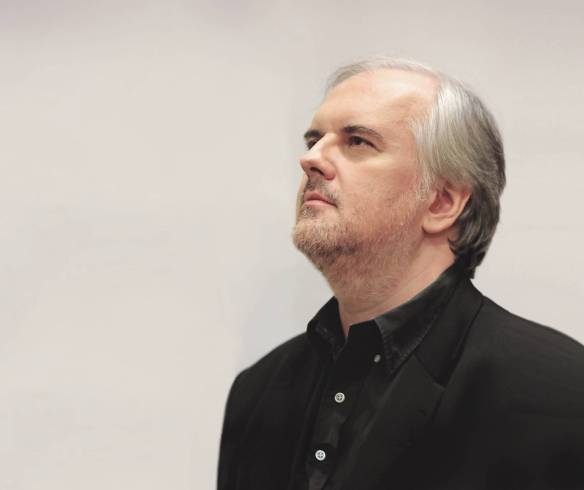
Julian Anderson
Ring Dance (1987) Benjamin Nabarro, Michael Gurevich (violins)
The Bearded Lady (1994) Richard Hosford (clarinet), Ian Brown (piano)
The Colour of Pomegranates (1994) Philippa Davies (alto flute), Ian Brown (piano)
Prayer (2009) Lawrence Power (viola)
Poetry Nearing Silence (1997) Benjamin Nabarro (violin, triangle), Michael Gurevich (violin, triangle), Lawrence Power (viola), Adrian Brendel (cello), Philippa Davies (flute, piccolo), Richard Hosford (clarinet, E-flat clarinet), Hugh Webb (harp)
Another Prayer (2012) Benjamin Nabarro (viola)
Van Gogh Blue (2015) Ian Brown (piano), Graham Mitchell (double bass), Marie Lloyd (clarinet, bass clarinet), Lawrence Power (viola), Adrian Brendel (cello), Philippa Davies (flute, piccolo), Richard Hosford (clarinet, E-flat clarinet), Hugh Webb (harp)

Producer and Engineer David Lefeber
Digital Editing Susanne Stanzeleit

Recorded 1-3 April 2019 at Menuhin Hall, Yehudi Menuhin School, Cobham, Kent

Written by Ben Hogwood

What’s the story?

Back in 2007 NMC released a disc called Book of Hours, a highly enjoyable compendium of the work of Julian Anderson, where smaller-scale music rubbed shoulders with ambitious works like the Symphony and the Book of Hours itself, which combined an ensemble and electronics to fascinating effect.

Poetry Nearing Silence is to all intents and purposes a follow-up release to that Gramophone Award winner, and features the Nash Ensemble and their members in short works by Anderson. They range from solo instrumental pieces to suites for ensemble, written from 1987 to 2015.

What’s the music like?

Concentrated, effective and stimulating. It is great to have such variety within a disc the listener can either dip into or experience in full. Either approach brings dividends.

Ring Dance, for two violins, opens the collection with the instruction that it should ‘be played with unimaginable joy!’ The open string drones with which the piece starts give a penetrating sound, and this approach is consistent with the piece. The instruction with some of the bowing is often to dig in hard near the strings, which gives an extra scratchy timbre. The sound is also striking when the open strings shift up a fifth, accentuating the positive if not always obviously joyful.

The Bearded Lady is next, receiving a tour de force account from clarinetist Richard Hosford and pianist Ian Brown. After the bold opening it becomes more lyrical if still high in its register, defiant yet mournful in its regret at how characters such as the bearded lady – in this case, Baba the Turk from Auden’s The Rake’s Progress – have been portrayed on stage. The uncompromising notes from the piano at the end speak plenty here.

It is surprising not more composers write for alto flute, for the instrument has a really appealing sonority. Anderson writes enchantingly on his nocturne The Colour of Pomegranates, aided by a richly coloured performance from Philippa Davies and Ian Brown, which builds to the sound of tolling bells on the piano and sharper, bird like squawks from the flute. This piece sounds a lot further East than England – and indeed is named after an Armenian film.

Another change of sound brings in the husky viola of Lawrence Power for Prayer, a more recent piece in which Anderson enjoys writing for the instrument he learned briefly in his teens. Here is a reminder that the instrument has a much bigger range than composers often use, grainy in its lower register but with a penetrating line higher up where Anderson capitalises for his melodic material. You might expect Prayer to be a contemplation but this one lets its thoughts unravel and regroup.

After four pieces bringing forward solo instruments, the disc moves to the ensemble number that gave its name. Poetry Nearing Silence is for seven players and runs through eight short movements, where Anderson reacts to the unusual drawings and words therein of Tom Phillips. The crisp chords that open Muse in Rocks or Pebbles or Clouds or Foliage are immediately appealing for their watery colours, and the suite continues to deliver keen illustrations of its subject matter. Anderson writes dreamy lines through Know Vienna, while the intriguing buzzing of a ratchet, played by the second violin, adds mystery to the bigger ensemble number My Future as the Star in a Film of My Room. As the suite progresses Anderson makes keen use of his resources in concentrated, expressive music that charms and impresses in equal measure. Shrill clarinet and gritty strings make notable colours, yet when the piece collapses as the bell tolls in Tall Rain Rattled Over Paris, the music subsides into silence. A dramatic piece well worth returning to.

Another Prayer returns us to solo instruments, this time for violin. It is around the same length as its viola counterpart heard earlier on, and shares some melodic material. It shares its restlessness too, forthright from the start and buzzing with nervous energy. Benjamin Nabarro rises to its challenges comfortably, but also creates a rarefied atmosphere with the harmonics of the central section.

Finally the most substantial piece, Van Gogh Blue, based on the painter’s letters that relish ‘the sheer stuff of which his own art is made’. This is the most obviously expressive piece of the collection, with clarinet-rich sonorities and expansive piano teamed to immediate effect in L’Aube, soleil naissant. Second movement Les Vignobles invokes the dance, while Les Alpilles teems with activity and life, the painter seemingly writing faster than his pen will allow. The clarinets dominate here. Eygalieres is a heat haze, with lovely colours emanating from the suspended chords of the ensemble, expanded by the piano. They create fuzzy yet bright sound worlds. Finally la nuit, peindre les étoiles is more playful, pizzicato violin and clarinet often in cahoots. There is a bigger scope to this movement, the recording playing effectively with perspective as some of the group sound detached and distant, almost bickering in the room next door.  The sparring, completed over solemn piano notes, completes an eventful and compelling piece.

Does it all work?

Yes. It is well worth giving the disc several airings so the works make themselves clear. It will be apparent that Julian Anderson is capable of writing concentrated music that sticks, and that he is incredibly versatile in his writing either for alto flute, viola or even the ratchet. Martyn Brabbins conducts superb accounts of the ensemble pieces, technically fault free in the way the Nash Ensemble tend to be – but also finding the sensitive centre of Van Gogh Blue in the beautifully voiced Eygalieres.

Is it recommended?

Yes, very much so. While Anderson’s orchestral works have rightly enjoyed good exposure of late, the chamber music has tended to drift under the radar. What it needed was a collection like this to push it into the spotlight.

Listen

Buy

You can listen to clips from Poetry Nearing Silence and to purchase a copy at the Presto website here
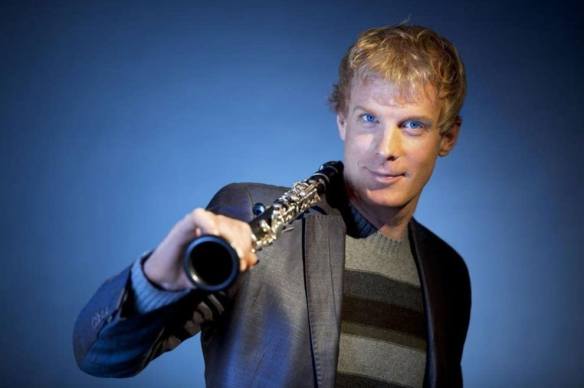
In concert – Martin Fröst & Roland Pöntinen at Wigmore Hall

Martin Fröst (clarinet), Roland Pöntinen (piano)

Wigmore Hall, Monday 16 December 2019

Review and guide by Ben Hogwood

A concert that was relatively short on music but extremely high on musicianship and virtuosity. Martin Fröst is one of the finest clarinettists at work today, and fellow-Swede Roland Pöntinen, with whom he has enjoyed a musical partnership for 25 years, is an extremely highly respected pianist either in a solo capacity or here as a chamber music ally. Both delighted their young Wigmore Hall audience – yes, that can be a thing at this venue’s concerts! – who were on their feet at the end.

The two gave us ‘French Beauties and Swedish Beasts’, a concert based on their first disc for BIS made 25 years ago. The beauties were first, in the shape of Debussy and Poulenc. The former’s Première rapsodie was written as a competition piece for the Paris Conservatoire, and later orchestrated in a form revealing its stylistic parallels with the composer’s ballet Jeux. There was a balletic feel to this interpretation too, Fröst’s languorous tone complemented by the stop-start rhythms of Pöntinen’s piano part. Initially the music was happy to indulge in its warm, lush surroundings but gradually it grew more agitated until Fröst’s final, bluesy solo.

Poulenc’s Clarinet Sonata, a late work, is dedicated to the composer Arthur Honegger and received its first performance in the hands of no less a duo than Benny Goodman and Leonard Bernstein. It is difficult to imagine a better account than here, with Fröst’s tone in the quieter and reflective passages simply sublime, layered with emotion. This was complemented by a sparky finale, where the music flew out of the gate like a horse let into an open field. The performers finished each other’s musical sentences in a performance of wit, charm and sensitivity.

The first of the ‘Swedish Beasts’ followed, a piece from Anders Hillborg written for the partnership before his breakthrough work, the Clarinet Concerto which Fröst recorded some seven years later. This was a piece of two extremes, flitting between reflective slow phrases and sharp retorts where the clarinet used the outer limits of its register. It was effective and a concentrated piece showing off Fröst’s technical prowess.

The second Swedish Beast was much more benign, but Roland Pöntinen’s own Mercury Dream showed an affinity with the blues. Nocturnal New York seemed to be its focus, especially in the easily paced piano introduction and postlude, but when Fröst joined the music became more animated.

Prior to that the pianist (above) gave us two substantial chunks from Ravel’s Miroirs. His account of Une barque sur l’océan was highly pictorial, and his Alborada del gracioso had swagger, even if some of the initial phrases were clipped. Pöntinen has not yet recorded Ravel and it would be interesting to set alongside his many BIS recordings of earlier music.

The partnership finished with Chausson’s Andante and Allegro, a discovery from the composer’s Bayreuth period in his mid-twenties, before Wagner’s spell exerted itself on his music. This was an enjoyable piece, full of melodic grace in the flowing Andante before turning slightly darker for the passionate Allegro.

We had two superb encores from the duo, playing pieces Fröst has previously given with orchestra. BrahmsHungarian Dance no.1 in G minor surged forward passionately, while Göran Fröst, the clarinettist’s brother, contributed the hugely entertaining Klezmer Dance no.2, full of good tunes and musical banter between clarinet and piano. Given the technical expertise on show, the standing ovation that followed was inevitable.

Repertoire

This concert contained the following music:

Debussy Première rapsodie (1909-10)
Poulenc Clarinet Sonata (1962)
Hillborg Tampere Raw (1991)
Ravel Miroirs: Une barque sur l’océan; Alborada del gracioso (1904-5)
Pöntinen Mercury Dream (1994)
Chausson Andante and Allegro (1881)

Encores
Brahms Hungarian Dance no.1 in G minor ()
Göran Fröst Klezmer Dance no.2

Further listening

You can hear the music from this concert on the Spotify playlist below:

You can hear the album French Beauties and Swedish Beasts in its entirety on Spotify below. Alongside the items from this concert it includes the rather wonderful Saint-Saëns Clarinet Sonata:

Meanwhile Anders Hillborg’s Clarinet Concerto Peacock Tales’ written for Fröst, can be heard in its premiere recording here:

Wigmore Mondays – Nicolas Angelich plays Bach / Busoni, Brahms & Beethoven

Nicolas Angelich (piano)

Wigmore Hall, Monday 9 December 2019 (lunchtime)

You can listen to this concert on the BBC Sounds app here (opens in a new window)

Review and guide by Ben Hogwood

A concert of the three ‘B’s, all of them greats of keyboard literature – with a fourth, Busoni, added for good measure.

J.S. Bach and Busoni make a winning combination, the Italian 20th century composer having discovered a strong affinity with his ‘ancestor’s’ work in transcribing his organ and harpsichord works for piano. These were always done in a reverent way, and the famous Advent chorale prelude Nun komm, der Heiden Heiland (Now come, Saviour of the heathens) is no exception. Nicolas Angelich ensured all was still before beginning this account, and once started he left plenty of room for musical thought and variation of tempo and phrasing. Although at times it was a little too mannered, it was a nicely gauged start to the concert.

Angelich continued without a break into Brahms 7 Fantasien, hailed by Clara Schumann as ‘a true source of enjoyment, everything, poetry, passion, rapture, intimacy, full of the most marvellous effects’. The seven pieces work well as a whole, with three Capriccios placed 1, 3 and 7 in the group, interspersed with four Intermezzi. The relatively ambiguous labels mean Brahms has plenty of freedom for expression, and beyond the Capriccios being faster and stormy, and the Intermezzi slower, intimate and experimental, there is little to confine his work.

The performances here were well-informed, Angelich having recorded these works for Virgin Classics back in 2006. The first Capriccio in D minor (9:51) exhibits power and authority, with the composer’s beloved triplet rhythms in evidence, and is complemented by the first Intermezzo in A minor (12:11), one of several moments where Brahms’ thoughts turn wholly inwards – apart from the slightly sunnier middle section. The third piece, a Capriccio in G minor (16:23) has arpeggios tumbling downwards, and has a central section anticipating the tonal area (E) of the three Intermezzi to come. These are the fourth piece in E major (19:23), full of subtle but noticeable questioning in its melody, and the longest piece of the set. It is followed by the thoughtful fifth piece in E minor (23:59) and a sixth, mostly chordal piece back in E major (26:56) which quickly moves away from its harmonic base. Finally the power and passion returns for the seventh piece, a Capriccio in D minor (30:21). Brahms again is in his favourite two-against-three rhythmic figuration, and this signs off the set in the major key with some aplomb in Angelich’s performance.

Fantasy is also a theme for Beethoven’s most famous piano work, his Moonlight Sonata. In truth this piece sits between a fantasy and a sonata (hence the composer’s subtitle, Sonata quasi fantasia), and the first movement, though static in the profile of its arpeggios, is pure and magical imagery, Beethoven intentionally or not evoking moonlight over Lake Lucerne as perceived by his friend, the poet Ludwig Rellstab.

Angelich brought the stillness of the moment to the Wigmore Hall (35:30), reflective and deep in a reverie, only rousing slightly for a Scherzo of relatively downbeat thoughts (41:35). Those sentiments were well and truly blown away by the Finale (44:12), the only one of the three movements written in true ‘sonata form’ by Beethoven. This was a terrifically played account, carefully thought through and played with feeling rather than a need for technical prowess – though that was present too.

Angelich returned to late Brahms for his encore, the Intermezzo in E flat major Op.117/1 (54:02) Another late work, this one is based on an old Scottish ballad, Lady Anne Bothwell’s Lament – and brought the mood and chronology of the concert full circle.

Repertoire

This concert contained the following music (with timings on the BBC Sounds broadcast in brackets):

J.S. Bach arr. Busoni Nun komm, der Heiden Heiland BWV 659 (c1748, arr.1898) (4:36)
Brahms 7 Fantasien Op.116 (1892) (9:51)
Beethoven Piano Sonata no.14 in C sharp minor Op.27/2 ‘Moonlight’ (1802) (35:30)
Encore: Brahms Intermezzo in E flat major Op.117/1 (1892) (54:02)

Further listening

The music from this concert can be heard in leading available versions on Spotify below. These include Angelich’s recording of the Brahms pieces, with Murray Perahia playing the Bach / Busoni and Beethoven:

Angelich can be heard in a double album of late Brahms that includes the composer’s piano pieces published as Op.117-119. They hold a unique place in the piano repertoire, written by Brahms in the knowledge that his compositional career was nearly over and looking forward to innovations by composers such as Mahler, Berg and Schoenberg:

Busoni’s transcriptions of Bach organ works repay further exploration, especially at this time of year. This album from Kun-Woo Paik brings together some of the more famous examples, including the Toccata, Adagio and Fugue:

Beethoven’s 32 Piano Sonatas remain one of the wonders of his output, but even a listen to the four published after the Moonlight sonata reveal a composer striking out for new shores. The Piano Sonata no.15 in D major Op.28, known as the Pastoral, is similarly magical – before the group of three works published as Op.31 reveal humour in the first, stormy Romanticism in the second (nicknamed The Tempest) and an openness of expression in the beautiful third. The playlist below brings together leading recordings from Emil Gilels:

Wigmore Mondays – Pavel Kolesnikov & Samson Tsoy, Colin Currie & Sam Walton: Music for pianos and percussion

Pavel Kolesnikov and Samson Tsoy (pianos), Colin Currie and Sam Walton (percussion) (pictured above in rehearsal, credit unknown)

Wigmore Hall, Monday 2 December 2019 (lunchtime)

You can listen to this concert on the BBC Sounds app here (opens in a new window)

Review and guide by Ben Hogwood

A truly memorable concert with many more instruments than performers! The Wigmore Hall stage was straining at the seams for this concert, with a daunting battery of percussion positioned behind two lidless Steinway pianos.

As BBC Radio 3 presenter Fiona Talkington confirmed, the two pianists and their percussion counterparts had only met the previous week. This is where music making can be so thrilling, for chemistry had been established and all four performers clearly enjoyed the concert experience.

That much was clear from the first, atmospheric notes of Ravel’s Rapsodie espagnole, given in an arrangement that seems to have been the composer’s own, retaining percussion parts from the orchestral original. The Prélude à la nuit (1:49 on the broadcast link below) immediately evokes the heady Mediterranean scene, laced with a background tension that was occasionally released in faster music, thrumming like an ensemble of guitars. Ravel’s orchestral concepts are easily discerned here, with the players very closely attuned. The Malagueña (6:02) is suitably enchanting, while the Habanera (8:05), with lovely detail on castanets and xylophone, wears its Carmen influences on its sleeve. Finally the dazzling Feria (10:52), brilliantly performed, wraps up our colourful Spanish sojourn with a flourish.

The percussionists then had a break while Pavel Kolesnikov and Samson Tsoy gave us a rarity in the form of Britten’s Two Lullabies. Written for a concert with South African pianist Adolph Hallis, they are barely known – but carry a number of the 22-year old composer’s musical trademarks. The first lullaby is as you would expect, gently rocking like a boat as the listener’s head nods towards sleep (19:07) but the second, Lullaby for a retired colonel (23:20), is an ‘anti-lullaby’, seemingly written to annoy its subject into wakefulness with renditions of The British Grenadiers, Men of Harlech, the Marseillaise and the Last Post. This performance caught the gracefulness and cheek respectively.

The main act, if you like, was an extraordinary performance of an extraordinary piece. Even now, 82 years on from its Swiss premiere, there are few pieces as original as Bartók’s Sonata for two pianos and percussion, one of the standout pieces of 20th century repertoire but one of the least performed in that class, due to its unusual scoring.

This performance gave us the chance to appreciate Bartók’s unique sound world, from unhinged Allegros to daringly slow night music where nobody dare move a sinew. It begins in the depths (28:10) with the ominous rumbling of timpani and cold piano octaves. This is the small cell from which the piece grows, angular lines on the piano complemented by strident timpani. As always in Bartók the music is incredibly atmospheric, and when it breaks out into the faster music (from 31:30) an almost primal energy is released. Terrific playing from all four, who had only started playing this music together the previous week – with a stunning ending in pure C major.

The second music (42:13) is a classic example of Bartók’s night music. The brushes on the snare drum bring the cooler evening air into sharp focus, with an even colder unison on piano in response. This performance brings out these incredibly descriptive aspects of the writing, each detail carefully observed and pointed until – as in many slow movements from the Hungarian composer – the ground suddenly falls away and the music tears off at a pace. Soon enough a peace of sorts is restored, though again there is an eye left open just in case.

The third and final movement is the sound of unbridled joy, heralded by a rapid shift to C major and a terrific burst of energy. The xylophone (Sam Walton in this performance) has terrific clarity in its theme, which has sardonic overtones Shostakovich would have enjoyed, while the interplay between the pianos is superbly balanced. The percussion includes a driving part for both bass drum and timpani, where Bartók uses glissando to create an evocative twang, often in quieter passages. These were superbly judged by Colin Currie. The piece ends in unexpected quiet, the purity of C major ensuring it has the ideal place to rest after considerable exertions.

A truly great performance, this, one borne of musical instinct and chemistry that found all four performers going hell for leather in the quick music but exercising the utmost restraint to bring Bartók’s vivid colours through when all was quiet. Make sure you listen to it!

Repertoire

This concert contained the following music (with timings on the BBC Sounds broadcast in brackets):

Ravel Rapsodie espagnole (1907-8) (1:49)
Britten Two Lullabies (1936) (19:07)
Bartók Sonata for two pianos and percussion (1937)

Further listening

The music from this concert can be heard in leading available versions on Spotify below:

Colin Currie and Sam Walton have recorded the Bartók previously, with pianists Cédric Tiberghien and François-Frédéric Guy. Details on that recording can be found together with soundbites at the Hyperion website:

Bartók wrote three pieces for Paul Sacher while in Switzerland – the Sonata as heard here, the remarkable Music for Strings Percussion and Celesta and the more rustic, folksy Divertimento for string orchestra. Both those pieces can be heard below as part of an album from Ádám Fischer and the Hungarian State Symphony Orchestra, which also includes the ballet suite from The Wooden Prince:

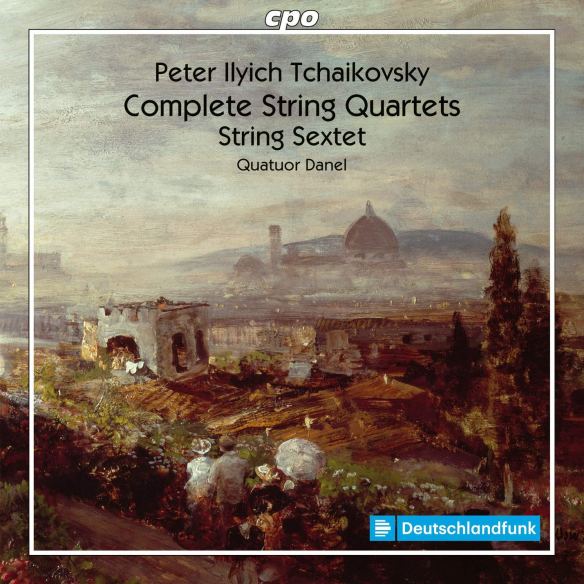
On record – Quatuor Danel: Tchaikovsky – Complete String Quartets & Souvenir de Florence (CPO)

Quatuor Danel [Marc Danel & Gilles Millet (violins), Vlad Bogdanas (viola), Yovan Markovitch (cello)], Vladimír Bukač (viola)*, Petr Prause (cello)*

Tchaikovsky
String Quartet no.1 in D major Op.11 (1871)
String Quartet no.2 in F major Op.22 (1873-4)
String Quartet movement in B flat major (1865)
String Quartet no.3 in E flat minor Op.30 (1876)
String Sextet in D minor Op.70, ‘Souvenir de Florence’ (1890)*

Written by Ben Hogwood

What’s the story?

This is a very welcome release from the Quatuor Danel. Having already given us complete cycles of Weinberg and Shostakovich – a total of 32 string quartets – they extend their reach back to Tchaikovsky and the first major quartet cycle in Russian music. There are two discs which include the three published quartets, the quartet movement and Souvenir de Florence, the composer’s String Sextet.

What’s the music like?

Following these pieces is a very interesting way of charting Tchaikovksy’s development as a composer.

The String Quartet no.1 in D major gives evidence of his major early influences, with Mozart and Mendelssohn in evidence. It also contains as its second movement the Andante cantabile, removed and arranged for string orchestra and very popular as a standalone piece for reflection.

The String Quartet no.2 in F major is weightier, with a more overtly Romantic musical language as Tchaikovsky shows more obvious emotion in his writing. The String Quartet no.3 is unusually cast in E flat minor, not a key string players regard with great affection, but one which offers very effective, dark colouring in an elegiac work.

The cycle is nicely positioned at regular intervals in the composer’s career, predated by a Quartet Movement in B flat major from the mid-1860s and capped by the String Sextet, Souvenir de Florence, from 1890, written while the composer was working in the Italian city.

Does it all work?

Yes. These are excellent performances from a quartet clearly attuned to Russian chamber music. They enjoy the graceful music with which the String Quartet no.1 starts, gliding forward with poise and elegance. As the development of the ideas gathers pace and intensity, so the quartet become more animated, convincingly driving through to the final bars. The Andante Cantabile is fresh and free of indulgence, its central dance offsetting the thoughtful main material. The Scherzo has plenty of cut and thrust, plus an enjoyable, bubbly trio, while the finale is in a similar vein but sunnier, enjoying the major key and some glorious melodies from Marc Danel’s violin.

Once fully in to gear, the String Quartet no.2 has an exuberant first movement. It is a high voltage performance, occasionally brimming over with its high spirits, but with a nicely judged and serene close. The quartet enjoy the rustic sounds of this work, particularly evident when Tchaikovsky uses open fifths in the lower parts, and they get admirable clarity from the big textures in the middle of the Andante.

The String Quartet no.3 receives a telling performance, getting right to the heart of Tchaikovsky’s thoughts. Sombre and thoughtful in its introduction, the first movement soon has admirable depth, the transition to the faster music ideally judged. The quartet relish Tchaikovsky’s fulsome writing but also the deeply soulful character of the movement’s second theme. The Scherzo is light on its feet, enjoying the exchanges from the top of the first violin to the bottom of the cello and back again, while the muted start to the third movement is particularly intense, deeply telling in its sorrowful and respectful closing pages. The finale largely shakes off these shackles but for a brief reference to the mood of the third.

As a useful postscript the Quartet Movement has a quiet and mysterious beginning, and it is not initially obvious where the work is going but then it blooms into a full structured movement, using the influence of Schubert and Mendelssohn to strong effect.

Finally a spirited account of the Souvenir de Florence, busy and upfront from the start, with plenty of energy from the six players – but with time too to enjoy both the softer second theme of the first movement and the lovely slow movement, where the cello line blooms beautifully. The shimmering central section here has plenty of drama, then the sound becomes earthy as the cello line returns. Textures are occasionally stretched in the third movement but the finale has a dramatic sense of urgency as well as a lovingly dispatched, broadly phrased second theme bringing brief parallels to the composer’s fantasy overture Romeo and Juliet. After this the sextet secure a thoroughly emphatic and affirming finish.

The big challenge with these works is getting the melodies to sing through the full textures with which Tchaikovsky writes, but the Quatuor Danel achieve the right balance throughout these excellent versions.

The elegance of the first quartet is immediately appealing, as is the red blooded cut and thrust of the second and the deeply emotive third, the best performance here. Having the Quartet Movement and an excellent account of Souvenir de Florence is the icing on the cake.

Is it recommended?

Yes. There is formidable competition in these pieces from the Borodin String Quartet, in company with Genrikh Talalyan and Mstislav Rostropovich for the Souvenir de Florence, and also from the Gabrieli and Chilingirian Quartets.

Yet despite these the Quatuor Danel offer an excellent modern alternative, with excellent performances and recording all round. It’s time for Tchaikovsky’s string quartets to come in from the cold.

Listen

Buy

You can listen to clips from the Quatuor Danel’s Tchaikovsky cycle and purchase a copy at the Presto website here