Wigmore Mondays – Richard Egarr: Keyboard music of the Tudors and Stuarts

Richard Egarr

Richard Egarr (photo Marco Borggreve)

Byrd Fantasia in A minor; Pavan and Galliard; The Bells

Purcell Suite in G major; Ground in C minor

Blow Chaconne in FaUt

Purcell Suite in G minor; Suite in D major; Ground in D minor

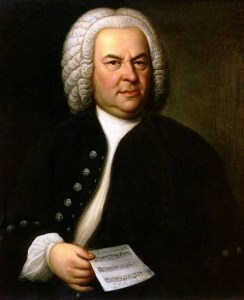
L-R William Byrd (c.1540-1623);   Henry Purcell (c.1659-1695); John Blow (1648-1708)

Listen to the BBC broadcast here

Written by Ben Hogwood

The harpsichord enjoys a rather chequered reputation in concert, and from personal experience at least among friends I can say it is one of those ‘marmite’ instruments.

Certainly it is unusual for it to have a place alone in a BBC Radio 3 Lunchtime Concert, yet here it was, with Richard Egarr beginning the 2017 part of the Wigmore Hall Monday lunchtime concert season.

In the event the BBC had chosen well, Egarr compiling a fascinating program of keyboard music from the Tudors (Byrd) and Stuarts (Purcell and Blow).

The music of Byrd, a composer for Queen Elizabeth, flows with obvious inspiration. Egarr’s selection here began with the free and at times elaborate Prelude and Fantasia (from 1:43 in the broadcast), moved on to a more stately Pavan and Galliard (from 10:54 and 14:39) from the impressive collection My Lady Neville’s Book and concluded with the descriptive The Bells (16:19), a remarkable piece of writing beginning with a single toll and working its way intricately through thrilling peals of bells.

Purcell, even now one of the greatest composers England has ever produced, appears to have written his harpsichord suites as a tuition aid, yet they are all characterised with dances fast and slow. Egarr played three suites here, the G major work (from 23:55 on the broadcast) the simplest and the G minor (from 37:07), with its brisk Corant dance, seemingly the most challenging. Most engaging, however, was the three-part D major suite (from 45:45), with its thoughtful Prelude and brief but vigorous Hornpipe.

Egarr also included two brief Grounds (pieces with a short, recurring bass line) by Purcell (27:24 and 49:31), with a third, A New Ground, as an encore (52:50). We also heard a Chaconne by Purcell’s teacher John Blow (30:18), a chirpy piece that became increasingly busy and eventful, leading to a series of grand, block chords near the end.

Egarr’s performance manner was conversational. He turned his own pages, and even gave the harpsichord itself a clap at the end, as though thanking it for staying well-tuned! His demeanour encouraged the audience to feel part of an intimate concert, and lightened some of the heavy cloud around London for the first Monday proper of 2017.

Further listening

You can listen to the music in this concert on Spotify below, with recordings from Egarr himself:

Raluca Stirbat plays Enescu at the Romanian Cultural Institute

raluca-stirbat

Raluca Stirbat (piano), above

Romanian Cultural Institute, London; Thursday 3rd November, 2016

Enescu Prélude et Scherzo (1896)

Franck Prélude, Chorale et Fugue, Op. 21 (1884)

Liszt Mephisto Waltz No. 1, S514 (1862)

Enescu Piano Sonata in D, Op. 24 No. 3 (1935)

The Enescu Concerts Season at Romanian Cultural Institute continued tonight with a recital by Raluca Stirbat, the Vienna-based pianist whose advocacy of Enescu – his residencies as well as his music – has long been central to her activities.

Enescu’s music, what she termed the ‘frames’ of his piano output, book-ended this programme – opening with the Prélude et Scherzo which is the composer’s first piano work of real consequence. A little too rhetorical and rhythmically stolid as the Prelude may be, the Scherzo’s vivid alternating between devil-may-care impetus and (in its trio) elegant repose recalls the eponymous work with which the teenage Brahms announced himself some 45 years earlier. Good, also, that these pieces were heard together, as the resulting expressive duality was to inform Enescu’s thinking thereafter.

Franck had passed on by the time Enescu arrived at the Paris Conservatoire, yet his approach to harmony and texture undoubtedly left its imprint – not least the Prélude, Chorale et Fugue with which the mature composer returned to the solo medium after several decades. Keeping its discursive manner in check, Stirbat duly pursued a secure course through the Prelude and maintained a keen textural clarity in the Chorale, before the Fugue wended its eventful course to a culmination where cyclical ingenuity and emotional fervour were bound together as one.

If Liszt is a less discernible influence on Enescu, the sheer virtuosity and lack of inhibition in much of his piano music is an audible touchstone; not least as deployed in the First Mephisto Waltz. Stirbat despatched the opening pages of this ‘dance in the village inn’ with requisite abandon, and if the central section slightly hung fire, this is arguably as much Liszt’s fault in overly delaying the transformed return of that earlier music; the latter being projected here as characterfully as were the teasing insouciance then the surging irony of its heady conclusion.

The main programme (played without pause and from memory) ended with the Piano Sonata in D which was to have formed the final part of Enescu’s Op.24 sequence had he completed its central portion. Despite advocacy from such as Dinu Lipatti and John Ogdon, the present work enjoys only infrequent revival – doubtless owing to its technical difficulty but also its singularity as music that opens ostensibly in the world of the late Baroque only to close with that of a renewed Classicism.

Stirbat had the measure of the initial Vivace’s rhythmic agility, then brought understated eloquence to the central Andante with its improvisatory variants on a motive of blithe self-effacement, before the final Allegro evinced purposeful onward drive toward an apotheosis which superimposes all the salient themes in a truly joyful outpouring.

A demanding recital, then, which Stirbat rendered with unflagging commitment and resolve. She returned for two encores: first the Baccanale from the Third Piano Suite by Constantin Silvestri, given with due physicality, and the Bourrée from Enescu’s Second Piano Suite – which, as was pointed out, is linked to the finale of the Third Sonata thematically as well as in terms of key. It made for an exhilarating conclusion to an impressive recital that reaffirmed Raluca Stirbat’s authority in the piano music of her native country’s pre-eminent composer.

Richard Whitehouse

The next event in the Enescu Concert Season is a recital by soprano Valentina Naforniţă on Friday 2nd December. More information at the Romanian Cultural Institute website

Wigmore Mondays – Marie-Elisabeth Hecker & Martin Helmchen

hecker-helmchen

Marie-Elisabeth Hecker (cello) & Martin Helmchen (piano)

J.S. Bach Viola da gamba Sonata no.3 in G minor, BWV1029 (late 1730s-early 1740s) (14 minutes)

Stravinsky Suite Italienne (arr. Piatigorsky) (1932/33) (20 minutes)

Brahms Cello Sonata no.1 in E minor Op.38 (1862-5) (23 minutes)

Listen to the BBC Radio 3 broadcast here, until 23 November

Arcana’s commentary

Pairing Bach with Brahms was a smart move for this concert.

When Bach was writing for the viola da gamba – essentially an early form of cello with no spike and sometimes five strings! – he was one of the first to recognise its potential as a treble instrument as well as a bass.

To that end the three sonatas he published for viola da gamba and ‘continuo’ – which in this case would normally mean a harpsichord. The pieces transcribe well for modern cello and piano though, as can be heard from 1:35 on the broadcast. It took a little while for Marie-Elisabeth Hecker to settle her tone and intonation in this performance, but once evened out the performance is notable for its clarity and expression at the higher end of the cello. This becomes especially obvious in the Adagio slow movement (from 7:00), which takes the form of an aria. The last movement (12:22) is like a fugue, with its question and answer phrases.

Stravinsky’s Suite Italienne comes from a period in his compositional life where he was looking back to the music of classical and baroque times, taking that music as inspiration, and remoulding it into something that sounded much more modern. For his ballet Pulcinella he took the music of Pergolesi (1710-1736) – or a contemporary, as was recently suggested – and gave it new musical clothes, with spiced-up harmonies and colourful orchestration. Several movements from Pulcinella were reworked for violin and piano to become the Suite Italienne, after which point the cellist Gregor Piatigorsky realised with a few more tweaks he could expand the repertoire of his own instrument.

This was done with Stravinsky’s approval, and the results – as you can hear from this concert – are invigorating and humourous. The nip and tuck between cello and piano is brilliantly caught in the Tarantella (29:49) but in truth all the movements carry the same levels of excitement – running through a sprightly Introduzione (17:33), Hecker’s graceful Serenata (20:00), a surprisingly vigorous Aria (23:45), a sombre and slow Minuetto that grows in stature (32:30) before leading into the vivacious Finale (34:48)

The Brahms (beginning at 39:25) is a piece that also looks back for its inspiration – to Bach, who inspires the finale (55:29) and perhaps to classical composers for the second movement minuet (50:00)

Marie-Elisabeth Hecker and Martin Helmchen give a superb and very fluent performance of this work, getting the balance between cello and the active piano part just right. The similarities between Brahms and Bach are clearest in the two composers’ use of counterpoint – that is a number of different melodies being played simultaneously or in complement to each other.

The flow of melodies in the first movement is unbroken and rather beautiful, especially when the piano briefly switches to a major key (42:13) Elsewhere the mood is darkly passionate and powerfully played.

The Minuet has an attractive poise, enjoying the relative mystery of its central section (from 51:43) while the finale has a steely sound to its theme from the piano (55:29) and the cello’s response (55:37) – all set out as a fugue, developing considerable momentum through to the end, which is straight faced but roundly optimistic at the same time.

This was a brilliantly played account of the Brahms, ideally balanced and communicating the composer’s rich abundance of melodies.

Further listening

The Spotify playlist below – Looking back to move forward – examines more of Brahms and Stravinsky’s use of techniques of the past to shape their own music of the future. You can also hear Marie-Elisabeth Hecker and Martin Helmchen in their new disc of the Brahms Cello Sonatas.

by Ben Hogwood

The Genesis of Minerva: Schumann and the Young Brahms – Minverva Piano Trio

minerva-piano-trio

Minerva Piano Trio (above): Michal Cwizewicz (violin), Richard Birchall (cello), Annie Yim (piano)

St John’s Smith Square, London; Sunday 23rd October, 2016

Schumann Piano Trio No.1 in D minor Op.63 (1847)

Birchall Contours (2014)

Brahms Piano Trio No. 1 in B, Op. 8a (original 1854 version)

A season-long residency as Young Artists at St John’s is enabling the Minerva Piano Trio to schedule several worthwhile recitals. None fitted the bill more than this afternoon’s programme, culminating in a rare revival for the First Piano Trio of Brahms as heard in its original version.

Completed when he was barely into his twenties, this is the only work from the outset of Brahms’s maturity to have survived essentially as it was conceived. That the composer substantially re-wrote it in 1889 (after his temporary ‘retirement’ from composition) but allowed the versions to co-exist suggests that, dissatisfied though he may have become with them, he was unable to suppress those earlier thoughts. One does not look to the 1854 version for formal unity or finesse, but it certainly has the edge in terms of expression and tonal cohesion.

The opening Allegro is as much about charting an emotional course through its constituent themes than fashioning them into a logical argument, yet such is the imaginative resource with which Brahms elaborates his material that the movement as it evolves becomes its own justification. The Minerva audibly appreciated this with playing as perceptive as the music required, then was equally inside the Scherzo with its alternately brusque and elegant ideas – and an intriguingly fugitive ending that the revision streamlines into something less arresting.

With its multiple allusions to the then nascent Lieder tradition, the Adagio casts a magnetic if unsettling spell and the Minerva accordingly brought out its exquisite ambiguity in full measure. No less impressive was a Finale which, irrespective of how convincing – or otherwise – is its reworking (and Clara Schumann’s strictures cannot be lightly dismissed), the audacious homecoming in B minor is here suffused with inevitability such as the older and wiser Brahms was unable to achieve by modulatory means alone: a QED in every sense.

A commanding performance, then, and the Minerva had been hardly less inside the idiom of Schumann’s own First Piano Trio at the start of this recital. Whether or not the emergence of his wife Clara’s masterly work for the medium just a year before was indeed the catalyst, the present piece harnesses those sombre hues often to the fore in Schumann’s later music with a textural translucency which never spills over into opacity. This, at least, was the impression left by a reading that plotted a resolute course through the discursive design of the opening movement then clarified the scherzo’s rhythmic intricacy without sacrificing its poise. The plangent ‘song without words’ that follows was seamlessly dovetailed into the finale, which unfolded with no lack of incident on its way to a decisive while tenuously affirmative close.

Coming between these expansive staples of the repertoire, Contours by the Minerva’s cellist Richard Birchall proved a diverting entity – its four brief movements amounting to a discreet unity that, with its evocative Nocturne and engaging Fast Waltz, confirmed a real grasp of this difficult medium. There was further music at the close – when, in response to generous applause, the Minerva gave an easeful reading of the Andante from Clara Schumann’s Piano Trio in G minor. An eloquent conclusion to an impressive recital by an ensemble which is clearly going places.

Richard Whitehouse

The Minerva Piano Trio returns to St John’s for further concerts on 9th March and 1st June 2017. Further information can be found at the St John’s website. You can hear more of the trio below:

Wigmore Mondays – Nelson Goerner plays Debussy & Chopin

nelson-goerner

Nelson Goerner (piano) © Jean-Baptiste Millot

Chopin Polonaise in F# minor Op.44 (1841) (11 minutes)

2 Nocturnes Op.62 (1846) (12 minutes)

Polonaise in A flat major Op.53 (1842-3) (7 minutes)

Listen to the BBC Radio 3 broadcast here, until 23 November

Arcana’s commentary

For both Chopin and Debussy the piano became arguably their primary means of musical expression. Both used relatively traditional forms – studies, preludes for instance – but stretched them from conventional structures to suit their own means.

Here we heard seven of the twelve Préludes Debussy wrote as a book, the first of two, published in 1909 and 1910. These are character pieces where he was painting a picture or an impression, without always specifying his exact stimulus. Some were more obvious; others were left to the player for interpretation.

Nelson Goerner made each of these his own. The languid, humid atmosphere of Danseuses de Delphes (1:32 on the broadcast), with control and shading, set the scene and led to an enjoyable and mysterious La serenade interrompue (4:35). This was playful but wary too – dancing but not wanting to fully let itself go.

The ‘underwater rolling of pebbles’ from Verlaine’s poem could be sensed in Le vent dans la plaine (7:00), while the simplicity of La fille aux cheveux de lin (9:09) was rather moving. La danse de Puck (11:24) could have found the Midsummer Night’s Dream character in a more playful mood perhaps, while the thick atmospherics of Les sons et les parfums tournent dans l’air du soir (14:02) hung heavy on the air. Finally Les collines d’Anacapri (17:58) danced and shimmered, controlled but letting itself run wild too. The last four high notes were hammered out convincingly (20:37)

Goerner’s Chopin was rather different. The first of the Polonaises (22:14) was Chopin’s most ambitious work to use the dance form, using a Polonaise in its outer sections but a Mazurka in the middle (from 26:56). This central section had more charm but the outer sections were stern, almost obsessive – and brilliantly played. Their return after the Mazurka (30:05) was like two bolts of lightning, the mood almost that of a Tango from Goerner’s native Argentina.

The Nocturnes (33:40) and (40:12) could have done with a bit more air and relaxation; Goerner seemed rather anxious to push on with them. That said the trills of the first (from 37:55) were expertly managed, while the second was really nicely pointed.

The Polonaise (45:53) was heroic indeed, strutting its stuff but frequently dazzling, especially in Goerner’s white hot ostinato (49:02)

There was an encore to finish, an Impromptu of poise and grace (53:48), more of a Nocturne than the other two arguably.

Further listening

There is something rather special about Polish piano music – and to continue from the Chopin the Spotify playlist below offers up some lesser-heard treats in the form of piano concertos by Paderewski and Moszkowski, prefaced by a sprinkling of exotic Mazurkas from Szymanowski.

by Ben Hogwood