Stephen Kovacevich 75th birthday concert with Martha Argerich

kovacevich

Stephen Kovacevich 75th birthday concert, Wigmore Hall, London Monday 2 November

How to review a concert where two genuine piano legends quite literally collide on stage? Well since this was a celebration, it seems only right to celebrate the main protagonist first.

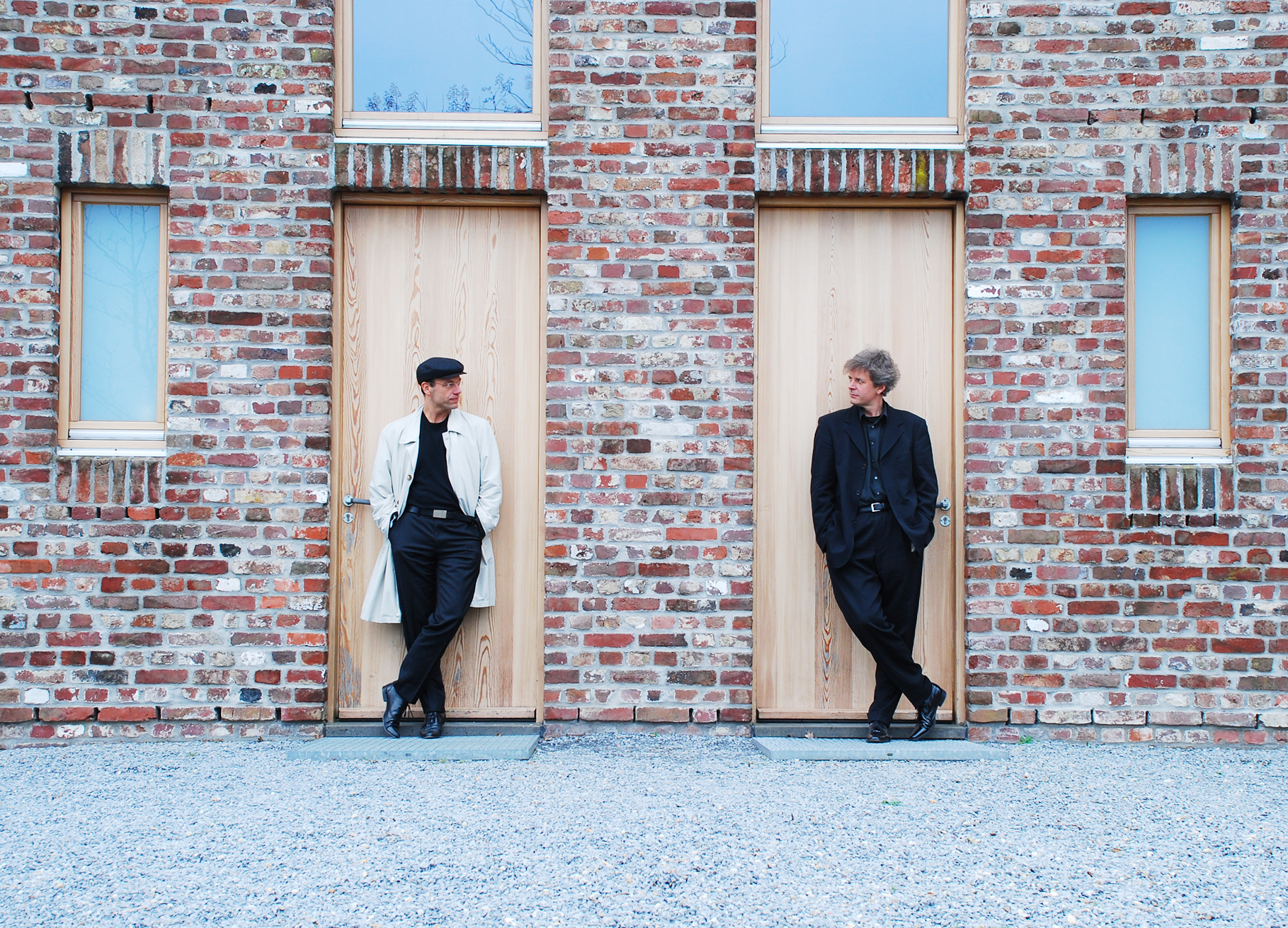
Stephen Kovacevich, who has recently celebrated his 75th birthday, was honoured with this concert by the Wigmore Hall, where he made his debut over fifty years ago. He chose to include two-piano works with Martha Argerich, herself a celebrated pianist whose public appearances, if on occasion irregular, are as greatly revered as ever – and with whom he has a daughter. For the two to be together in a musical sense, performing relatively unfamiliar repertoire – for the birthday boy at least – made an opportunity too good to miss.

It was perhaps just a bridge too far in the case of Debussy’s En blanc et noir, however. Not because the performance was bad, but because the necessarily short rehearsal time meant the use of two page turners. This unfortunately relegated the modest Kovacevich to the back of the stage, rendering him only partly visible. The musical chemistry was pronounced between the two, especially in the second movement where Debussy hauntingly evokes the sounds of First World War bugle calls and gunfire against the slow, stately movement of a Bach chorale, which Argerich solemnly intoned. Yet the outer movements were tense, partly because of page turning quirks (no fault of the turners themselves) and the sense of two players not yet fully in gear.

They were emphatically in the zone for Rachmaninov’s Symphonic Dances, a terrific performance of the two-piano arrangement by the composer who is currently Kovacevich’s first love. The first movement punched at a considerable weight, with sharp ensemble and crisp rhythms, the speed a little slower than orchestras tend to take. Kovacevich himself clearly enjoyed the great second theme, usually assigned to the saxophone but beautifully phrased here.

The second movement was similarly fine, Argerich closely watching her partner, who was now nearest to the audience. This was his first public performance of a piece she has been performing for decades with friends, so it was natural she would want to ‘drive’ – but Kovacevich was very much her equal here and in the last dance, where rhythmic precision was key, they cut through the complexity of Rachmaninov’s writing to secure a powerful finish.

The second half of the concert immediately felt more relaxed, without the tension of page turning or multiple pianos to worry about. Instead Kovacevich gave from memory a lovely performance of Schubert’s final Piano Sonata in B flat, D960, one that flew in the face of the approach many pianists bring to this work. Rather than make it a final dying breath, he seemed to be saying this was music with plenty of life still to give. He made it so with faster tempo choices, a lack of repeats and phrasing that was at times unfussy but always affectionate.

Because of this the fabled slow movement was lovely, like a slow motion dance of contentment, coming after the first movement and its serenity – compromised by the rumblings of the lower left hand, though here they did not present too much threat. Kovacevich was keen to press on, each movement running into the next, and while there were a couple of choppy moments in the third movement, the intensity never let up. The feeling was of each of us being allowed into his own private recital room.

For an encore there was more Rachmaninov, Kovacevich beckoning the violinist Alina Ibragimova to join him from the audience for the Vocalise. This was a special moment, the pianist still discovering new music to perform even in his 76th year. He has made an incredibly good recovery from the stroke that threatened to end his career a few years back, and his disposition on stage is inspiring – modest but also affectionate. He is a musical treasure we should continue to nurture.

Wigmore Mondays – Alexei Ogrintchouk and friends play music for oboe and string trio

Picalexei-ogrintchouk

Picture used courtesy of the BBC

Alexei Ogrintchouk (oboe), Boris Brovtsyn (violin), Maxim Rysanov (viola) and Kristina Blaumane (cello) – Wigmore Hall, London, live on BBC Radio 3, 12 October 2015

Listening link (open in a new window):

http://www.bbc.co.uk/programmes/b06hjxlv

on the iPlayer until 18 November

Spotify

In case you cannot hear the broadcast, here is a Spotify playlist of the music in this concert, from available versions on Spotify. Alexei Ogrintchouk has recorded the Mozart, while available versions of the Haydn, Britten and Schubert pieces are also included.

What’s the music?

Attributed to Haydn: Divertissement in B flat, HII:B4 (not known) (10 minutes)

Britten: Phantasy Quartet, Op 2 (1932) (13 minutes)

Schubert: String Trio in B flat, D471 (1816) (8 minutes)

Mozart: Oboe Quartet in F, K370 (1781) (14 minutes)

What about the music?

Often in chamber music the strings get a lot of the glory, so it is good to report on a concert where the oboe is invited to take centre stage. The instrument is on occasion associated with sad music (Midsomer Murders use it a lot!) and it is perfect for autumnal listening, but it should be remembered that the oboe is also responsible for a lot of happy music too, as Mozart’s Oboe Quartet testifies.

This piece is a beauty, seemingly free of any constraints in its outer fast movements, while the inner slow movement is short yet poignant, set in the minor key. Mozart wrote it for the virtuoso Friedrich Ramm, and composed the oboe line to sit above that of the violin, thus using the higher register of the instrument a lot.

Britten uses a wider range of colour in his Phantasy, written as a competition piece when he was at the Royal College of Music. Thanks partly to the advocacy of the legendary oboist Leon Goossens, but also to his musical craft, the piece won its competition in Paris. Set over nearly 15 minutes, it has a dramatic profile, beginning as a march that seems to process in from nothing – started by the cello – until the sweep of lyrical oboe and punchy strings together is striking.

The first piece in the concert is a two movement Divertissement attributed to Haydn but, it is not wholly certain who actually wrote it. To my slightly untrained ears it sounds like it could be earlier than Haydn, but regardless of who the composer is the music is polite and attractive, the four instruments set in close dialogue.

Schubert’s single movement for String Trio is in the same key – B flat major – and has a similar profile, though does make the most of a striking descending motif throughout. Originally Schubert wanted this to be the first movement of a bigger piece, but after sketching some bars of the slow movement he stopped writing.

Performance verdict

Over the last few years Alexei Ogrintchouk has developed from a very promising musician to an oboist right at the top of his game – and that was evident throughout a highly enjoyable concert.

The peak was undoubtedly reached in the Mozart, where he met the virtuosic demands of the piece head on but without losing the airy, lyrical approach that makes the Oboe Quartet such a charmer. The performance of the Britten dug in much more firmly, the strings encouraged to project outwards, and this they did with impressive power when the march took hold. Britten’s genius in working with small forms was evident even at this point, and not a note was wasted in the performance.

Both the Haydn and Schubert performances charmed, the Schubert nicely placed so that the strings had a brief moment in the sun – which they enjoyed, with lightness and dexterity, clearly listening to each other.

What should I listen out for?

Attrib.Haydn

2:01 – this light hearted piece begins with an oboe-led melody, while the cello supplies a chugging pulse. The music is polite and attractive. At 5:13 a central section begins, based on the melody from the start.

7:50 – a slightly slower second movement, a courtly dance – in the form of a rondo, which essentially means the same theme recurs at regular intervals. The violin and viola assume greater importance in this movement. The theme itself makes a final appearance at 11:02.

Britten

14:25 – the beginning is almost imperceptible, a little phrase from the cello which is gradually joined by the other two stringed instruments. When the oboe joins at 15:07 the tone is songful, though the spiky accompaniment continues, leaving some tension until a firm statement of the main tune at 16:12. Then a different section takes over, with heavier string writing.

20:25 – the writing now has a softer, hazy hue, as the strings enjoy a slower and more obviously lyrical section. At 22:30 a higher melody from the oboe floats above the texture.

24:52 – the main march idea makes a reappearance, striding forward purposefully – until the music fades, as though it were walking over the horizon and out of earshot.

You can read more about the Britten Phantasy on a blog entry I made two years ago here

Schubert

29:52 – the Schubert String Trio, set in one movement, begins with an attractive melody led by the violin. There is a distinctive downward sweep that is heard from 30:40, and which becomes an important part of the piece. The three instruments stay closely aligned throughout. After developing his main tune, Schubert restates it at 35:22.

Mozart

40:04 – the oboe is already high in its register when the distinctive tune of the first movement is heard, top of an extremely light texture. The strings are busy in their accompaniment. Mozart then proceeds to manipulate his memorable tune through different methods of presentation, until a slight lull at 43:53 – and the return of the main tune at 44:57.

46:44 – A slight shadow falls over the music for the second movement Adagio, where the strings are softer and the oboe a little mournful if still beautiful in its first melody. At around 48:57 the oboe is left exposed in a kind of cadenza, leading up to the thoughtful end.

49:57 – once again the brightness in this music is evident as a light hearted theme sways between oboe and strings. The oboe enjoys the recurrences of its tune, with Mozart subtly varying the accompaniment each time before finishing on the high ‘F’ of the oboe at 54:00.

Further listening

If you enjoyed the sound of the oboe, then a logical next step is a couple of orchestral pieces, added to the bottom of the playlist, that use the instrument to its fullest capabilities:

First of all is Ravel’s subtle but gorgeous Le tombeau de Couperin, the oboe taking up the first theme in the Prélude and also enjoying prominence in the slow Menuet.

Then we have Vaughan Williams’ beautiful, autumnal Oboe Concerto, heard here in a new recording from the oboist Nicholas Daniel. The wistful quality perhaps gives away the fact this piece was written in the Second World War. Daniel’s disc is reviewed on Arcana here

GrauSchumacher Piano Duo at the Wigmore Hall

GrauSchumacherPianoDuo
GrauSchumacher Piano Duo

Richard Whitehouse on the UK premiere of a substantial new work from Philippe Manoury, along with homages to J.S. Bach from Busoni and Kurtág
Wigmore Hall, London Monday 19 October

J.S. Bach (arr. Kurtág): Gottes Zeit ist die allerbeste Zeit, BWV106 – Sonatina; Alle Menschen müssen sterben, BWV643; Aus tiefer Not schrei ich zu dir, BWV687 (various)

Busoni: Fantasia contrappuntistica, BWV256b (1920, arranged for two pianos in 1921)

Manoury: Le Temps, mode d’emploi (2014) [UK premiere]

Andreas Grau and Götz Schumacher (piano duo)

The GrauSchumacher Duo – comprising pianists Andreas Grau and Götz Schumacher – follows in a distinguished lineage of such partnerships (among them Alphons and Aloys Kontarsky, or Bracha Eden and Alexander Tamir), but at least in the UK is known primarily through its substantial discography (notably for the enterprising NEOS label) than for its live performances. All credit, then, to Wigmore Hall for scheduling this recital as part of its focus on contemporary music, and which featured the first British hearing for a major new work.

Now in his early sixties, Philippe Manoury is well established among his peers in Western Europe while enjoying occasional UK performances (his large-scale orchestral and choral piece Zeitlauf caused something of a stir in London three decades ago). Live electronics has been a constant presence in his music, and Le Temps, mode d’emploi is no exception. Lasting around 50 minutes, this falls into eight continuous sections in which the consciously-applied virtuosity of the pianists is underpinned by electronics in terms of spatial diffusion and textural stratification. At the same time, the music audibly evolves in terms of its salient motifs dispersed across the sound spectrum and that merge into an accumulation of activity exceeded only by the plethora of echoes heard towards the close. Cohesive, then, while also overly uniform in sonic profile (is it surprising that electronically treated piano timbre seems to have moved on only incrementally since Stockhausen’s Mantra half a century ago?), with the actual material rather less memorable than those processes to which it is being subjected.

What was undeniable was the alacrity with which GrauSchumacher tackled this epic among piano duos, or the clarity with which those from Experimental Studio of South-West German Radio projected the complex sound transformations throughout the fabled Wigmore acoustic.

Before the interval came a welcome hearing for Busoni’s Fantasia contrappuntistica – a half-hour fantasy on, around and about Bach that began as a completion of his 14th contrapunctus from The Art of Fugue in 1910, soon to assume its definitive guise before being arranged for two pianos in 1921. This account pointed up the interplay of stark declamation and limpid passagework characterizing the initial chorale-variations, the increasing textural intricacy of the initial three fugues, then the tensile unfolding of the intermezzo with its three variations – leading, via a terse cadenza, to a climactic fourth fugue which was slightly underwhelming here, but the performance quickly regained focus for a haunting recollection of the chorale followed by the stretta (a concluding passage played at a faster tempo) that steers this piece through to its brief though magisterial conclusion.

An impressive reading overall, that gained from its having been placed in context with three Bach transcriptions by György Kurtág. Anyone present at one of the latter’s intimate recitals of these pieces with his wife may have found GrauSchumacher a touch too literal in overall execution, yet the sonatina from Bach’s Actus tragicus and the two chorale-preludes which followed evinced no lack of poise or elegance. Easy to overlook given what was to come, perhaps, while at the same time being telling instances of the maxim that ‘less is more’.

Wigmore Mondays – Sol Gabetta and Polina Leschenko play Rachmaninov

sol-gabetta

Sol Gabetta (cello), Polina Leschenko (piano) – Wigmore Hall, London, live on BBC Radio 3, 12 October 2015

Listening link (open in a new window):

http://www.bbc.co.uk/programmes/b06gqgpr

on the iPlayer until 11 November

Spotify

In case you cannot hear the broadcast, here is a Spotify playlist of the music in this concert, from available versions on Spotify. Sol Gabetta has recorded all of these pieces, with the pianists Bertrand Chamayou (Chopin) and Olga Kern (Rachmaninov), and, in the case of the Tchaikovsky, in an orchestral version with the Prague Philharmonic Orchestra conducted by Charles Olivieri-Monroe.

What’s the music?

Chopin: Introduction and Polonaise brillante, Op.3 (1829) (8 minutes)

Tchaikovsky: Lensky’s Aria (1879) (6 minutes)

Rachmaninov: Cello Sonata, Op.19 (1901) (34 minutes)

What about the music?

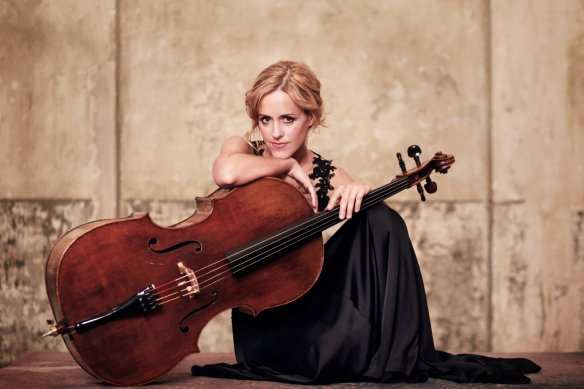
There is something about music for cello and piano from Eastern Europe that communicates directly with lovers of classical music, and in particular smaller scale chamber music. This may be because the cello’s range is like that of a vocalist, which becomes very clear in the arrangement of Lensky’s Aria that Sol Gabetta and Polina Leschenko play here. The cello has a way of portraying the solemn contemplation that Lensky goes through before his duel and inevitable death at the hands of Eugene Onegin.

On a far more cheerful note are the works by Chopin and Rachmaninov. Chopin wrote very little music where the piano was not the starring instrument, and even in this Introduction and Polonaise brillante the piano part is challenging to say the least! Chopin did love writing for the cello though, and showed in this late student piece how his melodic style became very well suited to the instrument. Later in his life he completed a substantial sonata for cello and piano.

The Rachmaninov Sonata is one of the big Romantic works for cello and piano, with a piano part whose difficulty is comparable to that of the piano concertos – and interestingly the composer had only just completed his famous Second Piano Concerto when he got to work on this piece. It is full of big tunes and bold musical statements but has a tender heart too, which we get to see in the third movement Andante. The finale is one of sheer jubilation, the composer moving from the earlier, stormy music of the minor key to bask in the full sunshine of the major key – with a good melody never far from the cello throughout.

Performance verdict

This was a technically spectacular concert from two performers clearly at the top of their game, and thoroughly enjoying their music making.

The Chopin was a delight, all the youthful vigour captured in Polina Leschenko’s grand introduction, with its impressive pyrotechnics in the right hand. Meanwhile Gabetta’s tone was particularly beautiful, an aspect common to the pair’s performance of Lensky’s Aria, the arrangement – apparently completed by cellist Werner Thomas-Mifune – making a seamless transition to the instrument.

The Rachmaninov Sonata was a tour de force, the piano if anything dominating a performance rich in romantic feeling but also keen to impose itself through challenging and fast speeds. This did on occasion become too much and some of the phrases were constricted, especially in the second movement Scherzo, which hurried forward as though late for an urgent appointment, and some of the detail was lost – a shame, as despite its big statements, this piece does have some lovely detail.

The slow movement Andante was lovely, Gabetta’s tone and phrasing ideal, her knack of holding back on some of the phrases just right. The finale resembled pealing bells at times, its sheer exuberance proving irresistible, and here the performance had what felt like exactly the right tempo, pausing for breath half way through.

Even allowing for those slight gripes though, this was an extremely impressive, high voltage performance from two musicians clearly enjoying their craft.

What should I listen out for?

Chopin

1:35 – a grand introduction from the piano, showing off the youthful composer’s impetuosity. The cello, however, is perhaps closer to his heart with a songful and broadly phrased melody above.

4:12 – the Polonaise itself begins, with a distinctive rhythm that speeds up as the three beats in the bar go on (from 1 crotchet to 2 quavers to 4 semi-quavers, for the musos amongst us!). It takes the profile of a florid march, and is passionate and extrovert. The piano leads the rhythm, with power and a little charm, while the cello provides the songful melody. The end, when it comes, is vigorous and like a drink fizzing over.

Tchaikovsky

11:27 – a solemn mood is immediately evident from the pensive piano introduction, with Lensky awaiting his duel with Onegin. The cello picks up on this, reproducing the tenor line with a feeling of imminent dread, especially when the end approaches at 16:58.

Rachmaninov

17:56 – the sonata begins with a tentative slow introduction (marked Lento), as though testing the water, but feels on much firmer ground when the faster Allegro moderato begins at 18:55.

19:58 – the second theme of the first movement, first heard on the piano. This is classic Rachmaninov, combining Romantic thoughts with a melancholic undertone. Then from 21:23 the pair repeat the faster section before an intense development of the main material, the cello now playing lower in its register and the piano taking a hard hitting approach

26:53 – the piano now brings out the second theme in the ‘home’ key, where it retains its original melancholic quality, before the music gathers itself for a final big statement, finishing at 29:21.

29:34 – the Scherzo second movement begins at quite a fearsome tempo, led by the piano. Here the emphasis is much more rhythmic, though there is a distinctive six-note figure that dominates the movement. At 30:16 we hear a second theme, more songlike in nature.

31:29 – the contrasting ‘Trio’ section of the second movement, much smoother in nature. Then at 33:19 the stormy clouds of the Scherzo approach once again, with even greater force this time. The end, at 35:34, is beautifully done – quiet but atmospheric.

35:46 – the slow movement begins, marked Andante (at a walking pace). The piano introduces the tune, which is once again a deeply felt melody of contemplation. The cello takes it up at 36:34, and the theme proceeds to dominate the whole movement.

41:30 – the fourth and final movement bursts out the blocks. The key has switched from G minor, the sonata’s overall key, to G major – and the mood is completely contrary to the previous movement, full of jubilation. The music gets particularly stormy around 44:30, with cello and piano making particularly passionate statements.

A slower, quieter episode gives brief pause for reflection before a restatement of the last movement’s main theme at 46:59. At 49:44 the slower music returns, beautifully shaded by the performers, before the helter-skelter closing pages wrap up the piece from 50:52.

Encore

53:33 – the fourth and last movement of Shostakovich’s Cello Sonata. The composer’s spiky approach to this music is stressed in an interpretation that almost spills over into violence at times!

Further listening

The combination of cello and piano was one that 19th century composers loved to use – fuelled no doubt by Beethoven’s success in bringing the instruments forward as equal partners.

One of the most successful composers writing for cello and piano was Brahms – so here is a link to the powerhouse combination of Mstislav Rostropovich and Rudolf Serkin playing his two sonatas for the combination, both of which are known as repertoire staples:

Perhaps less well known but equally glorious are the two cello sonatas by Mendelssohn, also rich in melody and deep feeling. Here they are played by Jan Vögler and Louis Lortie:

Finally Chopin went on to write a Sonata for cello and piano, one that is perhaps best heard in a recording by Johannes Moser and Ewa Kupiec. The companion piece on the disc is the Piano Trio:

Wigmore Mondays – Marwood, Power and Crawford-Phillips play Brahms

Anthony Marwood (violin), Lawrence Power (viola) and Simon Crawford-Phillips (piano) perform music by Rebecca Clarke, Martinů and Brahms

Wigmore Hall, London, live on BBC Radio 3, 28 September 2015

Listening link (open in a new window):

http://www.bbc.co.uk/programmes/b06dbdk3

on the iPlayer until 27 October

Spotify

In case you cannot hear the broadcast, here is a Spotify playlist of the music in this concert, from available versions on Spotify. The Horn Trio is very rarely heard in the version for violin, viola and piano, but a recent recording from Maxim Rysanov and friends is included:

What’s the music?

Rebecca Clarke: Dumka for Violin, Viola and Piano (1941) (8 minutes)

Martinů: Three Madrigals for Violin and Viola (1947) (16 minutes)

Brahms: Trio for Violin, Viola and Piano (1884) (28 minutes)

What about the music?

rebecca-clarke

The music of Rebecca Clarke has taken a long while to reach our concert halls, but thankfully it is not the rarity it once was. A viola player of some distinction, she wrote a wonderful competition-winning Sonata for viola and piano in 1919. This Dumka comes towards the end of her career as a composer, though she lived for nearly 40 more years without consistent inspiration to compose. The piece alternates slow, melancholic figures with an attractive and dramatic dance.

Like Clarke, Czech composer Bohuslav Martinů had relocated to New York, and his Three Madrigals for violin and viola, essentially a late wartime work, were inspired by hearing the English Singers in concert in Prague. They were written for the brother and sister duo of Joseph and Lilian Fuchs. Though instrumental the pieces are clearly written with voices in mind, and through clever use of double stopping techniques (where the instruments play more than one string at once) it often feels as though more instruments are in the room.

Brahms wrote his Horn Trio, for horn, violin and piano, in memory of his recently-departed mother. A profound work, it contains a passionate and often stormy pair of slow movement, placed first and third, and two faster movements – a triple time Scherzo of more lyrical design and then a finale tailor made for the horn, sending the audience away with a vision of adversity conquered by strength.

Performance verdict

This was a very well-chosen program by the three friends, and it was especially rewarding to hear the music of Rebecca Clarke, a composer who is gradually feeling her way back to the exposure she deserves.

The Dumka performance was deeply felt, the slower music elegiac in tone through Marwood and Power’s closer harmonies.

These two excelled in Martinů’s Three Madrigals, which were surprisingly vigorous in content. The central madrigal was the charmer, its trills like autumn leaves in the breeze, calm but yet strangely restless.

The Brahms is an emotional work that tugs at the heart strings in the third movement Adagio, where the trio found the depth of the composer’s feeling. Yet the horn, for which this piece was ultimately written, was conspicuous by its absence and the viola – nicely played as it was by Lawrence Power – could not hope to fully deputise. Without the horn the fast music felt too polite, with no brassy rasp to enjoy in the Scherzo, nor fullness of tone towards the climax of the first movement. The finale was too fast, and although it is great ‘chase music’ this was a helter-skelter dash, the strings skating swiftly over thin ice rather than ducking and diving.

What should I listen out for?

Rebecca Clarke

2:13 – the stringed instruments are in close unison at the start, with a gentle melancholy running through their musical thoughts.

4:03 – the pace quickens and now the music dances, the stringed parts moving more independently of each other but still in close musical discussion. Their destination is less certain, as though dancing around the room unpredictably, and the mood becomes fractious.

7:58 – after the music reaches an emotional high – though not wholly positive – we return to the relative calm of the opening music, violin and viola back in close harmony.

Martinů

13:10 – the first madrigal is typical of Martinů, bustling into action with busy figurations from both instruments. There is energy aplenty, and it sounds as though both instruments are engaged in deep and earnest conversation. Martinů throws in some unexpected harmonic diversions to keep the listener on their toes. There is no let up, the music rushing towards a bright conclusion at 17:03.

17:27 – a complete change of mood for the second madrigal, a mysterious and enchanting piece that often sounds like the rustle of wind in branches. Martinů uses double stopping and trills here to give a fuller sound. Gradually the music becomes more positive and full in texture, Martinů working around to the same key of the first madrigal. The close harmony mirrors the brother-sister relationship of the dedicatees. The trills return at the end but are now settled.

23:51 – the third and final madrigal, an open-air burst of positivity! Again the music is busy, and here as elsewhere Martinů seems to be thinking of the dances of his home country. The trills return briefly at 27:41, before Martinů launches back into his main idea. In this performance the tempo is quick!

Brahms

32:33 – the first movement begins, marked Andante (at a walking pace). This is a slow walk at the beginning, with serious thoughts at a subdued volume. Soon the music becomes more animated, supported by a characteristically full-bodied and flowing piano part. In this version the violin and viola are close in harmony and dynamic; when the horn is involved it takes a greater lead. At 36:14 the viola introduces a halting second idea.

Around 37:00 the tone darkens, anticipating the sombre mood of the third movement, but this does not last too long – and at 39:02 Brahms can be heard at his most passionate before the movement ends.

40:09 – the second movement, a Scherzo. The restless piano establishes the triple time while the strings pull against the rhythm with syncopations – all typical Brahms qualities. The theme appears again at 41:41, then receives a stern development. At 42:45 Brahms effects a transition into the Trio section, which is slower, darker and reflective – and then at 44:26 the Scherzo returns.

47:29 – the mood darkens considerably for one of Brahms’s most profound utterances. This is the only instance in his music where Brahms uses the term Adagio mesto (slow and sad), and the heavy tread of the piano, and the instance at 49:19 where the stringed instruments are alone, are both instances that tell of the grief felt at losing his mother. It is not all doom and gloom however, for there are shafts of light at 52:08 – before the heavy heart is laid bare again towards the end.

54:26 – in which Brahms swiftly clears away his grief to write a wonderfully positive finale with a spring in its step, the three instruments seemingly chasing each other in flight. Nothing more to be said, except enjoy the wonderful music!

Further listening

There are not many opportunities to hear horn, violin and piano together – and since that combination is the original trio Brahms wrote for, the recommendation is for that version in a recording made for the Swedish record company BIS, by Marie-Luise Neunecker, Antje Weithaas and Silke Avenhaus.

Also on that recording is the trio for the same combination by Ligeti, which makes a vivid and intriguing contrast – titled as it is Hommage a Brahms: