Tasmin Little and Martin Roscoe at the Wigmore Hall – A fitting tribute

Tasmin Little and Martin Roscoe at the Wigmore Hall – A fitting tribute

tasmin-little-martin-roscoe

Tasmin Little (violin), Martin Roscoe (piano) – Wigmore Hall, London, live on BBC Radio 3, 1 June 2015

Listening link (opens in a new window):

http://www.bbc.co.uk/programmes/b05wytj1

on the iPlayer until 30 June

Spotify

In case you cannot hear the broadcast, I have put together a Spotify playlist of most of the music in this concert, including recordings the artists have made where possible. The playlist can be found here

What’s the music?

Brahms: Scherzo from the ‘FAE Sonata’ (1853) (6 minutes)

Dvořák: 4 Romantic Pieces, Op.75 (1887) (13 minutes)

Franck: Violin Sonata (1886) (28 minutes)

What about the music?

A well-chosen program of music for violin and piano, drawn from the period in the late nineteenth century known as ‘Romantic’. Yet as well as being from that period it is Romantic in nature.

Brahms wrote three substantial sonatas for violin and piano, each of them admired, and he also wrote a sonata in collaboration with Robert Schumann and his pupil Albert Dietrich. It was a gift to their friend Joseph Joachim, himself a composer and also a virtuoso violinist who was to inspire many more works from Brahms, Schumann and Dvořák among others.

The 4 Romantic Pieces of Dvořák were not written for Joachim, and are not greatly demanding technically – but are a perfect illustration of just how tuneful the composer’s music can be, and how through great simplicity he could write music of great expression. There is charm and wit in abundance here, music that seems to celebrate the great outdoors.

The Violin Sonata by Belgian-born French citizen César Franck is one of the chamber music masterpieces of the nineteenth century. Treating the two instruments very much as equals, it is memorable firstly for its dreamy first movement theme, which creeps in like a summer breeze, then for the darkly passionate movement that follows it. After the freedom of the third movement Franck plays his trump card, a ‘canon’ – that is, where violin and piano play the same melody but a little distance apart. This one is a beauty.
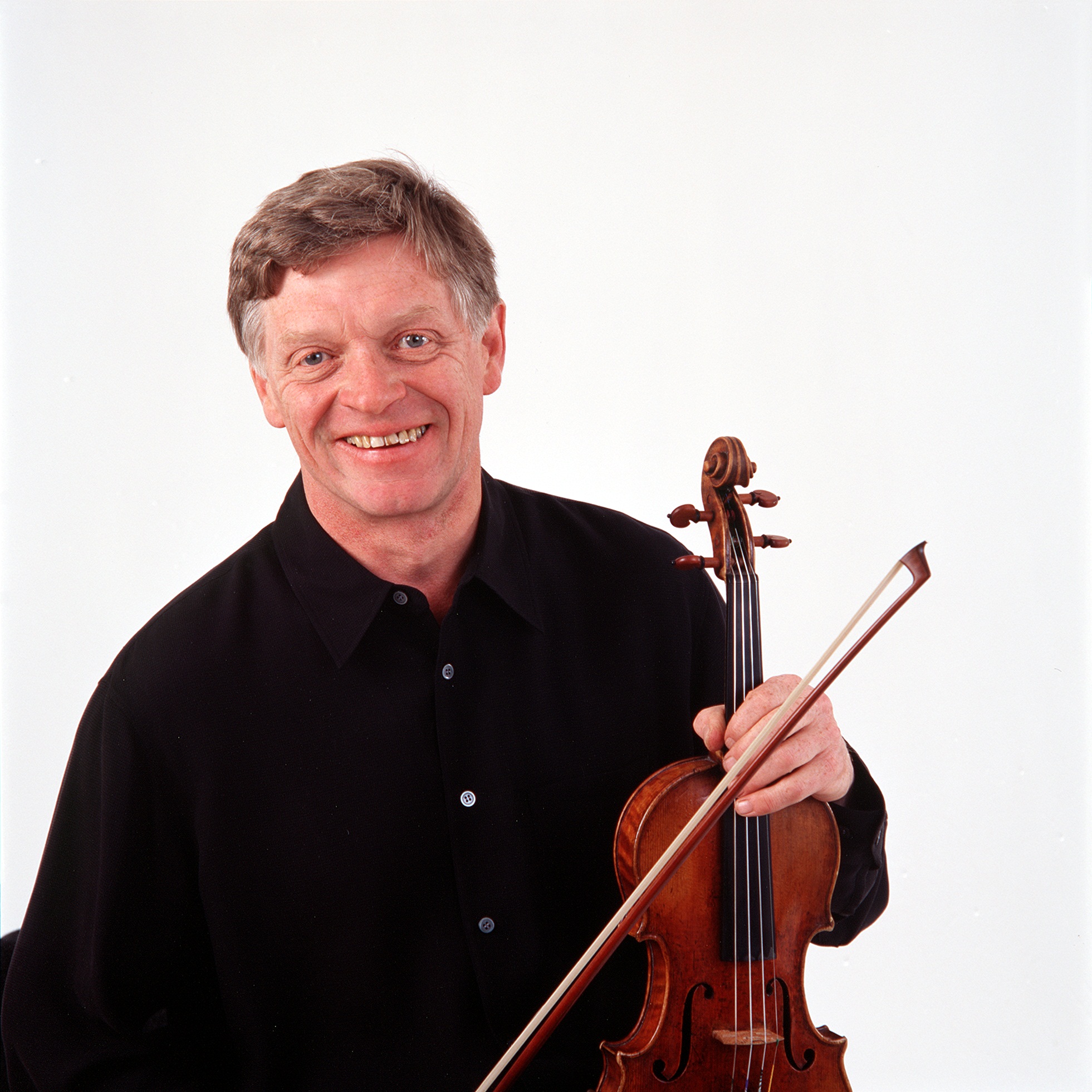
Peter Cropper. Credit: Hanya Chlala/ArenaPAL

Credit: Hanya Chlala/ArenaPAL

Performance verdict

This was a particularly moving concert, given a short while after the announcement of the death of Peter Cropper, first violinist with the Lindsay String Quartet and a close personal friend of Martin Roscoe. Not only was Roscoe intent on going ahead with this concert, he and Tasmin Little chose to dedicate their performance of the Franck Sonata to his memory – and in doing so they paid a deeply meaningful tribute.

The Franck is a lovely work and both Little and Roscoe brought out the deep-seated passion of the second and third movements, dovetailing beautifully with the charm of the outer movements. Roscoe was extremely responsive so that the melodies were passed back and forward with ease and enthusiasm.

The Dvořák Romantic Pieces were also extremely appealing, their apparent simplicity still given plenty of depth in this performance, with an especially poignant last piece. Warmth and wistfulness combined irresistibly in the first and third pieces, while for the second country dance it was as though someone had flung open the windows of the hall!

It was like that too for the Brahms Scherzo, which Little began almost before Roscoe had sat down, such was her eagerness to get on with it. The music surged forward as though intent on devouring everything in its path.

What should I listen out for?

Brahms

1:26 A surge of excitement as the piece begins, the violin using its lowest string and the ‘G’ an octave above it. The swaying motion of the theme is typical of Brahms, who often writes in triplet rhythms, and it creates an appealing syncopation, an ebb and flow between violin and piano.

There is a triumphant coda from 6:30, crowning this piece by the young Brahms with a flourish.

Dvořák

8:32 The first piece is warm and a little wistful, affectionately played.

11:48 The second piece is a grander affair, but also takes on the form of a country dance.

14:34 Marked ‘Allegro appassionato’, the third piece at first sounds remarkably similar to the first, being in the same mood and key, but becomes more passionate with Little playing two strings at once

16:43 A shadow falls over the sunshine created by Dvořák in the first three pieces, with music of introspection and contemplation. There is however still a positive ending.

Franck

23:40 A dreamy introduction from the piano, which hovers on an exotic chord until the violin comes in with the tune, also in a dreamy state. The mood becomes more passionate – amorous perhaps – and Franck manages that expression with very little variation to the tune itself.

30:00 The second movement begins with the turbulent rumblings of the piano, which give way to a passionate violin theme. At 33:35 this reaches a natural climax, before the turbulent theme is heard again. The onward flow of the music is impressive here, a torrent of notes – so much so that there is applause at the end of this movement!

38:05 – A ‘recitative’ forms the third movement – that is a passage of freedom for the violin, after the piano has set the scene. This gives it the opportunity to show off in a semi-improvised way, and after this the violin and piano exchange ideas, leading to a natural climax point at 41:10, the music at its most passionate again. There is a strong reference to the sonata’s opening at 43:30 – an example of Franck’s ‘cyclical’ way of writing, where he brings back themes from earlier in the work.

45:07 The canon, as described above, begun by the piano and followed by the violin. Franck writes it rather sweetly, with an innocence that proves touching throughout, but again it grows in stature. The violin and piano spend much of the movement imitating each other’s melodies in this way, with references to the first movement, before returning to the main music at 49:57 and then an uplifting finish.

Encore

53:00 An encore of Brahms’ Hungarian Dance no.5, probably in the arrangement by Joseph Joachim, as described above. Little plays this with great theatricality, Roscoe very sure-footed (or should that be handed?!) by her side.

Further listening

A rather attractive companion piece to both the FAE Scherzo and the Franck Violin Sonata is BrahmsViolin Sonata no.2, a summery piece that finds the composer in relatively relaxed mode. A nice complement to this is the shorter but quite fiery Légende by the Polish composer Henryk

A rather attractive companion piece to both the FAE Scherzo and the Franck Violin Sonata is Brahms’ Violin Sonata no.2, a summery piece that finds the composer in relatively relaxed mode. A nice complement to this is the shorter but quite fiery Légende by the Polish composer Henryk Wieniawski. Meanwhile a piece that joins everything together nicely is another red blooded piece of chamber music by Franck, his Piano Quintet, which in the right performance offers some high voltage music making! The one on this playlist, by Sviatoslav Richter and the Borodin Quartet, leaves absolutely nothing to chance.

Meanwhile a piece that joins everything together nicely is another red blooded piece of chamber music by Franck, his Piano Quintet, which in the right performance offers some high voltage music making! The one on this playlist, by Sviatoslav Richter and the Borodin Quartet, leaves absolutely nothing to chance.

For more concerts click here
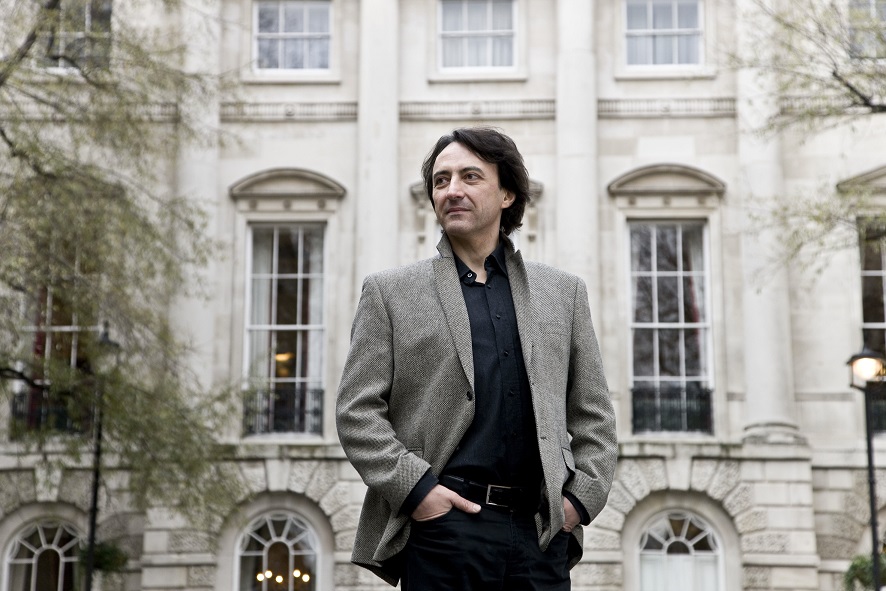
Jean-Efflam Bavouzet at the Wigmore Hall – Imitations and Studies

Imitations and Studies – Jean-Efflam Bavouzet at the Wigmore Hall

Jean-Efflam Bavouzet (piano) – Wigmore Hall, London, live on BBC Radio 3, 25 May 2015

Listening link (opens in a new window):

http://www.bbc.co.uk/programmes/b05w7tdx

on the iPlayer until 23 June

Spotify

In case you cannot hear the broadcast, I have put together a Spotify playlist of most of the music in this concert, including recordings the artists have made where possible. The playlist can be found here

What’s the music?

Beethoven: Piano Sonata No. 24 in F sharp major Op. 78 ‘A Thérèse’ (10 minutes)

Boulez: Piano Sonata No. 1 (11 minutes)

Maurice Ohana: 3 from the 12 Études d’interprétation, Book 1 (Mouvements parallèles; Quintes; Main gauche seule) (15 minutes)

Debussy: 3 from the Etudes Book I (Pour les tierces; Pour les sixtes; Pour les octaves) (10 minutes)

What about the music?

At first glance this program has the appearance of a slightly random but interesting set of composers and works; on closer inspection they are shown to have intriguing connections.

Beethoven’s middle period sonata, subtitled ‘à Thérèse’ in recognition of its dedicatee, Countess Thérèse von Brunswick, is a snip at just ten minutes and is one of the lesser known of the 32 sonatas. It also has a strange key and unusual structure, so to all intents and purposes it feels like an experimental work – yet it is concentrated in its emotion and ultimately rewarding for the listener.

The Boulez sonata, his first of three, was written when the composer – now 90 – was just 21. It was intriguingly modelled on the Beethoven work just heard – both in length and design – so it makes sense to hear the two together. Going further than Beethoven’s unusual key choice, Boulez writes using the ‘twelve-tone’ method – which means each note of the conventional Western notation has to sound before the initial note can be heard again. Twelve-tone pieces can often present challenges for audiences, but this one does still emphasise certain pitches – ‘B’ especially – and uses a wide range of dynamics and expressive nuances that make it much more palatable to the untrained ear.

Maurice Ohana is not a composer often encountered in the concert hall at all. His upbringing as an Andalusian of Jewish descent born in Morocco and eventually settling in France is reflected in the cosmopolitan nature of his music, uniting all these strands. Ohana often makes use of microtonality, using pitches between the semitones we are so used to in Western music. That of course is not possible on a tuned piano as in this concert – but we hear a flavour if his unusual harmonies in this selection of Etudes, modelled on Debussy’s equivalent works for the piano. The final etude is written for the left hand only.

Debussy’s Études are masterpieces that follow Chopin’s lead in making colourful and often emotional pieces from what are ostensibly technical exercises. Jean-Efflam Bavouzet chooses three here.

Performance verdict

An inventive program from Bavouzet, whose relatively recent recordings of Beethoven are complemented by a Boulez piece where the pianist is able to put his friendship with the composer to great authoritative use.

Bavouzet’s technical command is formidable, and comes to the fore in the studies by Ohana and Debussy, where we can hear each composer exploring the limits of the pianist through some particularly athletic writing.

What should I listen out for?

Beethoven

2:04 A short introduction leads to the main theme proper of the first movement (around 2:34). The music is relatively at ease here, but not a note is wasted, especially when Beethoven develops this theme – an intense section where the melody twists around but never beyond recognition. The tune dominates but Beethoven’s continued stress of the unusual F sharp tonality creates an unusual form of tension in this performance.

9:38 Bavouzet moves quickly into the second movement, where the first tune has a clipped melody, then the second sounds like two fingers chasing each other repeatedly around the keyboard.

Boulez

14:13 Like the Beethoven, the music seems very sure of itself right from the off. Although this is what is known as a ‘twelve tone’ piece, certain pitches come to the fore and there is an unmistakeably expressive shape to each statement. As the movement progresses there are some particularly crunchy discords, and often a longer phrase is followed by a flurry of notes in a downward descent. The movement ends convincingly at a lower pitch.

19:46 A wiry sound to the lower edge of the piano as this movement starts, and then the mood gets a bit more frivolous – with the ‘chasing’ around the keyboard as experienced in the Beethoven. This more ‘playful’ movement, which still sounds quite straight faced (in the manner of its creator, perhaps!) leads to an uncompromising and perfunctory finish.

Ohana

26:50 – the first etude, a study in parallel motion, starts at the extremes, with the right hand high and the left hand low. The inflections in the melody are full of Eastern flavour, then some of the chords are clumped together before a firm end. This is a virtuoso piece that has a greater rhythmic profile

31:37 – a cool profile to the beginning of Etude no.5, which is a study in the hands playing in fifths. The irregular rhythms make the music feel less secure, but the Eastern flavour is there once again in some of the softer melodies.

36:54 – a study for the left hand only, beginning immersed right at the bottom of the piano but soon ascending to the heights. Ohana asks a lot of the pianist here, and it is difficult to believe that some of the gymnastics here are for just the one hand, as this study flies along – until a stately slower passage.

Debussy

43:24 (Pour les cinq digits) (For the five fingers) A deceptive piece this, as it starts with a simple scalic motif but then moves about restlessly before filling out considerably.

46:38 (Pour les tierces (For the thirds) As the title indicates, this study uses a lot of smaller chords made up of thirds, Debussy giving a unique rocking motion to the music. If anything by the end the music is also a study in octaves as well as thirds.

50:36 Pour les octaves (For the octaves) Some big stretches for the hands in this piece, often playing an octave apart and at quick motion. Then in a typical move for Debussy we suddenly arrive at an emphatic finish in a key that is at once a logical but also surprising move.

Encore

54:22 An encore of Debussy’s L’isle joyeuse (The joyful island), played with typical pizzazz by Bavouzet!

Further listening

With the emphasis still on studies and modern music, an interesting – if challenging – next step are some Studies by Conlon Nancarrow, arranged for instrumental ensemble. These were originally written for a ‘player piano’ – that is, a piano that plyed itself – because the music was thought to be too difficult for human performance. Some pianists do defy gravity to play it, but the versatility of the music is shown by the ease with which it transfers to instruments. Nancarrow’s fiercely original voice can be heard in technicolour here

For more concerts click here

Steven Isserlis and friends – Czech chamber music

czech-chamber-music
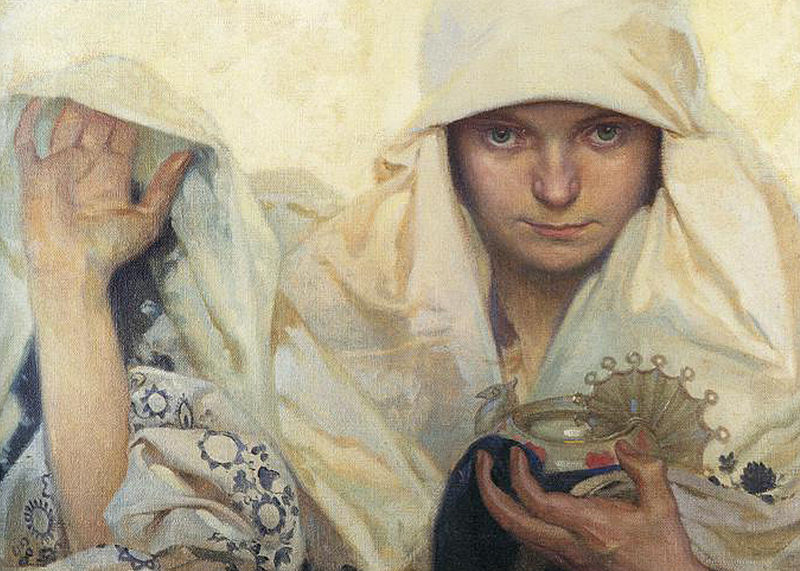
Fate by the Czech artist Alphonse Mucha, 1920

Jeremy Denk (piano), Joshua Bell (violin), Lawrence Power (viola) and Steven Isserlis (cello), Wigmore Hall, 20 May 2015.

As Steven Isserlis wrote so eloquently in the program notes for this concert, ‘Why is it that so much Czech music is loveable in such a unique way?’

This, the first of two parts, revealed a quartet of composers intent on spoiling the listener with a mass of tunes (teacher Dvořák and pupil Suk) or using their music to express the highly charged climate in Europe in the 1920s and 1930s (Janáček and, from a distance, Martinů)

Jeremy Denk, Joshua Bell, Steven Isserlis and Lawrence Power planned this concert to perfection, the abundance of tunes placed first and last, with the deeper moments in between.

It is doubtful Suk’s Piano Quartet, the first published piece of a precocious seventeen year old, has ever had a performance like this, bursting with pride and enthusiasm. After a forthright statement of the first tune from the ensemble, a beautiful solo from Isserlis revealed the work’s softer underbelly, which came to the fore in a similarly affecting tune in the slow movement, the cello releasing a beautiful mellow sound.

Janáček’s Violin Sonata wore a permanently furrowed brow. The icy reach of the muted violin in the last of the four brief movements was key to summing up a work that bristles with anger, though redemption was briefly found in the second movement Balada, with a theme of silvery consolation.

The second of three cello sonatas by Bohuslav Martinů was next. Isserlis has championed these works for more than 25 years, and gave a commanding performance of a moving work. Written in America in 1938, the composer having successfully fled Paris and the Nazis, it is a deeply felt and resilient utterance, especially in the second movement where time stood still.

As far as the tunes were concerned, the best was saved until last. Dvořák’s Piano Quartet no.2 positively bursts with Czech melodies – which are revealed to be surprisingly close in mood and contour to the American tunes he was to use towards the end of his career. Here they were swept along in a wonderful performance of good feeling, played with great sensitivity by Jeremy Denk, whose phrasing was key to the utmost charm of the Scherzo, the tender Adagio and the rustic finale.

Yet this was music for a team of friends to enjoy, the music surging forwards with a positivity rarely experienced to this extent in the concert hall – and happily caught by microphones, hopefully for a future release on Wigmore Hall Live. Those Czechs, they knew a good tune – and these four were the best possible Bohemian Rhapsodists in waiting!

The music from this concert can be heard here on Spotify. Part two of this series is at the Wigmore Hall on Saturday 23 May, and will include the Dvořák Piano Quintet and the Piano Trio by Smetana.

Joseph Tong – Sibelius and the piano

joseph-tong

Joseph Tong, St John’s Smith Square, 13 May 2015.

It is surprising, the number of famous composers with piano works that are rarely if ever heard in concert. Tchaikovsky, Elgar, Dvořák and Wagner – all wrote a considerable amount of keyboard music that remains relatively unheard.

To that list can be added Jean Sibelius, whose canon of piano works runs from early juvenilia to the late Five Esquisses of 1929. Sibelius wrote at the piano in his Ainola house, but the suspicion persists that a lot of his work was a necessary complement to the popular orchestral works we do hear a lot of – and that it wasn’t always designed for outings in the concert hall.

sibelius-piano

Sibelius’ piano at his Ainola home.

Joseph Tong sought to challenge that notion with a concert composed entirely of Sibelius piano works, given at St John’s Smith Square in the presence of the Finnish Ambassador. While the attendance suggested the music was not a great draw, the end product was never less than intriguing and often provided clues to Sibelius’s overall style.

Tong constructed a logical program that took us to the outer edges of the Finn’s piano output, from earlier pieces with a nationalist bent (the three movement suite Kyllikki and the five-piece suite The Trees) to some of the more rigorously structured pieces from Sibelius’ neo-classical period (a surprisingly touching Sonatina and two Rondinos) and finally to a strikingly effective transcription of the great Finlandia.

Tong was the ideal exponent, enjoying the intimacy of Sibelius’ writing and the occasionally abrupt manner in which he finishes his musical phrases. The Sonatina was a particular treat, its last movement hanging on the air like a branch after a bird has flown from it. Also notable was The Spruce last of The Trees, a popular work Tong played again as an encore. The later works were deeper and darker, suggesting winter claustrophobia in Sibelius’ house at Ainola, with only the hint of brighter times in evocations of spring.

To understand Sibelius as a composer the piano works are an invaluable and private aside, and in the right environment – such as this – they work very well as an intimate concert experience. Even the bluster of Finlandia, brilliantly played here, had its tender moments in the slow chorale theme that Tong gave lovingly. For an anniversary tribute with a difference, the pianist deserves great credit.

Joseph Tong has recorded a CD of Sibelius piano works, structured in a very similar way to the concert. It can be heard here on Spotify, with a second volume apparently in the pipeline for 2016.

Elias String Quartet and Simon Crawford Phillips – Messages Old and New

Messages old and new – the Elias Quartet give an Emily Howard world premiere, and are then joined by Simon Crawford Phillips for Schumann’s Piano Quintet

elias-quartet

Elias Quartet (Sara Bitlloch, Donald Grant (violins), Martin Saving (viola), Marie Bitlloch (cello), Simon Crawford-Phillips (piano) – Wigmore Hall, London, live on BBC Radio 3, 4 May 2015.

Listening link (opens in a new window):

http://www.bbc.co.uk/programmes/b05qypn8

on the iPlayer until 9 June

Spotify

In case you cannot hear the broadcast, here is a link to a recording of the Schumann (Howard’s pieces is a world premiere so not yet recorded). The Schumann is played here by Sviatoslav Richter and the Borodin String Quartet:

Spotify

What’s the music?

Emily Howard Afference (2015) (22 minutes)

Schumann – Piano Quintet (1842) (32 minutes)

What about the music?

Emily Howard’s new piece Afference, a substantial work for string quartet, is based on a physiological term to describe the way in which the brain processes our experiences of the world. Howard herself has a degree in maths and computer science, something that might lead an audience to expect a very calculated approach to composing music. This is not entirely the case though, as the biography on Howard’s own website suggests.

Afference appears to be her first work for string quartet, commissioned by the Elias Quartet themselves. It joins a canon of pieces that range from large-scale orchestral works (Axon and a symphony called Magnetite) to smaller scale compositions for clarinet and piano.

Schumann’s Piano Quintet was written in 1842, when he was still giddy with love for wife Clara. She was the dedicatee of this work, but as the BBC Radio 3 announcer Georgia Mann details it was first performed with none other than the composer Felix Mendelssohn at the piano.

Performance verdict

A fine concert, with concentrated playing from the Elias Quartet of what is on two listens an engaging new work for string quartet. Emily Howard writes in a distinctive style that the Elias Quartet understand, and the colours she achieves are consistently interesting and imaginative. It helps to know the program for the piece, as there do indeed seem to be a lot of messages transmitted in 22 minutes. Some of them are very nervy, though ultimately the piece feels of a positive nature.

The Schumann receives an excellent performance, the happiness of the first, third and final movements a joy to behold – while the second movement, if a tiny bit slow in its central section perhaps, is uneasy and in need of consolation this ultimately provides. Simon Crawford-Phillips plays brilliantly, with authority but also ensuring the strings are heard at all times. His nimble finger work in the third movement scherzo is especially impressive.

What should I listen out for?

Emily Howard

1:20 – a busy start with all four instruments playing frenetically then cuts to a section with a very small voice, doing battle with the quartet.

5:55 – the instruments all take a melodic line that uses portamento (sliding from one pitch to another) before a more intimate phrase starts to dominate. At this point the instruments are close together in pitch.

8:09 – a much slower section, with an intense violin pitch that grows into what sounds like a sorrowful lament, while the other three instruments give softly breathed harmonies. This leads on to some feverish activity, Howard’s nervous messages transmitted at great intensity.

13:17 – As the second movement starts there is a large gap between the instruments – violins on high and cello down below. The lack of a key centre brings to mind some of the quartet writing of Schoenberg, though Howard’s writing has more pitch-related implications in the cello’s continual return to its low ‘D’.

16:50 – a striking passage for violin with upwards phrases, in which Howard seems to be reaching for higher plains

18:51 – the instruments stick closer together again, but at 19:53 the violin shoots out a much higher phrase. The harmonies still make the music sound quite uneasy, as if in a state of dread.

22:20 – a piercing line on the violin returns to the pitch of D, before the rest of the quartet finish the piece with a short series of comments.

Schumann

26:23 – the first movement begins with a wonderfully positive outpouring of music from piano and strings together. The theme itself is a surprisingly catchy one

27:35 – a lovely tune makes itself known on the cello, Schumann at his most romantic with the music flowing beautifully onwards. This tune is then picked up with a counter melody from the violin.

32:03 – now in the centre of the development section, the music gets more turbulent, the piano lines swirling around those of the string quartet, but then we switch to a triumphant reprise of the opening music at 32:45.

35:33 – the subdued second movement begins. This is a form of funeral march and it has a halting tune, played by both strings and piano with short notes. This is complemented by a much sweeter episode of music that begins at 37:19, still in the spirit of remembrance but with a positive approach. The sombre first theme returns once again at 38:56.

40:10 – a faster episode begins, led by the piano, the strings with much heavier lines alongside – but still the tune persists from the viola at 41:00, picked up by the violin – and the sweeter theme also makes a reappearance (41:49).

44:16 – the third movement, a Scherzo, begins with fizzing interplay led by the piano. Schumann again finds music of great positivity and energy. At 45:34 a second section begins, in the far-removed key of F sharp major, before the main scherzo returns with just as much irrepressible energy at 46:16. At 46:58 a new section is introduced, again with plenty of energy! The main theme returns at 48:02, carrying through to an emphatic finish at 48:57.

49:04 – the last of the four movements begins, and again the energy levels are up – though here we begin in a minor key that briefly recalls the second movement march. Quickly the music moves to E flat major – the ‘home’ key of the piece. The music then becomes more reserved and secretive.

51:24 – the first theme comes back, though the music is still in a minor key and still feels a long way from ‘home’. Gradually though the music gets greater presence in the ‘home’ key, and by the time we get to 54:16 it is rooted here, and sweeps to a decisive finish by way of a fugue, instigated by the piano at 54:41 and rounding off at 56:28.

Want to hear more?

Following the contrasting nature of the two pieces in this concert, the suggested further listening looks to progress from the Howard with Schoenberg’s String Quartet no.2. This famously has a last movement that sets the text ‘I feel the air from another planet…’, sung by a soprano and said to consciously signal the composer’s move away from writing in a particular key (tonality). Here the words are sung by Susan Narucki, in conjunction with the Schoenberg Quartet.

After the Schumann a rewarding next port of call is the Piano Quintet by Dvořák, his second in the form – and once again played by Sviatoslav Richter and the Borodin Quartet. The playlist can be found on Spotify here:

For more concerts click here