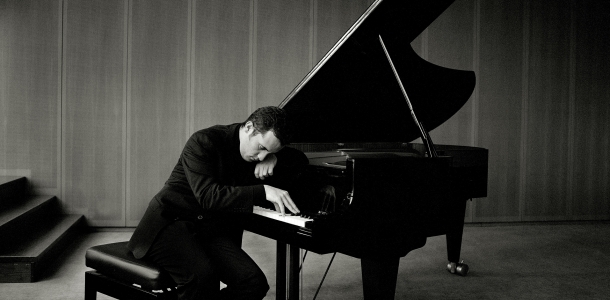
Louis Schwizgebel

BBC Radio 3’s New Generation artist Louis Schwizgebel gives a live recital of piano works by Haydn, Chopin and Liszt

Louis SchwitzgebelPhoto © Caroline Doutre

Louis Schwizgebel – Wigmore Hall, live on BBC Radio 3, 23 February 2015

Listening link (opens in a new window):

http://www.bbc.co.uk/programmes/b05302mn

on the iPlayer until 24 March

For non-UK listeners, this Spotify playlist is available:

For those unable to hear the broadcast I have put together a Spotify playlist. Louis has not recorded this repertoire, so I have chosen suitable available versions:

What’s the music?

HaydnPiano Sonata in E flat major (1789-90) (19 minutes)

ChopinBallade no.3 in A flat major (1841) (7 minutes)

ChopinÉtude in C# minor (1836) (5 minutes)

ChopinWaltz in C# minor (1847) (4 minutes)

ChopinFantaisie-impromptu in C# minor (c1834) (4 minutes)

LisztConsolation no.3 in D flat major (1849-50) (4 minutes)

LisztHungarian Rhapsody No. 6 in D flat major (c1863) (6 minutes)

What about the music?

This is a cleverly structured recital taking in three giants of the piano.

Schwizgebel begins with Haydn, godfather of so many musical forms – and one of the first composers to start writing what became known as the mature piano sonata, in three movements. His examples in the form – many written like this one for the palace of Esterházy in Hungary – show good humour and a delicate touch. This work, not often heard in concert, fits the bill nicely as an opening piece.

Schwizgebel’s Chopin selection is carefully structured so that the keys fit – moving from A flat major for the Ballade into C# minor for the three other works. The Ballade is a form in which Chopin made very personal expressions but which also allowed him the chance to experiment formally. The three works following are an unusually profound Etude (Study) – which sounds technical but is far from dry, shot through with characteristic Chopin melancholy. The Waltz is more playful, coming back to the same theme again and again, while the freeform Fantaisie-Impromptu makes the most of its freedom.

Liszt was a barnstorming virtuoso – the piano equivalent of Jimi Hendrix, you could say! – but he had his sensitive side too, as the Consolations show – and this one selected is a tribute to Chopin himself. It is a thoughtful example, leading to the fire and brimstone of the Hungarian Rhapsody no.6, given the natural inflections of the music of Liszt’s own country before a helter-skelter coda.

Performance verdict

Schwizgebel is a thoughtful Haydn pianist, and gives a rather touching performance of the slow movement in particular. He is commendably modest in performance, preferring not to go for the demonstrative approach, but instead letting his playing do the talking. The Chopin selection is excellent, very well played, losing a little rhythmic definition in the climax of the Étude but trumping that with a dazzling Fantaisie-impromptu.

The Liszt could perhaps have done with more of the reckless bravura you get in the Hungarian Rhapsodies, a sense of living right on the edge. That said, the closing pages are brilliantly played, the octaves written for the right hand immaculately delivered.

What should I listen out for?

Haydn

4:19 – a matter-of-fact start to the first movement, with a slightly gruff accompaniment to the tune. Yet Haydn’s easy charm is soon in evidence, despite the left hand having to work pretty hard in accompaniment!

11:14 – the second movement begins, headed by a graceful melody, as if assigned to a singer. Then, later on, it nearly stops as the right hand melody gets lost in thought before ambling to an easy close.

19:46 – a typically perky Haydn finale, nicely proportioned and sensitively played here.

Chopin

24:36 – the Ballade no.3 – beginning with an attractive introductory theme before the music assumes the profile of a waltz (from 26:27). Schwizgebel takes this slower than a lot of pianists, with a delicate approach – allowing greater contrast for then the music appears again, much more forcefully, at 27:20. At 29:35 a shadow falls over the music and it becomes more fraught as it moves into a minor key – C sharp minor, which is the key for the next three works in the recital. The Ballade’s main theme comes back at 30:57 before the closing passage.

31:52 – the Étude in C# minor, numbered 7 in the second book of studies Chopin published as his Op.25. The left hand takes the lead with a rising theme, and sets the melody throughout in what is a deeply intense piece, the longest of Chopin’s Études.

37:25 – the more playful Waltz in C# minor, published as Op.64/2, characterised by a sparkling theme high up in the piano’s register. This returns frequently to trump the underlying melancholy in the music, and the player has the chance to play around with the speed to give the music more ebb and flow. A contrasting section (38:28) brings a ray of light in the middle.

40:35 – the Fantaisie-Impromptu, a freeform piece where the floodgates just open! A torrent of notes form the main theme, wheeling up and down the keyboard, before taking the foot off the gas for a sweetly toned second theme (41:31)…which segues neatly back to the river of notes again (43:24)

Liszt

46:02 – the Consolation in D flat major, one of a set of six. Intimate and romantic, especially in this performance.

50:07 – the Hungarian Rhapsody no.6 begins with a drone and a rustic tune, very controlled in this performance, which takes some nice liberties with the tempo, holding back where necessary. There is some dazzling virtuosity as the piano then unfurls a variation on that melody before a solemn second theme (51:50) makes itself known. At 54:01 the final section starts with a melody played in octaves, which soon works to a thunderous climax (55:33).

Encore

57:36 – Moszkowski’s Étincelles (1886) – a showpiece from the Polish composer, with some brilliant runs up and down the keyboard as well as some sharply pointed notes. Schwizgebel dispatches it very impressively, with a wonderful throw-away finish!

Want to hear more?

Haydn’s humour makes for lovely music to work to – and a personal favourite is his C major sonata.
Chopin’s Ballades reward repeated listening – so after the intimate Third I would recommend the stormier Fourth – with the calm of an A minor Waltz and the famous Raindrop prelude completing a very attractive selection.

For Liszt with real depth the Vallée d’Obermann can be strongly recommended as a powerful utterance.

All these are collected on a Spotify playlist, below the repertoire played by Schwizgebel:

For more concerts click here
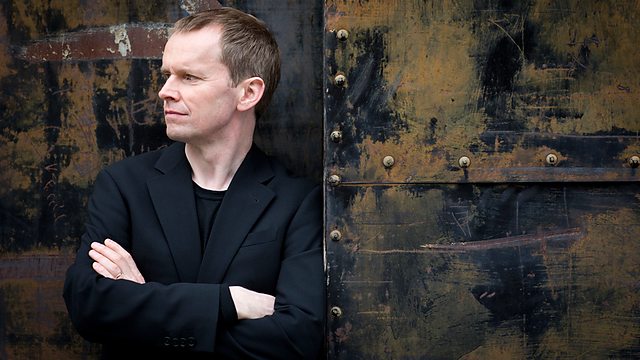
Pictures at an Exhibition – Steven Osborne

Pictures at an Exhibition – Musorgsky’s much loved collection for piano played by Steven Osborne

steven-osborneSteven Osborne (piano) – Wigmore Hall, live on BBC Radio 3, 2 February 2015

Listening link (opens in a new window):

http://www.bbc.co.uk/programmes/b04wmjx6

on the iPlayer until 3 March

For non-UK listeners, this Spotify playlist is available:

Please note that recordings of these works by Steven Osborne are not available on Spotify – the Musorgsky however is available to hear on the Hyperion website. I have therefore chosen suitable alternatives and will change the time references below when the BBC iPlayer link expires.

What’s the music?

Rachmaninov – a selection of 4 Etudes-Tableaux (1916-17) (13 minutes)

Musorgsky – Pictures at an Exhibition (1874) (36 minutes)

What about the music?

Musorgsky‘s Pictures at an Exhibition is a much-loved group of pieces, capturing the imagination of performers and arrangers alike. Although written originally for piano it has enjoyed life in several guises, most famously in a tremendous orchestration by Ravel but also through arrangements for all sorts of instrumental combinations, including brass band and even pop group – which Emerson, Lake and Palmer released as a live album in 1971.

The composer wrote it so the listener takes the part of the viewer at an art exhibition – in this case a series of paintings by the Russian artist Viktor Hartmann. Some of the pictures are separated by Promenades, where Musorgsky takes a breather to portray the viewer moving between paintings, reacting to what they have just seen. The pictures often refer to Russian legend, and some of them are grotesque – Gnomus, for instance, a gnome with crooked legs, or The Hut on Fowl’s Legs, a depiction of the terrifying Russian witch Baba-Yagá. There are social interactions – children playing (Tuileries), a rich man meeting a poor man (Samuel Goldberg and Schmüyle) and a violent quarrel (The Market at Limoges) – as well as two striking depictions of buildings in The Old Castle and an imposing Great Gate of Kiev, with which the exhibition ends.

Complementing Pictures are four of Rachmaninov’s Etudes-Tableaux, part of a set of pictorial studies published in 1917. In this case the objects of Rachmaninov’s characterisation were hardly if ever revealed, but the four chosen invite the listener to create an image. They are a brisk march, a contemplation, a scene at a fair (as described by the composer) and a restless mood.

Performance verdict

Steven Osborne won a Gramophone Award for his Hyperion recording of Pictures in 2013, and it was easy to see why here – there was the odd wrong note but this was generally because he was striving for maximum expression, which he found in a compelling performance. His pacing was ideal, so that some of the really loud moments – the old cart Bydlo grinding into action, or The Great Gate of Kiev in all its splendour – built inexorably from start to climax point.

The Rachmaninov was terrific, an indication that Osborne is spending a lot of time at the moment discovering his piano music. The Etudes-Tableaux do not really feature regularly in concert, partly because they are hard to bring off, but Osborne managed it handsomely here.

After the Musorgsky we had the considerable bonus of a serene Rachmaninov Prelude in D major, which tugged at the heart strings in all the right places.

What should I listen out for?

Because they are so well-loved, I have opted to describe each of the Pictures below:

Rachmaninov

6:31 – the second Étude-tableau, a spacious reverie with a particularly beautiful floated central section, where the key changes from C minor to C major (8:44).

11:41 – the third Étude-tableau, brightly voiced with crisp rhythms.

Musorgsky

18:36 – the first Promenade. Musorgsky’s viewer has a quick stride!

19:51 – Gnomus. Dark, grotesque and unpredictable, with a heavy line for the piano’s left hand and some ominous trills (22:11). After this the viewer ambles on to….

23:40 – The Old Castle. The melody is a depiction of a troubadour singing – but the mood is grey and heavy of heart, the harmony almost completely static. A weighty Promenade moves the viewer on to…

28:43 – Tuileries. A delicate description of children’s play, over in a flash!

29:40 – Bydlo. A depiction of a Polish cart grinding into action. The heavy weight of the machinery is supplied by the piano’s left hand, and the cart recedes into the distance at the end. Osborne applies as much weight to this as possible while the vehicle lumbers past! The viewer pauses briefly to take stock, before…

34:10 – The Ballet of Unhatched Chicks in their Shells. An amazingly vivid depiction of the little birds in clipped figures for the piano right hand, played very delicately here.

35:21 – Samuel Goldenberg and Schmuÿle. An imposing dialogue with the grandeur of the rich man (Goldenberg) and the quavering speech of the poor man (Schmüyle). After this the viewer moves on with another Promenade.

38:59 – The Market at Limoges. An excitable cackle of voices from the piano here, tripping over themselves and becoming increasingly out of control as they career into…

catacombs
Catacombs

40:22. Darkness descends as we move underground, Musorgsky conveying the stillness of space. The melodic figure of the Promenade appears (from 43:16), though here it appears shrouded in mist

45:26 – The Hut on Fowl’s Legs. I often think this piece on its own inspired a lot of rock music – it has the sort of figure you would not find out of place on a King Crimson album. The hammering figure on the left hand feels like drums and bass guitar combined while the right hand is almost completely unhinged. This leads straight into…

great-gate-of-kiev

The Great Gate of Kiev

48:40. The massive outlines of the gate are clear in the big block chords Musorgsky writes for the piano, which become ever more imposing as the piece progresses. Towards the end (50:22) a huge peal of bells rings out, then there is another reference to the Promenade (52:01) ahead of an emphatic final set of chords, by which time the pianist is playing as loud as he possibly can!

Encore

56:06 – Rachmaninov – Prelude in D major. A graceful and rather moving complement to Pictures!

Want to hear more?

Excerpts from Steven Osborne’s recording for Hyperion can be heard here

For more Musorgsky, I would suggest the Songs and Dances of Death, for low male voice and orchestra – which is ironically on BBC Radio 3 this Thursday 5 February , with a listener’s guide to come here! For more Rachmaninov I would suggest an earlier work, the Five Morceaux Op.3. This group of five pieces contains the famous Prelude in C sharp minor.

For more concerts click here

Four seasons in one hour

igor-levitAll the seasons in one concert – Igor Levit performs Tchaikovsky’s cycle of twelve months for piano

Igor Levit (piano) – Wigmore Hall, live on BBC Radio 3, 26 January 2015

Listening link (opens in a new window):

http://www.bbc.co.uk/programmes/b0505zfj

on the iPlayer until 28 February

For non-UK listeners, this Spotify playlist is available:

What’s the music?

Tchaikovsky – Méditation (1893) (5 minutes)
Tchaikovsky – The Seasons (1876) (41 minutes)

What about the music?

It might seem like a recent development where music magazines carried CDs on the front, but the idea of the cover mount was given to Tchaikovsky all the way back in 1875 by Nouvellist, a St Petersburg magazine. They commissioned from the composer one piece per month in manuscript form, and these were often published with a short piece of text from the editor Nikolai Bernard.

Although they are separate pieces they work really well as a whole and are perfect easy listening. Closer inspection reveals a wealth of melodic content and some keen characterisation too – especially in the characteristic October gloom with which Autumn begins, dispelling the three bright and incident packed months of summer. Bookending the collection are January in front of the fire, and December – by which time the Christmas hearth is beckoning once again.

The brief Méditation is rather moving, an epitaph to the head of the Conservatoire in Moscow. Tchaikovsky’s response has a noble beauty.

Performance verdict

Igor Levit is ideal for The Seasons, painting each picture with beautiful detail and sensitivity. Sometimes the months run into each other, which is effective when considering the year as a whole – that’s what time does, after all!

What should I listen out for?

1:41 – the soft, contemplative beginning to the Méditation

The Seasons

8:37 – Tchaikovsky paints the comforting warmth of the fireside in January through music that is easy to listen to – though under the surface there are a few worrisome figures
15:48 – The song of the lark in March, possibly the first clue this cycle offers that it is the work of a Russian composer
24:33 – June is the best-loved month of The Seasons, and this reflective Barcarolle is cast in a similar mood to March – until the sun literally comes out in the middle (26:09),as the music changes from minor key to major key
37:25 – After the bracing horn calls of September, the shadows lengthen noticeably for October, the longest of the twelve pieces by far, stretching out like tendrils into the gathering dusk. Tchaikovsky’s music here is appreciably darker in colour, sitting lower in the piano’s register.
42:44 – November puts a brave face on October’s troubles in music that bears more than a little resemblance to Schumann. There is however a very Russian Troika at its heart (from 43:40 and heard in full at 44:20)

Encore

51:22 – Another short Tchaikovsky piano piece, the Chanson triste – a model of simplicity, beautifully played.

Want to hear more?

Tchaikovsky is generally known for his loud orchestral music – 1812 Overture and the like – so why not try something else along the more gentle line practised here? His Symphony no.1, subtitled Winter Daydreams, is well worth trying next.

Finding the Romanian soul

Finding the soul of Romania – Patricia Kopatchinskaja and Polina Leschenko play Enescu’s remarkable third sonata with music by Mozart
patricia-kopatchinskaja

Patricia Kopatchinskaja (violin) and Polina Leschenko (piano) – Wigmore Hall, live on BBC Radio 3, 12 January 2015

Listening link (opens in a new window):

http://www.bbc.co.uk/programmes/b04xrsl2

on the iPlayer until 14 February

For non-UK listeners, this Spotify playlist is available:

What’s the music?

Mozart – Sonata for Violin and Piano in B flat (1784, 20 minutes)

Georges Enescu – Violin Sonata no.3, ‘dans le caractère populaire roumain’ (‘in Romanian Folk Style’) (1926, 25 minutes)

What about the music?

Mozart wrote a mass of sonatas for piano and violin. The order of instruments is significant, because whereas now we tend to be used to the piano playing second fiddle – as it were! – to the violin, Mozart wrote for them the other way around. For this piece, the tale is that he didn’t even have a piano part ready for the first performance in Vienna, so had to make one up on the spot!

Just a week after our encounter with the remarkable Solo Cello Sonata of Hungarian composer Zoltán Kodály, we experience an equivalent outpouring of national passion from his contemporary, the Romanian composer Georges Enescu. A formidable violinist as well as a conductor, Enescu wrote what is regarded as one of the most difficult pieces for the instrument in 1926, looking to explore the soul of his country’s music. He does so in music of an incredibly direct nature, treating the violin as a voice at times.

Performance verdict

The Mozart proves to be a delicate palette cleanser for the main course, where the two performers feel a lot more at home in a meaty and often stormy account of Enescu’s masterpiece. It may need several listens but this is a forward thinking piece of work that brings out some extraordinary colours from Kopatchinskaya’s violin. Leschenko is no slouch either! A red hot performance.

What should I listen out for?

Listen especially for these bits:

Mozart

01:28 – the start of the piece. A polite musical language, calm and unaffecting. Kopatchinskaja uses very little vibrato here.

02:47 – Mozart moves from the slow section (marked by the Italian term Largo) to the fast (‘Allegro’). The music becomes more nimble

08:02 – The start of quite a lengthy but serene slow movement, with violin and piano imitating each other’s musical phrases.

14:42 – The beginning of the third movement, a sprightly number – where Kopatchinskaja’s outbursts suggest a bit of impatience!

Enescu

22:22 – the mysterious and almost otherworldly start of the Enescu

26:40 – the sort of broad, highly expressive melody in which the Romanian composer specialises, with animated backing on the piano.

31:30 – Enescu employs harmonics on the violin to get a really unusual, glassy sound quality, the start of a passage with a kaleidoscope of colours that reaches its peak at 34:39 with some weird and wonderful squeaks from the instrument – before 35:30 features some incredibly robust double stopping (more than one note at once on the violin) and runs on the piano from Leschenko

40:00 – A strong set of quotations from Romanian sources, with brilliant ensemble from the two players.

43:00 – Vigorous plucking to add a percussive element to the music

47:00 – the lead up to the powerful end

Encores

The duo gave two encores to the performance:

Cage – Etude for Violin and Piano (from 49:23 to 53:03)

Fritz Kreisler – Syncopation for Violin and Piano (from 54:12 to 56:22)

Want to hear more?

Mozart – one of the great master’s five violin concertos, which provides a good number of tunes (K216)

Enescu – further explorations of his country’s heritage in the Romanian Rhapsody no.1


Hungarian passion

Hungarian passion – Alisa Weilerstein plays music for solo cello by Bach and Kodály

alisa-weilersteinAlisa Weilerstein (cello) – Wigmore Hall, live on BBC Radio 3, 5 January 2015

Listening link (opens in a new window):

http://www.bbc.co.uk/programmes/b04wmjx6

on the iPlayer until 7 February

For non-UK listeners, this Spotify playlist is available:

What’s the music?

J.S. Bach – Solo Cello Suite no.5 (1724, 26 minutes)

Zoltán Kodály – Solo Cello Sonata (1915, 28 minutes)

What about the music?

Bach wrote six suites for the cello – or an instrument incredibly similar to it – and they have become some of his most popular works, suitable for students or performers alike. They are intensely private pieces but have a nice line in humour as well, especially in the faster sections, set to European dance forms of the time.

The first of Bach’s six suites was used in the film Master and Commander, on which more can be found here. The fifth is a sparse work and quite bleak at times. It is in six movements – with a Prelude, two faster dances (an Allemande (German) and a Courante (French), then a slow French one (Sarabande). Then we have a pair of lively Bourrées (French again) and a Gigue.

The Hungarian composer Kodály has written a much more modern sounding piece; even more so than its 1915 composition date suggests. Before performance the cellist is required to lower the lower of the four from a ‘C’ pitch to a ‘B’, darkening the colour considerably. Kodály uses a lot of dance music – like Bach – but this is much freer and has an improvised feel, the listener practically carried outside into the village by the directness of the writing.

Performance verdict

Despite a couple of lapses of tuning in the Bach, Alisa Weilerstein gives a carefully thought performance. In the Kodály she really comes into her own though, with plenty of fire and brimstone!

What should I listen out for?

Listen especially for these bits:

J.S. Bach

01:08 – the start of the Prelude, where Weilerstein plays very quietly with no vibrato*. The music is bare and at a funeral pace.

16:03 – the ‘Sarabande’ (a slow dance), which Weilerstein takes incredibly slowly. To me this sounded like an evocation of slowly falling tears.

Kodály

26:44 – the arresting start of the Kodály Sonata. A lot of music for just one instrument!

30:00 – the second main theme. More serene and songful.

37:27 – the start of the second movement. A broad low ‘B’ leads through a slow melody to

38:00, where a distant tune brings the strongest use yet of Hungarian folk music. While the right hand is using the bow, the left hand is plucking the open string alongside.

41:36 – a powerful outburst on the cello.

57:55 – the incredibly fraught and powerful run to the finish, ending with an emphatic final double-stopped** chord.

Want to hear more?

Bach – if you enjoyed this performance something equally dramatic can be found in the form of the St John Passion, a vivid telling of the Gospel

Kodály – the Hungarian’s grasp of orchestral colour can be fully appreciated in the Dances of Galanta

Glossary

*Vibrato – a way of adding extra expression to a piece of music, usually used by string players or singers. For string players it is controlled by the non-bowing arm, with a vibration applied to the finger pressed onto the string. For singers it is achieved through control of the voice.

**Double-stopped – playing more than one string at a time on the cello.