In concert – St. John’s College Choir Cambridge / Christopher Gray – Christmas Carols @ Wigmore Hall

Choir of St. John’s College Cambridge / Christopher Gray

Beamish In the stillness (2007)
Rutter There is a flower (1986)
Parsons Ave Maria (c1560)
Hassler Verbum caro factum est (1591)
Britten A Hymn to the Virgin (1930, rev. 1934)
Walton All this time (1970)
Trad/German arr. Pearsall In dulci jubilo
Hieronymus Praetorius Magnificat quinti toni (pub. 1622)
Daley Love came down at Christmas (2004)
Poston Jesus Christ the Apple Tree (1967)
Kirbye Vox in Rama (c.1620)
Anon Coventry Carol
Dove The Three Kings (2000)

Wigmore Hall, London
Monday 15 December 2025

Reviewed by Ben Hogwood

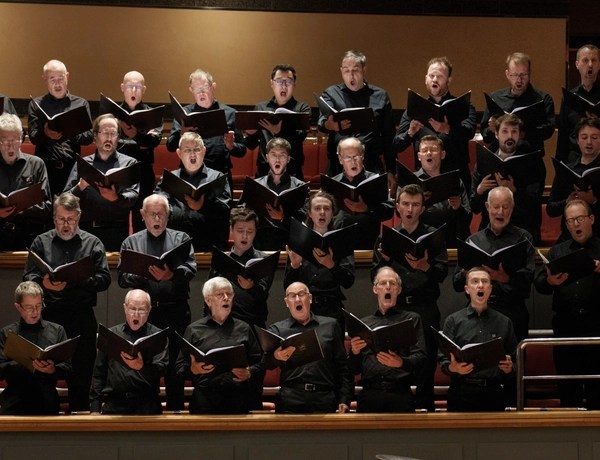
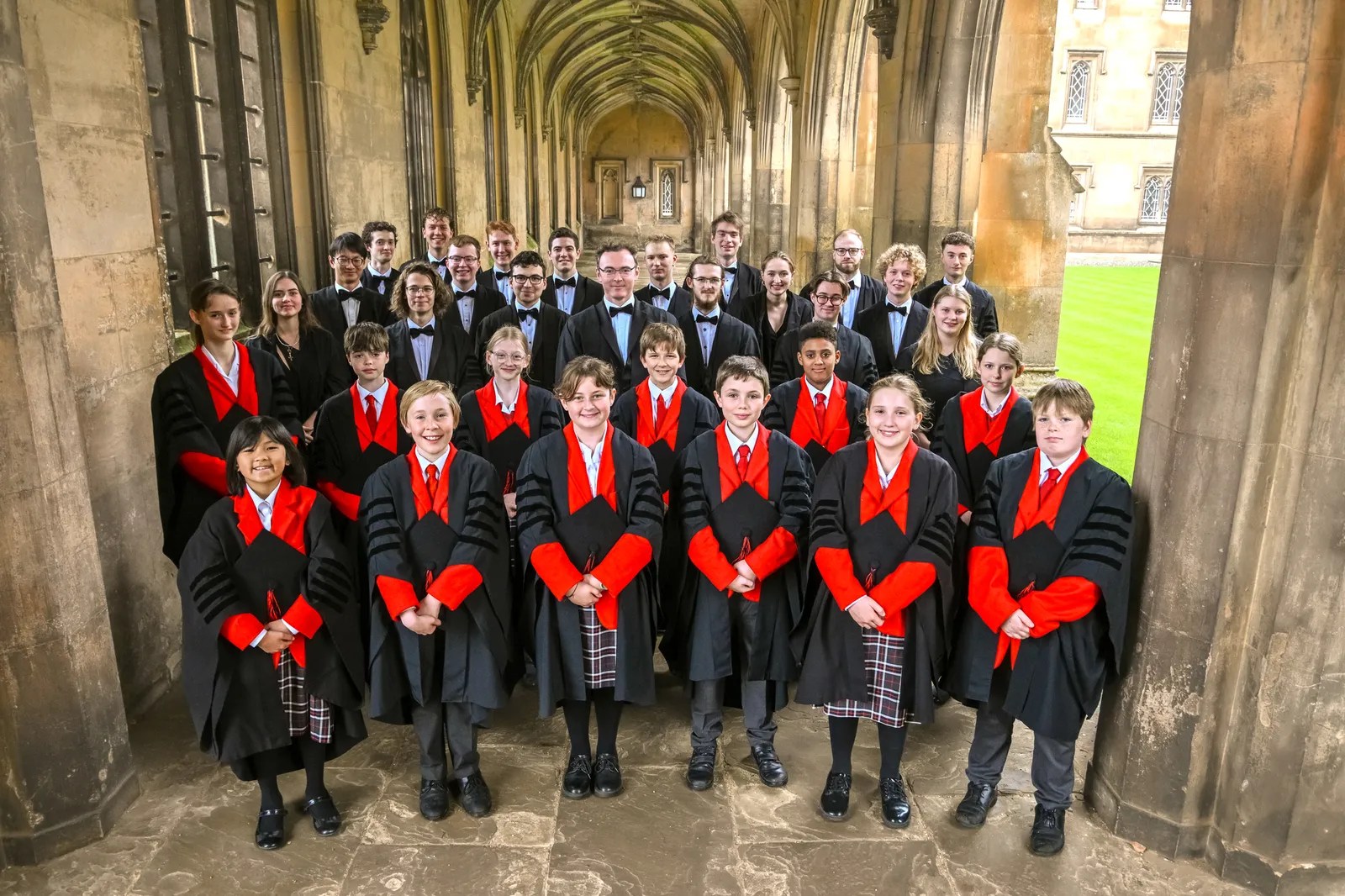
What a lovely idea to bring a concert of Christmas Carols to the last of the BBC Radio 3 Lunchtime Concerts held in the Wigmore Hall in 2025. The Choir of St. John’s College Cambridge, suitably attired, were led in a stirring yet thought-provoking programme by their conductor Christopher Gray, who have just released O Holy Night, an album of Christmas carols, on Signum Classics.

Yet much of the selection here went beyond the album’s component parts, exploring responses old and new to specific parts of the Christmas story. In a curious twist, the oldest music heard proved to be the most adventurous and emotive.

The concert began with an account of Sally Beamish’s In the stillness which was notable for its crystal clear intonation and enunciation, features the choir would display throughout the concert. John Rutter’s There is a flower fared equally well, the anthem he wrote for the choir leading with a touching treble solo, before the complexities of Robert Parsons’ masterful Ave maria were aligned in commendable phrasing. Similar qualities befell the lively exchanges of counterpoint in Hans Leo Hassler’s Verbum caro factum est, before the remarkable invention of the teenage Britten was found in A Hymn to the Virgin, music that looks simultaneously forward and backward.

The choir performed these carols in carefully arranged sequences, ideally programmed for tonality and emotive impact. Walton’s exuberant All this time began the second sequence, the choir enjoying the push-pull rhythms, after which In dulci jubilo switched on its ever-beautiful light in the darkness, casting a spell in spite of a slightly ragged second verse. The clever text setting of Hieronymus Praetorius – not the normally performed Michael! – was especially enjoyable in his Magnificat setting, before the clarity of carols from Canadian composer Eleanor Daley and Brit Elizabeth Poston was beautifully achieved. The latter’s Jesus Christ The Apple Tree was particularly moving in the simplicity with which its paragraphs end.

The mood darkened appreciably for George Kirbye’s lament Vox in Rama, the inconsolable Rachel weeping for the loss of her children in the massacre ordered by King Herod, while the Coventry Carol too sounded sombre in this company. All the more reason to end with a characterful account of Jonathan Dove’s The Three Kings, brilliantly characterised by the trebles especially.

Two encores followed – a breathless and exciting arrangement of Adam lay ybounden by Laura Sheils, then a close-harmony version of We Wish You A Merry Christmas, channelling Cole Porter to show-stopping effect. It was the musical equivalent of a mince pie with extra brandy, the ideal way to send the Wigmore Hall audience humming into the afternoon!

You can listen to the concert on BBC Sounds here, and explore the choir’s recent discography at the Signum Classics website.

Published post no.2,750 – Tuesday 16 December 2025

In concert – Jonathan Kelly, CBSO / Kazuki Yamada: Richard Strauss – Tod und Verklärung, Oboe Concerto, Also sprach Zarathustra

Jonathan Kelly (oboe), City of Birmingham Symphony Orchestra / Kazuki Yamada

Richard Strauss
Tod und Verklärung Op.24 (1888-9)
Oboe Concerto in D major AV144 (1945)
Also sprach Zarathustra, Op.30 (1896)

Symphony Hall, Birmingham
Wednesday 10 December 2025

Reviewed by Richard Whitehouse Picture of Jonathan Kelly (c) Stefan Hoederath

Richard Strauss is among a relatively select number of composers, the range and breadth of whose output makes it suitable for a whole programme – as was evident from this evening’s concert by the City of Birmingham Symphony Orchestra and music director Kazuki Yamada.

Never one to miss such an opportunity, Strauss had evidently conceived his tone poem Death and Transfiguration in the wake of illness only to extend its remit accordingly. Yamada duly had its measure: whether in the not so stark fatalism of its opening pages, the tussle with his approaching demise audibly relished by the protagonist then emergence of that transfiguring state which, after the brief and rather jarring interjection of earlier angst (no more convincing here than almost any other performance) sees this work through to a fervent culmination then on to its beatific close. Not consistently more than the sum of its best parts, and with internal detail sometimes obscured in the onslaught of its vehement tuttis, this was still an involving account – lessened not a jot by its underlining Strauss’s enjoyment of his emotional strivings.

Onward 46 years to the Oboe Concerto the ageing composer wrote at the promptings of US army corporal and professional oboist John de Lancie. Much the finest of those concertante pieces from Strauss’s ‘Indian summer’, its three movements merge into the finely balanced continuity that Jonathan Kelly (above) – making a welcome return to the orchestra of which he was solo oboist during 1993-2003 – relished throughout. The elegance of its initial Allegro here abetted by a degree of nonchalance, as was the poise of its Andante with deftest pathos, his reading came into its own in a Vivace whose cadenza passages were as eloquent as the coda that Strauss duly extended to make this movement an unerring fusion of scherzo and finale. Kelly understandably offered no encore, but he returned to join the CBSO after the interval.

That second half consisted of Thus spake Zarathustra – if not the most ambitious of Strauss’ tone poems in size then surely in scope, whether or not the depths of Nietzsche’s existential musings are really plumbed. The indelible ‘Sunrise’ treading a fine line between profundity and portentousness, Yamada charted its idiosyncratic journey toward spiritual enlightenment with a sure sense of where this music was headed – no matter that the outcome felt as much   a glorification of orchestral power and opulence as of anything more intrinsically humane.

Highlights during its course included the sustained emotional force in ‘Of Joys and Passions’, the textural unanimity of the strings across their fugal writing in ‘Of Science and Learning’, and suavity then mounting animation of ‘The Dance Song’ with leader Eugene Tzikindelean in his element – before ‘Song of the Night Wanderer’ brought proceedings down from their orgiastic heights into that sombre repose whose tonal inconclusiveness may be an indicator  of Strauss’s own perspective; the certainly of those opening bars left pointedly unresolved.

Its pizzicato chords on lower strings made a telling farewell for Eduardo Vassallo, principal cellist throughout much of the past 36 seasons. His broad sympathies including Argentinian tango, and a characterful Don Quixote to boot, leaves players and listeners alike in his debt.

Published post no.2,747 – Saturday 13 December 2025

For more on the CBSO’s season for 2025/26, head to the CBSO website – and for more on the artists in this programme, click on the names to visit the websites of conductor Kazuki Yamada, oboist Jonathan Kelly and principal cellist Eduardo Vassallo

In concert – Ryan Wang, CBSO / Pierre Bleuse: Ravel, Liszt & Bartók

Ryan Wang (piano), City of Birmingham Symphony Orchestra / Pierre Bleuse

Ravel Ma mère l’Oye – ballet (1910-11); Rapsodie Espagole ((1907-08)
Liszt Piano Concerto no.1 in E flat major S124 (1849, rev. 1855)
Bartók The Miraculous Mandarin BB82 – suite (1918-24)

Symphony Hall, Birmingham
Thursday 4 December 2025

Reviewed by Richard Whitehouse Photo of Pierre Bleuse (c) Marine Pierrot Detry

His marking the centenaries of Berio and Boulez at this year’s Proms confirmed Pierre Bleuse (music director of the Ensemble Intercontemporain) as a conducting force to be reckoned with, duly reaffirmed by this afternoon’s concert with the City of Birmingham Symphony Orchestra.

The CBSO has an association with the ballet incarnation of Ravel’s Mother Goose stretching to Simon Rattle and beyond to Louis Frémaux. After an evocative Prelude then a winningly nonchalant Spinning-Wheel Dance, Bleuse (above) brought out the plaintiveness in Pavane of the Sleeping Beauty’ then the subtly nuanced humour in Conversation of Beauty and the Beast; pointing up the piquancy of Tom Thumb then the whimsicality of Laideronnette, Empress of the Pagodas. Interpretively as well as musically, the best was saved until last – the deftest of transitions leading into a Fairy Garden of artless eloquence. Throughout this memorable performance, woodwind playing was consistently beguiling – not least during that approach to an apotheosis such as benefitted from Bleuse’s refusal to overstate its emotional rhetoric.

Nothing wrong with an all-Ravel first half, even if Rapsodie Espagnole may not have been the ideal continuation. Yet that sultry aura exuded by Prélude à la nuit felt almost tangible, as was the ominous unease of Malagueña and the rarefied elegance of Habanera, before the mounting excitement of Feria carried all before it. Bleuse successfully brought out the nostalgic resonances at the centre of this finale, and even if the closing bars lacked a degree of visceral excitement, the sense of a cohesive or cumulative whole could hardly be denied.

After the interval, a welcome hearing (less frequent these days than might be imagined) for Liszt’s First Piano Concerto. Executed with the right panache and an absence of histrionics, its formal succinctness and cyclical ingenuity are its own justification; not least as rendered with such attention to detail or expressive impetus by Ryan Wang (above). The winner of last year’s BBC Young Musician competition, he evidently has technique to spare while being equally capable of a delicacy and understatement ideally suited to the pensive ‘slow movement’ or the teasingly playful ‘scherzo’. The opening section was enhanced by a poetic contribution from clarinettist Oliver Janes, while the ‘finale’ headed to an exhilarating peroration. Wang duly acknowledged the applause with his leonine rendering of Chopin’s ‘Heroic’ Polonaise.

The programme ended with the suite from Bartók’s pantomime The Miraculous Mandarin. This is music which all too easily descends into overkill, but Bleuse kept a firm grip on its progress from the frenetic opening evocation of urban traffic, via its mounting anticipation with the arrival of the three ‘clients’, through to a bewitchingly shaped encounter between the mandarin and the woman. Nor was there any absence of virtuosity in a climactic chase-sequence, even while the emphasis on its rallentando markings proved a little too intrusive.

Most surprising, however, was a relatively prolonged silence after its explosive ending. Was the audience nonplussed by its once-infamous scenario, or was it unaware of this supposedly familiar music? Whatever, the performance assuredly seal the seal on an impressive concert.

For more information on the 2025-26 season head to the City of Birmingham Symphony Orchestra website. Click on the names to read more about soloist Ryan Wang and conductor Pierre Bleuse

Published post no.2,740 – Sunday 7 December 2025

In concert – Helena Juntunen, CBSO / Osmo Vänskä: Sibelius & Shostakovich

Helena Juntunen (soprano), City of Birmingham Symphony Orchestra / Osmo Vänskä (above)

Sibelius
Karelia Suite Op.11 (1893)
Songs – Höstkväll Op.38/1 (1903, orch. 1904); Hertig Magnus Op.57/6 (1909, orch. 1912); Våren flyktar hastigt Op.13/4 (1891, orch. 1913)
The Bard Op.64 (1913)
Luonnotar Op.70 (1913)
Shostakovich
Symphony no.15 in A major Op.141 (1970-71)

Symphony Hall, Birmingham
Wednesday 19 November 2025

Reviewed by Richard Whitehouse Pictures (c) Jonathan Ferro

Finnish conductor Osmo Vänskä makes relatively UK appearances these days such that this evening’s concert with the City of Birmingham Symphony Orchestra was to be anticipated, given the never less than intriguing juxtaposition of works from Sibelius and Shostakovich.

It now appears less frequently on programmes than half a century ago, but Karelia Suite finds Sibelius at his most uninhibited and Vänskä responded accordingly – whether the simmering motion of its Intermezzo or the pulsating activity of its Alla Marcia; its Ballade distilling the keenest atmosphere with Rachel Pankhurst making the most of her plaintive solo. Harpist Karherine Thomas was similarly attuned to her almost obligato role in The Bard, a tone poem whose sombre understatement hardly prepares one for the surging emotion towards its climax.

Elsewhere in this half it was Helena Juntunen (above) who stole the show with her judicious selection of Sibelius songs. That almost all these are settings of Swedish texts reflects an introspective Romanticism often overlooked in his output and Juntunen brought out the stark imagining of Autumn Evening then restless aspiration of Baron Magnus as potently as the ecstatic yearning of Spring is Flying. Her swapping sophisticated gown for traditional dress may have pointed up stylistic differences with Luonnotar, but it also underlined the inimitability of this setting from Finnish national epic the Kalevala. Birmingham audiences had been spoiled by hearing Anu Komsi in the piece, but Juntunen was no less inside music whose extremes of timbre or texture result in as heady a culmination then as spellbinding a conclusion as any in Sibelius.

Hard now to recall a time when Shostakovich’s 15th Symphony was believed too inscrutable for wider appreciation, rather than that masterly reassessment of Classical symphonism it is. Vänskä brooked no compromise in an initial Allegretto not without its technical mishaps, for all its sardonic and even scabrous humour came over unimpeded, but it was with the Adagio this performance wholly found its stride. As enhanced by eloquent contributions from cellist Eduardo Vassallo then trombonist Richard Watkin, this was palpably well sustained through to a climax shot through with a defiance borne of desperation, before retreating back into its initial numbness. Continuing directly, the ensuing Allegretto was an intermezzo no less acute in its expression and not least for the way solo instruments melded so deftly with percussion.

Vänskä did not make the mistake of rendering the finale an Adagio, such as holds good only with its portentous introduction. The main Allegretto was persuasively handled – broadening marginally for a central passacaglia builds stealthily if inevitably to a climax corrosive in its dissonance, before retracing its thematic steps towards a coda which evokes the notion of the ‘unbearable lightness of being’ more completely than any other music. Here, also, there was no mistaking the CBSO’s collective focus in bringing this totemic work to its deathless close.

Shostakovich 15 does not lack for probing or memorable readings these days and, if tonight’s did not answer all its questions, Vänskä nevertheless ensured this piece left its mark on what was a commendably full house, and which set the seal on a flawed while memorable concert.

For more information on the 2025-26 season head to the City of Birmingham Symphony Orchestra website. Click on the names to read more about soloist Helena Juntunen and conductor Osmo Vänskä

Published post no.2,727 – Sunday 23 November 2025

In concert – Gwilym Bowen, Gareth Brynmor John, William Vann, Navarra String Quartet @ Temple Church, London – Ian Venables: Out of the Shadows (a 70th birthday concert)

Gwilym Bowen (tenor), Gareth Brynmor John (baritone), William Vann (piano), Navarra Quartet [Benjamin Marquise Gilmore, Eva Aronian (violins), Sascha Bota (viola), Brian O’Kane (cello)]

Venables Out of the Shadows Op.55 (2023)
Vaughan Williams arr. Vann Fantasia on Greensleeves (1934)
Vaughan Williams On Wenlock Edge (1909)
Vaughan Williams Love Bade Me Welcome (1911)
Venables Portraits of a Mind Op.54 (2022)
Howells An Old Man’s Lullaby (1947)

The Temple Church, London
Tuesday 4 November 2025

Reviewed by Richard Whitehouse

The emergence of Ian Venables as the leading British art-song composer was suitably marked with a 70th-birthday concert, sponsored by the Morris-Venables Charitable Foundation under the auspices of Temple Music Foundation and held in the evocative setting of Temple Church.

Song cycles being at the forefront of Venables’s output, it made sense to start with one of his most recent – Out of the Shadows a wide-ranging overview of male love. From the coyness of Constantine Cavafy’s At the Cafè Door and the barbed humour of Horatio Brown’s Bored, this takes in the fleeting ecstasy of Cavafy’s The Mirror in the Hall and stark soulfulness of Alfred Tennyson’s Dark House, prior to the overt playfulness of John Addington Symonds’s Love’s Olympian Laughter and calm affirmation of Edward Perry Warren’s Body and Soul.

Affectingly sung by Gareth Brynmor John (above), it preceded likely the most influential such cycle in English. A. E. Housman may have disliked his settings, but Vaughan Williams always gets to the heart of the matter in On Wenlock Edge. Hence the volatile imaginings of its title-number or hymnic poise of ‘From Far, from Eve and Morning’, the brooding dialogue of ‘Is My Team Ploughing’ or nonchalant wit of ‘Oh, When I Was in Love with You’; reaching a climax in the innocence to experience of ‘Bredon Hill’, with ‘Clun’ ending the sequence in fatalistic repose.

Gwilym Bowen gave a searching account of this cycle (doubly so having replaced Alessandro Fisher at such short notice), with Brynmor John comparably attuned to the understatement of George Butterworth’s Love Blows as the Wind Blows. These settings of W. E. Henley amount to a cohesive yet subtly contrasted entity – the existential musing of In the Year that’s Come and Gone followed by the deadpan charm of Life in Her Creaking Shoes and effervescence of Fill a Glass with Golden Wine, then On the Way to Kew brings a close of deftest poise.

Bowen duly tackled a further Venables cycle. Written to commemorate the 150th anniversary of Vaughan Williams’s birth, Portraits of a Mind is a notably inclusive one of the composer. Hence the gentle pantheism of George Meredith’s The Lark Ascending and the meditation on creativity of Ursula VW’s Man Makes Delight His Own; the engaging impetus of R. L. Stevenson’s From a Railway Carriage a perfect foil to the resignation of Christina Rosetti’s Echo, before lines from Walt Whitman’s A Clear Midnight conjure a warm transcendence.

Throughout these performances, the playing of the Navarra Quartet (above) evinced an incisiveness and eloquence always at the service of this music; William Vann’s attentive pianism astutely deployed in his appealing arrangement of VW’s Fantasia on ‘Greensleeves’. Brynmor John opened the second half with that composer’s disarming take on George Herbert’s Love Bade Me Welcome (first of Five Mystical Songs), with both vocalists heard to advantage in An Old Man’s LullabyHerbert Howells’s setting of Thomas Dekker that made for a winsome envoi.

Taken overall, this was a wholly pleasurable evening and welcome confirmation of Venables’ creative prowess – his corpus of songs or song-cycles surely second to none among those for whom the English language is a source of never-ending and always unexpected possibilities.

Click here to read an extensive tribute to Ian Venables on from his husband, pianist Graham J. Lloyd – or click on the names to read more about Gwilym Bowen, Gareth Brynmor John, William Vann, the Navarra Quartet and Temple Music Foundation

Published post no.2,710 – Thursday 6 November 2025