In concert – Sandrine Piau & David Kadouch @ Wigmore Hall – Journeys: Longing and Leaving

Sandrine Piau (soprano), David Kadouch (piano)

Schubert Mignon (Kennst du das Land) D321 (1815), Gesänge aus Wilhelm Meister D877: Heiss mich nicht reden; Nur wer die Sehnsucht kennt (1826)
Clara Schumann Er ist gekommen Op. 12 No. 1 (1841); Sie liebten sich beide Op. 13 No. 2 (1842); Lorelei (1843)
Robert Schumann Lieder und Gesänge aus Wilhelm Meister Op. 98a: Kennst du das Land (1849)
Duparc La vie antérieure (1884); L’invitation au voyage (1870)
Lili Boulanger Clairières dans le ciel (1913-14): Si tout ceci n’est qu’un pauvre rêve; Je garde une médaille d’elle; Vous m’avez regardé avec toute votre âme
Debussy Les soirs illuminés par l’ardeur du charbon (1917); 5 poèmes de Baudelaire (1890): Le jet d’eau; Recueillement; La mort des amants

Wigmore Hall, London, 17 January 2022

reviewed by Ben Hogwood from the online broadcast

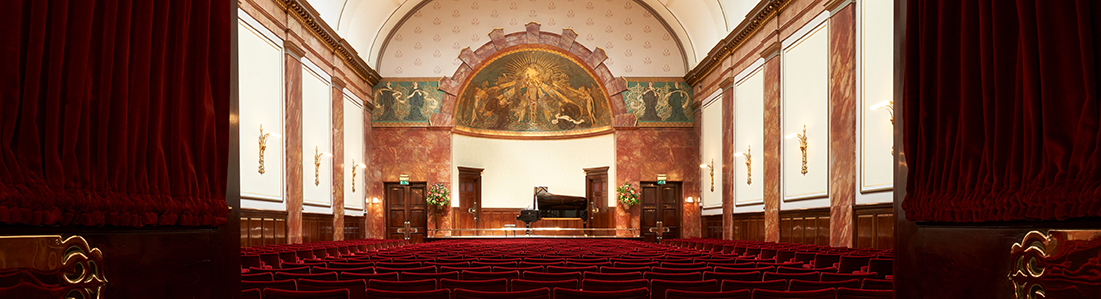
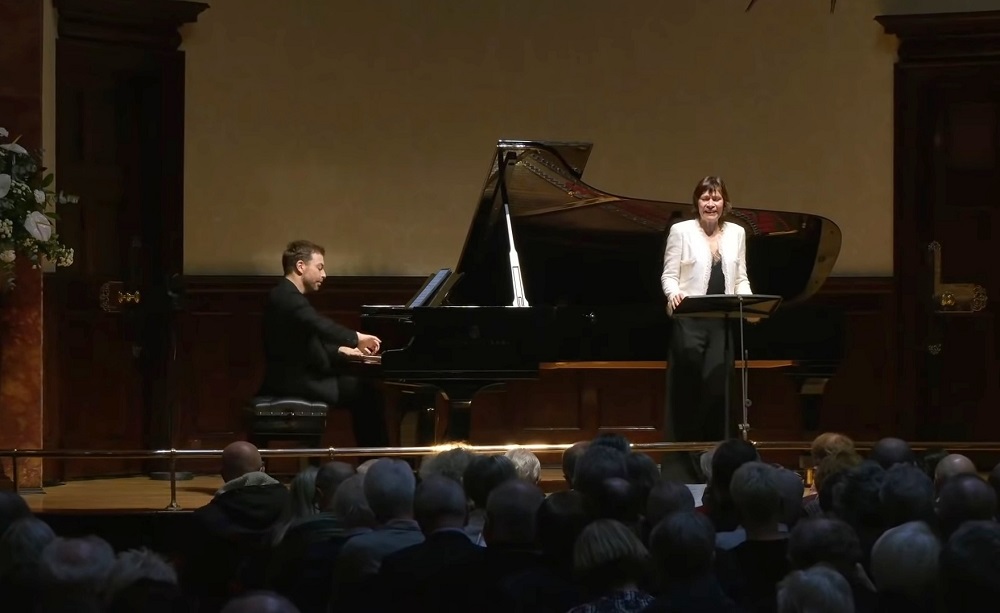
It was heartening indeed to see the Wigmore Hall at capacity for the visit of soprano Sandrine Piau and pianist David Kadouch, bringing with them a new program with the theme of Journeys: Longing and Leaving.

They delivered the songs in two ‘halves’, one of German Lieder drawn  from the first half of the 19th century, the other of French song from the late 19th and early 20th centuries, giving us a smooth trajectory from Schubert to Debussy.

Refreshingly the journey took in substantial contributions from Clara Schumann and Lili Boulanger, three songs from each – as well as showing the increasing influence of Wagner on even the smallest forms of vocal music as the century turned.

Singing from a tablet, Sandrine Piau gave heartfelt performances and had the ideal foil in David Kadouch, whose brushstrokes on the piano were immediately telling. His chilly introduction to the third song in the Schubert group, Nur wer die Sehnsucht kennt, set the tone after a characterful first song and a sorrowful second, with a soaring vocal line from the soprano. Piau sang with arms outstretched, expressively capturing all the ornamentation and hitting the depths of the song’s turbulent middle section.

The Clara Schumann selection was fascinating, especially given the context of husband Robert’s well-known productivity in the years 1841-1843. The urgent Er ist gekommen was first, a heady song sitting high in the range, before a setting of Heine from just after Schumann’s celebrated year of song, a yearning and ultimately tragic number with a limpid commentary from the piano. The Loreley started in the same key, pushing restlessly forward. The only Schumann song in the program retained its intensity despite a noisy mobile phone introduction, a very different setting to the same text as tackled by Schubert at the start.

Turning to France, we heard two from the small output of Henri Duparc, whose entire output barely covers the length of a single concert. There is quality rather than quantity, however, and we heard the celebrated L’invitation au voyage, sumptuously performed with great poise. The two found the ideal pacing for La vie antérieure before it, solemn but quite open, and building to a powerful declamation.

Lili Boulanger wrote powerfully original music before her tragic death at the age of 24. Her orchestral tone poems have received greater exposure of late but the songs have remained relatively hidden. Piau and Kadouch put that to rights with three songs drawn from the wartime collection Clairières dans le ciel. They found an ominous tone in the lower vocal register from Piau, all the more so given the retrospective knowledge that Boulanger would only live for another three years from when the songs were written. The pained complexion at the end of Si tout ceci n’est qu’un pauvre rêve from Piau was profoundly affecting, then a slightly more optimistic Je garde une médaille d’elle led to the purity of Vous m’avez regardé avec toute votre âme.

Finally a selection from Debussy, prefaced by his final published piano piece Les soirs illumines par l’ardeur du charbon. This was a nice touch as an interlude, and was beautifully played. by Kadouch, We then heard three of the five Baudelaire poèmes, beginning with a babbling fountain shaded by Kadouch as Piau’s voice floated easily above. Recueillement (Meditation) found stillness initially but with the poet, distracted by darker thoughts, was mirrored by the music breaking from its reverie. Piau judged the awkward intervals perfectly, especially the final words with their harmonic transformation. The ultimate farewell was saved for last, La mort des amants quite a complex song. As with much early Debussy the harmonies travelled far but arrived at a strangely logical end point, both performers exhibiting exceptional control at journey’s end.

Piau spoke of the program giving ‘therapy after these two long years’, after which Beau Soir – one of Debussy’s celebrated songs – proved the ideal encore, though as the soprano warned, it was essentially saying, “Look at these beautiful things, because everybody goes in the same direction – death!”

Watch and listen
In concert – Elizabeth Watts & Julius Drake perform the music of Imogen & Gustav Holst @ Wigmore Hall

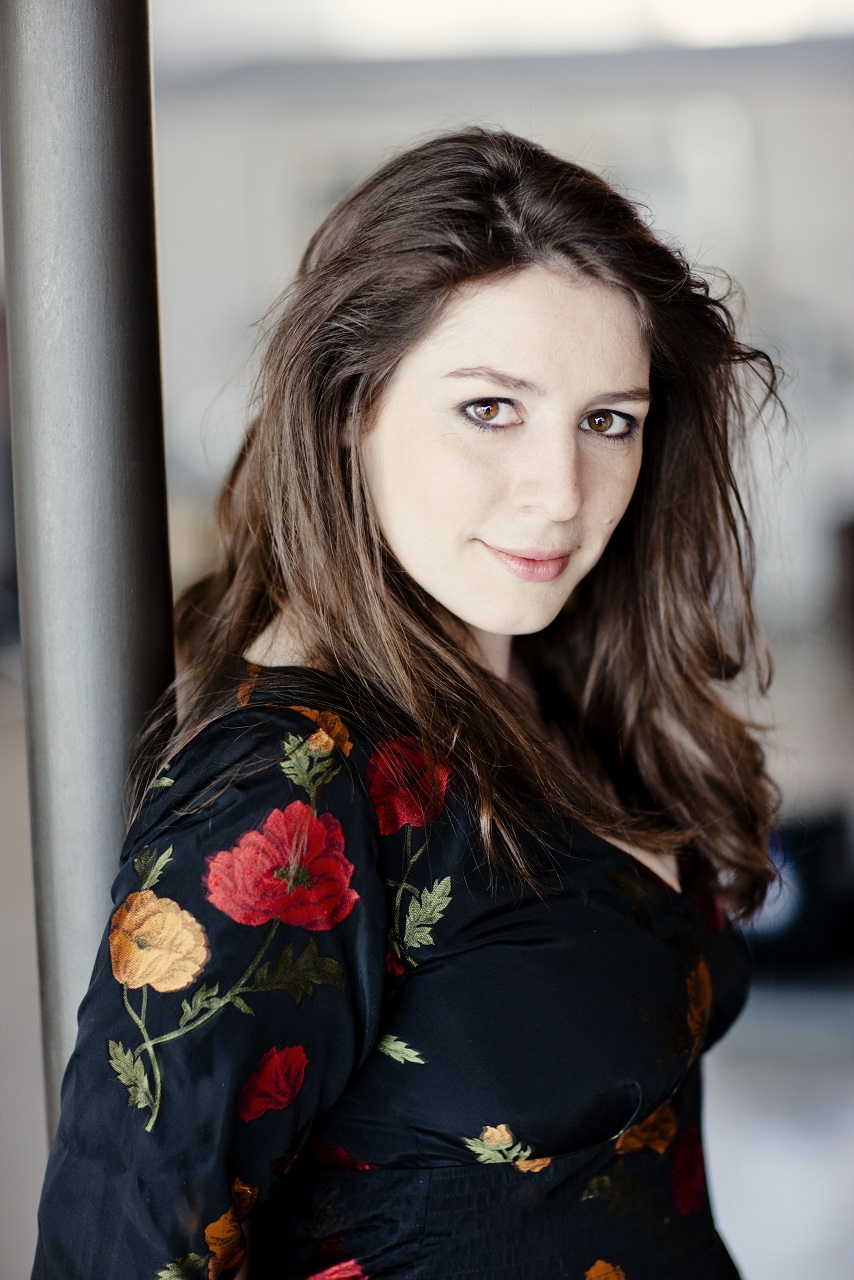
Elizabeth Watts (soprano, above), Julius Drake (piano, below)

Gustav Holst Calm is the morn Op. 16 No. 1 (1903-4), Persephone Op. 48 No. 1, Betelgeuse Op. 48 No. 12 (1929), The heart worships (1907), The Floral Bandit Op. 48 No. 6 (1929)
Imogen Holst Weathers (1926), 4 Songs from Tottel’s Miscellany: Shall I thus ever long, As lawrell leaves (1944), 10 Appalachian Folk Songs: My dearest dear, The brisk young lover, I must and I will get married (1938, world première performances)
Gustav Holst Hymns from the Rig Veda Op. 24 (1907-08)

Wigmore Hall, London, 3 January 2022

reviewed by Ben Hogwood from the online broadcast. Artist photos (c) Marco Borggreve

The songs of Gustav Holst have largely eluded British performers and concert audiences over the years, and a quick scan over retail sites reveals just the one recording in the last decade. The songs of Imogen Holst, meanwhile, are even more scarce, so it was doubly welcome that this imaginative recital from soprano Elizabeth Watts and pianist Julius Drake chose to pair works by father and daughter.

Holst senior was a composer capable of finding unusual stillness in music, as the Venus and Neptune movements from his orchestral suite The Planets testify. That talent extended to his songs, and we heard several examples where the composer took his time to set the scene, helped in extremely sympathetic performances from Watts and Drake.

Calm is the morn, a Tennyson setting, found a deep peace tinged with sorrow, though the high notes floated effortlessly by Watts were rather special. These contrasted vividly with the stately Betelgeuse, low in the range while contemplating the end of life – just as Neptune explored the boundaries of the living and the dead at the edge of the solar system. In theory Betelgeuse, with text by Holst’s good friend, the poet Humbert Wolfe, should be more effective with a male voice but Watts found the mysterious depths too. Drake’s tolling chords were the ideal foil, and indeed the pianist proved sensitive to every slight nuance in his scene setting, particularly the slow chorale figure of The heart worships. This was another setting that took its time but was all the more moving for it, with the soprano’s low range well controlled. The Floral Bandit, another Wolfe setting, flitted between quick piano figurations and a restless, high contour from the voice, deliberately uncertain in its direction. Meanwhile Watts’ fretful tones caught the urgency given to Persephone.

Holst was always a keen melodist, a quality that runs through Imogen’s music too. As her father did, she had a keen interest in folk melodies both from this country and further afield, and it was fascinating to compare Watts and Drake’s Anglo-American selection, sourced with help from the Benjamin Britten archive at the Red House, with the songs digitised for performance here.

Imogen’s writing celebrated the open air, its melodies often reaching for the sky. The first song Weathers revelled in its freedom, with a lovely pointed piano part to offset the folksy tune. Drake then enjoyed the trippy syncopations from the piano, combining with a bright soprano line for Shall I thus ever long, Watts keeping clarity in the quick moving words. The slightly elusive As lawrell leaves was next, before the three Appalachian folk settings, collected by Cecil Sharp, exhibited a powerful yearning quality. My Dearest dear kept the folk melody true but turned the melody beautifully. The brisk young lover could almost have been Gustav Holst himself, though Imogen’s piano parts felt more directly connected to the melody. There was an unexpectedly devastating beauty to the simple, sad, final verse, before I must and will get married took a lighter approach.

A rare performance of the complete set of Gustav Holst’s Hymns from the Rig Veda followed. It is remarkable to think these works were published in 1908, for they still sound forward looking today, written as they were after the composer made his own translations of the sacred texts.

Holst’s advanced harmonic thinking was distilled by Drake, while Watts took the longer and more complex melodic phrasing in her stride. The accumulating brightness of Ushas (Dawn) gave way to a stern Varuna I (Sky), where confession of sin was made and ultimately quashed. The sudden movements of Maruts (Stormclouds) came as something of a shock, with the flashing of sword blades, before Indra (God Of Storm and Battle) assumed a regal air with grand chords and a bold melody, strong as an ox under Watts’ delivery. Really impressive power from both in this song. Varuna II explored mysterious and ultimately deathly waters, the listener almost losing a harmonic centre, before Song of the Frogs charmed with its burbling activity. Vac (Speech) gave us another slow and concentrated song, while Creation was even more compelling with its haunting, mostly unaccompanied writing. Finally the wandering piano line for Faith found the soprano ‘rising in silent worship’.

This remarkable set of songs are not only harmonically adventurous but have words that are prescient for today’s climate and particularly the management of the Earth on which we live. Little did Holst know the way in which his work would be thought provoking nearly 115 years on. Watts recognised this, lending a lighter touch to her encore which was Imogen’s arrangement of Henry Carey‘s The Beau’s Lament, brightly sung.

This was a special concert, one of a kind – and a mention should be made for the quality of Wigmore Hall’s camera work, sensitive to both text and performers. Copyright restrictions may prevent them from doing so, but it would be wonderful to see Watts and Drake present this programme in recorded form, for they illuminated aspects of the Holst dynasty rarely glimpsed in the concert hall. Do watch it if you can.

Watch and listen

Sadly the Imogen Holst songs are not yet available in recorded form, but you can the selection from her father Gustav on the Spotify playlist below:

Music online – BBC Radio 3 to restart Wigmore Hall concerts behind closed doors

Since its beginnings five years back, Arcana has made a big deal of the BBC Radio 3 Lunchtime Concerts at the Wigmore Hall on Mondays, covering the majority of recitals given in that time. The concerts bring a great deal of pleasure to listeners not just in the hall but at home, brightening up a dreary Monday on many occasions. Their availability on catch-up through BBC Sounds only heightens the xpe
Very happily the concerts are to return to our homes. With the Wigmore Hall closed to the public until September, Alan Davey, Controller of BBC Radio 3 and John Gilhooly, Director of Wigmore Hall, have today confirmed the first live classical music broadcasts on BBC Radio 3 from Wigmore Hall, following the nationwide lockdown.

A series of 20 concerts will take place at 1pm every weekday throughout the month of June, starting on Monday 1st. The series will mark Wigmore Hall’s temporary re-opening, as well as BBC Radio 3’s return to live concert broadcasting, part of their Culture in Quarantine initiative.

Programmes are to be confirmed, but rather excitingly the artists confirmed include a wide array of British-based talent, listed alphabetically below:

James Baillieu (piano), Benjamin Baker (violin), Iain Burnside (piano), Allan Clayton (tenor), Michael Collins (clarinet), Imogen Cooper (piano), Lucy Crowe (soprano), Nicholas Daniel (oboe), Iestyn Davies (countertenor), Julius Drake (piano) Benjamin Grosvenor (piano), Angela Hewitt (piano), Stephen Hough (piano), Elizabeth Kenny (lute), Pavel Kolesnikov (piano), Paul Lewis (piano), Michael McHale (piano), Joseph Middleton (piano), Mark Padmore (tenor), Hyeyoon Park (violin), Timothy Ridout (viola), Sean Shibe (guitar), Anna Tilbrook (piano), Samson Tsoy (piano), Ailish Tynan (soprano), Mitsuko Uchida (piano), Adam Walker (flute), Roderick Williams (baritone)

Arcana will be looking to cover a number of these concerts, offering listening guides as we have done for five years. See you in the virtual concert hall!

Ben Hogwood

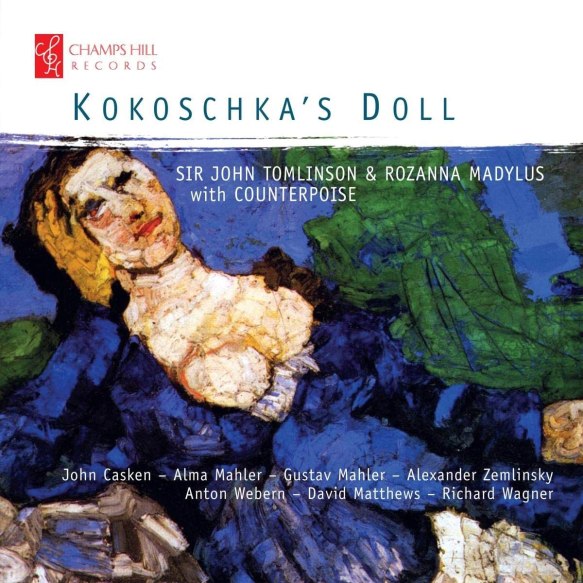
On record – Sir John Tomlinson, Rozanna Madylus & Counterpoise: Kokoschka’s Doll (Champs Hill Records))

Rozanna Madylus (mezzo-soprano), Sir John Tomlinson (bass), Counterpoise [Kyle Horch (saxophone/clarinet), Deborah Calland (trumpet), Fenella Humphreys (violin), Iain Farrington (piano)]

Music by John Casken, Alma Mahler, Gustav Mahler, David Matthews, Richard Wagner, Anton Webern and Alexander Zemlinsky

Champs Hill Records CHRCD150 [81’54”]

Producer Matthew Bennett
Engineer Dave Rowell

Recorded 21-22 May 2018 & 17 January 2019, Music Room, Champs Hill, Sussex

Written by Richard Whitehouse

What’s the story?

The enterprising ensemble Counterpoise returns with its second release – an ambitious and wide-ranging selection centred upon that redoubtable femme fatale who was Alma Mahler and with a major new piece of music-theatre featuring Sir John Tomlinson from John Casken.

What’s the music like?

The generous programme effectively divides into two parts. The Art of Love opens with four songs by Alma – her setting of Julius Bierbaum’s Mild Summer Night and A Nocturnal Light followed by that of Gustav Falke’s Harvest Song, all of them accorded a fresh perspective in resourceful arrangements by David Matthews. Much the finest is the recently located setting of Leo Greiner’s Lonely Walk, but even this must yield to the radiance of Paul Wertheimer’s Blissful Hour by Zemlinsky, Alma’s lover before Mahler and an underrated Lieder composer.

Matthews’s subtle arrangement of Mahler’s rapturous Rückert setting If You Love for Beauty, followed by his ominous Wunderhorn setting Where the Splendid Trumpet Sounds, proceed Iain Farrington’s violin-and-piano transcription of the start of the Adagietto from Mahler’s Fifth Symphony (it would be worth hearing the rest). Webern’s glinting Trio Movement for clarinet, trumpet and piano is intriguingly countered by Matthews’s hardly longer yet more equable Transformation (with addition of piano); after which, his arrangement of Wagner’s Dreams (last of five settings after Mathilde Wesendonck) underlines its rapt introspection. Rounding off this first part with Liszt’s take on Isolde’s Liebestod might almost be thought rather predictable, but Farrington’s pointedly unshowy rendering is an undoubted pleasure.

The second half of this programme is devoted to Kokoschka’s Doll – a melodrama for bass-baritone and ensemble by John Casken, who has also devised the text in collaboration with Barry Millington. Drawing on the artist’s letters and autobiography, this almost 40-minute piece focusses on Kokoschka’s fractious liaison with a recently widowed Alma Mahler, his near-death experience as a soldier on the Eastern front, then his ill-fated attempt to recreate Alma as a doll to his idealized specifications. Unfolding between past and present, the text provides plenty of leeway for Sir John Tomlinson to convey the tortured while not a little self-seeking protagonist through an adept interplay of speech and parlando – dispatched with his inimitable blend of fiery rhetoric and soulful rumination. Instrumentally the music is rich in timbral and textural nuance, following the emotional ebb and flow of Kokoschka’s musings as they spill over into the irrational. An engrossing concept, skilfully realized, which would certainly be worth presenting in a scenic version at some of the UK’s many studio-theatres.

Does it all work?

As an overall sequence, certainly. Counterpoise is an object-lesson of unity within diversity, whether in the range of music this ensemble brings together or in the arresting nature of the arrangements it favours. Added to which, the singing of Rozanna Madylus is a treat in store.

Is it recommended?

Indeed. Performances and recording leave nothing to be desired, while the booklet features a succinct introduction by Millington along with reproductions from Kokoschka’s drawings of his ‘Alma Doll’ – more appealing visually than it becomes at the denouement of the scenario!

Listen and Buy

You can read more about this release, listen to clips and purchase from the Champs Hill website

In concert – Carolyn Sampson & Joseph Middleton: The Contrast

Carolyn Sampson (soprano, above), Joseph Middleton (piano, below)

Wigmore Hall, Friday 14 February 2020 (lunchtime)

Review and guide by Ben Hogwood
Photo credit Marco Borggreve

Once best known for her interpretations of Baroque music, Carolyn Sampson is revelling in the world of song. With musical partner Joseph Middleton painting pictures from the piano, she has made a number of attractive releases for the BIS label – of which The Contrast is the latest.

This Wigmore Hall concert doubled as the album launch event, and was programmed with a wide range of responses to settings of English text. The pair began with Sir William Walton’s multi-poet cycle A Song for the Lord Mayor’s Table, reminding us just how different London was when this was written in 1962. The balance was tricky in The Lord Mayor’s Table itself, where there is a lot going on in the piano part, but Sampson carried her line with verve. Her accent on Wapping Old Stairs was well judged for subtly comedic effect, while Holy Thursday cast a spell and Rhyme ended the cycle with a flourish.

The songs of Roger Quilter can really blossom in the right hands, and Sampson sang this selection of five beautifully. The flowing My Life’s Delight and softer By a Fountainside showed off her natural delivery, Middleton responding with lovingly caressed accompaniment. Dream Valley was a beautiful reverie as dappled sunlight shone across the Wigmore Hall, while the Arab Love Song was urgent and fleet-footed, while Fair House of Joy ended the selection with a winning smile.

Huw Watkins wrote his Five Larkin Songs for Sampson, and was present for this powerfully affecting performance. The challenge of setting Larkin’s occasionally bleak verse is realised with music of passion and dramatic impact, and as she said from the stage, Sampson clearly loves to sing the songs. The wandering piano line of Who called love conquering? contrasted with the awkward shifts in the soprano line, both of which were handled extremely well. Sampson’s ringing delivery brought expressive power to Love Songs in Age, as did her instinctive use of vibrato. The end of Larkin’s wry poem Money, ‘it is intensely sad’, left a strong aftertaste, while Dawn showed a hint of Britten in its setting. The delivery of the last line, ‘How strange it is for the heart to be loveless, and as cold as these’, made an impression with its completely (and deliberately) flat tone.

Finally we heard five songs from Frank Bridge, whose contribution in this area is still underrated. That is in spite of heartwarming songs such as Go not, happy day, which was full of smiles in this performance, bubbling over with good feeling. Adoration showed of a sumptuous vocal tone, while Come to me in my dreams could have been written for such a voice. Once again Middleton’s accompaniment was ideally weighted and phrased, the two combining for a magical and poignant encore of Bridge’s Yeats setting When You Are Old, powered by an achingly tender melody from the piano.

Repertoire

This concert contained the following music:

Walton A Song for the Lord Mayor’s Table (1962)
Quilter My Life’s Delight Op.12/2 (1908), By a Fountainside Op.12/6 (1908), Dream Valley Op.20/1 (1916), Arab Love Song Op.25/4 (1927), Fair House of Joy Op.12/7 (1908)
Watkins Five Larkin Songs (2009-10)
Bridge When most I wink (1901), Go not, happy day (1903), Adoration (1905), Come to me in my dreams (1906), Love went a-riding (1914)

Further listening & viewing

You can listen to the whole of the In Contrast release on Spotify here:

To hear clips and to purchase, In Contrast can be found on the Presto website