Wigmore Mondays: Fatma Said sings Schumann, Mendelssohn, Poulenc & Sherif Mohie El Din with James Vaughan

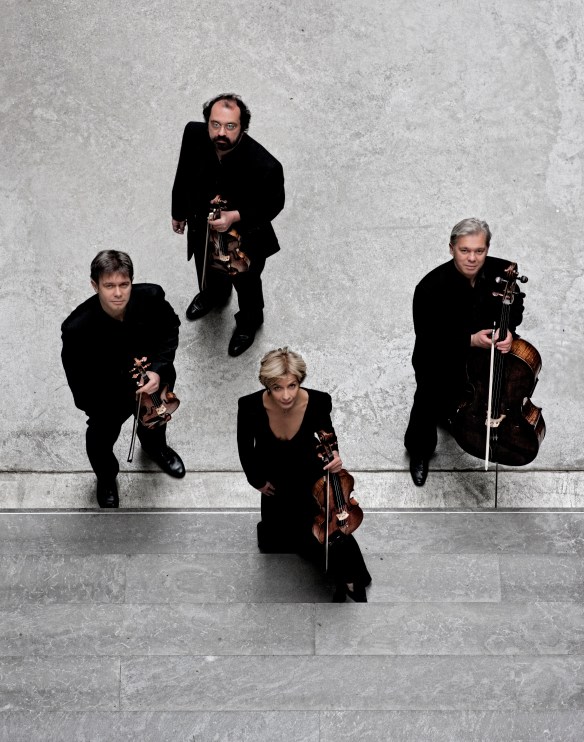
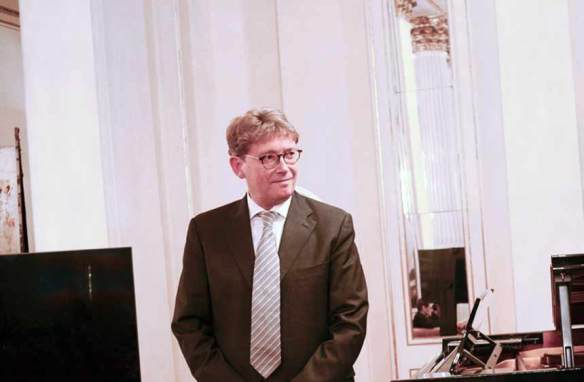
Fatma Said (soprano, above), James Vaughan (piano, below)

Schumann 6 Gesänge Op. 89 (1850); Singet nicht in Trauertönen Op.98a/7, Liebeslied Op.51/5 (both 1849), Requiem Op.90/7 (1850)
Mendelssohn Die Liebende schreibt Op.86/3 (1831), Ach, um deine feuchten Schwinge (Suleika) Op.34/4 (1837), Hexenlied Op.8/8 (1827)
Poulenc Les chemins de l’amour, from Léocadia (1940), 2 poèmes de Louis Aragon (1943)
Sherif Mohie El Din Three Poems by Amal Donqul (1989)

Wigmore Hall, London; Monday 15 January 2018

Written by Ben Hogwood

The broadcast can be heard on the BBC iPlayer by clicking here

As a demonstration of artistry, this was quite some Wigmore Hall debut for soprano Fatma Said, a BBC Radio 3 New Generation Artist. The Egyptian singer used four languages in the course of an hour, and showed an aptitude for contrasting musical styles in a cleverly constructed programme.

It was good to hear less familiar Schumann songs as a starting group (from 1:32 on the broadcast) The set of six, published as Op.89, were written in the composer’s second ‘year of song’, the productive 1850. They set words by Wilfriend von der Nenn (a pseudonym for Wilhelm Schöpf), and show off an economy and intensity of word setting, with none lasting more than two minutes.

Said caught the agitation running through Es stürmet am Abendhimmel (There are storms in the evening sky) (1:32), set up by a wonderfully turbulent introduction from the excellent James Vaughan. A flowing Heimliches Verschwinden (Stealthy departure) (3:07) led to the yearning harmonies of Herbstlied (Autumn song) (5:12), then the softer hearted Abschied vom Walde (Farewell to the forest) (7:38). Both performers threw wide the curtains for a bracing Ins Freie (Out in the open) (9:45), before Röselein, Röselein! (Rose, little rose) (11:54) began with a striking solo, setting its dreamy mood.

A group of three more Schumann songs followed, the bright and carefree Singet nicht in Trauertönen (Do not sing in mournful tones) (15:20) leading to Liebeslied (Love Song), where there was a nice rapport from both performers in the song’s ebb and flow (17:38). Requiem (19:46) had a restrained and respectful air.
Mendelssohn’s songs are less-often heard, but carry melodic invention along with often incredibly challenging piano parts! A thoughtful Die Liebende schreibt (The beloved writes) (24:55) and the more urgent Ach, um deine feuchten Schwingen (Ah, West Wind, how I envy you) (27:51) were nicely done, but the Hexenlied (Witches’ song) (30:34) was something else, the high notes nailed impressively by Said while Vaughan handled the flurry of notes with apparent ease.

The pair then turned to Poulenc, whose songs are the jewel in the crown of his musical output. We heard three brief but meaningful numbers, Les chemins de l’amour (The paths of love) (34:44) caught the efforts to stay cheerful despite the approach of World War II in 1940, while C (38:51) dealt with the immediate and horrific aftermath. Fêtes galantes (41:40) was a bit too breathless, but maybe that was the point as it raised a laugh!

Said then turned to ‘home away from home’, introducing three songs by Egyptian composer Sherif Mohie El Din, a welcome move that introduced a new sound world to the Wigmore Hall as well as showing the soprano’s clear passion for music and words of her first language.

The musical depiction of The Rain (from 44:22) was vivid and featured well-placed silences, the piano part enhancing the effect of raindrops. Could the river flow forever (46:50) had darker shading, while the final Against whom?  (49:57) was a tortuous and anguished study of feelings felt during surgery.

The performers generously gave us two encores – a further Egyptian song, Daughter of the Sultan by Gamal Abdel-Rahim (54:41) and then, after the radio went off air, Old Sir Faulk by Sir William Walton, with accompanying gestures from the soprano.

This emphasised how at home she is on the stage, and capped an extremely impressive and enjoyable recital, where a blend of musicianship and communication of the messages behind the text was always the primary goal. Both performers succeeded comfortably.

Further listening

You can listen to recorded versions of the repertoire in this concert on this Spotify playlist, apart from the Sherif Mohie Eldin songs which are not on the streaming service:

Meanwhile here is a link to the Sherif Mohie Eldin official YouTube page, including the three poems performed in the concert:

Wigmore Mondays – Baiba and Lauma Skride play Nordic works for violin and piano

skride

Baiba Skride (violin) and her sister Lauma (piano, both above)

Wigmore Hall, London, 2 May 2016

written by Ben Hogwood

Audio (open in a new window)

http://www.bbc.co.uk/programmes/b078wy1n

Available until 31 May

What’s the music?

Sibelius Four Pieces Op. 78 (1915-17) (13 minutes)

Vasks Maza vasaras muzika (Little Summer Music) (1985) (10 minutes)

Rautavaara Summer Thoughts (1972/2008) (4 minutes)

Nielsen Violin Sonata No. 2 in G minor Op. 35 (1912) (20 minutes)

Spotify

In case you cannot hear the broadcast, recordings of the music played can be found on the Spotify playlist below. Neither of the Skride sisters have recorded this repertoire before, but there are other versions picked out instead:

About the music

An intriguing program based on the first instrument of composers Sibelius and Nielsen – the violin. While both composers wrote violin concertos that are either extremely well known (Sibelius) or appreciating gradually (Nielsen) their music for violin and piano is almost shrouded in secrecy.

Sibelius wrote a few sonatas but much more in the way of short pieces for violin and piano, many of which were requested as commissions for the salon market. The four here are characteristic examples of a composer who uses economy in his writing, often ending his pieces abruptly but using music of charm and poise – and inventive textures.

Nielsen’s Violin Sonatas are rarely heard, but the second sonata, completed in 1912, is a substantial piece that shows the composer’s ease with dealing in bigger forms of music. The second sonata falls between the third and fourth symphonies in his output.

We also hear shorter pieces for violin and piano by two composers heavily influenced by Sibelius and Nielsen, the Latvian Peteris Vasks and Finnish composer Einojuhani Rautavaara. The warmth felt in both sets of pieces show how Nordic music is not just about the cold!

Performance verdict

Arcana was not at the concert at the Wigmore Hall, but listening to the broadcast it is clear of the involvement both performers have in these works.

The deep-seated passion running through the third of the Sibelius pieces is striking and intense, with the technical mastery of what sounds like a tricky Rigaudon very stylishly achieved.

If anything the Second Violin Sonata of Nielsen carries a greater impact, for this is an impressive piece of work whose stature grows with each hearing. It is unjustly neglected for sure, and the Skride sisters give it an excellent performance here, the violinist’s tone especially impressive in the longer notes used by the composer for many of his themes.

Providing light for the relative shade are the works by Vasks and Rautavaara, full of charm, warmth and melodic invention. They complete a program with an outdoor feel, and both performers give this seldom-heard music the fresh performances it deserves.

What should I listen out for?

Sibelius

1:57 Impromptu The first piece of the four has a dreamy piano and more energetic violin, which feels free spirited over the relatively static harmony.

4:01 Romance The sweet tone of the romance is carried by the violin’s melody over a calm piano accompaniment. There is a childlike quality to the main material reminiscent of Schumann, but the music becomes more passionate.

7:14 Religioso A heavier feel to this, especially in the piano, which uses more of the keyboard in its part, and the lower register of the violin too. A melancholy piece.

12:55 Rigaudon A French dance that starts commandingly in the major key but then has a brief shadow of darkness (13:19) when it shifts into the minor. The rhythm is often syncopated in a way that suggests the tango, and the piece ends abruptly – as so many Sibelius pieces do!

Vasks

16:42 The opening section of this piece (marked Breit, Klangvoll) sounds like bird calls exchanged between the violin and piano.

17:55 A slow episode (marked Nicht Eiland), sweetly sung by the violin.

19:27 A dance, led by the violin, with a rustic, outdoor feel.

21:10 The music takes a serious tone, moving to a minor key, and appears lost in thought.

23:53 –  a glittering descent on the piano (a glissando) introduces another folksy section, with an outdoor feel.

25:21 – once again we hear the first section, with its bird calls.

Rautavaara

27:14 – Rautavaara’s interpretation of summer is a dreamy one, with a wandering line on the piano, but it gradually gathers its intensity for a passionate middle section, falling back and then gathering once again with the violin holding long, lyrical notes. It then fades into the middle distance.

Nielsen

32:25 – initially the mood is calm, starting on the lowest note of the violin, but the music wanders and soon the violinist is taking charge of a passionate section that includes a grand theme in C major around 34:31. By 37:30 the music is a little lighter on its feet but the exchanges continue to brim with passion. The movement ends with reflection at 39:40.

39:55 – the slow movement begins with a broad melody from the violin. The long notes are countered with a restless piano part. That spills over into a fraught statement at 40:48, after which the music calms down. The piano figure can never be fully shaken off however, and even when the movement ends sweetly at 46:48 it does so with the two note progression the piano used almost all the way through.

47:18 – the third and final movement flows with more serenity, and then the piano at 48:44 introduces a jubilant episode, joined in a high register by the violin. By this point the music has reached E major – the same key Nielsen uses as a home base in his exuberant Symphony no.4 (the Inextinguishable). The music gathers greater energy, and at 51:10 the piano hammers out brittle, percussive notes before the music fades to end.

Encore

53:11 – the Mazurka by Sibelius, Op.81/1, the first of five published pieces. This is a piece with plenty of fire in its introduction, but charm when the theme is heard again, softly, at 53:52. The violin has to move between passionate low register tune and a swift upsurge to the high register.

Further listening

Baiba Skride has recorded both the Sibelius and Nielsen Violin Concertos, and these can be heard in company with Sibelius’ 2 Serenades for violin and orchestra. They are on Spotify here:

Wigmore Mondays – Michael Collins and the Borodin String Quartet play Mozart

borodin-quartet

Michael Collins (clarinet) and the Borodin String Quartet (above) (Ruben Aharonian and Sergei Lomovsky (violins), Igor Naidin (viola), Vladimir Balshin (cello)

Wigmore Hall, London, 25 April 2016

written by Ben Hogwood

Audio (open in a new window)

http://www.bbc.co.uk/programmes/b07866f4

Available until 24 May

What’s the music?

Tchaikovsky, arr. Rostislav Dubinsky – Album d’enfants, Op.39 (1878) (29 minutes)

Mozart – Clarinet Quintet in A major, K581 (28 minutes) (1789)

Spotify

In case you cannot hear the broadcast, recordings of the music played can be found on the Spotify playlist below, including a recording of Rostislav Dubinsky’s arrangement:

About the music

Tchaikovsky’s Album d’enfants follows in the footsteps of Schumann’s collection for piano of the same name, yet this set of 24 piano miniatures is designed to be played by children as well. It includes dances, children’s pieces, portraits and flights of fancy, with most pieces little more than a minute and a half in length.

In it the composer allows his inner child to run free, in the same manner it was to do later in life in the ballets The Sleeping Beauty and The Nutcracker. This arrangement for string quartet was made by the Borodin String Quartet’s previous first violinist, Rostislav Dubinsky.

michael-collins

Clarinetist Michael Collins

Mozart’s Clarinet Quintet is probably the best known work for the combination of clarinet and string quartet, and it was written late in his life – 1789 – for the clarinettist Anton Stadler. It is written in A major, the same key the composer was to use for his final orchestral work, the Clarinet Concerto, and is notable for its sunny mood.

Performance verdict

This was a charming concert, though the Borodin String Quartet did take quite a serious approach to even the most infantile of Tchaikovsky’s character pieces. They were effective in their arrangements, and the quartet played with charm, delicacy and poise.

The Clarinet Quintet enjoyed a similar performance – serious but enjoying the work’s abundance of melody, although the decision not to employ the repeats Mozart marks in the first two movements changed its dimensions rather. Michael Collins was a good match, allowing himself a freer rein at times in the solo part, and while the quartet and clarinettist did not exchange much in the way of glances during the performance, theirs was an account notable for its unity. When played as beautifully as it was here, the Clarinet Quintet is as vivid an evocation of spring as you could wish to hear!

What should I listen out for?

Tchaikovsky

1:20 Morning prayer a charming, contented slow piece

2:42 A Winter morning – quite a blustery one by the sounds of it! Quicker interplay between the instruments

3:32 The Hobby-Horse – a quick portrait of a horse that seems to be difficult to capture!

4:17 Little Mother – soft and reassuring music that speaks of safety and warmth

5:55 March of the Wooden Soldiers – the title sounds like something out of The Nutracker, and the tune is similar. A crisp march.

6:49 The Sick Doll – the mutes are on for this fragile, mournful portrait, which sinks despondently into its minor key.

8:20 The Doll’s Funeral – the doll has now died, and this movement marks its passing with plaintive pizzicato.

9:49 The New Doll – the funeral has passed and a relatively quick and brief waltz, the face of the new doll lifts the mood from the doldrums.

10:29 Old French Song – A solemn piece, but with elements of warmth too. A beautifully scored movement, this has a lovely unison between first violin and cello.

11:48 German Song – this cheery dance has a jagged rhythm and opens out into quite a knees-up! The viola (I think) can be heard tapping its strings rhythmically half way through.

13:00 Italian Song – this has a lovely warmth, and the full part writing allows us to hear a lovely, rich quartet sound, with the cello plucking underneath.

14:15 Neapolitan Song – here the peasant is playing a form of concertina – and it sounds a lot of fun from the cello plucking and the sprightly tunes from the quartet!

15:24 Waltz – this has a lovely, simple tune for first violin, with the other instruments mostly off the beat.

16:52 Mazurka – a grand introduction from the cello with multiple stopping (playing more than one string at once), taken over by the violin

18:10 Polka – a charming, brief dance, lively and with some imaginative violin harmonics at the top end.

19:21 Russian Song – a solemn intonation from each instrument in turn, taking on the form of a canon but then settling to a relatively calm finish

20:21 The Peasant Plays His Ziehharmonika­ – the instrument effectively portrayed here is the concertina, the quartet playing as one.

21:05 Popular Song (Kamarainskaya) – this is brilliantly sent up by the violin especially, with squeaky high harmonicas like an old creaking chest of drawers

22:28 Sweet Dreams – a sentimental tune where Tchaikovsky allows some indulgence

24:43 The Old Nurse’s Tale The scratchy strings here give a lovely impression of old age, and the tale itself is lightly humorous.

25:40 The Witch: Baba-Yaga Even more scratchy is the old witch, played with the bows right close to the finger board for a more scary sound.

26:22 Song of the Lark The lark makes a beautiful sound here, thanks to the first violin over warm string accompaniment.

27:52 The Organ-Grinder Sings – over the held chords of the organ the first violin sings in a rather small voice.

29:02 In Church – a solemn finish to the cycle, given by the quartet in very subdued and rather eerie tones.

Mozart

27:07 – the first movement (marked Allegro) begins with the strings, a restful series of chords that are actually the first theme, a support for when the clarinet rises through the texture. Then, a minute later, the clarinet enjoys a tune that rises through the texture, floating gracefully. At 30:06 Mozart develops his ideas, the main theme coming back at 31:18.

34:01 – the second movement is marked Larghetto. In the key of D major, it is notable for its restraint and beautiful, spaced out melody heard on the clarinet at the outset. The melody returns at 37:50 in an even softer guise, peaceful and rather moving.

40:44 – a stately Minuet for the third movement, led by the clarinet but egged on by the strings. Mozart includes two contrasting ‘Trio’ sections – the first in the key of A minor (42:01). The Minuet section is repeated at 43:59 before a second trio at 44:40, another graceful dance led by the clarinet. The Minuet returns for the final time at 47:00.

47:47 – the final movement consists of a perky theme from the strings, embellished by the clarinet – and then five variations on it. The first (48:36) gives the clarinet a free reign, the next (49:30) hands over the baton to the first violin in an energetic section. The third (50:25) moves into the minor key and a brief shadow falls over the music, before 51:36, where the clarinet joyously lets itself go in the fourth variation. Then the music pauses, almost in an operatic sense, with a complete freedom of tempo as the clarinet leads the movement towards a close – where the perky theme reappears (54:36).

Further listening

Having heard the Borodin Quartet in sympathetic versions of Tchaikovsky, it makes perfect sense to expand that to the composer’s three published string quartets, which are relatively rare in concert these days. They are extremely enjoyable works. The First is notable for its slow movement, the Andante cantabile, which Tchaikovsky arranged for string orchestra, while the Third is a particularly poignant piece of work. As a bonus the album below includes the Souvenir de Florence, the composer’s String Sextet:

Wigmore Mondays – Hagen Quartet play Schubert’s last quartet

Lukas Hagen, Rainer Schmidt, Veronika Hagen, Clemens Hagen (f.l.t.r)

Lukas Hagen, Rainer Schmidt, Veronika Hagen, Clemens Hagen (f.l.t.r)

Hagen Quartet Photo (c) Harald Hoffmann

For this performance, Veronika Hagen had to miss out with a shoulder injury. The line-up was therefore Lukas Hagen and Rainer Schmidt (violins), Iris Hagen-Juda (viola) and Clemens Hagen (cello)

Wigmore Hall, London, 18 April 2016

written by Ben Hogwood

Audio (open in a new window)

http://www.bbc.co.uk/programmes/b0770ms1

Available until 17 May

What’s the music?

Schubert – String Quartet in G major, D887 (1826) (55 minutes)

Spotify

In case you cannot hear the broadcast, the Hagen Quartet’s recording of this work can be accessed through Spotify on the playlist below:

About the music

Schubert’s last quartet remains shrouded in secrecy. It is however another illustration of the ‘late’ Schubert’s ability to write at tremendous speed. ‘Late’ Schubert of course is the composer in his very late twenties, dogged by illness but still able to write a large string quartet such as this in a mere ten days.

He did not hear it in his lifetime, for the first performance did not take place until 1850 in Vienna – at which point the audience will no doubt have been surprised to note that the first movement, clocking in at well over 20 minutes, is the size of many Haydn quartets. It is classic late Schubert, finding its own sweet time but containing some extraordinary music of poignancy and depth.

It eclipses in size Schubert’s previous biggest quartets, known as the Rosamunde and Death and the Maiden respectively, but it goes further in exploring Schubert’s near-obsession with the conflict of major and minor mentality. The piece is listed as being in G major but often spends time in the minor, creating an exquisite tension resolved only in the final moments.

Performance verdict

Quite simply an outstanding performance from a quartet wholly inside the music. The Hagen Quartet kept extremely concentrated levels of performance throughout a gripping drama that took hold of the listener from the first moment and did not let them go.

The tension of the first movement never let up, its major-minor arguments sustained at an impressive level of intensity, but the second movement introduced more raw emotion in the form of Clemens Hagen’s yearning cello solo. The bubbling scherzo gave a little respite but in the finale the group restored Schubert’s tense arguments, never allowing one to dominate, holding the conflict firm.

They also reminded listeners of just how expansive Schubert’s quartet-writing had become, to the extent that some passages sound like a small string orchestra rather than four players. That the Hagens managed to do this without full-time viola player Veronika

What should I listen out for?

2:27 – the quartet begins and immediately sets out the idea that will give it extreme tension over the next 45 minutes. Here – and seemingly throughout – the music alternates between major (the very beginning) and minor (2:32), the listener torn between happy and sad and never quite sure which is which.

A certain amount of piece descends with the first theme proper from the violin at 3:09, given over hushed tremolos in the other three instruments.

At 6:36 the cello takes over with a beautiful theme, if somewhat hesitantly written in by Schubert. Then at 8:40 the quartet observe Schubert’s instruction to repeat the music from the beginning. From 14:58 the quartet slow the pace a little, giving the main tune a more graceful impression, but the tense movement in the other instruments takes over once again.

At 18:23 a serene home key is reached, and then the music heads into a more emphatic passage, closing out one of the longest single movements in the quartet repertoire (22 minutes)

26:17 – the second movement, marked Andante un poco moto, is a beautiful though rather sorrowful piece of music, introduced by a sparse chord and then passed over to the cello for a reflective, songful tune. This completely dominates the music, though there are two stormy interruptions (28:01 and (31:41), where Schubert feels more unhinged.

However at 34:11 the music shifts to the major, and for a brief moment all cares are forgotten as a shaft of sunlight comes through.

37:17 – the third movement is a Scherzo, and its scurrying main theme again sets the mood for the whole movement. It acts like the wind picking up stray leaves and whirling them around…before they are set down in the ‘trio’ section, beginning at 40:33, which features a charming melody from the cello which is almost suitable for the stage. This is taken up by the violins. The scherzo section returns in its entirety at 42:55.

45:25 – the last movement reinstates the conflict between major key and minor key, and holds it the whole way through til the end. It starts with the nervy tune, and the backwards and forwards continues in music of a distinctly wary energy. At 46:36 the violin introduces another prominent theme, this one more obviously happy in the major key. Then at 49:36 another melody asserts itself, this one more earthbound and like a hymn.

At 50:24 we hear the main idea of the last movement once again…through until at 55:16, when the hymn-like tune is more profound. The music then arrives at a final, massive two part cadence – completed at 57:20.

Further listening

How to follow one of the biggest works in string quartet literature? Well I’ve tried to go for a mixture of big and small in the additions to the playlist. For small-scale, you can enjoy another Schubert movement for string quartet, the brilliant, self-contained Quartettsatz, as it’s known. On a bigger scale, Schubert’s quartet is often compared and contrasted with his Symphony no.9, known as the Great – and that is noted below:

Wigmore Mondays – English madrigals with I Fagiolini

I-Fagiolini

I Fagiolini, conductor Robert Hollingworth. Photo (c) Eric Richmond

Wigmore Hall, London, 11 April 2016

written by Ben Hogwood

Audio (open in a new window)

http://www.bbc.co.uk/programmes/b0769q91

Available until 10 May

What’s the music?

Byrd This sweet and merry month of May (3 minutes)

Wilbye Adieu, sweet Amaryllis; Ye restless thoughts; Draw on a sweet night (9 minutes)

Tomkins Weep no more thou sorry boy; Too much I once lamented (12 minutes)

Gibbons The silver swanne (1 minute)

Ward If the deep sighs (8 minutes)

Janet Wheeler Music to hear (2015) (4 minutes)

William Brooks Oooh Will (2016) (world première)

Adrian Williams Love is a babe (2012) (4 minutes)

Spotify

Most of the music in this concert is not available on Spotify. Where possible a few of the items have been included on the playlist below:

About the music

What is a madrigal? Wikipedia obliges with a good definition, calling it a ‘secular vocal composition, usually a partsong, of the Renaissance and early Baroque eras’. That means roughly speaking the 16th and 17th centuries. Usually the song is unaccompanied, as here.

It is still a relatively rare thing to get the opportunity to hear madrigals in concert, which is where I Fagiolini are so valuable. This richly varied program covers approximately 500 years of music, beginning with popular examples of the form from William Byrd, John Wilbye, Thomas Tomkins, Orlando Gibbons and a descriptive epic from John Ward. Tomkins’ Too much I once lamented is described as ‘one of the great laments’ of the period.

Then the concert fast forwards to celebrate the 400th anniversary of William Shakespeare through three new pieces setting his texts, each written for I Fagiolini themselves. These are responses from Janet Wheeler, William Brooks and Adrian Williams, each finding out for themselves how enjoyable the Bard’s texts remain!

Performance verdict

A few props put the icing on the cake for this hour-long concert of great character and enthusiasm. As compere Robert Hollingworth was ideal, and it was a real education as the vocalists led us through classical English madrigals of old, before illustrating how today’s composers respond to the text of the time.

It would be churlish to criticise the performance, for it was full of energy, crisp and incredibly even, and some contributions – Hollingworth’s in William Brooks’ Oooh Will for instance – almost defied belief! This was the most memorable of the three new pieces, though Adrian Williams’ Love is a babe made a strong impact with its soft-hearted romance, and Janet Wheeler’s Music to hear was memorable especially for its whispered closing bars.

Yet ultimately it was the old classics that made the greatest impression, none more so than Ward’s remarkable If the deep sighs, a powerful and evocative portrait of despair.

What should I listen out for?

Byrd

1:20 A bright sound from the six part ensemble, reflecting the ‘sweet and merry’ month. Short melodic figures are passed between each of the parts in the short song.

Wilbye

4:11 Adieu, sweet Amaryllis A slightly lower pitch for this madrigal, making the contributions of the male parts more audible. There is a lovely open harmonic progression at the end, which is more subdued with just the four parts.

6:16 Ye restless thoughts as though to represent the restless thoughts Wilbye bombards the listener with short fragments of melody. This madrigal is in just three parts.

8:32 Draw on a sweet night a slow and richly scored madrigal, reflective but also quite subtly passionate.

A spoken introduction from Robert Hollingworth follows…then leads to…

Tomkins

14:59 Weep no more thou sorry boy A poignant beginning to the song, which then begins to stress certain words and phrases in quicker figures (such as the phrase ‘if she chide’)

21:15 Too much I once lamented Some spicy harmonies and complex part writing for Tomkins’ lament, which proceeds with a slow and stately feel. Again Tomkins speeds up the music where he wants to stress certain words, but the madrigal proceeds with some beautiful layering of parts.

A second spoken introduction from Robert Hollingworth, paying tribute to recordings from the Consort of Musicke and the Deller Consort, and describing the Ward as ‘nine minutes of soaring pairs of lines and a thoroughly melancholic text’

Gibbons

28:56 The Silver Swanne is one of the best-loved early English madrigals. It is short but beautifully formed, with soaring soprano high notes and a surprisingly full sound for six parts.

John Ward

30:26 Immediately it is clear If the deep sighs will be an expansive piece, with longer phrases and slow but beautiful high singing from the sopranos. Around 33:30 there is some striking singing from the male voices. Then there is a really strong finish from the ensemble as they sing of how ‘as new showers increase the rising flood’.

Janet Wheeler

39:46 Music to hear This has some pretty spicy harmonies but the four voices stay quite close in rhythm and harmony throughout. Wheeler’s most original writing is saved for the end, and after a unison finish to the music the choir whisper, as though exhaling in musical form. You’ll have to strain to hear it on the broadcast though!

William Brooks

44:23 Oooh Will The quick part of the accompaniment for this song is just one voice – that of Robert Hollingworth, whose incredibly agile tones support the sonorous solo of Charles Gibbs. The style is bluegrass – not a common form for Shakespeare, but a mighty effective one!

Adrian Williams

48:16 Love is a babe A modern setting of modern-sounding words – what would Shakespeare have made of the frequent use of ‘babe’ I wonder? Williams’ response is romantic but the choir show great depth of feeling

Encore

53:33 – Thomas Morley’s Now is the month of May – given in an attempt to bring summer on apace, said Robert Hollingworth – and the bright performance of this most English of madrigals gives it the best possible opportunity. Unfortunately it was raining when I left the hall, so it didn’t quite work!

Further listening

If you think of madrigals the name of Monteverdi will surely be one of the first composers who comes to mind. So here is a recent disc of his madrigals from Paul Agnew and Les Arts Florissants:

Meanwhile the new I Fagiolini album for Decca can be heard here: