In concert – Westminster Philharmonic Orchestra / Jonathan Butcher: Bliss: A Colour Symphony

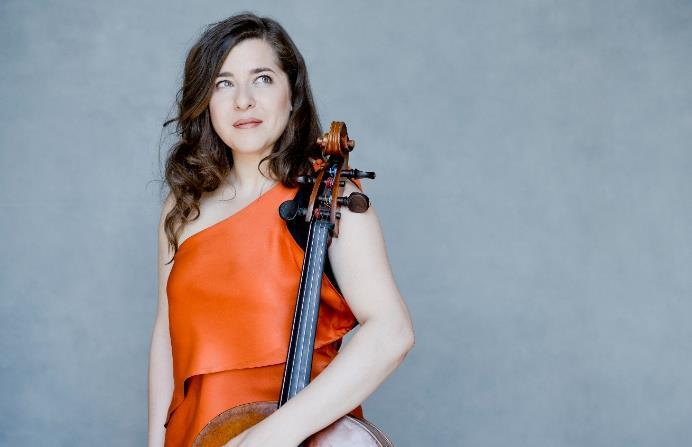
Westminster Philharmonic Orchestra / Jonathan Butcher (below)

Elgar In the South (Alassio) Op.50 (1903-4)
Bernstein On the Waterfront – Suite (1954-5)
Bliss A Colour Symphony (1921-2, rev. 1932)

St John’s Church, Waterloo, London
Saturday 1 March 2025

Reviewed by Richard Whitehouse

The Westminster Philharmonic Orchestra has given any number of well programmed concerts over the 53 years of its existence and tonight’s was no exception, featuring as it did a welcome revival of A Colour Symphony with which Arthur Bliss nonplussed first-night listeners 102 years ago.

Much has been written about the relationship between the colours as referenced in each of the movement headings with the music in question. In fact, the heraldic source from which these are derived was the means to focussing what could otherwise have remained the ‘Symphony in B’ of its working-title. The Purple of its opening movement evokes a processional whose emergence then retreat sets out the salient ideas in its wake, while that of Red is a scherzo with its two trios drawn into a sonata form whose unwavering impetus makes contrast with Blue more potent. Nor is this latter an archetypal slow movement – its expressive eddying an anticipation of that inexorable momentum with which Green traverses its double fugue, towards an apotheosis that sets the seal on the overall design with unmistakable conviction.

A Colour Symphony is not an easy work to make cohere – in which respect, this performance succeeded admirably. Jonathan Butcher ensured that Purple fulfilled its preludial function with sufficient gravitas to launch Red with an energy as amply underpinned its productive thematic elaboration; the work effectively becoming a tale of two halves, with the latter an extended and varied take on the ideas already established. The nervous energy that informs Blue was admirably conveyed, with the WPO giving of its collective best, while Butcher (rightly) did not rush the unfolding of Green – its respectively methodical then impetuous fugal subjects persuasively fused into a coda whose affirmation is far from that of a ‘‘mere paragraphist’’, as Elgar lamented, but of one able to refashion symphonic principals at will.

In the first half, Leonard Bernstein demonstrated a symphonic cohesion far greater than that of his actual symphonies in the suite from his score to Elia Kazan’s film On the Waterfront. For all its violent energy (and lessons well learned from Copland’s ballet Billy the Kid), this is music defined by its wind solos and it was to the credit of horn player Adrian Wheeler, oboist Tony Freer or alto saxophonist Bernie Hunt they were never less than plangently emotional. Whether or not Bernstein’s most ambitious orchestral work, this is by some way his finest.

Music by Elgar had opened the concert. His In the South might be as much a tone poem as a concert overture, but its effective overall design – anticipating those first movements of the symphonies to come – is its own justification. While he eschewed something of this music’s often scenic opulence, Butcher certainly had the measure of its formal ingenuity – with only the final peroration failing to deliver that necessary emotional frisson. Earlier on, Jonathan Welch’s viola playing brought pathos as well as tenderness to its exquisite ‘canto populare’.

Overall, a concert such as matched in execution what it had in ambition and which should equally be the case with the WPO’s next concert, where highly contrasted works by Barber and Tchaikovsky are to be followed by the mighty edifice of Bruckner’s Ninth Symphony.

For more information on the orchestra’s 2024-25 season, head to the Westminster Philharmonic Orchestra website Click on the names to read more about conductor Jonathan Butcher, and about Sir Arthur Bliss himself. You can also find out more about The Bliss Trust

Published post no.2,464 – Wednesday 5 March 2025

In concert – BBC Philharmonic Orchestra / Michael Seal: Discovering Bliss

BBC Philharmonic Orchestra / Michael Seal (above)

Sir Arthur Bliss
Miracle in the Gorbals (1944) – Overture
Things to Come (1934) – March
Metamorphic Variations (1972)

Royal Concert Hall, Nottingham
Wednesday 26 February 2025

Reviewed by Richard Whitehouse

2025 promises no mean retrospective of Arthur Bliss’s music in this 50th anniversary year of his death but no more significant revival than that of Metamorphic Variations, the composer’s late masterpiece that was heard live this evening for the first time in more than three decades.

Completed in December 1972 and premiered at Croydon’s Fairfield Halls the following April, Metamorphic Variations was the last while also the longest of Bliss’s purely orchestral works. Shorter than might have been, even so, as two of its sections were omitted at that first hearing (Leopold Stokowski having requested more rehearsal time for Tchaikovsky’s Pathétique after the interval) and given as an appendix in the published score; being excluded at later hearings as on the two commercial recordings. Tonight brought their reinstatement almost 52 years on.

First performed as ‘Variations for Orchestra’, this work only acquired its definitive title after considerable soul-searching on the composer’s part, though Metamorphic Variations is more accurate in terms of those ideas outlined in the initial Elements: an oboe cantilena, a phrase for horns then strings, and a cluster on woodwind – thereby setting up melodic, rhythmic and harmonic possibilities to be explored intensively over the ensuing 15 sections. The first five comprise a lively Ballet, a brusque Assertion and atmospheric Contrasts whose absence hitherto has been to the detriment of overall balance. Less crucial formally, Children’s March is of considerable fascination for its deft pivoting between innocence and experience, while Speculation marks a crucial expressive juncture through its renewed sense of anticipation.

Such anticipation is fulfilled by the starkness of Interjections then incisiveness of Scherzo I, before Contemplation yields further repose. Next come the two most elaborate sections – an increasingly energetic Polonaise being followed by Funeral Processions which builds to a wrenching, even anguished culmination. A lighter sequence moves from the dextrous Cool Interlude, via the angular Scherzo II, to the ingratiating Duet – an intermezzo prior to the final two sections. A brief yet potent Dedication makes explicit the work’s inscription to the artist George Dannatt and his wide Ann, then Affirmation draws each of the main elements into a sustained peroration thrown into relief through its ultimate subsiding into a return of the oboe cantilena from the opening and which, in its turn, brings a withdrawal into silence.

Scored with real virtuosity for sizable forces, Metamorphic Variations proves no less testing for the players as it is conceptually for the listener, though the BBC Philharmonic responded with assurance to Michael Seal who (given the unavailability of John Wilson) had not merely learnt the score in around 10 days but ensured an interpretation that was distinctively his own. Hopefully a recording from this source (how about it, Chandos?) will follow before too long: meanwhile, however, this performance is being broadcast by BBC Radio 3 in the near future.

Having provided the musical illustrations in Stephen Johnson’s introductory talk, Seal and the BBCPO had framed the first half with the fateful ‘Overture’ to Bliss’s wartime ballet Miracle in the Gorbals then the rousing ‘March’ from his inter-war score to the film Things to Come.

For more information on the orchestra’s 2024-25 season, head to the BBC Philharmonic Orchestra website Click on the names to read more about conductor Michael Seal, and about Sir Arthur Bliss himself. You can also find out more about The Bliss Trust

Published post no.2,463 – Tuesday 4 March 2025

In concert – Susan Bullock & Richard Sisson @ Bechstein Hall, London

Susan Bullock (soprano), Richard Sisson (piano)

Bechstein Hall, London, 21 February 2025

by John Earls. Photo credit (c) John Earls

There can’t be that many connections between Richard Wagner and the Great American Songbook, but Susan Bullock is one of them.

The revered British soprano has appeared as Wagner’s Brünnhilde in opera houses around the world, and has also performed the role of Isolde.

Last year she and pianist Richard Sisson released Songs My Father Taught Me, an album of songs from and inspired by some of the classics from the Great American Songbook, and that formed the basis of this wonderful recital at the shiny new Bechstein Hall in London’s Wigmore Street (a stone’s throw from Wigmore Hall).

It was clear from the start the genuine affection and affinity both musicians have for these songs. Bullock’s father was, she tells us, “a policeman by day and a wannabe Bing Crosby by night”. Sisson’s grandmother was a fan of the classic musicals.

I’ve Got the World on a String (Harold Arlen and Ted Koehler) and Hello Young Lovers (Rodgers and Hammerstein) were a fine opening to the show, before Sisson drew the audience’s attention to the full programme listing displayed on the digital notice boards in the hall – “the writing’s on the wall. It’s like Belshazzar’s feast!”

And what a programme! In the first set alone we had greats from Rodgers and Hart (My Funny Valentine), George and Ira Gershwin (‘S Wonderful) and Jerome Kern and Oscar Hammerstein (Bill and Can’t Help Lovin’ That Man), as well as a zingy What About Today (David Shire).

There was also a gorgeous Bewitched, Bothered and Bewildered (Rodgers and Hart) and a charged If I Loved You (Rogers and Hammerstein) with Bullock ranging from whisper to exhortation and Sissons eulogising afterwards about the amazing “symmetrical chords”.

The first half finished with a fabulous One for My Baby with Bullock playing the part perfectly, sat at the piano looking weary before finally walking down the aisle still singing to exit out the back door.

Alas, Bullock was not to be seen nursing ‘one for the road’ in the bar during the interval but thankfully returned for an excellent second set. This started by acknowledging some great heirs to the American Songbook. Firstly, Stephen Sondheim (Oscar Hammerstein II was a mentor to Sondheim and something of a surrogate father) with a moving Send in the Clowns, a very humorous The Boy From… and a dramatic Losing My Mind. This was followed by a beautiful arrangement and performance of Bert Bacharach and Hal David’s A House Is Not a Home.

A warm The Folks Who Live on the Hill (Kern and Hammerstein) was then followed by a magical medley from songwriters featured earlier – Stormy Weather, The Man I Love, All the Things You Are, What’s the Use of Wond’rin’ plus Tommy Wolf and Fran Landesman’s The Ballad of the Sad Young Men.

Of course these songs have wonderful tunes and beautiful melodies, which is why they have been, and continue to be, frequently covered as instrumentals, particularly by some of the jazz greats. But they also have stunning lyrics that can be touching, witty and poetic. One could grab lines from any of the songs in this programme but Sisson made a particular reference to the lyrics of The Ballad of the Sad Young Men. Take these closing lines:

While a grimy moon, watches from above
All the sad young men, who play at making love

Misbegotten moon shine for sad young men
Let your gentle light guide them home again
All the sad, sad, sad, young men.

The show ended with a delightful take on the Gershwins’ Let’s Call the Whole Thing Off and a moving encore of You’ll Never Walk Alone from Rodgers and Hammerstein’s Carousel.

This was a superb celebration of magnificent songs. Bullock’s singing was expressive and crystal clear, Sisson’s piano accompaniment was wonderfully balanced with some lovely flourishes. These great songs have endured for a reason. And with advocates and performances such as this they will be around for a good while yet.

John Earls is Director of Research at Unite the Union. He posts on Bluesky and tweets / updates his ‘X’ content at @john_earls

Published post no.2,454 – Sunday 23 February 2025

In concert – Hyeyoon Park, CBSO / Alexander Shelley: Gershwin, Florence Price, Ravel & Stravinsky

Hyeyoon Park (violin, above), City of Birmingham Symphony Orchestra / Alexander Shelley (below)

Gershwin An American in Paris (1928)
Price Violin Concerto no.2 in D minor (1952)
Price arr. Farrington Adoration (1951)
Ravel Le Tombeau de Couperin (1914-17, orch. 1919)
Stravinsky The Firebird – suite (1910, arr. 1919)

Symphony Hall, Birmingham
Thursday 20 February 2025 (2:15pm)

Reviewed by Richard Whitehouse

Although he holds major posts in Canada and Naples and has a longstanding association with the Royal Philharmonic, Alexander Shelley seems not previously to have conducted the City of Birmingham Symphony Orchestra, and this afternoon’s concert made one hope he will return soon.

An American in Paris was a tricky piece with which to open proceedings, but here succeeded well on its own terms. Somewhere between tone poem and symphonic rhapsody, Gershwin’s evocation of a compatriot (maybe himself?) not a little lost in the French capital was treated to a bracingly impulsive and most often perceptive reading. A slightly start-stop feel in those earlier stages ceased well before Jason Lewis’s eloquent though not unduly inflected take on its indelible trumpet melody, with the closing stages afforded a tangible sense of resolution.

Much interest has centred over this past decade on the music of Florence Price – the Chicago-based composer and pianist, much of whose output was thought lost prior to the rediscovery of a substantial cache of manuscripts in 2009. One of which was her Second Violin Concerto, among her last works and whose 15-minute single movement evinces a focus and continuity often lacking in her earlier symphonic pieces (not least a Piano Concerto which Birmingham heard a couple of seasons ago). Its rich-textured orchestration (but why four percussionists?) is an ideal backdrop for the soloist to elaborate its series of episodes commanding, ruminative then impetuous, and Hyeyoon Park made the most of her time in the spotlight for an account that presented this always enjoyable while ultimately unmemorable work to best advantage.

The concerto being short measure, Park continued with an ideal encore. Written for solo organ, Price’s Adoration was given in Iain Farrington’s arrangement that brought out its elegance and warmth, if also an unlikely resemblance to Albert Fitz’s ballad The Honeysuckle and the Bee.

After the interval, music by composers from whom Gershwin had sought composition lessons when in Paris. Orchestral forces duly scaled down, Ravel’s Le Tombeau de Couperin was at its best in a deftly propelled Forlane, the alternation of verses with refrains never outstaying its welcome, then a Menuet whose winsome poise – and delectable oboe playing from Hyun Jung Song – emphasized the ominous tone of its central section. The Prélude was a little too skittish, while a capering Rigaudon was spoiled by an excessive ritenuto on its final phrase.

Interesting how the 1919 suite from Stravinsky’s The Firebird has regained a popularity it long enjoyed before renditions of the complete ballet became the norm. Drawing palpable mystery from its ‘Introduction’, Shelley (above) secured a dextrous response in Dance of the Firebird then an alluring response from the woodwind in Khovorod of the Princesses. Contrast again with the Infernal Dance of King Kashchei, even if its later stages lacked a measure of adrenalin, then the Berceuse had a soulful contribution by Nikolaj Henriques and fastidiously shaded strings. Hardly less involving was the crescendo into the Finale, started by Zoe Tweed’s poetic horn solo and culminating in a peroration with no lack of spectacle. It made an imposing end to this varied and cohesive concert, one that confirmed Shelley as a conductor with whom to reckon.

For details on the 2024-25 season A Season of Joy, head to the City of Birmingham Symphony Orchestra website. Click on the names to read more about violinist Hyeyoon Park, and conductor Alexander Shelley, or for more on composer Florence Price

Published post no.2,453 – Saturday 22 February 2025

In concert – Isabelle Faust, CBSO / Kazuki Yamada: Akio Yashiro: Symphony, Shostakovich: Violin Concerto no.2 & Bartók Dance Suite

Isabelle Faust (violin, above), City of Birmingham Symphony Orchestra / Kazuki Yamada (below)

Bartók Dance Suite BB86a (1923)
Shostakovich Violin Concerto no.2 in C sharp minor Op.129 (1967)
Yashiro Symphony for Large Orchestra (1958) [UK Premiere]

Symphony Hall, Birmingham
Wednesday 5 February 2025

Reviewed by Richard Whitehouse Picture of Isabelle Faust (c) Felix Broede

It may not have been a popular programme, but tonight’s concert by the City of Birmingham Symphony Orchestra drew a pretty decent attendance in music clearly to the liking of music director Kazuki Yamada, who duly gave of his best for what proved a memorable evening.

Often seen as a breakthrough work in terms of its fusing indigenous musical expression with Western formal conceits, Bartók’s Dance Suite makes an ideal concert-opener. At its best in the rhythmic propulsion or harmonic astringency of the second and third dances, the present account felt a touch inhibited elsewhere; Yamada making overmuch of rhetorical pauses that should motivate rather than impede ongoing momentum. Not that this precluded a forthright response from the CBSO, pianist James Keefe making the most of his time in the spotlight.

Although not now the rarity it once was, Shostakovich’s Second Violin Concerto will always lag behind its predecessor as to performance. Coming near the outset of its composer’s final decade, its inwardness and austerity belie its technical difficulties – though these latter were rarely an issue for Isabelle Faust, who kept the initial Moderato on a tight if never inflexible rein so its demonstrative outbursts and speculative asides were more than usually integrated. Even finer was the central Lento, muted anguish finding potent contrast with plangent solo passages, and a closing contribution from horn player Elspeth Dutch of subdued pathos. Nor was the final Allegro an anti-climax, Faust drawn into engaging confrontation with timpani and tom-tom then heading to a denouement with more than a touch of desperation in its hilarity.

Inquiring listeners may have encountered a recording in Naxos’s Japanese Classics series of a Symphony by Akio Yashiro (1929-76). One of the first group of Japanese composers to study in Europe after the Second World War, his limited yet vital output witnesses a determined and distinctive attempt to fuse certain native elements with the more radical aspects of timbre and texture stemming from the West. Messiaen (with whom he studied) is audible in the fastidious harmonies of this work’s Lento that, building from pensive melodies on flute and cor anglais into a threnody of real emotional power, is its undoubted highlight. Otherwise, the music feels more akin to that of André Jolivet (whose three symphonies deserve revival) in its abundant orchestral colour and predilection for rhythmic ostinatos that galvanize the musical argument.

Such is evident in the implacable unfolding of a Prelude whose motivic ideas secure a more purposeful accord in the ensuing Scherzo, while the finale draws upon the slow movement’s intensity as it expands over successive waves of activity to an impetuous Allegro of no mean velocity prior to a seismic, even brutal peroration. Whatever its intermittent lack of subtlety and cohesion, Yashiro’s Symphony remains an imposing musical edifice such as makes one regret that the composer never managed to pen its successor during his subsequent 18 years.

It certainly found the CBSO at its collective best, so making one hope that Yamada (above) might yet schedule pieces by such as Toshiro Mayuzumi or Sadao Bekku. His next concert has a rather more familiar symphony by Tchaikovsky in the orchestra’s annual Benevolent Fund Concert.

For details on the 2024-25 season A Season of Joy, head to the City of Birmingham Symphony Orchestra website. Click on the names to read more about violinist Isabelle Faust and the CBSO chief conductor Kazuki Yamada, and also the composer Akio Yashiro’s symphony

Published post no.2,438 – Friday 7 February 2025