Yesterday we heard of the sad news of the death of inspirational pianist and writer Alfred Brendel, at the age of 94. Brendel leaves a quite incredible body of recordings, most made for Philips Classics, now Decca – and they form the body of the playlist linked below:
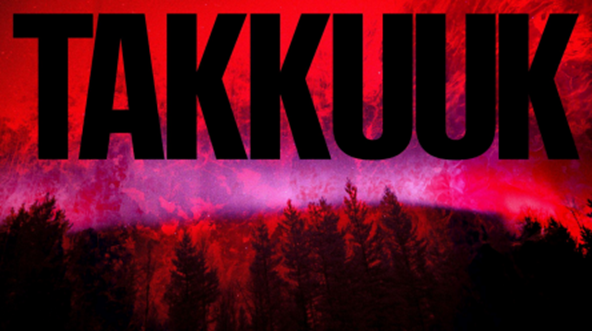
TAKKUUK is a new immersive installation from BICEP, visual artist Zak Norman and filmmaker Charlie Miller that explores the lives, communities and challenges facing artists Indigenous to the Arctic Region. TAKKUUK will feature on the giant floor to ceiling wrap around screens at Outernet London, one of the UKs most visited cultural attractions.
Created in partnership with the charity In Place of War, as part of their EarthSonic programme, the installation sees the renowned Northern Irish electronic duo — otherwise known as Andy Ferguson and Matthew McBriar — collaborating with a number of Indigenous vocalists, including Katarina Barruk, Andachan, Sebastian Enequist (from Sound of the Damned), Tarrak, Nuija, Niilas and Silla. The music was recorded in 2024 by Detroit-based producer and musician Matthew Dear in Árni Árnason from The Vaccines studio, during Iceland Airwaves festival in Reykjavík.
The resulting demos, combined with additional field recordings taken by Ferguson from the Russell Glacier in Greenland, form the backbone of this unique soundtrack set to accompany the remarkable TAKKUUK visual installation which premiers on July 3rd at Outernet London, before touring venues and festivals across the globe over the coming year.
The initial spark for the project came when BICEP travelled to Greenland in 2023, in which they began learning about the various issues facing local artists and their communities. It then came to life over the following two years, growing to eventually incorporate a striking visual element shot by Zak Norman (who has previously worked on visuals for BICEP, Squarepusher and Africa Express) and Bristol-based filmmaker Charlie Miller (whose documentary work with In Place of War has taken him to some of the world’s most marginalised and remote communities.)
Across its immersive presentation, TAKKUUK sees Norman and Miller introduce each of the Indigenous musicians and their communities. In scenes from Greenland, Sweden, Norway and Canada, attendees will witness the impact of their changing worlds, giving us an insight into their everyday lives and exploring not just the direct environmental consequences of a changing climate, but also the displacement of people and the marginalisation of their communities — resulting in the erosion of ancient cultures, languages, traditions and more.
Through highlighting these individual stories, the project hopes to raise awareness of the existential issues facing Indigenous people across the Arctic region. TAKKUUK reflects In Place of War and EarthSonic’s mission to use music to tell the stories associated with climate change, amplifying the voices of Indigenous artists on its frontlines. Through their music, words, and lived realities, this project shines a light on the deep connection these Indigenous communities have with their environment, while revealing the challenges they face as their lands, languages, and traditions come under threat.
“Takkuuk (pronounced tuck-kook) is the Inuktitut word which translates to literally ‘look’ but has the connotation that you’re urging someone to look at something closely. The Arctic climate is changing rapidly, so in context of the larger project, it’s a ‘hey look at this, the adverse effects of climate change are obvious,’ but also, ‘hey look at how cool Inuit culture is’.” – Charlotte Qamaniq (AKA Silla)
“This is a global story, and we all have a role to play. Join the movement by pledging to one or more of our six climate actions, and become an EarthSonic Champion. Together, we can make meaningful steps towards a more climate-conscious future.” – Ruth Daniel, CEO In Place of War/EarthSonic. Read more at earthsonic.org/6-acts
“Creativity and music are both powerful forces that can shine a light on global issues that need to be addressed. As a trustee of In Place of War the Earthsonic project with Bicep and artists Indigenous to the Arctic Region was something we really wanted to support. The work that has been created will be showcased across the Outernet screens and I know it is going to have a real impact and look and sound beautiful.” Philip O’Ferrall CEO Outernet
LONDON – OUTERNET – 03/07/2025 GHENT, BELGIUM – Wintercircus – 01-07/09/2025 MILAN, ITALY – Act in Synch Summit at Linecheck – 17-22/11/2025 TBC OULU, FINLAND – Deep Space at Museum & Science Center – 02/2026 NUUK, GREENLAND – NUUK Snow Festival – February 2026 UMMANNAQ, GREENLAND – Iceberg Projection – February 2026 SISIMIUT, GREENLAND – Arctic Sounds – 04/05/2026 BELFAST, NI – Ulster Museum – May – July 2026 TBC LINZ, AUSTRIA – Ars Electronica – Dates TBC LONDON, U.K. – Frameless – Dates TBC BERLIN, GERMANY – Quantum Gallery – TBC BARCELONA, SPAIN – Mira Festival – TBC DUBAI, UAE – IMS – TBC SÃO PAULO, BRAZIL – CCBB Gallery – TBC BELFAST, N.I – AVA Festival – TBC GIJÓN, SPAIN – LEV Festival – TBC
In the weird world of Wevie Stonder, things are never straightforward. The five-piece collective headed up by Al Boorman have returned with their first album in 15 years – and one reason it took so long is that they couldn’t think of a title.
The group are renowned for their outlandish electronics and humorous vocal performances, with a series of treasured records on Manchester’s eminent Skam Records, and their latest album Sure Beats Living ventures into unknown realms. Introducing a host of new characters, tall tales and bizarre scenarios to a musical backdrop as varied as it is striking, the record darts between ambient tranquillity, strange soundtracks, bass-heavy beats and emotive R&B.
Opener That’s Magic features a magician talking us through a convoluted magic trick, to a mysterious synth theme that a celebrity conjurer might use to help the pyramids disappear. It’s probably one of the only pieces of music to draw influences from Paul Daniels.
Carpet Squares is a hefty slab of squirming machine bass, acid squidges and clanking industrial drums, its samples extolling the virtues of fitting comfortable flooring, with a voiceover recorded on a Canadian golf course.
Vanja & Slavcho tells the odd story of twins who have an extraordinary ability to a bustle of spiralling arpeggios and comedic sound effects, while Tiktaalik has a glam rock beat, guitar twangs, wild synth runs and dance music drum rolls that build to nowhere, plus processed dolphin noises and a vocal about evolution. Then there’s Piccolo’s Travels, a spellbinding mix of classical strings and…is that a malfunctioning Clanger?
Album Titles lists rejected names for the record to hilarious effect, with outlandish blips, accordion riffs and bubbling percussion setting the scene, The 38th Parallel is a wonky slab of electronica, while Push It has everything from rock guitar interjections to explosions and birdsong.
If Customer Services imagines the bewildering experience of dealing with a sentient automated phone call, then the following Nothing To Write Home About is a waltz-time organ piece with a nostalgic, bittersweet air. Ready? lists practically every genre under the sun and gives you a burst of it, from drill to country & western, hardcore to Miami bass, and the final track, The Void, is an Autotune-laced R&B track with a deep, emotional core.
That’s the genius of Wevie Stonder: their ability to make you laugh one minute, and the next transport you to an atmospheric reverie.
Wevie Stonder are Al Boorman, Chris Umney, Henry Sargeant, Nadir Al-Badri and Rich Sothcott. Although now all based in different countries, the seeds of the group were sown in a quiet Suffolk village when at the age of six, Al and Rich recorded a group of chickens down a telephone and played it back while hitting a three-stringed guitar & a biscuit tin.
When the revered Susumu Yokota left us in 2015, at the young age of 54, he left a legacy that helped to redefine ambient music, from the first release (Magic Thread in 1998) right through the last, 2012’s Dreamer.
Now, with the assistance of his family, Skintone Edition commemorate Yokota with the re-release of all 14 of the albums he made for them.
They will be reissued on Lo Recordings on Vinyl, CD & Digital formats both as individual albums and packaged in two limited edition box sets. The Skintone Edition hopes to highlight the extraordinary work and legacy of Susumu Yokota.
The Volume 1 box set is available to pre-order now – with the individual albums becoming available over the next year to include:
Dot Allison releases a new album, Subconsciousology, via Sonic Cathedral on 25 July. It’s a full reworking of 2023’s Consciousology, by electronic producer and machine-maker Lomond Campbell, who, as the title suggests, has made it deeper, darker and dancier.
The first single,Weeping Roses, has been twisted from its original incarnation as a Tim Hardin-style folk lament into the most unlikely acid house banger.
“It began on a guitar with the two verse chords and grew from there,” says Dot of the song’s germination. “I wanted it to have a deep heartbreak and rawness, and now I love the surreal and beautiful, light and dark clash of worlds and sounds that Lomond has created from the roots and stems of the original.”
“It was the last one I remixed, possibly because it was the only track I wasn’t entirely sure what to do with,” explains Lomond. “At the risk of sounding obvious, I decided the best thing was to work on it somewhat subconsciously. I like that some of the bonny twists and turns of the original song haven’t been entirely corroded away by acid.”
Watch the stunning visualiser by Studio Sparks – using the artwork of Maria Mochnacz and Marc Jones – below:
While the original Consciousology was all ornate avant-garde folk and psychedelic explorations, this new take is as hard-hitting as it is heavenly, as beat-driven as it is beautiful.
Crucially, it finds Dot re-embracing the electronic music with which she first made her name in One Dove.
“I think electronic music will always be a key part of my music-making DNA,” she explains. “I see all instruments as possibilities with which to voice ideas, so I’d never want to cloister myself in a genre or feel I couldn’t return to any genre. Whether the sound source is from vibrations or a voltage, I don’t really see any limitations or rules.”
It was this open-minded approach that led to Dot and Lomond working together in the first place. After being introduced to his music by Hannah Peel, Dot asked him to remix Ghost Orchid, a track from her previous album, Heart-Shaped Scars. In the meantime, he’d already been listening to the album and had noticed the similarities between it and some of his own music.
There was an element of synchronicity, which extended to them both having mutual friends where they hang out in the Highlands and islands in the west of Scotland. The remix was also so good that it inspired Dot to ask Lomond to rework a whole album.
“I knew Dot would be encouraging of experimentation as I strayed pretty far off the mark with the remix of Ghost Orchid and she loved it, so I felt I could be playful,” explains Lomond. “However, I’ve never remixed an entire album before and was keen to make it work as a standalone piece with a vibe of its own. Dot’s vocals are so impressive that I felt anything could work around them, even atomising the recordings into abstract micro samples. It also amazes me how much grime, distortion and dense sound you can throw at Dot’s voice, yet it remains so bright and salient. I loved all of Hannah Peel’s string arrangements, too, so I made heavy use of them.”
“I love that he has brought a rich musicality and has created wild universes around the elements he has chosen to retain in the various songs,” adds Dot. “It reminds me of working with Andrew Weatherall in a way, where the mixes were bold and reinventive departures.
“I wanted an album through the looking glass, in a way. In my mind, it was going to be a mirror version of Consciousology. The whole concept of the original record is about interconnectivity and the electromagnetic aspects to consciousness, so the remixed version should be like a diffracted version of the original, like a rainbow diffracted from a beam of light!”
The end result is the pot of gold at the end of that rainbow – everything sounds and feels at once familiar but different – from the chugging electro of Unchanged and Bleached By The Sun, to the almost absurd, Aphex Twin-like shock of 220Hz.
“It’s landed exactly where I hoped it would,” says Lomond. “I like that each track has its own identity yet there’s a clear thread running through it all. Dot has a real knack for creating striking melodies that hit quickly and stay with you. I tried to build different chord structures around these vocal lines, re-harmonising to take it to darker places.”
The good news is that they are planning on working together again in the future, and have already collaborated on Lomond’s new album.
“I think it would be remiss of us not to build on everything that we’ve done so far,” concludes Lomond. “Stay tuned!”





 Arcana.fm