This second EP from Wolfgang Voigt‘s GAS project actually dates from 1999, when it was released on Mille Plateaux, but now it has been ‘transferred’ to his home Kompakt label. There are only two tracks but half an hour of music, released in part to offer some comfort in isolation.
What’s the music like?
This is music for mindfulness. Tal 90, the first track, feels like it is played on vinyl, with the reassuring clicks and scratches serving as a background to Voigt’s fuzzy overall sound. His concept is orchestral, with serene violins high in the mix and a soft but majestic line for horn. There are no drums but the music floats in suspension, resulting in a comforting feeling for the listener.
The second track Oktember is much darker and denser, and has an immediately subtle menace to its sound. The steady tread of a four to the floor rhythm underpins thick, brooding chords, which are still strangely comforting despite their straight-faced approach.
Does it all work?
It does. GAS is an incredibly well-revered project and in all recent ambient music it remains one of the most recognisable styles. Time really does stand still when Voigt finds the right level of musical hypnosis, and Oktember finds him towards top form.
Is it recommended?
Yes – and if fans don’t already have it they will want to snap up these two recordings. They work particularly well as early morning or late night balm.
It may have been a while since we last heard from Swedish duo I Break Horses, but they have used the time productively, despite several obstacles in their way.
Principle songwriter and singer Maria Lindén was working in cinematic accompaniments to her own favourite films when she realised the instrumentals were well on the way to becoming the basis for a new I Break Horses album.
The band’s plans were thwarted, however, by crashed hardware – two years of work lost – and collaborations that didn’t quite work, meaning Warnings took a while to break cover. It does however include the fruits of Lindén’s film scoring, with three instrumental interludes to complement the broad canvas of the songs.
What’s the music like?
The first since 2014’s well received Chiaroscuro, Warnings is another winner – and draws on the styles used in that long player. The band are at ease working in larger song structures, and as the epic nine-minute opening track Turn unfolds in its deceptively languid triple time there is an exquisite tension between the well-crafted production and Lindén’s glacial vocals.
The musical secret to their success lies in the heart-shifting changes of harmony that plumb the emotional depths. The macabre I’ll Be The Death Of You has these in abundance, despite its premonition, while Baby You Have Travelled For Miles Without Love In Your Eyes also moves in mysterious ways, the slow and stately shifts in harmony matched by a full bodied percussion section. Lindén’s vocals here are a little reminiscent of Lana del Rey, while the production often brings Cocteau Twins to mind – and label mates Beach House, whose producer Chris Coady is utilised here.
Elsewhere the glittering synths and quickfire drums of Neon Lights rush by, in complete contrast to the stately vocals, while Death Engine is a thing of wonder. Again utilising a big drum track, and enough reverb for an aircraft hangar, it has beautiful vocals to fit its grand designs, but moves up a level when a softly undulating riff emerges just over halfway through.
The instrumental interludes are short mood pieces, the last one leading to a similarly short coda, Depression Tourist a block of vocoded thoughts to sign off on.
Does it all work?
Yes. Although I Break Horses have an established way of writing it is very distinctive, so they are far from one-trick ponies. There is a lot of emotion here, too, despite the sometimes deadpan nature of Lindén’s vocals. She holds a note with husky beauty, part of the overall sound which the listener can easily dive into. Final track Depression Tourist feels tagged on, but by then the album has already made its impact.
Is it recommended?
It is. Warnings may be a deeply serious, even moody album – but it is an ultimately uplifting one too. Despite its ominous titles and subject matter the dreamscapes this pair can create leave the listener in elevation.
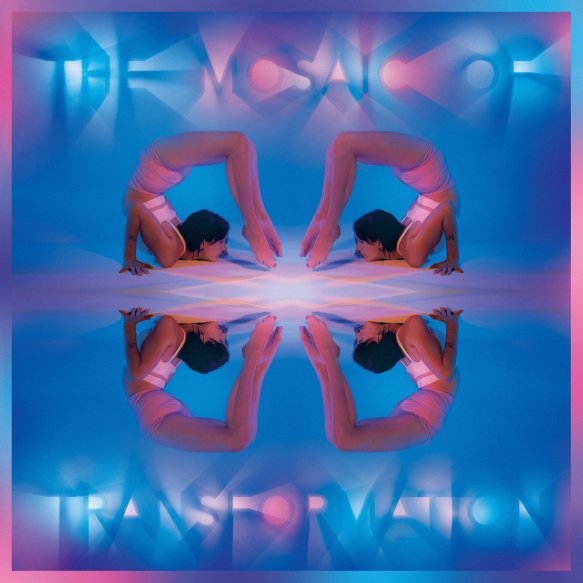
It is tempting to put forward the idea that what the musical world needs right now is a new album from t Kaitlyn Aurelia Smith. That is because the music she has made up until now is not just a comfort for anxious times but it offers real, meaningful positivity from within. Recognising that potential, Ghostly International have proceeded with the album release rather than defer it, meaning that while Smith’s tour with Caribou may be cancelled the album she would be promoting is still with us.
Her previous release, Tides, was free of beats, and much of the rhythmic profile of The Mosaic Of Transformation is constructed without explicit use of bass drums. Yet it is an album of movement, exploring the relationship between sound and colour, and our own physical beings. She has a great wealth of knowledge and experience in this area, making music specifically designed to ‘fit’ our life experiences in a way that enhances them.
What’s the music like?
The Mosaic Of Transformation is light on its feet much of the time, but that does not make it insubstantial. Quite the opposite, for in tracks like Expanding Electricity, the ten and a half minute closing track on the album, Smith has put together sound collages of a deep and lasting beauty and also of a surprising density. If music were colour – which it often is of course – there would be deep blues and purples in this track especially, beginning with sonorous low register strings but curving upwards through the spectrum. When her multitracked voice proclaims, ‘I feel it, can you feel it expanding?’, the celebration of electrical power is wholeheartedly complete.
This love of electricity – without which very little of our music could be heard! – is felt throughout the album, where brighter pastel shades make themselves known. Carrying Gravity is another substantial track that develops instinctively and with a keen structural command. It has a luminous glow, especially as the textures thin out towards the end.
Some of the harmonic language Smith uses has an Oriental feel, which is either implied or more directly referenced – and the busy exchanges of The Steady Heart bring this through to the front. It is subtly apparent as the album gurgles into life through Unbraiding Boundless Energy Within Boundaries, while Remembering uses block chords and Smith’s distinctive layered vocals. After the initial relative stillness Understanding Body Messages stays true to its title with snippets of musical code passing along the line, conveying positive energy.
The beats are more gainfully employed in The Steady Heart, which has multi-layered vocals at its core – but everything is inevitably pointed to the closing, epic ode to electrical power.
Does it all work?
Yes – and the more you listen to The Mosaic Of Transformation, the more it has to offer. Smith’s layering technique is a sonic delight, because each visit to the music reveals previously hidden workings, subtle melodic touches and crossrhythms, all done with a light craftswoman’s touch. As the last sounds of Expanding Electricity subside, a lasting warmth is left behind.
Is it recommended?
Yes – and the more you listen to The Mosaic Of Transformation, the more it has to offer. Smith’s layering technique is a sonic delight, and each visit to the music reveals previously hidden workings, subtle melodic touches and crossrhythms, all done with a light craftswoman’s touch. As the last sounds of Expanding Electricity subside, a lasting warmth is left behind.
Having made a guest appearance on the Houndstooth compilation IDDK in 2018, Hodge joins full-time to release his debut LP on the label. He joins a list of luminaries such as Special Request, Throwing Snow, Aisha Devi and Marquis Hawkes.
Hodge – real name Jacob Martin – says his inspirations for the album come from pleasingly diverse sources such as gardening, science fiction, progressive rock and a penchant for raving.
What’s the music like?
Shadows In Blue feels like an outdoor record, as its inspirations would imply – yet it does occasionally disappear indoors for a heavy session clubbing. Hodge keeps his door open to a number of different styles, working with busy loops and spacious backdrops on the title track, and looking back in time to the mid-1990s for the rave he craves in Cutie.
Ghost Of Akina also feels older with its clattering beats, while Lanes keeps the energy high but takes a more machine-like approach. Meanwhile Lanacut gives a view of a more private side to the producer.
The progressive rock elements are not quite so explicit but are probably better made known in the original structures both of the tracks and the album. There is certainly a psychedelic strand that reveals itself when the busier tracks get going.
Does it all work?
Yes, it’s a very cohesive album and Hodge has a busy state of mind that keeps energy levels high. His may not yet be a wholly distinctive voice but there are a lot of good things to commend Shadows In Blue, which shows how he knows his way round a studio.
Is it recommended?
Yes – as a signpost for the future especially. Shadows In Blue is a strong debut from a producer who joins a crowded field of British techno talent. It will be interesting to see how he progresses and how his individual voice blossoms from here.
Blizzards began with Nathan Fake’s intention to soundtrack ‘the ideal rave’. Heavily based on his live shows, it was made with an eye on musical instinct, going with the moment and effectively going back to first principles.
The Norfolk producer’s fifth album, Blizzards’ title is a nod towards the chaotic politics of the UK in recent times, but its spirit is about channeling positive energy in response.
What’s the music like?
By turns, the music in Blizzards is invigorating and heartwarming. Fake has always been able to summon up kinetic energy without a moment’s notice, which explains why the album gets off to such a strong start with Cry Me A Blizzard, but it’s an approach that bears fruit elsewhere with the twists, turns and clattering breakbeats of Firmament. Vectra and Eris & Dysnomia power upwards from deep bass movements, their loops sweeping all before them, while Torch Song is all about the euphoric treble, with rushes of white sound and widescreen percussive movement. Tbilisi, meanwhile, has sonorous bell-like textures to counter the fizzing drum track
These heady, hedonistic moments of abandon are beautifully countered by warm-hearted thoughts and rich harmonies. Ezekiel evolves magically, from primitive beginnings to brightly lit vistas all centred on a majestic melodic loop, taking the listener on an immersive trip. It is a real beauty, one of Fake’s warmest musical thoughts to date. The closing Vitesse, with all energy spent, revels in the comedown of a good and thoroughly satisfying night, slowly descending in pitch as it comes in to land.
Does it all work?
Yes, handsomely. Nathan Fake has always shown a strong suitability for the album format but here, on his own label, he works brilliantly well with a combination of structure and flexibility. The instinctive approach gives Blizzards a human edge and a warmth that might not have been so apparent had the music been more studio-governed.
Is it recommended?
Without hesitation. In a competitive field, Blizzards is probably Nathan Fake’s finest piece of work to date, confirming him to be one of the top talents of the day in UK electronic music.





 Arcana.fm