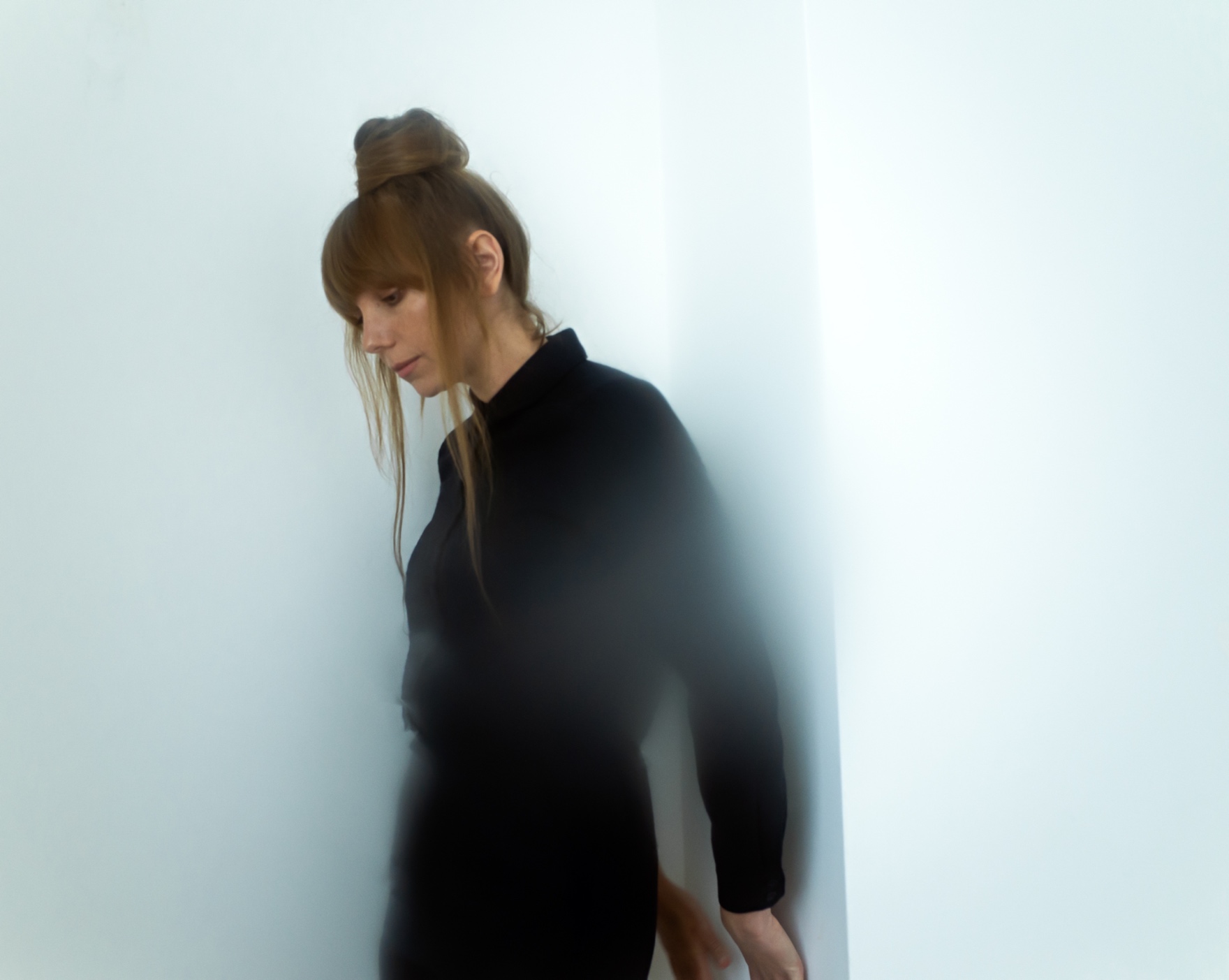
New music: Poppy Ackroyd

One Little Independent have today announced the return of Poppy Ackroyd with new music for piano. Her fourth album Pause, set to be released in November, is a collection of ten pieces for the keyboard which, in the label’s words, ‘utilize the full instrument, with a mixture of inside piano strumming and playing the keys’.

Evidence of this can be seen in the new track Seedling, and its accompanying video directed by Jola Kudela. She collected small pieces of plants and leaves, submerged them in water and put them in her freezer, then observed the process of defrosting, filming it in time-lapse. The second part of the video was filmed with infrared camera. “I was trying to imagine the process of nature waking up, beginning with a seed, that then slowly transforms itself into a seedling”, says Kudela. “So, we begin with a frozen environment that encapsulates the seed – it seems trapped and immobilised by the icy world. Then gradually it starts to warm up and defrost, fighting with the power that has been holding it frozen.”

Poppy gave some background to Pause. “For previous albums almost as much of the creative process was spent editing and manipulating recordings as it was composing at the piano, however after having my son, I struggled to spend time sat in front of a computer. The only thing I wanted to do while he was still small, if I wasn’t with him, was to play the piano. In fact, much of the album was written with him asleep on me in a sling as I used any quiet moment to compose.

It therefore made sense that this album should be a solo piano album. I used extended technique – playing with sounds from inside the instrument – like I do in my multi-tracked recordings, however it was important to me that every track on the album could be entirely performed with just two hands on the piano.”

Watch and enjoy below…while looking forward to Poppy’s full-length return.

On Record – Dot Allison: Heart-Shaped Scars (SA Recordings)

dot-allison

reviewed by Ben Hogwood

What’s the story?

The return of Dot Allison is big news indeed. Heart-Shaped Scars is her first album release since 2009, a follow-up of sorts to that year’s Room 7 1/2. Allison secured something of a cult following for her work in the early 1990s with Andrew Weatherall as part of dance band One Dove, before moving onto a solo career with the Afterglow album in 1999. For her new work, however, Allison has more or less pressed pause on the electronic side of things, removing drums too, working with producer Fiona Cruickshank and with several songs orchestrated by Hannah Peel.

It is, she says, a record about ‘love, loss and a universal longing for union that seems to go with the human condition’. Ideal, then, for a generation emerging from more than a year of lockdown conditions.

What’s the music like?

‘Ethereal’ is an over-used word in music reviews, but it is wholly applicable here. Allison’s voice is the principle reason, delivering the words in hushed tones but wholly immersed in the stories she has to tell. Hannah Peel’s orchestrations are another, sensitively complementing the melodies with thoughtful additions of their own, knowing when to hang back so that music keeps its concentrated intimacy.

The music often feels sparse and ‘old’ – in the sense that the melodies feel like part of a land with a great deal of history. Long Exposure embodies this approach, while Can You Hear Nature Sing does so with its lyrics, celebrating the natural world as many more of us have done during the pandemic.

Lyrically, Allison paints vivid pictures and emotions. One Love – which would surely have been a dance anthem with that title 30 years ago – is now a vulnerable soul at the start of a relationship, two cellos dovetailing as Allison tells the story. The Haunted draws the ear closer. ‘Step inside this haunted house’, sings Allison in lower tones at the start, the melody resembling a slower folk tune while the string harmonics shimmer in the middle ground.

Constellations tells of a wide-open freedom, the author lying ‘still in the lake, floating on my back, gazing up at all the stars’ – painted by a twinkling piano figure and shimmering strings. While this has a certain reassuring quality, Forever’s Not Much Time is truly haunting. ‘I miss you, like a dead man recalls life’, sings Allison, as a shiver passes over the face of the music. Cue The Tears has a similar chill. ‘Did we shut out the sun?’, asks the chorus.

Does it all work?

It does. Some of the songs are longer structures, and most are slow in their movement, but Allison makes them work, the music drawn out exquisitely with sensitive orchestration and backing vocals. Listening conditions will make a big difference to your enjoyment of the album, though – with a quiet room or headphones advised for maximum impact.

Is it recommended?

Wholly. If you have Dot Allison’s body of work already, then this will mark the start of a new chapter in the story of her music. If you are new to her sound, then it is a great place to start, a place of storytelling through simple and directly effective means – just like the best folk music.

Stream

Buy


On record: Stephen Wilkinson – A Celebration of Conductor and Composer (Prima Facie)

stephen-wilkinson

William Byrd Singers, *BBC Northern Singers / Stephen Wilkinson

Dickinson Late Afternoon in November (1975)*

Ellis Sequentia in tempore Natali Sancti (1965)

McCabe Siberia; Visions (both 1983).

Traditional (arr. Wilkinson) Four Choruses from Grass Roots (2003); Betjeman’s Bells (2012)

Wilkinson That Time of Year (1976)

Prima Facie PFCD147 [60’55”] English texts included

Reviewed by Richard Whitehouse

What’s the story?

The always enterprising label Prima Facie releases an album to celebrate the centenary of the conductor and composer Stephen Wilkinson (b1919), whose many decades of work with both the BBC Northern Singers and the William Byrd Choir is appropriately commemorated here.

What’s the music like?

The selection begins with Peter Dickinson’s Late Afternoon in November, a setting of a poem he himself wrote and one whose distanced, often desolate imagery inspires music in which the underlying slowness of pulse and stark emphasis placed on certain words or phrases yields an anguished tone rare in the composer’s output. This performance by the BBC Northern Singers was indeed the world premiere and emphasizes Wilkinson’s assured direction of a demanding piece, the commitment in whose realization hardly something that could be taken for granted.

The remainder is sung by the William Byrd Singers, of whom Wilkinson was the director for almost 40 years. It duly makes the most of Visions, John McCabe‘s elaborate and often eight-part setting of a poem by James Clarence Mangan whose ranging across mellifluous vocalise and visceral chant is conveyed accurately and with not a little sensitivity. If that of the same poet’s Siberia encourages a more direct and (understandably) plangent response, the overall textural variety in this four-part chorus is felicitously judged throughout what is another responsive reading.

For many years a senior producer for BBC Radio in Manchester, David Ellis is also a notable composer, witness his resourceful and often imaginative response to the traditional sequence for Christmas time Sequentia in tempore Natali Sancti. In its astute alternation between full choir and solo voices, it makes for an admirable foil to the straightforward approach adopted by Wilkinson in That Time of Year – a setting of Shakespeare’s Sonnet LXXIII that enfolds its autumnal musings within a sound-world that is monochrome while luminous in character.

The programme is interspersed with Wilkinson’s arrangements of four folksongs taken from his collection Grass Roots – being Welsh, English, Irish and Scottish respectively. Thus, the ruminative As I walked out is followed by the gentle eloquence of Rowing down the Tide, the winsome melancholy of The Lark in the Clear Air, before the steadily accumulating vivacity of The Piper o’ Dundee. Also included here is the charming Betjeman’s Bells, three settings of texts by the Poet Laureate whose music was ingeniously derived from traditional sources.

Does it all work?

As an overall sequence, very much so. While none of these pieces makes use of the extended techniques encountered in much post-war choral music, they are rarely easy technically and the care in preparing these performances (including several world premieres) is evident from every bar. A pity that full recording details have not been included, though the quality of the remastering means that few, if any, allowances need be made for presumed older recordings. The booklet notes place each of these pieces within a meaningful as well as relevant context.

Is it recommended?

Indeed. That Wilkinson is still active as composer, and reader for his daughter’s early-music ensemble Courtiers of Grace, is itself gratifying. This archival release goes much of the way towards explaining why his presence on the English choral scene has been a beneficent one.

For further information on this release, and to purchase, visit the Prima Facie Records website, and for more on Stephen Wilkinson click here

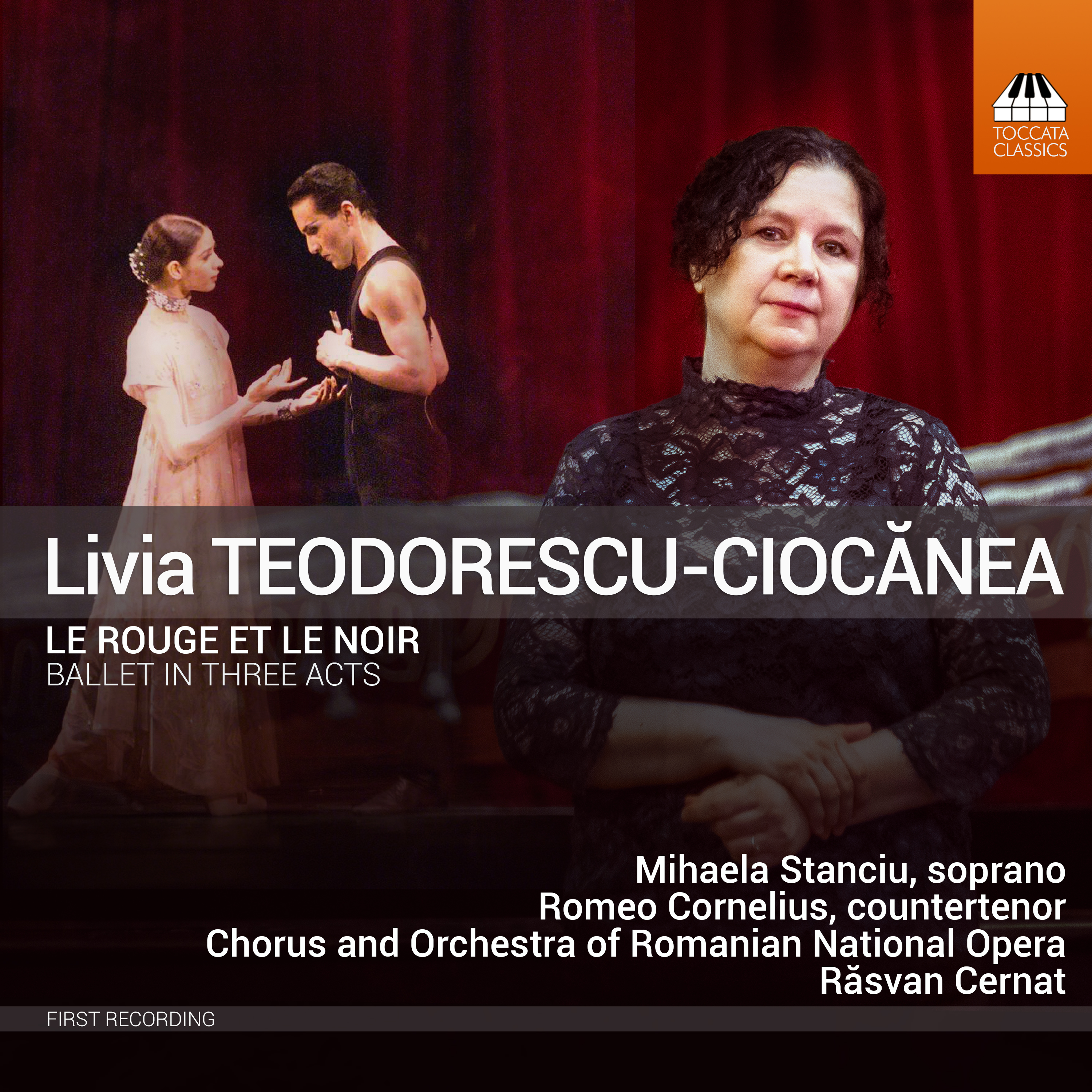
On record – Livia Teodorescu-Ciocănea: Le rouge et le noir (Romanian National Opera / Răsven Cernat) (Toccata Classics)


TOCC_0595

Teodorescu-Ciocănea
Le rouge et le noir (1999-2000)

Mihaela Stanciu (soprano), Romeo Cornelius (countertenor), Chorus and Orchestra of Romanian National Opera / Răsven Cernat

Toccata Classics TOCC0595 [75’25”] Synopsis included

Producers Florentina Herghelegiu, Erika Nemescu
Engineer Alexandru Părlea

Recorded 11-15 June 2000 at studios of Romanian Radio Broadcasting Corporation, Bucharest

Written by Richard Whitehouse

What’s the story?

Toccata Classics here continues its coverage of Livia Teodorescu-Ciocănea (b1959) with the ballet Le rouge et le noir, whose frequently lurid scenario allows her orchestral prowess and range of invention full rein – making for a musical experience cohesive almost despite itself.

What’s the music like?

Alongside a distinguished academic career (her PhD in composition was undertaken at the University of Huddersfield), Teodorescu-Ciocănea has amassed a sizable output that ranges across all the main genres. Her music has been compared to that of Horaţiu Rădulescu and Ştefan Niculescu in its usage of ‘spectral’ elements, but its expressive character is arguably closet to that of Pascal Bentoiu with its pivoting around post-romantic and modernist traits. Appropriate, then, for a ballet score complementing its subject-matter in no uncertain terms.

In her introductory essay, the composer describes Stendhal’s novel upon which this ballet is based as a ‘‘powerful and romantic one’’; which might almost be thought euphemisms for a scenario in which histrionics are emphasized to the point of – and even beyond – overkill. All is revealed in her track-by-track synopsis, but maybe this is a score best tackled – at least on first hearing – minus the distractions of Stendhal’s narrative with its cumbersome symbolism or mostly unsympathetic protagonists; one that culminates in a disingenuously tragic outcome.

Appreciating this ballet ‘in the abstract’ is facilitated, moreover, by the theatrical immediacy of its music. Structured in three acts, framed by a prologue and epilogue, it draws the listener through the story with no inherent longueurs (the ballet initially lasted for around 95 minutes, which Teodorescu-Ciocănea has reduced to its present 75 through withdrawing the numbers ‘‘that seemed to me redundant or transitional’’). Highlights are the second half of Act Two’s first scene – a propulsive passacaglia set in the mayor’s house; the subsequent scene, with its plangent and evocative love-duet set at Vergy; the brief while potent Passion Tango in Act Three’s second scene; and the Epilogue which brings about the denouement with a fervour and a dramatic inexorability that comprehensively transcends the narrative which inspired it.

Does it all work?

For the most part, yes. Listeners might well be advised to tackle the music straight off, rather than study the scenario beforehand. In the (understandable) absence of the visual component, this is a piece best evaluated on its own terms; without the cringing element of melodrama as derived from Stendhal, yet another of those ‘classics’ novels which has rightly been relegated to an academic footnote in history. The present performance surely presents this work to best advantage – vocalists Mihaela Stanciu and Romeo Cornelius eloquent in their contributions, and Răsven Cernat securing a visceral response from the forces of Romanian National Opera. The track-listing gives immediate access to each scene in the three acts, while Joel Crotty’s biographical outline is invaluable given the almost complete absence of material in English.

Is it recommended?

Yes, in the hope Toccata will go on to release examples of Teodorescu-Ciocănea’s orchestral and choral music – not least the oratorio Poppy Fields, her ‘in memoriam’ for those who fell in the First World War and on a scale as was largely ignored by major composers in the UK.

Listen

Buy

You can discover more about this release at the Toccata Classics website, where you can also purchase the recording. To read more about Toccata’s exploration of Teodorescu-Ciocănea’s piano music, click here

On record: Meriel & Peter Dickinson: An Erik Satie Entertainment (Heritage Records)

satie-dickinson

Meriel Dickinson (mezzo-soprano / reader), Peter Dickinson (piano / reader)

Heritage Records HTGCD171 [68’09”] French texts included
Producer Antony Hodgson
Engineer Tony Faulkner

Recorded 6 October 1975 at All Saints’ Church, Petersham (Unicorn LP only) Remastered by Peter Newble

Reviewed by Richard Whitehouse

What’s the story?

The Heritage label continues its worthwhile excavation of overlooked ‘deep catalogue’ with this selection of Erik Satie’s piano pieces, songs and prose as performed by Meriel and Peter Dickinson, whose recitals were a notable fixture of the UK music-scene over several decades.

What’s the music like?

After the lively and rumbustious march Le Piccadilly (1904), Trois melodies (1887) show the composer’s poignant take on domestic song-writing from the period. The haunting Deuxième Gnossienne (1893) is followed by the hieratic plangency of Hymne: ‘Salut Drapeau!’ (1891), while the Deuxième Pièce froide (1897) anticipates the quirky humour to come. Tendrement (1902) ranks among Satie’s most disarming songs, as does the amiable Proudre d’or (1900/1) within his piano music. Two winsome songs from incidental music for the play Geneviève de Brabant (1899/1900) precede two piano pieces – the mystically aloof Première Gymnopédie (1888) and the demurely anarchic Vexations (1893) – which, between them, outline the extent of Satie’s creative thinking. Similarly, the gently facetious humour of Trois melodies (1916) affords pointed contrast with the introspective mystery of the early Chanson (1887) then the considered evocation which is Chanson medieval (1906); further reminders that demarcation between this composer’s seemingly serious and humorous sides cannot be taken as absolute.

An undoubted bonus of the added live material is the Dickinsons’ readings from Satie’s own writings. Thus, there is Peter’s deadpan rendering of Satie’s Self-Portrait as provided for his publisher, its barbed whimsy duly complemented by brief piano interludes from his comedy Le Piège de Méduse (1913), while those gnomic expressions that are Quatres petites melodies (1920) inhabit similarly elliptical domain. Peter reads from the composer’s fanciful outline of his ‘routine for living’ in A Musician’s Diary, while Meriel tells of his ironic attitude towards Beethoven in Satie’s Fakes; between them, she sings the compact confessionals that are Trois Poèmes d’amour (1914). The gnomic song-cycle Ludions (1923), among Satie’s final works, makes a suitably telling foil to Peter’s reading of the archetypal Satie text In Praise of Critics. The selection concludes with a brace of songs – the blithely sardonic La Diva de l’Empire (1904) then the quintessentially Satie confection Je te veux (1897), its deftest interplay of charm and guile with a knowing sentimentality evidently to the pleasure of those listening.

Does it all work?

Very much so, given that Meriel and Peter are so attuned to the facets of Satie’s inimitable genius. At the time of this LP and its attendant recitals, its sheer extent had still to be fully assessed, which does not lessen the significance of the Dickinsons’ efforts (as with Satie’s younger contemporary and English counterpart Lord Berners) in championing this music at the highest artistic level. Both the transfer of the original Unicorn disc and the live extracts (mono) have been capably done – revealing few, if any, limitations in the source-material.

Is it recommended?

It is, not least as an informed and appealing introduction to this music by artists for whom its advocacy was clearly a labour of love. A pity that English translations of the song-texts were not included, though these are mostly accessible online, and their omission is a minor caveat.

For further information on this release, and to purchase, visit the Heritage Records website, and for more on Meriel and Peter Dickinson click here