On record – Villa-Lobos: Choral Transcriptions (São Paulo Symphony Choir / Valentina Peleggi) (Naxos)

villa-lobos

Villa-Lobos transcriptions of:

Bach Prelude and Fugue no.8 in E flat minor / D sharp minor BWV853, Prelude no.14 in F sharp minor BWV883; Fugues – no.1 in C major, BWV846; no.5 in D major, BWV874; no.21 in B flat major, BWV866; no. 22 in B flat minor BWV867
Beethoven Adagio cantabile Op.13/2
Chopin Waltz no.7 in C sharp minor Op.64/2
Massenet Élégie Op.10/5
Mendelssohn Lieder ohne Worte in E major Op.30/3
Rachmaninov Prelude in C sharp minor Op.3/2
Schubert Ständchen D957/3
Schumann Träumerei Op.15/7
Villa-Lobos Bachianas Brasileiras no.9 W449

São Paulo Symphony Choir / Valentina Peleggi

Naxos 8.574286 [58’32”] English and Portuguese translations included

Producer Ulrich Schneider
Engineers Marcio Jesus Torres, Camilla Braga Marciano, Fabio Myiahara

Recorded: 5-10 August 2019 at Sala São Paulo, Brazil

Written by Richard Whitehouse

What’s the story?

Naxos’s coverage of the music of Heitor Villa-Lobos (part of this label’s series The Music of Brazil) continues with a selection of mainly transcriptions from the piano repertoire that the composer undertook during the mid-1930s as part of his extensive educational commitments.

What’s the music like?

Almost all these arrangements emerged in the period 1932-5, when Villa-Lobos took on the challenge of overhauling music education in the public school system of Rio de Janeiro. This involved the creation, virtually from scratch, of a choral pedagogy that he drew from across the spectrum of Baroque, Classical and Romantic music. It is a measure of his prowess that such transformation from mostly piano sources was accomplished with unfailing rigour and an idiomatic quality, so the fame of the originals is almost the only clue to their provenance.

From the soulful strains of among the most mellifluous from Mendelssohn’s Songs without Words, the programme then continues with the Eighth Prelude and Fugue from the first book of Bach’s The Well-Tempered Clavier – the former piece summoning a plangently rhetorical response which finds pertinent contrast with the latter piece’s methodical and intricate build-up to a culmination of sombre eloquence. The arrangement of Dreaming from Schumann’s Scenes from Childhood fully conveys its wistful pathos, as does that of the First Fugue from Bach’s WTC the original’s cool elegance. Similarly, the last of Schubert’s Serenade settings loses little of this song’s plaintiveness, and the Twenty-First Fugue from Bach’s WTC takes on unexpected jauntiness in what proves one of Villa-Lobos’s most inspiriting re-creations.

Chopin’s Waltzes might be considered unsuited to the vocal medium, yet the C sharp minor responds ably to such elaboration, as too the ruminative calm of the Twenty-Second Prelude from Bach’s WTC. Rachmaninov might have thought better of his Prelude in C sharp minor had he encountered this uninhibitedly dramatic realization, with basses providing the baleful anchorage, in contrast to the yearning aura drawn from the Fourteenth Prelude of the second book from Bach’s WTC. Massenet’s Elegy exceeds the original song for bittersweet poise, a foil to the serenity of the Fifth Fugue from Bach’s WTC. The indelible main melody from the Adagio of Beethoven’s Pathétique segues ideally into the Ninth Bachianas Brasileiras, with Villa-Lobos’s choral incarnation rather more atmospheric and evocative than that for strings.

Does it all work?

Almost entirely and due in no small part to the excellence of the São Paulo Symphonic Choir with its Italian conductor Valentina Peleggi. Lasting just under 60 minutes, the selection feels varied yet also cohesive enough to be enjoyed as a continuous programme, while enterprising choirs from both sides of the Atlantic ought to find much here to enrich their existing rosters. Inclusion of Villa-Lobos’s own music at the close is a reminder its technical demands should never be taken for granted, but here too the SPSC rises to the challenge with unstinting verve.

Is it recommended?

It is. The acoustic is just a little reverberant at times yet without detriment to the clarity of the choral writing, with informative annotations from Manoel Corrêa do Lago. Listeners should also investigate a recent Naxos release of Villa-Lobos’s first three violin sonatas (8.574310).

Listen

Buy

You can discover more about this release at the Naxos website, and you can also purchase the recording here. You can read more about conductor Valentina Peleggi here
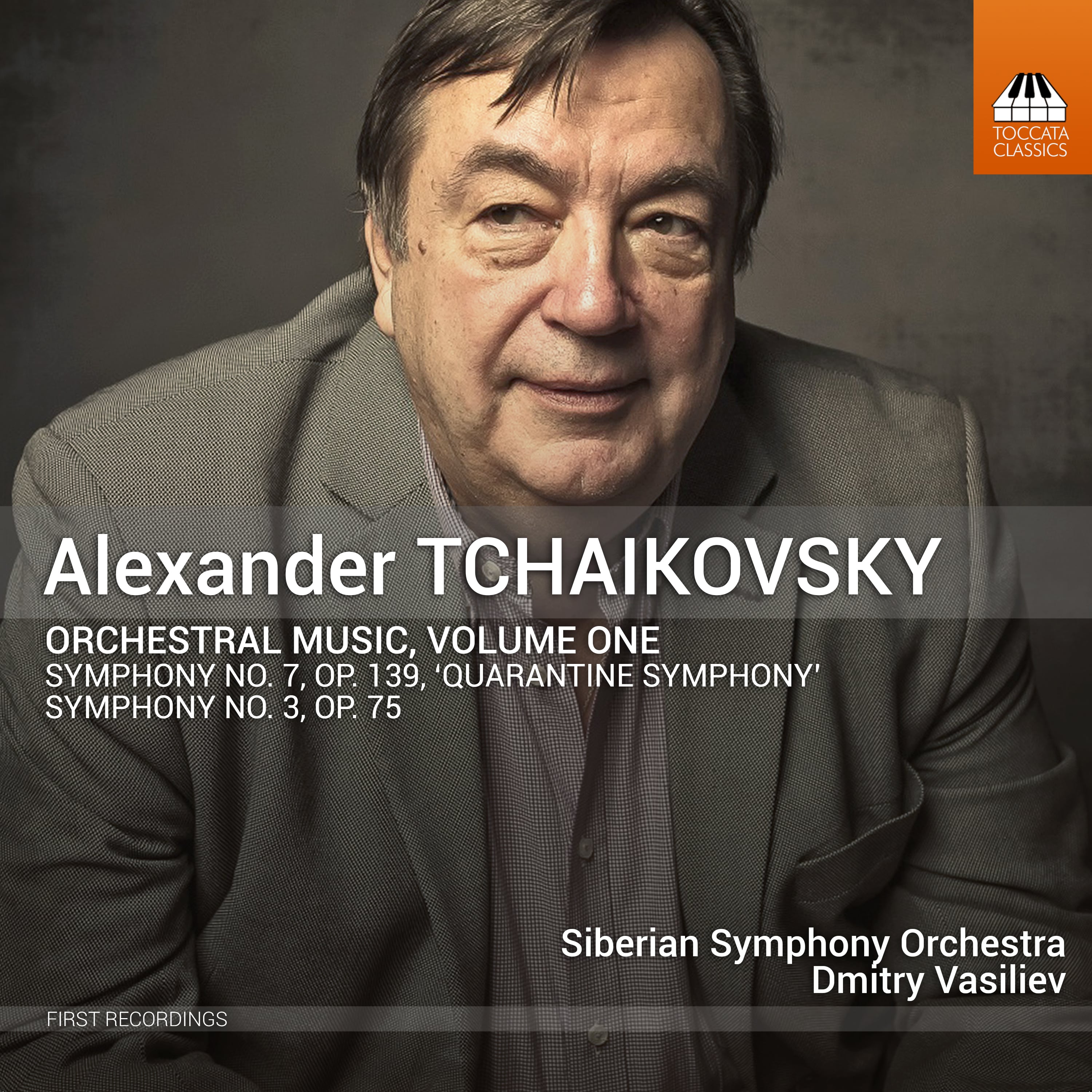
On record – Alexander Tchaikovsky: Orchestral Music Volume One (Siberian Symphony Orchestra / Dmitry Vasiliev) (Toccata Classics)

alexander-tchaikovsky

Alexander Tchaikovsky
Symphony no.3 Op.75 (1995-2002)
Symphony no.7 Op.139 ‘Quarantine Symphony’ (2020)

Siberian Symphony Orchestra / Dmitry Vasiliev

Toccata Classics TOCC0587 [60’12”]

Producer Vadim Dedik
Engineer Adaq Kahn

Recorded in live performances: 19 May 2019 (Symphony no.3), 20 September 2020 (Symphony no.7) at Philharmonic Hall, Omsk

Written by Richard Whitehouse

What’s the story?

Toccata Classics continues to investigate those paths lesser trod with this first instalment of symphonies by Alexander Tchaikovsky, likely the leading composer of the older generation in Russia, whose music is directly and audibly in the lineage of his geographical forebears.

What’s the music like?

Born in Moscow in 1946, Alexander Tchaikovsky is a nephew of composer and pianist Boris – but, in contrast to the latter’s selective output, has built an extensive catalogue featuring 14 operas (in addition to operettas and musicals) and three ballets, alongside numerous concertos and (to date) seven symphonies that frequently evince an illustrative or at least programmatic aspect. This is borne out in music highly evocative in import if without loss of that formal or expressive focus needed to sustain the two, wholly different, abstract arguments pursued here.

With its lengthy gestation and opulent instrumentation, the Third Symphony is a key work in the composer’s output. Its minimalist aspects occasioned more by Nielsen or Prokofiev than any post-war figure, the initial Allegro opens stealthily as its main theme gradually comes to the fore – tension increasing through a series of dissonant outbursts towards a massive climax across the orchestra that subsides into a sombre close. The central Allegro molto is described as ‘‘essentially a sequence of waltzes’’, which indicates its motion but not its stark emotional contrasts and violent denouement. It remains for the final Andante, proceeding without pause, to attempt a reconciliation; its furtive gestures opening-out onto a sustained expression whose restive and volatile content does not pre-empt the inexorability of the waltz music at the close.

Its title referring to the COVID-19 pandemic that occasioned its compact design and smaller forces (strings with percussion and piano), the Seventh Symphony comprises two movements. The first of these alternates between a plaintive Andante and trenchant Allegro molto, which latter gradually comes to the fore in a conclusion of unbridled abandon. Almost twice as long, the Adagio unfolds on the lines of a ‘prelude and fugue’ – the initial section sustaining a rapt eloquence that is intensified after the strings’ airy ascent and the commencement of the fugue in its methodical while deeply felt progress towards a fervent close. It is worth noting that the composer himself contracted the virus soon after completing this work – and which duly led to his missing the premiere in Omsk – but from which he has fortunately made a full recovery.

Does it all work?

For the most part, yes. This is music governed by the impulses as brought it to fruition, such that its underlying logic can be difficult to discern even on repeated hearings, while ensuring that a sense of destination – and arrival thereat – is never absent. The playing of the Siberian Symphony Orchestra is up to the standards of earlier releases for this label, Dmitry Vasiliev bringing a discipline and cumulative momentum to the often lengthy individual movements. There is little evidence of audience ‘presence’ in what are designated as live performances.

Is it recommended?

Indeed. The sound conveys the impact of these symphonies (the Third in particular) with no lack of immediacy, and there are insightful notes by pianist and composer Jonathan Powell. Hopefully more volumes of Alexander Tchaikovsky’s orchestral music will be forthcoming.

Listen

Buy

You can discover more about this release at the Toccata Classics website, where you can also purchase the recording. You can read more about Alexander Tchaikovsky here, and more about conductor Dmitry Vasiliev here

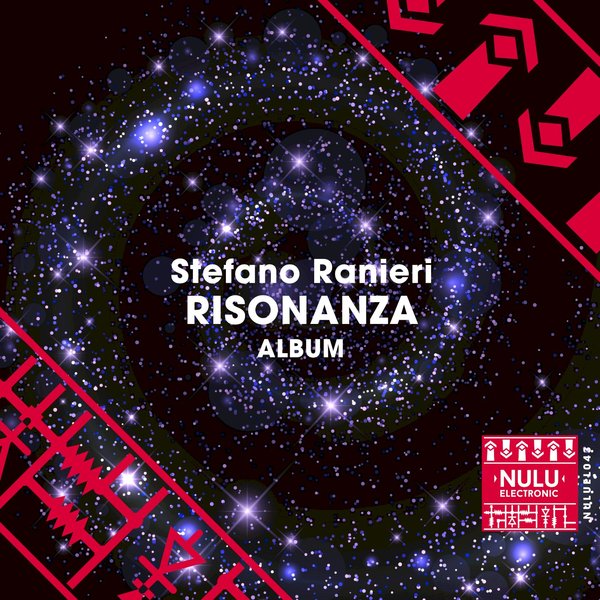
Let’s Dance – Stefano Ranieri: Risonanza (Nulu Electronic)

stefano-ranieri

reviewed by Ben Hogwood

What’s the story?

This is the first album for Italian producer Stefano Ranieri. He has been making and releasing music for around 15 years, and is now ready to dip his toes into the long player format. A list of the DJs supporting Ranieri’s work includes Carl Cox and Masters At Work, says much about his reputation built up in that time, and also the styles of dance music he gravitates towards.

What’s the music like?

Excellent. Ranieri uses all his experience of making dancefloors move to come up with a wide range of tracks that fulfill that brief perfectly. Koncept One has a touch of Lil Louis about it, with a great vocal rant ‘you’re not free, you’re a slave’. It comes after Your Time Is Up has set a smoky scene with a really good loping beat.

1942 has a powerful vocal and a strong piano line. C’est Terrible goes more acidic but counters that with a really good, slightly tribal sample. Saulè punches through a bassy electro riff, while a minimal cut like Karming Deep works really well as it has a good vocal cut to go with its keyboard hook. Die Of Pain has a real gravitas, taking the tail end of a Martin Luther King speech. Of Course is excellent too, rolling along nicely.

Does it all work?

Consistently. Ranieri knows what works on the most basic level, and has the confidence to let his beats do the talking. Each of the fifteen tracks is excellent, really well paced, and does all the right things – without ever being routine.

Is it recommended?

Enthusiastically. Risonanza is a really fine piece of work, whether you approach it from a house, techno or electro direction. Stefano Ranieri can be proud of his achievement.

Stream

Buy

You can listen to clips from the album and purchase Anywhere Here on Traxsource

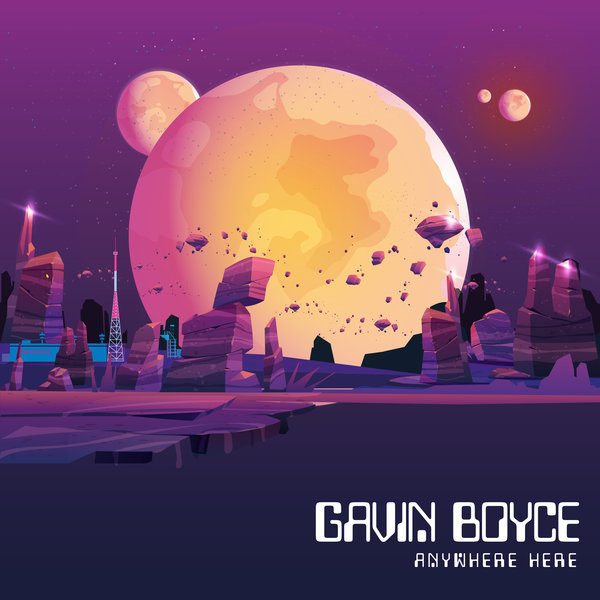
Let’s Dance – Gavin Boyce: Anywhere Here (Nordic Trax)

COVER_4.7

reviewed by Ben Hogwood

What’s the story?

It has been out for a couple of months, but when you consider the debut album from Irish producer Gavin Boyce has been two decades in the releasing, what’s a few days between friends?! In that 20 years Boyce has been concentrating his endeavours on the single or EP format, with a stream of high quality house, techno and deep disco releases, many of them released on the excellent Canadian label Nordic Trax.

Their relationship goes back to 2012, and includes the much-loved Haboo, but his reputation for quality and positive house goes back a long way before then, with a fine bouncy vocal track called So Obvious getting pride of place on a Sessions mix by Mark Farina in 2006.

Anywhere Here contains a 2021 album mix of Haboo and a new version of Boyce’s 2008 release Face Down, alongside 10 other originals.

What’s the music like?

You don’t have to spend much time at all with Anywhere Here to know that it carries the imprint of an experienced production hand. Yet with Boyce experience has never bred over-familiarity, and he has always had a strong inventive streak running through his house music. Each of the instrumental tracks here on the carries a spark, a spring in its step, with a bit of class too.

Try Be Grand, a really strong nocturnal track that introduces itself with a slightly dubby tread. Haboo is predictably brilliant, an airy version for the album capitalising on its strong reputation, while Radarz has a similar open air feel, powered largely by a two chord progression on the piano.

Boyce’s beats are reassuringly solid throughout, with tracks like Olive Groves ideally paced and structured. Face Down introduces some sharper tones, while the flowing piano on Kitui has an end of day warmth, with the poolside beckoning. Anywhere Here, the last of the dozen, is arguably the best with its probing melody.

Does it all work?

Yes. Boyce stretches his 12 tracks over 80 minutes and structures them like a DJ set, so the peaks and troughs are beautifully managed, with an assured selection of beats and grooves that keep their vitality throughout.

Is it recommended?

It is, provided you bolster your Gavin Boyce collection with a selection of mixes from the singles he’s already released on Nordic Trax. Anywhere Here shows off his prowess as an album artist though, capable of keeping the floor full as the dozen tracks take us on a journey filled with strong, colourful grooves. All Boyce needs to do now is make sure he doesn’t leave it another two decades for the next one!

Stream

Buy

You can listen to clips from the album and purchase Anywhere Here on Beatport

Let’s Dance – Conclave: Conclave (Love Injection Records)

conclave

Conclave: Conclave (Love Injection Records)

reviewed by Ben Hogwood

What’s the story?

Conclave is a musical collective under the wing of the multi-talented instrumentalist and vocalist Cesar Toribio. With his roots in the Dominican Republic and Florida, Toribio acquired a love of rhythm-based music through playing drums in church, studying jazz music in Boston, and garnering an appreciation of Afro and Latin-based rhythms.

The name ‘Conclave’ is an accurate identity for his aims, explained in the press release as an amalgamation: con (with) + clave (a unifying rhythm that holds the key to unlock dances both ancestral and contemporary).

What’s the music like?

Joyous. When thinking about dance and rhythm-based music it is so easy to take it for granted, to forget what an impact it can have on a community and how important it is to boosting moods in these difficult times. Cesar Toribio takes music back to those first principles, recognising the elemental feelings his music can provide, and because of that his self-titled album feels like a pure celebration of music. The album turns out to be as colourful as its cover.

To give some of the many highlights, the rich layers of There’s Enough are brightly coloured and enormously uplifting. Habla has a persuasive, swaying rhythm capped by a brilliant trumpet solo. Somehow All That I Need, featuring Sharin, is even better, with a winsome give and take between the two vocalists. Meanwhile Twice, while a little more introspective, features a squelchy bass and sun-drenched keys.

A soaring vocal takes Rise to the next level, while the much loved Perdón dazzles with its shimmering textures, a strong communal presence. The extended Alati Yeye Chege is hypnotic, while the album signs of with some irresistible, Todd Edwards-type funk on Take Heed (No Sunlight).

Does it all work?

Yes. The rhythms are gloriously instinctive, and production levels are just right so that the music has plenty of room to breathe, keeping its elements to the fore.

Is it recommended?

Heartily. For those of us in the Northern Hemisphere who are mourning the loss of our summer, the occasional appearance of the sun should be soundtracked by this album. It may have been out for a couple of months but if you haven’t got it yet, you are encouraged to invest in some warmer musical weather. It will go far – and comparisons with Masters At Works’ Nu Yorican Soul offshoot are well-earned.

Stream

Buy

here