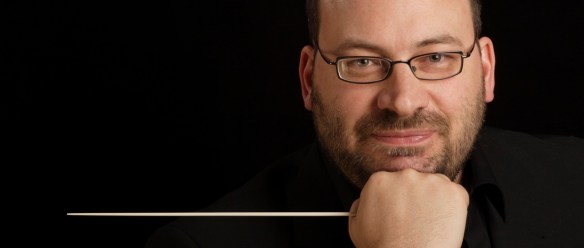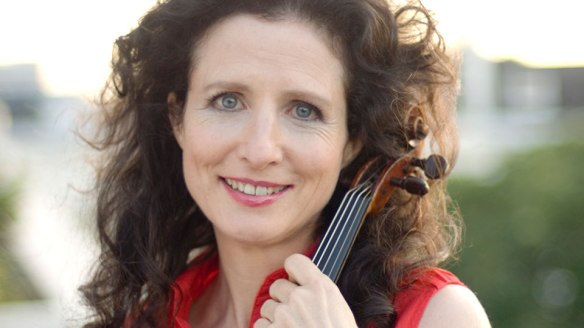
In concert – London Chamber Ensemble & Madeleine Mitchell: A Century of Music by British Women (1921-2021)

London Chamber Ensemble [Madeleine Mitchell (violin, director), Joseph Spooner (cello), Sophia Rahman (piano), David Aspin (viola), Gordon Mackay (violin), Lynda Houghton (double bass), Peter Cigleris (clarinet, bass clarinet), Nancy Ruffer (flute), Alec Harmon (oboe), Bruce Nockles (trumpet), Ian Pace (piano)

Rebecca Clarke Piano Trio (1921)
Judith Weir Atlantic Drift: Sleep Sound ida Mornin’ (1995), Atlantic Drift (2006), Rain and Mist are on the Mountain, I’d Better Buy Some Shoes (Movements I-IV, 2005)
Helen Grime Miniatures (2005)
Judith Weir The Bagpiper’s String Trio (1985)
Cheryl Frances-Hoad Invocation for cello & piano (1999)
Thea Musgrave Colloquy (1960)
Ruth Gipps Prelude for bass clarinet (1958)
Errollyn Wallen Sojourner Truth (2021, world premiere)
Grace Williams Suite for Nine Instruments (1934)

St John’s Smith Square, London
Monday 9 March (review of the online broadcast)

Written by Ben Hogwood

Classical music still has an awfully long way to go before female composers are an integral part of its make-up, but the celebration of International Women’s Day is helping the cause considerably, gaining more traction with each passing year.

One of the highlights of the 2021 celebrations was this concert from St John’s Smith Square, masterminded by Madeleine Mitchell, who led the London Chamber Ensemble in a very satisfying hour-and-a-half of music.

In a concert celebrating eight women composers, the common threads of America and the Royal College of Music were also explored. The latter organisation is where Rebecca Clarke, Grace Williams and Helen Grime all studied, and where Errollyn Wallen and Mitchell herself are now professors. Wallen wrote a new piece, Sojourner Truth, for the occasion.

The concert began however with a terrific performance of Rebecca Clarke’s Piano Trio. Completed in 1921, this substantial piece begins with a passionate outpouring, but it also has its elusive, mysterious moments. The trio of Mitchell, cellist Joseph Spooner and pianist Sophia Rahman caught these elements, getting off to a terrific start but pulling back to allow the enchanting slow movement room to breathe. At times Clarke’s music hints at influences from France – particularly Ravel but also Franck – which Spooner caught in his high intonation in the second movement. The spirit of the dance inhabited the finale, a more obviously English statement, but there was still room for more fervent thoughts when the trio united.

There was a sudden transition on the broadcast to the refreshing open air of Judith Weir’s Atlantic Drift, a compilation of three pieces for two violins proving an invigorating contrast to the denser textures of the Clarke. Weir’s incorporation of folk material into her music is enchanting, especially in the four-part last piece, Rain and mist are on the Moutain, I’d Better Buy Some Shoes. Using a Gaelic song as its inspiration, Weir’s adaptation worked really well in these open air accounts from Mitchell and Gordon Mackay, the empty St John’s providing the ideal acoustic. Weir appeared later with The Bagpiper’s String Trio, a similarly folk-powered work from 1985. Based on a Scottish pipe tune this too lifted the listener away to the great outdoors, with excellent teamwork from Mitchell, Spooner and viola player David Aspin.

Helen Grime’s trio of Miniatures for oboe and piano were next, studies in compressed expression from the pale harmonics of the first to the jagged edges of the second. The third was an effective summation of Grime’s thoughts, panning out for a wider perspective from the piano. Alec Harmon and Sophia Rahman were fully responsive to the virtuoso demands.

Cheryl Frances-Hoad’s Invocation for cello and piano followed, a late teenage piece offering an immediate chance to appreciate the probing line given to Joseph Spooner’s fulsome cello. As the composer’s response to Edvard Munch’s painting Melanchola reached its apex there were clangorous chords from Rahman, capping a compact but powerful utterance.

Thea Musgrave’s Colloquy was next, another model of economy – four short pieces for violin and piano packed with sharp, expressive statements. There were some challenges to performance here – such as the quick interchange between pizzicato and bowing in the second movement – which Mitchell took in her stride. The third piece was a touch more playful but still assertive, but the fourth was the most effective, a private train of thought gracefully prompted by Ian Pace’s piano.

The most striking piece of the evening – for its sound, its soul and its warmth – was Ruth Gipps’ Prelude for bass clarinet. Gipps’ centenary falls this year, and her slightly baleful writing for the instrument was beautifully captured by Peter Cigleris, a model of control. After watching this I was struck by two questions – why do we not hear the music of Gipps more, and why are there not more pieces for solo bass clarinet?

Errollyn Wallen’s Sojourner Truth followed, written not just for Madeline Mitchell but for International Women’s Day – and taking us back to violin and piano. Based on a spiritual, O’er the crossing, it features intense dialogue between the two instruments, but when the melody is heard unaccompanied on the violin the ear is pulled firmly towards the centre of the music, a striking feature of another piece with more traditional inspirations.

To finish, we heard the 75-year-old Suite for Nine Instruments by Grace Williams. Scored for piano quintet, double bass, flute, clarinet and trumpet, it is a vivacious piece, quite modal and with hints of Stravinsky’s Septet for a similar instrumental combination – and equally driven in the outer movements, bringing the interval of a tritone right to the front. The London Chamber Ensemble played with flair, commitment and virtuosity, bringing a very impressive program to a close.

The concert is available to watch until 8 April on the link below – with some spoken introductions by Mitchell herself. On occasion the gaps between pieces are very short, but there are helpful markers to make viewing easier. Do make sure you watch, as some of the best chamber music from British women composers in the last 100 years is right here.

A Century of Music by British Women (1921-2021) on International Women’s Day, directed by Madeleine Mitchell from St John’s Smith Square on Vimeo.

Meanwhile, Madeleine and the London Chamber Ensemble’s album of works by Grace Williams can be heard here:
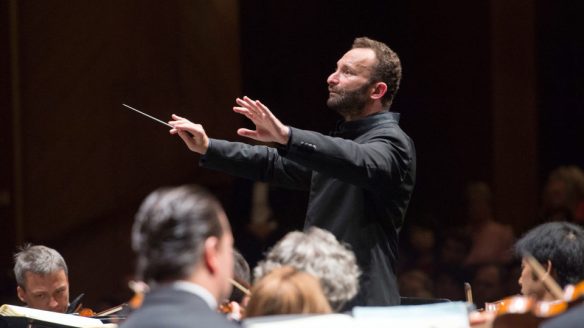
In concert – Berliner Philharmoniker / Kirill Petrenko: The Golden Twenties – Weill & Stravinsky

Michael Spyres (Oedipus), Ekaterina Semenchuk (Jocasta), Andrea Mastroni (Tiresias), Krystian Adam (Shepherd), Derek Welton (Creon, Messenger), Bibiana Beglau (speaker), Men of the Rundfunkchor Berlin, Berliner Philharmoniker / Kirill Petrenko (above)

Weill Symphony no.1 in one movement (1921)
Stravinsky Oedipus Rex (1927)

Philharmonie, Berlin
Saturday 13 February (review of the online broadcast)

Written by Ben Hogwood

“This is no little hicktown. This is one helluva city!”

The words of Bertolt Brecht, writing about his home city in the song Berlin im Licht, set to music by Kurt Weill. It is a sentiment brought to the front of The Golden Twenties, an online festival from the Berliner Philharmoniker running through February, examining ‘a metropolis of contrasts…the epicentre of artistic modernism’.

The festival’s first concert, streamed from the Philharmonie via the orchestra’s Digital Concert Hall, featured the Berliner Philharmoniker’s first ever performance of Weill’s single-movement Symphony no.1 from 1921. This seems like a remarkable historical oversight, even for a work as little-known, but the performance gave this student piece the best possible platform to reach a new audience.

After a thoughtful and revealing introduction from the orchestra’s concertmaster Noah Bendix-Balgley, the Symphony’s distinctive main motive rang out like an extended peal of bells. With this arresting opening Weill laid out the ambition of his work, writing as a student of Busoni looking to impress. This bold statement was complemented by intricate and intimate solo episodes through the inner workings of the orchestra.

Kirill Petrenko conducted a cohesive and convincing account, making sense of the more congested writing and bringing out the parallels with Hindemith and Schoenberg, which he spoke about in the interval. The work’s fulsome harmonies had plenty of deep colour, and it was revealing to hear the counterpoint in such detail. The double basses made an eerie contribution through a fugal episode which wound its way up through the orchestra at several points in the work, before an impressive climax and a darkly shaded postscript. Petrenko nailed the scope of the piece but ensured there was plenty of room for the phrases to breathe individually.

Stravinsky’s Oedipus Rex could hardly have been a more appropriate counterpart for a concert filmed behind closed doors. With its chilling opening statement, ‘The plague is destroying us!’, sung by a socially distanced male chorus from the choirstalls, it was a stark reminder of our current, locked down predicament – and struck an inevitable parallel with the state of the performing arts currently.

This 50-minute opera / oratorio is one of the most notable achievements in Stravinsky’s so-called ‘neo-classical’ period, a dramatic response to Sophoclese‘s tragedy that is not the easiest to digest but which packs an expressive punch.

Petrenko’s incisive conducting brought its message home with a lasting power, and in the performance he was aided by a strong cast of soloists. Michael Spyres’s tenor dominated in the title role, his ringing tones promising deliverance but ultimately winding up in great anguish before the end. He was given ample support by Creon (bass-baritone Derek Welton) and mezzo-soprano Ekaterina Semenchuk, whose fulsome contribution was made in a bright red dress bringing her into dramatic contrast with the funereal black of chorus and orchestra.

Petrenko kept things moving throughout, with virtuoso contributions from woodwind and percussion in particular. In spite of their social distancing the chorus lost none of their power, playing out the tragic story with detail but an ominous inevitability. Holding the threads together was narrator Bibiana Beglau (above), an excellent choice and with strong proejction in the empty hall.
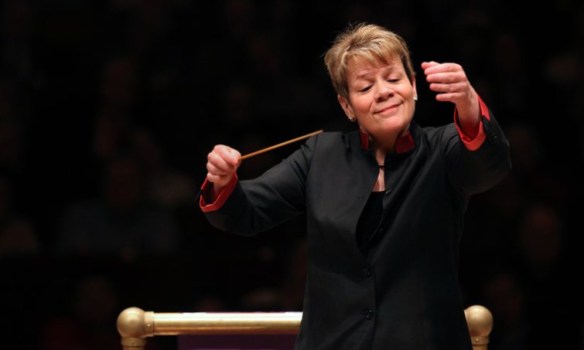
Highlights could be found in the assertive delivery of Welton in the ‘Avenge Laius’ section, while Spyres gave an impassioned promise that he would solve the riddle of the Sphinx. The chorus alternated between a horror at the plague, a sorrowful realisation of the plight of Oedipus, which was particularly moving, and the cold, regretful end.

This was an auspicious start to what promises to be a revealing celebration of Berlin and particularly Weill in the 1920s. The next concert on 16 February will look at the composer’s better-known Second Symphony, while this and future instalments will include the music of Hindemith, Richard Strauss and Eisler. If the performances are as good as these then online attendance is highly recommended.

The next concert in The Golden Twenties season can be seen and heard at the Berliner Philharmoniker website


In concert – ORF Vienna Radio SO / Marin Alsop: Musikprotokoll 2020 – Hidden Sounds

Joonas Ahonen (piano), ORF Vienna Radio Symphony Orchestra / Marin Alsop

Saariaho Chimera (2019) Austrian premiere
Maintz Piano Concerto (2014) Austrian premiere
López Disparates (2004-06) Austrian premiere

Helmut List Halle, Graz
Friday 9 October (review of the online broadcast)

Written by Richard Whitehouse

Now into its 53rd season, the Musikprotokoll festival in Graz has long been synonymous with some of Austria’s most innovative music-making, with this evening’s concert from the ORF Vienna Radio Symphony Orchestra and its current chief conductor Marin Alsop being no exception. Notable too was the sizable audience – notwithstanding the needs of social distancing – and its enthusiasm for a programme, as concise as it was uncompromising, which contained music by a younger Austrian composer and one who has been resident in that country over the past three decades.

First, though, a curtain-raiser by Kaija Saariaho – the Finnish composer who has long resided in Paris, whose output features harmonic subtlety and timbral finesse as its hallmarks. Both of these were present in Chimera – an oblique homage to Beethoven in the 250th anniversary of his birth, in which material from her earlier orchestral piece Orion was (almost) book-ended by the beginning and ending of that composer’s Second Symphony. The result was diverting if insubstantial, redolent of Berio’s re-imaginings while assuredly not outstaying its welcome.

Among the leading Austrian composers of his generation, Philipp Maintz (b1977) evidently wrote or at least began several piano concertos prior to completing the one heard tonight. He has spoken of admiration for the Ligeti and Lutosławski concertos, as well as his nonplussed regard for the Schoenberg; yet this latter soon came to mind in a piece whose four continuous movements take in a gradual accumulation of energy, followed by two contrasting intermezzi then a further and more rapid gathering of momentum toward the emphatic close. Connecting the whole are brief recitative-like passages as cede the foreground to a soloist whose dextrous pianism is otherwise embedded into the overall texture. Joonas Ahonen was an alert and agile soloist in music that requires, and received, acute coordination with orchestra and conductor.

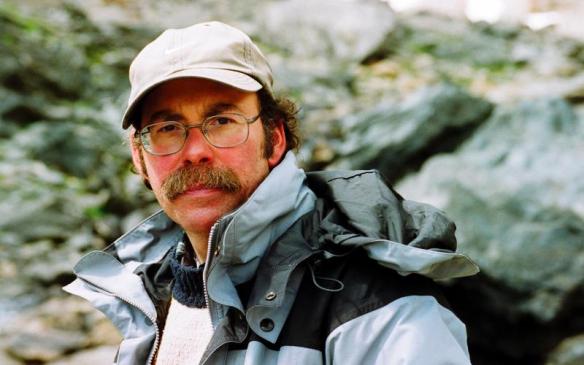
Championed by such conductors as Michael Gielen, Peter Eötvös and Ilan Volkov, Jorge E. López (above) eschews both the gnomic intricacies of new-complexity and ironic self-regard of post-modernism in drawing resourcefully on the past for a provocative challenge to the future; not least those symphonic works as dominate his recent output. Leading into them is Disparates, described as a ‘Goya / Beethoven homage’ that draws parallels between the artist’s desolate late sketches with the composer’s equally gnomic Six Bagatelles from much the same time.

The sequence is no mere orchestration or paraphrase of piano originals. Its sepulchral textures thrown into relief by glassy asides from Stroh violin, the first piece merges reluctantly into the militaristic march-past of its successor, then on to those stark pathos and disjunctive contrasts of the two that follow. Fusing aspects of the final two bagatelles, the fifth piece veers between fraught eloquence and glowering recessional as it lurches on to an ending bereft of meaningful closure: Goya’s ominous imagery and Beethoven’s flights of fancy united in unwitting accord.

An engrossing and disquieting sequence, which yet offers a direct way into López’s singular musical ethos. The VRSO responded with verve and no little virtuosity to Alsop’s animated prompting, so rounding off what was an intriguing fixture in this always enterprising festival.

This concert can be seen and heard at the Musikprotokoll website

In concert – Gould Piano Trio @ Wigmore Hall

Gould Piano Trio [Lucy Gould (violin), Richard Lester (cello), Benjamin Frith (piano)]

Mozart Piano Trio in G major K564 (1788)
Clarke Piano Trio in E flat minor (1921)
Ravel Piano Trio in A minor (1914)

Wigmore Hall, London, 29 October 2020

Reviewed by Richard Whitehouse

This latest event in the Wigmore Hall season saw a welcome recital by the Gould Trio, now well into its third decade and whose frequent appearances at this venue have always featured music from right across the medium of the piano trio; with tonight’s programme no exception.

A medium to which Mozart came relatively late in his career, producing five such works in little more than two years. Last in this sequence, K564 has rather remained in the shadow of its predecessors; unfairly so, as motivic interplay across and between its three movements is comparable to any of his more imposing pieces of this time. Such was affirmed in a reading which brought out the muscular interplay of its Allegro, the wistful elegance of its Andante then the relaxed nonchalance of a final Allegretto as ranks among Mozart’s most endearing.

Would that Rebecca Clarke had followed up her solitary contribution; the Piano Trio belonging to a clutch of pieces that should have laid the basis for a composing career but were destined to remain the peak of her achievement. The influence of Debussy and Ravel is often cited, but the vehemence of Bartók’s music from this period is equally evident – witness the emotional volatility of the first movement (which predates the similarly conceived opening movement of the Hungarian composer’s First Violin Sonata), fraught eloquence of the central Andante then driving impetus of the final Allegro; its powerful culmination subsiding into a resigned coda whose defiant ending feels almost in spite of itself. A fine performance by an ensemble which was championing this piece well before it attained the recognition it now justly enjoys.

If Ravel’s Piano Trio has never lacked for advocacy over the century and more since it was first performed, it remains a tough challenge both technically and interpretively. The present account was perhaps a shade under-characterized in the simmering dance rhythms of the first movement, with the Scherzo’s deft syncopations similarly downplayed at least until the sheer effervescence of its closing bars. No doubts, though, as to the ensuing Passacaglia – building methodically yet irresistibly to its baleful climax before winding down into the depths of the piano, from whence the finale steals in. The latter movement has been criticized for exuding near-orchestral sonorities, but Ravel’s handling of this is astutely judged – not least in a coda whose hard-won triumph in the face of encroaching adversity was powerfully conveyed here.

It certainly made for an impressive conclusion to this recital, just the sort of programme that feels necessary at such a time as this. Hopefully, these next few weeks will bring no cessation on the part of Wigmore Hall or the Gould Trio – their activities necessary now more than ever.

This concert can be streamed again until 29 November via the YouTube link above, or through the Wigmore Hall website here

These Wigmore Hall concerts are free to view but the venue is relying on the generosity of its audience to make them possible. If you do watch the concert, please consider making a donation, either at the Wigmore Hall website or via PayPal

In concert – April Fredrick, English String Orchestra / Kenneth Woods: Visions of Childhood – Following Mahler on the path to eternity

April Fredrick (soprano), Members of the English Symphony Orchestra / Kenneth Woods

Mahler arr. Stein Symphony no.4 in G major (1900) – Opening
Wagner arr. Woods Siegfried Idyll (1870)
Humperdinck arr. Woods Hänsel und Gretel (1892) – Der Kleine Sandmann; Abendsegen.
Schubert arr. Woods Die Forelle – Lied and Variations, D550/D667 (1817/19)
Mahler arr. Woods Das Irdische Leben (1892)
Schubert arr. Woods Der Tod und das Mädchen – Variations & Lied, D531/D810 (1817/24)
Mahler arr. Stein Das Himmlische Leben (1892/1900)

Wyastone Concert Hall, Monmouth
Friday 16 October (review of the online broadcast)

Written by Richard Whitehouse

The English Symphony Orchestra’s Music from Wyastone online series continued this evening with an ingenious programme centred on Childhood, as depicted in music from the latter 19th century, and featuring chamber arrangements by the orchestra’s principal conductor Kenneth Woods.

The initial bars of Mahler’s Fourth Symphony, heard in the now relatively familiar reduction by Erwin Stein, led seamlessly into Siegfried Idyll – here arranged for identical forces and so affording even greater prominence to Wagner’s felicitous writing for woodwind. In this never rushed account, Woods underlined the methodical aspect of music whose birthday association and ethereal aura rather bely its formal ingenuity. There were no qualms over instrumentation, even if the trumpet’s timely presence might have made the ecstatic climax seem even more so.

April Fredrick (whose impressive account of Strauss’s Four Last Songs in the first of these concerts is required listening) then took the stage for a medley drawn from the second act of Humperdinck’s timeless Hänsel und Gretel, trebling up as the Sandman and then both main characters in a reminder that the enchanting essence of this opera is seldom without its more ambivalent, even ominous undertones in the treatment of childhood. Moreover, this chamber reduction brought an intimacy that more closely aligned the music to its origins as a singspiel.

Of especial interest were two Schubert pieces – hardly unfamiliar in themselves, here given an unexpected while revealing guise. In the case of The Trout, this entailed interweaving the verses of the song with those variations of the fourth movement from the later piano quintet so as to make more explicit the constantly shifting emotions across what is often considered one of this composer’s most equable settings. A different procedure was adopted for Death and the Maiden, in which the slow movement of Schubert’s eponymous string quartet – its intensifying variations characterized by appealing woodwind contributions – were followed by the earlier song, heralded by the hieratic strains of harmonium, and whose mingling of anguish with resignation threw the variations’ emotional trajectory into more acute relief.

Following each of these items were songs by Mahler, the natural successor to Schubert in so many aspects of his music – not least these settings of texts from Des knaben Wunderhorn. In its pivoting between the child’s supplications and the mother’s entreaties, over the fateful strains of a ceaseless ‘treadmill’ accompaniment, The Earthly Life is one of this composer’s most evocative songs – albeit of the child’s existence running out as though grains of sand. By contrast, The Heavenly Life speaks of a child’s paradisal existence in the afterlife and if Mahler’s treatment is a good deal more complex than the words might suggest (the singer’s assessment of this on the ESO website is worth hearing), Fredrick’s judicious floating of the vocal line was integrated with Wood’s astute handling of the ensemble to good effect.

Hearing the latter piece in Stein’s reduction as finale of the Fourth Symphony served equally to bring this well-planned and thought-provoking programme full circle; one that is required listening for those yet to hear it, and with the next concert in this series keenly anticipated.

This concert can be accessed free until the end of Tuesday 22 September at the English Symphony Orchestra website

Further information about the Music from Wyastone series can be found here