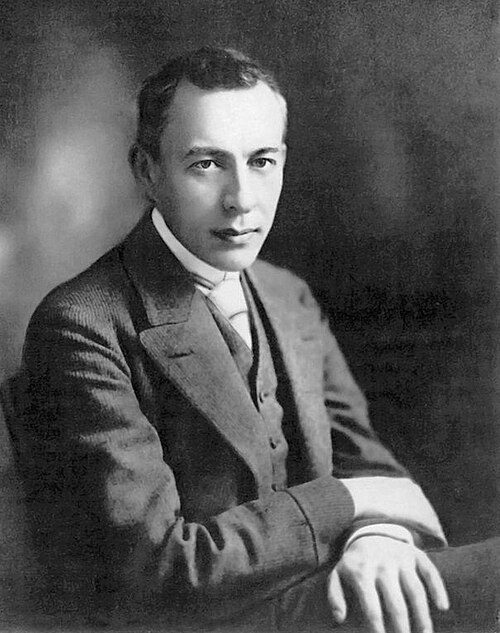
by Ben Hogwood Photo of Rachmaninoff, c1900, courtesy of Wikipedia
March 28 was a significant date in the life of Sergei Rachmaninoff. Sadly it was on this day that he died, in 1943 – but the event I have chosen to highlight is the infamous premiere performance of the Symphony no.1 in 1897.
The concert was an unmitigated disaster, due to under-rehearsal and the supposedly intoxicated state of its conductor, Alexander Glazunov. The negative reaction afforded the work caused Rachmaninoff great psychological harm, severely denting his confidence and casting a shadow over many future compositions. This was a great shame, for it is a powerful piece, with original development of its melodic material and an instinctive and fluid compositional style. The finale is lean, its raw power making a strong impact both in concert and on record.
The symphony was not revived until 1945, when a second performance took place under Alexander Gauk, since when the work has steadily gained in popularity. It has been helped by a number of excellent recordings, of which one is chosen here – the Concertgebouw Orchestra conducted by Rachmaninoff specialist Vladimir Ashkenazy:
by Ben Hogwood, with adapted text from the press release
Set against the backdrop of ‘Elgar Country’, the Elgar Festival is a highlight of the West Midlands cultural calendar, this year taking place across the scenic destinations of Worcester, Malvern, and Pershore from 23 – 31 May 2026. The festival celebrates the enduring legacy of Worcester-born composer Sir Edward Elgar (1857–1934), through a diverse programme featuring world-class artists and accessible performing experiences, talks, exhibitions and guided walks designed to attract the broadest audience.
GALA CONCERT IN WORCESTER CATHEDRAL
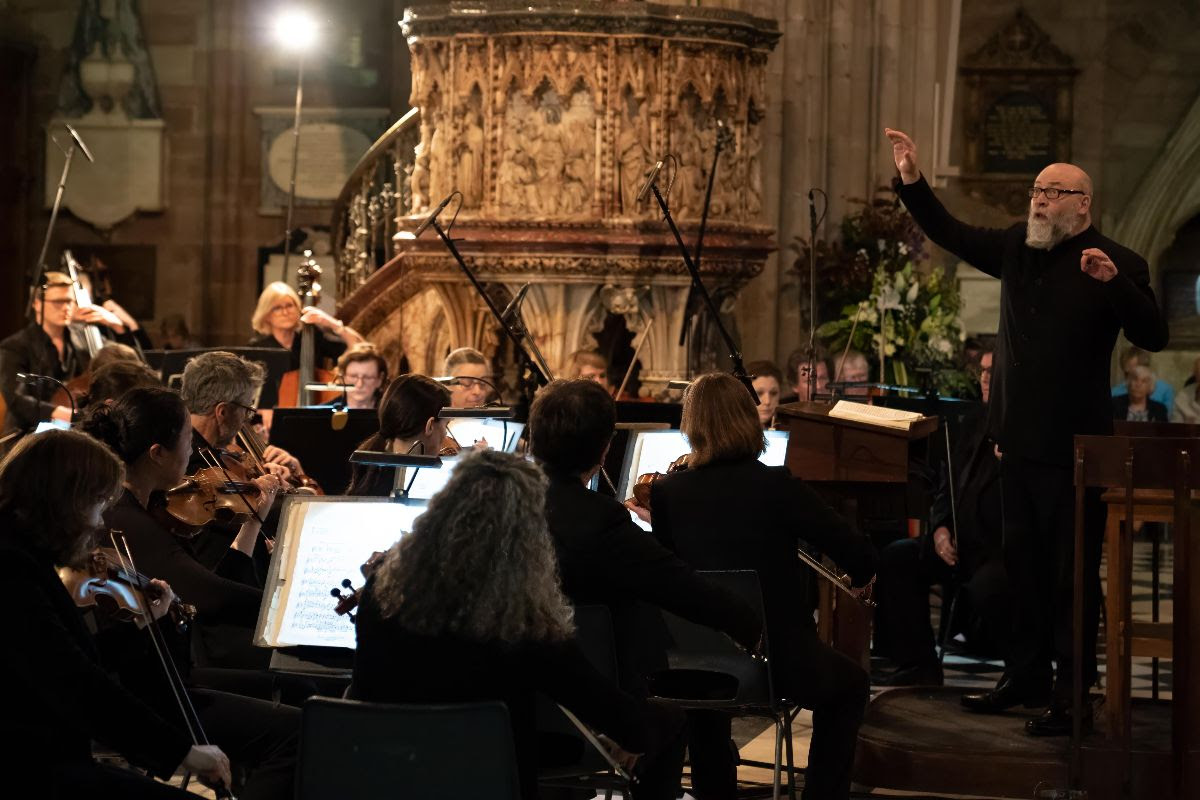
Amongst highlights this year is a Gala Concert in Worcester Cathedral on Saturday 30 May which features a performance of the rarely-heard Cello Concerto by Elgar in the version for Viola, prepared by Lionel Tertis and premiered under Elgar’s baton in 1930. The work is to be performed by one of today’s leading performers and educationalists, Rosalind Ventris, with the English Symphony Orchestra (ESO) under their Principal Conductor Kenneth Woods. For the second half, the ESO will be joined by the Elgar Festival Chorus for another Elgar rarity; the composer’s early ‘symphony for chorus and orchestra’, ‘The Black Knight’.
‘GREAT BRITISH TONE POEMS’
There will be a further opportunity to hear the English Symphony Orchestra – as Orchestra-in-Residence at the Elgar Festival – on Friday 29 May at Worcester Cathedral in a rousing ‘Great British Tone Poems’ programme, to include Elgar’s ebullient ‘Falstaff’, Bax’s evocative ‘Tintagel’ and Holst’s ever-popular ‘The Planets’ Suite.
STRING GREATS AND NEW DISCOVERIES
On Thursday 28 May, the ESO Strings perform at Great Malvern Priory in a programme of masterpieces from the string repertoire; popular works by Elgar alongside ‘Rakastava’ by Sibelius, and Schoenberg’s ‘Verklarte Nacht’ (‘Transfigured Night’), both haunting and powerful. The final work is ‘Night Windows’ by Thea Musgrave; a five-movement chamber work inspired by a painting of that name by Edward Hopper.
THEA MUSGRAVE CELEBRATED AS FEATURED COMPOSER
The distinguished 97-year-old Scottish-American composer, Thea Musgrave, is featured composer this year at the Elgar Festival and her work will be showcased in performances throughout the event.
GUEST ARTISTS
Guest artists include oboist Nicholas Daniel and composer and pianist Huw Watkins. I Fagiolini, the British solo voice ensemble and Director Robert Hollingworth will be making a special visit as part of their 40th anniversary tour. Already fully booked is an evening with cellists Julian and Jiaxin Lloyd Webber, while leading record producer Andrew Keener will be reminiscing on his work in the studio with some of the most renowned Elgar conductors and instrumentalists from the 1980s to the present day.
In recital, soprano April Fredrick who, as ESO Affiliate Artist, is well-known to audiences for her many fine performances and recordings, will be joined by acclaimed composer-pianist Eric McElroy and guests Grace Shepherd, violin, and narrator Joseph Campbell Powell, to explore the World War I experiences in words and music of regional luminaries including composers Ivor Gurney, George Butterworth, Arthur Bliss, and Ralph Vaughan Williams.
BEST-LOVED ENSEMBLES
Offering FREE admittance is a popular programme given by Worcestershire Symphony Orchestra, the orchestra co-founded by Sir Edward Elgar, providing an opportunity for families to experience the thrill of live orchestral music. Choral and song repertoire is to be performed by the region’s best-loved ensembles including The Elgar Chorale, and The Jenny Lind Singers who celebrate the works of women composers past and present.
An exciting new collaboration is to be led by Malvern-based multi-disciplinary artist Nakisha Swatton who is working with local amateur and professional musicians to create new musical portraits inspired by Elgar’s ‘Enigma Variations’. International competition winner Roman Kosyakov brings the 2026 festival to a close in virtuosic style with a piano transcription of Elgar’s ‘Enigma Variations’.
PARTICIPATORY EVENTS FOR MUSICIANS OF ALL AGES
At Malvern College, a ‘Come and Play Elgar’ day invites amateur musicians to perform alongside members of the English Symphony Orchestra in two of Elgar’s most challenging overtures as part of a collaborative workshop.
The ‘Elgar for Everyone’ Family Concert is hosted by ESO Youth’s patron, Classic FM broadcaster, composer and author Zeb Soanes, and provides an introduction to the orchestra for music lovers of all ages. Over 100 young musicians from across Elgar Country will play alongside their teachers and ESO mentors for a performance following rehearsals and workshops. A highlight of the program includes the premiere of the winning entries from the 2026 Young Composers Competition.
Participants from the Elgar Festival/Royal Birmingham Conservatoire Young Performer Showcase Programme will perform works for string quartet by Elgar and Rebecca Clarke at the Church of St Mary Magdalene, NT Croome Court.
FREE AND INFORMAL EVENTS
All concerts at the Elgar Festival offer free entry for under 18s accompanied by full-paying adults. Many other events are free-of-charge including relaxed concerts, talks, film and an exhibition.
‘ELGAR FOR EVERYONE’ – BACKGROUND TO THE ELGAR FESTIVAL
Since its inception in 2018, the annual Elgar Festival has grown from a weekend to a 9-day celebration of the life and music of Worcester’s most famous son and Britain’s great composer, Sir Edward Elgar (1857-1934), held at a number of integral venues of both historic interest and personal significance to the composer including Worcester Cathedral and Great Malvern Priory. The Elgar Festival was The Guardian’s Crtic’s Pick in 2018 and in 2022 featured as one of the top 20 Jubilee events. https://elgarfestival.org/about/
FURTHER INFORMATION AND BOOKINGS
Elgar Festival 23 – 31 May 2026 Patron: Julian Lloyd Webber Artistic Director: Kenneth Woods Orchestra-in-Residence: English Symphony Orchestra Programme information and ticket sales Online: www.elgarfestival.org Email: elgar@elgarfestival.org Telephone: 01905 611 427 In person: Worcester Theatres, Huntingdon Hall Box Office, CrownGate, Worcester WR1 3LD
HOW TO SUPPORT THE ELGAR FESTIVAL
The Elgar Festival is raising money to help deliver its 2026 iteration and to continue the development of its range of events for people of all ages, interests, and lifestyles. Funding continues to be a huge challenge across all arts organisations and donations are valuable in helping to continue the legacy of one of England’s most revered composers, contributing towards costs for relaxed concerts, artist’s fees and instrument and venue hire, and keeping the Free events free for all. https://elgarfestival.org/support/
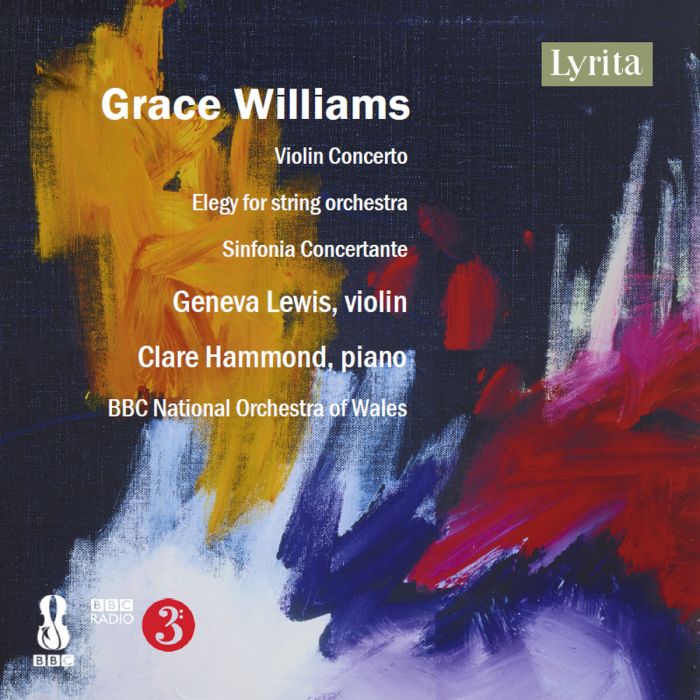
Geneva Lewis (violin, Violin Concerto), Clare Hammond (piano, Sinfonia Concertante), BBC National Orchestra of Wales / Jaime Martin (Violin Concerto), Ryan Bancroft (Elegy), Jac van Steen (Sinfonia Concertante)
Lyrita SRCD447 [59’09”] Producer Mike Sims Engineers Andrew Smilie, Simon Smith (Violin Concerto)
Broadcast performances at Hoddinott Hall, Cardiff on 12 February 2022 (Elegy) and 22 September 2022 (Sinfonia Concertante); live performance from Royal Albert Hall, London on 8 August 2023 (Violin Concerto)
Reviewed by Richard Whitehouse
What’s the story?
Lyrita continues its exploration of Grace Williams with this enticing collection of orchestral works dating from before, during and after the Second World War. All the pieces feature the BBC National Orchestra of Wales, which has championed this composer over nine decades.
What’s the music like?
Earliest here is the Elegy for strings that, evidently overhauled and re-scored after several hearings, falls within an extensive lineage of such miniatures (in length but not expressive scope) by British composers. Scored for muted violins and violas, the initial idea evinces a ruminative austerity such as persists to the main climax; after which, a heartfelt passage for solo strings presages the more conciliatory mood setting in near its end. Ryan Bancroft has the measure of a piece whose emotional depth is out of all proportion to its modest duration.
Although conceived prior to the above, Williams did not commence work on what became her Sinfonia Concertante until the turn of the next decade. With its compact dimensions and intensive integration of piano and orchestra, its title (actually suggested by pianist Michael Mullinar) is well chosen. If the opening Allegro never quite finds the right balance between its impulsive and yielding main themes, the central slow movement is Williams at her most characteristic with its unfolding as terraces of mounting intensity toward a powerful climax which subsides into pensive resignation; the final Alla Marcia duly maintaining its impetus through to a forceful if never hectoring close. Clare Hammond is at her inquiring best in an account as finds Jac van Steen handling some passing issues of balance with real adeptness.
For its part, the BBC National Orchestra of Wales is no less attuned to the very different ethos of the Violin Concerto, which it premiered with soloist Granville Jones almost 75 years back. New Zealand-born Geneva Lewis proves to be a sympathetic advocate – even if the opening Liricamenta surely requires a more purposeful sense of direction for its enfolding inwardness not to risk inertia. Not that her unforced manner and tonal elegance are other than appropriate, as is even more evident in the central Andante with its impressionist eddying of phrases and fastidious timbral shading. Following on attacca, the final Allegro sees the work’s only swift music in which Lewis’s deftness gains from her assured co-ordination with Jaime Martin. Its cadenza is incisively despatched, and the coda more satisfying for its teasing unexpectedness.
Does it all work?
Almost always. The Violin Concerto is a work with which its composer never seems to have been wholly satisfied, but such reservations as there are centre less on its actual content than on the difficulty – at least in its opening movement – of controlling overall momentum such that the music coheres overall. Lewis is by no means unsuccessful, though comparison with earlier performances that are available online suggests other soloists may have gone further in this respect. A reminder, moreover, that Williams’s music does not necessarily ‘play itself’.
Is it recommended?
Indeed. The Cardiff broadcasts benefit from the superb acoustic of Hoddinott Hall, while the Proms account of the Violin Concerto has far more immediacy than ‘on the night’. Typically informed and informative notes by Paul Conway round out what is a mandatory acquisition.
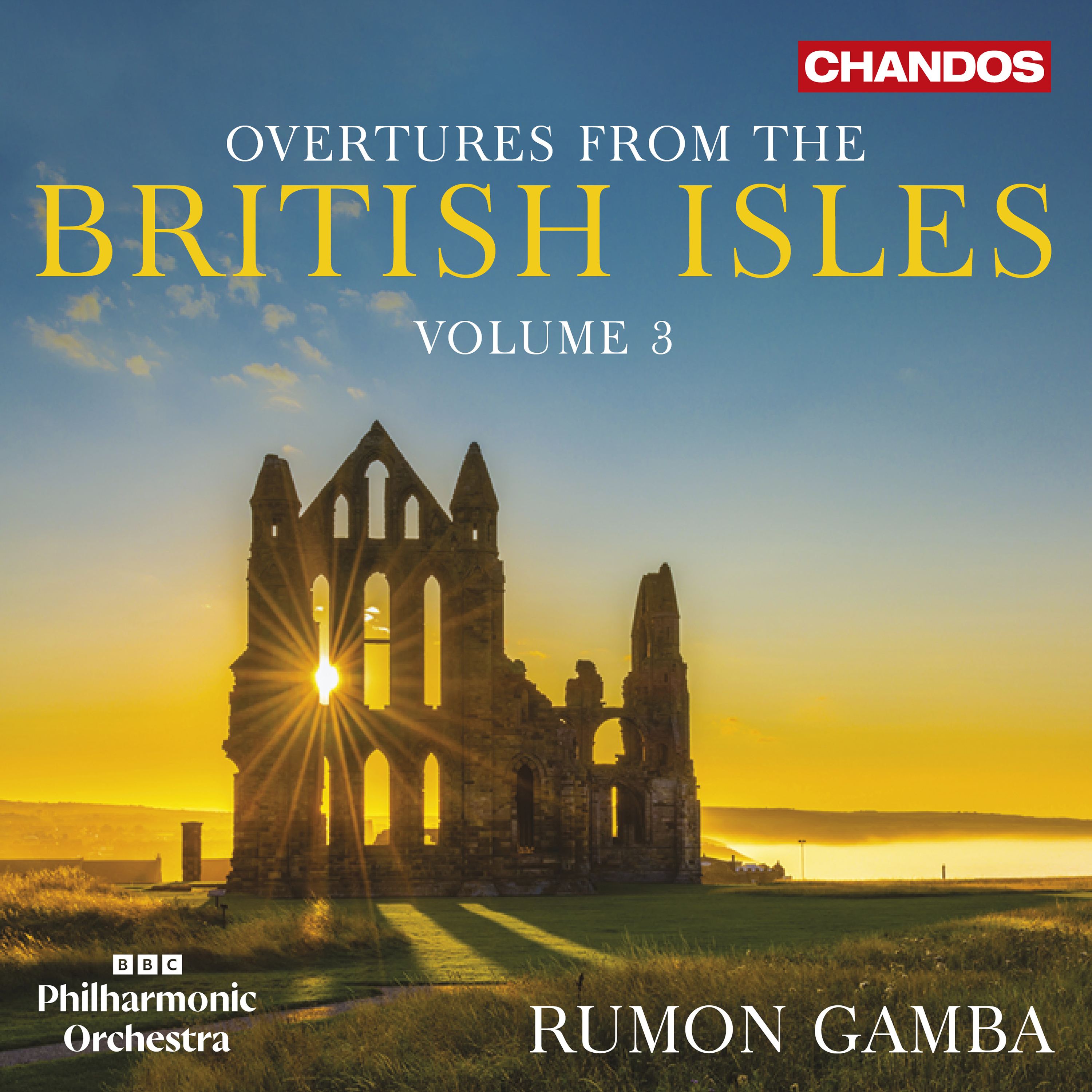
Arnell The New Age, Op. 2 (1939) Brian The Tinker’s Wedding (1948) Bridge Rebus H191 (1940) Britten orch. Colin Matthews Overture to ‘Paul Bunyan’ Op.17 (1941) A. Bush Resolution Op.25 (1944) G. Bush Yoric (1949) Fenby Rossini on Ilkla Moor (1938) Jones Comedy Overture (1942) Orr The Prospect of Whitby (1948) Parker Overture to ‘The Glass Slipper’ (1944) Rawsthorne Street Corner (1944)
Chandos CHAN20351 [77’20’’] Producer Jonathan Cooper Engineer Stephen Rinker, Philip Halliwell
Recorded 23 May (Arnell, Brian, Britten, G. Bush, Rawsthorne), 20 November (Parker), 21 November 2024 (Bridge, A. Bush, Fenby, Jones, Orr) at MediaCityUK, Salford, Manchester
Reviewed by Richard Whitehouse
What’s the story?
Chandos continues its series devoted to British Overtures with the third instalment featuring three first recordings among those eleven works which, between them, demonstrate just how significant to British concertgoing was this now neglected genre throughout the inter-war era.
What’s the music like?
The album gets off to a cracking start with The Tinker’s Wedding – Havergal Brian’s overview of a play by J. M. Synge, by turns uproarious and ruminative, that duly launched his abundant Indian Summer. After this, Geoffrey Bush’s Yorick cannot help sounding well-behaved if with sufficient expressive contrast for an evocative portrayal of Shakespeare’s hapless jester. In his detailed booklet note, Lewis Foreman describes Alan Rawsthorne’s Street Corner as ‘‘largely forgotten’’, which is a pity given its vivid conjuring of time and place has dated as well as the best Ealing Comedy. If Daniel Jones’ take on its subject may be less memorable, his Comedy Overture exudes more than enough humour and intrigue to make its acquaintance worthwhile.
Frank Bridge’s last completed work, Rebus was unheard for decades after its premiere but this third recording confirms it as a minor masterpiece and the finest of all these pieces – not least as an object-lesson in being accessible without diluting individuality. Robin Orr first attracted attention with The Prospect of Whitby, and his bracingly resourceful evocation of the London pub should not have waited so long for its recording. Richard Arnell was clearly out to make a statement of intent with The New Age, which generates real energy between imposing outer sections. Benjamin Britten might not have intended to preface his operetta Paul Bunyan with an overture but, as realized by Colin Matthews, it leaves a pleasing if anonymous impression.
Far more personality is conveyed by Alan Bush in Resolution, derived from an earlier piece for brass band and which continues that dialectical facet evident in much of his earlier music through its contrapuntal dexterity. There could be no greater contrast than The Glass Slipper, Clifton Parker’s overture to Herbert and Eleanor Farjeon’s ‘fairy tale with music’ that found success as a Christmas Matinee in London’s West End. Most appealing for its slightness and knowingly fey charm, it ideally complements Rossini on Ilkla Moor – Eric Fenby’s ingenious homage to the Italian master which came about through (deliberate?) misunderstanding only to enjoyed frequent performance, and which entertainingly rounds off the present collection.
Does it all work?
Yes, whether in terms of the overtures heard individually and a continuous overall sequence. Those who have acquired those previous volumes (or Chandos’s two issues of British Tone Poems) will recall that Rumon Gamba favours predominantly swift tempos and so it proves here, though there is never a sense of this music unnecessarily being rushed, while the BBC Philharmonic is more than equal to the often considerable technical demands of each piece. None of those overtures previously recorded can surely have emerged so effectively as here
Is it recommended?
Indeed it is. The continued absence of overtures from the programmes of most UK orchestras means such pieces have little chance of reaching a new public other than with recordings, and there could be no greater incentive to get to know them than through a collection such as this.
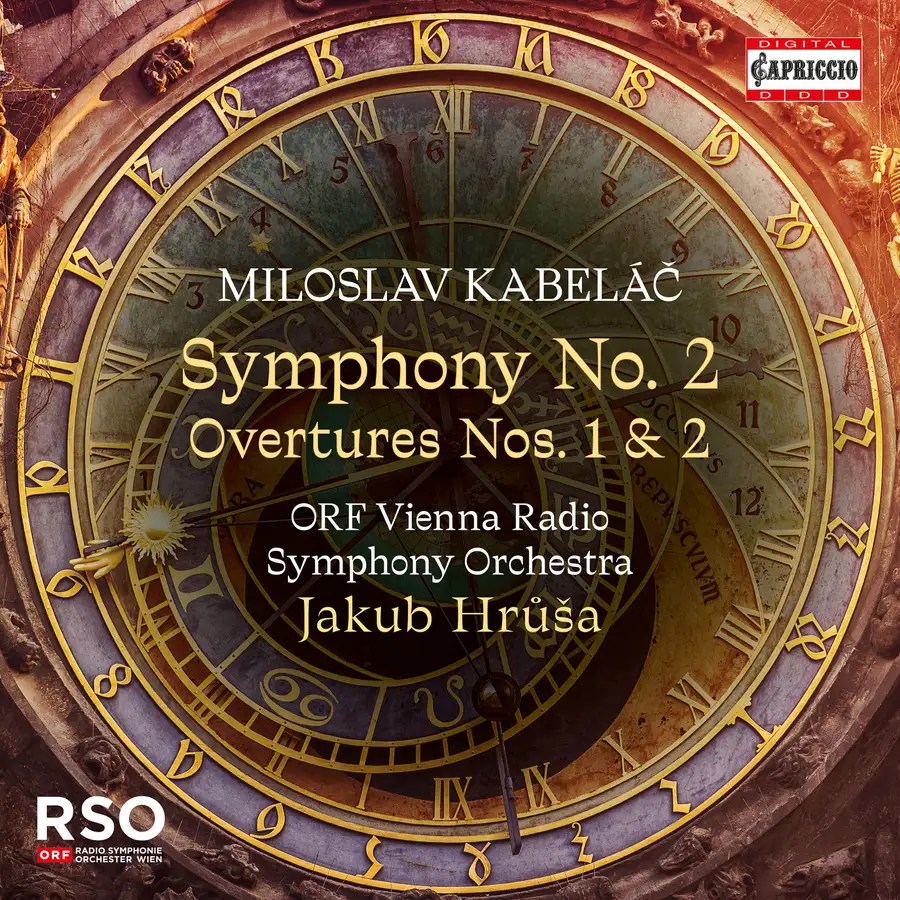
Kabeláč Symphony no.2 in C major Op.15 (1942-6) Overture no.1 Op. 6 (1939) Overture no.2 Op.17 (1947)
Capriccio C5546 [54’51’’] Producer Erich Hofmann Engineer Freidrich Trondl
Recorded 14-16 June 2023 (Symphony), 17 June 2024 (Overtures) at Konzerthus, Radio Kulturhaus, Vienna
Reviewed by Richard Whitehouse
What’s the story?
Capriccio continues its exploration of paths less travelled with a collection of early orchestral works from the Prague-based composer Miloslav Kabeláč (1908-79), all persuasively realized by the ORF Symphony Orchestra of Vienna while authoritatively conducted by Jakub Hrůša.
What’s the music like?
Although his output made little headway outside his native Czechoslovakia over his lifetime, with its dissemination subject to considerable restrictions imposed by those authorities either side of the Dubček era, Kabeláč has belatedly been recognized as a major figure from among the European composers of his generation. The three pieces featured here give only a limited idea of those radical directions that his music subsequently took, though a distinct personality is already evident such that they afford a worthwhile and rewarding listen in their own right.
His first such work for full orchestra, the Second Symphony occupied Kabeláč throughout the latter years of war and into a peace whose promise proved but fleeting. Uncompromising as a statement of intent, the first of its three movements unfolds from an imposing introduction to a sonata design as powerfully sustained as it is intensively argued. Beginning then ending in elegiac inwardness, while characterized by an eloquent theme for alto saxophone, the central Lento builds to a culmination of acute plangency. It remains for the lengthy finale to afford a sense of completion, which it duly does with its methodical yet impulsive course towards an apotheosis whose triumph never feels contrived or overbearing. Successfully heard in Prague then at the ISCM Festival in Palermo, the piece endures as a testament to human aspiration.
This recording is neatly and appositely rounded out with the brace of overtures Kabeláč wrote on either side of the symphony (neither of which appears to have been commercially recorded hitherto). Written in the wake of the Nazi’s invasion of Czechoslovakia, the First Overture is a taut study in martial rhythms whose provocation could hardly have been doubted at its 1940 premiere. Eight years on and the Second Overture is no less concise in its form or economical in its thematic discourse, while exuding an emotional impact which doubtless left its mark on those who attended its 1947 premiere and seems the more poignant in the light of subsequent events. Kabeláč was to write more searching orchestral pieces in those decades that followed, yet the immediacy and appeal of his earlier efforts is still undimmed with the passage of time.
Does it all work?
Yes, owing not least to the excellence of these accounts. While he has not previously recorded the composer, Hrůša directed a memorable performance of Kabeláč’s masterly orchestral work Mystery of Time in London some years ago and he conveys a tangible identity with his music. Those who have the excellent Supraphon set of Kabeláč symphonies (SU42022) need not feel compelled to acquire this release, but those who do will hear readings of this uncompromising music which are likely to remain unsurpassed in their authoritative playing and interpretation.
Is it recommended?
Very much so. Recorded sound could hardly be bettered for elucidating the frequently dense but never opaque orchestral textures, and Miloš Haase pens an insightful booklet note. Those yet to acquire Capriccio’s overview of Kabeláč’s chamber music (C5522) are urged to do so.

 Arcana.fm