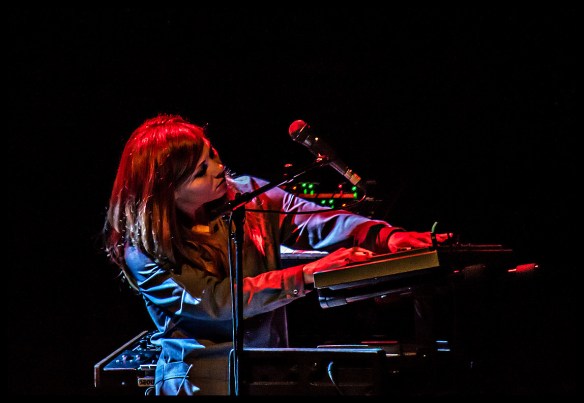
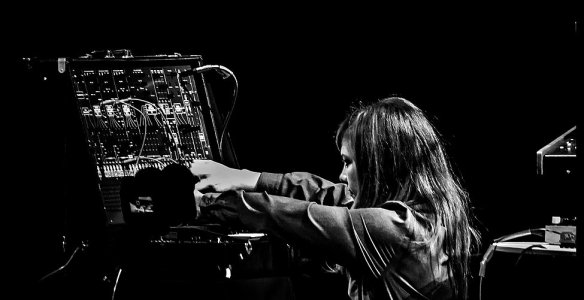
Meet Emily Howard, the featured composer at this year’s Aldeburgh Festival. We will hear four works from her impressive canon – a new orchestral piece, sphere, receiving its UK premiere together with Magnetite in a program from the BBC National Orchestra of Wales and Mark Wigglesworth. This concert comes a day after Afference, her string quartet, which will be played by the Piatti Quartet.
Her biggest work to date, however, is a new opera, To See The Invisible. Developed with writer Selma Dimitrijevic and director Dan Ayling, it will receive three performances at the head of the festival. Arcana was able to chat with Emily to get her thoughts on the new pieces. As is traditional, however, I began by asking for her earliest recollections of classical music.
“I was lucky that it was always around me since I was young,” she recalls. “My dad, a medic, also played the cello. I was brought up in the Wirral, near Liverpool, and I remember going to see the Liverpool Mozart Orchestra, and really loving it. I was taken to operas as well, and because my mum is a pianist too, I was around music all the time.”
Howard began learning her music in a traditional route, but soon realised composition was the discipline for her. “When I was really young I started learning the cello. I was never so good at very regular and disciplined practice – even then I was always more interested in exploring new sounds and tones. Composing came naturally in that way, at the age of eight or nine years old, and what I really wanted to do was write a piece for orchestra. I made a piece for the cello, and transcribed for orchestra. I wrote it all out and the composer/conductor Guy Woolfenden, who was a great influence, was really kind and got the orchestra to play it through!
Fast forward to 2016, when Emily’s Torus (Concerto for Orchestra) enjoyed its world premiere at the BBC Proms in 2016, her ‘home’ orchestra conducted by Vasily Petrenko. It made a strong impression on those present (including yours truly). She declares herself “really pleased, overwhelmed” with the reaction. “The piece has won a British Composer Award since then, too. You can’t tell necessarily how these things are going to go but I was absolutely delighted!”
To See The Invisible is her biggest work to date, and she considers the challenges in writing such a substantial piece for the stage. “It lasts about eighty minutes in total. To be honest I have no idea how I managed to write something that long, but I suppose you’ve got the narrative and texts, which have helped to extend it to a length similar to that of Mahler’s Third Symphony. I had worked with Selma before on Zátopek!, a mini-opera I completed several years ago. We have been talking ever since, and with our director Dan Ayling, the approach has been truly collaborative, making it a very exciting and enjoyable experience. Composing abstract music is not a sociable activity necessarily, and I have found that throughout the opera process, it really helps when you share ideas with your creative partners, and take on board their viewpoints, often very different. Collaboration is a wonderful thing, and it does change you.”
The opera takes its inspiration from a short science fiction story by Robert Silverberg. “For ages Selma and I had been talking about writing an opera based on the experience of a person who is shunned by a society. The central character would be ignored, rather like being sent to Coventry. While Selma was writing the libretto, her brother said about the Silverberg story in which a character is sentenced to a ‘Year of Invisibility’ for ‘a crime of coldness’. It turned out that Selma had been partially remembering the story and we read it and the opera became an adaption. We were really knocked out by the Silverberg.”
She describes the setting in more detail. “It is a sort of musical deuce, where this person is somehow different, and the story plays on the isolation of people who do not fit the system and are excluded from society. Therefore I wanted The Invisible, the opera’s protagonist, to be vocally distinct from the other characters and I chose for them to be represented by baritone and soprano voice simultaneously, particularly in the character’s private moments.” The singers are required to have great flexibility and dexterity here. “The soprano and baritone have really wide ranges, together they are a meta-voice portraying an emotional journey, with the baritone often a lot higher than the soprano.”
Musically, the opera is about collisions between The Invisible’s world and the World of Warmth. “I have intentionally set up contrasting sound worlds with The Invisible’s language consisting of musical extremes, ranging from ethereal to anguished. The World of Warmth is much more traditional and tempered in feel.” The opera looks beneath the surface of these different worlds. “With the World of Warmth, we are all asking is this really the world of warmth?”
One of the many intriguing elements of Howard’s work is its fascination with the relationship between music and mathematics. This is perhaps best captured in a recent work, The Music of Proof.
A collaboration with mathematician Marcus du Sautoy, it began while Howard was writing another – Torus (Concerto for Orchestra) – itself a musical work influenced by mathematics. “I met Marcus through a friend when I was writing Torus, and we had a coffee at the Royal Albert Hall. We really connected about the piece, and about the doughnut shape of the hall’s construction. He immediately said the Royal Albert Hall is torus-shaped (shaped like a doughnut), and since then we have been meeting and working together on various projects.”
“We presented The Music of Proof at New Scientist Live in 2017, featuring a newly composed work entitled Four Musical Proofs and a Conjecture premiered by the Piatti Quartet, five miniatures for string quartet. Each miniature is related to a different style of mathematical proof and in order to compose them, I had asked myself the question “What if I approach writing music as though I am proceeding with the construction of a mathematical proof?” This was a completely different way of working for me and certainly helped me to brush up on some mathematical proofs I had all but forgotten! In the show, Marcus explains the proof, and I explain what I did in response – I have found very different ways to translate aspects of these proofs into music, and then you get to hear the music. We’ve recently repeated the show in Sheffield at Music in the Round.”
The success of the collaboration has filtered through to Howard’s tuition work at the Royal Northern College of Music. “At the RNCM, we have started PRiSM (which stands for Centre for Practice & Research in Science & Music), and we are encouraging collaborations between music students, scientists and mathematicians. I feel that there are real links to be explored: for me both music and maths are about pattern-making.”
“As a composition student, I had wanted to take ideas from mathematics and science and create musical shapes with them, and to begin with I found this difficult. As my musical craft has grown, I feel as though I’ve become more successful at translating ideas from mathematics into musical ideas on which to base my work. For instance, when I created Torus, I imagined I was on the surface of the shape, travelling around and around in one direction, and encountering different landscapes as I went. Around 14 minutes into the work, there is a significant shift and a complete change of musical soundworld, and this is where I had instead imagined a rotation in the other direction. So considering mathematical shapes in this way does help me to define musical shapes and structure in my compositions.”
Returning to the Aldeburgh Festival, Afference – completed in 2014 – represents a significant foray into chamber music. “That was a very difficult piece to write”, she admits. “I had written several orchestral pieces and I really wanted to write some chamber music. I spent ages on it and it’s helped me a lot to write that piece. Perhaps with chamber music in general and certainly with this work, everything feels much sparser and I find that every note, every gesture has a poignant significance. The Piatti Quartet are playing it at the festival, and it will be very interesting to hear them perform another of my works – they’re such fantastic players. They’ve put in an incredible amount of work on the piece.”
Howard is naturally delighted to be given such a prominent role in this year’s festival. “It’s an honour, I’m really proud of being Composer In Residence, alongside esteemed colleagues such as Sir Harrison Birtwistle, Simon Holt, and of course it’s Benjamin Britten’s festival. It’s a wonderful festival and a magical place – especially for opera. In fact we developed To See The Invisible in Aldeburgh, so the piece has grown up there!”
For more information on Emily Howard, visit the composer’s website
When it comes to British music, Martyn Brabbins is your man.
His current set of projects are particularly invigorating. A cycle of Vaughan Williams symphonies with the BBC Symphony Orchestra is off to a flying start, with a recording of A London Symphony on Hyperion. A cycle of the symphonies of Sir Michael Tippett with the BBC Scottish Symphony Orchestra is also underway for the same company, and will include the world premiere of the composer’s early Symphony in B flat. Then there is the small matter of English National Opera, where Brabbins is Music Director – and it’s after a stint of rehearsals and creative advice there that Arcana takes him to the pub for a well-earned drink. As you might hope for one deeply involved in English symphonies, he chooses a pale ale.
“We’ve just done the Sea Symphony!” he proclaims when the small matter of the Vaughan Williams cycle is raised. Does that mean with the first two works covered, that the nine symphonies will proceed in chronological order? “They will now,” he confirms, “we’re doing the Third (the Pastoral) and the Fourth next year. One at a time! I supposed we didn’t do the Sea Symphony first because of the chorus availability, but it doesn’t matter.”
A London Symphony (no.2) is now out on Hyperion, and has been extremely well received, not least for the extended edition used. “What I really like about it was the version we did. A real Vaughan Williams buff said to me that we should do this version. It has been recorded before, but he thought – and I agree with him now – that some of the music that Vaughan Williams put back in is absolutely fantastic.
I know the original, and even some of the music that we’ve cut out of the version we’ve done is amazing – but as a one-off performance piece that original version is a bit too long. This one is only five more minutes, but you get such pay-offs in the new music, especially at the very end of the piece and in the slow movement. The slow movement coda is absolutely ravishing. When we recorded it with the BBC Symphony Orchestra they realised it was different and they were completely convinced. I don’t remember anybody saying they preferred the original, and at the time, when we were recording in Henry Wood Hall, it felt so right because this is the orchestra for whom it was written. It is in their blood and in their spirit, possibly more than any other British orchestra.”
The orchestra has a rich recent history with VW, due to their conductor laureate Sir Andrew Davis. “He did a cycle with them,” says Brabbins, “and somehow it felt like they knew how it should go, and on a technical level they can do everything anyway. You just press the right buttons and they are so incredibly responsive, and so willing to go where you want them to go.”
Did he take their performing history into account when preparing the recording? “No, not at all. I just feel the fact they have that history means they don’t just do it how they’ve done it –they have the DNA of the music. It was like that in the BirtwistleEarth Dances, which we performed alongside the Sea Symphony at the Barbican in November. They are the only orchestra in the world that has got it in their blood. With that piece particularly it’s incredibly difficult and they have to work really hard, but in that performance it felt like they were meeting a familiar friend.”
I confess to Brabbins that I have struggled with Birtwistle at times – the Earth Dances included – due more to my own response to the music than anything else. It is however telling to witness the effect his music has on devotees such as its conductor. “It was a shattering performance, and I think anyone who was there was very positive about it”, he says. “Again the orchestra wondered why we weren’t recording it! Some of them might not like it but they take enormous pride in doing it. It’s like taking a really high, haute cuisine recipe and doing something out of the ordinary with it. It’s in every musician’s grasp but you have to grasp it. We all have those challenges in our lives I imagine, but when you’ve achieved it the rewards are so great. I think for your case it’s just repetition, listening to it more. I’ve always listened to a lot of contemporary music, and I trained as a composer, so I’ve always been interested, not in an anoraky kind of way but I’ve always found it hugely rewarding to explore music. As a professional I always want to do the best for my colleague composers. It gives me a huge sympathy for them!”
He elaborates. “When I think a composer has done their utmost to make a piece work, and they’re being practical, professional and interacting well with the musicians, when you get everything going well – like the opera I’ve been doing with Nico Muhly, Marnie – then it’s great. They’re not all like that, but I do try to pride myself on being a good intermediary between composer and orchestra. That can be very fraught, because if a composer doesn’t handle them right, you’re in deep water.”
A form of negotiation, essentially? “You have to be diplomatic but you have to be that all the time as a conductor. When there is a composer in the room there is a chance of a catastrophic outburst. I’ve witnessed players really lose their temper, and witnessed composers behave awfully – and once that happens, nobody is a winner! So I try all I can to avoid that.”
As is customary, at some point in an Arcana interview we ask our subjects to cast their mind back to their first encounters with classical music. Martyn thinks hard before taking up the story. “I remember music moving me as a child, especially when I sang it. I used to make myself feel sad singing Edelweiss from The Sound of Music. I grew up in a non-musical household, but joined a brass band at the age of eight or nine. Through that I would have got to know arrangements of classical music.”
He gives more detail on his family history. “When I think that I had a working class background, and am one of five kids, it’s pure fluke that I’m here. I’m quite proud of that, because I left school at 14. My dad and mum worked in a shop, dad became a travelling salesman, and there was no education to speak of.
My dad was a paratrooper in the Second World War, and was a prisoner of war. Looking back, he is a hero for me. He then had a tragic car crash when I was at the age of seven. I had a younger brother, an elder brother and two elder sisters, and he was in his late 40s. He never really got himself back. His kidneys failed, and he had renal dialysis for 15 years at home. Both of my parents died before I went to study conducting, in the same year. They were hugely wonderful to me, and in no way did they discourage music. Dad had a good singing voice, and I remember he had about four classical records. I used to nick them and play them very loudly in my bedroom if I could – the KarajanVerdiRequiem, Schubert’s Unfinished Symphony with Karl Böhm and Sibelius’ Symphony no.5 conducted by Anthony Collins. They are the records I remember at home in my teens.
I was born in Leicester, and dad heard Gigli and Caruso there. There was never any serious idea that I would become a musician though. One of my oldest sisters went to university, and I did in the end, but my other siblings are an electrician, a chef and a secretary who went to run a company. When you talk to other conductors there is probably a private education somewhere along the way, from Cambridge or Oxford. Don’t get me wrong, I’m not saying any of that is a bad thing – it’s wonderful! – but I never saw myself in that league. It took me a while to even think I could be a conductor because of my background, my lack of keyboard skills – and I wasn’t a chorister either. There were so many things against it but in my early 20s after graduating people said why don’t you take it seriously? That’s how it started, with a few brass bands. I played in a band but then conducted the one I had grown up in as a member. It was too far to travel to Northamptonshire and so I got a band in London, then conducted amateur choirs and orchestras. Then I went off to Russia and it all happened after that, so it was a very unorthodox route!”
Now for Brabbins it is all about giving something back, and he is equally keen to talk about this as he is his own new recordings. “I’ve just established a youth company at the ENO, the Harewood Artists Programme, and some of the youngsters are clearly from disadvantaged circumstances, but when you hear them making music and drama together I realise just how lucky I am to be here. I’m a donor to the Baylis programme here at ENO, simply because I realise that so many kids with talent are never given the chance. This has got nothing to do with CDs though! I’m president of the Salomon Orchestra, who are amateurs, and Music Director of the Huddersfield Choral Society. I’m president of the Royal Choral Union in Edinburgh, and the Towcester Choral Society where I grew up. I really care about music making for all people.”
I remark how this dedication to the community recalls tales of Vaughan Williams, and he nods vigorously. “Of course! He did amazing things, and he wrote music to speak to everyone. The Hymn Tunes on the new disc are a great example of that.”
Does he think that London now is so different from Vaughan Williams’ capital city that A London Symphony is less meaningful? “I realised this morning that I haven’t read Tono-Bungay, the H G Wells book that the piece is inspired by, so I’m going to put that right as soon as I can. I think there is still enough of a connection with the spirit of London from that period somehow. It’s a completely different city in all manner of ways, but still there is a kind of special flavour about London. You can talk to a cabbie or walk down some of the back streets, or go to some East End or South London locations, and there are certain connections. It seems to me that Londoners still have that pride in their history, so although it has changed you can still smell the same London that Vaughan Williams did – maybe not quite as smoggy! I think that is where the cover of that disc is fantastic, Simon Perry and those guys find such fantastic artwork for their discs at Hyperion.”
As the symphony cycle progresses Brabbins will inevitably arrive at the angrier wartime symphonies, the Fourth and Sixth in particular. Will he then be more mindful of his father’s role in the war? “Well Vaughan Williams was of course a driver in the First World War”, he notes, “and he went off to France. The Pastoral is influenced by his experiences in France. As for my connection, I was born in 1959, so if you think back from here that’s only 15 years after the war ended, which is incredible. You don’t think of things like that until you’re much older, but realising how close it all was is amazing. My dad was a prisoner of war, and we’ve got the telegrams from the war office saying ‘Missing In Action’. It’s incredibly touching and moving.”
“Having that family connection and experience…everything infuses how you perform, how you look at stuff. I went to Auschwitz for the first time recently, and that leaves an indelible mark on how you view things. The whole thing is so profoundly inhuman and unrepeatable, but sadly the same tragic stuff is still going on. Life is full of horrible things, and as I get older I realise my emotions in performance are much more free, and bubble over sometimes. The whole thing gets to me! I think that’s all to do with the things one goes through, your history and pre-history, and stuff that happened to you or your family. I’ve got three children and one of them has had health problems, my wife has had brain surgery previously, I lost my parents in my 20s – all those things give you a grounding in emotion somewhere, and it comes out.”
The music of Vaughan Williams will be forever close, it would seem. “I remember I was doing the Fifth Symphony on tour in China. I had to go there about 3-4 days after my father in law died, and I had to get back to see him. Because I lost my parents early he was like a father to me. We were doing Vaughan Williams’ Fifth in Beijing, and in the slow movement I just collapsed. I carried on but music has that way of speaking in a way that is unexpected, perhaps. The Fourth and Sixth as you say, there is a palpable anger there. He wouldn’t have it said that the Sixth is about the Second World War but…”
What about the striking discord in the epilogue of the London Symphony, does that have a similar quality? “Harmonically I find the whole piece very subtle, and everywhere there are places that become dissonant and then come back, bass lines that are sustained, and dissonances that come against it. I think it’s incredible music. The way he evokes place, somehow, and weather – you can almost feel the mist. The Scherzo is fantastic in this way, the Nocturne too.”
He also notes the French influence. “I think that time with Ravel was very important, and that Vaughan Williams did the right thing going to him. The orchestration, the colours and the way he subdivides the string sections – it’s amazing stuff and I’m sure that is the French influence.”
As a coupling to the London Symphony Brabbins chooses two vocal pieces, Elizabeth Watts singing Sound Sleep and Orpheus With His Lute, and then conducts the Royal College of Music Brass Band in the Variations. “The songs are very lovely, they’ve never been recorded – and there is something similar to go on the Sea Symphony disc. I have to say that for me the real thrill was doing the brass band variations, and of course now you know my background you can see that.”
“It just occurred to me that I played that piece as a boy and had never conducted it. I said to Simon Perry, how about it, and he said yes, if that’s what you want to do! I had just got this position at the Royal Northern College, and for them it’s quite a treat, for the students to prepare and record something under the conditions we did was wonderful. It’s top quality stuff, the producer Andrew Keener is a genius to work with, so educationally it was brilliant, and they get on to a successful disc, so it’s a win-win situation! For me getting that on there was great, because it takes me back to my roots.”
His own compositions have come to light at a similar time. “As an aside, James MacMillan has got a festival up in Ayrshire, and he asked me if I would conduct a brass band in the festival that’s just gone. I thought it over, and by the third beer I said yes! I hadn’t conducted a brass band for 30 years, and it was like going home. It was the Dalmellington Band, one of the top bands in Scotland, and it was so thrilling to go back and hear that sound, to feel the enthusiasm, the joy they get. It’s nice to go back to your roots.
When James asked me we came up with a few pieces – Eric Ball’s Resurgam, Herbert Howells’ Suite from Pageantry, and a world premiere from Jay Capperauld and the MendelssohnHebrides Overture. It was alright, once I got them not to play too loudly! I also mentioned to James that in 1980-81 I wrote two very short pieces for brass band that have never been played. I ran through one and the band couldn’t play it at the time. They’ve been in my attic for 30 years, and I sent it to James and he said we’d do them! So there were two Brabbins premieres…and someone was there and they want to publish them, which is great! It was a terrific experience all round.”
Recently Brabbins has brought the music of Sir Michael Tippett back into the spotlight, and he reflects briefly on the composer. “I knew him a little, I did a few projects with him in the latter years of his life. I knew his music, and I met him quite a few times and Meirion Bowen, his partner, who was a Guardian critic – I knew him quite well. Poor Tippett disappeared once he died, apart from the obvious pieces. So a few years ago with Steven Osborne we did the Piano Concerto, and I’ve done A Child Of Our Time – we staged it with ENO and I’ve done it in concert. I’ve not done any major repertoire apart from this, so I suggested we do a Tippett Symphony cycle. The BBC Scottish Symphony Orchestra were willing to program them, two last season and two this, and I can tell you it’s going to be good. I’ve got a copy of the first disc, and I think it’s as good as any of the other recordings. I think it will be very well received. That music is very difficult, and it needs a bit of time to get to know. The orchestra really took it to heart. We have just done the Third in concert and they really loved it. That’s quite a feat.”
“The most exciting part of the project is the ‘rediscovery’, the Symphony in B flat, which is a new discovery for me too. An academic friend alerted me to it, and we looked – and I thought we should do it! However there was a clause in his will that we had to overcome, so I asked the trustees and the Tippett Foundation, and in the end they decided on balance that it would be better for that piece to be heard, especially by people who knew Tippett. The thought being to get it out while his friends are still around! It’s a significant piece, around half an hour, and if I understand correctly it had a lot of performances, more than a handful at least. When Schott’s the publishers took him on, I think it was in the 1950s, and he decided to withdraw it. I can see what he means, but historically it is an interesting thing.”
You can hear the Symphony in B flat on the BBC iPlayer here
British music is a huge part of Brabbins’ life, and he is combining it with his work for English National Opera. “Yes, and with repertoire that has been neglected for a little too long. We’re talking about bringing back some British pieces which haven’t been done for a while. It’s a great company with an amazing history, and a wonderful orchestra and chorus. Sadly it’s had trials and tribulations in other areas, so I’m hoping we can have a period of some stability and re-establish what the company is really about, which is making great music and getting the dramas on stage, which we do well! The Barber of Seville, Aida, Rodelinda – they have had fantastic quality of voices, all of them. Marnie is really good too.”
Is there any more British orchestral music he is keen to do? “There are people around I would like to have a look at”, he says, “and not necessarily British! I’ve got scores at home of the symphonies of Gavril Popov, they’re just enormous, and there are interesting people out there. Myaskovsky I would like to do. I’ve done all the Bruch violin music, and I’d like to record the symphonies.
Over the years, for many years, I recorded what I was asked to record. Now I can say I’d like to record this, what do you think? They’re not going to say yes to a Beethoven cycle, I’d do those in concert. I should be doing stuff that other people aren’t doing and that I can do as well as anybody. I would love to do the Elgar Symphonies, all three of them, at some point. I did the First, 15 years ago, and it was a mistake. We didn’t have time, the orchestra didn’t know it and it wasn’t ideal. I’d love to do it again. It was with the Brussels Philharmonic Orchestra. They’re a fine orchestra but Elgar needs to be in your blood before you record it.”
Elgar has an increased international appeal now – but he is not the only British composer to enjoy elevated status. “I tell you where they love Vaughan Williams is Japan”, says Brabbins. “I’ve done the Antarctica and the London Symphonies, and they love it. It’s the pentatonic quality!”
Finally, what is his relationship with London in comparison to Vaughan Williams’ own? “The first time I came to London was to see Tutankhamun at the British Museum,” he recalls, “and I remember seeing someone like Houdini near the Tower of London, completely chained up. I must have been a little boy…but then I came to London to live in 1977, to go to Goldsmiths, and I lived here until 1989. I met my wife in 1977. I did 2 years as a postgraduate, she did a year, she went off to Germany to work (she’s a violinist) and she came back. We got a flat in London, in Wimbledon, in 1984, and lived there – although in 1986 I went off to Russia for two years. We decided to move out just before our first child was born. I live very near to Down Ampney, fifteen miles away in Gloucestershire. It’s a very musical county – we’ve had Howells and Holst, Elgar’s up the road, Finzi lived in Painswick, there is Vaughan Williams of course – it’s everywhere!”
You can read more about Martyn Brabbins at his website. The recordings of Vaughan Williams’ A London Symphony and Tippett’s Symphonies nos. 1 & 2 are both available now from Hyperion.
It may not yet feel like it (in the UK at least!) but Spring is just around the corner. With a timely intervention, Huw Watkins (above) has not long had the first performance of a piece with that very title, given by the orchestra of which he is Composer-in-Association, the BBC National Orchestra of Wales. When Arcana catches up with him, however, his thoughts are with a boyhood favourite, the BrittenPiano Concerto – centrepiece of a concert he has curated for the orchestra.
Immediately Watkins is enthusiastic about the Britten performance, and the orchestra’s prowess. “I have to say the orchestral parts are sounding brilliant, and touch wood it’s gone pretty well. It’s a really fun piece to play, and I don’t think the orchestra have ever played this piece before. They are so quick to learn though, and the rehearsal we have just done was done in two hours rather than three!”
The Britten brings its own particular challenges. “I do play concertos but I’m a composer and chamber musician really, so I’m not on the regular circuit. It is always a bit nerve wracking playing with an orchestra again, but this is a work that I am familiar with and have known since university. I did it with the orchestra there, so got to know it very well. It’s a lovely, youthful piece, and the conductor Martyn Brabbins, who I’ve been working with, has done it a lot and knows it very well. He was really excited about this performance, and it was lovely to work with him. I play a lot of chamber music so you have to listen in a different way with the orchestra, leading rather than following.”
Watkins recalls for Arcana his first ever encounters with classical music. “It’s difficult to remember exactly, because music was always around. Paul was already playing the cello and piano, my dad was an amateur viola player, and mum was teaching in school. Before my teenage years I loved playing the piano but I had become a bit bored with it. Then I listened to Stravinsky’s Petrushka and it blew me away when I first heard it – and so did the Britten that I’m about to play! It’s so immediately likeable and fun.”
He then recalls the first meeting he had with the BBC National Orchestra of Wales. “I remember that I’d written a piece in 2000, a Sinfonietta-type piece that they did with Grant Llewellyn. I’ve withdrawn it from publication now but it was a great learning piece. As a composer it’s hard to get access to an orchestra regularly so that was a really big thing. Shortly after I wrote my Piano Concerto, which I played myself with tonight’s conductor Martyn Brabbins. We go back a long way!”
How would he describe Spring in the form of a program note? “I didn’t really want to do what was just an aural picture, but the opening felt like that moment just before spring starts. A lot of pieces of music do that but it had a pregnant feel to it. Giving a title to a piece of music is really hard, because if you think of something poetic you become chained to it, but it’s nice to have something to think about in the audience. With this piece I think there is a sense of something blooming and broadening out. That was in my mind, and the idea of looking forward to spring.”
What are his own personal reflections on the season? “When spring comes you notice it getting lighter, and getting energy back. It would be nice to be able to have a break but the trouble with composing is that the deadlines come through thick and fast. I do need to plan a bit of a break, you can’t just keep churning it out. I do want to find time to listen to other pieces, it can be distracting to hear other people’s work when you’re writing so I generally choose not to. I’m lucky with the demand there is at the moment, the BBC NoW is a source of three commissions and writing for the orchestra is very enjoyable, if time consuming!”
Watkins divides his time between composition and the piano, and over recent years has shown himself to be an extremely quick learner. This has enabled him to record several discs of lesser-known British repertoire for cello and piano for Chandos. In partnership with cellist brother Paul Watkins, this was an experience he clearly enjoyed. “A lot of that repertoire was new to us, and I think the John FouldsCello Sonata in particular is an absolute masterpiece. The York BowenCello Sonata was good too. We were lucky to do those discs. I find I’ve always been a quick sight reader but I can’t always rely on that as I get older! I want to spend more time on new pieces, but I want to concentrate on doing pieces more than once, to really get to know them.”
The challenge with such a busy schedule on both fronts is achieving balance between work as a performer and a composer. “My piano playing feeds into my creativity and my compositional life”, he says. “I think you lose a perspective if you’re not involved in live performance as a musician, and with how audiences respond.”
Some opportunities are just too good to pass though, including last year’s commission for a carol for the Service of Nine Lessons and Carols at King’s College, Cambridge. “It was an incredibly inspiring thing to be asked to do. I wanted to write something simple, to write something pure and plain. The atmosphere in that service on Christmas Eve is amazing, and that’s probably my only chance to go to the service as well!”
You can discover more about Huw’s contribution to the service here
Later in the year Watkins the pianist will step forward as soloist in the Piano Concerto by Philip Cashian, an eagerly awaited world premiere at the Aldeburgh Festival. “Yes, that’s something we were preparing to do this time last year with the BBC Symphony Orchestra,” Watkins recalls. “We had three days rehearsing it with Oliver Knussen and he sadly became ill on the morning of the concert, and it had to be rescheduled. It’s a really good piece, energetic and athletic. Philip is great at writing fast and rhythmically lithe music.”
Knussen is a conductor Watkins has worked with before, and who has had a considerable influence on his life as a performer and composer to date. “I find him completely inspiring”, he gushes. “I’ve been lucky to do a couple of concertos with him, the Tansy Davies and Helen Grime (Huw’s wife). He’s brilliant to hang out with too, he knows and knew so many people. I hope he writes it all down! It would be great to read a book by him eventually, especially as he’s also hilarious and very good company. He wrote a piece for the violinists Tamsin Waley-Cohen and I recently. It was the first new piece he had written since 2010, so that was really special. I think this has started him back to regular writing, and it is a truly gorgeous piece. It was a real honour. We were getting e-mails with a page a day of this amazing, handwritten score.”
Watkins counts Knussen as a lasting inspiration. “He really is one of the towering figures of the last 50 years in the music of this country, a composer with such a brilliant ear. With him it’s really important that you play the right notes, because he has thought out the harmony so thoroughly. It is so beautiful to listen to. He is definitely very high up my list, and I’ve been very lucky to work with a lot of contemporary composers. Gerald Barry is another I have really enjoyed working with, and I played in his opera The Importance of Being Earnest. I admire it greatly, although it is hugely difficult to play!”
There is plenty for Watkins to explore on the instrumental front, and for now he has plenty to get his teeth into with this relatively ‘traditional’ approach. “I don’t think instruments are ‘tired out’ yet, there is still so much you can get out of it. There was a Thomas Adès piece Seven Days, a kind of video ballet, and I thought that was absolutely brilliant. I wouldn’t rule it out in my own writing but there is still so much to do!”
His own music has a tonal base, with melodic points of reference, but continues to look forward int is approach, drawing a little on the past in form and function but introducing new melodic and harmonic thoughts. “That’s a nice way of putting it”, he says approvingly. “I don’t want to go back to something safe and cosy, I want to write fresh things. I’ve immersed myself in some out there music but I am now writing the music I really want to write. I get some writers who say it’s conventional but I don’t care to be honest! I think someone like Britten still did things with tonality that still make it new and fresh. If everything is self-consciously new it can be fake! It’s no good denying the tonal audacity and the hierarchy of the intervals with Britten – and shows that there are still things you can do. That’s not to say the other developments are not valid, but I wouldn’t dismiss it.”
We move on to discuss the BBC National Orchestra of Wales, now 90 years old. Watkins is hugely appreciative of their achievements and function. “I think the part I know is since the 1980s, when they became a fully fledged Symphony Orchestra. I can only speak from my own experience in the St David’s Hall, which was new then. It has become an incredibly good orchestra, but they also make an effort to go around Wales which I think is extremely important. Places like Abergavenny and Bangor would not always have a symphony orchestra near them, so it’s very important. They don’t have to worry quite so much about full houses so they can do stuff that’s off the beaten track, and it’ll also be on the radio.”
“That’s a very healthy thing. It’s good for composers to think a little bit commercially when writing, but also good that people like the BBC NoW commission these pieces. At the end of February I’m doing a workshop with young composers, and Martyn Brabbins is doing conductor masterclasses. That’s a real services because it’s hard for people to learn their craft. The orchestra does get better and better, we were so impressed with the Britten and I know that tomorrow it will be better still. Cardiff’s lucky to have the Welsh National Opera too, it improves the life of a city. I feel very lucky to be Composer in Association here, it’s been a very nice experience for me.”
Watkins will perform Philip Cashian’s Piano Concerto at the Aldeburgh Festival, part of a concert with the BBC Symphony Orchestra and Oliver Knussen that will include Copland’s Appalachian Spring and Music For A Great City. For more details you can go to the Snape Maltings website
Of the many fine young singers coming through in classical music currently, few have a voice quite as memorable as Benjamin Appl (above). The German baritone, a BBC New Generation Artists performer, has been making quite an impact on audiences worldwide, and more recently wowed the Gramophone awards with a rendition of Carl Millöcker’s aria Dunkelrote Rosen from Gasparone. In this chat with Arcana, which took place a few months back, he talked about his first album for Sony Classical, Heimat, and the influence of legendary singer Dietrich Fischer-Dieskau on his work. But first…
Can you remember your first encounters with classical music?
I grew up in Regensburg in Bavaria. I don’t remember my very first encounters but my mum is musical, and played guitar. I grew up with folk music, lullabies, classical music and the church. My older brother, six years older than me, was banned from attending the boys’ choir in our home town (the Regensburger Domspatzen). My parents were against it completely but he won the battle after six or seven years. My second brother followed, then as a natural process it was me. I sang a lot of church music and choral music – some of it in German but a lot of Latin.
When did you start to take singing lessons, and realise that singing was going to be a career?
The system is a bit different to that in England. When your voice breaks, you continue as part of a boys’ choir, and start as a young male voice. At the age of 15-16 I started as a young baritone, and had a very supportive teacher who introduced me to a lot of new repertoire. I worked in a bank for two years, then in business administration, and while I was doing that I started studying singing for fun. More and more I changed my direction, and around the beginning of 2009 I did my business administration diploma. Then I moved to London to study at the Guildhall. It was not an overnight decision but was a shift in my thinking.
What have you learned from working with someone as well established as Graham Johnson?
It’s a wonderful collaboration. When I met him he was on the panel of a singing competition in Germany. He was the professor of song at the Guildhall when I was there. He had a wonderful ability to change the student-teacher dynamic to an equal partnership of colleagues on the stage. For songs he is definitely ‘Mr Lied’, and his knowledge of this is like nobody else. He knows where the texts are and has been incredibly helpful in putting texts together for this release.
The idea for Heimat was one that had been in my mind for some time, and generally before I worked with Graham Johnson I was working with Dietrich Fischer-Dieskau. He taught me that song recitals should be either for one composer or in groups so the audience could get into one composer. I saw that Graham Johnson had created a concept of recital programmes with the Songmaker’s Almanac, and I was inspired by him and his art of putting songs together for this album.
I took this as a topic so I went to the library and made a list of songs that were related to Heimat or speaking about it, then others that were not so related but related to my personal Heimat or experiences. I had a huge list, so it was challenging to cut it down to 65 minutes or so of music. It is always difficult to translate or explain Heimat, to get a sense of what it means in the UK, so some sections take in the place I was born, children’s songs I relate to, and then the idea of space or locations where people belong to – the country or a house. It also looks at the people I connect to, and feel comfortable with. There are a lot of different aspects to the program, so I wanted to explain it in a personal sense.
I also thought it should be in both German and English, so it might look like a complete mess but when you listen it works rather nicely. That said, the world of song is such a bubble within the bubble of classical music, but it is a small bubble that people will hopefully discover. I hope one or the other person will be attracted to it. Songs will always belong to a smaller audience, as they are such an intimate art form, but I am hoping there are people who will react and get an audience for song.
Who do you particularly admire in the form of song?
As a German baritone I think Dietrich Fischer-Dieskau will always be the first, but I also admire Felicity Lott, who I found to be so kind and modest after such a wonderful career. I would also say Thomas Allen, and Thomas Hampson too. These are all people who have done all the three genres so well – song, solo singing with orchestra and opera.
What have you learned from working with someone as fresh and talented as James Baillieu?
I find working with both Graham Johnson and James very different of course. With James it is more like a journey of exploring things and trying things out, starting from a sheet of white paper from where you can write things out. With Graham Johnson, with his experience, you have a discussion but always realise he is absolutely right! In every part of life you explore these things and they bring you a greater learning experience. I really like the mixture of both collaborations; it’s inspirational to work with different people, like playing tennis with someone who has a different style. It brings out different sides of your character.
I first saw you sing in the Wigmore Hall. Do you think it is the ideal venue for singers – and what other venues have you enjoyed singing in?
Absolutely. There is no place in the world that compares to it. It also helps greatly that the chairman John Gilhooly is supporting song as an art form so much, with people who believe in it. It’s the perfect venue, the acoustic and the audience, like a temple for the form. In Germany people go to the string quartet, and it is often difficult to get them to go to a song recital as people think they’re old fashioned. They think that because the songs use words we don’t use anymore, or they think all the songs are about death! Yet even when we don’t know all the words the emotions of love, losing someone, rejection, pain, are all feelings we belong to. I would like to explore and show this art form should not always be given on an intellectual platform. The texts are so important we often lose the emotional connection. That’s how we can belong and relate to the song.
Did Sony give you confidence for promoting song as an art form?
This was one of the reasons I signed. They gave me complete freedom in what I wanted and helped me to be brave to do a song disc. It is a challenge, and it gives me the chance to present myself in an art form like song. It’s great to have this level of support from a major label, one that looks after singers like Christian Gerhaher and Jonas Kaufmann, who are two of the major players.
Are you also working with bigger forces than piano?
Absolutely, I love to sing in the oratorio tradition, and also in orchestral songs. I have sung Schubert orchestrated by Brahms, Mahler songs, and in the Bach oratorios. I’m doing a lot and the next album I do will be with an orchestra. When I was a New Generations Artist I did a lot of that. It is important to do two or three genres of singing – and for me the main three are opera, concert and lied. They enrich each other vocally and mentally.
Some of our Arcana readers will not be very familiar with Lieder. Would you recommend Schubert as the best way in, or a mixture of composers perhaps?
It is always difficult as taste is a very individual thing, but generally it depends on your background. There is some wonderful English song on the Heimat disc, like Vaughan Williams songs or Britten folksong arrangements. It’s very individual how you connect to music, so even if there is just one piece from that moment you can discover more. There is more Schubert, but then he is the father of song so hopefully you can find one song you like!
I Speak Machine are an electronic duo described as a ‘vocalist and synth nerd’ (Tara Busch, above) with filmmaker Maf Lewis. They are preoccupied with soundtracks, and specifically the working practices of Ennio Morricone and Sergio Leone, who would write scores while the film itself was still under construction. The music of I Speak Machine, however, is centred on the golden age of analogue synths, and for new score Zombies 1985 they have restricted themselves only to instruments from that year, conceiving a zombie movie for them to soundtrack.
The apocalyptic music comes highly recommended, produced with fellow synth geek Benge but also receiving the enthusiastic advocacy of John Foxx and Black Swan / Moon composer Clint Mansell. Mansell’s blessing is perhaps an indication that on occasion Busch moves towards classical territory, a link Arcana wanted to explore in interview. With such a strong body of recommendation, as Tara talks generously we begin by asking her…
How did I Speak Machine begin?
Maf & I had been working together for several years before with our band Dynamo Dresden, and after that, collaborating on my solo work (my debut Pilfershire Lane on Tummy Touch). He did all the visuals; the videos, artwork, photography and creative direction for that album. We decided after that to pursue something that felt a bit ‘next level’ for us personally – we didnt want to repeat ourselves and do another album in the ‘traditional’ sense.
At that time I also wanted to explore the avenue of film scoring, but I wanted to do films that were more music driven and leftfield, and also keep the live component as a crucial part of what we would do as well. Meanwhile Maf had several film ideas in the works, that he was either writing or conceiving, and I began to write with these ideas in mind. So – it all meshed together pretty organically – we decided to pursue making our own films and screening them with me playing the score live. Then, in 2014, Lex Records stepped in and released our sountracks – the Silence and Zombies 1985.
How did you form the idea of composing a soundtrack for a Zombie movie set in 1985, and was it stimulating working within the restrictions that created?
Making it a period film actually happened by accident, really. We were looking for a place to film Zombies, and at that time we went to visit Benge in his new house in Cornwall. It was literally an 70s/80s time capsule, as he had just bought it – I dont think it had been touched in 30 years! We pretty much decided immediately to film it at Benge’s and shift it into a 1980s piece. We then invited Benge to collaborate on the score – he’s an absolute master of 1980s-style electronic music production as well. So again, it just fell into place.
I love working within a framework, or ‘limitations’. I am someone that can get lost in a sea of possibilities and have a hard time making final creative decisions if I have no sort of framework or focus; so having a protocol like this was fun and actually made me feel more creative, but never ‘comfortable’. I love it when you can find that sweet spot of feeling juicy and creative, but not safe or comfortable. Limitations help with that a lot, not to mention it saving me a lot of time and mental anguish, so to speak.
What did you take from working with Maf Lewis and Benge?
Well, part of I Speak Machine’s ‘manifesto’, so to speak, is that we work side by side on the music and the film – so that each component is given equal importance. So, to work with Maf is pretty intense as we’re very much entrenched in each other’s worlds to make sure we’re totally in sync with what the other is doing. There’s lots of encouragement from him, but also no bullshit – if something isn’t working for the other, we don’t use it. That’s not to say we micro-manage each other, but we like to have the film and music components to where they truly inform and feed off of each other. We have to know when the film needs to back off and give the music more of a voice and vice versa – a lot of this is due to the live element as well – it has to go down well as a live show. We’ve been working together for so long that I think we know what the other needs to push themselves and never compromise. I think he’s taught me to really be true to the work I’m doing, and try to do the best work we can, always. And he keeps me focused – I’m a bit like a child in kindergarten class that needs rules, schedules and guidelines at all times, or else it becomes the wild west. Sad but true!
I loved working with Benge, I always do. We met in 2011 when he & I were working on a track in his studio with John Foxx. Since then, we’ve done quite a few projects together. He’s a great producer and musician, and an amazing synthesist – he’s very capible of making quick decisions as he is very very knowledgeable, such as narrowing down which machines to use and not overthinking anything. He cuts right to the chase and I love that, as I can be quite the opposite – experimental to a fault if I lose focus. Its also refreshing to work with a guy that isnt patronizing and just treats you like an artist & an equal in the studio.…I certainly had enough of the opposite for one lifetime.
Are there any zombie movies and / or associated soundtracks that you particularly enjoy?
To be honest, I’m not massively into or knowledgeable about zombie films, though Dawn of the Dead & Charlie Brooker’s Dead Set (though actually not a film) are two that really are fantastic. I find I prefer ‘infected’ films; 28 Days Later or The Girl With All the Gifts. That said, making a zombie film was great fun – there’s always a huge metaphorical / social commentary element with those films, ours included, and it’s interesting & actually pretty disturbing to watch them amidst the current backdrop in the USA.
If we’re just talking horror / thriller / sci-fi soundtracks, there’s tons that I adore that are hugely influential…the biggest ones to me are probably Susperia, Andromeda Strain, Berberian Sound Studio, Rosemary’s Baby, Klute, Ex Machina, The Girl With All the Gifts, Halloween…all brilliant and mind bending.
Casting the net wider, what soundtrack scores would you say you respect – from the last few years and then from the period in which the movie is set?
Well, my taste is always a bit more on the darker side – I like scores that are brave and unique and have a strong ‘voice’ in the film. I always found just about everything Ennio Morricone does to be brave and moving to the point of tears. All of the ones mentioned in the last question mean the world to me as far as influence and ‘respect’, they’re all astonishing. Most recently the score to Good Time by Oneohtrix Point Never was very cool, and it was refreshing to see the music take such an upfront space in the film…I’ve been obsessed with Cristobal Tapia De Veer for the past few years, ever since seeing the TV series Utopia that he did – just incredible. Clint Mansell’s score to Black Mirror’s San Junipero also is beautiful and heartbreaking…great storytelling through music.
From the 1980s – John Carpenter’s Halloween is probably my favorite, but I also loved Halloween III – best opening titles ever. Again my taste isnt terribly obscure, but I loved: Bladerunner, The Thing, Alien, To Live & Die in LA, Cat People, The Dark Crystal, Terminator, The Last Unicorn (yep, seriously), Purple Rain, Tron, Manhunter, Thief & Videodrome… and Benge got me into Harold Faltermeyer, too. And Stu Phillips’ Knight Rider theme is just as perfect now as when I watched the show as a kid (I know – not a film, but still deserves mention!)….I’m sure a bunch will come to me when I’m falling asleep tonight!
You’ve had a lot of love for this project from John Foxx and Clint Mansell among others – are they also artists that you mutually respect?
Absolutely. I learned a lot working with John – speaking of limitations, he is also one that knows how to employ a very efficient process in the studio while gving everyone space to express themselves & have fun. He is proper artist through & through, unpretentious and kind, yet totally confident..& I would die to be able to write lyrics like Just for a Moment or My Sex.
Clint is musically so unique, and in a league of his own (sorry for the cliche) – it was his score to Pi that first switched the bulb on in my head as to how powerful & important music can be when given proper space in a film. And Moon stands as one of those untouchable favorites – perfection, really. I think he has a gift of being able to convey huge amounts of emotion & storytelling without having to resort to wildly complex arrangements – that type of simplicity is incredibly difficult to pull off. His High Rise score was awesome too – surreal, bleak & bone chilling, reminded me a bit of Pink Floyd’s The Wall.
Do you ever cast your mind towards classical music when you are writing music for film?
Yes – I love to envision how my work would be if ‘translated’ by an orchestra, especially with vocal arrangements & strings in the style of Henry Mancini (one can dream!). But currently the music takes form using machines and vocals. I’d love to merge the two!
Has classical music played a part in your life, and if so what pieces are you particularly drawn to? (if this is the case, it would be great if you’re able to expand on it a bit!)
I did study classical music up until I graduated from high school (playing woodwinds and also in choir) but it has been many years since I have picked up a piece of sheet music! I was part of a competitive chamber choir in high school, and we did quite a few dark, dismal pieces that I loved. Sadly the only one I can remember was a suite called Prayers from the Arc, and I had a self-indulgent solo ( I was a cocky first soprano) that I loved to sing. I think classical music had a big impact on me growing up – once I realized that I could sing and had an aptitude for music, I loved to mimic opera singers… for a short time, I was able to pull off Queen of the Night, which must have been really annoying for my family…doubt I still have that high ‘E’ though.
Some of your music for synthesizer has the feeling that you are composing for an orchestra. Is that an important part of your writing for keyboards?
While writing, I’m not conciously composing for that purpose, but speaking just stylistically, what I write could easily be reimagned for an orchestra. I would also love to classically recreate the more stark, electronic pieces I’ve done just to hear the contrast…that said, I have written lots of vocal and string arrangements in recent years that I have either wound up recording on synth or mellotron, or pieces intended for strings that wind up becoming a ‘Tara choir’…
I remember reviewing – and really enjoying – your ‘Pilfershire Lane’ album, where I sensed Kate Bush and early Peter Gabriel might be two of your musical loves. Has that been the case?
Thanks for the kind words – that was a beast of an album! It was a difficult record to make as it was my first venture into learning to engineer and produce on my own, and bring in other people to play my parts, and learn about synthesis – I was a newbie with everything but I loved it. That is actually one that I wanted to use a large string section on, but it never came to pass.
I get the Kate Bush comparison all the time, especially on this album… and as much as I admire her work, she isn’t an influence on my own work & I’m not a massive fan – not sure why, but I never quite fell under her spell as I did with David Bowie, for example. I was obsessed with The Beach Boys’ Pet Sounds, Smile, Friends & 20/20 and also Dark Side fo the Moon & Hunky Dory at the time… to me, those influences are pretty obvious, but I hear it from a very different perspective than the audience does.
Peter Gabriel! Interesting, but he wasn’t an influence either. I find it really interesting how other people interpret your influences.
What two soundtracks would you recommend for Arcana readers – one with beats and one without – and why?
It depends on my mood, of course! I have two classics, already mentioned them, but I’ve been revisiting them a lot lately:
The Andromeda Strain – it’s brave, totally bizarre and abstract, yet meaty enough for you to sink your teeth in & take you away. Gil Mellé also built all of the machines he used on that soundtrack! I listen to this alot when I want to incorperate more sound design aspects into my work, or to just get into a more surreal headspace for writing.
Then I would say Legend of Hell House by Delia Derbyshire and Brian Hodgson. It’s beautiful, brave & gloriously bleak…the marriage of orchestration and electronics is totally unique, and has that wonderful 1960s BBC/ Radiophonic Workshop vibe to it. It’s all fog, screams & prowling black cats. Perfect.
I Speak Machine’s album Stories From Far Away is out now on Lex Records. For more information, head to the duo’s website

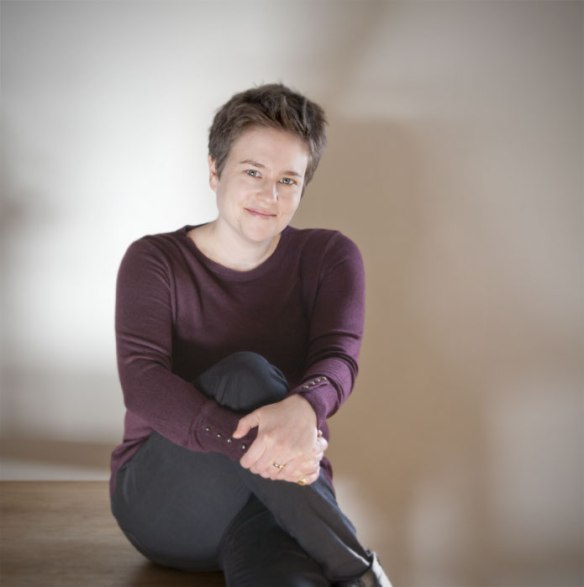


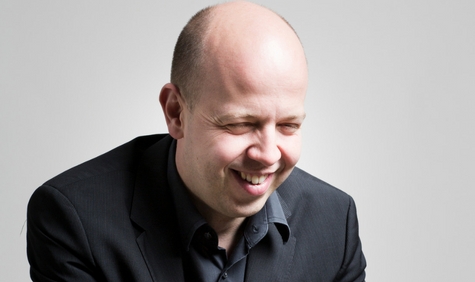
 Of the many fine young singers coming through in classical music currently, few have a voice quite as memorable as Benjamin Appl (above). The German baritone, a BBC New Generation Artists performer, has been making quite an impact on audiences worldwide, and more recently wowed the Gramophone awards with a rendition of Carl Millöcker’s aria Dunkelrote Rosen from Gasparone. In this chat with Arcana, which took place a few months back, he talked about his first album for Sony Classical, Heimat, and the influence of legendary singer Dietrich Fischer-Dieskau on his work. But first…