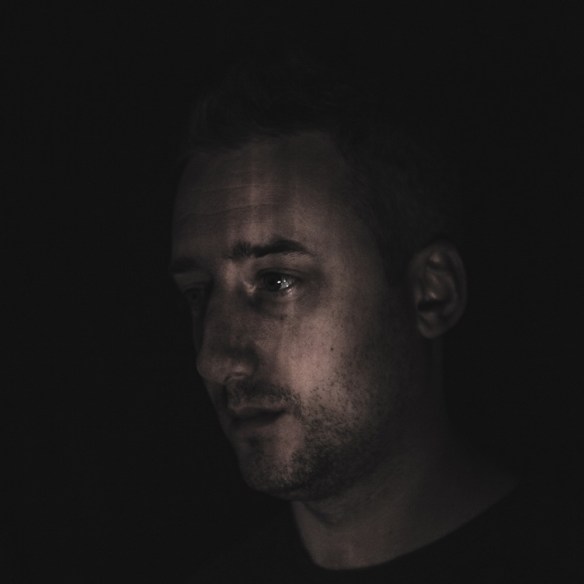
Last year, Arcana defined Víkingur Ólafsson as a true classical music entrepreneur. We explored his introductions to classical music, and talked about the two festivals he helps administer – Sweden’s Vinterfest and the Reykjavik Midsummer Festival. We also covered his friendship with composer Philip Glass, 80 this year. Olafsson professed his admiration for the composer and his creative energy, an admiration he has now transferred to disc in the form of his first recording for Deutsche Grammophon. Time, then, for chapter two in the interview!
When did you first encounter Philip Glass’s music?
It’s quite a specific memory. I was 13 years old, sitting with my two sisters in the back seat of our car on a family vacation. Dad was driving on the highway, heading from France to Switzerland and as we were bored and quarrelling in the back seat, he handed us this recording of Philip Glass Violin Concerto No.1 with Gidon Kremer (on DG as it happens) which we listened to on our Sony Discman players. It was unbelievable to discover this new sound world while passing by the French landscapes on 150 KM per hour.
Some of the Etudes on this album feel like extended meditations. Do you get into a kind of trance when you play them?
Not really, I’d rather have my audience in a trance… I just try to listen intensely and explore the possibilities of the instrument and acoustics, looking for the right proportions of sound and time.
Do you think the Etudes are actually much more emotional than the titles suggest they should be?
What is emotional for one person can be completely impersonal to the next. To me there is a nostalgia to the slow ones, but it’s emotions revealed through the filter of time. Etude means ‘study’, but one can also write etudes on emotions, just as well as on finger dexterity.
What technical challenges does the music present for you?
It’s relatively easy to learn the etudes and play them at an average level. But what I find difficult – as with any music – is to play them in the most specific way, when it comes to rhythm, texture, sound…
To get the clockwork fine tuned in a piece like Opening is extremely delicate and difficult, to take one example. And of course playing a piece like Etude No.6 is quite difficult, and the repeated notes make me feel as if I’m playing a late-20th century Scarlatti.
Etude No.20 requires intense layering of texture and pedal sensitivity and No 15 demands an orchestral palette on the piano. The etudes can be extraordinary when played well, but, like almost all other music, they can also be rather bland when played in a bland way. But blame the performer in that case.
Are you working closely with Philip on any new material?
We’ve discussed briefly a new work, but it’s too early to say more…
Aside from the piano music, what is your favourite piece by Glass?
I saw Einstein on the Beach in Berlin two years ago. It blew my mind to experience it live. I will also mention his Violin Concerto No.1, as it was the first piece I heard by him. And I have to mention Koyaanisqatsi. It’s actually on Youtube, I recommend spending a Sunday afternoon watching and listening to the great work.
Do you play music by any of the other so-called ‘minimalists’?
Yes, but they’re really not minimalists… at least not since the early 70s! I’m playing John Adams‘ Piano Concerto in Leipzig in June and I’ve played a bit of Steve Reich as well. I love these composers but I’ve played far more Glass than either of those.
What is it like being signed to Deutsche Grammophon, and do you have any plans for future releases on the label?
We are meeting in Berlin in March to discuss next albums. We have roughly three different ideas on the drawing board and they are all very different from one another – and from the Glass album. I don’t want people to know what to expect too much, I’d love for each of my album to tell its own story, independent from the previous ones.
I love working with Deutsche Grammophon as we have a mutual love of listening to, exploring and discussing music. And of course I’ve listened to so many DG records in my life and gotten to know so much great music and so many great performances through the label. It’s both a privilege and pleasure to work with them.
You can find out more about the Midsummer Music festival in Reykjavik here, while you can also discover Vinterfest here. For more information on Víkingur himself, head to his own artist website
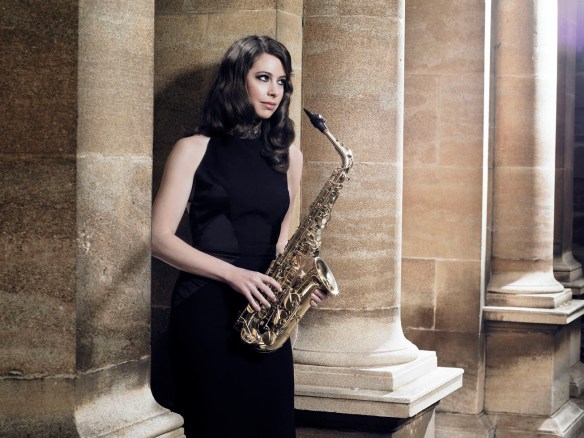
To mark the 80th birthday of Philip Glass this week, saxophonist Amy Dickson has expressed her love of the composer’s music through an album released for Sony Classical. The record – simply titled Glass – includes two important arrangements highlighting the flexibility of the composer’s music, and showing how well it transcribes for Dickson’s instrument.
In this interview with Arcana she talks about how the arrangements were made, how she had to develop a whole new form of breathing for the recording, and how Take A Breath, her campaign for primary school children, has touched thousands around the world.
As always, to start with, Arcana raised the traditional question:
Can you remember your first encounters with classical music?
I’m not sure I can! I do remember starting on the piano when I was two, and having music lessons early on. Pieces of piano music still take me back to early childhood. My fondest memory is being drawn in by a cassette that we used to listen to in my mum’s car. I would be absolutely rapt while we listened and then we would press rewind and listen over again. The piece I remember most was Andalucía by Ernesto Lecuona. I learned to play it on the piano after my mum went to great lengths to find the score of it.
How did you develop a love of the saxophone?
There was a great teacher, Melinda Atkins, who isn’t that much older than me. I had lessons with her from the age of six. It was just meant to be, she was absolutely amazing for me, and the chances were so slim of something like that happening. We looked at a lot of different styles of music, she was really cool about jazz and classical, and never made me think there was anything I couldn’t do. I was her student in Sydney until I went to the Royal College of Music at the age of 18.
I played in jazz bands through my childhood years, and I had the widest range of musical influences you could imagine! I played piano classically, harpsichord in music from the Baroque, while for the saxophone it was so wide ranging. I feel very lucky to have had great teachers, and they have inspired me to have no boundaries. They helped me learn whatever I could, and I also have had parents who are very keen to give me opportunities. I am eternally grateful for that.
Has that approach carried with you to your recording career?
Yes. I definitely had no idea before it about a grand plan. I work from year to year and like to record whatever I feel particularly passionate about. I have recorded some really diverse repertoire so far, and I have no idea where I will be in five or so years – and I don’t really want to know either! I love playing with new and different people all the time, and that’s so interesting. There is no set path as a classical saxophonist, the only way to go is to be open.
What attracted you to the music of Philip Glass?
I feel very emotionally pulled towards it. When I first heard the Violin Concerto I fell in love with it. It was all to do with a place where I was in my life, and it tugged at my heartstrings. I thought about transcribing it, and that was ridiculous in a sense because there was nowhere to breathe! That was when I learned how to circular breathe.
The pieces from The Hours are particularly beautiful too – Morning Passages is lyrical and a complete piece in itself, and is remarkably complete for a film score. The Violin Sonata is similar to the concerto in terms of structure and content. I immediately felt as strong a pill to this as I did to the concerto, but it’s harder than anything I have ever played. Technically it’s tricky, but the element of stamina required is something else – there really is nowhere to breathe, nowhere with a beat’s rest. Since learning how to circular breathe I have dealt with that, but it really is playing constantly for around 25 minutes.
What is circular breathing, and how did you learn it?
While you’re breathing out, you sniff in through your nose and put more air into your lungs. You manipulate the back of your throat to put air into your cheeks, so then you release the air and sniff in again.
It’s a question of separating the muscle groups so that you can manipulate them. I knew a few people who did something similar, but I decided I wanted to play the concerto, and I set aside 20 minutes a day to learn how to circular breathe.
It took around two weeks, and was like learning a new life skill! It turned out to be the first steps, and it was six months until I felt I could really do it while I was playing, as the sound could be disrupted. If you can separate your lip muscles from your cheek muscles, it is much more instinctive now, but I still have to think carefully about it.
What has the reception been like to your Glass recordings, and have you heard from Glass himself?
It’s been amazing. I got a message from Sony this morning to say that overnight the video had reached one million hits on YouTube. Philip has been very pleased with it too. Generally he doesn’t let other people touch his music.
Had you heard his previous work for saxophone before starting on this?
I got to know the Façades when I was doing the first transcription. I think the best way to get to know a composer is to listen to as much of their music as possible.
What was the inspiration for the ‘Take A Breath’ campaign?
The focus is to teach children to breathe well, but it stems from playing the Glass and teaching myself to breathe again as an adult.
I have spoken to experts about this and realised that children develop bad habits as they get older. As we get older, so much of our lives could be improved by breathing better. I was going into schools with the Children & The Arts charity, and we noticed that the kids would run and run around the playground, and could then calm themselves down if they took a breath and could breathe properly.
If I had been taught that as a child I would have benefited greatly! Over time with the kids we have developed a saxophone playing elephant – Ellie – that they can relate to. The children called her that, and they would pretend to have a trunk that they would breathe air into. They would breathe through it and it would put air in their tummies. All through the exercises we imagined they were playing a note on the saxophone.
It’s amazing seeing children remembering these exercises and being mesmerised by them. Some of the children said how it had helped them when they had fallen over, taking their ‘elephant breath’. It’s about having a tool for emotional resilience too. It was amazing seeing these little people doing elephant breaths before exams.
Could you recommend a piece of Philip Glass that you wouldn’t normally play?
There is a violin piece that I have been particularly drawn to – the Chaconne from the Partita for Solo Violin.
Finally, what does classical music mean to you personally?
That’s really difficult! (Amy pauses) What is classical music? I think the term is difficult, I say I’m a classical saxophonist but I don’t play classical music – I see that as being music from between 1750 and 1820.
If you look at classical music it’s difficult to define. I reckon that in fifty years’ time they might call some of the pop music of the 1970s and 1980s classical music. We’ll have to wait and see!
Amy Dickson’s Glass is out now. For more information you can head to her website, where the Take A Breath campaign can also be found
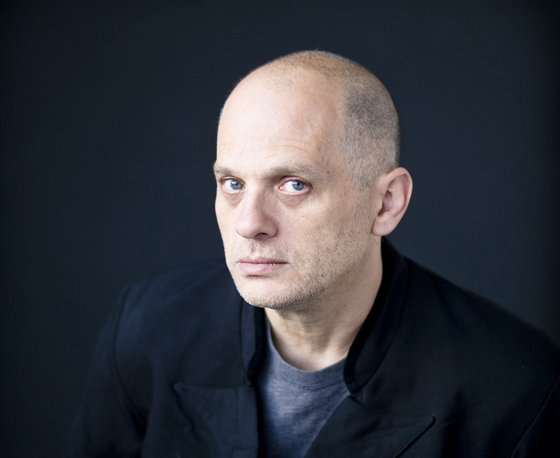
Scott Morgan (above) is the Vancouver-based producer behind the music of Loscil. Under this moniker his music is often found filed under ‘ambient’, but in reality it has more of a foreground impact through its deep and meaningful content. He talks with Arcana about his experiences of classical music, how it can be found in the fringes and structures of his work, while discussing his methods of composition and personal investment in the music.
Can you remember your first encounters with classical music?
That’s a tough question! I don’t know if I can remember listening to what I understand as classical music, as I wasn’t really from a musical family at all. I’m quite sure my first exposure would have been to some sort of film or movie. I did eventually go to university for music, and it’s funny because even though I took music at high school – saxophone and playing in a rock band – I don’t remember a relationship with classical music until later.
I was studying from modernism and moving on, and of course a lot of that is rooted in classical music. Certain composers like Schoenberg and Stravinsky had their more retro periods; they were doing their experimental stuff and went back to more kind of tonal, traditional classical stuff.
I always look back and kind of regret that my parents never put me in piano. My first exposure to music was through my uncle who gave me an acoustic guitar which I self taught, and then I took saxophone in high school. I eventually gave up on that, but that was the road that led to me being more of a composer and an experimenter with studio stuff, in that I loved to play around with electronics and to muck with things and make sounds. I would pick up an instrument and learn how to play it but never that well, enough to make sounds with it.
In your encounters with classical music, who are the composers you have grown to admire?
I was really drawn to people like Ligeti and Penderecki, people like these 1960s composers who were doing stuff with texture and using the orchestra as a sound palette rather than writing melodies and harmonies and traditional stuff.
Xenakis too, and I really loved all that Webern twelve tone stuff. I was really drawn to this idea that you could play with texture, because texture and timbre – the colour of the sound – had always been present, and good orchestrators know how to manipulate that stuff, but it was never at the forefront, it was always rhythm and melody and harmony that were given all the attention.
When did you realise you had a real aptitude for working with texture in particular?
I wasn’t conscious of it in my teens when I was doing rock band stuff, but when I was first going to school the splinter for me was working with computers and electronics. I had a professor I worked with who was really in to this technique called granular synthesis, and actually Xenakis explored a lot of this stuff too. There are some overlaps with acoustic writing and practice, but granular synthesis is where you take a sound and you cut it up into a bunch of tiny grains or components, and it gives you this control over the sound in terms of multiplying it in density or growing it in time. You have this sculptural control over sound.
The first time I heard it and the first time most people hear this kind of process is so ghostly, and you hear all these voices that come out of the sound. The texture of it is so rich and inviting that it creates this instant kind of sound world, stretching and multiplying the sound. I was really taken by this process, and I think finding the connections from there into what people were doing acoustically was really interesting.
That’s why Ligeti is often a good acoustic counterpart in terms of building up these clouds and textures of sound. That was the genesis for me, and then I went on to muck with other computer, digital signal processing models to build up textures and sounds. That ended up being the root of the Loscil project, which has been about building these textures and working with sound in that sculptural way.
There’s something truly different from what you heard before, that eureka moment of doors opening, where you realise that you can think of it this way now. In my early school days I was having more moments like that with worlds opening up, and different ways of thinking about sound and music.
Your music has a vast sense of space in it. Is that something you are keen to have, or is it a by-product of how you write?
I think it’s a bit of both. When you’re working with electronics, everything is so instant in real time that you can almost be as much of an audience member or listener as you are a composer. I find there is this very zen-like state that I get in to making stuff where I can sit and listen to loops for long periods of time, and really enjoy that space, and in fact feel kind of guilty that I have to really impose myself on it as an editor and as a composer, to present it to people. I’ve done a couple of releases, one of them a digital release a few years ago called Stases.
It was this exploration of these long, drone-like textured arcing shapes that had a longer trajectory to them. They didn’t have really identifiable elements to them – rhythm, melodic components, and yet they have been some of my more popular recordings. People like to put them on and have them as this kind of aural wallpaper, while they’re writing or working on visual arts. I find people put these on as a mental stimulus. I get into these patterns when I’m working that is an altered state, half listening and have creating, and the tools let you do that. I guess a lot of instrumentalists get into a similar state, where you’re zoning out on scales or something.
I find your music very effective during travelling to work on the train.
Train travel is an interesting one. There is something inherent about the rhythm of the train and the movement outside the window and I assume a lot of commuters want to get out of the reality that they’re in when commuting!
What I perhaps wasn’t quite so prepared for at first was the depth of emotion or concentration in your music.
Sometimes there are things you can’t quite explain when you’re creating stuff, and where it comes from it’s hard to put your finger on. I know I am generally a happy person, but things come out when I’m making stuff! There is a way of using the creative process and the creation of music to express that which you can’t express in other ways, and that’s what ends up coming out a lot of the time.
With your new album Monument Builders, was it a coincidence to be releasing it on Remembrance Day, or was that planned?
It’s funny. I didn’t choose that, but I asked the label if it was intentional, and I got a three word reply that was something to the effect of ‘yes of course!’ I believe it was somebody’s intention, but not really mine.
Was it inspired by a particular event or set of events? I know you mentioned a link with the Philip Glass score to Koyaanisqatsi.
I rewatched Koyaanisqatsi, and the version I was watching was quite messed up. It was a VHS tape and the pitch was a little off, and the tracking on the machine, and I thought it was interesting. I saw it first in a Vancouver theatre, which has ironically been destroyed and replaced with condos, which is the Vancouver thing right now.
We’re such a young city, and that is my attraction to it. I used it for the cover of Monument Builders, a 1970s kind of brutalist thing. It is one of only a couple of buildings of that style in Vancouver now, everything else is like flashy glass towers. I found that related to Koyaanisqatsi as something that was very epic and meant to spark you and wake you up emotionally as to what is going on in the world – over consumption, over population.
Over time, as technology progresses, maybe what was once epic is no longer quite as epic, and especially when it was projected on an old format. It’s like you are looking into the past, warning you of the future. A lot of time has gone by now, over 30 years since that movie came out, and there is something interesting to me about that and relating it to architecture.
You look at our city, and my mum thinks that building is so ugly, but there is something beautiful about it too, and there will probably be one of the last things standing. It was a swarm of ideas about that kind of stuff. Some of it is admittedly a little dark but there is a core beauty about it too.
There is a certain brightness to your music too, for instance in the previous album Sea Island where there are bright, deep blues implied.
When I look back at most of my catalogue, I realise so much of it is unintentional when you’re inside it, but when you see it splayed out in front of you a lot of my work accidentally plays with the spectrum between the natural world and the industrial world. There are times when I have moved to one side over the other, but ultimately I think I’m after some sort of balance of what it is to be human, and what it is to be human inside of this natural world we live in. We are a part of it but we’re also outside of it – or we think of ourselves as out of it.
When you are writing with electronic sounds and samples do you feel like you are in charge of an orchestra, in a classical sense?
A little bit. I definitely take some of my musical education in terms of writing for instruments and apply that. You’re often working in tonal ranges or pitch ranges, the bass, the mids and the highs, and you’re always wanting to balance those things, and I definitely think I compartmentalise those things in a similar way. I don’t think of moving a melody among different instruments and things, but there is a slight touch that is definitely taken from acoustic writing.
Some of the Loscil tracks could in theory be played by an orchestra.
Yeah, I’ve actually tried to imagine that at times myself. It is a really interesting question, wondering how I could create this sound not using electronics and only using an orchestra. It would be a really fun challenge but I just need more money!
I think I have always really been a kind of acoustic composer at heart, who just ended up using electronics. I think that’s part of the reason I’m folding in acoustic instruments a lot of the time. On Monument Builders I wrote a lot for the French horn, I thought that would be interesting.
The final track on Monument Builders, Weeds – does that use cut-up vocal sounds?
Yeah, that’s my friend Ashley Pitre. She sang on a couple of tracks on Sea Island, and I had the samples still kicking around. I ended up using some processing on them, and it has some of the granular technique I was talking about, to chop up the voice a little bit.
When I play live I tend to leave that one towards the end, because you can’t do much after it! It has more of a dynamic range that is not as common in my work – most of it gets to a point where it sits at one particular level and will then gradually decay. That track really goes from nothing to everything over the course of seven or eight minutes, and when I do it live the volume gets quite a bit louder at the end.
Do you think your sense of structure has a lot in common with modern classical composers?
Yeah, maybe I’ve not experimented with structure as much as I could have done over the years. I did do a release, an interesting project with an Irish record company called Wist Rec, who asked me to score a novel and they were using these Penguin mini-classics, and asking composers to write music for this book. I was given Malcolm Lowry’s story Lunar Caustic, which is a short story about a pianist in New York who loses his mind and gets put in an asylum.
He mentions the Grieg music to Peer Gynt in his story, and listening to this in the asylum. I ended up writing and working with a friend of mine on the piano parts, and we ended up referencing elements of the Grieg piece. We played a lot more with the structure, and because the book is so structured it allowed us to think in a different kind of shape.
Normally I approach a piece of music as an isolated thing, and this was like four movements, so that was one of the few times I’ve stretched the structure away from what is common for me, which is making a bunch of pieces that might speak to one another but ultimately get compiled and turn out on an album. Because of vinyl’s popularity again you think about sides and the length of an album, and it’s interesting to be freed from that and be a little more flexible.
The original version with the book, I’m not sure if you can buy it anymore, but the version on Bandcamp is a reconstructed version with my friend Kelly Wyse, a pianist from Seattle.
What does classical music mean to you?
It’s a treasure trove. For me I would say any kind of music history. I am actually drawn more to early music, and the study of that alongside politics and history, and what’s going on in the world. I think you can draw so much looking back at classical music like that.
I also have an incredible respect and admiration for classical players. Any time I get an opportunity to work with performers who have dedicated their lives to an instrument, and are masters of that instrument, I have so much respect for it – probably because I am just not that person! I have not mastered an instrument. But the discipline that goes along with that, and the ability to read music off the page and understand an instrument so well that you can express through it, is fascinating to me.
Is that what makes electronic music so great, that it enables people to formulate more of what’s in their heads musically?
I think so, but I think there is another element with electronic music that you get the ability to not only do that but you get a feedback system, and get drawn in to areas of experimentation that you just would not discover. I think that’s a lot harder to realise than with a traditional approach of sitting at a piano and orchestrating. You don’t get that immediate feedback of what it does when you bend it and shape it. That’s relinquishing to the machine, but it is part of the process as well.
If you could recommend a couple of classical pieces for Arcana readers, that have maybe held a special place for you, what might they be?
Because we spoke about Ligeti I would definitely recommend Atmosphères. I’m obviously on the modern end of things here, but the opening of Koyaanisqatsi is high on my list these days. My composition teacher hated the minimalists, so it was held from us in a certain way, but I discovered those on my own later. He was really into Schoenberg and Stravinsky.
I love Gregorian chant, too, and Thomas Tallis. There is something about that modal music, and because it is religious music it is performed in these massive churches and cathedrals with their massive reverb.
Reverb now is such a massive part of electronic music, so the idea of a fully natural reverb is fascinating and interesting, and also when you think of what we are drawn to electronically does have its roots in religious music. I’m not a religious person but it makes you wonder if something fundamentally spiritual is being handed down in that sense.
Loscil’s album Monument Builders is out now on Kranky. For more information on Loscil and Scott Morgan, head to his artist website
We’ve already spoken to Murcof about his collaboration with pianist Vanessa Wagner – and now it’s time for her side of the story. She describes how she found classical music and how her meeting with Murcof opened up all sorts of electronic possibilities. Here they are on their work together:
Vanessa, can you remember your first encounter with classical music?
My parents were not listening to a lot of classical music. They were rather into jazz and the French chanson. Then one day, the piano of my great-grandmother came home, and I started to play. My childhood idol was a wonderful Romanian pianist named Clara Haskil, far away from the glamour girls are usually dreaming of! She is still an artist that I love.
Who are the composers you have grown to particularly admire?
I grew up with the music of Bach, Schubert, Schumann, Mozart, Rachmaninov, Brahms and Janáček, who are still my favourites, Schubert especially. His melancholy, and the time stretched in his music touches me enormously. Die Schöne Müllerin and Winterreise are pieces that never leave me.
What was it that appealed to you about working with Murcof?
I was the one to initiate this encounter. I have listened to his music for a long time. I met him at the workshop of the Infiné label, and we made an improvised test. Then I had the chance to have a residency in a room of the Arsenal of Metz. They gave me carte blanche to develop new projects, I invited Murcof to play with me, and Statea was born.
How did you make sure you got a good balance between the piano and the electronics?
I always asked Murcof to pay attention to the acoustic piano sound. The piano is the starting point of this project, and it was important that the electronic effects do not swallow its sound even if it is sometimes distorted. Similarly, it also seemed very important to stay true to the scores of composers that I interpret. That’s why the album is called Statea, which means balance in ancient Italian.
Had you listened to much electronic music prior to working with him?
I have listened to electronic music for 20 years. At that time, in my classical circles, it was frowned upon. I had never heard of the big techno anthems, and I went right back to ambient/IDM artists – the likes of Autechre, Aphex Twin, Model 500, Maurizio, UR etc.
Do you think there are other albums or pieces of music that bring classical and electronic together well?
Max Richter´s Four Seasons of Vivaldi works pretty well. Brian Eno also has a beautiful piece called Fullness of Wind, taking its lead from Pachelbel.
Do you think classical and electronic music have a lot more in common than one would expect?
I think meetings of the two styles are quite possible, if one avoids falling into the mainstream that we call crossover classical. The approach focuses on the sound result. We must respect the original script. Adding a beat onto a piece of Mozart or Beethoven cannot be a creative artistic process in itself.
Moreover, music known as ‘contemporary classical’ and art music has a lot in common with experimental electronic. Bridges are possible and desirable between these universes.
Has working with electronic music helped your appreciation of classical?
This does not specifically help me in my classical interpretation. What I greatly appreciate is to exercise out of my classical world, to transform the sound of my instrument, and to experience concerts differently, giving a new fresh perspective to my daily occupation of being a pianist.
For me, it is an interior window that opened itself, and I strongly hope that this is new cornerstone in the musical world which will contribute to the opening of minds and ears!
If you could recommend one piece of classical music to Arcana readers that you’ve been listening to recently, what would it be and why?
I would recommend listening to the Goldberg Variations of Bach (Glenn Gould, for example), the Death and the Maiden String Quartet by Schubert, or Tabula Rasa by Arvo Pärt, especially the second movement Silentium.
Statea, by Murcof and Vanessa Wagner, is out now on Infiné. The pair will appear at the Barbican on Monday 31 October as part of a bill including pianist Lubomyr Melnyk. Tickets can be purchased from the Barbican website. Vanessa will also be giving her thoughts on classical music to Arcana shortly!
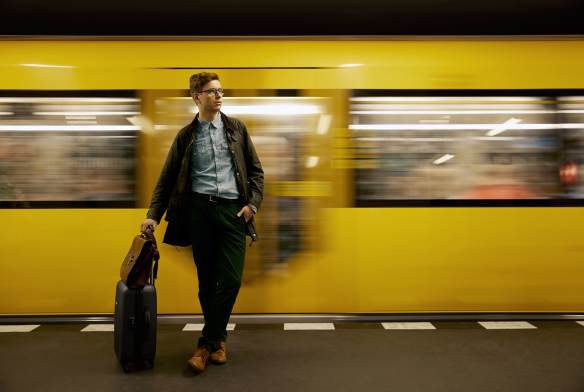
Murcof is Mexican musician Fernando Corona, an artist who integrates classical and electronic music. Working with pianist Vanessa Wagner he has recently released the Statea album, an ambient piece of work that takes its source material from John Cage and Erik Satie amongst others. Here he talks to Arcana about his love of classical music, and how the two forms harmonise together. But first, here’s an introduction to their album together:
Can you remember your first encounter with classical music?
It was a long time ago when I was a kid, and it comes from the side of my father in the family. It was an album of Wendy Carlos playing Bach in the late 1970s, I think. He also did some electronic / analogue synthesizer interpretations of Bach’s music, and so that was the first proper marriage of electronic and classical that I heard. I developed an interest in both, and I became much more familiar with 20th century music from composers like Stravinsky, the Schoenberg school, Xenakis, Ligeti and all the people up to Arvo Pärt, Silvestrov and the minimalists. Classical music has been with me all this time from my childhood and this album is a logical place to go because of that.
How did you get to work with Vanessa?
I met her before we started making music, through her husband Alexandre Cazac. He is director of the Infiné label, and I have been friends with him for many years. We’ve worked together, and in that time he has been very supportive. It wasn’t until a week-long workshop that we did a small arrangement together however. We were playing the same night, and Vanessa was the first one on, then me, so we interlinked the two. Statea has been a work in progress since 2010.
In that time we only did 20 or 30 concerts together, so it is still a fresh collaboration, and now with the album done we are adapting it for the stage. Many things have changed, and we have started from scratch again with some of the pieces, but we have always respected what we are doing.
For our Satie work (Gnossienne no.3) the piano sounds have a lot of analogue processes, where we have brought the piano audio signal into the modular system, before messing around with ring modulation, filtering, and experimenting with the possibilities. The piece is not too long, but I recorded around 45 minutes of messing around and cut the most important and interesting bits to fit the final track.
The album is called ‘Statea’. Is that because you achieve the ideal balance between classical and electronic music?
It’s because to make an album is sometimes the hardest part. It was open enough, it wasn’t going to encapsulate us in a direct way, a literal way, but we talked about a good balance between acoustic and digital. You can listen to the piece as one whole, not just the acoustic and not just the digital but something that works together. That is one of the things I am looking for, not getting lost in the sounds and what I have to say. That’s the reason for the name. We were initially going to use the Latin but Alexandre suggested the old Italian way.
Sometimes when classical and electronic music meet the results are a bit cheesy, but there is a very deep emotion to what you do.
That’s good to know, it’s a process and a matter of deciding what works and what doesn’t. It’s telling a story, and each sound needs a reason for existing. Vanessa and I were working together for a common goal. Most of these compositions are well known, and people have an idea about them, but even if it’s an abstract message it’s still there. You can enhance it or steer it off somewhere else.
With Satie, yeah, we wanted to see him a new light, especially as it’s one of the pieces that is most famous. It was tricky to work with it because of what you just said. We wanted to try and prepare a fresh view of the piece, to justify Vanessa and I working on it to contribute something new.
Is your approach in some way similar to that of Satie, a kind of ‘less is more’ viewpoint?
In a way, though I do find it quite a challenge to say when a track is done. I take that step very seriously, and I don’t like to overdo or underdo things. When a piece is finished it is when I have explored so many possibilities! Then I choose the best one, polish it and finish it.
Do you intend to continue working with classical music in this way?
Yeah. There are many things that can be done with classical music, and there are many approaches I would like to try. I would say ‘watch this space’, with compositions old and new. The acoustic instruments are so rich, and it is wonderful to work with them electronically and to open a can of worms with some of the weird harmonics that are peculiar to those instruments.
It has been a really strong emotional passage for me since our early ages, it is a big part of me on a personal level, and it is a natural situation for me to work with it.
You have a very fine ear for orchestration. Have you ever written for a full orchestra?
Yes. I did a small interaction with Jean-Paul Dessy, from Belgium, who is a composer and a director. Musiques Nouvelles is the name of his ensemble, and they adapted a piece of mine for orchestra. I have been sitting with this idea for a long time, and I would love to sit down with a composer / director who is open to the idea. It would be a bit stressful for sure but would be a lot of fun as well.
What does classical music mean to you?
For me personally each kind of music is a whole avenue of expression – classical, jazz and electronic with its many subgenres. Classical is long standing for so many centuries, and for me it is about always keeping with acoustic instruments – the more conservative music.
Classical music is a combination of centuries of studying, developing, trial and error of previous work. It is an emotional world but also a very strict one. The core essence is the compositions, but you need trained interpreters to play it. Because of that it can be stressful and competitive, but I think it is worthwhile to have highly trained interpreters so that we can enjoy the music of the past, from the Baroque to the 20th century twelve-tone music of Schoenberg and his school.
It is always this though – highly emotional and direct. In my case I formed an instant connection with it and because of that I have always found it very emotional.
If you could recommend one piece of classical music to Arcana readers that you’ve been listening to recently, what would it be and why?
I always go to one of my favourite composers of late, Valentin Silvestrov, a composer from the Ukraine. His latest work is amazing and I often go back to his Requiem, written for his wife. One small section of it is also part of a series of songs for piano and voice, but he also did a version for choir and orchestra. It is not a new piece but it is the one that comes to mind right now.
Statea, by Murcof and Vanessa Wagner, is out now on Infiné. The pair will appear at the Barbican on Monday 31 October as part of a bill including pianist Lubomyr Melnyk. Tickets can be purchased from the Barbican website. Vanessa will also be giving her thoughts on classical music to Arcana shortly!