Interview: Loscil – granular processes, emotive results

loscil

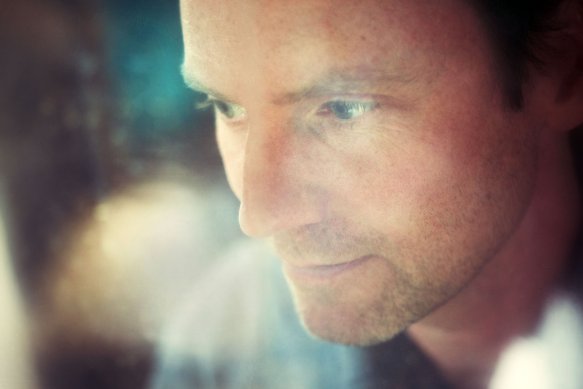
Scott Morgan (above) is the Vancouver-based producer behind the music of Loscil. Under this moniker his music is often found filed under ‘ambient’, but in reality it has more of a foreground impact through its deep and meaningful content. He talks with Arcana about his experiences of classical music, how it can be found in the fringes and structures of his work, while discussing his methods of composition and personal investment in the music.

Can you remember your first encounters with classical music?

That’s a tough question! I don’t know if I can remember listening to what I understand as classical music, as I wasn’t really from a musical family at all. I’m quite sure my first exposure would have been to some sort of film or movie. I did eventually go to university for music, and it’s funny because even though I took music at high school – saxophone and playing in a rock band – I don’t remember a relationship with classical music until later.

I was studying from modernism and moving on, and of course a lot of that is rooted in classical music. Certain composers like Schoenberg and Stravinsky had their more retro periods; they were doing their experimental stuff and went back to more kind of tonal, traditional classical stuff.

I always look back and kind of regret that my parents never put me in piano. My first exposure to music was through my uncle who gave me an acoustic guitar which I self taught, and then I took saxophone in high school. I eventually gave up on that, but that was the road that led to me being more of a composer and an experimenter with studio stuff, in that I loved to play around with electronics and to muck with things and make sounds. I would pick up an instrument and learn how to play it but never that well, enough to make sounds with it.

In your encounters with classical music, who are the composers you have grown to admire?

I was really drawn to people like Ligeti and Penderecki, people like these 1960s composers who were doing stuff with texture and using the orchestra as a sound palette rather than writing melodies and harmonies and traditional stuff.

Xenakis too, and I really loved all that Webern twelve tone stuff. I was really drawn to this idea that you could play with texture, because texture and timbre – the colour of the sound – had always been present, and good orchestrators know how to manipulate that stuff, but it was never at the forefront, it was always rhythm and melody and harmony that were given all the attention.

When did you realise you had a real aptitude for working with texture in particular?

I wasn’t conscious of it in my teens when I was doing rock band stuff, but when I was first going to school the splinter for me was working with computers and electronics. I had a professor I worked with who was really in to this technique called granular synthesis, and actually Xenakis explored a lot of this stuff too. There are some overlaps with acoustic writing and practice, but granular synthesis is where you take a sound and you cut it up into a bunch of tiny grains or components, and it gives you this control over the sound in terms of multiplying it in density or growing it in time. You have this sculptural control over sound.

The first time I heard it and the first time most people hear this kind of process is so ghostly, and you hear all these voices that come out of the sound. The texture of it is so rich and inviting that it creates this instant kind of sound world, stretching and multiplying the sound. I was really taken by this process, and I think finding the connections from there into what people were doing acoustically was really interesting.

That’s why Ligeti is often a good acoustic counterpart in terms of building up these clouds and textures of sound. That was the genesis for me, and then I went on to muck with other computer, digital signal processing models to build up textures and sounds. That ended up being the root of the Loscil project, which has been about building these textures and working with sound in that sculptural way.

There’s something truly different from what you heard before, that eureka moment of doors opening, where you realise that you can think of it this way now. In my early school days I was having more moments like that with worlds opening up, and different ways of thinking about sound and music.

Your music has a vast sense of space in it. Is that something you are keen to have, or is it a by-product of how you write?

I think it’s a bit of both. When you’re working with electronics, everything is so instant in real time that you can almost be as much of an audience member or listener as you are a composer. I find there is this very zen-like state that I get in to making stuff where I can sit and listen to loops for long periods of time, and really enjoy that space, and in fact feel kind of guilty that I have to really impose myself on it as an editor and as a composer, to present it to people. I’ve done a couple of releases, one of them a digital release a few years ago called Stases.

It was this exploration of these long, drone-like textured arcing shapes that had a longer trajectory to them. They didn’t have really identifiable elements to them – rhythm, melodic components, and yet they have been some of my more popular recordings. People like to put them on and have them as this kind of aural wallpaper, while they’re writing or working on visual arts. I find people put these on as a mental stimulus. I get into these patterns when I’m working that is an altered state, half listening and have creating, and the tools let you do that. I guess a lot of instrumentalists get into a similar state, where you’re zoning out on scales or something.

I find your music very effective during travelling to work on the train.

Train travel is an interesting one. There is something inherent about the rhythm of the train and the movement outside the window and I assume a lot of commuters want to get out of the reality that they’re in when commuting!

What I perhaps wasn’t quite so prepared for at first was the depth of emotion or concentration in your music.

Sometimes there are things you can’t quite explain when you’re creating stuff, and where it comes from it’s hard to put your finger on. I know I am generally a happy person, but things come out when I’m making stuff! There is a way of using the creative process and the creation of music to express that which you can’t express in other ways, and that’s what ends up coming out a lot of the time.

With your new album Monument Builders, was it a coincidence to be releasing it on Remembrance Day, or was that planned?

It’s funny. I didn’t choose that, but I asked the label if it was intentional, and I got a three word reply that was something to the effect of ‘yes of course!’ I believe it was somebody’s intention, but not really mine.

Was it inspired by a particular event or set of events? I know you mentioned a link with the Philip Glass score to Koyaanisqatsi.

I rewatched Koyaanisqatsi, and the version I was watching was quite messed up. It was a VHS tape and the pitch was a little off, and the tracking on the machine, and I thought it was interesting. I saw it first in a Vancouver theatre, which has ironically been destroyed and replaced with condos, which is the Vancouver thing right now.

We’re such a young city, and that is my attraction to it. I used it for the cover of Monument Builders, a 1970s kind of brutalist thing. It is one of only a couple of buildings of that style in Vancouver now, everything else is like flashy glass towers. I found that related to Koyaanisqatsi as something that was very epic and meant to spark you and wake you up emotionally as to what is going on in the world – over consumption, over population.

Over time, as technology progresses, maybe what was once epic is no longer quite as epic, and especially when it was projected on an old format. It’s like you are looking into the past, warning you of the future. A lot of time has gone by now, over 30 years since that movie came out, and there is something interesting to me about that and relating it to architecture.

You look at our city, and my mum thinks that building is so ugly, but there is something beautiful about it too, and there will probably be one of the last things standing. It was a swarm of ideas about that kind of stuff. Some of it is admittedly a little dark but there is a core beauty about it too.

There is a certain brightness to your music too, for instance in the previous album Sea Island where there are bright, deep blues implied.

When I look back at most of my catalogue, I realise so much of it is unintentional when you’re inside it, but when you see it splayed out in front of you a lot of my work accidentally plays with the spectrum between the natural world and the industrial world. There are times when I have moved to one side over the other, but ultimately I think I’m after some sort of balance of what it is to be human, and what it is to be human inside of this natural world we live in. We are a part of it but we’re also outside of it – or we think of ourselves as out of it.

When you are writing with electronic sounds and samples do you feel like you are in charge of an orchestra, in a classical sense?

A little bit. I definitely take some of my musical education in terms of writing for instruments and apply that. You’re often working in tonal ranges or pitch ranges, the bass, the mids and the highs, and you’re always wanting to balance those things, and I definitely think I compartmentalise those things in a similar way. I don’t think of moving a melody among different instruments and things, but there is a slight touch that is definitely taken from acoustic writing.

Some of the Loscil tracks could in theory be played by an orchestra.

Yeah, I’ve actually tried to imagine that at times myself. It is a really interesting question, wondering how I could create this sound not using electronics and only using an orchestra. It would be a really fun challenge but I just need more money!

I think I have always really been a kind of acoustic composer at heart, who just ended up using electronics. I think that’s part of the reason I’m folding in acoustic instruments a lot of the time. On Monument Builders I wrote a lot for the French horn, I thought that would be interesting.

The final track on Monument Builders, Weeds – does that use cut-up vocal sounds?

Yeah, that’s my friend Ashley Pitre. She sang on a couple of tracks on Sea Island, and I had the samples still kicking around. I ended up using some processing on them, and it has some of the granular technique I was talking about, to chop up the voice a little bit.
When I play live I tend to leave that one towards the end, because you can’t do much after it! It has more of a dynamic range that is not as common in my work – most of it gets to a point where it sits at one particular level and will then gradually decay. That track really goes from nothing to everything over the course of seven or eight minutes, and when I do it live the volume gets quite a bit louder at the end.

Do you think your sense of structure has a lot in common with modern classical composers?

Yeah, maybe I’ve not experimented with structure as much as I could have done over the years. I did do a release, an interesting project with an Irish record company called Wist Rec, who asked me to score a novel and they were using these Penguin mini-classics, and asking composers to write music for this book. I was given Malcolm Lowry’s story Lunar Caustic, which is a short story about a pianist in New York who loses his mind and gets put in an asylum.

He mentions the Grieg music to Peer Gynt in his story, and listening to this in the asylum. I ended up writing and working with a friend of mine on the piano parts, and we ended up referencing elements of the Grieg piece. We played a lot more with the structure, and because the book is so structured it allowed us to think in a different kind of shape.

Normally I approach a piece of music as an isolated thing, and this was like four movements, so that was one of the few times I’ve stretched the structure away from what is common for me, which is making a bunch of pieces that might speak to one another but ultimately get compiled and turn out on an album. Because of vinyl’s popularity again you think about sides and the length of an album, and it’s interesting to be freed from that and be a little more flexible.

The original version with the book, I’m not sure if you can buy it anymore, but the version on Bandcamp is a reconstructed version with my friend Kelly Wyse, a pianist from Seattle.

What does classical music mean to you?

It’s a treasure trove. For me I would say any kind of music history. I am actually drawn more to early music, and the study of that alongside politics and history, and what’s going on in the world. I think you can draw so much looking back at classical music like that.

I also have an incredible respect and admiration for classical players. Any time I get an opportunity to work with performers who have dedicated their lives to an instrument, and are masters of that instrument, I have so much respect for it – probably because I am just not that person! I have not mastered an instrument. But the discipline that goes along with that, and the ability to read music off the page and understand an instrument so well that you can express through it, is fascinating to me.

Is that what makes electronic music so great, that it enables people to formulate more of what’s in their heads musically?

I think so, but I think there is another element with electronic music that you get the ability to not only do that but you get a feedback system, and get drawn in to areas of experimentation that you just would not discover. I think that’s a lot harder to realise than with a traditional approach of sitting at a piano and orchestrating. You don’t get that immediate feedback of what it does when you bend it and shape it. That’s relinquishing to the machine, but it is part of the process as well.

If you could recommend a couple of classical pieces for Arcana readers, that have maybe held a special place for you, what might they be?

Because we spoke about Ligeti I would definitely recommend Atmosphères. I’m obviously on the modern end of things here, but the opening of Koyaanisqatsi is high on my list these days. My composition teacher hated the minimalists, so it was held from us in a certain way, but I discovered those on my own later. He was really into Schoenberg and Stravinsky.

I love Gregorian chant, too, and Thomas Tallis. There is something about that modal music, and because it is religious music it is performed in these massive churches and cathedrals with their massive reverb.
Reverb now is such a massive part of electronic music, so the idea of a fully natural reverb is fascinating and interesting, and also when you think of what we are drawn to electronically does have its roots in religious music. I’m not a religious person but it makes you wonder if something fundamentally spiritual is being handed down in that sense.

Loscil’s album Monument Builders is out now on Kranky. For more information on Loscil and Scott Morgan, head to his artist website
Vanessa Wagner – Expanding the piano

vanessa-wagner

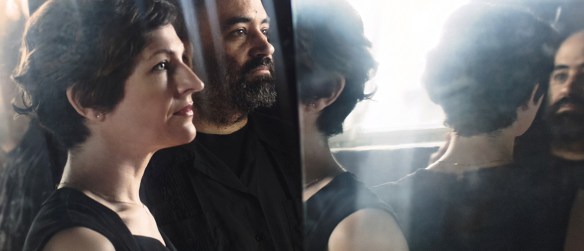
We’ve already spoken to Murcof about his collaboration with pianist Vanessa Wagner – and now it’s time for her side of the story. She describes how she found classical music and how her meeting with Murcof opened up all sorts of electronic possibilities. Here they are on their work together:

Vanessa, can you remember your first encounter with classical music?

My parents were not listening to a lot of classical music. They were rather into jazz and the French chanson. Then one day, the piano of my great-grandmother came home, and I started to play. My childhood idol was a wonderful Romanian pianist named Clara Haskil, far away from the glamour girls are usually dreaming of! She is still an artist that I love.

Who are the composers you have grown to particularly admire?

I grew up with the music of Bach, Schubert, Schumann, Mozart, Rachmaninov, Brahms and Janáček, who are still my favourites, Schubert especially. His melancholy, and the time stretched in his music touches me enormously. Die Schöne Müllerin and Winterreise are pieces that never leave me.

What was it that appealed to you about working with Murcof?

I was the one to initiate this encounter. I have listened to his music for a long time. I met him at the workshop of the Infiné label, and we made an improvised test. Then I had the chance to have a residency in a room of the Arsenal of Metz. They gave me carte blanche to develop new projects, I invited Murcof to play with me, and Statea was born.

How did you make sure you got a good balance between the piano and the electronics?

I always asked Murcof to pay attention to the acoustic piano sound. The piano is the starting point of this project, and it was important that the electronic effects do not swallow its sound even if it is sometimes distorted. Similarly, it also seemed very important to stay true to the scores of composers that I interpret. That’s why the album is called Statea, which means balance in ancient Italian.

Had you listened to much electronic music prior to working with him?

I have listened to electronic music for 20 years. At that time, in my classical circles, it was frowned upon. I had never heard of the big techno anthems, and I went right back to ambient/IDM artists – the likes of Autechre, Aphex Twin, Model 500, Maurizio, UR etc.

Do you think there are other albums or pieces of music that bring classical and electronic together well?

Max Richter´s Four Seasons of Vivaldi works pretty well. Brian Eno also has a beautiful piece called Fullness of Wind, taking its lead from Pachelbel.

Do you think classical and electronic music have a lot more in common than one would expect?

I think meetings of the two styles are quite possible, if one avoids falling into the mainstream that we call crossover classical. The approach focuses on the sound result. We must respect the original script. Adding a beat onto a piece of Mozart or Beethoven cannot be a creative artistic process in itself.

Moreover, music known as ‘contemporary classical’ and art music has a lot in common with experimental electronic. Bridges are possible and desirable between these universes.

Has working with electronic music helped your appreciation of classical?

This does not specifically help me in my classical interpretation. What I greatly appreciate is to exercise out of my classical world, to transform the sound of my instrument, and to experience concerts differently, giving a new fresh perspective to my daily occupation of being a pianist.

For me, it is an interior window that opened itself, and I strongly hope that this is new cornerstone in the musical world which will contribute to the opening of minds and ears!

If you could recommend one piece of classical music to Arcana readers that you’ve been listening to recently, what would it be and why?

I would recommend listening to the Goldberg Variations of Bach (Glenn Gould, for example), the Death and the Maiden String Quartet by Schubert, or Tabula Rasa by Arvo Pärt, especially the second movement Silentium.

Statea, by Murcof and Vanessa Wagner, is out now on Infiné. The pair will appear at the Barbican on Monday 31 October as part of a bill including pianist Lubomyr Melnyk. Tickets can be purchased from the Barbican website. Vanessa will also be giving her thoughts on classical music to Arcana shortly!

Murcof – bringing classical and electronic music together

murcof

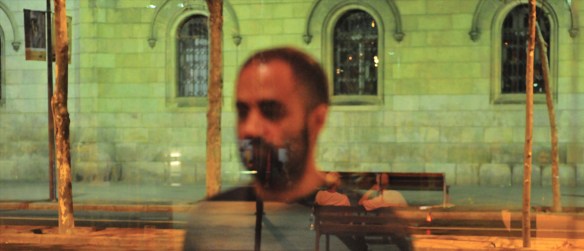
Murcof is Mexican musician Fernando Corona, an artist who integrates classical and electronic music. Working with pianist Vanessa Wagner he has recently released the Statea album, an ambient piece of work that takes its source material from John Cage and Erik Satie amongst others. Here he talks to Arcana about his love of classical music, and how the two forms harmonise together. But first, here’s an introduction to their album together:

Can you remember your first encounter with classical music?

It was a long time ago when I was a kid, and it comes from the side of my father in the family. It was an album of Wendy Carlos playing Bach in the late 1970s, I think. He also did some electronic / analogue synthesizer interpretations of Bach’s music, and so that was the first proper marriage of electronic and classical that I heard. I developed an interest in both, and I became much more familiar with 20th century music from composers like Stravinsky, the Schoenberg school, Xenakis, Ligeti and all the people up to Arvo Pärt, Silvestrov and the minimalists. Classical music has been with me all this time from my childhood and this album is a logical place to go because of that.

How did you get to work with Vanessa?

I met her before we started making music, through her husband Alexandre Cazac. He is director of the Infiné label, and I have been friends with him for many years. We’ve worked together, and in that time he has been very supportive. It wasn’t until a week-long workshop that we did a small arrangement together however. We were playing the same night, and Vanessa was the first one on, then me, so we interlinked the two. Statea has been a work in progress since 2010.

In that time we only did 20 or 30 concerts together, so it is still a fresh collaboration, and now with the album done we are adapting it for the stage. Many things have changed, and we have started from scratch again with some of the pieces, but we have always respected what we are doing.

For our Satie work (Gnossienne no.3) the piano sounds have a lot of analogue processes, where we have brought the piano audio signal into the modular system, before messing around with ring modulation, filtering, and experimenting with the possibilities. The piece is not too long, but I recorded around 45 minutes of messing around and cut the most important and interesting bits to fit the final track.

The album is called ‘Statea’. Is that because you achieve the ideal balance between classical and electronic music?

It’s because to make an album is sometimes the hardest part. It was open enough, it wasn’t going to encapsulate us in a direct way, a literal way, but we talked about a good balance between acoustic and digital. You can listen to the piece as one whole, not just the acoustic and not just the digital but something that works together. That is one of the things I am looking for, not getting lost in the sounds and what I have to say. That’s the reason for the name. We were initially going to use the Latin but Alexandre suggested the old Italian way.

Sometimes when classical and electronic music meet the results are a bit cheesy, but there is a very deep emotion to what you do.

That’s good to know, it’s a process and a matter of deciding what works and what doesn’t. It’s telling a story, and each sound needs a reason for existing. Vanessa and I were working together for a common goal. Most of these compositions are well known, and people have an idea about them, but even if it’s an abstract message it’s still there. You can enhance it or steer it off somewhere else.

With Satie, yeah, we wanted to see him a new light, especially as it’s one of the pieces that is most famous. It was tricky to work with it because of what you just said. We wanted to try and prepare a fresh view of the piece, to justify Vanessa and I working on it to contribute something new.

Is your approach in some way similar to that of Satie, a kind of ‘less is more’ viewpoint?

In a way, though I do find it quite a challenge to say when a track is done. I take that step very seriously, and I don’t like to overdo or underdo things. When a piece is finished it is when I have explored so many possibilities! Then I choose the best one, polish it and finish it.

Do you intend to continue working with classical music in this way?

Yeah. There are many things that can be done with classical music, and there are many approaches I would like to try. I would say ‘watch this space’, with compositions old and new. The acoustic instruments are so rich, and it is wonderful to work with them electronically and to open a can of worms with some of the weird harmonics that are peculiar to those instruments.

It has been a really strong emotional passage for me since our early ages, it is a big part of me on a personal level, and it is a natural situation for me to work with it.

You have a very fine ear for orchestration. Have you ever written for a full orchestra?

Yes. I did a small interaction with Jean-Paul Dessy, from Belgium, who is a composer and a director. Musiques Nouvelles is the name of his ensemble, and they adapted a piece of mine for orchestra. I have been sitting with this idea for a long time, and I would love to sit down with a composer / director who is open to the idea. It would be a bit stressful for sure but would be a lot of fun as well.

What does classical music mean to you?

For me personally each kind of music is a whole avenue of expression – classical, jazz and electronic with its many subgenres. Classical is long standing for so many centuries, and for me it is about always keeping with acoustic instruments – the more conservative music.

Classical music is a combination of centuries of studying, developing, trial and error of previous work. It is an emotional world but also a very strict one. The core essence is the compositions, but you need trained interpreters to play it. Because of that it can be stressful and competitive, but I think it is worthwhile to have highly trained interpreters so that we can enjoy the music of the past, from the Baroque to the 20th century twelve-tone music of Schoenberg and his school.

It is always this though – highly emotional and direct. In my case I formed an instant connection with it and because of that I have always found it very emotional.

If you could recommend one piece of classical music to Arcana readers that you’ve been listening to recently, what would it be and why?

I always go to one of my favourite composers of late, Valentin Silvestrov, a composer from the Ukraine. His latest work is amazing and I often go back to his Requiem, written for his wife. One small section of it is also part of a series of songs for piano and voice, but he also did a version for choir and orchestra. It is not a new piece but it is the one that comes to mind right now.

Statea, by Murcof and Vanessa Wagner, is out now on Infiné. The pair will appear at the Barbican on Monday 31 October as part of a bill including pianist Lubomyr Melnyk. Tickets can be purchased from the Barbican website. Vanessa will also be giving her thoughts on classical music to Arcana shortly!

Alban Gerhardt – a Proms interview with the cellist who sings

ag44_credit_sim_canetty-clarkehyperion_records

Alban Gerhardt has not played his cello for 12 days…but on the evening Arcana calls for a chat he is about to pick it up, finally.

“It’s fantastic not having played for that length of time!” he enthuses. How will he get back into the saddle? “I start off with very basic exercise, just playing open strings and long notes – nothing else really. It’s all about getting to know it again, and I play so slow that I won’t get any notes wrong or play anything false. Then tomorrow I will restart the Dvořák, which I haven’t played in a long time!”

He is referring to the Dvořák Cello Concerto, which he will perform at the Proms this year – Prom 25, to be precise, on Wednesday 3rd August at the Royal Albert Hall, where his accomplices will be the Royal Philharmonic Orchestra and their conductor Charles Dutoit. “I definitely haven’t played the piece this year”, he confirms, “but I think I am starting next year with it a couple of times. I’m very glad to have been playing other things, otherwise you start doing crazy stuff with a piece. If you do perform something more than 50 times without a proper break the danger is you start doing those things to entertain yourself.”

As is customary with all Arcana interviews, I move on to ask the cellist if he can recall his first encounters with classical music. “Mine were pre-natal! My mother was a singer, so I heard her singing and practising, and when I was born I was crawling between the music stands. I don’t actually have any memory without music, it has been the all-dominating thing for me. My mother would sing a lot, and then the cello was the next choice, as I found I could sing with that.”

His love of the cello developed as an extension of the voice. “In my second lesson I learned how to make the music vibrate, to use vibrato, and it made so much sense to me. My mother had a natural vibrato from between the ages of three and four and I picked it up. I had a minority complex about my voice, but when I got the cello it all happened and I ran screaming through the house, I was so happy!”

Gerhardt has performed the Dvořák concerto at the Proms before, stepping in for the indisposed Heinrich Schiff in 2001. “It was a huge thrill, to be playing such a big piece on the biggest stage of all.” How will this experience be different for him? “I think by now I am so old” (he’s only 47! – Ed) “but I am very much looking forward to working with Charles Dutoit again. The stage doesn’t matter so much anymore, I find, and I don’t get inhibited or frightened. I do respect the stage more though, wherever I am. Everybody deserves a good performance wherever I am, and it shouldn’t necessarily be better just because I am at the Proms. The last time I played it was exhausting because you have to produce more sound in the Royal Albert Hall. In the last six years I have been playing with earplugs, as I used to force my sound, and that has helped enormously.”

This year the BBC Proms is focusing intently on the cello, with ten concerto performances and four premieres. Does that reflect the instrument’s popularity? “I would love to say yes, but I don’t know”, he says candidly. “There are many seasons for each of the orchestras where the violin and the piano are far more in demand. It might reflect the number of wonderful cellists there are these days, though I do find I am missing a bit, a wonderful protagonist like Mstislav Rostropovich who created works and was such a natural force for the instrument. He was not created by any PR or fancy stories, but there was a huge hunger in this guy. Now we have specialists and PR people – they are wonderful players but none are of that stature so far. It could be a couple of people standing up for the instrument, but then maybe it’s Rostropovich’s fault, that nobody has stepped up like that since him! Maybe Casals did, but there has not been anyone quite of the same stature. It feels like we are still trying to catch up.

Gerhardt has yet to record the concerto, save for a disc given away with a past issue of the BBC Music Magazine, but from the sound of things is not in a hurry to do so. “I’d like to one day, but there is no rush. It should be in the perfect setting. I don’t want to do it for the sake of it. It is such an important piece, such a symphonic work. To make it special it would have to be recorded with genius people. I think ahead of the Dvořák I have pushed for the Bach suites, but that is maybe the next thing I would love to tackle.”

And what of the considerable honour of performing the piece at the Proms? “It will always be special, the excitement is so much bigger. I believe my father played at the Proms with the Berlin Philharmonic Orchestra in the 1960s. I think it was when Herbert von Karajan came to the Proms for the first time (this appears to have been in January 1973 according to the Proms website) and it was a very political occasion. He told me that when the oboist Lothar Koch gave the ‘A’ the whole audience hummed it! The orchestra thought it was sabotage, but then they realised the orchestra was so excited. When I was asked to the Proms around 20 years later I played Shostakovich in the late 1990s. I got frightened, but now I am excited to play for this unbelievable audience.”

He goes on to discuss the advantages of planning for the festival. “At the Proms you can schedule almost anything and people come! For instance this year Steven Isserlis is playing a new orchestral version of Thomas Adès’s Lieux retrouvés, and it is one of my standout Proms, as I love Isserlis. I am sure it will be full.” There is a note of regret, too. “I wish this could be translated into other seasons, because I think it proves you don’t always need the big names like Beethoven and Brahms to fill a hall. Music is for all seasons, not just the summer!”

Staying with the Proms theme of the cello, does he think it true to say the instrument is popular for new works? “Not so much in the last 40 years”, he says. “Not since the Rostropovich commissions. We live in times where there is a much shorter life, things expire quickly, and so to get a piece into the repertoire is impossible. This has happened with the Dutilleux concerto perhaps (Tout un monde lointain) but not since then, especially if you compare those pieces to Shostakovich and Prokofiev.”

He muses on the reasons for this. “It is difficult for a player to learn without having a pianist accompany them, and for that you need a piano reduction. People love modern music, and there is lots being written, but it’s been written, played once and then never again. Maybe that’s how it was 300 years ago, after all Bach had to write a cantata every week! It is nice to go back to a piece and rediscover it though. I have been able to do that with some contemporary pieces which is great as you can do so much more with them. With the Dvořák I can tell a story with it, and I can channel my energies so that I am not dead by the end of the first page, and can carry through the whole piece!”

What of recommending a piece of cello music to Arcana readers? “The Wigmore Hall Director John Gilhooly did tell me that Lieux retrouvés is a fantastic piece”, says Gerhardt, “and he thinks it is one of the greatest pieces written in the last few years. I think that is my favourite last cello recording, the one made with Isserlis and Adès themselves. I do love to go to concerts rather than stay at home and listen though, I am not a big consumer of recordings. Having said that this one is also special for the Janáček and Fauré pieces they include, it has a beautiful combination of works. They are such fantastic musicians, and at times they remind me of Rostropovich and Benjamin Britten in partnership.”

It is nearly time for Gerhardt to head home and pick up his cello. “I will summon the energy over the next six days to completely fall in love with the piece again”, he declares. “I have a complete score and will go back to basics, to look at the part without any marks on the page and look at what the composer really had in mind. Otherwise I find that I do things in the moment and repeat them. A clean score, with no markings, fingerings or bowing instructions, brings you back to the composer.”

Dave Howell – an anniversary interview for the 130701 label boss

130701

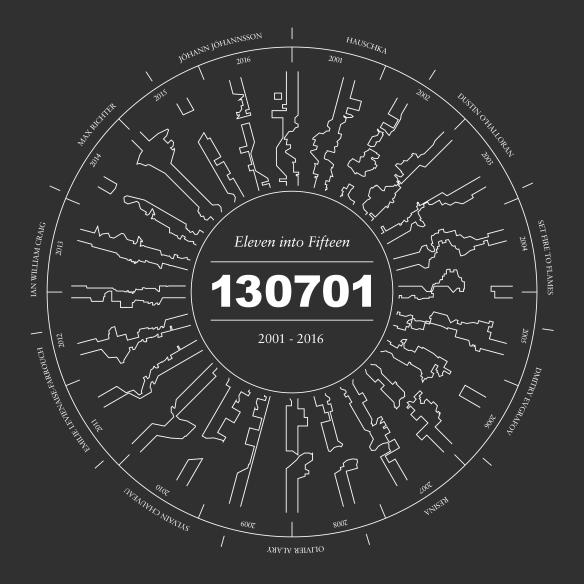
On this day, 15 years ago, a new record label was born. July 13th, 2001 – or, as we should call it for the purposes of this article, 130701 – for that was the new name given to the record company.

It was the brainchild of Dave Howell, and initially existed purely for the release of the new album by Set Fire To Flames, an offshoot of Godspeed! You Black Emperor. Soon the label built into releases from Max Richter and Sylvain Chauveau, adding composers influenced by but not bound to classical music tradition.

These included Hauschka, an adventurous and experimental pianist, Johann Johannsson – now an Oscar-winning soundtrack composer – and Dustin O’Halloran, now half of Mary Anne Hobbs darlings A Winged Victory For The Sullen.

Sadly this enviable pool of musical talent found itself uprooted by a legal dispute for the parent company of 130701, FatCat, and each artist had to subsequently leave the label. Somehow it returned from the ashes, with Howell once again at the helm – and now he can sit with understandable satisfaction, celebrating their fifteenth anniversary with a new compilation, and sharing with Arcana the formation and legacy of his label:

Can you remember your first encounters with classical music?

Ha. I don’t think any of us at FatCat had any background whatsoever in classical music at all prior to setting up 130701. The first encounters I can remember with classical were as a kid, with my father having a handful of classical LPs in the house. I remember one was Holst’s The Planets, and there was probably Vivaldi‘s The Four Seasons there too but he was just a dabbler really, he wasn’t really passionate about music and I never really dug much that he liked, so I don’t have any great memory of it.

I guess there was that thing of reacting against the values of your parents and their music and for me those records were the old order and didn’t speak to me. They came from an age and a class that felt remote and something that I just couldn’t relate to.

I think the first classical stuff I started finding myself getting interested by would probably have come through film – so things like Walter Carlos on ‘Clockwork Orange’ and Michael Nyman’s work for Peter Greenaway’s films.

That was probably the first time I heard contemporary classical stuff that to me sounded really interesting and a little later I read Nyman’s book of his on 20th century experimental music which became a big influence on my thinking and writing and a guide in exploring whole new areas of electronic music, Minimalism and the avant-garde. I think when I started getting more into electronic stuff, then I began to dig things like Satie, Morton Feldman, Arvo Pärt. I never had, and still don’t have, anything remotely approaching a decent understanding of the classical canon and what classical music actually is. But I do know, instinctively, what I like and why I like it, and I do trust my instincts 100%.

Can you remember your first encounters with electronic music?

That’s a little bit easier… growing up through the ’80s electronics was the common currency in pop music. I remember being hugely into Depeche Mode‘s first two or three albums when I was at secondary school. New Order. Kraftwerk. Human League. The Art Of Noise. Soft Cell‘s first couple of records I really loved. Odd bits of electro and hiphop. But if I’m honest, it was all very piecemeal and without any deep engagement or understanding of it in a cohesive sense. When I was at art school at the end of the ’80s I started getting heavily into industrial things – Throbbing Gristle, Cabaret Voltaire, SPK, Clock DVA, Coil.

I went to acid house parties in Portsmouth without really feeling the music, there were bits and pieces I liked but I never totally fell for it. I think I was probably a bit too insular, too much of a loner to really embrace that communal acid vibe. But then, after I moved to Bristol in ’91, I totally started falling into that UK electronica scene – LFO, Black Dog, Aphex Twin, Global Communication, that kind of thing.  Also a lot of early drum and bass stuff which seemed really fractured and exciting. I started to consume things much more voraciously, to really start digging deeper and deeper. The first Autechre album In Cuna Bula was a massive find, that opened so many doors for me, and was pretty much the reason I started writing the fanzine Obsessive Eye, which was ultimately what got me working at FatCat.

Do you remember when the two first combined in a meaningful way for you?

Electronics and classical? Well other than that Walter Carlos Clockwork Orange stuff, which was amazing but I heard it too early and kind of forgot about it, I would say probably on that first Sylvain Chauveau album, Un Autre Decembre, which was the second 130701 release and something I still really love. That was probably the key release that really helped start to orient 130701 towards the kind of ‘post-classical’ territory we have occupied. It fit really well alongside the Set Fire To Flames stuff (our first release) in that it had this kind of gritty, noisy, electro-acoustic layer locked alongside classical instrumentation – in this case, Sylvain’s really gorgeous, precise but emotive piano.

When Max Richter arrived a year later, that just kind of cemented things and everything seemed clear to me in terms of establishing this progressive, hybrid kind of aesthetic for the label, based on a meshing of traditional classical instrumentation used in on-traditional ways or used alongside newer technologies. There were other things around the same time that were doing similar – people like Kenneth Kirschner and Taylor Deupree; Ryuichi Sakamoto and Alva Noto, people who were taking the piano and re-contextualising it alongside computer processing and electronic noise.  I think the prepared piano material on Aphex Twin‘s Drukqs started a lot of balls rolling too.

What do you think is behind the current love for music that touches both classical and electronic aesthetics?

I think it’s a whole range of factors coming together.  in general, over the past 10 or 15 years especially, we’ve been on a curve where there’s just much more of an openness about dissolving boundaries as everything has become so much more accessible and maybe the older, more rigid subcultural signifiers and ties have broken down and the way people orient themselves, in terms of music at least, is much more fluid and fractured.

Maybe people don’t discriminate as much as they used to and maybe those kind of musics appeal to a younger generation or people of a certain age who’ve reached a point where they’re looking for things that are a bit calmer or something.. and a generation of musicians who’ve come through the academies or who are self-taught, or coming from non-academic angles, have just looked at ways of utilising those instruments into something that has a more connected modern context.

I also think it’s partly the result of a cumulative effect of things that have been percolating over the same period. this sort of area that we’ve been pushing for the past 15 years, alongside others like Type, Bedroom Community, Erased Tapes, etc – that’s been dripping away for a long time now and slowly drawing more and more people (both creators and consumers) into its orbit.

The music’s also been especially prevalent at sync level – on TV, radio, film, adverts. I can clearly remember back when we first started working with Max in 2004-2005, how fairly quickly his music just seemed to be taken up everywhere as sound-beds on radio, TV, to the level where almost every evening I’d be watching TV and would hear his music somewhere, so it starts to increasingly become part of the cultural soundscape. You can feel that now with Olafur Arnalds, Nils Frahm and others. And also I think when you have a handful of artists like that who are really forceful personalities and who play the game very cleverly and who are great live performers, then that creates a really strong momentum and it provokes further interest and opportunities in the media.

Do you think classical music has become more accessible as a result of that?

Possibly. I think also probably those big classical labels like Deutsche Grammophon have twigged what’s been going on at ground-level and have become a lot smarter about how to market classical music. They are starting to get a bit smarter with the way a release is packaged, and are looking at ways of appealing to a younger, hipper crowd.

Do you think it is important for a record label to innovate in the music it releases?

Not necessarily, no. There’s plenty of amazing music out there which is great without necessarily being innovative, and labels that function really well putting out such music. I think it’s important to have a vision and a strong sense of identity, integrity and quality control about what you do. That’s more important than being innovative.

Having said that, for me personally, that idea of pushing new angles and shaking things up, working with music that does feel innovative, has always been a really strong belief, almost a guiding principle for the past 20 years. I grew up reading melody Maker through the 1980s, with people like Simon Reynolds writing brilliantly about whole swathes of new music, and seeing stuff like Public Enemy, Young Gods, Buttonhole Surfers, My Bloody Valentine etc. on the cover of what were then huge publications, that was pretty amazing. That kind of modernist notion of renewal felt really important and utterly vibrant, and it marked my attitude indelibly and shaped how I thought about music and kind of helped confirm where my interests were.

I sort of luckily fell into A&R-ing and helping to run a label and when I started working here at FatCat I was full of idealism about what a label ought to be  – aiming at the kind of adventurous creativity and quality control of labels which for me were defining beacons of brilliance – Factory; Rough Trade between ‘77 – ‘81; 4AD and Blast First in the late eighties; Warp through the ‘nineties; Basic Channel; those kind of labels that were setting agendas, nurturing and working with artists who were chasing a very clear sense of their own vision, who had integrity and who were mostly pushing boundaries..  Whether we’ve got anywhere close to those standards with 130701 is for others to judge, but that was always my own hope / intent.

How would you say 130701 played a part in that?

In being innovative? I think we’ve just been really selective in what we’ve put out on 130701, and there’s been very little compromising.

Are you still in contact with the artists you nurtured on 130701?

Absolutely. I stay in touch with every one of them, meet up whenever they’re passing this way, and I’m really proud we’ve played some part, however small, in each of their careers, and I follow what each of them do pretty closely.

It must have needed a great strength of character to get the label going again. What were the driving forces behind that decision?

It was a massive blow to have lost the roster we had, and it took a while to recover from. I think starting to receive some great music from people like Dmitry and Emilie helped give a bit of impetus, and also the fact that we were coming up towards the fifteenth anniversary, which felt like it needed to be marked properly. Once you start to get things moving then it sort of started to take on a bit of its own momentum. There’s also been a bit of a will to prove to people that we know what we’re doing, that we could get back on our feet and re-establish ourselves as a vital label.

Are you actively looking for the ‘next thing’, rather than looking for the same kind of artist you had before the hiatus?

I guess we are also looking to search out people at the start of their careers a bit more. We’re not looking to repeat ourselves, but we are trying to retain that high sense of quality that we always had, and to be really selective in who we sign. In general I’ve always just tried to find artists in whom I can see some strong sense of purpose and integrity, people who are working their own angles and whose music is really stamped by a strong sense of their own identity, and who hopefully are strong and interesting live performers.

I think “same kind of artists you had before” is a bit of a difficult one also, as those artists weren’t really definable as being that similar. They each had their own thing going on and they were all at a really high level. And it’s not so easy to find people who come up to that level. I’m also very aware of how saturated this little scene is at the moment and I hear quite a lot of stuff that sounds just a bit derivative to my ears, or that lacks that extra something that sets it apart or that resonates strongly enough. It would be kind of easy to just shore things up and just sign a whole bunch of those artists making recognisable piano and string works, like some kind of spread-betting. So in part I feel we’re reacting a bit against that and trying to find things that can expand and reposition the label a bit so it doesn’t just sit in this comfortable little easily-defined space.

Who are you working with now, and what can we expect from the label over the rest of the year?

Well, the roster is basically being re-grown from scratch. Last year we signed pianist/ composers Dmitry Evgrafov and Emilie Levienaise-Farrouch, whose albums came out just before Christmas, and we’ll definitely keep working with them.

This year we reissued Hauschka‘s first album for us in an expanded form, and we signed Ian William Craig, Resina, and most recently Olivier Alary. There’s one or two others I’m keeping tabs on. Ian’s album is just dropping and he’ll be touring in August and I’m so happy to be working with him as I think he’s exactly that artist I mentioned above – someone who has completely his own thing going on and who is just the complete deal.

Resina‘s album will be out in September / October and again, she’s really exciting, doing her own thing, navigating us into slightly different territory. She’s an amazing live performer and someone who could have a really bright future.

I’m looking at trying to bring in a couple of others over the next year or so and just really focus on working with and helping enable those artists to realise their visions and grow their careers as much as possible.

Do you think there is a danger the majors will take some of the spirit of discovery and originality out of the artists you worked with?

You mean Max and Johann signing to Deutsche Gramophon changing their adventurousness away?  No, knowing them both really well, I really don’t think that will happen at all. I think DG / Universal are wise enough to understand the way both artists work and I’m sure they’ll just let them continue. They’re both culturally voracious artists and both similarly driven by finding really interesting narratives and concepts and in shaping and framing those within their own aesthetics. I think that spirit of discovery is hard-wired and I just think they’ll continue doing what they’ve been doing. They just have increasingly better resources to realise those ideas.

If you could recommend some new listening for Arcana readers, what would it be? (preferably a mix of 130701 and a few others if you’ve got time!)

Here’s some recent / new stuff  I’ve been enjoying that’s all more or less in the 130701 ballpark:

A.G.

Ben Lucas Boysen

Kara Lis Coverdale

For more on 130701 records, you can visit the label’s website