Life, the Universe and Music – a conversation with Vasily Petrenko

vasily-petrenko
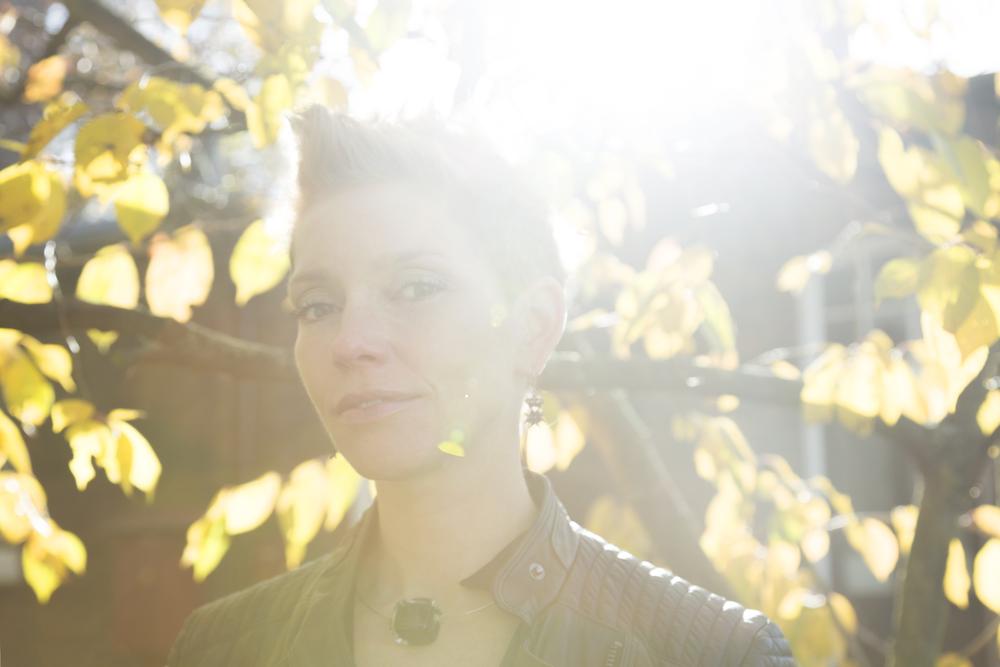
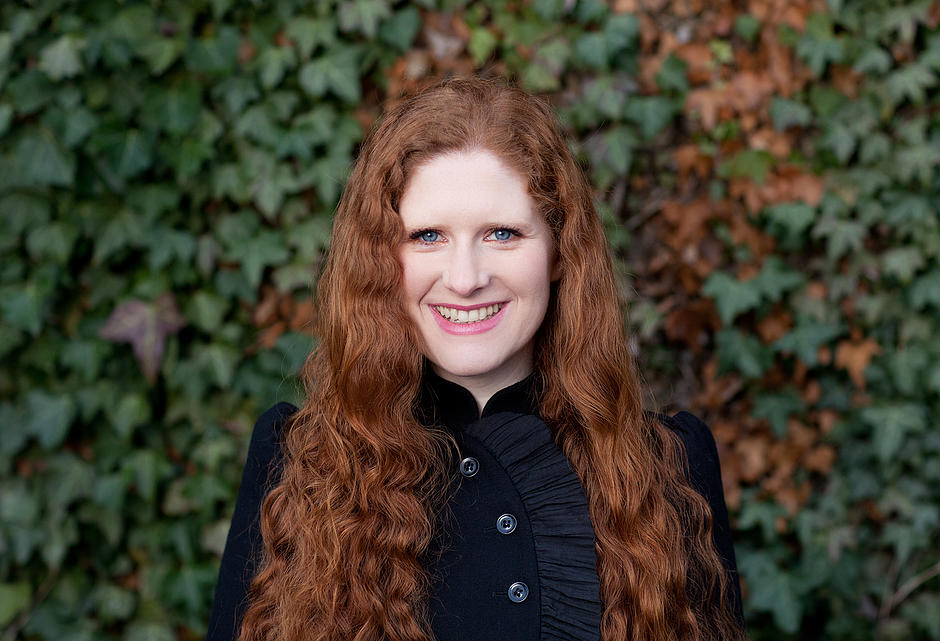
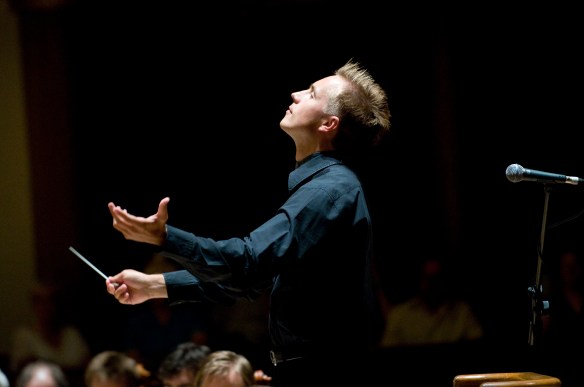
Photo (c) Mark McNulty

Richard Whitehouse talks to conductor Vasily Petrenko about the music of Enescu and Scriabin, his work with two orchestras who have flourished under his direction (the Oslo Philharmonic and the Royal Liverpool Philharmonic) and not confusing your Petrenkos!

Chatting with Vasily Petrenko is precisely that: an informal exchange of ideas and anecdotes with none of the potential divisions between interviewee and interviewer. Not that this in any way belies his commitment as a conductor, having brought the Royal Liverpool Philharmonic Orchestra to the 15th Enescu Festival in Bucharest (they first appeared here four years ago) for two of this event’s most ambitious concerts – the second of which featured the Romanian composer’s lavish and hugely demanding Third Symphony (given its London premiere only last February). Was this a work Petrenko had conducted previously?

“No, and I can’t wait to hear how it comes together this evening [for the record, it was an undoubted highlight of the festival]. Enescu still suffers from being thought of as a composer of folk-inspired music, but there’s far more to his thinking. The Third Symphony is an important stage in the evolution of the genre after Mahler, and only really makes its mark in a large venue such as the Grand Palace here in Bucharest. I doubt whether it could ever become a repertoire piece, yet much the same was said of Mahler’s symphonies up until the 1960s so you can never be sure.”

Hopefully Petrenko will soon bring his other orchestra to the Enescu Festival – the Oslo Philharmonic, of which he has been Chief Conductor since 2013. Having appeared at the Edinburgh Festival last month, and with a UK tour next March, theirs is building into an equally auspicious partnership – underlined by the imminent appearance of Scriabin’s First and Fourth Symphonies on the LAWO Classics label. Although no longer the cult figure he once was, Scriabin is still viewed with a degree of suspicion and his abilities as a symphonist treated with some scepticism.

lawo

“I think there are several reasons for this, not least his premature death in 1915 and the advent of the Bolshevik Revolution three years later which meant that Russian music took a very different route from that on which Scriabin was headed. Clearly the piano music – the sonatas in particular – has become part of the twentieth-century repertoire, and I feel that the five symphonies are due the same recognition. You have to remember, too, that Scriabin’s evolution came at a time of immense ferment across all the arts – not least music; indeed, I tend to feel that the history of music from the Renaissance onwards is one of an increasing acceleration, so the early twentieth century was a real explosion of possible ways forward. Only now, perhaps, can we view this era more objectively and get a balanced overview of what was achieved. When this happens, I’m sure that Scriabin’s symphonies will be seen as crucial to their time.”

Was it fortuitous that The Poem of Ecstasy was being designated on this new disc as Symphony no.4? “Not at all, and you can be sure that Prometheus – The Poem of Fire will be given as Symphony no.5 when we record it. Scriabin himself had no doubt these pieces followed on chronologically from his previous symphonies and it’s not difficult to hear why. I think what we might call ‘extra-musical’ factors have tended to draw attention away from their musical content – the formal rigour and especially the thematic economy of which the composer was capable by then.”

Petrenko’s commitment to the Scriabin cause is such that he is keen to perform and, if possible, record Preparation for the Final Mystery that the composer had envisaged prior to his death, and which was realized over the course of three decades by musicologist Alexander Nemtin. “I imagine that the precise nature of Scriabin’s Mysterium [a week-long synaesthetic ‘happening’ in the foothills of the Himalayas, intended to bring about the purification of the human race] can never be known, and maybe even the composer wasn’t too sure beyond the overall concept. Yet the ‘Preparation’ as Nemtin has realized it is more than an indulgence: I feel it stands up as a musical statement in its own right, and would be a great way to crown our work with Scriabin. I’ve little doubt, too, it would come across much more effectively in Oslo’s Konserthus than some remote performance space in the Himalayas!”

Mention of the Konserthus is a reminder that the orchestra finally looks set for a new concert hall – to be situated on the waterfront at Filipstad, with the Oslo Philharmonic as the principal tenant and the project to be financed in conjunction with the building of a congress hotel on the adjacent site. Petrenko remains optimistic, albeit cautiously so, concerning future developments.

“Thirty years on from the initial proposals, and this looks like becoming a reality. Of course, there will always be those who say such a project is taking up resources that could be better used elsewhere, but if you consider the positive impact this is likely to have in terms of infrastructure and employment, then there can be little doubt why it should get the go-ahead. I very much hope it will come about during my tenure with the orchestra.”

Indeed, there seems no reason why Petrenko’s four-year contract in Oslo should not be extended before long. In Liverpool, meanwhile, he has an open-ended contract which only requires him to give three years advance notice of when he wishes it to be concluded.

“This is ideal in that it enables us to plan ahead, with more than enough time in hand when either of us feels the need to move on. I’m proud of what we’ve achieved together so far [not least cycles of Rachmaninov symphonies for Warner and Shostakovich symphonies for Naxos], and there’s no reason why it should end when we’re able to put on concerts such as those at this year’s Enescu Festival. That said, I was more than a little surprised when I received congratulatory emails and tweets about taking on the Berlin Philharmonic Orchestra from 2018 [actually the conductor Kirill Petrenko]. It’s great to be popular, but some people had evidently confused their Petrenkos!”

Stephen Kovacevich – a truly great pianist

kovacevich
Steven Kovacevich Photo: David Thompson/EMI Classics

If you were asked to name some of the world’s greatest living classical pianists, the chances are it would not be long at all until you got to the name Stephen Kovacevich.

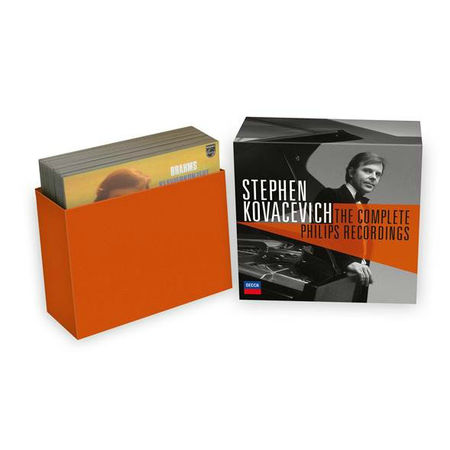
Kovacevich has just reached the age of 75, but despite some recent health problems it is clear when Arcana has the privilege of meeting him that he is in good physical, mental and musical shape. He is the perfect host, too, pouring coffee as we prepare to discuss aspects of his career to this point, based around the recent issue of a handsome box set with the collected recordings he has made for Philips. These include legendary performances of Bartók, Beethoven, Mozart and Brahms – all of which he will discuss over the course of the next half hour.
kovacevich-philips

To begin with, however, it’s back to the start. What are his earliest memories of playing the piano? “I can’t remember the very first one”, he considers, “but I know that it was in San Pedro, about an hour and a half south of Los Angeles. My grandmother had an upright piano, and I probably tinkered with that but I just remember that it was there. I don’t remember much. Then I had at around the age of seven the local piano teacher, who was OK, then I had lessons with a very good teacher in San Francisco where my family moved to Berkeley. I remember thinking that I wasn’t very good, because I found it difficult at the age of eight or nine, but by the age of eleven I was playing quite well. I gave quite a good concert then, and looking back I probably wouldn’t be ashamed of it today – or maybe I would be! Then I studied in San Francisco until I came here to work with Myra Hess, a great artist.”
myra-hess
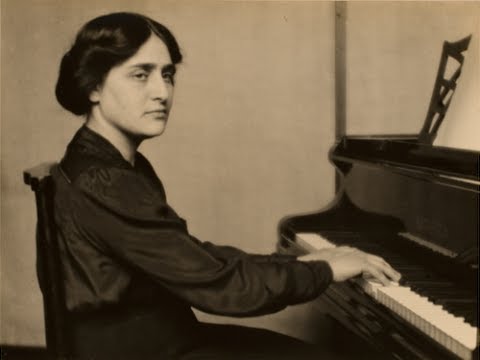
Myra Hess

“She was a profound artist”, he says of his teacher, “and I had a choice of going to Juilliard, with a scholarship at the college there, or coming to London. I chose London because of the repertoire, and Myra Hess’s repertoire interested me more. Juilliard is so competitive.”
What were the lasting things he learned from study with her? ““I was 18 or 19”, he recalls, “and I could play well, but I think it was rather monotonous in terms of variation of sound. I remember the first lesson was on the Brahms Variations on a theme of Handel.

The theme, which can be sight read, we worked 45 minutes just on that, trying to get a ‘trumpet sound’ that was perfect, a sound that was ‘dolce’. Just working on that started to provoke other areas of your imagination. She was a great teacher, with repertoire that interested me at that time. I hadn’t liked Beethoven very much until I heard her play it, and she really understood late period Beethoven. I was privileged and benefited greatly from that, because genuinely – if immodestly – it was the only music I was interested in.”

I mention to Stephen how I have been listening recently to his recording of Bartók’s Piano Concerto no.2, made with Sir Colin Davis and the London Symphony Orchestra for Philips:

“It’s one of the best I ever did!” he says emphatically. “Everything I could do musically, mechanistically, emotionally, is there, and I was lucky because when I first heard the piece I then went and bought the score. I’m not being coy, but I just didn’t think I could play it! I dropped in on Colin Davis and I wasn’t fishing but I simply said, “Colin, I’ve heard this incredible piece but I think it’s beyond my abilities”. He was in charge at the BBC Symphony Orchestra at the time, and he asked me to play it at a Prom nine months later.”

“I knew if I couldn’t do it that I could always cancel, but that I would never forgive myself for not trying! I had never played anything so difficult – and actually there isn’t anything more difficult! It was the making of me – in some ways a bit too much, because I developed muscles, and a sound which was on the cusp sometimes of being too …but I had it in my repertoire. It made a lot of things possible, but also psychologically, if you can play the third Rachmaninov concerto, the second Bartók, the second Brahms maybe, the Beethoven Hammerklavier Sonata, if you can do these things it gives you a certain pride. The Chopin Études, I can’t play them properly but I can play them alright. But Bartok’s Second I can play. So that gave me some confidence. It’s a frightening piece, you know!”

Kovacevich goes on to reminisce about his early experiences with the concerto. “The first performance I gave was at the Proms, and a very distinguished composer who learned with Myra Hess, he turned the pages for me. In the middle of the second movement he got lost, and just sat down! Thank God the passage is so difficult that I had memorised it. He just sat down and gave up, and this was a live Prom!”

And what about that recording session? Just listening to the results, the listener gets an idea of the sheer adrenalin generated by the performance. “Colin and I had performed it ten times – in New York, and on tour with the Scottish National Orchestra, and in several performances with the BBC. I knew the recording went well because the first performance at the Proms was OK but nothing special. Then the next performance I stopped in the studio recording, but the performance after that was the opening night of the Edinburgh Festival, a live broadcast. I was so terrified I couldn’t even do the BBC balance test. Can you believe it?! They did it cold. There is a passage which I had missed before and two of my friends, very famous and wonderful young players, they embraced each other when it was coming up, and I got through it! And when I did I went completely nuts and really played out of my skull. So I knew if I could survive a concert then I could do a recording. I just went for it, and I remember Colin knew it very well by then too, we knew how we did it together, so we did not have any problems. I think it took three sessions. One session we concentrated on the sound but then we did two and a half sessions on it.”

What was it about Stephen’s relationship with Sir Colin that worked so well? “Well it stopped, but when it worked I can only say there was similar passion and energy, and in those a similar sense of tempo. He then became more spacious, so it didn’t work because I didn’t do that – and both are perfectly valid journeys. At that time he was a firebrand, with the Beethovens and the Brahms and the Bartók. I think he loved the first and third, and that’s appropriate. At the time he was doing the Rite of Spring but interestingly enough he stopped becoming interested in doing it. I had to trust him on it but I didn’t understand it. I think he turned away from that kind of wild stuff. I never heard anyone conduct Berlioz the way he did; I heard two staged performances of The Trojans – just marvellous. Why he stopped, I don’t know, but it did. Thankfully we did more Mozart piano concertos, Schumann, Grieg, Bartók and both Brahms, Stravinsky and all the Beethovens.”

One of Kovacevich’s favourite stories is of his recording with Martha Argerich of Bartók’s Sonata for two pianos and percussion. One of the pianos had been dropped, and was unplayable – but somehow they found a replacement so that recording could take place at an unearthly hour. Was that the right time to record it after all?! “I think the second movement is definitely a late night piece”, he agrees, “but the rest is so difficult – almost as difficult as the Second Piano Concerto. Again it’s a piece of savagery. The first movement, if that’s not an onslaught I don’t know what is! As you know the piano was dropped, and they tried to say that nothing had happened, and then at about 8 at night they were trying to find another piano for the session. Steinway was closed, I don’t know how they found it, but at about two in the morning another piano arrived, and that’s when Martha starts working. I was gaga at that stage but the adrenalin kicked in, and we finished probably around 6:30 or 7:00. If you had said I was going to be recording at 2:30 then of course I wouldn’t have accepted it, but there was nothing else we could do!”

Kovacevich will give a concert at the Wigmore Hall in honour of his birthday, taking place on Monday 2 November. The first half consists of Debussy’s En blanc et noir and Rachmaninov’s Symphonic Dances, both with Argerich at the second piano. When did he last play these pieces? “I last played the Debussy with Martha at her festival in Lugano, about two months ago, so that is in our fingers.

The Rachmaninov is the first time I’ve ever played it, and I just came back from Brussels two or three days ago where we rehearsed. I think our rehearsing is done. My new love is Rachmaninov. I’ve always loved him but now I think I’ve completely fallen for him!” Is that in a sense that makes him want to play his music? “Yes. I’d like to learn some of the solo music, but it’s no joke at my age to learn this type of repertoire, especially when it’s not the kind of repertoire that is my home territory. Now my favourite Rachmaninov concerto is the second. I can’t play it, but I have a few months where I don’t have a concert. I have to learn the Bartók Second Violin Sonata, and I will try and do the Second Piano Concerto or some of the shorter pieces.”

Clearly he still has a keen spirit of discovery, and I ask what it is about Bartók that particularly appeals to him? “The rage, because you feel much of the music – rather similar to Beethoven – has protest, anger, rage at the brutality and suffering that people go through. When you feel it is not just an individual thing, but society is doing it – like the Second World War which was going on – that’s a feeling of oppression. I think he captures that sense of rage and I think Beethoven is the only one to my mind who does it in the same way. Stravinsky’s rage in The Rite of Spring is ferocious, but you don’t feel it is a negative piece. Whereas Bartók’s Duke Bluebeard’s Castle, the String Quartets, the Piano Concerto no.2, the Out of Doors suite – the music of the night and The Chase especially. The Chase (the last movement of Out of Doors) is about one animal chasing another, with a chomp at the end! That’s it, but it is not music for Blue Peter!”

I note that when listening to the Out of Doors Suite, it seems Bartók finds parts of the piano that no one else seems to find. Kovacevich nods. “The piano writing is magnificent, and the music of the night – Ravel or Debussy did not write more exquisite music and super sensitive sonorities, but the music of the night in the second piano concerto, that’s a dark atmosphere, and the chase is frightening.”

This is perhaps why some see Bartók’s music as containing roots of rock, and I suggest it may be why his music has been used in horror films. Stephen agrees, but has more to add. “Another fact that isn’t known about him, which I have read, is that he had the feeling of an isolated person. When he was very young he had a skin disease that was so unpleasant to observe that at that age, only his mother could touch him. It cleared up, and he had beautiful skin after, but there was a feeling that he was probably physically isolated. I’m guessing but I think it stayed with him.”

A love of dance also stayed with Bartók in his music. “Absolutely. You take the Mazurkas of Chopin, you push it a bit further and you get some of the dance rhythms in Bartók. Also a composer who is surprisingly dark sometimes in his dances, but where nobody plays them, is Grieg. He is not the boy next door! I love Grieg. He wrote so little, but Peer Gynt is wonderful. It is also terrifying, and I find Anitra’s Dance scares me! There is a shadow there.”

The Philips set includes Kovacevich’s recordings of the late Brahms piano works, providing a nice contrast to the concertos:

Does he find now that at the age of 75 he appreciates composer’s late works more than he used to? “No, I don’t think so. I have always had a weakness for composers’ third period works. Beethoven, Mozart, Schubert, Brahms as well. I was always intrigued, so I don’t think about that.” Can it go the other way, to exploring composers’ young works? “I enjoy early Beethoven much more now than I did in my twenties, for sure. But the late stuff, there is something about the third periods which is different.”

At the moment Schubert appears to be the one with whom he feels the strongest connection – and his last Piano Sonata, the famous B flat major work numbered as D960:

“This work means a lot to me and to many, many people,” he says. “In the late Beethoven sonatas, in Op.110 the aria speaks so personally about late thoughts, and I think that the B flat sonata in the slow movement is in that area. The sonata before has this amazing outburst in the slow movement, and where does that come from? If you just played that passage, you would never know it was Schubert! It could be Liszt, Rachmaninov, Musorgsky, but never would you think it was Schubert. And where does it come from? Woody Allen, in his film Crimes and Misdemeanors, in the murder scene, he chooses that String Quartet of Schubert with the eerie tremolos at the beginning, they are like a slap in the face. Woody Allen, who knows music upside down, chooses Schubert for moments when the centre does not hold:

Does it feel with the Schubert piano music that he is playing songs sometimes? “I wouldn’t say so. Maybe with some of the Impromptus, but I think when he writes piano sonatas it’s not just melody with accompaniment, there are more ingredients than that.” I comment how in late Schubert it feels like time has stopped sometimes. “Well the late String Quintet is a good example of that, but it is inexplicable. I mean, I love it but I have no idea what it’s all about! There is something there, where the imagination is supercharged from him. And also the lyricism, it defies analysis, you don’t know why it is so beautiful – it just is.”

Given the story of the Bartók session above, I wonder if he has any other unusual stories of recording sessions or performances? “I was doing a Prom once, where I was playing the world premiere of the Piano Concerto by Richard Rodney Bennett, and they had forgotten to lock the wheels of the piano! It was a live broadcast, and as I played the piano started to move away from me, and it went straight into the cello section! So these guys were playing cello and they saw this massive beast heading towards them. The piece begins quite quietly and there is about a ten second break just after you start, so in those ten seconds I reached into the piano, pulled it back to me.

Of course the audience laughed, and this time it didn’t move. That was quite scary! Yet even as I was bowing, the phone rang backstage and the Beeb said, “It’s the Daily Express. Did your piano start to go into the cello section?!” Unlike me I just calmly pulled the piano back. And of course the audience loved it.”

Kovacevich has conducted more recently, and enjoyed a series with the London Mozart Players at the Cadogan Hall, performing all the composer’s symphonies and piano concertos. Did it give him extra insight into the music in any way? “Not into the music, but with conducting it is different to the piano. No matter how anxious you might be you don’t have to play the notes, so when you’re on stage conducting, and you know the piece very well, you can actually concentrate on the music, to a degree more than when you are playing. So I was walking on stage and looking forward to the concert. The first time I performed the Ninth Symphony I was looking forward to it! The first time I played the Emperor Concerto I wasn’t looking forward to it!”

“I loved conducting”, he says. “I’ve conducted the Beethoven Symphonies, the Brahms, Sibelius‘ Fourth, the Tchaikovsky Pathétique. I wanted to do those pieces. I’ve lost interest, I don’t know why exactly – I think because when I am conducting I have to concentrate so much that part of my concentration is actually on playing the piano. I have done all the Beethoven concertos from the keyboard, and I find it easier to play them when I’m conducting too – I think the Emperor paradoxically is easier to play! The Fourth is harder to coordinate, as it has more flexibility, and when we performed we placed the piano in the middle of the orchestra so that the winds and I could hear each other. I loved doing those concerts at the Cadogan Hall where we did the concertos and symphonies.”

What role has music played in Stephen’s life outside of performing? “It has been a source of consolation, which is one of the things that music is for. Late Beethoven when I was younger was a source of consolation. I remember being very blue and Wagner‘s Die Meistersinger getting me out of it night after night. Also Brahms – it’s like someone consoling you.”

And does he listen to any music besides classical? “I like the ‘black jazz’ from America in the 1930s and 1940s and I love the American musicals, I think they are phenomenal. I love Gershwin, I think he’s phenomenal, and he has a lyrical gift which is fabulous, really inspiring. The fact he and Schoenberg used to play tennis in Los Angeles – can you imagine?!”

Talk turns to audiences, and more specifically how classical music could boost its own. “How often, especially in the days when I dressed in tails to go to a concert – you would get into a taxi and the driver would say what you are doing? I would say I’m playing a concert – do you ever go? “No”, would be the response. Do you enjoy it? “Yes”. Why don’t you go? I don’t know how many times but the response is “I’m embarrassed – I wouldn’t know how to behave”. I know the same thing. I would love to go more jazz, but I’m shy to go to a jazz club because I think I would not know how to behave. The feeling of sticking out – if classical music could get rid of that it would be good. It’s an uphill battle.”

Does he think classical music can portray itself as being slightly removed? “I would think only a small percentage of musicians would want to exclude anybody. This whole idea of clapping between the movements, I find it fine – but some people are horrified by it, and I think that’s ridiculous.” So is it less the musicians but more the audiences? “You could say it destroys continuity, but Mozart and Beethoven had plenty of breaks between movements. I think most musicians would welcome it. I don’t stand up when it happens but I acknowledge it with a nod of the head and a smile, for sure. When I was young I went to some Indian concerts with Ravi Shankar, and during the concert people were shouting but not loudly. I asked for the translation and they were saying, “to this there is no answer”. That is such a wonderful response to a turn of phrase!”

The Complete Philips Recordings by Stephen Kovacevich is out now as a box set – and is available to buy from the Universal music store here

Proms Interview: Tansy Davies – Re-greening

tansy-davies
Tansy Davies Photography by Rikard Österlund

For the annual appearance of the National Youth Orchestra of Great Britain at the BBC Proms, listeners will be treated to a performance of Mahler’s farewell to life, the Symphony no.9.

Prior to this, however, they will hear a new piece of music all about bringing new life to proceedings. Re-greening was written by composer Tansy Davies as a complementary piece to the Mahler, and in a short notice and generously arranged interview with Arcana the composer gave a guide to her new work and her Proms history:

Do you remember your first encounter with the Proms?

I must have been aged around 15. I just turned up with a couple of friends, not having planned or looked at what was on. We prommed of course, and I know that the programme included Debussy’s Prélude à l’après-midi d’un faune. The atmosphere was palpable, and I loved every second.

What was your first Prom as a composer?

In 2010, when I wrote Wild Card for the BBC Symphony Orchestra.

Have you written for the National Youth Orchestra before?

No.

Where did the idea for Re-Greening come from?

The concept emerged out of a collaboration between the NYO, Sir Mark Elder and myself. It’s a celebration of youthful exuberance and Spring. The commission brief, which was flexible, included the following ideals: references to old English melodies, singing in the orchestra, no conductor, and the orchestra would consist of upwards of 165 musicians. And it should create a feeling of freedom within the orchestra, before Mark Elder enters the stage as the voice of experience, to lead them through Mahler 9.

Did you have a particular location in mind when writing it?

I see the piece as being rather like a journey around a forest. The place I was thinking of is Earth (Re-greening the Earth…); and an old English forest.

What is it about an old English forest that you have represented in the piece, or were you looking to capture the overall atmosphere more?

That was really just part of my inspiration; drawing on ideas about reaching back to our roots as humans with a deep connection with nature (the structure is loosely based on a shamanic wheel of the year). But I think the way the music is layered to me suggests a forest like quality; interweaving arpeggio-type figures bubbling or erupting up from the cold earth in winter, and scales or lines reaching up to the light.

As you are writing a piece to complement Mahler’s Ninth Symphony, was it important to write a piece with a lot of opposite elements?

It was important to find something unique, performable and right for the group and the occasion, within the given constraints.

What do you like about Mahler as a composer?

The epic film-like quality of his vision.

How do you portray the colour ‘green’ in classical music?

That’s not something I’ve tried to do, although green is the colour of the heart-chakra, and my music mostly comes out of this part of me.

Neon for chamber ensemble of 7 players

Is it fair to say that through your career as a published composer you have tended to work with smaller ensembles, working gradually up to orchestral composition?

No – I think it has been more haphazard than that! It’s true that I wrote for smaller groups in most of my early music, but I’ve actually written quite a lot of orchestral music over the years. You can include chamber orchestra music in that, and my Requiem As with Voices and with Tears, which is for chorus, string orchestra and electronics.

Were you pleased with the production of your opera Between Worlds, and the reception it got?

Over the moon!

Tansy Davies and Deborah Warner talk about their operatic collaboration, Between Worlds, staged at the Barbican Centre recently

What else are you working on at the moment?

My next piece is for symphony orchestra, I’m very excited about it, but I can’t say any more just yet. I’m thrilled to have had so many opportunities to write for orchestra; I never planned it that way, but I absolutely love getting a feel for how to work with the medium.

If you could see one other Prom this season, which one would it be?

There are many and some wonderful things that I sadly can’t get to. But I hope to attend the BBC Scottish Symphony playing Sibelius and Michael Finnissy (16 Aug), and then Esa-Pekka Salonen and the Philharmonia in Bartók and Shostakovich (24 Aug). After that I am also attending the next two Proms – the BBC Symphony Orchestra and Edward Gardner (Prom 54, Nielsen Flute Concerto and Janáček Sinfonietta) and the SWR Symphony Orchestra with François-Xavier Roth (Prom 55, Bartók Concerto for Orchestra and Boulez …explosante fixe…

Tansy DaviesRe-greening will be performed at the Proms by the National Youth Orchestra of Great Britain under their conductor Sir Mark Elder, on 8 August 2015. For more information about the composer head to her website, where you can hear http://www.tansydavies.com/works/ excerpts from her catalogue of works.

Proms Interview: Cheryl Frances-Hoad – From the Beginning of the World

cheryl-frances-hoad
Cheryl Frances-Hoad Photography by Mat Smith Photography

Ahead of an appraisal of her new piece on this site, here is an interview with composer Cheryl Frances-Hoad about The Beginning of the World, a commission for the BBC Proms – to be performed in the company of the music of Thomas Tallis. Cheryl talked with Arcana about rubbing shoulders with one of the greats of English music – and the thrill of writing for the BBC Proms:

When did the BBC approach you with this commission?

Actually it was the Cardinall’s Musick who approached me, in March of last year (my piece isn’t an official BBC commission, although it is a Prom Premiere. Originally my new work was supposed to be premiered in Leeds, but the timings didn’t work out, so, it was decided that it would be premiered at the Proms instead. Leeds is a wonderful city, but in this case I’m glad the original premiere date didn’t work out! 🙂

Was there a particular brief?

Yes, the Cardinall’s Musick wanted a piece for eight voices (double SATB choir) (soprano-alto-tenor-bass) that was a homage to Tallis, and about 7 minutes long (I ended up writing a piece that’s closer to 9 minutes). They suggested some words (I eventually selected my own) but were otherwise completely free about how I should approach the commission.

In the Proms guide the working title for your new work was ‘Homage to Tallis’. At what point did it become ‘From the Beginning of the World’?

At the time we had to list the piece in the Proms brochure, I still had absolutely no idea what the piece was going to be called (or, I think, what text I was going to use – I only finished the piece on the 20th June!)

I got a bit stuck when I began to think about this piece – Tallis is such a wonderful composer but I found a lots of the texts he set, well, a bit boring (mostly because a large amount were in Latin). I wanted to find an exciting text that was somehow relevant to Tallis and contemporary times, but for about a month I was utterly stuck.

I plodded through a two foot high pile of books about Tallis but got nowhere. But, little by little (and at this stage with quite a lot of help from Google) I started connecting things – Tallis lived in Greenwich towards the end of his life, which lead me on to reading about the refinements of timekeeping and the calender during his lifetime, which then lead on to discovering that there was a major astrological event that happened whilst he was alive…which came to symbolize (to me) the massive changes that occurred during Tallis’s lifetime (including for instance the Reformation)…which lead to discovering Tycho Brahe’s (A Danish astronomer) ‘Treatise on the Great Comet of 1577’….

Where does the text come from?

Tycho Brahe‘s German Treatise on the Great Comet of 1577.  I spent several weeks in libraries attempting to find a suitable text. Whether Tallis knew about the comet is unknown of course, but this seismic event, to me, seemed emblematic of all the great changes that occurred during his lifetime, in areas such as religion, the calendar, and time-keeping (finding out that Tallis lived out his last days in Greenwich was an extra bonus).

The text also seems to speak to contemporary times: whilst Brahe may have thought the comet’s birth would cause the sun to ‘bring unnatural heat’, nowadays we know that its ‘venom [will be] spewed over the lands’ due to mankind’s continued pillaging of the earth’s natural resources, a fact which our political ‘pseudo-prophets’ seem to deem less important than saving us from a false austerity.

The full text of From the Beginning of the World

Then it comes to pass that something new is born in the heavens

Contrary to the custom of nature
And all mankind holds it to be a great wonder.

Videte Miraculum  (Behold the miracle)
A miracle of the heavens.

From the beginning of the world
From the uppermost sphere of the fixed stars
This new birth reveals itself
A comet with a very long tail.
Something new can be generated in the heavens.

Gloria Patri et Filio et Spiritui Sancto (Glory to the Father, and to the Son, and to the Holy Ghost)

But what do such unnatural births mean?

Creator caeli et terrae! (Creator of Heaven and Earth),
Respice humilitatem nostram (Be mindful of our lowliness)
Peccavi (Have mercy)

Great mortality among mankind.
Mighty and destructive wind storms
Peccavi
Poisonings of the air
Peccavi
Terrible earthquakes
Great harm by fire.

Great mortality among mankind.
The sun will bring unnatural heat
The sun will bring harmful, unnatural heat
It will spew its venom over the lands

Great mortality among mankind
Gruesome pestilence
Incurable pains
(Pestilential)

Those who deal with political regimes
Will be much stifled
(Creator caeli et terrae)
Those who seek their own honour as pseudo prophets
(Respice humilitatem nostram)
Will be punished, punished.

Great wars and bloodsheddings.
Peccavi
Miserere Nostri  (Have mercy on us)

However, there are actually no reliable grounds
For predicting the end of the world from this comet.
It thus behooves us to use well our short life here on earth,
So that we may praise him for all eternity.
Our short life here on earth…
Amen.

The music itself is very influenced by Tallis, and canons and imitation abound. During my time as a ‘cellist at the Yehudi Menuhin School, I performed Ralph Vaughan Williams’s Fantasia on a Theme of Thomas Tallis many times, and so From the Beginning of the World, which also uses Tallis’s Third Mode Melody from the English Hymnal, is really a homage to both composers.

How would you describe the piece?

At this point of interview I haven’t heard the piece yet (I have to wait until Saturday 18th to hear it for the first time!) But, I hope it is a tremendously dramatic piece, perhaps a bit melodramatic! (also see paragraph above this question…)

Is it daunting knowing the work will be performed around such a well-loved work as Spem in alium, or does that become an inspiration as it is a homage to Tallis himself?

It was inspiring when I was composing, but now it’s daunting. It’s silly, I’ve written far bigger pieces than the one that’s to be premiered on the 20th, but I have to say I’m getting incredibly nervous for this premiere! I really hope I haven’t gone and written a dud! However! I’ve consciously both based this piece closely on Tallis, AND tried to do some things that are very different in style – so, at the very least, my piece will stand out hopefully!

How does it feel to be writing a piece for the Proms?

Really exciting!

Does it help that the concert is available on the iPlayer afterwards, for people to get a chance to properly get to know the piece?

Absolutely! And this year, all the Proms are also downloadable which is wonderful! Particularly as my piece is being performed at lunchtime, I imagine many people won’t be able to listen live, so it’s so wonderful to be able to nag people to listen to it on iPlayer for 30 days after the premiere!

The BBC are actively encouraging new music with programs like ‘Five Under 35’ – do you feel the corporation is stronger than ever in its support for current composers at the Proms?

I’m not really sure to be honest – I’ve been exceptionally lucky to have been chosen as one of the Five under 35 (as part of the International Women’s Day celebrations) and feature in the Proms – but I’m not sure how connected the two are.

You can listen to the world premiere of Cheryl Frances-Hoad’s FromThe Beginning of the World as part of the first Proms Chamber Music concert of the season, given by the Cardinall’s Musick and Andrew Carwood, by clicking here

You will shortly be able to hear Cheryl’s thoughts on how it went – and an Arcana appraisal – on the site in the next few days.

For more information on Cheryl you can visit her website – and as a taster here is a recent YouTube post of her Mazurka for violin and piano:

Proms Interview: Colin Currie – Into the open

colin-currieColin Currie. Photo: Marco Borggreve

It is not an exaggeration to say that Colin Currie is one of the most exciting classical musicians at work today. The percussionist has been instrumental in securing a number of vital commissions from leading composers – Steve Reich, Elliott Carter and Rautavaara among them. Now he returns to HK Gruber for a second percussion concerto, into the open…, which he will give at Prom 5 with the BBC Philharmonic Orchestra and John Storgårds.

The piece is dedicated to the memory of David Drew, who in 1976 was appointed director of publications at the leading music publisher Boosey & Hawkes. In a chat with Arcana Colin took us through the piece itself, the instruments he uses and how Gruber’s music responds to bereavement.

Do you remember your first encounter with the Proms?

Yes – I think I played before I attended! It was in 1993, with the National Youth Orchestra of Scotland. I was playing timpani, and we played Holst’s The Planets, and a new violin concerto by Thomas Wilson. It was a typical Proms programme.

What was your first Prom as a soloist?

I gave the premiere of Ruby by Joe Duddell in 2003. By then I had attended many Proms as a student. I would stay down in London over the summer and Prom ‘binge’, and from around 1995 I went to dozens of Proms, usually as a Prommer. I think it’s the best way to experience the festival, and the best way for me is to stand towards the back of the arena. The gallery also gives a really nice perspective.

It is amazing to play in the Royal Albert Hall for the first time, it is a huge hall and a wonderful audience. There were people packed around the orchestra in this concert, and it was wonderful.

You’ve worked with HK Gruber for nearly 15 years now. How do you think his music has changed and / or developed in that time?

He is always going through different stages of density in his music. At certain points his writing has become incredibly dense, and at other times he has the confidence to let things thin out, to use his charm and charisma. His qualities become transparent that way. He is developing often in a most challenging way, always looking for new angles and takes. His is an extremely creative and inquisitive mind, and he does things with a childlike wonder. An interesting comparison to showcase is the first percussion concerto, Rough Music, but I think this one is a better one. Rough Music is a wonderful piece, but this shows how things have moved on. It is more challenging for the soloist and for the orchestra, and it is highly intensified, more extreme, more daring and audacious!

The impression HK Gruber gives is that he has a keen sense of humour.

He does have a wicked sense of humour, that’s all true, but he is also extremely serious about his music, and it is done with lightness and enjoyment. It’s all about music and high art, nothing else matters, and he is incredibly passionate about it. If you don’t want to listen it is beyond him, and that’s why music is so strong for him.

You must have built up quite a set of memories of collaborations with composers.

Definitely. These composers I have got to know and I treasure those experiences, they are fascinating to me. I have come to relate strongly to their endeavours and the challenges they face. They are extremely strong characters, and not always easy, but it is an amazing sweep of personalities that I have been lucky enough to work with. I try to be a facilitator, and I will put them way ahead of anything that might be bugging me. I will put their music over and above their egos, and I try to put mine last!

into the open… is scored for a variety of percussion instruments. Can I get you to explain these ones?

Cencerros: “they are tuned cow bells”

Plate bells (or bell plates) “They sound like large church bells. There are three of them in this piece, and they are deep and resonant. None of the instruments are especially unusual, but the combinations Gruber uses are unusual. The plate bells are used with the marimba, gongs and temple blocks. It is a monstrous percussive machine! There are also six timpani with tom toms, snare and bongos – a grand total of 22 drums!”

Cajón (pronounced ca-hon) – “A box you sit on and play with your hands. It is used in Latin music.”

African balafon – “essentially a xylophone”

Did you know David Drew at all?

I did meet him briefly, but only meeting him once I was completely inspired by him. He was eccentric, and without being disrespectful it is fair to say he was crazy about music. I met him not long before he died, when I gave a concert in 2009. It was a concerto by Kurt Schwertsik, a Boosey & Hawkes composer, who is Austrian and a good friend of Gruber. Drew signed them in the 1980s I believe, and he was so passionate, jumping up and down like a child as he was energised by Mozart, Stravinsky and Schwertsik. I’ll be doing my best to do him proud in the performance.

(click here to watch an introduction to Schwertsik’s Marimba Concerto from the Scottish Ensemble

How does into the open… remember David Drew?

The piece itself is about thwarted feelings of desperation and loss. It confronts bereavement in an angry and passionate way. It is a violent piece, and an unhappy one too – but it is also extremely lyrical and tender. The person, the subject, is clearly missed – but it is not easy to put into words.

You have worked with John Storgårds on new percussion works previously. Do you find him particularly understanding to your requirements?

He is the best! He has a wonderful way of working with soloists, and he has been a vast presence in maintaining concerto-level performances. Nothing is ever too complicated, and nothing gets between him and the music. He always get the simplest approach, and gives us soloists confidence while also keeping us calm. He and the BBC Philharmonic Orchestra are fantastic, I could not be happier with them.

What are your plans for the rest of the year?

I am going to Vienna, which is a big deal as I am playing at Wien Modern, a festival I have revered from afar. I am playing the Gruber with the Vienna Symphony Orchestra, and it will be wonderful as it is my debut there.

I have some concerts further away but I am giving the premiere of a Percussion Concerto by Andrew Norman called Switch next season. That will be with the Utah Symphony Orchestra, they are celebrating their 75th anniversary in Cadogan Hall.

Are you continuing to work with Steve Reich?

Absolutely, the group is very busy touring away. Next season we will play the Music for 18 Musicians at the Royal Festival Hall, and will play the Quartet that he wrote for us. We are also very busy with upcoming projects and playing in Japan, and all around music. There is a great spirit for collective music, we have a lot of fun playing it. The Southbank performance will be part of my role as Artist in Association there, and after the Metal Wood Skin festival we have some wonderful plans in the pipeline!

Colin Currie performs into the open… with the BBC Philharmonic Orchestra conducted by John Storgårds at the BBC Proms on Monday 20 July, in a concert that includes Haydn’s Symphony no.85 and Stravinsky’s Petrushka.

You can get more information about his disc of Gruber’s first Percussion concerto, Rough Music, by clicking here.

Finally an obituary and appreciation of David Drew from the composer Alexander Goehr can be read on the Guardian website