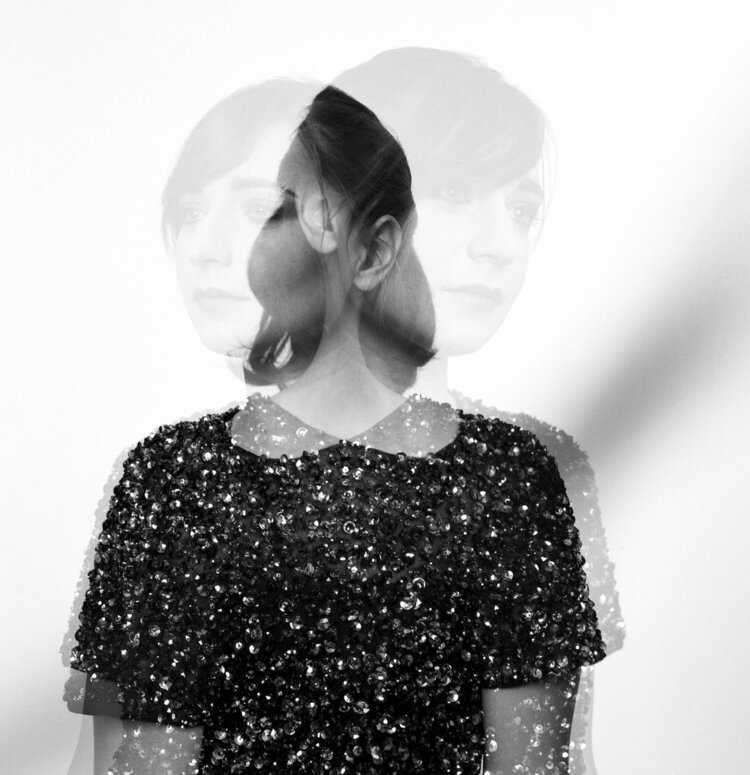
Take some time out this weekend – three minutes and forty-one seconds to be precise – and enjoy this video, a taster of pianist Vanessa Wagner‘s new album Study of the Invisible.
Released today on InFiné Music, the album is a carefully constructed suite of modern piano music, taking in minimal approaches but casting its net wider to hear from composers such as Caroline Shaw, Julia Wolfe and Harold Budd.
Arcana will carry a full review of the album, and an interview with Vanessa where we discuss the recording of the album and her approach to the piano. For now, though, enjoy the peace and stillness of this video!
You can read more about Vanessa Wagner at her website – and to hear more from the album, listen on by using the Bandcamp link below:
Composer Charlotte Harding returns with the intriguing track III, marking her debut as a solo artist.
Her new track, shown here in TRI Remix form, uses a string quintet and plays around with their sounds to make a musical language Harding calls ‘clectro’. Put simply, clectro = classical + electronic!
If you watch the video, directed by John Minton with artwork from Keaton Henson, you will see how the description is rather apt – and also get an idea for Harding’s powers of invention. She looks set to bring a fresh approach to the meeting point of the two styles – we will certainly keep our ears peeled for more!
You can read more about Charlotte Harding’s work at the Faber Alt. website, and also her own website here
If an awards ceremony does its job properly, it should provide those attending and watching with lasting feelings of inspiration, hope and even wonder.
The Royal Philharmonic Society Awards did just that at the Wigmore Hall on Monday, recognising some superhuman musical achievements as we dared to think in more hopeful terms of classical music emerging from the pandemic.
Restrictions such as those imposed in lockdown can often bring out the best in creative minds, and the 13 awards made during the evening showed this time and time again. When such minds are backed into a corner, some of the solutions can be truly mindboggling. You can judge for yourself when the Awards are published online next week, and aired on BBC Radio 3 on Monday 8 November (to open in a new window click here)
Perhaps the most striking and wide reaching initiative on show was ENO Breathe, the program set up for sufferers of long-Covid to help with breathing and anxiety, and now rolled out to 50 NHS Trusts across the UK. All the people involved in its creation were rightly acknowledged here, praising a program which has benefited from the expertise of opera singers and colleagues at Imperial College Healthcare:
It was indeed a night to acknowledge the tireless work of those behind the scenes, who effectively enable their organisations or teams to give the appearance of a swan while they work feverishly beneath the surface. Bassoonist Ashby Mayes is a prime example. He gave a bubbly performance of Weber’s Rondo Ongarese with pianist Kumi Matsuo, but then violinist Nicola Benedetti revealed his ‘other’ vocation as technology inventor and troubleshooter as part of The Benedetti Foundation’s online work.
Benedetti rightly added the Instrumentalist Award to her already impressive armoury, for she is a true modern ambassador for classical music. With the ability to face outwards to politicians but also inwards to those at early or difficult stages in their musical journey hers is a consistently inspiring presence.
As the evening progressed it became ever clearer that each category had three nominations that were effectively winners, and they were recognised as such in the excellent presentations from RPS Chief Executive James Murphy, RPS Chairman and Director of Wigmore Hall John Gilhooly and BBC Radio 3 presenter Katie Derham. They all brought a fresh and enthusiastic approach to the awards, sharing with us the delight of simply being in the same room again.
Further inspiration came from Kadiatu Kanneh-Mason, winner of the Storytelling Award for her book House of Music. In revealing just how many publishers had turned down the volume ‘because black people don’t play classical music’ (!) she illustrated just how persistence and endurance can overcome such ridiculous hurdles. Peter Brathwaite, nominated for his Radio 3 program In Their Voices, showed the same thing
Elsewhere there were joyous stories of music making in lockdown, providing solace to everyone. The World How Wide, led by the Chorus of Royal Northern Sinfonia, won the Series and Events Award with a vibrant recasting of Vaughan Williams’ Tallis Fantasia, showing off the region’s natural beauty with a film directed by NOVAK that made you want to be there:
Meanwhile Hilary Campbell and the Bristol Choral Society used online resources in the best possible way to launch a new CD and a Christmas carol competition for new composers. They won the Inspiration award, showing in the process how amateur music making is so important to the mental and physical health of all the country’s musicians. Good CDs can enlighten and inspire us, but first-hand musical experiences can rarely be bettered.
This can be felt throughout the Bold Tendencies initiative in Peckham, Hannah Barry’s transformation of a disused multistorey car park claiming the Gamechanger Award. Dani Howard’s Trombone Concerto, written for Peter Moore and the Royal Liverpool Philharmonic Orchestra, confirmed its status as a powerful new vehicle for the instrument, while Jennifer Johnston won the Singer Award for her artistry and services to the same city. Back online, meanwhile, Vopera claimed the Opera and Music Theatre Award for their vibrant and imaginative digital production of Ravel’s L’enfant et les sortilèges, brilliantly backed by musicians from the London Philharmonic Orchestra:
Other winners – last but certainly not least – included Laura Bowler, who won the Chamber-scale Composition Award for her remarkable work Wicked Problems, the composer performing with bass flautist Ruth Morley at the ‘sound’ festival in Aberdeenshire. Ryan Bancroft won the Conductor Award to supplement his burgeoning reputation with the BBC National Orchestra of Wales, and Edinburgh’s Dunedin Consort capped a year of stellar online music making, including the premiere of Errollyn Wallen’s opera Dido’s Ghost, with the Ensemble Award:
Finally we heard from the Hermes Experiment, winners of the Young Artist Award. This exciting and highly original ensemble comprises soprano (Heloise Werner), clarinet (Oliver Pashley), double bass (Marianne Schofield), harp (Anne Denholm) and co-director Hanna Grzeskiewicz. The group stand for original creation of mostly new music in an open and diverse musical setting. Their contagious love and boundless enthusiasm was at the heart of Pashley’s arrangement of Piazzolla’s Concert d’aujourd’hui, capturing the spirit of a bright and uplifting evening.
Our wholesome congratulations go to all the nominees for the RPS Awards – and indeed to all of those unnamed who did not quite make the shortlist. You are all winners in our eyes!
To learn more about the Royal Philharmonic Society visit their website
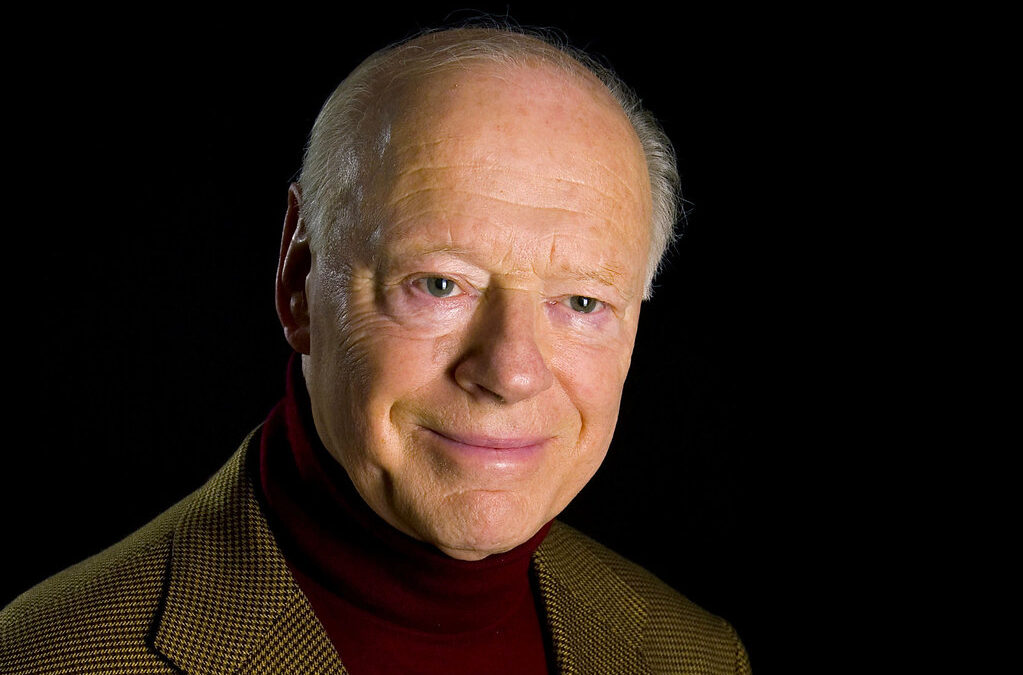
Last week we heard the sad news of the death of Dutch conductor Bernard Haitink at the ripe old age of 92.
Haitink was a special man indeed, seen by many as the last in a long line of ‘old school’ conductors. He was an artist of great craftsmanship and elegance, who earned the respect of his peers through an incredibly long career that only ended in 2019.
The tributes flooding in from ensembles the conductor worked with say everything about Haitink as a man. The Salzburg Festival declared, “The music world has lost one of its very greatest. His aim was never to triumph; probably that is why his interpretations became such triumphs.” The Berliner Philharmoniker praised how “He always impressed and inspired us with his qualities – his great craftsmanship, his perfect knowledge of the score, his warm, noble bearing.” From Sir Simon Rattle, an insight borne of personal experience: “He was one of the rare giants of our time, and even rarer and more precious, a giant full of humility. My dear Bernard, we keep you deep in our hearts.”
Like many people I have had the pleasure of listening to Haitink’s recordings for many years, but my first live memories go back to the first ever BBC Proms concert I attended in September 1997. There he conducted the European Union Youth Orchestra in Bruckner’s Symphony no.7, following a sensitive account of Beethoven’s Piano Concerto no.4 where the soloist was Emanuel Ax. By coincidence the same works and soloist featured at Haitink’s last Prom in 2019, this time with the Vienna Philharmonic.
I also saw Haitink at the Proms in 2005, conducting the London Symphony Orchestra as soloist Hélène Grimaud performed the Ravel Piano Concerto. After the interval, Haitink gave a characteristically poised account of Shostakovich’s Eighth Symphony, which left its mark on this particular listener for days:
I remember too a very special pair of Proms in 2011, Haitink and Ax united once again for Brahms with the Chamber Orchestra of Europe, one of several ensembles with which the conductor forged a special relationship.
As a recording artist, Haitink gave us a vast array of special symphony, concerto and opera recordings. He recorded multiple symphony cycles of Mahler, Bruckner, Beethoven, Brahms and Schumann, not to mention landmark collections of Shostakovich and Vaughan Williams symphonies with the Concertgebouw and London Philharmonic Orchestras, and fine cycles of Rachmaninov and Beethoven piano concertos with Vladimir Ashkenazy and Alfred Brendel respectively. That’s before we even get to opera! There he delivered much-loved recordings of Mozart, Wagner, Richard Strauss and Britten to highlight just a few.
I have delved into the discography for a set of recordings with personal significance – which can be accessed on the Spotify playlist below. They include Mahler, Bruckner, Shostakovich and begin with Vaughan Williams’ Symphony no.5, with the London Philharmonic Orchestra.
It is safe to say that Bernard Haitink will occupy a special place in the heart of many a musician and listener, and this gives just a small number of reasons why:
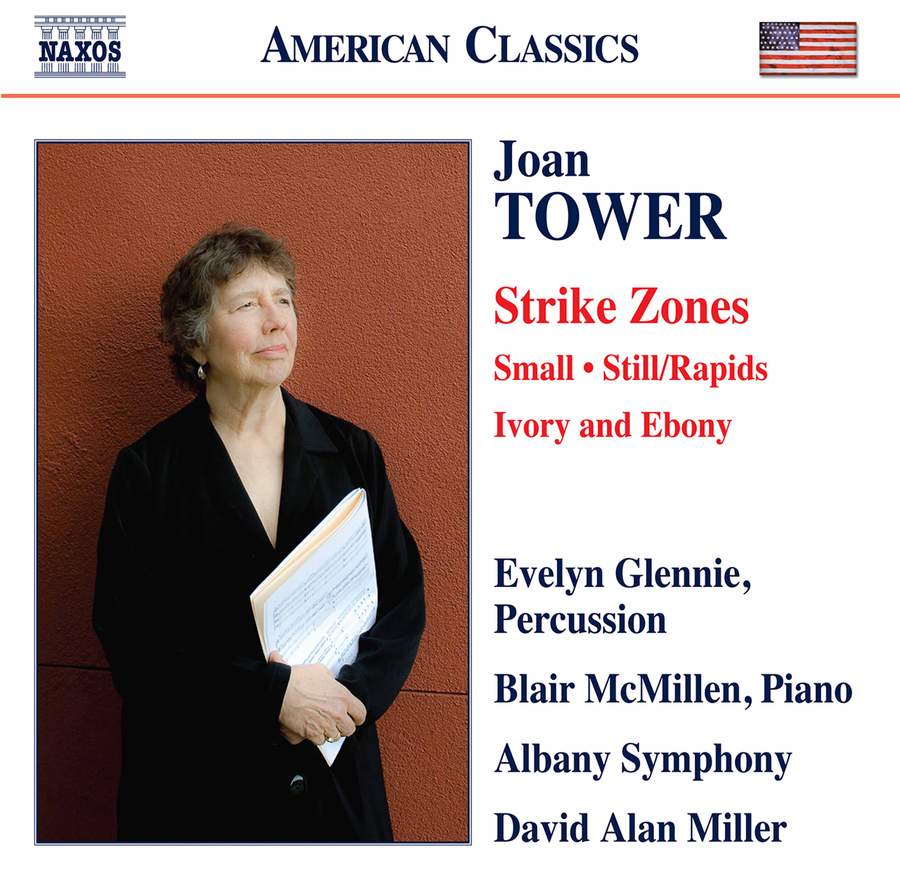
This year’s incarnation is ‘Celebrating Women In Music’, and there are two I would like to celebrate on this particular album, released by Naxos earlier this year. Percussionist Dame Evelyn Glennie will not need much introduction, for she is probably a familiar figure to you – but I would like to add to that the name of American composer Joan Tower.
Born in 1938, Tower has recently come to greater prominence thanks to the release of some excellent new recordings on the Naxos label. The latest is headed by Strike Zones, a concerto written for Glennie.
To quote from Tower’s program note: “Most percussion instruments are struck (hence the word ‘strike’ in the title) and I decided to have the percussion placed across the front of the stage with the soloist moving from one ‘zone’ to another – starting with the more fragile vibraphone and ending with a tour de force of drums. The other ‘zones’ include a marimba solo, a cymbal/hi-hat group, an ensemble of smaller/softer instruments (like the maraca, piccolo woodblock, castanet), a xylophone solo, and a trio with two other players placed in the hall echoing/‘reverberating’ the glockenspiel (with crotales) and the castanets (with more castanets)”
It is a piece of high drama, a composition with some compelling arguments and fascinating textures, best experienced on a big audio system or headphones.
Strike Zones is complemented by Still/Rapids, another substantial work for piano and orchestra. Rapids was a repeat commission from pianist Ursula Oppens, and is a fast-paced work – to which Tower has added the slow introduction Still. The two sections make a piece that proves every bit as dramatic as Strike Zones, with the unmistakable feeling of the American outdoors.
Meanwhile Small, also written for Dame Evelyn Glennie, is written for tiny percussion instruments – a rather lovely contrast to Strike Zones. Completing the album is Ivory and Ebony, which, as you might have guessed, is a piece for piano, commissioned by the San Antonio International Piano Competition.
I would urge you to have a listen, as Joan Tower’s music is both approachable and powerful. Hers is a distinctive musical voice well worth getting to know.




 Arcana.fm