Happy new year from Arcana!

celloFirst of all, a very happy new year to you all. Hope 2017 has been good to you so far!
Here at Arcana we are dipping our toes back in the water after an extended break, gradually getting back into the swing of the day job – and planning some exciting things for the site in 2017. The idea is to use the enjoyment and power of music to bring some much-needed sunshine to the current climate. Not just us though – if there is anything you want to see after reading this, please get in touch (editor@arcana.fm), so we can be as inclusive as possible!

So far, with the site almost two years old, it is fair to say the focus has been too heavily on classical music. That might seem an odd thing to say, but it’s time Arcana went back to first principles and delivered on its promise of looking at the intersection between pop and classical, and how we can make the latter much more approachable.

With that in mind, we will be looking a lot more at music from composers who work well on both sides. Philip Glass is 80 this year, John Adams 70 – and a lot of artists and composers inspired by them are expected to be busy.

We will once again be taking friends to classical concerts for the first time, an idea trialed with great success at the 2016 BBC Proms, so if you’re interested in that then please let us know! The Wigmore Hall Monday lunchtime concerts will still be covered too – the only website to offer reviews of these hour-long treats.

We plan to honour the music of Emerson, Lake & Palmer, paying tribute to last year’s sadly departed Keith Emerson and Greg Lake as we look at their treatment of classical music.

We will also celebrate the unrivalled career of cellist Mstislav Rostropovich, who would have been 90 this year, by taking an extended look at the pieces he commissioned from some of the greatest composers of the twentieth century, and celebrate his instrument, the cello.

Rostropovich singlehandedly changed the reputation of the instrument, and we’ll be looking at how he did that while also enjoying concerts such as the Kings Place cello festival.

As you’ll see then, plenty to get our teeth into as the New Year gets in to gear. Hope you enjoy the ride!

Ben Hogwood, editor, Arcana.fm

Keith Emerson

The sad news today is that Keith Emerson, spearhead of the legendary trio Emerson, Lake and Palmer, has died aged 71.

The group could be regarded as the original pirates of classical music, taking pieces by Sibelius, Prokofiev, Bach, Bartók and – famously – Musorgsky‘s Pictures at an Exhibition, reworking them affectionately for rock band and a new audience.

By way of tribute, here they are in their most famous arrangement of all, Copland‘s Fanfare for the Common Man:

A full appreciation of Emerson’s achievements, especially with regard to his use of classical music, will follow in due course.

In concert – Ryan Wigglesworth and the BBC Symphony Chorus and Orchestra at the Barbican

ryan-wigglesworth

Picture (c) Benjamin Ealovega

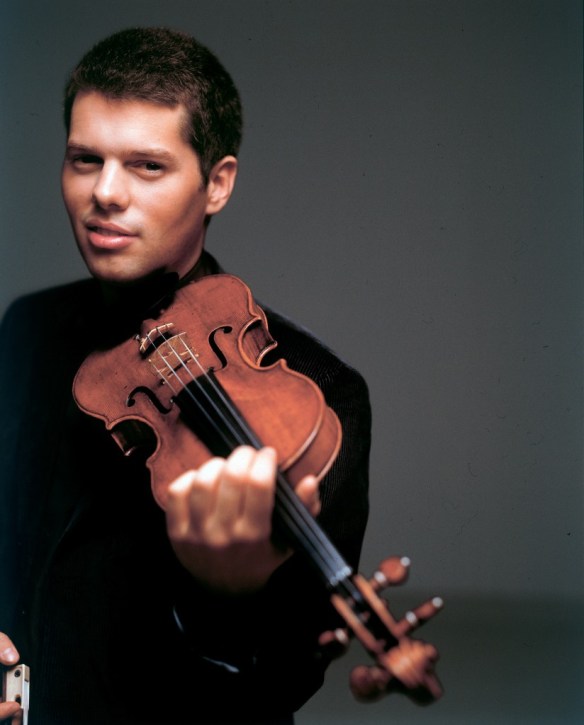
Barnabás Kelemen (violin), BBC Symphony Orchestra / Ryan Wigglesworth (above)

Barbican Hall, London / Wednesday 2 March

This typically well-planned BBC Symphony Orchestra concert had a surprise or two in store. Bookending the quartet of works on display were two pieces by Stravinsky – the Agon ballet from 1957 and the Symphony of Psalms.

They provided a good illustration of how Stravinsky changed styles as a composer, and how in spite of that he retained a fascination with older polyphonic styles. Some of the sound worlds in Agon, a set of twelve tableaux for twelve dancers, frequently alighted on melodic figures or chords that felt ‘old’, holding dissonances and deliberately leaving chords unresolved.

Agon is viewed as the work where Stravinsky starts to take his leave from a more obviously tonal approach to composition. In this performance it was lean yet colourful, with excellent solos from leader Stephanie Gonley, mandolin player Nigel Woodhouse, harpist Sioned Williams and Christian Geldsetzer and Richard Alsop, the two BBC SO lead double bass players, who nailed their otherworldly harmonics on each appearance.

The Symphony of Psalms was more obviously outgoing but saved its greatest emotional impact for the quieter music, the closing pages of ‘Omnis spiritus laudet Dominum’ (‘Let everything that hath breath praise the Lord’) from the BBC Symphony Chorus given out with softly oscillating orchestral figures.

Stravinsky uses the lower end of the orchestra in this piece, with no violins or violas, adding extra percussive punch from two pianos – all aspects that Wigglesworth brought forward in a taut performance. Great credit should however go to chorus master Hilary Campbell, who was unfortunately not mentioned in the concert programme. She is clearly popular with the singers, and helped secure that extra degree of accuracy and emotional involvement. One of Stravinsky’s most cinematic scores, it was in this performance a powerful statement of affirmation.

Wigglesworth positioned his own Violin Concerto modestly after the interval – I say modestly as in its five years of existence the piece has already ramped up an impressive number of performances. On this evidence its status is well-deserved, for it is a tightly structured unit of no little tension, the soloist searching for his ultimate melody while the reduced, ‘classical’ orchestra try and find their ultimate tonality.

barnabas-kelemen

Soloist Barnabás Kelemen (above) was a macho presence, with a little too much testosterone at times when the violin was surging forward, but he balanced that with some incredibly sensitive playing at the quietest moments of the piece, where the audience strained on his every note. Both melody and tonality were resolved in moments that confirmed Wigglesworth as a composer of impressive style and instinct.

The one dud in the program was Britten’s Four Sea Interludes and Passacaglia from the opera Peter Grimes, seen through the visual projections of Tal Rosner. This was a commission from four American orchestras in Britten’s centenary year 2013, with each interlude was set to the images of the city from which the commission came. For its UK premiere Rosner added a portrait of London to go with the other orchestral excerpt from the opera, the Passacaglia. This was centrally placed, keeping the order in which the scenes appear in the opera.

Although well played by the orchestra, the idea sadly fell flat on several levels. Although Britten spent time in America – and indeed began Peter Grimes there – the work’s roots are so entrenched in Suffolk that to suggest anything other than the Aldeburgh coastline through the music feels completely wrong. Rosner’s constructions were skilled, and had a few fine moments where close-up images of the Golden Gate Bridge rotated in technicolour.

Sunday Morning, with its bright building blocks of orchestral colour, was revealed to be a minimalist precursor of the music of John Adams through the clever constructions of its visuals. However despite Britten’s more universal appeal as a composer these days, Peter Grimes surely belongs wholeheartedly in Suffolk – and any suggestion to the contrary, however well intended, feels wrong.


In concert – Actress and the London Contemporary Orchestra at the Barbican

Actress (above) and the London Contemporary Orchestra

Barbican Hall, London / Wednesday 10 February 2016

This intriguing collection of musical thought had three aims. The first was to draw on a long-held ambition of Darren Cunningham, to work with an orchestra under his Actress pseudonym, while the second and third celebrated – or rather illustrated – the ‘brutalist’ architecture of the Barbican and the data readings behind the LAGEOS (Laser Geodynamics) satellite. Into all of these blueprints, curated by Boiler Room, were fed the music of Actress – a potent blend of techno, soul and dark electronica that lends itself to classical structures and instruments. In new arrangements and pieces Actress and Hugh Brunt, conductor and co-Artistic Director of the London Contemporary Orchestra, found a meeting point of all these elements, presenting them to the Barbican with video artist Nic Hamilton.

They called the collision Momentum, a banner symbolised by a circular object that initially resembled a giant glitterball but was in fact the spacecraft used in the LAGEOS missions. In practice it rotated at a much slower pace, responding to Cunningham’s beats – if indeed there were beats at all.

momentum

There was an air of tension from the start of the performance, with a long period of silence before the music began. Even then it only gradually crept into the consciousness, and with the lights down low a feeling of forced ambience crept over the audience, restful but not relaxed in the way earlier Aphex Twin can work. Slowly Cunningham built through Lagos and Momentum, two new tracks, his set already clearly conceived on a larger scale.

Brunt’s arrangements for a string quartet of violin, viola, cello and double bass were striking, the instruments softly voiced to begin with but using a wide vibrato to make the centre of pitch far less certain. Oliver Coates’ cameo on a detuned cello was darkened by the use of a curious, semi-elliptical bow. The harp sprinkled planetary dust on the strings through the hands of Victoria Lester, while Hamilton’s astronomical backdrop helped create space in the closed environment.

As the audience began to fidget a breaking point was nearly reached, emphatically punctured by the volleys of Galya Beat, kick drums thrown from the pads of Sam Wilson’s machine. From here the music had greater power and caught the attention, the arrangements enhancing the beauty of Ascending, the harp and manipulated piano twinkling at the top of the sonic pile, while Piano Scrapes worked with subtle humour and more imaginative textures through the strings and the clarinet of Harry Cameron Parry.

Elsewhere Actress worked with claustrophobic backdrops, bringing the concrete maze of Hamilton’s Barbican video work to life. The strings provided essential colour to the largely grey backdrop of the thick but rather lush keyboards, themselves ambient but restless as before. The imaginative scoring included the creative use of a plastic bag in the percussion section.

Though it was a relatively small London Contemporary Orchestra on this occasion – much smaller than the forces used for Jonny Greenwood’s There Will Be Blood recently – it was used with imagination and flair by Cunningham and Brunt, the resulting music of substance and structure. Rather like the Barbican, in fact – together with a relative lack of pure emotion in the more calculated sections.

It would be great to see Actress flexing his muscles some more in the fascinating area in which he finds himself, bringing forms of music face to face with each other without anything sounding contrived. Future collaborations are surely inevitable; they are greatly anticipated!

Actress played: Lagos, Momentum, Galya Beat, Chaos Rain I-II, Ascending, Piano Scrapes, Surfer’s Hymn, Skygraff (Game Theory), N.E.W., Chasing Numbers, Voodoo, 5 Audio Track I-II, Hubble.

Names of Players:

Actress (electronics), London Contemporary Orchestra – Galya Bisengalieva (violin), Robert Ames (viola), Oliver Coates (cello), Dave Brown (double bass), Harry Cameron Penny (clarinet), Sam Wilson (percussion), Katherine Tinker (piano), Victoria Lester (harp)

In concert – BBC Scottish Symphony Orchestra: Koechlin’s Seven Stars Symphony

ilan-volkov-2Kari Kriiku (clarinet), BBC Scottish Symphony Orchestra / Ilan Volkov, live from City Halls, Glasgow, Thursday 14 January 2016

Written by Ben Hogwood

What’s the music?

Dukas – L’apprenti sorcier (1896-7) (11 minutes)

Unsuk Chin – Clarinet Concerto (2014) (24 minutes)

Koechlin – Seven Stars Symphony (1933) (46 minutes)

Broadcast link (open in a new window):

http://www.bbc.co.uk/programmes/b06v2667

About the music

koechlin

Anyone who has seen the BBC Scottish Symphony Orchestra in Glasgow knows how valuable they are to the community, not just in Glasgow but Scotland too. City Halls, the impressive building that has been their home for the last ten years, is the perfect venue for them. In that time they have explored an impressive range of repertoire with principal conductor Ilan Volkov, who has become a versatile conductor capable of turning his hand to any music from the last five centuries.

A typically inventive program here includes a rare performance of the Seven Stars Symphony by Charles Koechlin (above). Long before the likes of Heat magazine fuelled celebrity culture, Koechlin was a star-struck fan in awe of the Hollywood actors and actresses of the day, especially Lilian Harvey, subject of the second movement, who became his muse. Volkov includes this piece as an example of 1930s that is not often heard, with most programmers opting for the ubiquitous works of the period by Schoenberg, Shostakovich and early-period Stravinsky.

Before that we hear a classical music favourite, Dukas‘ L’apprenti sorcier (The Sorcerer’s Apprentice), surely one of the biggest influences on Walt Disney – appearing in the Fantasia film. This is followed by the Clarinet Concerto from Unsuk Chin, the South Korean composer’s sixth work in a form that suits her style.

What should I listen out for?

Dukas L’apprenti Sorcier (The Sorcerer’s Apprentice)

2:06 – an enchanted introduction, the clarinet spelling out what the profile of the main theme will sound like. The spell has been cast. The orchestral colouring is vivid but then the music stops – awaiting the bassoon’s big moment at 4:26 with the tune we all know and love. The orchestra develop and play around with this until we hear it again in full technicolour at 6:00.

Throughout the piece has a macabre element and this comes to the fore at 9:07 where we hear the creaking sound of the contrabassoon right at its lower end. Gradually the tune comes out again and the full orchestra play it at …with glittering touches applied to the top end with woodwind and piccolo.

Then the door seemingly slams shut, and at 12:10 we hear the enchanted music of the start again – before a sudden end at 13:00.

Unsuk Chin – Clarinet Concerto

16:30 – we hear the clarinet straight away, with its sonorous low end sounding almost like a bird – a swan maybe, ducking and diving over the orchestra like a bird with a big bill. The influence of Messiaen is clear in some of this writing.The brass are prominent with rich accompaniment, and then the strings are heard, shimmering in accompaniment to the clarinet’s playful notes. There uis a build-up and then the orchestra scatter at 22’53”, and the music is much more agitated. Then at 24’20” the music takes a thoughtful angle, the clarinet with

26:07 – the second movement begins with the clarinet playing multiphonics – as in two notes at once – which is a very difficult skill for the clarinettist! He does so very quietly and alone, and is gradually joined by members of the orchestra. The sound is akin to bottles in the wind, and is quite spooky. Then from 29’18” the clarinet returns to the top of the picture, but with some incredibly difficult passagework exploiting its whole range.

The music subsides but then gradually builds again – before the quiet multiphonics make a brief reappearance.

35:26 – the whirring of the percussion inspires the clarinet to a playful approach. Chin uses much more of the orchestra this time, and we hear the bass end in its fullest voice yet. The two forces then play off each other, the clarinet with short squeaks and pips to the end.

Koechlin – Seven Stars Symphony

You can listen to a BBC feature on the Seven Stars Symphony here

1:04:40 Douglas Fairbanks, Sr. – Immediately we get a taste of Koechlin’s rich orchestral palette through exotic solos for clarinet and violin. A rich harmonic backdrop creates a sultry atmosphere, while also suggesting a night time portrait. Flutes, clarinets, bassoon and oboe are all prominent over soft strings, painting pictures in the manner of an early detective soundtrack – far ahead of its time, given this piece was written in 1933!

1:11:43 – Lilian Harvey – a brief but affectionate portrait of Koechlin’s muse / obsession, assigned initially to the oboe but with high violins taking much of the melodic material.

1:14:27 – Greta Garbo – now we hear the weird but wonderful tones of the electronic ondes martenot, a similar instrument to the theremin. It begins the portrait of Greta Garbo with a highly chromatic melody, and Koechlin is to use the orchestra sparingly, creating an exotic atmosphere.

1:18:42 – Clara Bow Et La Joyeuse California – a lively dance led by high violins, countered by a wary sequence. Koechlin uses a wide range of orchestral colour in this movement. At 1:23:08 we hear a saxophone solo before the orchestral gathers for a big, exaggerated Hollywood finish.

1:25:31 – Marlene Dietrich – a soft clarinet solo cuts to an affectionate passage accompanied by softly rippling piano and harp. This slow movement is richly scored, and takes the profile of a declaration of love, settled by an affectionate viola solo at the end.

1:30:55 – Emil Jannings – more exotic scoring from Koechlin at the start of this movement, as the strings come surging through, before a quieter but no less atmospheric passage of play from the woodwind. The portrait ends with a warm string sound.

1:35:15 – Charlie Chaplin – Koechlin’s final portrait is also the most substantial, and could stand as a piece on its own. A luxurious violin solo is then interrupted by a lively sequence suggesting one of Chaplin’s fast moving black and white films – very expressive! Chaplin then becomes furtive, seemingly peering round corners in a slow section. Again Koechlin uses the whole orchestra in a rich variety of colours and moods, right from double basses and piano at the lower end to sparkling woodwind and brass at the top.

Even the harpsichord makes an appearance at 1:44:37. After this the orchestra begin to suggest a slow Habanera dance – but after hinting at a fast section indulges in a serene passage led by the strings – before a softly voiced march takes the music off into the distance – from which point sumptuous strings lead us home to a grand finish.