Bruckner 200 – a quick look beyond the symphonies

by Ben Hogwood picture (c) Linz Tourismus Tom Son

Today marks the 200th anniversary of the birth of composer Anton Bruckner.

Bruckner is a ‘marmite’ figure in classical music. His symphonies, the calling cards of his small but profound output, divide opinion greatly. The later works, I am sure, would appeal to those approaching from the direction of progressive rock, and are fiercely admired by a great many devoted classical music listeners. They create sound worlds unlike any other composer, ‘cathedrals in sound’ in which he uses distinctive themes, deceptively simple techniques, and extended forms that mean most of his symphonic works run for an hour or more. Other ears, however, remain unmoved, immune to the great expanses of texture and intensity.

What cannot be disputed is that Bruckner’s music is instantly recognisable as his, especially when it is one of those nine numbered symphonies. In the last year a host of recordings have appeared of the whole cycle, along with a myriad of different – if authentic – performing versions. A box set round-up of all these versions is due to appear on Naxos on 13 September, collecting all the individual volumes of Bruckner recorded by the Bruckner Orchester Linz under Markus Poschner for the Capriccio label:

My personal favourite among the symphonies is the mighty Eighth, which has received a number of classic recordings. Those by Reginald Goodall, Herbert von Karajan, Carlo Maria Giulini and – especially – Gunter Wand, have all left a mark. The latter is an incredible account, recorded in 1987 in Lübeck Cathedral:

Yet I did also want to draw some attention to Bruckner’s music for voices and for strings, in case you want to try something different. The motets for unaccompanied choir are profound and beautiful – while the Te Deum is a many-splendoured thing, as are the three masses for chorus and orchestra.

Here, too, is the String Quintet in F major, a big-boned piece with music of real poise and power. The slow movement shows how Bruckner can write delicate music, the Scherzo is an elusive dance, while the outer movements show what an unusual yet affective style he has, able to wring every last drop of power from a seemingly small ensemble:

Published post no.2,291 – Wednesday 3 September 2024
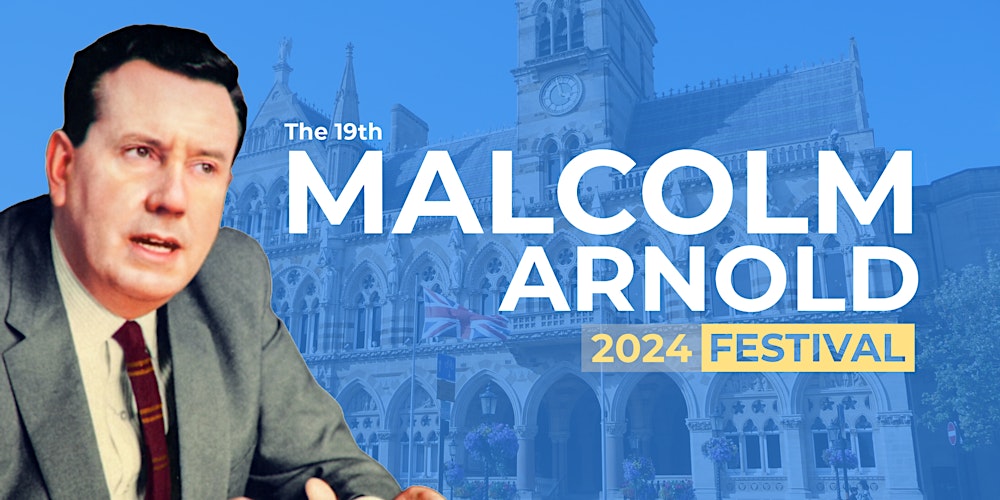
The 19th Malcolm Arnold Festival, 2024

posted by Ben Hogwood – text copied from the festival’s press release:

One of England’s most colourful and charismatic composers – Sir Malcolm Arnold (1921-2006) – is to be celebrated at the 19th International Malcolm Arnold Festival; an annual programme of events centred around the multi-faceted composer and his music. The composer’s hometown of Northampton will host a day of live music-making on Saturday 19 October, and a specially procured programme to attract listeners from around the world will live-stream on Sunday 27 October.

SATURDAY 19 OCTOBER – LIVE MUSIC CONTINUNES ALL DAY

Continuing his successful presentations in both live and digital formats, Festival Director Paul Harris is extending the reach of Malcolm Arnold’s music to listeners everywhere, with live concerts and a Symposium hosted in the composer’s hometown, and a specially conceived live-stream day, presenting recorded performances and talks, this year with a particular focus on Arnold’s songs and choral works – a relatively little-known area of the composer’s output.

Paul Harris says: “This year we are offering three concerts within central Northampton (Malcolm’s birthplace), all in walkable distances from each other. We are delighted that Saturday’s launch concert will take place at St Peter’s, marking the reopening of the church as a performance space.”

Launched by composer, Matthew Taylor, listeners will be able to enjoy a programme of rousing music for brass, one of Malcolm Arnold’s most popular genres as a renowned trumpet player himself, performed by Spectacle Brass Quintet lead by Nick Budd. Following this there will be a performance of the composer’s second String Quartet performed by students from the Royal Birmingham Conservatoire.

Live music continues throughout the day, transferring to All Saints’ Church, just a short walk away, with music for choir and organ to include the composer’s psalms and part songs, his John Clare Cantata, and Turtle Drum; familiar to many from school days. Also featured will be Arnold’s Organ Variations: five variations by living composers and one new variation written especially by Jonathan Whiting for this year’s Festival.

Demonstrating the exuberance of Arnold’s works and some of his finest and most popular tunes, the Festival’s Gala Concert takes place at Northampton Guildhall and will be performed by the  Northamptonshire County Youth Concert Band and Orchestra (NMPAT) who are regular guests at the Festival. The Festival will end with a short Symposium hosted by Matthew Taylor discussing all things Arnold.

HOW TO BOOK
Tickets are £10 per concert or £25 for a day ticket, available at the door or book in advance online. Students and under 18s are admitted FREE of charge.
www.malcolmarnoldfestival.com

ONLINE DAY (FREE live-stream) – SUNDAY 27 OCTOBER

FREE-to-view and presented live by Director Paul Harris, the Festival’s complimentary digital live-stream day will take place on Sunday 27 October and features performances of some of Malcolm Arnold’s greatest solo, chamber and orchestral music as well as talks, lectures and exclusive interviews.

Paul Harris says, “The day is structured around the years that have their anniversary this year; 1934, 1944, 54, 64, 74 …etc. and what Malcolm was writing and doing in those years. We are also featuring all of his wonderful songs as the central theme performed by Claire Thompson and Scott Mitchell – Malcolm is not well-known for his vocal writing and our programme will give a fascinating insight into this genre. Also a host of Arnold specialists will be contributing through their knowledge and enthusiasm to bring together another fascinating and engaging day of music making.”

Harris himself will give a talk on Malcolm Arnold at the Royal College of Music, and there are further talks by Arnold authorities including Dr. Timothy Bowers, Dimitri Scarlato, Eleanor Fox, Gus Woodward, and BBC Radio 3 broadcaster and long-time Arnold enthusiast, Martin Handley.

Amongst the assortment of Malcolm Arnold’s chamber works will be historic recordings and specially recorded performances by students from Chethams’ School and the Royal College of Music. Soloists taking part, who will also introduce their pieces, include soprano, Claire Thompson, pianists Scott Mitchell and Lynn Arnold, and oboist Ewen Millar.

Amongst those pieces featured will be Kensington Gardens for Oboe, a piece by Arnold’s fellow composer at the Royal College of Music, Ruth Gipps, known affectionally to Malcolm as ‘Widdy’. Written for Gipps’ own instrument and piano, this is an engaging short suite of three pieces named Elfin Oak, Fat Pigeon and Chestnut Trees.  Alongside Arnold’s songs from his own Kensington Gardens are his William Blake Songs, which were hailed by Gipps as “the real Malcolm”.

Both dramatic and playful in tone, the Sinfonietta No. 3, Arnold’s third “Little Symphony” completed in September 1964, extends the scope of his two earlier essays in this form and is scored for a classical chamber orchestra, demonstrating all the usual hallmarks of the composer’s inventiveness in smaller scale.

From the same year, the celebratory Water Music was commissioned by the National Trust for the opening of the Stratford Canal. In three movements, the piece was written for wind and percussion to be played on a raft moored on the River Avon, and later transcribed by the composer for full orchestra.

HOW TO VIEW
Live-stream FREE to view. Refer to the website for further information including the full programme: www.malcolmarnoldfestival.com

Published post no.2,290 – Tuesday 3 September 2024

Arcana at the Proms – Prom 55: Vikingur Ólafsson, Berliner Philharmoniker / Kirill Petrenko – Schumann & Smetana

Schumann Piano Concerto in A minor Op.54 (1841-5)
Smetana Má vlast (1874-9)

Vikingur Ólafsson (piano), Berliner Philharmoniker / Kirill Petrenko

Royal Albert Hall, London
Saturday 31 August 2024

reviewed by Richard Whitehouse Photos (c) Chris Christodoulou

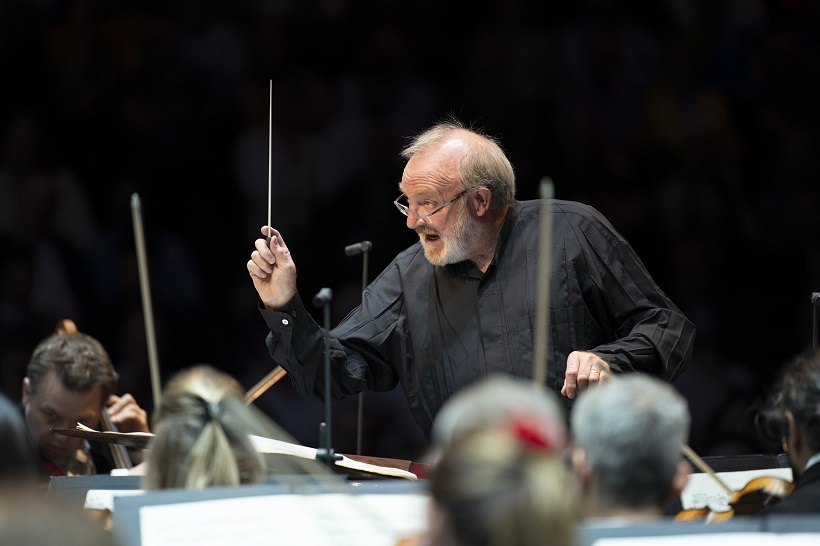
This first concert in its latest Proms visit by the Berliner Philharmoniker and chief conductor Kirill Petrenko featured a complete performance of Smetana’s Má vlast as the second half of a programme that, at barely the length of an average Mahler symphony, need not be unusual.

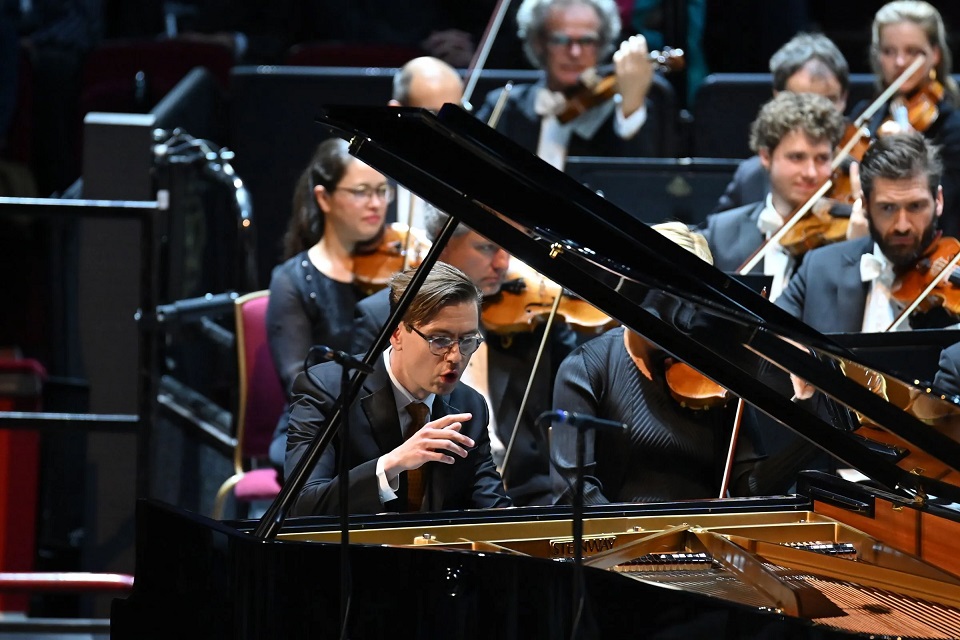
Few would, in any case, object to Vikingur Ólafsson tackle Schumann’s Piano Concerto in an account as dextrously articulated as it was unerringly proportioned. Not least an initial Allegro such as avoided any tendency to mid-tempo ‘drift’, those subtly contrasted themes building a cumulative impetus carried into the combative cadenza then a coda whose tensile energy was judged to a nicety by Petrenko. Some might have felt the Intermezzo too interventionist in its alternation of capriciousness and pathos, but absence of the cutesiness and cloying was more than its own justification and not least when that transition into the final Allegro had such an expectancy. Rhythmically supple with unwavering focus on its overall continuity, this set the seal on a reading whose technical finesse and interpretative insight ensured a riveting listen.

Ólafsson caused some stir at these concerts three years ago with Bach and Mozart concertos, and it was the former composer who provided the encore: the Adagio from the Fourth Organ Sonata (BWV528), transcribed here by August Stradel and rendered with understated poise.

More Czech music so soon after the Czech Philharmonic’s brace of Proms might have been too much of a good thing, but Petrenko’s Má vlast was very different from Jakub Hrůša’s in its lithe expression and streamlined textures. Nor was there was any lack of emotional depth – hence those earlier stages of Vyšehrad as it emerged eloquently on harps towards a fervent climax, its dramatic central section of a razor-sharp precision before subsiding into the main theme’s moving return. Vltava was scenically evocative and formally cohesive as it took in folk-dance, nocturnal landscape and treacherous rapids prior to its resplendent emergence in Prague, then Šárka unfolded its narrative of a matriarchal icon and her heroic demise with an impulsiveness that went into overdrive – without being overdriven – at its dramatic close.

It may be more generalized as to content, but the initial half of From Bohemia’s Woods and Fields is spellbinding as it conjures a pantheist ecstasy (in the process, anticipating Janáček and Minimalism) to which the BPO players were audibly attuned – Petrenko mindful not to overstate the relative blatancy of what follows. Most impressive, even so, were the final two stages whose gaunt rhetoric and granitic sound-world most often make for uneasy listening. Not here, however, as Petrenko gauged the motivic eddying of Tábor so that its underlying momentum held good through to the inevitable segue into Blaník. Emotional tension here was unremitting, the intensive interplay of Vyšehrad-theme with Hussite-chorale building to an apotheosis of Beethovenian power before letting loose for a coda of visceral exhilaration.

Its composite nature makes Má vlast difficult to sustain in performance, but there could be no doubt Petrenko managed this through his and the BPO’s acute yet never wanton control over every facet of the greater concept. A memorable performance and an impressive achievement.

You can get details about this year’s season at the BBC Proms website – and you can click on the names to read more about the Berliner Philharmoniker, their chief conductor Kirill Petrenko and piano soloist Vikingur Ólafsson

Published post no.2,289 – Monday 2 September 2024

Arcana at the Proms – Prom 53: Remembering Sir Andrew Davis

Stravinsky Symphony in Three Movements (1942-5)
Reich Jacob’s Ladder (2023) [BBC co-commission: UK premiere]
Tippett The Midsummer Marriage – Ritual Dances (1946-52)
Elgar Variations on an Original Theme ‘Enigma’ Op.36 (1898-9)

Synergy Vocals [Tara Bungard (soprano), Micaela Haslam (soprano/director), Will Wright, Ben Alden (tenors)], BBC Symphony Orchestra / Martyn Brabbins

Royal Albert Hall, London
Friday 30 August 2024

reviewed by Richard Whitehouse Photos (c) Andy Paradise

What should have been the 133rd concert that Sir Andrew Davis conducted at the Proms became a commemorative event after his untimely death in April but, with Martyn Brabbins presiding over a thoughtfully amended programme, the outcome could not have been more appropriate.

Proceeding unaltered, the first half began with Stravinsky’s Symphony in Three Movements in a performance redolent of Otto Klemperer in its deliberation if without that conductor’s heft – not least an opening movement whose rhythmic trenchancy felt a little dogged as it unfolded. Best was the Andante – its deadpan humour complemented by the beatific poise at its centre, then a transition of hushed expectancy to launch the finale. Here the closing build-up might have been more visceral, but the conclusiveness of that final chord could hardly be doubted.

Davis (above) was hardly known as proponent of Minimalism in general or Steve Reich in particular, thus his scheduling this first UK performance of the latter’s Jacob’s Ladder could be taken as significant. Playing just under 20 minutes, this is artfully structured as four short ‘expository’ sections followed by four longer ‘developmental’ ones. The former pitted its four vocalists – a telling number in this context of eight strings, six woodwind, two vibraphones and one piano – against an instrumental ensemble that took precedence in those latter sections; the final one brings them together in new-found accord. Dealing with scalic patterns in all their conceptual and metaphorical implications, the musical content typifies late Reich in ruminative elegance or subdued intensity which, if it offers no revelations, is yet satisfying in its stylistic deftness.

Schumann’s Second Symphony had been planned for a second half as now commenced with the Ritual Dances from Tippett’s The Midsummer Marriage – an opera, and composer, close to Davis’ heart. Unfailingly cohesive to the degree its series of elemental and seasonal dances interwove with their respective ‘transformations’ and ‘preparations’, this account was equally notable for its textural clarity even in those most contrapuntally intricate passages, along with a colouristic sense sustained up to the climactic return of its initial music for a magical envoi.

When Brabbins last conducted Elgar’s ‘Enigma’ Variations at the Proms, it was the final item in a 60th-birthday tribute that began with Pictured Within – a latter-day equivalent involving 14 different composers. Tonight’s account gave eloquent insight into what has become almost too familiar a work, evident from the outset in a ‘Theme’ of melting pathos. Highlights from those that followed included the soulfulness of ‘C.A.E.’, pensiveness of ‘R.P.A.’ or elegance of ‘Ysobel’ with its lilting viola from Sebastian Krunnies. ‘Nimrod’ started imperceptibly but built towards a nobly wrought apex, with the affectionate portrayed ‘Dorabella’ or searching evocation of ‘***(Romanza)’ no less affecting. The ‘E.D.U.’ finale moved confidently to an organ-clad peroration exuding what Elgar elsewhere termed a ‘‘massive hope for the future’’.

Just before this performance, Brabbins spoke for a capacity house in paying tribute to Davis with his dedication to music-making in the UK and beyond; something Sir Andrew brought to every one of his 132 appearances at the Proms, across 54 years of dedication to his cause.

You can get details about this year’s season at the BBC Proms website – and you can click on the names to read more about the BBC Symphony Orchestra, their conductor Martyn Brabbins, and an obituary of Sir Andrew Davis himself

Published post no.2,287 – Sunday 1 September 2024

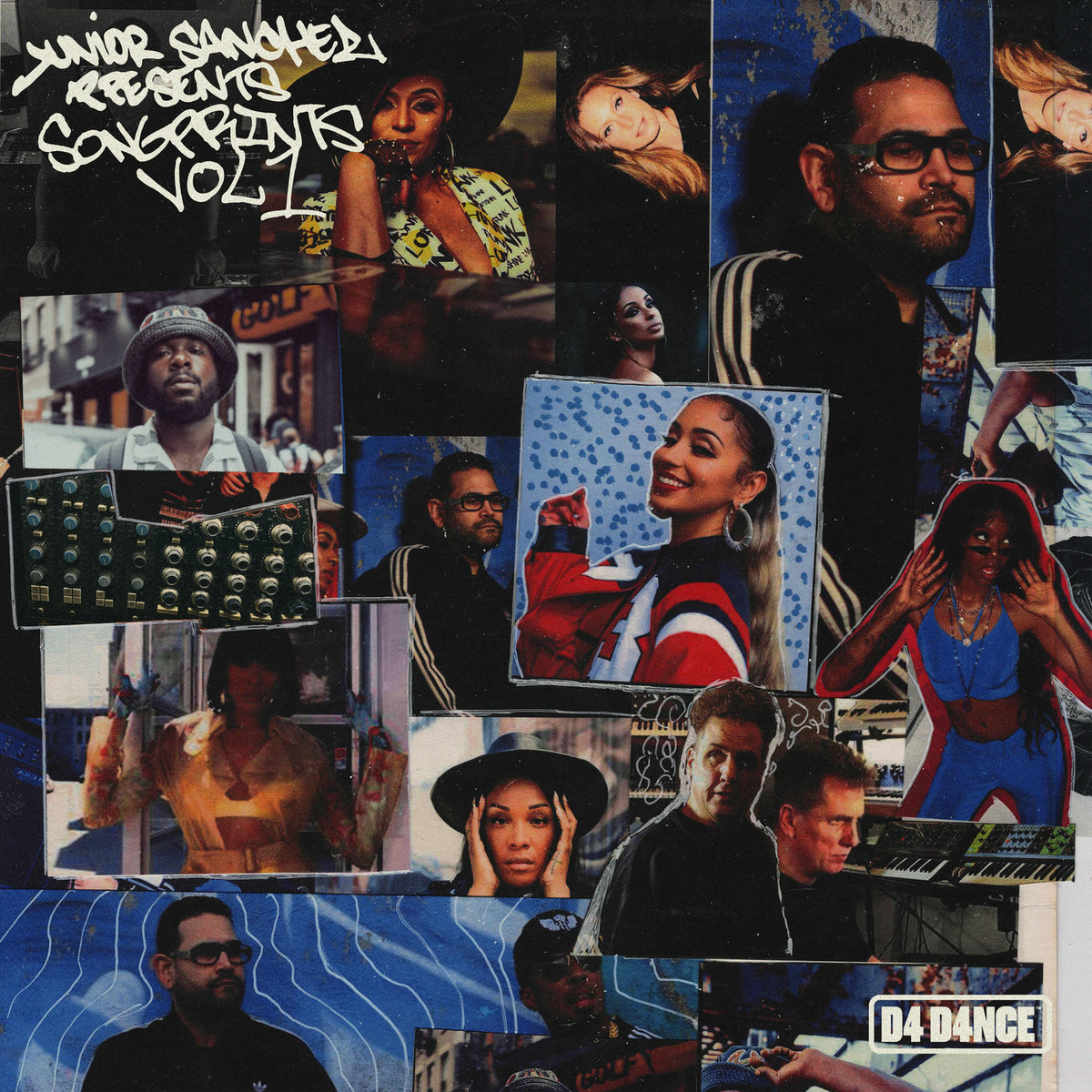
Let’s Dance – Junior Sanchez: Songprints, Vol. 1 (D4 D4NCE)

by Ben Hogwood

What’s the story?

Junior Sanchez is something of an unsung star in the world of house music, making quality productions since the 1990s and collaborating with the likes of Daft Punk, DJ Sneak and Roger Sanchez – to name just a few.

Collaboration is the name of the game this time around, too, with a host of vocalists lending their pipes to a set of songs the New Jersey DJ began during lockdown. The project has executive production from Dallas Austin, marshalling the eight guest singers into a set of productions compressed into radio edits and aimed squarely at the dancefloor.

What’s the music like?

Sanchez has struck gold here, his craft evident in all nine of the grooves on show – and with a series of superb, floor filling beats.

The album sets out its stall with So Hype, its deeper beats topped by excellent vocals from Mýa, and sets the listener down in a heap some 40 minutes later having danced and sung themselves to a standstill. This is thanks to songs like Higher, where Dawn Richard gets higher than anyone else to deliver a brilliant and catchy song.

Drip is enjoyably saucy, with lots going on in the company of Johnny Apollo and Cookiee Kawaii, while I Need More – with the brilliant Darlene McCoy – is a bouncy number. Sanchez uses solid four to the floor beats throughout, each lifted by fluid bass lines and quality house music production.

Does it all work?

It does. The quality level barely lets up, partly because of Sanchez’s skilful use of guests – and each voice brings a fresh perspective to his music.

Is it recommended?

Enthusiastically. Sanchez deserves a great deal of kudos for this album, which reinforces his credentials as one of the leading lights in house music. Great songs, brilliantly executed.

For fans of… Luke Solomon, Purple Disco Machine, Tensnake, The Juan Maclean

Listen & Buy

Published post no.2,287 – Saturday 31 August 2024