Expecting the unexpected is the most predictable aspect of a recital from Piotr Anderszewski, tonight’s programme no exception in its juxtaposing collection by Beethoven and Bartók with a selection from Brahms and music by Bach that has long been a cornerstone of his repertoire.
Alive to their iconoclastic flourishes and improvisatory asides, Beethoven’s last bagatelles yet emerged as a cohesive and integrated unity as it ventured through limpid musing and angular playfulness then disarming elegance before arriving at a propulsive take on the B minor Presto muscular or energetic by turns. The final two numbers were of a piece with what went before – the one understated and the other’s ingratiation bookended by outbursts of grating humour. Nothing to be taken for granted in this music, then, as Anderszewski intimated only too well.
Although published as four separate collections, there is no reason why Brahms’s late piano pieces cannot be given separately or in autonomous groupings as here. Starting with Op. 119, Anderszewski brought a confiding touch to the plaintive B minor Intermezzo and rendered the lilting syncopation of that in C with real playfulness. Turning next to Op. 118 and the forlorn quality of its A minor Intermezzo complemented ably that in A, whose new-found popularity need not detract from its harmonic subtlety or soulful poise. From Op. 117, the B flat minor Intermezzo struck note of ingrained fatalism intensified by that in E flat minor from Op. 118 – its ‘mesto’ marking here underlined as the music unfolded toward an endpoint of unforced resignation. Anderszewski looked regretful it should end so before duly leaving the platform.
As his recent recording confirms, Anderszewski has forged unerring identity with the Op. 6 Bagatelles where Bartók gave notice of his fast-emerging individuality. Played with minimal pauses (albeit with a 3-3-2-2-2-2 grouping such as brought these into line with the six pieces in each of those other sets), they offer a conspectus of possibilities over his ensuing creative decade that was to the fore here, alongside a cumulative focus evident less in any increasing technical demands as in a gradual opening-out of their emotional world made explicit in the final two numbers as doubtless stems from Bartók’s unrequited love for violinist Stefi Geyer. Thus, the sombre restlessness of Elle est morte merged directly into the valse Ma mie qui danse – this latter’s vicious irony maintained right through to its almost dismissive pay-off.
Had Bach ever entertained any such feelings, they were certainly far removed from the keen objectivity of his First Partita. A little restive in its Praeludium, Anderszewski hit his stride in its gently eddying Allemande then animated Courante. There was no lack of gravitas in its Sarabande, but this was as deftly inflected as was the elegance of its contrasted Menuet dances, then the Gigue made a dextrous yet assertive conclusion to a sequence where (as in everything heard tonight) what was made possible outweighs what had already been achieved.
It would have been possible to combine these works with other pieces – maybe some or even all of Ligeti’s Musica ricercata that Anderszewski will hopefully play at a future recital. For now, a limpid reading of Chopin’s Mazurka in A flat major (Op.58/2) made for an ideal envoi.
To read more on Piotr Anderszewski, visit his website
Kelly Lee Owens today releases Ballad (In The End) – the latest offering from her forthcoming album Dreamstate.
Co-written and co-produced by Tom Rowlands from The Chemical Brothers, it opens with tender piano chords, gradually building into a chorus of soft vocals and shimmering synths. It is a complement to the exceptional previous single Higher, as well as Sunshine and Love You Got, all of which will feature on Dreamstate, Owens’ fourth studio album, which will be released Friday 18 October via dh2:
published by Ben Hogwood, with text appropriated from the press release
We bring excellent news from Sonic Cathedral, a label much loved of these pages – as they gear up to celebrate 20 years as a label later this month.
The London label has announced a 20th anniversary boxset Celebrate Yourself! The Sonic Cathedral Story 2004-2024 released 6th December. More Sonic Cathedral goodness continues throughout October with a limited edition photo book and an accompanying exhibition at The Social in Fitzrovia, Brewgazer beer and some SC20 merch t-shirts and earplugs SC20 live series continues this week and next with shoegaze trailblazers Slowdive and Ride (get the last tickets here)
Photo book cover by Stuart Jones
Andy Bell (Ride) by Geoff Shaw
This 4 CD box of delights features 62 tracks, many of which are previously unreleased, plus rare remixes, showstopping live recordings and a shoegaze Christmas compilation to fill any festive family gathering with blisteringly beautiful noise and heavenly harmonies. The box set features the best of Sonic Cathedral’s artists and associates including Andy Bell (Ride), Emma Anderson (Lush), Slowdive, bdrmm, Whitelands and deary, plus remixes by Andrew Weatherall, James Holden, David Holmes, Daniel Avery and many more. Pre-order online or at your favourite record shop here.
Across the four discs, the box set tells the story of Sonic Cathedral from its humble beginnings as a club night in 2004 to its present-day position at the centre of the never-ending shoegaze revival, after playing a huge part in repopularising the once maligned genre over the past two decades. Sonic Cathedral founder Nathaniel Cramp says “We are incredibly proud to announce the release of a box set which tells the story of Sonic Cathedral from its humble beginnings way back in 2004 right up to the present day, where we find ourselves at the centre of the never-ending shoegaze revival. Now, in 2024, pretty much all of our dreams have come true apart from releasing a box set in the spirit and style of Factory’s peerless ‘Palatine’. Until now in ‘Celebrate Yourself!'”
A series of 7” singles with some additional tracks will be released on Bandcamp to coincide throughout the rest of 2024, the first of which features Sonic Cathedral artist and Lush co-founder Emma Anderson. Anderson’s brand new track ‘Queen Moth’ provides the a-side, please listen above. The track is also available on CD 1 of ‘Celebrate Yourself!’ This super limited 7” is out today and comes with with a brand new song called ‘Swiss Air’ on the b-side. Which sees Emma collaborating with Ride’s Steve Queralt. For now, this instant classic is only available on vinyl, a little look ahead to a project that will see the light of day next year. Watch this space…
Also announced today, there will be more Sonic Cathedral goodness happening across London throughout October and into November. Launched on the same day as the Sunday Service gig, there will be an exhibition called Celebrating Ourselves! Worshipping at the Sonic Cathedral 2004 – 2024 featuring classic Sonic Cathedral photos through the years in the upstairs bar at The Social, Fitzrovia, 13th – 28th October. During the upstairs and downstairs events, the delicious yet dangerous Brewgazer beer (by Nottingham-based brewery Liquid Light) will be available. As if that wasn’t enough, Sonic Cathedral have produced a limited edition photo book, and some SC20 commemorative merch, including collapsed logo t-shirts and potentially essential earplugs designed by Stuart Jones. The merch will be available to buy exclusively at the SC20 events
CD1 – Celebrate Yourself! A compilation of Sonic Cathedral classics
The first CD is supposed to be a best of, rounding up 20 of the good things we have done since the label grew out of the Sonic Cathedral club night. As well as some personal favourites it includes a number of single edits that have never been on a physical release before, tracks we only released on vinyl (Horsegirl, Dummy) and the aforementioned brand-new song ‘Queen Moth’ by Emma Anderson. One of the first things you will notice about the compilation is that Andy Bell is everywhere – the Ride guitarist and all-round musical polymath crops up on guitar with Pye Corner Audio and Dot Allison, and then with his own solo banger, the Mark Hamill-approved ‘Skywalker’. Andy has been a huge presence in our world for the past five years or so, ever since he recorded a couple of tracks for our Singles Club (look out for something new in 2025). But it was for his partner in Ride Mark Gardener that we hastily came up with the idea of a Sonic Cathedral label after a show at The Social in Nottingham in March 2006. It was never intended for us to be a home reserved for shoegaze legends, however, and despite the presence of Slowdive’s Neil Halstead (in his folky, solo guise) and Simon Scott (as Three Quarter Skies) as well as Emma and Andy on this disc, the label’s focus has always been on new bands. So, it’s fitting that we conclude with some of our more recent discoveries who have all helped to bring this once maligned genre back into the public consciousness – Whitelands, deary and bdrmm, who with their 2020 single ‘A Reason To Celebrate’ unwittingly even gave us an anthem.
Pye Corner Audio feat. Andy Bell – Warmth Of The Sun (Edit)^ The Early Years – Fluxus Mark Peters feat. Dot Allison – Switched On ^ Dot Allison feat. Andy Bell – Unchanged (Edit) ^ Cheval Sombre – It’s Not Time Neil Halstead – Spin The Bottle (Alternative Version) ^ Mildred Maude – CPA II Yeti Lane – Dead Tired Lorelle Meets The Obsolete – Balance Horsegirl – Sea Life Sandwich Boy # Dummy – Slacker Mask # Three Quarter Skies – On Fire (Edit) ^ Moon Diagrams – Rewop Andy Bell – Skywalker (Edit) ^ Not Me But Us – When We See (Edit) ^ MOLLY – The Golden Age (Edit) ^ Emma Anderson – Queen Moth – exclusive to this release deary – Fairground Whitelands feat. Dottie – Tell Me About It bdrmm – A Reason To Celebrate
CD2 – Recalibrate Yourself! A collection of Sonic Cathedral remixes
The second CD focuses on remixes and was perhaps the hardest one to put together because, limited to a mere 80 minutes, there were only so many we could include. We love remixes, we have done since the very start of SC (that Mark Gardener single was actually a remix by Ulrich Schnauss) and never pass up the opportunity to get some done. Never for the sake of it, I hasten to add, but just to spread the joy a little further. As well as Andy Bell (again), the late, great Andrew Weatherall’s presence on this disc is massive; he turned up to the first ever Sonic Cathedral night at The Legion in East London, we exchanged numbers, and he became an ever-present Cathedral champion over the ensuing years, turning in two remixes of a track from The Early Years’ second album as an apology for not being able to make a DJ gig. One gig that he did make was our now legendary 10th anniversary party at Hoxton Square Bar & Kitchen and a photo of him lording it in the DJ pulpit graces the inner sleeve of this CD. He is joined by the likes of David Holmes, Daniel Avery and Justin Robertson and, in true mixtape style, their floorfillers are balanced by Sonic Boom’s spaghetti western re-rub of Pye Corner Audio, Slowdive smothering Argentina’s Sobrenadar in white noise and James Holden’s epic take on XAM Duo, which he says is “like a blurry dream about a rave”. That slightly out-of-focus approach is present throughout these 11 mixes, never more so than on the closer, Richard Norris’ glorious ambient iteration of Mark Peters and Dot Allison’s ‘Sundowning’.
Andy Bell – The Sky Without You (David Holmes Radical Mycology Remix) Pye Corner Audio feat. Andy Bell – Saturation Point (Sonic Boom Remix) # Lorelle Meets The Obsolete – Unificado (Pye Corner Audio Remix) # Not Me But Us – When We See (Maps Remix) – first physical release The Early Years – Hall Of Mirrors (Andrew Weatherall Remix II) # Cheval Sombre – Couldn’t Do (Justin Robertson’s Deadstock 33s Remix) # bdrmm – Port (Daniel Avery Remix) Sobrenadar – Del Tiempo (Slowdive Remix) # XAM Duo – Cold Stones (James Holden Remix) # Dot Allison feat. Andy Bell – Unchanged (GLOK Remix) ^ Mark Peters feat. Dot Allison – Sundowning (Richard Norris Ambient Remix) ^
CD3 – Reverberate Yourself! A congregation of Sonic Cathedral live recordings
The third CD is possibly my favourite, not least because it’s inextricably linked to what Sonic Cathedral started out as – a live music night. As if to prove that point, of the 13 tracks here, nine of them were actually recorded at Sonic Cathedral events. To further the link to our genesis the very first song we played at that night at The Legion back in October 2004 was Syd Barrett’s ‘Golden Hair’, and this disc is book-ended with covers of that very same song – Lorelle Meets The Obsolete’s stunning segue of it with their own ‘What’s Holding You?’ and Slowdive’s jaw-dropping version, recorded on their US tour back in 2014, which is the most beautiful noise we have ever heard. It’s quite possibly the apogee of the shoegaze genre. (Apologies in advance to the blue-haired girl for making you cry. Again.) In between, all crossfaded to make it sound like the best gig you’ve never been to, we have The Early Years, one of the best live bands we’ve ever witnessed, Andy Bell (yes, him again) joining forces with Masal for a harped-up cover of Neu!, Disappears doing Bowie, Sennen singing Big Star and Dean Wareham covering himself. We travel from our spiritual home of The Social, via the 100 Club to St Pancras Old Church, a true sonic cathedral if ever there was one and hallowed ground for special live shows. Witness Cheval Sombre finding himself joined on church bells by Sonic Boom on a fragile, pin-drop version of The Supremes’ ‘Where Did Our Love Go’ and – bringing us to the present day – deary’s delicate hymn to unrequited love, ‘Want You’.
Lorelle Meets The Obsolete – What’s Holding You? – Golden Hair (Recorded at The Victoria, London 10.04.14) # Andy Bell & Masal – Hallogallo (Recorded at The Social, London 21.05.23) # Disappears – Speed Of Life (Recorded at The 100 Club, London 23.11.15) # The Early Years – The Simple Solution (Recorded at The 100 Club, London 15.10.14) # bdrmm – Momo – Push/Pull (Recorded at The Nave, Leeds 16.08.20) # Pye Corner Audio – Excerpt from Social Dissonance (Recorded at The Social, London 23.10.19) # XAM Duo – Excerpt from Live At The Total Refreshment Centre (Recorded at The Total Refreshment Centre, London 05.11.16) # Mark Peters – Sundowning (Recorded at The Band Room, Yorkshire 08.04.23) # Sennen – Nightime (Recorded at Goldsmiths Music Studios, London 12.06.21) Dean Wareham – When Will You Come Home (Recorded at St Pancras Old Church, London 05.12.13) # Cheval Sombre – Where Did Our Love Go (Recorded at St Pancras Old Church, London 22.11.12) # deary – Want You (Recorded at St Pancras Old Church, London 23.11.23) ^ Slowdive– Golden Hair (Recorded at The Theatre at Ace Hotel, Los Angeles 09.11.14) #
CD 4 – Celebrate Your Elf! A constellation of Sonic Cathedral Christmas songs
We’d be lying if we said that being able to use that punning title wasn’t one of the main motivating factors behind making the fourth and final CD a collection of seasonal songs. However, as it took shape, this one proved its true value. For life, not just for Christmas. We have had a number of Christmas covers lying around for a while, looking for a formal physical release; Mark Peters went through a phase of doing one a year, and the much-missed Younghusband were hip to Margo Guryan back before TikTok had even been invented. Instead of releasing their cover of ‘I Don’t Intend To Spend Christmas Without You’ properly, we opted to hide a download code for it in a mince pie at our 2013 Christmas party. A prank worthy of our old friends Spectres, whose cover of ‘Wonderful Christmastime’ manages to mechanically remove all the annoying cloyingness as well as the joy from Paul McCartney’s original. A Place To Bury Strangers do something similarly unspeakable to Kool & The Gang’s ‘Celebration’ (I know, but they could be celebrating Christmas) which is one of a few exclusives we got hold of, along with three Pye Corner Audio seasonal offerings that have never made it out of Bandcamp land. There’s beauty too, with specially recorded tunes by Dawn Chorus And The Infallible Sea (a version of ‘O Holy Night’) and MOLLY (a traditional Austrian yodel recast as glacial ambience). Rounding up the disc is Maps’ stunning version of the Die Hard of Christmas tunes, East 17’s ‘Stay Another Day’. And there we have it: a true box of delights.
Mark Peters – The Box Of Delights # Three Quarter Skies – Holy Water (Single Version) # Andy Bell – Listen, The Snow Is Falling Pye Corner Audio – Omnichord Omnishambles (At Xmas) ^ Younghusband – I Don’t Intend To Spend Christmas Without You ^ Spectres – Wonderful Christmastime # A Place To Bury Strangers – Celebration – exclusive to this release Fairewell – Christmas Eve # Pye Corner Audio – A Winter Drone For Christmas ^ Mark Peters – Silent Night ^ Dawn Chorus And The Infallible Sea – O Holy Night – exclusive to this release MOLLY – Andachtsjodler – exclusive to this release deary – 2000 Miles Mark Peters – Jingle Bells ^ Fairewell – In The Bleak Midwinter # Pye Corner Audio – Get Thee Behind Me Santa ^ Mark Peters – The Box Of Delights (Maps Remix) # Maps – Stay Another Day ± ^ first physical release
Kaito is the name of the project under which Hiroshi Watanabe works, the Japanese electronic musician having joined InFiné after a twenty year stint that began at the Kompakt label.
Kaito is a name of significance for Watanabe – it is the name of his son born in the year 2001, when he started with Kompakt. It means ‘universe’ and ‘secret’ in Japanese, and as the press release says, “these references hint at a spirituality visible in his photographic work and contribute to the elements that make Japanese artists masters of the ambient genre”.
Collection is made up of nine tracks composed during the pandemic.
What’s the music like?
Incredibly soothing and yet subtly energising, too. In some of these tracks Kaito transcends time and space, allowing the music to simply float.
The slow pace of A Call From The Ground is a case in point, where a lovely slow arc of synths works its way over the backing, A piano drifts weightlessly over Summer Mood, while A Life That Can Only Be Dream Now is a lovely sketch expanding like a slowly evolving cloud – complemented by Nexus 2.
Does it all work?
It does – a musical time out of the best variety. Instinctive ambient music is difficult to come by, but this definitely does the job..
Is it recommended?
Very much. The Kaito project is music that is incredibly easy to listen to – and especially at times of stress, where it can just wash over the consciousness.
It’s nine years since Jamie xx last made an album. That record, In Colour, was a celebration of London in all its forms. This time around, he’s gone for a night out – and In Waves is the result, a concept piece to track his every move and emotion, naturally with the help of a few vocal collaborators.
What’s the music like?
In a word, thrilling. We begin with a blast from the past, a distant recollection of the late 1990s UK garage explosion – Double 99’s RIP Groove taking us straight back to south London. From there we are wrenched into the present day, with the multiple highs of Treat Each Other Right, and the dancefloor beckons.
Jamie xx then hits the floor running, and the central two highlights are the Honey Dijon collaboration Baddy On The Floor, a spring-loaded anthem with a touch of Armand van Helden about it, and the superb Life, currently soundtracking the goals on Match of the Day 2 in the UK, gets to work, its wobbly riff and vocals from Robyn hitting every conceivable spot.
Elswhere there are wins aplenty – from Waited All Night, with Romy and Oliver Sim, to Nobody and Dafodil, a multi-vocal extravaganza that doesn’t fully make sense but which travels through some fascinating sonorities on its way. All You Children, with The Avalanches, is excellent, while the closing Falling Together – while a bit cheesy – proves the ideal sunrise moment.
Does it all work?
It does – a brilliantly thought out album from beginning to end, loaded with musical fireworks.
Is it recommended?
Most definitely. When Jamie xx wants to dance, he has all the tools of the trade you could possibly wish for!
For fans of… Basement Jaxx, Disclosure, Armand van Helden, Groove Armada
Listen & Buy
Published post no.2,317 – Monday 30 September 2024



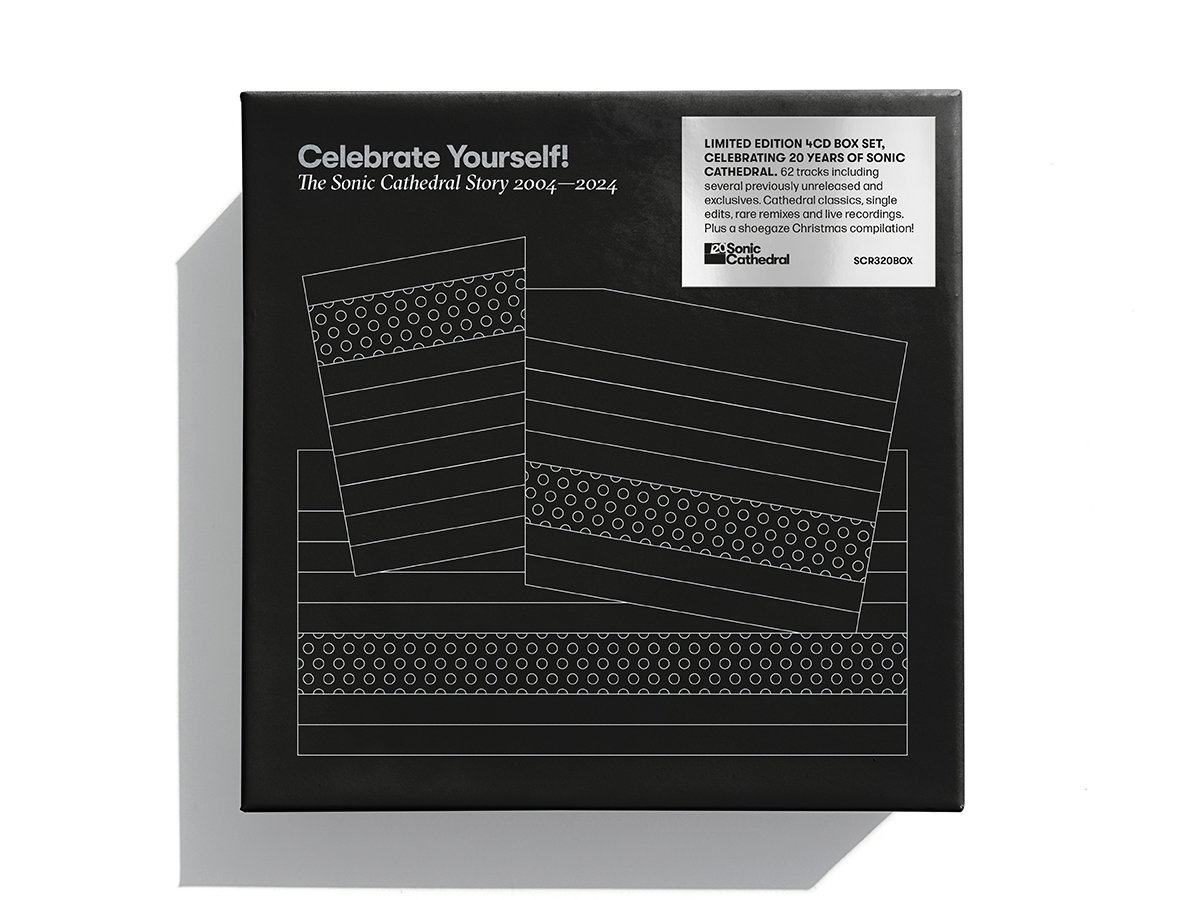
 Photo book cover by Stuart Jones
 Andy Bell (Ride) by Geoff Shaw


 Arcana.fm