Listening to Beethoven #227 – String Quartet no.7 in F major Op.59/1 ‘Razumovsky’

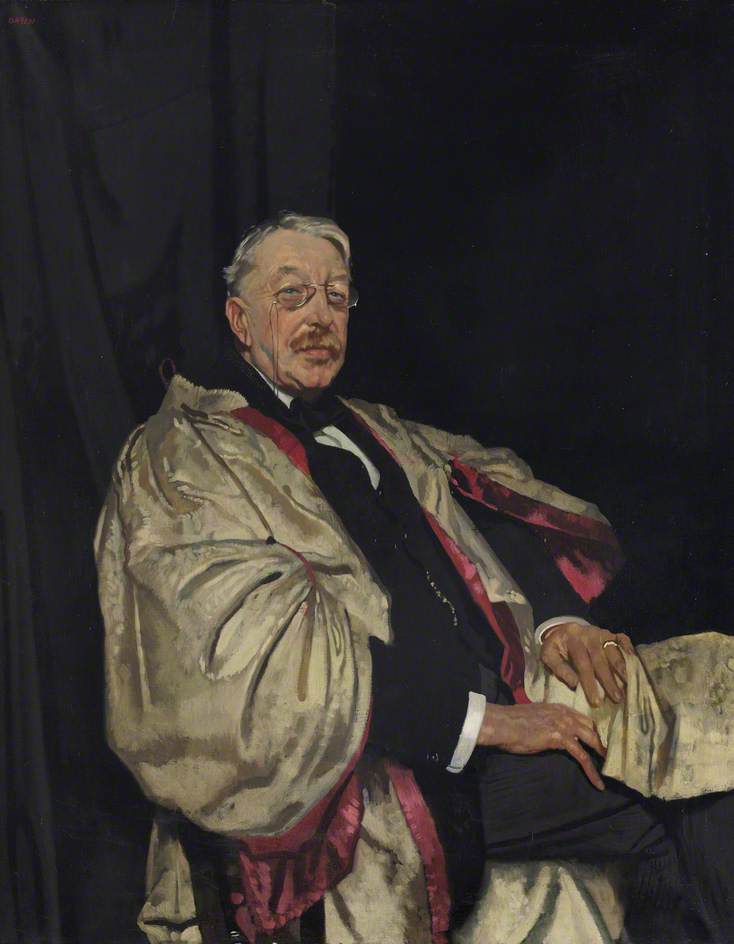
Sea beach with fisherman (The fisherman), by Caspar David Friedrich (1807)

String Quartet no.7 in F major Op.59/1 ‘Razumovsky’ (1806, Beethoven aged 35)

Dedication Count (later Prince) Andrey Kirillovich Razumovsky
Duration 40’

1.Allegro
2.Allegretto vivace e sempre scherzando
3.Adagio molto e mesto – attacca
4.Thème Russe: Allegro

Listen

written by Ben Hogwood

Background and Critical Reception

In 1801, Beethoven published his first group of string quartets, the six quartets Op.18 confirming his prowess in yet another form of music – while suggesting he had the potential to take this form much further.

Just five years on, that potential was realised in dramatic fashion through a set of three substantial string quartets dedicated to the Russian ambassador in Vienna, Count Andreas Razumovsky. The new works were nearly half as long again as the Op.18 set, and showed many ways in which the string quartet was challenging the boundaries of its very form.

To help communicate his new ideas Beethoven had at his disposal the violinist Ignaz Schuppanzigh, in the words of the Grove Dictionary “the first musician in history to make his main reputation as a chamber-music specialist”. Jan Swafford notes how “this portly, silly-looking violinist was the indispensable partner in Beethoven’s remaking of the medium…Schuppanzigh and his men allowed Beethoven to take quartets wherever he wanted to go with them.”

It is thought Beethoven wrote the three Razumovsky quartets between April and November 1806. They are, as Swafford observes, ‘the most symphonic quartets to that time, harder on both players and listeners than any quartet before’.

Several commentators liken the impact of the first quartet in the set to that of the Eroica symphony. There are musical parallels for sure – the elevation of the cello to take on the first theme, the resolute and optimistic mood of the first movement, the willingness to stretch the structure like never before, pushing the tolerance of players and audiences.

Thoughts

The cello’s heightened role is immediately evident as the instrument leads of with the main theme – not just any theme, but an expressive, lyrical one giving it a whole new importance in the quartet. Nor is the theme dissimilar to the first movement of the Eroica, though the mood is less bullish.

There is an assurance about Beethoven’s writing, a kind of inner serenity as the musical dialogue unfolds, and also a sense that the real drama is still to come. His writing is so fluent in the first movement, each melody seemingly inevitable and with a really strong sense of unity between the quartet members. The middle of the movement becomes more mysterious, the first violin with a figuration suggesting a bird on the wing as the other quartet members engage in dialogue of the theme.

The second movement begins with a remarkably innocuous statement on the cello, a single note rhythmic figure – but of course Beethoven makes something distinctive out of it, like a subtle but insistent knocking on the door. By the time the full quartet play it, we have a fully fledged tune and enough energy to power the whole of the scherzo. The music then goes for a ‘wander’, Beethoven exploring all manner of far flung tonal areas with an appealing wit. The rhythmic and melodic figures with which the movement began are always kept in mind, however, and before we know it the original key has returned.

The slow movement is very solemn, sorrowful even, its theme played mournfully by the first violin on a supportive bed of thick harmony. Yet there is strength in that supporting playing, which comes through in powerful dialogue between the violins and a touching elegiac theme on viola. There is a very tender passage halfway through, beautiful but tinged with sadness in D flat major before working its way back.

The slow movement leads beautifully into the finale, whereupon the sun ‘reappears’, the cello once again starting an upbeat, dance-inflected theme. This is the most playful music we have heard so far, as though Beethoven has shaken off his troubled feelings for the time being. In a master stroke in the coda he brings the main theme back at half speed, implying a solemn finish – before a gust of wind blows the main theme back through at a rate, and over the finish line.

Recordings used and Spotify links

Melos Quartet (Wilhelm Melcher and Gerhard Voss (violins), Hermann Voss (viola), Peter Buck (cello) (Deutsche Grammophon)
Borodin String Quartet (Ruben Aharonian, Andrei Abramenkov (violins), Igor Naidin (viola), Valentin Berlinsky (cello) (Chandos)
Takács Quartet (Edward Dusinberre, Károly Schranz (violins), Roger Tapping (viola), Andras Fejér (Decca)
Tokyo String Quartet (Peter Oundjian, Kikuei Ikeda (violins), Kazuhide Isomura (viola), Sadao Harada (cello) (BMG)
Végh Quartet (Sándor Végh, Sándor Zöldy (violins), Georges Janzer (viola) & Paul Szabo (cello) (Valois)
Amadeus String Quartet (Norbert Brainin, Siegmund Nissel (violins), Peter Schidlof (viola), Martin Lovett (cello)

There are some finely cultivated versions of the first ‘Razumovsky’ quartet on record. It is a shame that Quatuor Mosaïques did not get as far as the set, given the quality of their Op.18 interpretations, but any of the quartets below will more than satisfy. The Melos and Takács spend more time over the slow movement, but generally speeds are similar.

You can chart the Arcana Beethoven playlist as it grows, with one recommended version of each piece we listen to. Catch up here!

Also written in 1806 Weber Concertino for horn and orchestra

Next up String Quartet no.8 in E minor Op.59/2 ‘Razumovsky’
English Music Festival 2024

Here is a nod in the direction of the English Music Festival, returning next month for 2024. For the first time, all festival events will be held in Dorchester-on-Thames. The concerts will take place in Dorchester Abbey, while the talks will be held in the historic Village Hall. The details, copied from the press release, are below:

The seventeenth annual English Music Festival (EMF) returns to Dorchester Abbey, Oxfordshire from Friday 24 May until Bank Holiday Monday 27 May 2024. Celebrating anniversaries of two of Britain’s greatest composers across the event, the opening concert, given by the BBC Concert Orchestra and conductor Martin Yates, features Stanford‘s Clarinet Concerto with soloist Michael Collins, and Holst‘s ‘Cotswold’ Symphony. Vaughan Williams’s ‘Richard II’ Concert Fantasy is given a World Premiere, alongside works by Doreen Carwithen and Frederick Delius. Orchestral, chamber and choral concerts continue throughout the weekend.

The English Music Festival celebrates the brilliance, innovation, beauty and richmusical heritage of Britain with a strong focus on unearthing overlooked or forgottenmasterpieces of the late-nineteenth to mid-twentieth century.

“Each year audience feedback proclaims the latest EMF the best yet and we are delighted to be able to continue developing and improving our now much-loved Festival”, says Em Marshall-Luck, Festival Founder-Director. “This year’s is typical EMF programming, in the range from solo piano recitals to full orchestra and choral concerts, and from early music through to contemporary, while we retain our focus on the EMF’s raison d’etre, those overlooked and forgotten works by British composers of the Golden Renaissance.

“We are delighted to have been able to attract top performers from abroad, with musicologist, tenor and English-music expert Brian Thorsett joining us from the USA and brilliant pianist Peter Cartwright from South Africa, where the EMF has a collaboration with the University of Witswatersrand in Johannesburg. I am particularly looking forward to their concerts, as well as-in particular-the Vaughan Williams premiere with the BBC Concert Orchestra, and the first modern performance of a gorgeous work by Sir Thomas Armstrong, as well as pianist and Radio 3 presenter, Paul Guinery‘s late-night recital, which celebrates the release of his third disc of Light Piano Music for the Festival’s own record label, EM Records.” The works of Gustav Holst (1874-1934) have been at the heart of Founder-Director Em Marshall-Luck’s programming at the EMF and remain a perennial favourite amongst audiences, with many memorable performances of the composer’s often overlooked major works having been given, as well as recorded by the Festival’s independent recording arm, E M Records. This year, the composer’s early Symphony, ‘The Cotswolds’, takes centre stage.

One of the leading musicians of his generation – as performer, conductor, composer, teacher and writer, Charles Villiers Stanford (1852-1924) had a profound effect on the development and history of English music. In addition to the Directorship of the Royal College of Music, amongst other august musical establishments, and his influence on several generations of composition students who went on to became household names, Stanford was a prolific composer, completing seven symphonies, eight string quartets, nine operas, more than 300 songs, 30 large scale choral works and a large body of chamber music.

The centenary of his death this year provides an opportunity for evaluation of some works from the large canon that have fallen under the radar. For the EMF’s opening concert, there will be a rare performance of Stanford’s Clarinet Concerto featuring one of today’s leading exponents of the instrument, Michael Collins.

WORLD PREMIERES

First performances include the World Premiere of Ralph Vaughan Williams’s ‘Richard II’ Concert Fantasy; the complete incidental music the composer was commissioned to write for Frank Benson’s 1912-13 production at Stratford, which will be performed by the BBC Concert Orchestra under Conductor, Martin Yates.

Vaughan Williams first discovered Shakespeare as a child when he was given the complete edition by his relative, Caroline Darwin, and ‘Richard II’ become a favourite. The composer took Shakespeare’s many references to English folk-ballads as supporting his own ‘national’ approach to music, saying “Shakespeare makes an international appeal for the very reason that he is so national and English in his outlook.” He went on to set and write over 20 Shakespeare texts and incidental music, often using folk-songs and ballads, and the well-known ‘Greensleeves’ appears in ‘Richard II’.

CHORAL CELEBRATIONS

The EMF regularly showcase live choral music. This year The Godwine Choir and Holst Orchestra conducted by Hilary Davan Wetton bring a programme of popular favourites to Dorchester Abbey, including a first modern performance of Edward Elgar’s ‘Give Unto the Lord’, and Excalibur Voices perform works by Coleridge-Taylor, Milford, Dyson, Bainton, Walford Davies and others.

INTERNATIONAL APPEAL

Returning to the EMF is South African pianist Peter Cartwright, who joins violinist Rupert Marshall-Luck in recital to perform works by Holst, Farrar, Stanford, Bliss and Howells.

American tenor Brian Thorsett and pianist Richard Masters, who enjoy a particular association with British music, are making their first appearance at the EMF with a programme of Finzi, Ireland, Frank Tours and Somervell.

RELAXED LISTENING

John Andrews raises the baton for the English Symphony Orchestra in a programme of works by Finzi, Delius, Howells, Milford, Dyson and Warlock, while Piano Trio, Ensemble Kopernikus, performs Delius, Holst, Rebecca Clarke, John Ireland and Percy Hilder Miles. Pianist and British music specialist, Phillip Leslie, performs works by Rawsthorne, Bowen, Dyson, Leighton, and John Ireland’s masterpiece, ‘Sarnia’.

Rosalind Ventris and Richard Uttley will be performing works for viola and piano including Rebecca Clarke’s Viola Sonata. Rosalind’s album ‘Sola’ is currently nominated for a BBC Music Magazine award in the 2024 ‘Premiere’ category.

Always a popular fixture, late-evening recitals are a special feature of the EMF, with the ancient warmth of Dorchester Abbey providing the perfect setting for audiences to relax in and enjoy a performance from The Flutes & Frets Duo – Beth Stone (historical flutes) and Daniel Murphy (lute; theorbo and guitar), and for a discovery of the lighter side of British composers when pianist Paul Guinery returns to the keyboard. Informative talks include those on anniversary composers, Stanford and Holst, as well as Farrar and Bliss.

This year, the Festival is remaining in Dorchester-on-Thames for the duration of the long weekend.

FURTHER INFORMATION

Further information including the full programme is available on the EMF’s website

Tickets go on sale via the website from 22 March (8 March to Festival Friends) and by means of a postal booking form. Full Festival and Day Passes are also available. Tickets for individual concerts will be available on the door, subject to availability

Playlist – Charles Villiers Stanford (died 29 March 1824)

by Ben Hogwood

This is a playlist to mark the contribution to classical music of the Irish composer Charles Villiers Stanford, who died on 29 March 1924.

If you are a first-time listener to Stanford, the playlist gives a first indication of the strength of his output – though there is much more to enjoy should you wish to go further!

The Irish Rhapsodies have a lot of melodic charm…while the Piano Concerto no.2 is a fine work that is a late Romantic equivalent to Rachmaninov. Stanford was a fine choral and vocal composer, too – there are glimpses of that here – while for sheer positivity and generosity of melody, his Symphony no.6 takes some beating

You can enjoy all of those below! Arcana intends to return to Stanford’s music in more detail later in the year…

Published post no.2,135 – Monday 1 April 2024

Music for Easter #3 – J.S. Bach: St. John Passion

Published post no.2,134 – Sunday 31 March 2024

In concert – Stewart Goodyear, CBSO / Ilan Volkov: Ives, Zappa, Lewis & Gershwin

Stewart Goodyear (piano), City of Birmingham Symphony Orchestra / Ilan Volkov (above)

Ives Three Places in New England (1911-14, rev. 1929)
Zappa Bob in Dacron and Sad Jane (1982-3)
Lewis Memex (2014)
Gershwin orch. Grofé Rhapsody in Blue (1924, rev. 1942)

Symphony Hall, Birmingham
Wednesday 27 March 2024

Reviewed by Richard Whitehouse

Ilan Volkov is always a welcome presence on the Symphony Hall podium, and this evening he conducted the City of Birmingham Symphony Orchestra in a fascinating programme of works by American composers – three of them established in music notably removed from classical.

The concert was framed by what have now become repertoire pieces, but Ives’s Three Places in New England had to wait over half a century to be accorded this status. Using what sounded to be the most recent edition, Volkov stressed its late-Romantic impulsiveness and rhetorical eloquence, though some over-emphatic pauses or phrasing slightly undersold the cumulative majesty of The Saint Gaudens and coursing energy of Putnam’s Camp – which latter still teetered (rightly) on chaos at its close. If the build-up in The Housatonic at Stockbridge felt unduly precipitate, Rachel Pankhurst’s rendering of its cor anglais melody had ideal pathos.

The three decades since Frank Zappa’s untimely death have brought into focus his sheer range of musical preoccupations, though his pair of early 1980s albums with the London Symphony Orchestra made plain that being one of rock music’s finest guitarists and leading provocateurs was never enough. Despite their linkage via a ballet with its somewhat dubious scenario, Bob in Dacron and Sad Jane are individual entities and their respective two movements underline Zappa’s concern for musical and expressive diversity – whether in the reckless overkill of the male protagonist or halting fatalism of the female. Volkov secured dedicated playing from the CBSO as brought out Zappa’s debt to ‘third stream’ jazz as much as his modernist forebears.

George Lewis is another figure whose creativity ranges over multiple media – not least that of the orchestra which, thanks not least to Volkov’s advocacy, has gained some familiarity in the UK. Its title referring to a theoretical device for establishing connections across an otherwise unregulated body of information, Memex is typical of the composer through its complexity of textures which affords a heady virtuosity but also a measure of subtlety and inwardness, not least in those final stages when the earlier volatility gradually coalesces into something akin to resolution; as if all that information was, if not dispersed, at least finding discipline. Such, at least, was the impression left by this committed reading of a striking and absorbing piece.

It might have been a conceptual leap too far from here to Gershwin’s galvanizing of the ‘jazz age’ aesthetic almost a century earlier, though Rhapsody in Blue has lost relatively little of its edge during the interim – especially when Stewart Goodyear projected the steely spontaneity of its solo part with such gusto. Admittedly the large orchestral forces (a feature of each work heard tonight) lacked a degree of co-ordination in tutti sections, but Volkov was at one with his pianist in conveying the breezy and often brittle excitement of music which sounded as   if evolving in real-time – not least the final stages that emerged as a high-octane apotheosis.

No little excitement, then, was generated over the course of this performance as of this concert overall: just the sort of event the CBSO should be putting on each season, which latter would certainly be the poorer were artists such as Volkov not encouraged to follow their convictions.

Click on the link to read more on the current CBSO concert season, and on the names for more on pianist Stewart Goodyear, conductor Ilan Volkov and composers Frank Zappa and George Lewis.

Published post no.2,133 – Saturday 30 March 2024