published by Ben Hogwood from the original press release
This December, Wigmore Hall focus in on a pianist famed for winning the prestigious Victoires de la Musique Classique award on five separate occasions, most recently in 2022. Described by the Guardian as ‘a remarkable musician, no question’, Chamayou caps off his short residency with an unmissable evening of the complete Ravel pianos works. Before that, the pianist joins forces with the thrilling Belcea Quartet and accompanies soprano Barbara Hannigan for her Wigmore Hall debut.
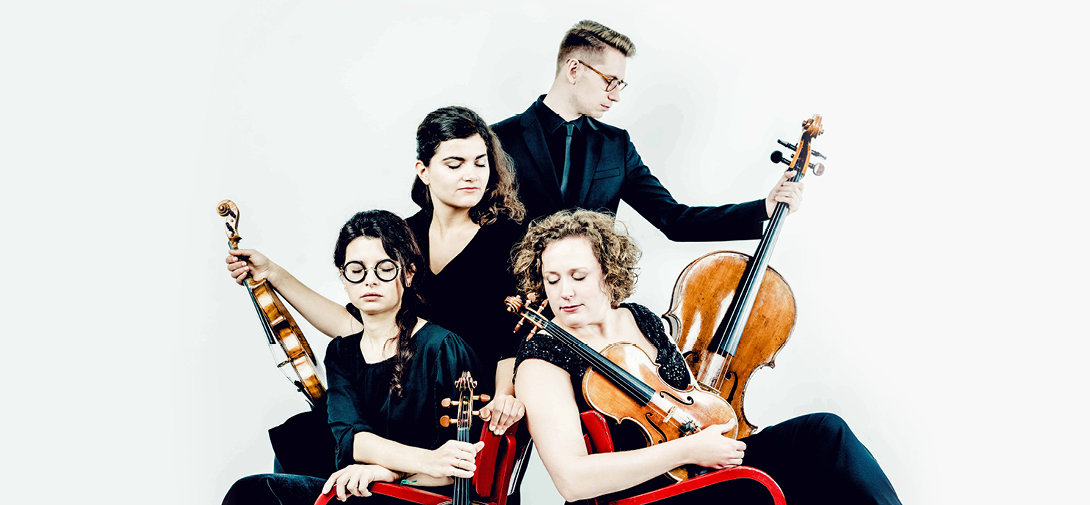
The programme with the Belcea Quartet on Thursday 4 December is of extra interest, for in addition to Chamayou’s appearance in the rarely-heard Piano Quintet in E major of Erich Korngold, the quartet will mark the 80th anniversary of the world première of Britten’s Second String Quartet at Wigmore Hall.
Chamayou’s programme with soprano Barbara Hannigan is typically adventurous, the pair reaffirming their Messiaen credentials with a performance of the Chants de terre et de ciel, before Chamayou looks at late Scriabin in the form of the Poème-nocturne Op. 61 and Vers la flamme Op. 72, before the two take on John Zorn’s song cycle Jumalattaret, written for Hannigan herself.
Chamayou’s third appearance will see him perform the complete works for solo piano by Maurice Ravel, whose birth in 1875 is being marked with 150th anniversary celebrations this year. The concert begins at 7pm, with the programme as follows:
1875-1937 Prélude Miroirs Menuet in C sharp minor Sonatine A la manière de Borodine Gaspard de la nuit
Interval
A la manière de Chabrier Valses nobles et sentimentales Menuet sur le nom d’Haydn Sérénade grotesque Jeux d’eau Menuet antique Pavane pour une infante défunte Le tombeau de Couperin
For more information on all the Wigmore Hall concerts, click on the links highlighted above.
Published post no.2,730 – Wednesday 26 November 2025
Following on from this year’s critically acclaimed The Collapse Of Everything, Adrian Sherwood teams up with Speakers Corner Quartet and African Head Charge for new four track EP Barbican Heights – a project which traverses the musical worlds of dub, jazz, electronic, afrobeat, and beyond.
Barbican Heights is born out of a spirit of collaboration, bringing together one of the UK’s most innovative and influential producers, Adrian Sherwood; one of the longest serving and most iconic members of the On-U Sound family, African Head Charge; together with Speakers Corner Quartet, a rising force whose influence is integral to the sound of the contemporary UK jazz scene.
Recorded during a singular day of creative spontaneity at Wicker Studios, the three acts, alongside Alex White of Primal Scream and Fat White Family, combined for semi-improvised reworkings of classic African Head Charge composition ‘Wicked Kingdom Of This Earth’, Speakers Corner Quartet’s own ‘Topanga’, as well as two new tracks constructed from scratch during the session.
The EP title, a sly nod to a classic Keith Hudson tune, refers to the upcoming show at London’s prestigious Barbican Theatre, which will see all three artists share the same bill. The show also sees headliner Adrian Sherwood on stage with his own live band for the first time, comprised of long-time collaborator, Doug Wimbish (Living Color, Sugar Hill Gang, Tackhead), the aforementioned Alex White, plus Mark Bandola (The Lucy Show) showcasing Sherwood’s new studio album, The Collapse of Everything, and other On-U classics.
Sherwood’s first solo album in thirteen years and only the fourth in his storied career, The Collapse Of Everything was released in August to great acclaim. More reflective than earlier records in his discography, the album plays out like a Jamaican spaghetti Western with its widescreen vistas and mood shifts, incorporating everything from dust-caked desert blues to earthshaking dubs decorated in seemingly infinite detail. An expansive palette that ranges from delicate piano motifs to heavily processed sound effects move in and out of a wide-panned stereo field, at times coalescing into an almost hallucinogenic state. Mojo Magazine calls it “Sherwood’s most thrillingly exploratory solo album so far.”
The show in February 2026 will also coincide with African Head Charge marking forty-five years since the release of their first album My Life In A Hole In The Ground. Started as a studio project by Adrian Sherwood and master percussionist Bonjo Iyabinghi Noah, in the basement studios on London’s Berry Street, beneath Chinatown, the group has gone on to release over a dozen studio albums (including 2023’s critically acclaimed A Trip To Bolgatanga), and developed into a potent live act, spearheaded by Noah, which has performed headline shows and festivals around the world.
Completing the lineup are Speakers Corner Quartet — a group defined by community, collaboration, and an unshakeable DIY spirit. Since forming in 2006, they have spent the past decade collaborating and shaping standout live and studio projects with artists such as Sampha, Kae Tempest, Tirzah, Dean Blunt, the late MF DOOM, and Lianne La Havas. Following the release of their critically acclaimed debut album Further Out Than The Edge (2023), the band have performed sold-out shows at The Roundhouse and Royal Festival Hall, delivered standout sets at Glastonbury and Montreux Jazz Festival, led a pioneering ICA residency exploring music and robotics, and scored the BAFTA-winning TV series Mr Loverman.
Adrian Sherwood Live Dub Sessions 2026:
5 Feb / Milan / Magazzini Generali
6 Feb / Gent / Wintercircus
11 Feb / Berlin / Metropol
13 Feb / Stockholm/ Fasching
17 Feb / London / The Barbican * w/ live band, African Headcharge + Speakers Corner Quartet
26 Feb / Madrid / Club Villanos
28 Feb / Barcelona / La Nau
26 Mar / Tennessee / Big Ears festival
27 Mar / NYC / Superior Ingredients (rooftop)
28 Mar / Montreal / Club SAT
31 Mar / Toronto / Standard Time
01 Apr / Chicago / Empty Bottle
02 Apr / Portland / Holocene
03 Apr / LA / First Fridays @ The Natural History Museum
04 Apr / SF / Great Northern
Listen / Buy
Published post no.2,728 – Tuesday 25 November 2025
On the occasion of the 70th birthday of Jorge E. López
The singular tonal language of an Austrian composer of Cuban origin
Sunday 30th November 2025 @ 19:45 [NB: 18:45 UK time] on Austrian Radio Station Ö1
Jorge E. López, one of the most distinctive and original composers currently living in Austria, celebrates his seventieth birthday next Sunday. He has never identified with the conventions of New Music: ‘‘Instead, I was convinced from the beginning that it was more about making the ancient present’’. He does not look for the new but ‘‘rather the repressed’’, as emphasized in an extended interview with the radio journalist and regular Ö1 broadcaster Peter Kislinger.
López was born on 30 November 1955 in Havana. In 1960 he came to the United States with his family, where he lived in New York and Chicago. In 1970 he began to compose – inspired by such figures as Mahler, Berg, Ives, Messiaen, Stockhausen and Xenakis – then studied at California Institute of the Arts during 1971-76. In 1987, after notable orchestral performances in Donaueschingen, the focus of his life shifted to Europe and the German-speaking world.
He draws inspiration for his often timeless works from an intense experience of nature, most especially in Lapland, Iceland and the American North-West. His works defy current trends in contemporary music and demonstrate an affinity for the music at the turn of the 20th century as well as proximity to the aesthetics of Surrealism. In recent years, he has resided alternately between Mölltal in Upper Carinthia and Vienna. This latest edition of the Supernova series (produced by Rainer Elstner) features several large-scale orchestral works by the composer.
The programme can be accessed from the UK by clicking on the link below:
Helena Juntunen (soprano), City of Birmingham Symphony Orchestra / Osmo Vänskä (above)
Sibelius Karelia Suite Op.11 (1893) Songs – Höstkväll Op.38/1 (1903, orch. 1904); Hertig Magnus Op.57/6 (1909, orch. 1912); Våren flyktar hastigt Op.13/4 (1891, orch. 1913) The Bard Op.64 (1913) Luonnotar Op.70 (1913) Shostakovich Symphony no.15 in A major Op.141 (1970-71)
Symphony Hall, Birmingham Wednesday 19 November 2025
Reviewed by Richard Whitehouse Pictures (c) Jonathan Ferro
Finnish conductor Osmo Vänskä makes relatively UK appearances these days such that this evening’s concert with the City of Birmingham Symphony Orchestra was to be anticipated, given the never less than intriguing juxtaposition of works from Sibelius and Shostakovich.
It now appears less frequently on programmes than half a century ago, but Karelia Suite finds Sibelius at his most uninhibited and Vänskä responded accordingly – whether the simmering motion of its Intermezzo or the pulsating activity of its Alla Marcia; its Ballade distilling the keenest atmosphere with Rachel Pankhurst making the most of her plaintive solo. Harpist Karherine Thomas was similarly attuned to her almost obligato role in The Bard, a tone poem whose sombre understatement hardly prepares one for the surging emotion towards its climax.
Elsewhere in this half it was Helena Juntunen (above) who stole the show with her judicious selection of Sibelius songs. That almost all these are settings of Swedish texts reflects an introspective Romanticism often overlooked in his output and Juntunen brought out the stark imagining of Autumn Evening then restless aspiration of Baron Magnus as potently as the ecstatic yearning of Spring is Flying. Her swapping sophisticated gown for traditional dress may have pointed up stylistic differences with Luonnotar, but it also underlined the inimitability of this setting from Finnish national epic the Kalevala. Birmingham audiences had been spoiled by hearing Anu Komsi in the piece, but Juntunen was no less inside music whose extremes of timbre or texture result in as heady a culmination then as spellbinding a conclusion as any in Sibelius.
Hard now to recall a time when Shostakovich’s 15th Symphony was believed too inscrutable for wider appreciation, rather than that masterly reassessment of Classical symphonism it is. Vänskä brooked no compromise in an initial Allegretto not without its technical mishaps, for all its sardonic and even scabrous humour came over unimpeded, but it was with the Adagio this performance wholly found its stride. As enhanced by eloquent contributions from cellist Eduardo Vassallo then trombonist Richard Watkin, this was palpably well sustained through to a climax shot through with a defiance borne of desperation, before retreating back into its initial numbness. Continuing directly, the ensuing Allegretto was an intermezzo no less acute in its expression and not least for the way solo instruments melded so deftly with percussion.
Vänskä did not make the mistake of rendering the finale an Adagio, such as holds good only with its portentous introduction. The main Allegretto was persuasively handled – broadening marginally for a central passacaglia builds stealthily if inevitably to a climax corrosive in its dissonance, before retracing its thematic steps towards a coda which evokes the notion of the ‘unbearable lightness of being’ more completely than any other music. Here, also, there was no mistaking the CBSO’s collective focus in bringing this totemic work to its deathless close.
Shostakovich 15 does not lack for probing or memorable readings these days and, if tonight’s did not answer all its questions, Vänskä nevertheless ensured this piece left its mark on what was a commendably full house, and which set the seal on a flawed while memorable concert.
published by Ben Hogwood from the original press release
Almost at the mid-way point between the past and future Summer Music in City Churches festivals, we bring news of two winter warming concerts to enjoy in the lead-up to Christmas.
Pavel Sporcl, English Chamber Orchestra, Holy SepulchreEC1A 2DQ Sunday 30November, 7pm
The 29th Made in Prague Festival concludes in grand style with a gala celebrating Czech violin virtuoso Pavel Šporcl, whose expressive artistry and dazzling technique have enthralled audiences worldwide.
The programme features Mendelssohn’s Octet in E-flat major, bursting with youthful brilliance, alongside Dvořák’s lyrical Romance and spirited Mazurek. Šporcl’s virtuosity will shine in a solo by Paganini, ensuring a thrilling and unforgettable finale to this year’s festival.
City of London Choir: Carols in the City – St Giles CripplegateEC2Y 8DA Friday 19 December, 6.30pm
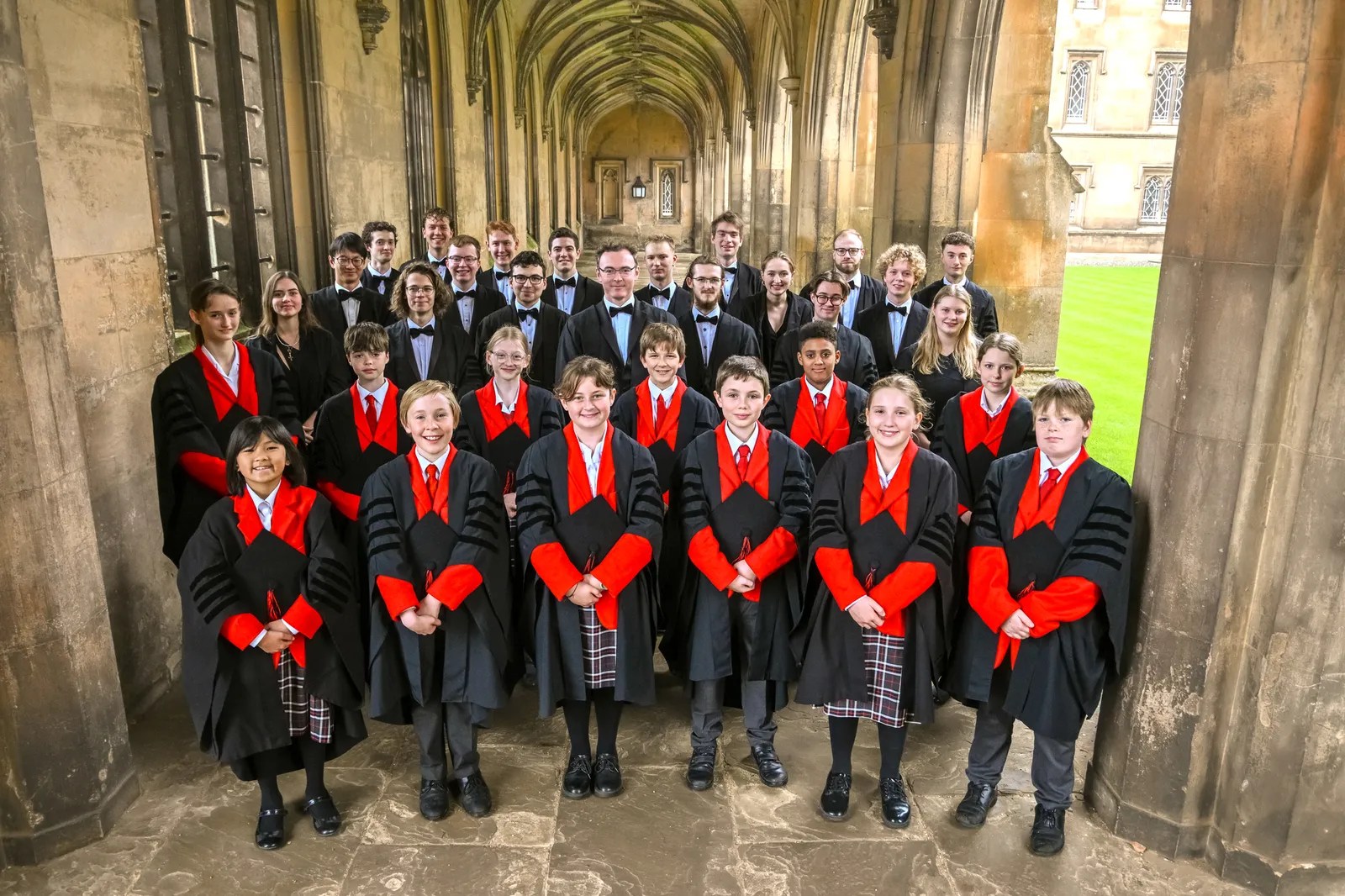
Just ahead of a sell-out carol concert in the Barbican with the King’s College Cambridge choir, the City of London Choir and conductor Daniel Hyde return to St Giles Cripplegate with a wonderful selection of carols and Christmas music, in the company of organist Andrew Lumsden.
Beloved carols by contemporary composers including John Rutter, Morten Lauridsen and Cecilia McDowall sit alongside traditional favourites – with plenty of audience participation. The perfect start to your family festivities.